
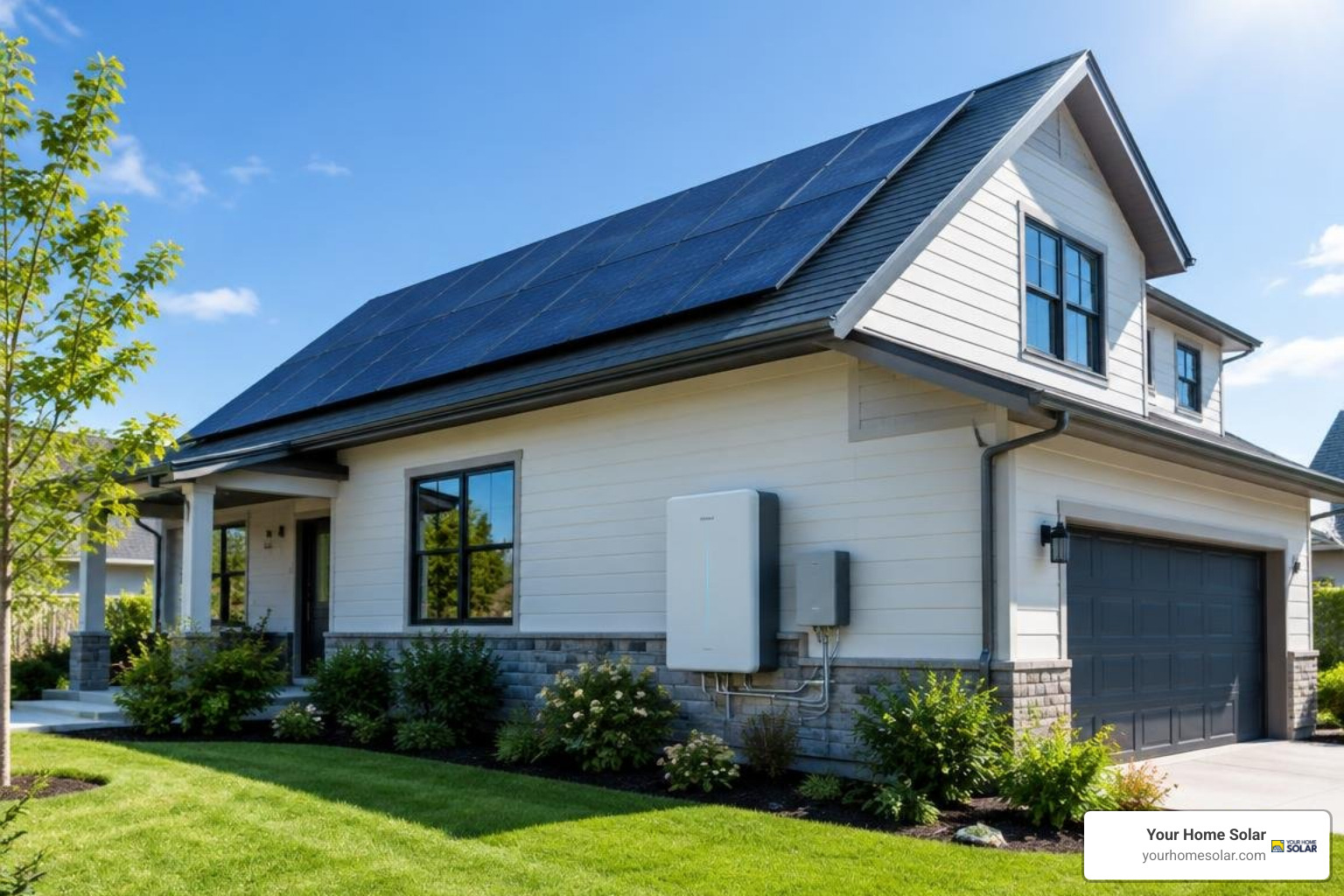
Is a 9000 Watt Solar Generator Right for Your Home?
A 9000 watt solar generator can be a strong backup option for an East Tennessee home, but check what the 9,000-watt rating means. If it is surge power, the system can deliver that much only briefly to start equipment; its continuous power rating tells you what it can keep running. Battery capacity, measured in kilowatt-hours, determines how long it can power your lights, refrigerator, and other selected appliances during an outage. Unlike a fuel-powered generator, it does not need gasoline or produce exhaust while running.
I’m Ernie Bussell, founder of Your Home Solar. Since 2020, I’ve worked in solar operations and home energy, helping East Tennessee homeowners make informed choices about backup power, including whether a 9000 watt solar generator fits their needs.
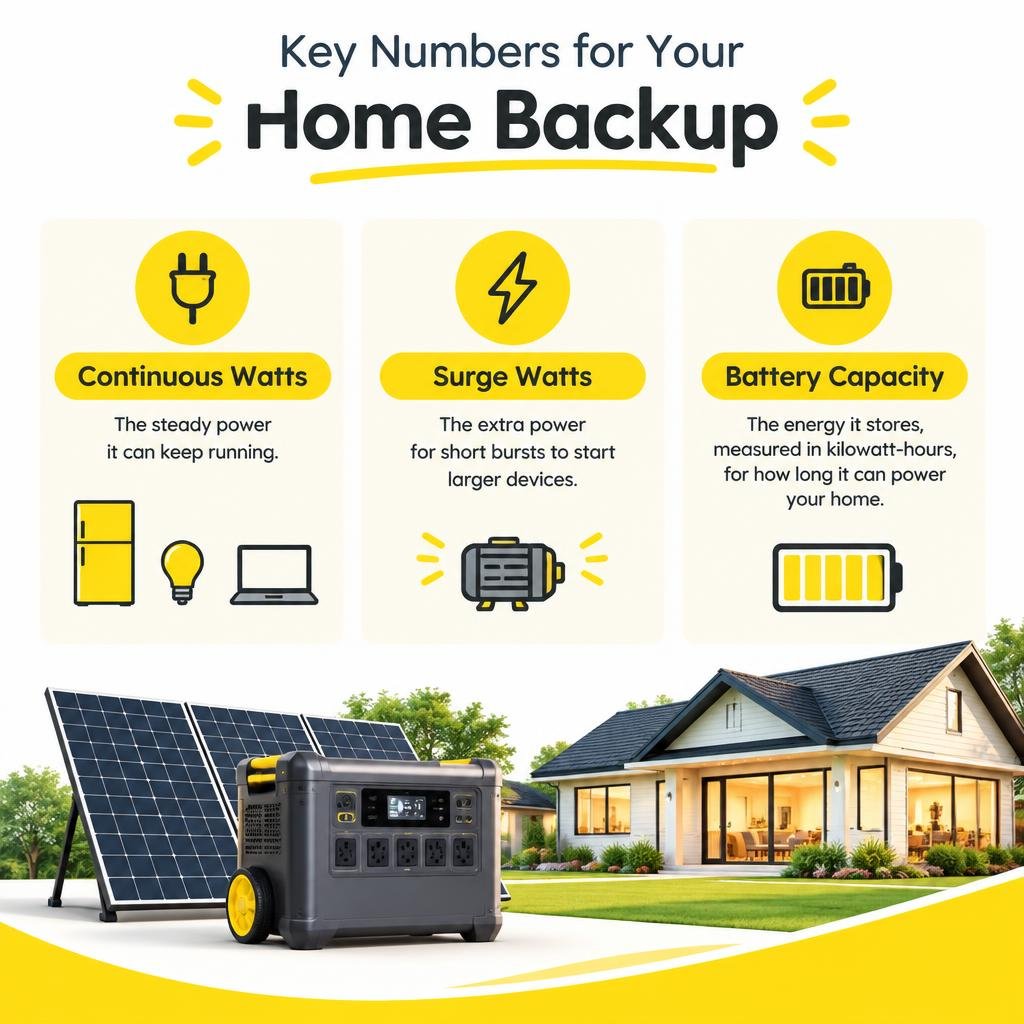
Basic 9000 watt solar generator terms:
Understanding the 9000 Watt Solar Generator: How It Works and What It Delivers
When you look at heavy-duty clean backup power, a 9000-watt class system represents a significant milestone. In practical electrical terms, an inverter rated for this tier can supply 75 amps at 120 volts or 37.5 amps at 240 volts. This split-phase, dual-voltage capability is critical because standard household circuits run at 120V, but large loads—such as well pumps, electric dryers, and central air systems—require 240V to operate.
Unlike basic 120-volt solar generators built primarily for small electronics and camping, a 9000W-class system acts as a true residential micro-powerhouse. It pairs a high-output pure sine wave inverter with modern lithium iron phosphate (LiFePO4) chemistry to capture solar energy during the day, store it safely inside your home, and deliver stable electricity when utility lines go down.
Understanding how inverter ratings interact with energy storage is essential for reliable backup design. For a deeper look at government research on grid-forming capabilities, see the Department of Energy’s guide on solar energy and storage basics.
Continuous Power vs Surge Watts in a 9000 Watt Solar Generator
One of the most common points of confusion is the difference between continuous (running) wattage and surge (starting) wattage.
- Continuous Power (Running Watts): The sustained output the inverter can deliver indefinitely without overheating. For example, a heavy-duty portable power station might deliver 6,000 watts of continuous power.
- Surge Power (Starting Watts): The momentary burst capacity—often rated up to 9,000 watts or higher—that the inverter supplies for a few seconds to kick over heavy inductive motors.
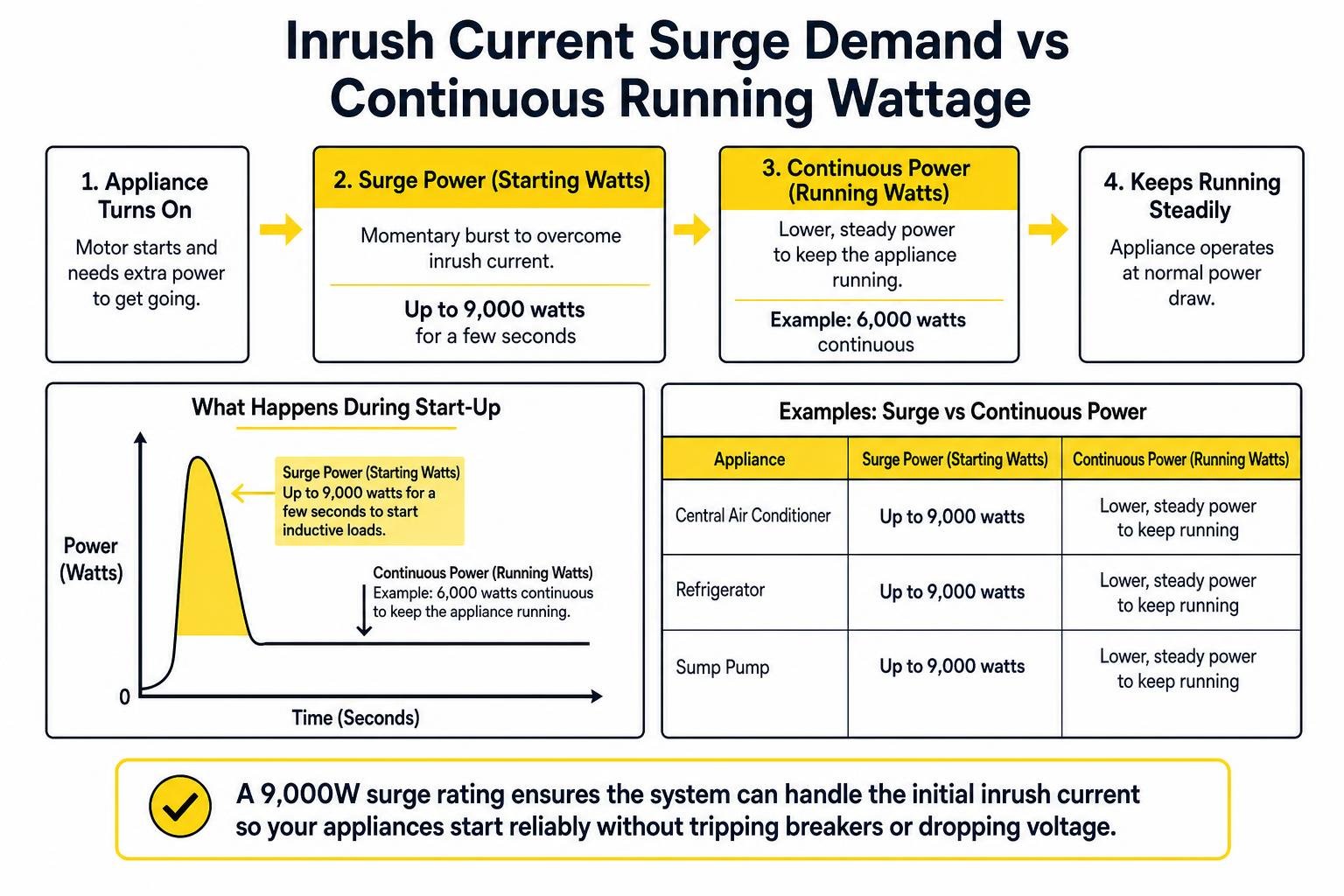
Inductive loads, such as central air conditioners, refrigerators, and sump pumps, require an initial rush of electric current (known as inrush current) that can be two to three times higher than their normal operating draw. A 9000W surge threshold ensures that when your compressor clicks on, the system delivers that instantaneous burst without tripping safety breakers or dropping voltage.
Battery Capacity and Expandability for Extended Outages
Inverter wattage determines what you can turn on at any given moment, but your battery capacity (measured in watt-hours or kilowatt-hours) dictates how long those appliances will run.
A high-performance system might start with a base capacity of 3,600 watt-hours (3.6 kWh) to 5,000 watt-hours (5.0 kWh). However, during prolonged severe weather in East Tennessee, modularity is essential. Modern LiFePO4 battery architectures allow you to daisy-chain expansion packs, scaling your total reserve up to 24 kWh, 36 kWh, or even 57.6 kWh. LiFePO4 cells are rated for over 3,500 full charge-discharge cycles before dropping to 80% capacity—giving you more than a decade of daily reliability. Adding dedicated solar battery banks ensures you have enough stored energy to weather multi-day grid failures effortlessly.
What Can You Power with a Heavy-Duty Solar Backup System?
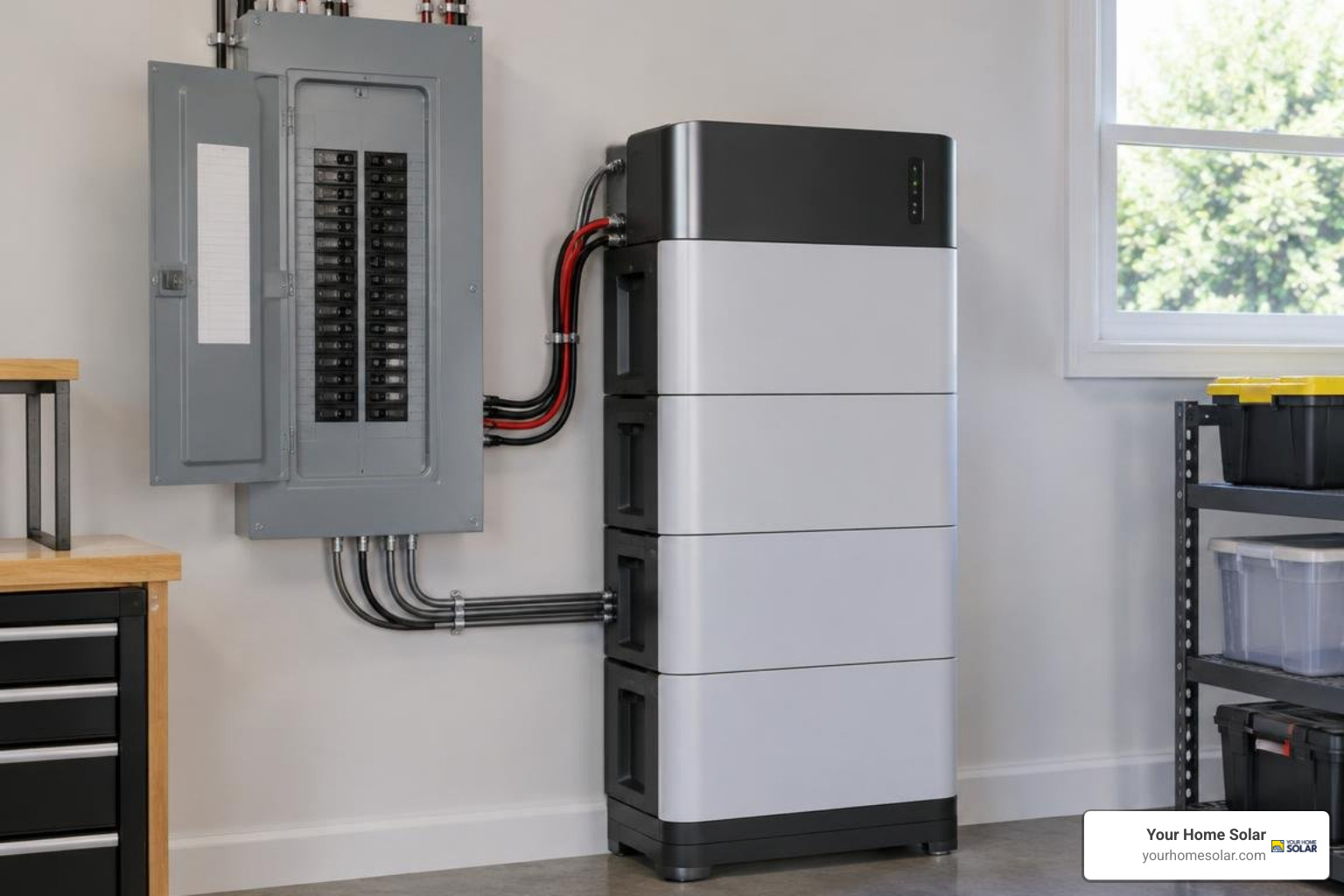
A heavy-duty solar backup system can manage virtually all of your critical household circuits simultaneously. By routing circuits through a manual or automatic transfer switch, you can keep essential home systems running seamlessly during an unexpected blackout.
| Appliance | Starting (Surge) Watts | Running (Continuous) Watts |
|---|---|---|
| 2-Ton Central AC Unit | 2,500W | 2,000W |
| Full-Size Refrigerator / Freezer | 1,200W | 200W – 400W |
| Microwave Oven | 1,100W | 625W – 1,000W |
| Sump Pump (1/2 HP) | 2,150W | 1,050W |
| Deep Well Pump (1/2 HP, 240V) | 2,100W | 1,000W |
| LED Lighting (Whole House – 15 bulbs) | 150W | 150W |
| Wi-Fi Router & Modem | 30W | 30W |
| Medical Devices (CPAP Machine) | 60W | 30W – 60W |
Powering Heavy Appliances in a 9000-Watt Solar Generator Setup
Because a 9000W-class system can supply substantial split-phase power, you do not have to pick and choose between keeping your food cold and staying comfortable. You can comfortably power a 2-ton central air conditioner (2,500W surge, 2,000W running), a microwave (625W to 1,000W), your refrigerator (400W), and home network gear at the exact same time without exceeding the inverter’s continuous or surge capacity.
For rural homeowners across Knox, Blount, and Sevier counties, running deep well pumps and sump pumps during heavy storms is a non-negotiable requirement. This system delivers the robust 240V power needed to keep your water running and your basement dry.
Calculating Runtime and Estimating Off-Grid Performance
To calculate how long your system will sustain your home, divide the total usable battery capacity by your continuous load draw:
Runtime in hours = (Battery Capacity in Watt-Hours × 0.85) / Total Connected Load in Watts
(Note: We multiply by 0.85 to account for real-world inverter efficiency losses.)
If your continuous running load is 1,200 watts and you have paired your setup with a 14.4 kWh (14,400Wh) expanded battery bank:
Runtime = (14,400 × 0.85) / 1,200 = 12,240 / 1,200 = 10.2 hours of continuous run time without solar input.
When you factor in active daytime recharging from a properly sized rooftop or ground-mounted solar array, your daytime consumption is offset directly by the sun, allowing your stored reserves to remain topped off for overnight use. Reviewing methods for sizing emergency home power systems helps eliminate guesswork when planning your storage needs.
9000W Solar Generators vs. Traditional Gas and Inverter Generators
When evaluating backup equipment in the 9,000-watt range, many homeowners compare solar setups to traditional open-frame or dual-fuel inverter generators. While combustion generators offer lower up-front purchase prices, their operational realities introduce major trade-offs in safety, maintenance, noise, and ongoing fuel logistics.
| Feature / Metric | 9000W Solar Backup System | 9000W Gas / Inverter Generator |
|---|---|---|
| Noise Level | Silent to Whisper-Quiet (30–45 dB) | Loud to Very Loud (70–82 dB) |
| Emissions & Safety | Zero emissions; safe for indoor installation | Toxic exhaust; carbon monoxide risk; outdoor use only |
| Fuel Requirements | Sunlight (Free and renewable) | Gasoline, propane, or diesel (Ongoing cost & storage) |
| Starting Mechanism | Instant automatic or push-button transfer | Electric start with battery / manual pull cord |
| Maintenance | Virtually zero (no oil, filters, spark plugs) | Periodic oil changes, carb cleaning, fuel stabilizer |
| Expected Lifespan | 10–15+ years (3,500+ LiFePO4 cycles) | 1,000–3,000 operating hours before overhaul |
For homeowners seeking long-term resilience, exploring reliable home battery backup options provides a dependable alternative to hauling gas cans during severe weather.
Noise Levels and Operating Conditions
One of the most striking differences is operational sound. A combustion generator in the 9000W category typically produces 70 to 80 decibels (dB) of noise—comparable to standing next to a busy commercial highway or running a gas lawnmower outside your window.
In contrast, a solar battery system operates between 30 and 45 dB, which is quieter than a whisper in a residential library. Because solar systems produce zero carbon monoxide or toxic exhaust fumes, they can be permanently installed inside a garage, basement, or utility closet, keeping your backup safe from outdoor elements and theft. Exploring the core emergency solar power advantages highlights how quiet, emission-free operation transforms the outage experience.
Fuel Costs, Maintenance, and Long-Term Operating Value
Combustion generators require fresh fuel, stabilized gas storage, periodic oil changes, and regular spark plug maintenance. During prolonged regional storms, local gas stations frequently lose power or run dry, leaving fuel-dependent households stranded.
A solar generator charges directly from the daylight hitting your roof. There are no carburetors to gum up, no starter cords to pull in freezing rain, and zero ongoing fuel expenses. Over a 10-year lifespan, avoiding routine fuel and mechanical servicing can save thousands of dollars while eliminating storage hazards.
Costs, Sizing, and Investment Considerations
Investing in clean backup power involves evaluating equipment hardware, installation scope, and long-term return on investment.

A high-capacity DIY solar kit or modular power station package generally ranges from $1.64 to $2.30 per watt on the equipment side. A complete 9kW solar equipment package often prices out around $15,000 to $20,000 before installation. However, federal residential clean energy tax credits can offset up to 30% of total system and battery costs. Comparing these numbers with actual home battery backup costs allows you to weigh up-front investment against decades of energy independence.
9kW Rooftop Solar Arrays vs. Modular Solar Generator Kits
It is helpful to distinguish between a portable/modular solar generator unit and a permanent 9kW rooftop solar installation:
- 9kW Rooftop Array: A full 9,000-watt (9kW DC) residential rooftop array consists of roughly 22 to 24 Tier-1 solar panels and requires approximately 529 square feet of unobstructed roof space. In East Tennessee, a 9kW array produces an estimated 450 to 1,200 kilowatt-hours (kWh) of clean electricity every month depending on season and sun angle. Since the average American household consumes around 920 kWh per month, a 9kW array can eliminate or drastically slash your monthly electric bill.
- Modular Inverter & Battery Systems: Pairing your solar array with modern 10kW hybrid inverter systems provides the ultimate whole-home backup solution. The hybrid inverter channels the massive daily generation from your roof directly into your home circuits while keeping your battery storage continuously charged.
Step-by-Step Sizing Guide: Matching Output to Your Home
To select the perfect system size, follow these four clear steps:
- Catalog Essential Loads: List every appliance you must run during an outage (refrigerators, medical equipment, lights, well pumps, HVAC).
- Determine Peak Surge Requirements: Identify the appliance with the highest starting surge wattage. Ensure your selected inverter’s surge ceiling exceeds this number with at least a 20% safety margin.
- Sum Continuous Running Watts: Add up the running wattage of all devices you plan to operate simultaneously. Your inverter’s continuous rating must exceed this total.
- Size Your Battery Reserve: Multiply your total continuous wattage by the number of hours you want backup without solar production. Reviewing comprehensive home battery options ensures your storage capacity matches your family’s routine.
Frequently Asked Questions About 9000W Solar Generators
How many amps does a 9000-watt generator produce at 120V and 240V?
Amperage equals wattage divided by voltage (Amps = Watts / Volts).
- At 120 volts, a 9000-watt system produces 75 amps (9,000 / 120 = 75A).
- At 240 volts, a 9000-watt system produces 37.5 amps (9,000 / 240 = 37.5A).
This high amperage capacity is what enables the system to feed standard 120V circuits while easily carrying heavy 240V double-pole loads like central air units and well pumps.
Can a 9000-watt solar generator run a whole house during a blackout?
Yes, provided you manage heavy loads intelligently and connect the generator through a properly configured subpanel or manual transfer switch. A 9000W surge / 6000W continuous capacity can run your refrigerator, lighting, well pump, communications, TV, and a 2-ton central AC unit simultaneously. However, running energy-intensive heating elements (such as an electric clothes dryer and an electric oven) at the exact same moment your AC starts up could exceed continuous limits. Having a clear plan for staying powered when the grid goes down makes whole-home load management effortless.
How long does it take to recharge a 9000W solar generator?
Recharge speed depends on the max solar input (PV capacity) of the charge controller and the total wattage of connected solar panels.
Many advanced solar power stations accept between 2,400W and 4,000W of direct solar DC input. With 3,000W of high-efficiency solar panels deployed in optimal midday sun, a standard 3.6 kWh to 5.0 kWh base battery can recharge from 0% to 100% in as little as 1.5 to 2.5 hours. When connected to AC grid power or an auxiliary generator, many units achieve full charge in under 90 minutes.
Choosing the Right Clean Backup Solution for Your Home
Selecting the right emergency backup setup is about protecting your family, securing your property, and gaining true energy freedom. A clean 9000-watt class solar system delivers the immense surge capacity needed to run modern household conveniences without the noise, pollution, and recurring fuel costs of combustion engines.
At Your Home Solar, we provide comprehensive home energy solutions tailored specifically to East Tennessee homes across Knoxville, Oak Ridge, Maryville, Johnson City, Kingsport, Morristown, and Sevierville. From custom rooftop solar arrays to modular battery storage and home EV chargers, our trusted expertise ensures 100% customer satisfaction from design through final permitting.
Ready to take control of your home’s energy resilience? Explore our comprehensive guide to off-grid solar panel systems to discover how clean, reliable solar power can safeguard your home for decades to come.