What a 6500 Watt Solar Generator Can Run Off-Grid
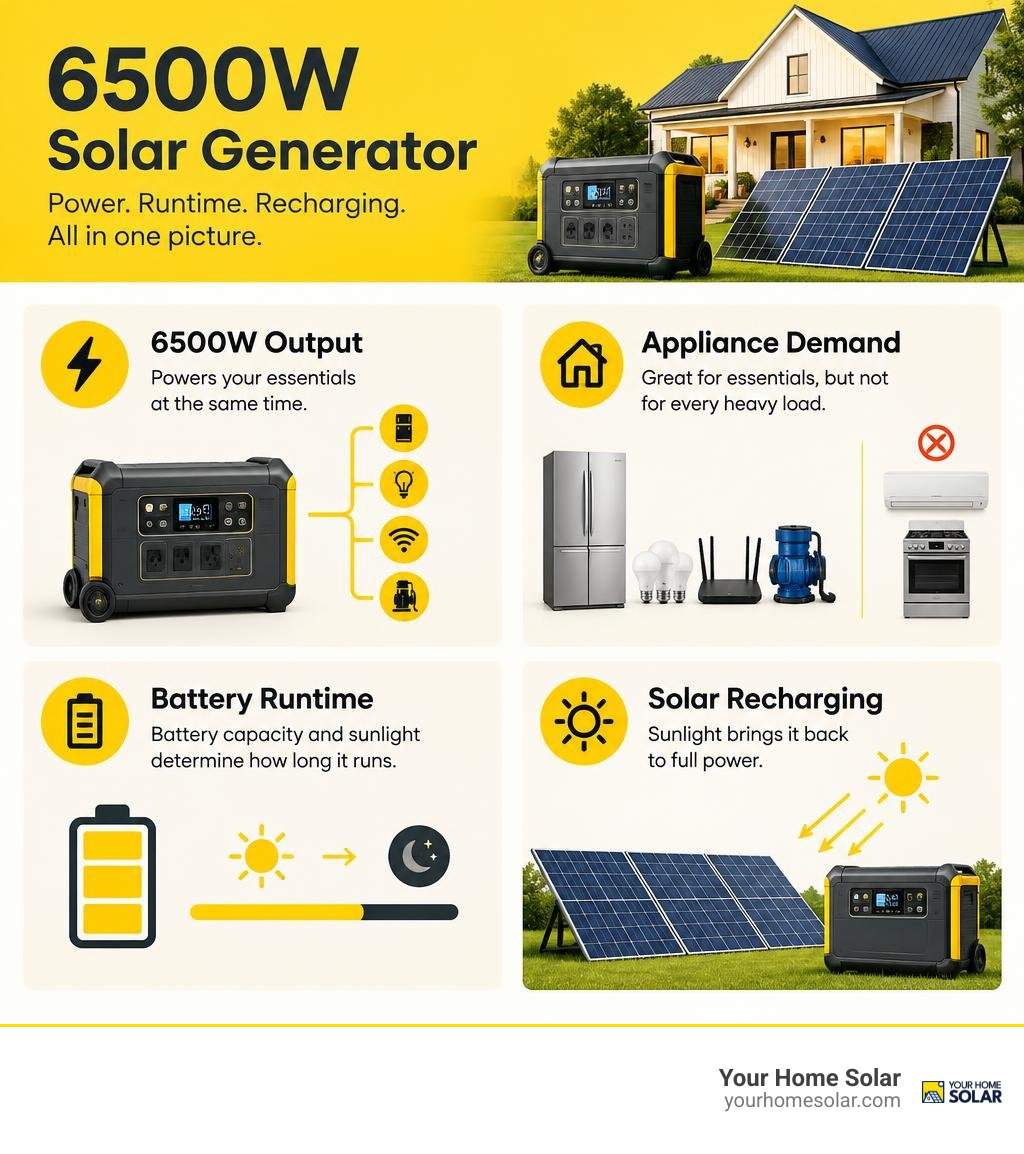
A 6500 watt solar generator can supply up to 6,500 watts of continuous power. That is often enough for essentials such as a refrigerator, lights, internet equipment, and a well pump, if their combined running and startup demands stay within the system’s limits. It does not guarantee whole-home backup. Large air conditioners, electric ovens, and other heavy loads may need to be managed or left off.
The key distinction is power versus runtime: 6,500 watts tells you how much the system can run at once. Battery capacity and available sunlight determine how long it can run, especially after dark. This guide will help you compare system types and size a setup for the loads that matter most during an East Tennessee outage.
I’m Ernie Bussell, founder of Your Home Solar. My work in solar operations and home energy planning has taught me to evaluate a 6500 watt solar generator by the appliances it can support, not just the number on the label.
Must-know 6500 watt solar generator terms:
What Can a 6500 Watt Solar Generator Actually Power?
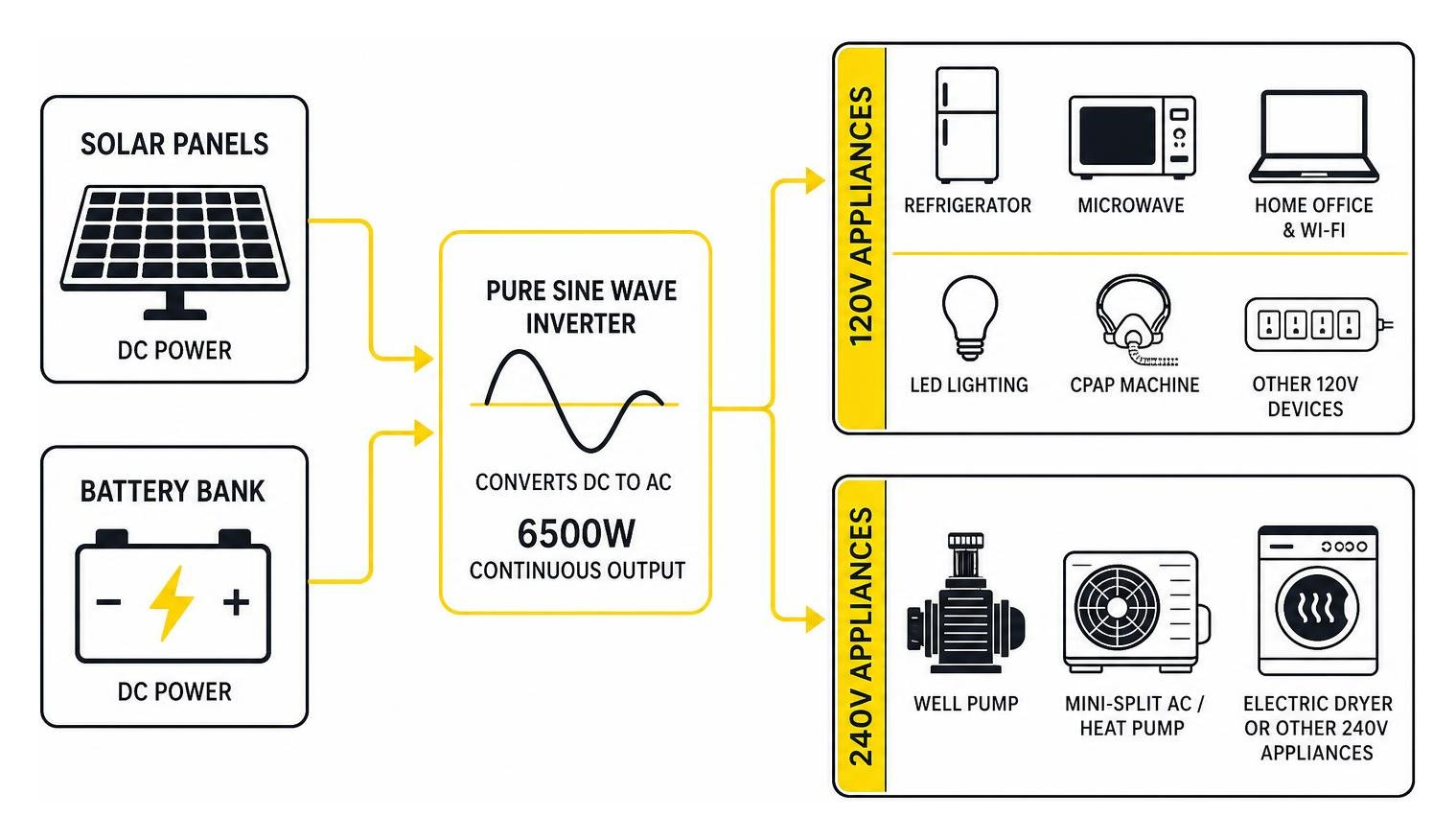
When evaluating continuous capacity, 6,500 watts (6.5 kW) delivers serious muscle. Operating via a pure sine wave inverter, these systems output clean, utility-grade electricity that keeps sensitive microprocessors, smart appliances, and medical gear running safely without harmonic distortion.
However, handling continuous wattage is only half the battle; managing peak surge demand is what separates an adequate power station from a true emergency backup. Most 6500W class inverters supply a momentary surge rating between 9,750W and 14,400W. This headroom allows inductive motor loads—such as well pumps, chest freezers, and compressor-driven tools—to start up without tripping circuit protection.
With both 120V and 240V multi-circuit configurations supported by modern high-capacity inverters, you can manage both standard household electronics and heavy-duty 240V appliances simultaneously.
Here is a realistic look at what a single 6,500W system can power off-grid all at once:
- Deep-well water pump (240V, 1/2 HP): ~800–1,050W running (2,100W startup surge)
- Full-size modern refrigerator: ~150–400W running (1,200W startup surge)
- High-efficiency mini-split AC or inverter heat pump: ~1,200–1,800W running
- Microwave oven: ~1,100–1,400W
- Starlink / Wi-Fi router & home office setup: ~120–200W
- LED lighting throughout essential rooms: ~100–150W
- CPAP machine / medical support equipment: ~40–80W
- Total simultaneous running load: ~3,510–5,080W (comfortably within the 6,500W continuous threshold)
Sizing Your Load for a 6500 Watt Solar Generator System
Accurate load sizing requires calculating both running watts and startup surge across appliance duty cycles. Inductive loads (appliances with motors or compressors) draw two to three times their normal operating wattage for a few split seconds when kicking on.
If your refrigerator, well pump, and mini-split all cycle on at the exact same moment, their brief starting demand could spike toward 6,000W before settling down into an easy 2,500W baseline. For homeowners stepping up from 5500W systems, that additional 1,000 watts of continuous ceiling and higher surge capability provides the necessary buffer to avoid unexpected overloads during heavy storm conditions.
When designing an emergency power plan, we recommend isolating these critical circuits into an essential subpanel. Practicing simple load shedding—such as avoiding running the microwave, electric water heater, and well pump simultaneously—ensures continuous, uninterrupted uptime.
Comparing System Architectures: All-in-One Inverters vs Modular Home Systems
Choosing a 6500W solar setup typically comes down to two primary equipment architectures: a fixed Hybrid Solar Inverter Charger or a Modular Portable Power Station.
| Feature | 6,500W Hybrid Solar Inverter | 5,000W-Plus Modular Power Station |
|---|---|---|
| Continuous Output | 6,500W (Single-Phase / Expandable) | 7,200W (Split-Phase 120V/240V) |
| Peak Surge Output | 9,750 VA | 14,400W |
| Solar Input Capacity | Up to 9,000W (Dual MPPT: 4,500W each) | Up to 4,000W PV Input |
| MPPT Efficiency | Up to 99.9% | High efficiency MPPT |
| Battery Chemistry | External 48V LiFePO4 bank required/optional | Integrated LiFePO4 (Expandable to 60 kWh) |
| Battery-Free Startup | Yes (powers loads directly from PV) | No (requires internal battery pack) |
| Transfer Time | <10 ms (Seamless UPS grade) | <20 ms (Online UPS mode) |
| Unit Weight | 40.79 lbs (Inverter only) | 134 lbs (Base power station) |
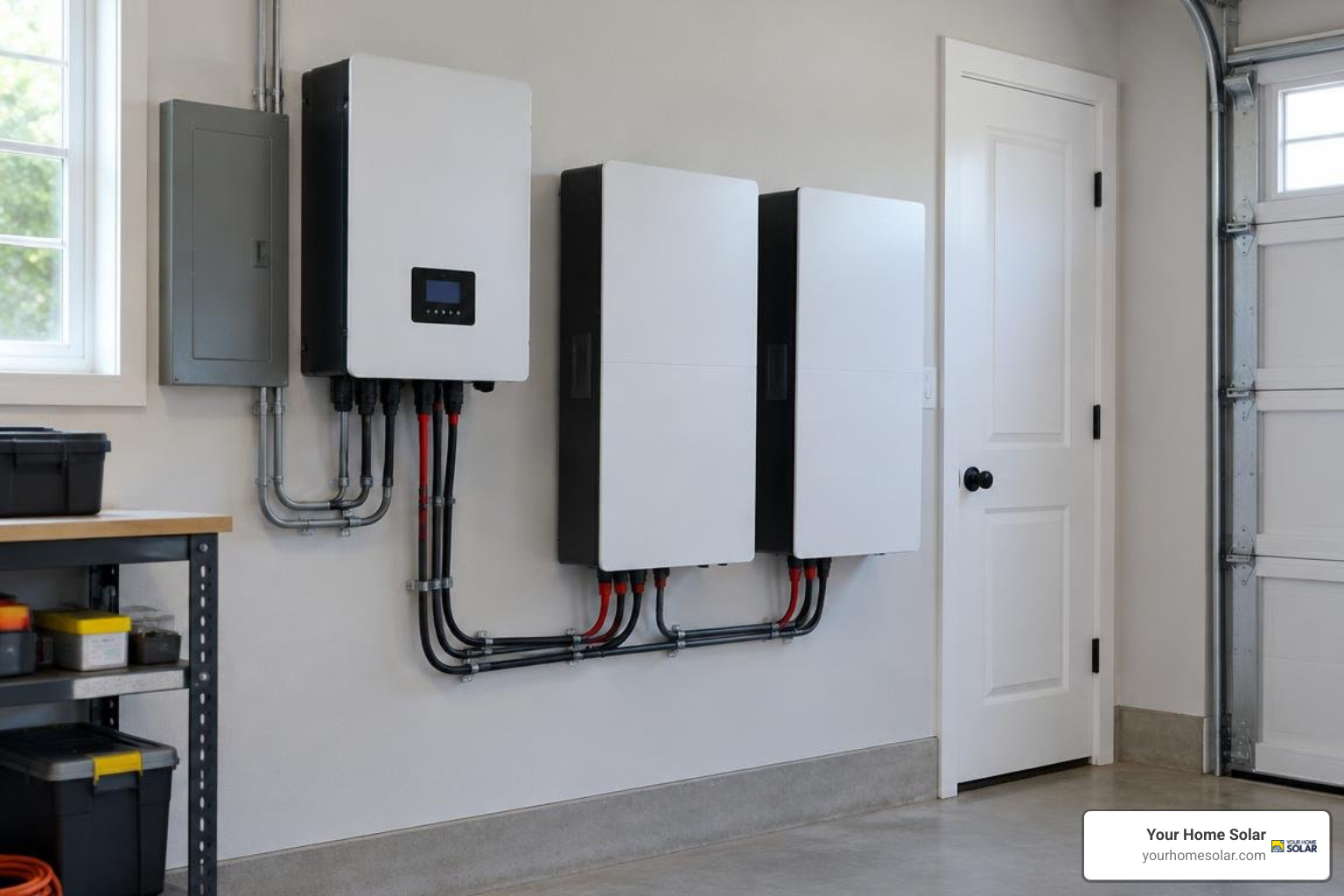
Hybrid inverters provide exceptional flexibility. With dual MPPT charge controllers capable of handling up to 9,000W of total solar input (4,500W per channel), you can orient separate solar strings east and west to maximize daily solar harvest. Furthermore, hybrid inverters can operate via battery-free startup, channeling active daylight into home circuits while giving you the option to add modular 48V LiFePO4 storage down the road.
Modular power stations provide an integrated, out-of-the-box solution with massive plug-and-play battery capacity, making them convenient for rapid deployment.
Seamless UPS Transfer Time and Sensitive Electronics
During severe weather across East Tennessee, grid instability can cause sudden drops, brownouts, and rapid outages. A standard generator can take anywhere from 10 seconds to several minutes to spin up, shutting down desktop computers and dropping medical equipment offline.
Modern 6500W solar systems feature ultra-fast automatic transfer switches:
- Dedicated hybrid inverters switch over in less than 10 milliseconds (<10 ms).
- Integrated modular power stations transition in under 20 milliseconds (<20 ms).
Because an AC electrical cycle runs at roughly 16 milliseconds (at 60Hz), a sub-10ms transfer is faster than the blink of an eye. Desktop workstations, CPAP machines, network servers, and smart home hubs stay running with zero flicker, eliminating the need for separate desktop battery backups.
Scalability and Parallel Expansion Up to 39kW
One of the greatest advantages of a 48V hybrid inverter system is modular scalability. By linking units in parallel, you are never locked into a single fixed output limit.
- Single Unit: 6.5 kW continuous output (9 kW PV input)
- Two Units Parallel: 13 kW continuous output (18 kW PV input, split-phase 120V/240V)
- Six Units Parallel: Up to 39 kW continuous output (54 kW PV input)
By synchronizing multi-inverter communication over a unified 48V battery bus, homeowners can start with an economical single-inverter setup and incrementally expand generation capacity as energy demands, electric vehicles, or workshop equipment grow over time.
Solar Generators vs Traditional Backup Generators
Fuel-powered generators have historically been the default choice for storm backup, but modern solar generators outperform combustion engines across everyday usability, indoor safety, and ongoing operating cost.
| Metric | 6500W Solar Generator System | Traditional Gas Generator |
|---|---|---|
| Operating Noise | 30–51 dB (Library quiet / Indoor safe) | 72–78+ dB (Loud lawnmower level) |
| Indoor Operation | 100% Safe (Zero emissions, no fumes) | Hazardous (Requires outdoor setup due to CO) |
| Fuel Dependency | Sunlight (Infinite & free) | Gasoline (7.9 gal tank = 11.5 hrs @ 50% load) |
| Starting Mechanism | Instant electronic bypass / UPS (<10ms) | Manual pull-cord or electric start battery |
| Maintenance | Zero moving parts, no fluids | Regular oil changes, spark plugs, carb cleaning |
| Lifespan | 4,000+ cycles (10–15+ years on LiFePO4) | 1,000–2,000 operating hours before overhaul |
As detailed when comparing solar with traditional backup generators, the ability to run your backup equipment safely indoors without carbon monoxide hazards is a massive safety upgrade. When severe ice storms or wind events knock down local transmission lines, understanding why emergency solar power is crucial becomes obvious: gas stations lose power and run dry, while your solar array continues replenishing your battery reserves every morning.
Total Cost of Ownership: 6500 Watt Solar Generator vs Traditional Backup Generator
While a traditional 6,500W portable gas generator carries a lower upfront retail price, fuel expenses and maintenance add up quickly during extended outages.
Consider a multi-day blackout scenario: running a 6500W gas generator continuously consumes roughly 15 to 16 gallons of fuel per day. Over extended seasonal outages, fuel runs, stabilizer additives, oil filters, and spark plug replacements represent substantial recurring costs.
In contrast, modern LiFePO4 solar batteries are rated for 4,000 charge cycles down to 70%+ capacity, translating to 11 to 15 years of daily cycling. When evaluating backup generator investment options, a solar generator functions as an active home energy asset rather than an emergency expense, offsetting daily utility bills via self-consumption long before the power grid ever goes down.
Installation Requirements, Solar Array Sizing, and Transfer Switches
To safely route 6,500 watts of power into your home’s breaker panel, you need a code-compliant installation managed by a certified professional.
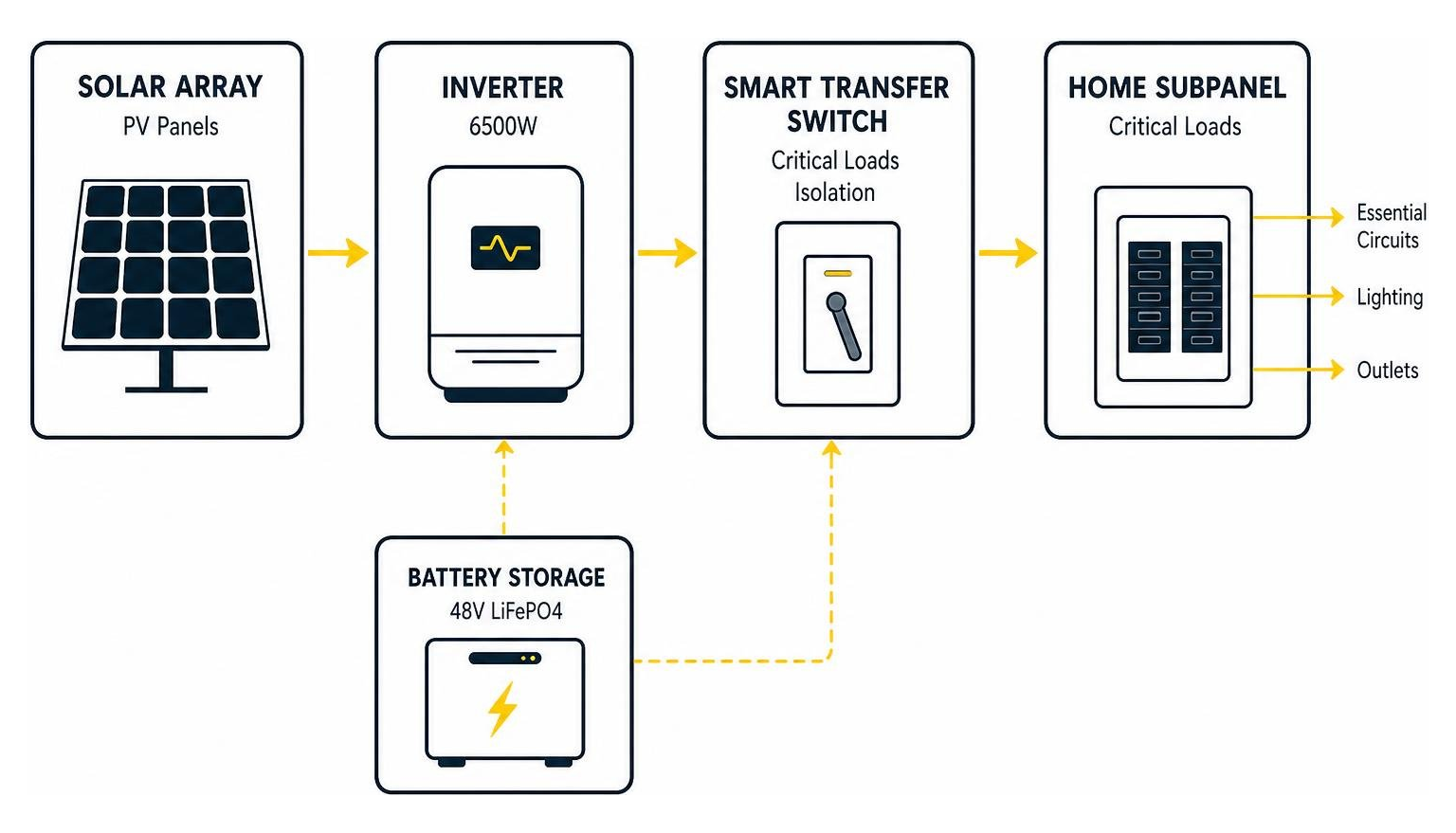
Key installation components include:
- Smart Transfer Switch / Critical Loads Subpanel: Keeps your backup circuits completely isolated from the utility grid, preventing dangerous backfeeding during repair work and allowing seamless manual or automatic power switching.
- Solar PV Array & High-Voltage Strings: Sizing an array between 4,000W and 9,000W provides optimal charging speeds. High-voltage strings reduce wiring thickness and energy loss across rooftop or ground-mount racking.
- Dedicated 48V Battery Enclosure: Ensures battery storage operates within safe, temperature-regulated indoor or garage environments.
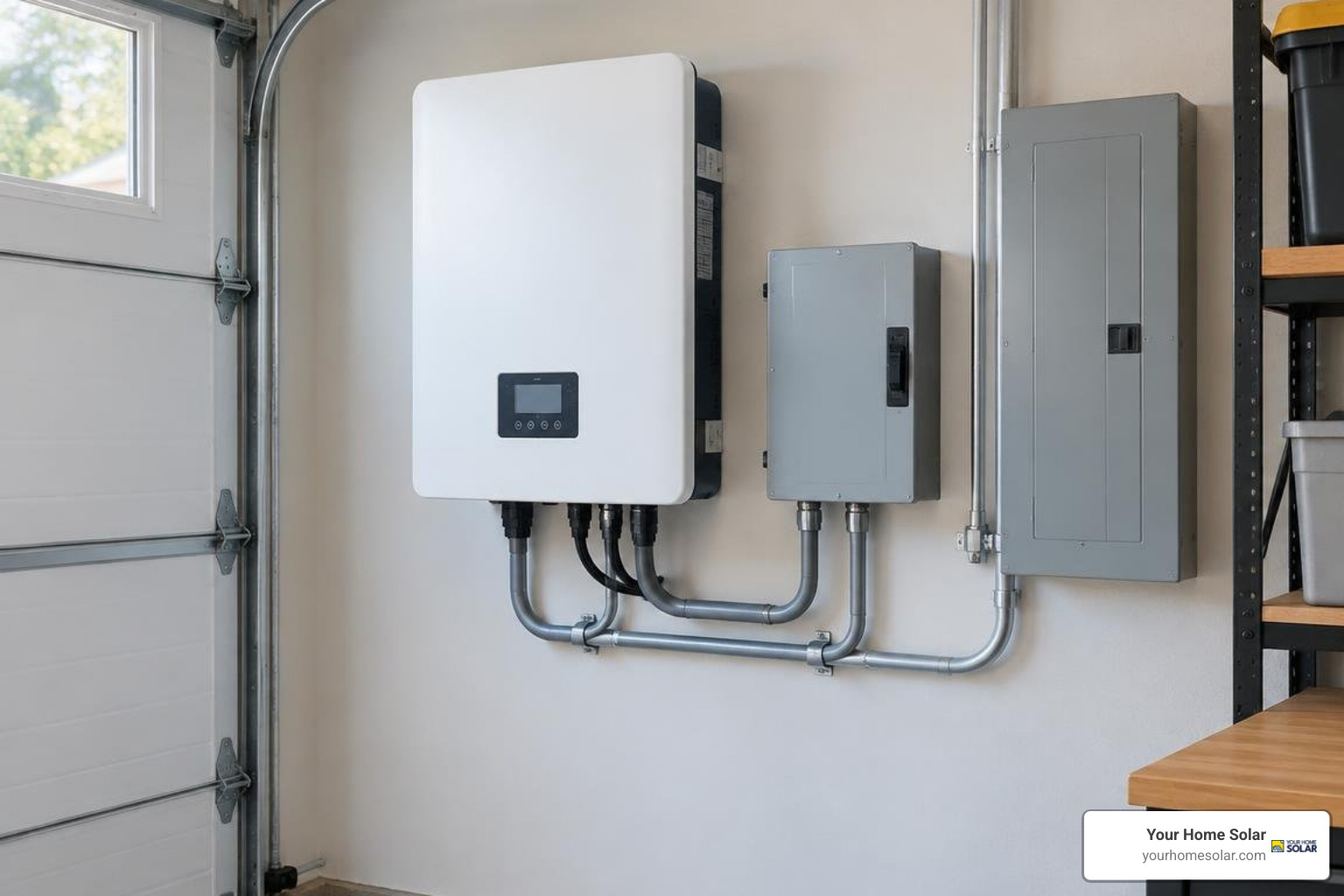
East Tennessee homeowners in communities like Knoxville, Maryville, Oak Ridge, and Sevierville benefit from strong regional sunlight hours, supporting robust distributed generation alongside expanding regional clean energy infrastructure. Professional installation ensures full National Electrical Code (NEC) compliance and reliable operation through every season.
Frequently Asked Questions About 6500 Watt Solar Generators
Can a 6500W solar generator run an entire house during an outage?
A 6500W solar generator can comfortably power essential circuits across an entire home, but it cannot run every high-draw appliance simultaneously. It will effortlessly handle your refrigeration, lighting, well pump, internet, electronics, and a high-efficiency mini-split AC. However, attempting to run central 5-ton air conditioning, an electric clothes dryer, and an electric range at the exact same moment will exceed the continuous 6,500W rating. Prioritizing circuits through a dedicated subpanel ensures uninterrupted whole-house essential coverage.
How long does a 6500W system take to recharge with solar panels?
Recharge speed depends on your total solar panel wattage and battery capacity. With dual MPPT controllers supporting up to 9,000W of solar input, a standard 10 kWh battery bank can recharge from 0% to 100% in roughly 2.5 to 3.5 hours of peak sunlight. With a standard 4,000W array on modular power stations, full recovery typically takes 3.5 to 5 hours under clear skies.
Can you operate a hybrid solar generator without batteries initially?
Yes. Advanced hybrid inverters support battery-free startup. In this mode, the inverter converts daytime solar energy directly into usable AC power for your home, reducing your utility consumption during daylight hours. When your budget allows, you can connect a 48V LiFePO4 battery bank to store excess energy for nighttime use. To keep your equipment in top shape over time, consult our guide on solar generator troubleshooting and upkeep.
Conclusion
A 6500 watt solar generator delivers the ideal balance of heavy-duty appliance support, whisper-quiet operation, and long-term energy independence. Whether you choose an expandable 48V hybrid inverter or an all-in-one modular system, you gain reliable protection against storm outages and rising utility rates without ever storing gas cans in your garage.
At Your Home Solar, we specialize in designing customized, dependable solar backup systems for homeowners across Knoxville, Maryville, Johnson City, Kingsport, Morristown, and surrounding East Tennessee communities. If you are ready to build a reliable off-grid energy safety net, explore our complete guide to off-grid solar panel systems or reach out to our team today for a custom assessment.