
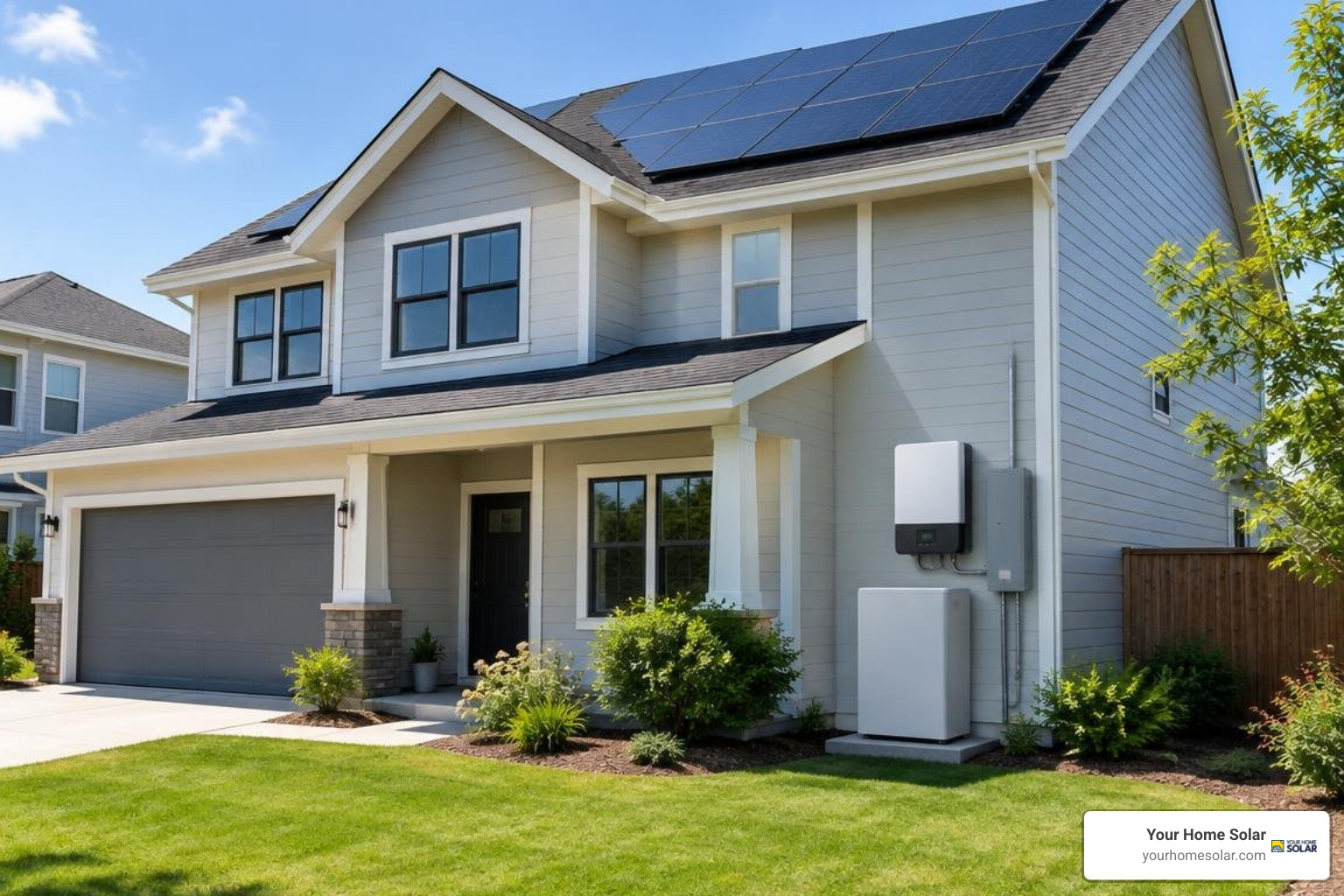
Why a 10kW Hybrid Inverter Can Make Your Home More Resilient
A 10kW hybrid inverter converts solar power into usable electricity while managing a battery and the utility grid. It can help an East Tennessee home use more of its own solar energy, lower grid use, and keep selected circuits running when an outage occurs.
Before choosing one, focus on these essentials:
- Match the inverter to your home’s electrical service and peak power needs.
- Confirm its solar input voltage and maximum DC capacity fit your current and future panel array.
- Choose compatible battery storage based on the backup time you want.
- Verify fast backup transfer, UL grid-interconnection certification, and FCC compliance.
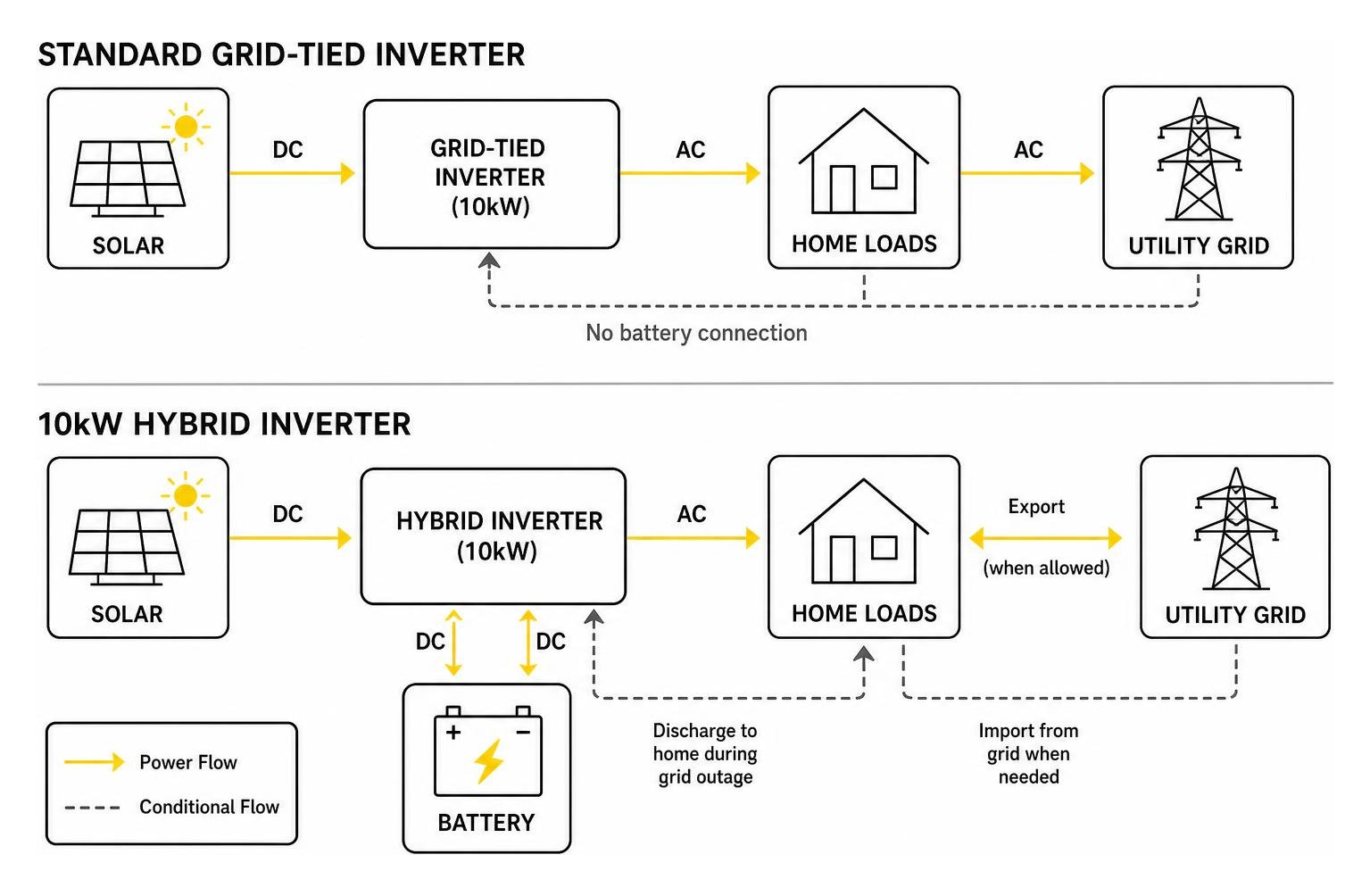
Unlike a standard grid-tied inverter, a hybrid model can send solar energy to household loads, charge a battery, export excess power when allowed, and draw from the battery during a grid outage. That added control makes it a practical fit for homeowners who want savings and backup power, rather than solar production alone.
I’m Ernie Bussell, founder and CEO of Your Home Solar. My experience leading solar operations and building dependable installation processes helps homeowners evaluate a 10kW hybrid inverter as part of a safe, practical long-term energy plan.
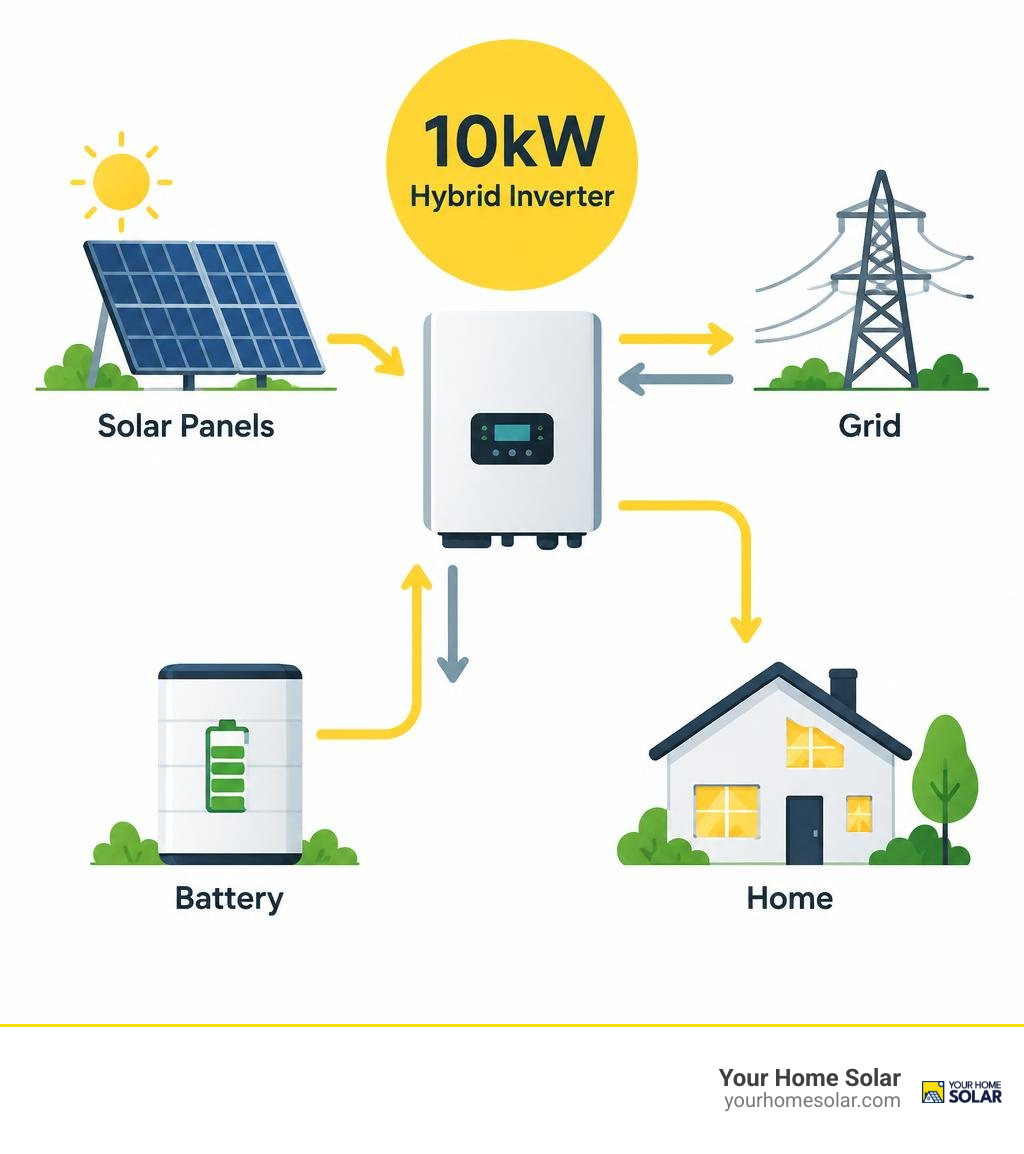
Simple guide to 10kw hybrid inverter terms:
Understanding the 10kW Hybrid Inverter and How It Differs from Standard Inverters
A solar power system is only as capable as its processing core. When homeowners explore understanding modern home solar inverters, they quickly discover two main architectures: conventional grid-tied string units and modern multi-port hybrid systems.
A standard grid-tied inverter performs a singular task: it takes direct current (DC) generated by photovoltaic rooftop panels and converts it into alternating current (AC) synchronized with the local utility grid. However, if the local power grid fails, standard grid-tied systems shut down immediately to prevent hazardous electrical feedback into utility lines. If you want battery storage later, you must add external charge controllers, extra disconnects, and a secondary AC-coupled storage unit.
In contrast, a 10kW hybrid inverter features bidirectional power management and integrated charge controllers. It connects directly to your solar array, high-capacity battery bank, home distribution panel, and the electrical grid through one central enclosure. By intelligently routing electricity in real time, the unit maximizes self-consumption, minimizes expensive peak-rate utility consumption, and produces pure sine wave AC output with total harmonic distortion (THD) under 3% for sensitive electronics.
| Feature / Capability | Standard Grid-Tied Inverter (10kW) | 10kW Hybrid Inverter |
|---|---|---|
| Primary Conversion | DC Solar to AC Home/Grid | DC Solar to AC, DC to DC Battery, Battery DC to AC |
| Grid Outage Operation | Shuts down completely (Anti-islanding) | Automatic switchover to islanded backup mode |
| Battery Integration | Requires separate AC-coupled inverter unit | Built-in native DC battery charging ports |
| Energy Management | Solar generation vs. immediate consumption | Programmable solar, battery, grid, and generator priority |
| Typical Efficiency | 96.5% – 97.5% | 97.0% – 98.2% |
| Emergency Power Switching | Not Supported | 5 ms – 20 ms automatic transfer |
Single-Phase vs Three-Phase Configurations for Homes
When designing a complete residential solar system, matching electrical phase configurations is critical.
- Single-Phase (Split-Phase 120V/240V): Standard single-family homes across East Tennessee utilize split-phase residential service. A single-phase 10kW hybrid inverter outputs two 120V hot legs with a shared neutral wire, delivering 240V across the legs for major appliances like heat pumps, water heaters, and EV chargers, alongside balanced 120V for standard branch circuits.
- Three-Phase (208V/480V): Three-phase inverters distribute power across three alternating live conductors (120° out of phase). These units are engineered for commercial facilities, agricultural processing plants, or heavy three-phase industrial motors.
Installing a three-phase inverter on a residential split-phase panel creates severe line-to-neutral voltage imbalances. For residential properties, a dedicated single-phase/split-phase hybrid inverter delivers seamless panelboard compatibility.
Key Technical Specifications and Performance Metrics
Evaluating hybrid hardware requires understanding the internal engineering specifications that govern performance:
- Maximum Power Point Tracking (MPPT): Modern units incorporate two to three independent MPPT channels. Multiple trackers allow you to place solar strings on different roof orientations (e.g., East and South) without shading or angle differences dragging down total system yield.
- Operating Voltage Windows: Standard MPPT voltage ranges span from 80V–450V to 150V–425V DC, with startup voltages as low as 90V–110V DC. This ensures early morning startup and late evening solar harvest.
- Peak Conversion Efficiency: Industry benchmarks range from 97.0% to 98.2% CEC weighted efficiency, backed by MPPT tracking efficiencies exceeding 99.9%.
- Continuous Output Amperage: A 10kW inverter operating at 240V AC delivers approximately 41.6A to 45A of continuous AC output, supporting up to 60A of continuous utility passthrough current during high-demand surges.
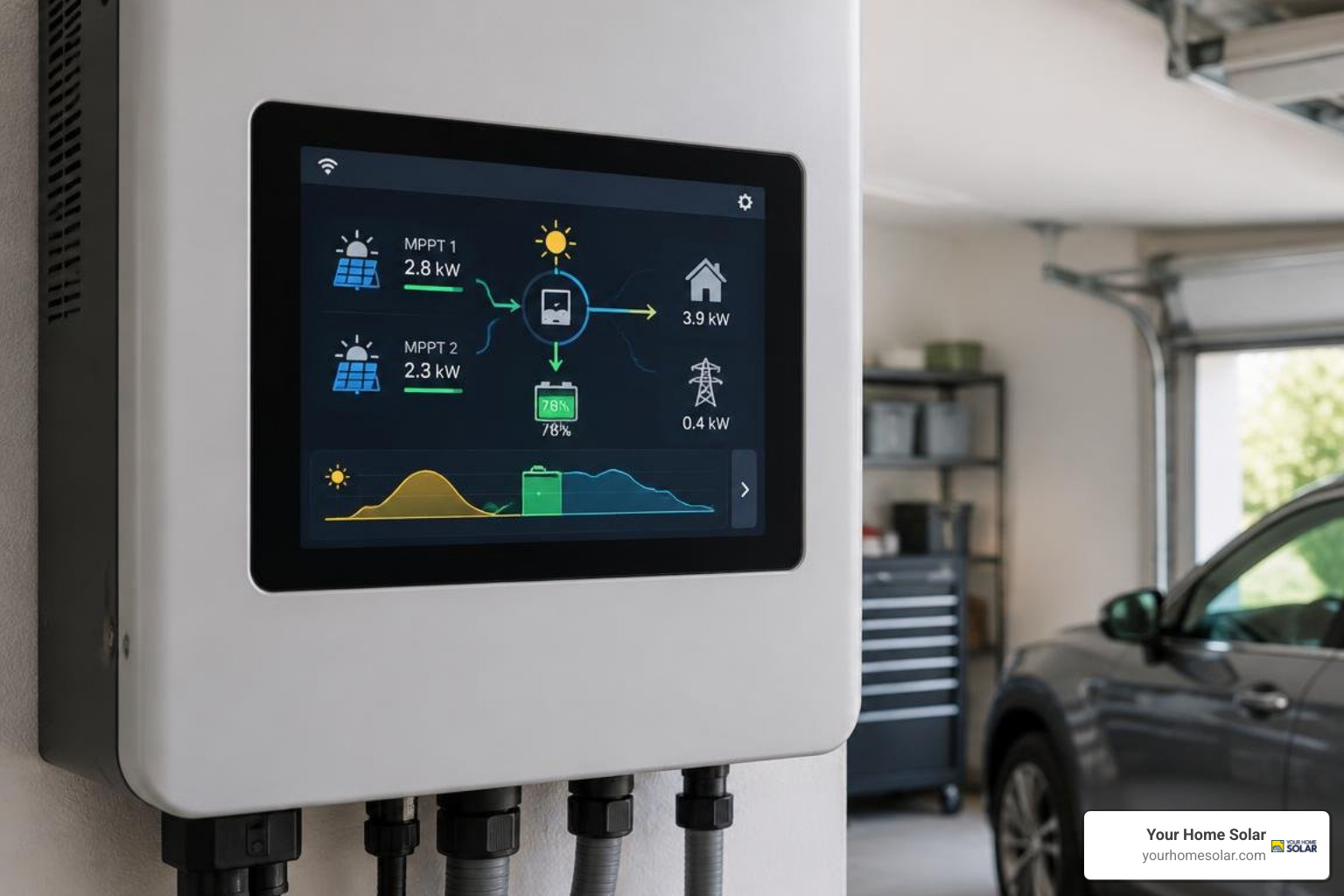
Sizing Solar Panel Arrays for a 10kW Hybrid Inverter
Accurately sizing solar arrays accurately ensures your system operates at peak efficiency. Today’s 10kW inverters support DC input ratings from 13,000W up to 14,850W DC, facilitating DC-to-AC oversizing ratios (often 1.25x to 1.48x).
To build a full 10kW–13kW DC array, you will typically install 24 to 32 modern 400W–450W solar modules divided across two balanced series strings.
Homeowners frequently ask if they can install a 10kW inverter alongside a smaller 5kW starter array (around 12 to 14 panels). You can safely operate this configuration provided the series string voltage exceeds the inverter’s minimum MPPT startup threshold (typically >120V DC). While the inverter operates slightly below its optimal thermal efficiency curve under low loads, it leaves ample headroom for future string additions without replacing the core balance-of-system equipment.
Battery Storage Integration and Charging Dynamics
Connecting modern home energy storage solutions requires selecting the appropriate battery architecture. Most 10kW hybrid units utilize nominal 48V (operating range 40V–60V) low-voltage battery banks or high-voltage DC storage systems.
Homeowners commonly deploy Lithium Iron Phosphate (LiFePO₄) chemistry due to its thermal stability and long cycle life. To sustain whole-home essential loads for 4 hours of backup without solar production, a home drawing a steady 5kW to 8kW load requires approximately 20kWh to 35kWh of usable capacity (typically three to five 51.2V 200Ah modular battery packs).
Sophisticated units allow flexible, scheduled charging dynamics:
- Solar-Priority Mode: Routes all solar generation to residential loads and battery banks before exporting excess power.
- Time-of-Use Arbitrage: Charges storage via off-peak grid power at night and discharges during peak afternoon utility billing periods.
- Backup-Reserve Mode: Keeps the battery fully topped off at 100% state of charge to handle unexpected grid outages.
Reviewing technical specifications for 10kW hybrid solar inverters helps homeowners verify voltage tolerances, charge rates, and equipment compatibility prior to installation.
Seamless Backup Power, Transfer Times, and Grid Switching
When severe weather rolls through the region, grid reliability is put to the test. A primary reason homeowners invest in solar battery and powerwall storage systems is automatic emergency backup.
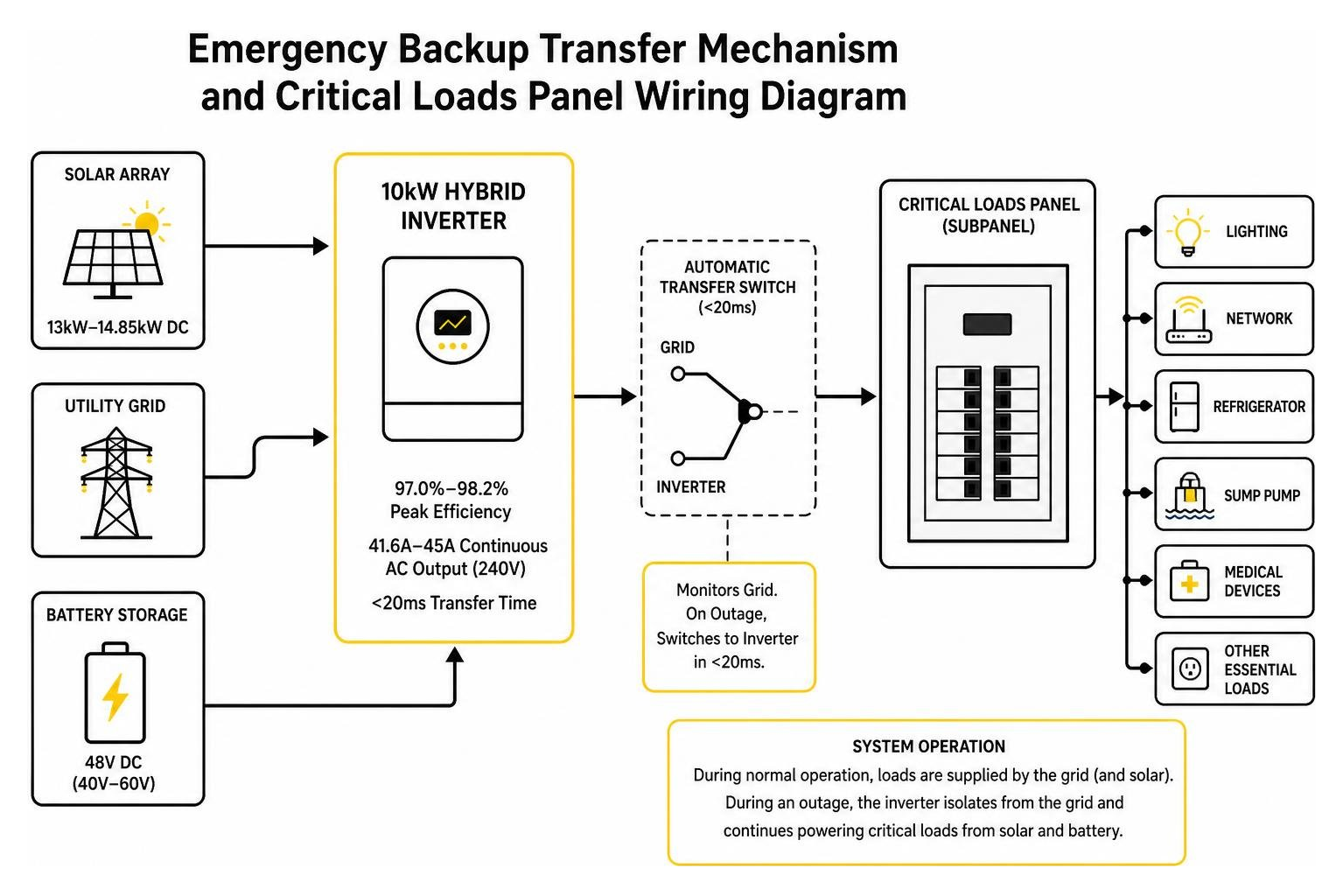
High-grade hybrid inverters feature internal automatic transfer switches with transfer latencies of sub-20ms (with many premium models switching in 5ms to 10ms). This transition speed is faster than the human eye can perceive and prevents desktop computers, Wi-Fi routers, and smart electronics from rebooting.

For whole-home energy security, systems incorporate:
- Critical Loads Subpanels: Isolates essential circuits (refrigeration, medical devices, lighting, water pumps, HVAC controls) to prevent non-essential high-draw appliances from draining storage.
- Anti-Islanding Protection: Instantly disconnects your home from the utility line within milliseconds of grid failure to ensure line workers are safe.
- Black-Start Capability: Restarts the home’s microgrid from dead storage using morning solar production alone.
- Direct Generator Integration: Dedicated AC generator inputs allow standalone gas or diesel generators to charge batteries and supply auxiliary loads during multi-day storms.
Installation Best Practices and Safety Certifications
Safe, high-performance operation requires strict adherence to physical installation guidelines and environmental protections outlined in our realistic solar inverter installation considerations.
- Mounting Surface: Hybrid inverters weigh between 30kg and 60kg (66 to 132 lbs). They must be fastened securely to a solid, non-flammable surface, such as concrete, masonry, or reinforced wood framing with non-combustible backing.
- Ergonomics and Clearances: Units should be installed at eye level for LCD screen visibility. Proper thermal management requires at least 20 cm (8 inches) of unobstructed side clearance and 50 cm (20 inches) of vertical clearance above and below for cooling tunnels.
- Environmental Protections: Quality inverters carry NEMA 4X or IP65 outdoor weather-resistance ratings. However, maintaining ambient operating temperatures between -10°C and 50°C (14°F to 122°F) away from direct sunlight preserves power conversion efficiency and component lifespan.
Safety Standards and Regulatory Compliance for a 10kW Hybrid Inverter
Grid-connected equipment must meet stringent US safety standards. Core certifications every system requires include:
- UL 1741-SA / UL 1741-SB: The standard for grid-interactive inverters, ensuring smart inverter grid-support functions, voltage/frequency ride-through, and anti-islanding compliance.
- IEEE 1547 & IEEE 1547.1: Interconnection benchmarks governing distributed energy resources interfacing with local electric power systems.
- FCC Part 15 Class B: Mandatory federal certification for unintentional radio-frequency radiators operating above 9 kHz. Uncertified budget equipment can emit severe electromagnetic interference that disrupts home Wi-Fi networks and local emergency broadcasts.
- NEC Safety Compliance: Built-in DC Arc Fault Circuit Interruption (AFCI Type 1) and rapid shutdown transmitters to de-energize rooftop wiring to 30V within 30 seconds during emergencies.
Cost Breakdown and Expected Price Ranges in 2026
The market for solar equipment in 2026 offers diverse options across budget, mid-range, and premium tiers. Standalone 10kW inverter hardware prices reflect varying features, surge capacities, and warranty terms:
- Entry/Value Tier ($1,200 – $2,300): Reliable, cost-effective hybrid hardware offering dual MPPT channels, standard grid-interactive capabilities, and basic battery backup compatibility.
- Mid-Range Tier ($3,300 – $3,900): High-efficiency units featuring integrated rapid shutdown transmitters, wider MPPT operating windows, and integrated balance-of-systems components.
- Premium All-in-One Tier ($4,500 – $5,200+): Heavy-duty, high-capacity models offering massive peak surge wattage, direct generator inputs, advanced load management, and sub-10ms transfer speeds.
When evaluating your complete installation budget, check our guide on investing in a 10kW solar system with battery storage along with our solar inverter comparison guide for 2026 to model long-term savings and payback timelines.
Frequently Asked Questions About 10kW Hybrid Inverters
Can I run a 10kW hybrid inverter with only a 5kW solar panel array?
Yes. A 10kW hybrid inverter will run safely with a 5kW array as long as the solar strings meet the minimum MPPT startup voltage (typically 90V–120V DC). This provides a clear path to expand your solar array over time without buying a new inverter.
How many batteries are needed to run a 10kW hybrid inverter during a blackout?
To supply 4 hours of reliable backup power for essential loads (averaging 5kW to 8kW continuous draw), you will need roughly 20kWh to 35kWh of battery capacity. This translates to three to five 51.2V 200Ah LiFePO₄ battery packs wired in parallel.
Does a 10kW hybrid inverter provide uninterrupted power during a utility outage?
Yes. Quality hybrid inverters feature automatic transfer times between 5ms and 20ms. This transition occurs fast enough that critical home appliances, computers, and Wi-Fi networks continue running without interruption.
Conclusion
A 10kW hybrid inverter delivers long-term resilience, flexible battery storage expansion, and optimal energy independence for modern homes. By consolidating solar conversion, dynamic battery management, and sub-20ms grid backup into a single platform, these systems maximize your investment while keeping your power on through any outage.
To explore system designs tailored specifically for your home’s energy goals, review our comprehensive residential guide to solar inverters and connect with the Your Home Solar team today for a tailored, professional evaluation.