Understanding Solar Inverters: Core Functions and DC-to-AC Conversion
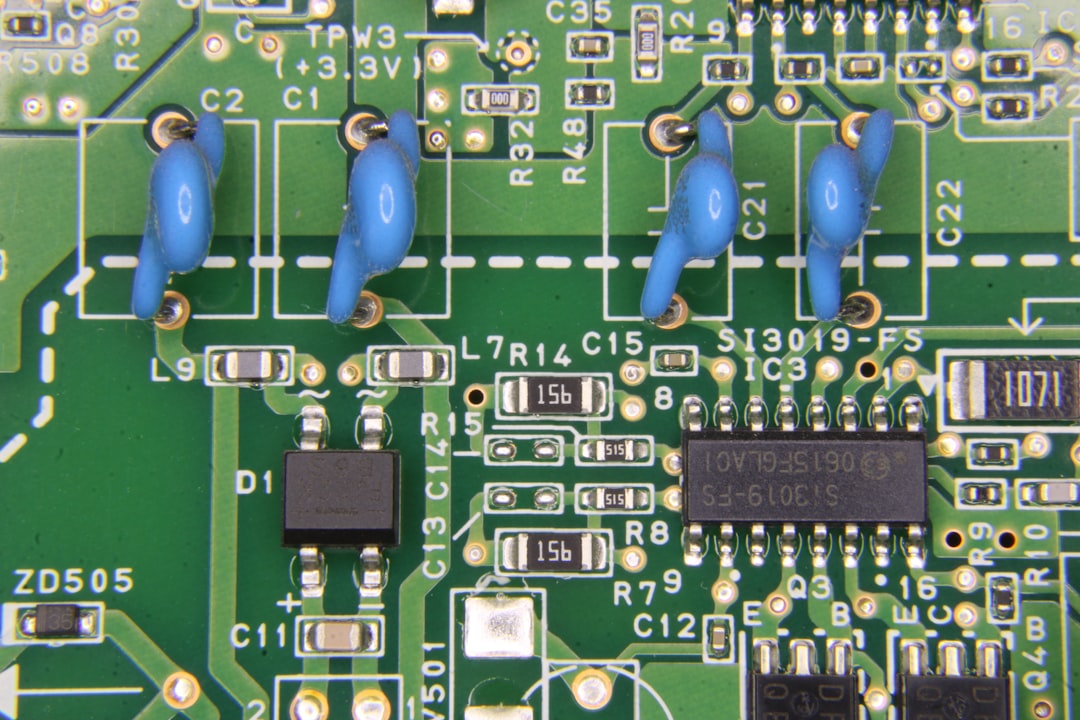
At its core, a solar inverter is the primary power conversion engine of your solar array. While solar panels capture sunlight and generate raw direct current (DC), your home appliances—from refrigerator compressors to delicate home computer networks—rely exclusively on alternating current (AC).
Without high-performance solar inverters, the energy gathered on your roof remains unusable. Beyond basic current conversion, modern units serve as the central brain of your system, constantly monitoring electrical conditions, managing safety protocols, and maximizing overall system yield.
As of recent industry benchmarks, conversion efficiency for state-of-the-art solar inverters has reached impressive heights, routinely topping 98%. Achieving high conversion efficiency ensures that virtually all the clean energy generated by your solar panels translates directly into usable electrical power for your home, minimizing thermal conversion losses.
Understanding how this component operates helps homeowners appreciate why it is referred to as the heart of a solar system. To explore the foundational aspects of this equipment, check out our guide on Understanding Home Inverters and see how it interacts with panel physics in our breakdown on How Solar Panels Work.
How Solar Inverters Process Direct Current into Alternating Current
The transition from direct current to alternating current is a complex process. In direct current, electrons flow continuously in a single, unwavering direction. Alternating current, however, requires electrons to rapidly reverse direction—typically 60 times per second (60 Hz) in North American power grids—creating a smooth sine wave pattern.
Modern solid-state solar inverters achieve this transformation using advanced semiconductor circuitry:
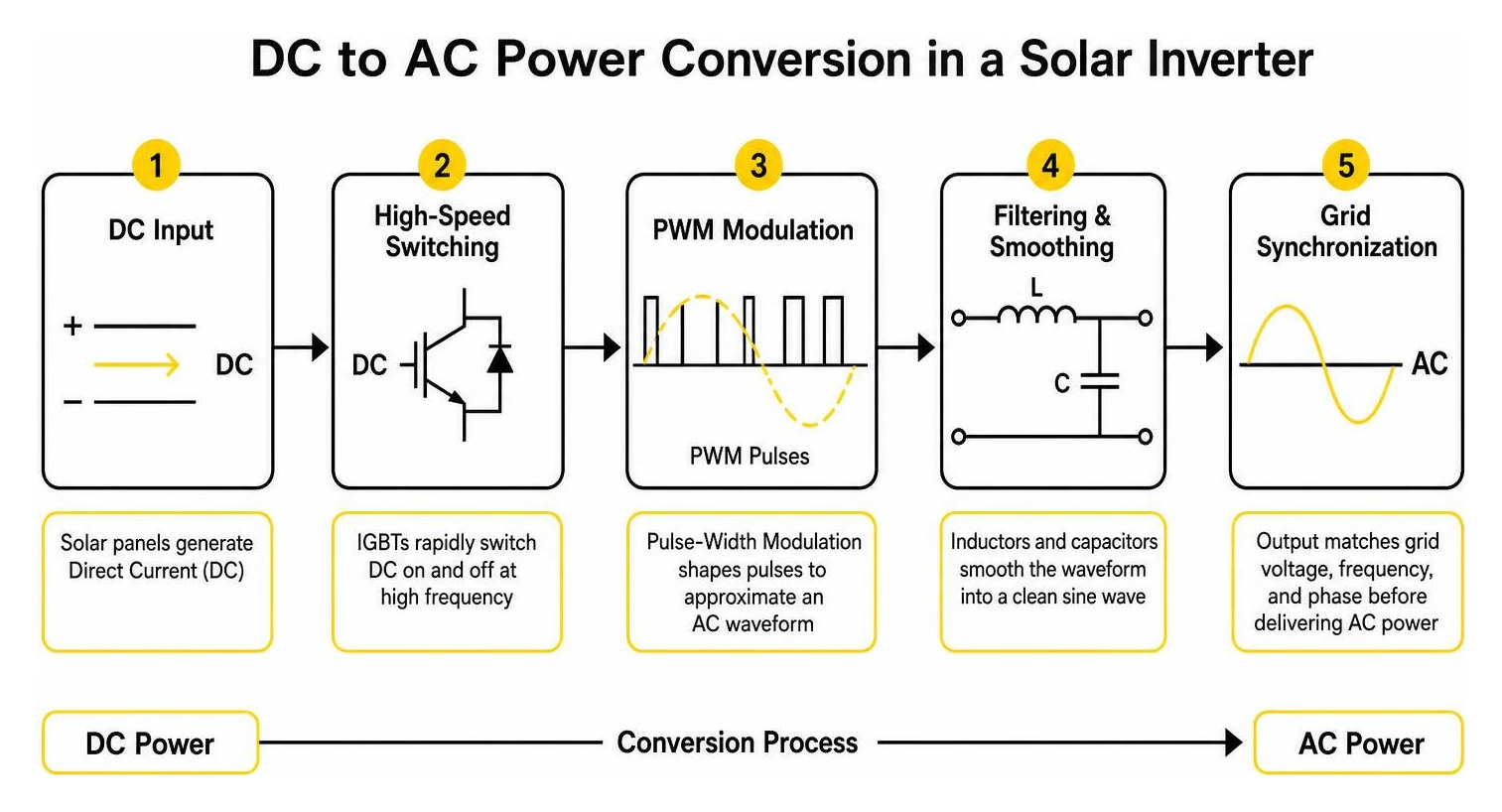
- Solid-State Transistors: High-speed silicon or gallium arsenide switches (such as Insulated Gate Bipolar Transistors, or IGBTs) rapidly toggle the incoming DC voltage on and off thousands of times per second.
- Pulse-Width Modulation (PWM): By precisely varying the width of these high-frequency electrical pulses, the inverter synthesizes a stepped approximation of an AC waveform.
- Filtering and Smoothing: Inductors and capacitors smooth out these rough electrical steps, transforming them into a pure sine wave that matches the clean power supplied by utility companies.
- Grid Synchronization: Before sending AC power into your main breaker panel, the unit matches its output voltage, frequency, and phase angle precisely to the electrical grid, ensuring seamless integration.
Maximum Power Point Tracking (MPPT) in Modern Solar Inverters
Solar panel energy output fluctuates constantly throughout the day based on ambient temperature, sunlight intensity, and subtle cloud coverage. A solar panel’s current and voltage relationship is defined by an dynamic current-voltage (I-V) curve. There is only one specific operating point on that curve—the Maximum Power Point (MPP)—where the panel generates its absolute maximum wattage.
This is where Maximum Power Point Tracking (MPPT) comes in. MPPT is an electronic control circuit and software algorithm embedded directly within solar inverters.
The MPPT system continuously samples the panel array’s output, calculates the optimum voltage-to-current ratio, and adjusts the electrical load resistance accordingly.
By constantly tracking shifting weather conditions and optimizing the “fill factor” of the solar array’s output curve, advanced MPPT algorithms ensure your system extracts the maximum possible power yield under all conditions.
Main Types of Solar Inverters Compared
Selecting the right inverter architecture depends on your roof’s layout, shading profile, budget, and power backup needs.
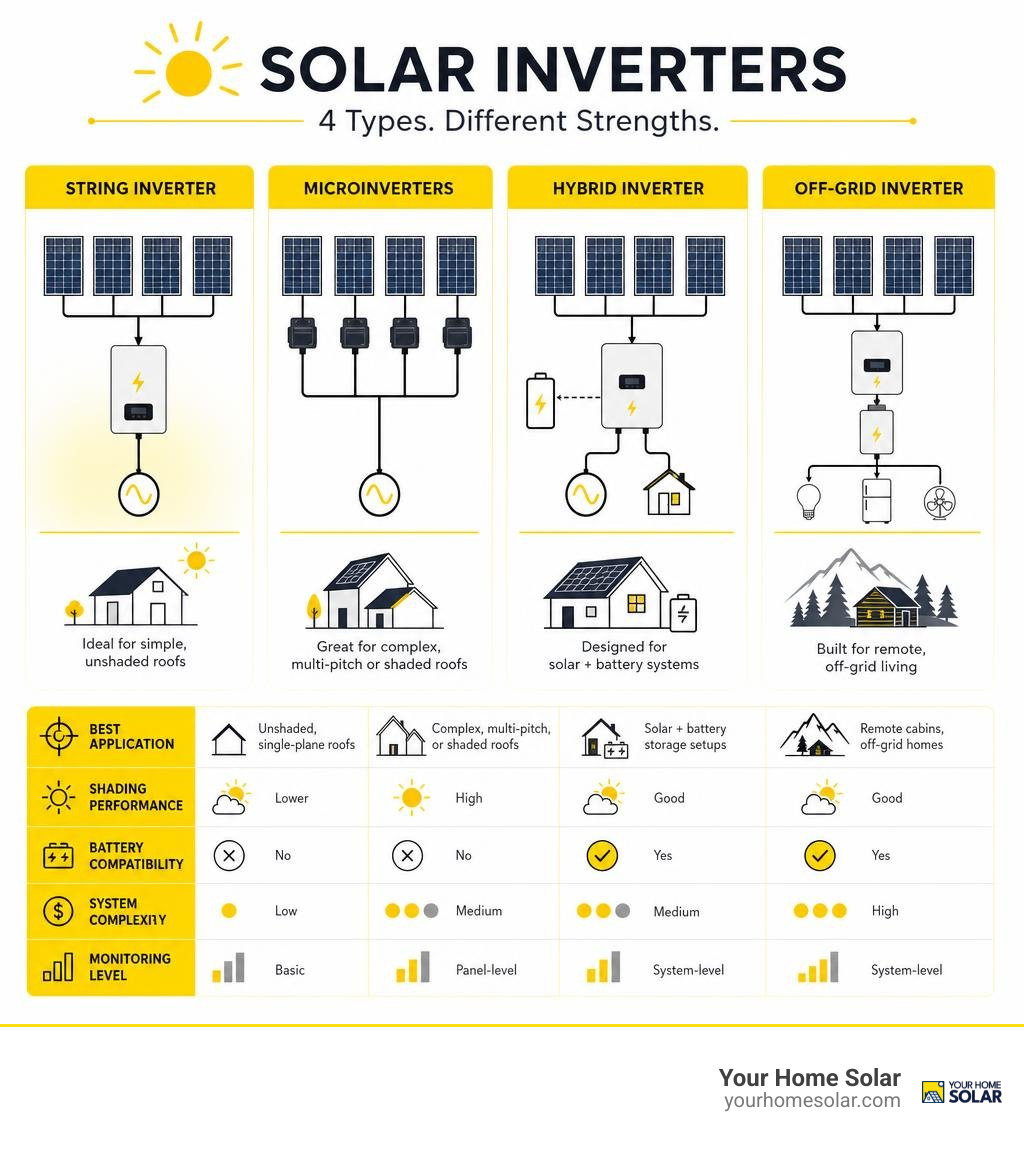
To help navigate these options, explore our detailed breakdown on Different Types of Energy Systems and learn how to integrate storage using our Going Hybrid Guide.
| Inverter Feature | String Inverters | Microinverters | Hybrid Inverters | Off-Grid Inverters |
|---|---|---|---|---|
| Best Application | Unshaded, single-plane roofs | Complex, multi-pitch, or shaded roofs | Solar + Battery storage setups | Remote cabins, off-grid homes |
| MPPT Level | String level (or panel level with optimizers) | Individual panel level | String or panel level | String level |
| Typical Cost Range | €0.05 – €0.17 / Wp ($0.10 – $0.20/W) | ~€0.29 / Wp ($0.35 – $0.50/W) | Medium to High | Varies by split-phase design |
| Expected Lifespan | 10 to 15 years | 20 to 25 years | 10 to 15 years | 10 to 15 years |
| Shading Tolerance | Low (unless paired with optimizers) | Exceptional | Varies by architecture | Low to Moderate |
| Battery Ready? | Requires AC coupling | Requires AC coupling | Native DC or AC battery integration | Direct battery integration required |
String Inverters vs. Microinverters
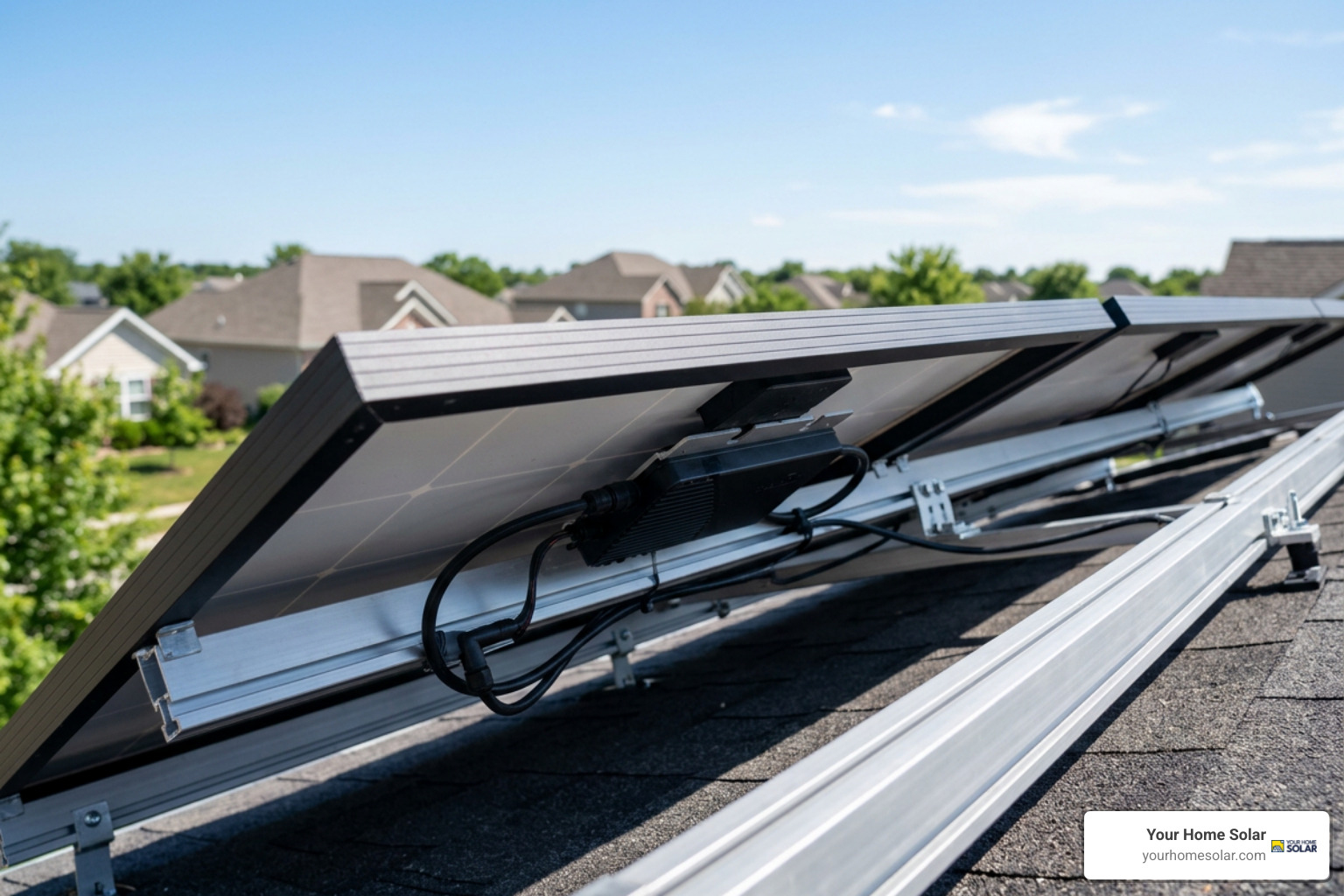
Historically, string inverters have served as the industry standard. In a string inverter system, multiple solar panels are wired together in series—like a string of holiday lights—and connected to a single central unit mounted on an exterior wall.
While string inverters are exceptionally cost-effective (averaging around €0.05 to €0.17 per watt-peak in core hardware costs), they have a notable vulnerability: if a single panel in a string experiences partial shading from a tree branch or chimney, the power output of the entire string drops to match the performance of that weakest panel.
Microinverters eliminate this bottleneck. Installed directly beneath each individual solar panel on your roof, microinverters perform panel-level MPPT conversion right at the source.
If shade falls across one module, the remaining unshaded panels continue operating at peak capacity. Microinverters carry a higher upfront hardware cost (around €0.29 per watt-peak), but they offer exceptional reliability.
Large-scale reliability data tracking 100,000 systems over five years revealed a microinverter failure rate of just 0.0551%, compared to a string inverter failure rate of 0.89% over the same timeframe.
Hybrid Inverters and Battery Storage Integration
If you plan to add energy storage to your home, hybrid solar inverters offer a flexible all-in-one solution. A hybrid inverter combines the functions of a standard grid-tied solar inverter and a battery management system into a single enclosure.
Hybrid units support two primary energy integration methods:
- DC Coupling: Solar panel output flows directly through the inverter’s internal DC charge controller into high-voltage batteries before converting to AC for home use. This eliminates multi-stage electrical conversion losses, maximizing energy efficiency.
- AC Coupling: The inverter accepts AC power generated by external solar sources or the grid to charge the battery bank. If you’re retrofitting batteries into an existing solar installation, review our guide on the AC Coupling Factor 10 Rule to avoid equipment overload.
Advanced hybrid units, such as the Sunny Tripower Smart Energy | SMA Solar, offer intelligent energy management and sub-10-millisecond Emergency Power Supply (EPS) switchover times during grid blackouts.
For larger commercial demands, high-capacity hybrid models like the SolaX X3-AELIO | 49.9K 50K 60K 61K Hybrid Inverter allow up to 10 units to operate in parallel, scaling system power from 49.9 kW up to 600 kW.
Off-Grid and Stand-Alone Inverters
For remote locations without utility grid access, off-grid solar inverters function as complete, self-contained power stations. Unlike grid-tied units that rely on an external utility signal to establish their operating frequency, off-grid inverters synthesize their own independent AC grid voltage.
Key considerations for off-grid inverter setups include:
- Split-Phase Output: North American homes and cabins require split-phase 120V/240V dual output to run standard wall outlets alongside heavy motor loads like deep well pumps or HVAC systems.
- Battery Compatibility: Off-grid units must pair directly with 12V, 24V, or 48V battery bank configurations.
- Pure Sine Wave Output: Clean, low-distortion power is necessary to prevent damage to sensitive electronics, power tools, and compressor motors.
- Integrated Transfer Switches: Built-in transfer switches allow automatic failover to a backup gas or diesel generator when battery levels drop during extended periods of overcast weather.
To design an independent system, check out our guides on choosing an Off-Grid Inverter Guide, sizing systems using our 5000 Watt Inverter Guide, and designing off-grid capacity in our Beyond the Grid Guide.
Key Technical Specifications for Solar Inverter Evaluation
When evaluating datasheets for solar inverters, understanding key electrical specifications ensures you select hardware optimized for long-term production and durability.
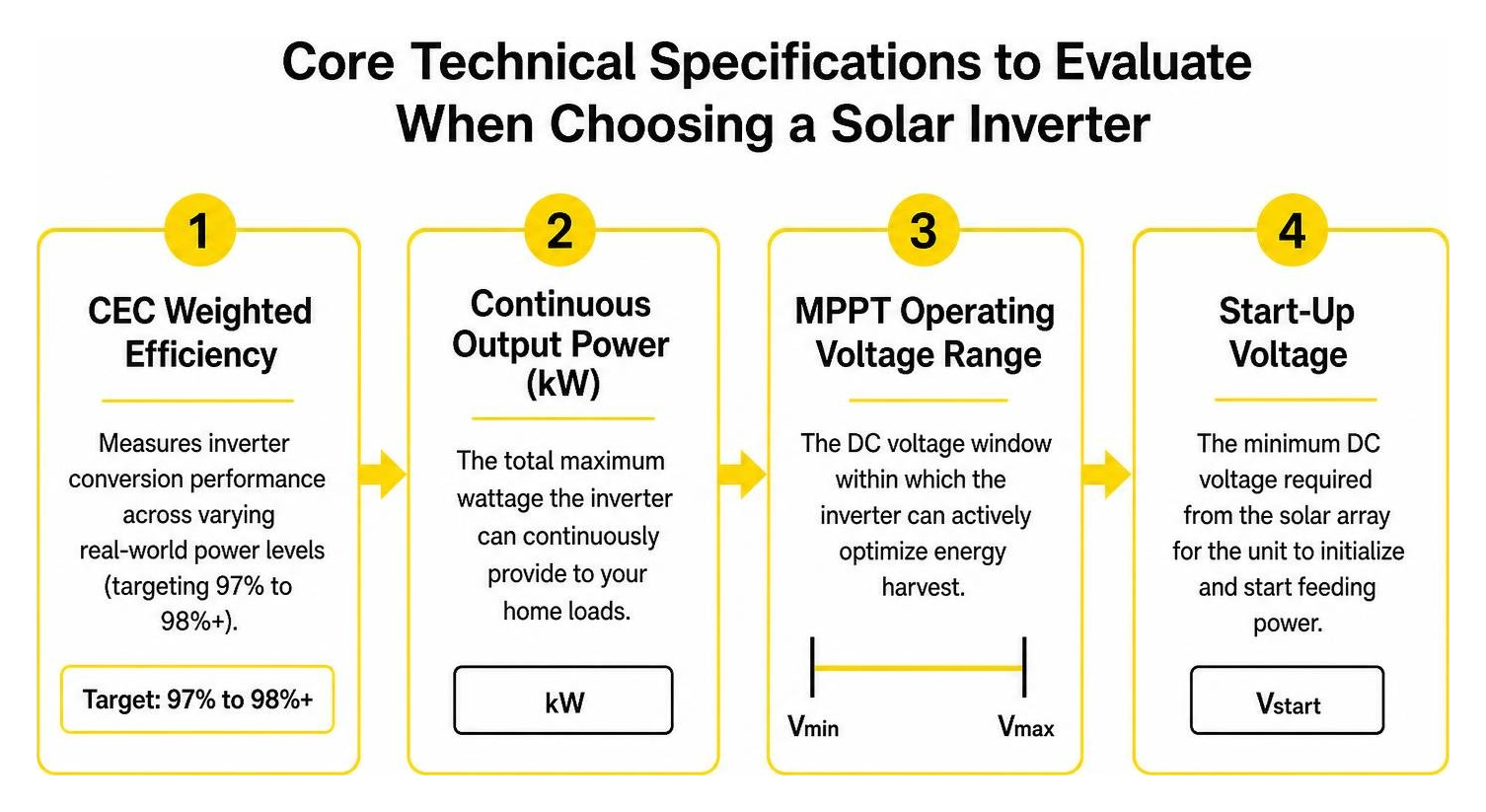
Core Specs Checklist
- CEC Weighted Efficiency: Measures inverter conversion performance across varying real-world power levels (targeting 97% to 98%+).
- Continuous Output Power (kW): The total maximum wattage the inverter can continuously provide to your home loads.
- MPPT Operating Voltage Range: The DC voltage window within which the inverter can actively optimize energy harvest.
- Start-Up Voltage: The minimum DC voltage required from the solar array for the unit to initialize and start feeding power.
- Ingress Protection (IP / NEMA Rating): Enclosure weatherproofing ratings (e.g., NEMA 3R or IP67 for outdoor durability).
- Temperature Derating Threshold: The ambient temperature at which the inverter reduces power output to prevent internal overheating.
Efficiency Metrics and Power Output Ratings
Inverter efficiency is evaluated using two primary industry standards: peak efficiency and weighted efficiency (CEC/European). Peak efficiency represents the maximum conversion percentage achieved under laboratory conditions.
For example, the Tesla Solar Inverter and Solar Shutdown Device Datasheet highlights a peak efficiency of 98.6% at 240 V, alongside a California Energy Commission (CEC) weighted efficiency of 98.0%, reflecting performance across dynamic daily weather variations.
Thermal management plays a big role in maintaining output ratings. Quality inverters utilize heavy aluminum heat sinks or intelligent cooling fans to prevent thermal derating when outdoor temperatures exceed 45°C (113°F).
DC/AC Oversizing Ratios and Voltage Ranges
Solar contractors frequently oversize the DC capacity of a solar panel array relative to an inverter’s nominal AC output rating. The DC/AC oversizing ratio typically ranges between 1.15 to 1.70.
For example, pairing an 8.5 kW DC solar array with a 5 kW AC inverter yields a DC/AC ratio of 1.70. Oversizing ensures that the inverter operates near its maximum power output during low-light conditions in early mornings, late afternoons, or winter months.
Any excess solar generation during peak mid-day hours that exceeds the inverter’s rated AC output is clipped—a minor loss known as “clipping loss,” which is typically outweighed by the shoulder-hour energy gains.
To learn more about sizing ratios and grid interaction, read our guide on Grid-Tied Solar Guide.
Inverter Safety Features, Certifications, and Smart Grid Support
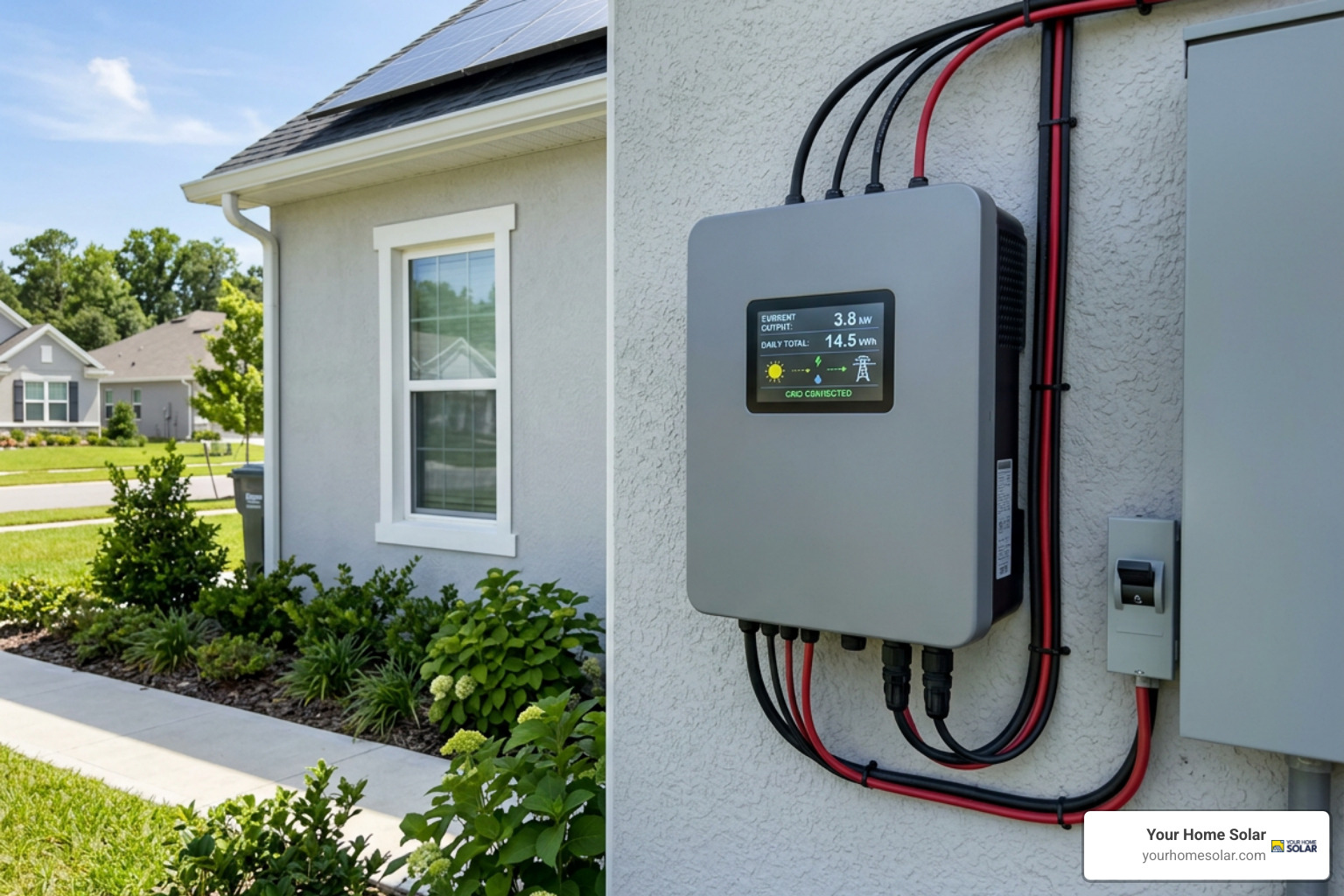
Modern solar inverters are packed with advanced safety features and smart capabilities designed to protect line workers, home wiring, and the regional power grid.
Rapid Shutdown, Anti-Islanding, and Code Compliance
Safety codes established by the National Electrical Code (NEC) dictate strict protective protocols for grid-connected systems:
- Rapid Shutdown (NEC 690.12): Requires roof-level solar array voltage to drop below 30 volts within 30 seconds of system initiation. This ensures that emergency first responders can safely navigate roofs without electrocution hazards. System components like Tesla’s Mid-Circuit Interrupters (MCI) or SolaX’s module-level rapid shutdown relays provide automated rapid shutdown capabilities.
- Anti-Islanding Protection: During a power outage, grid-tied solar inverters must immediately disconnect from the grid within milliseconds. This prevents “islanding”—the dangerous back-feeding of electricity onto local power lines that could injure utility crews working to restore service.
- UL Certifications: Residential models should hold UL 1741 SB certification for grid interconnection safety. For mobile, RV, or marine solar applications, look specifically for UL458 certification, which governs power converters and inverters used in mobile environments.
Smart Smart Inverter Functions and Future Innovations
As solar power adoption expands across East Tennessee, grid operators increasingly rely on smart solar inverters to actively stabilize grid infrastructure. Key smart functions include:
- Reactive Power Support: Traditional power grids lose transmission efficiency when voltage and current fall out of phase. Smart inverters provide dynamic reactive power compensation, smoothing local voltage fluctuations without requiring physical utility equipment upgrades.
- Frequency Response & Ride-Through: Smart inverters can temporarily “ride through” minor local voltage or frequency spikes rather than immediately shutting off, helping maintain regional grid stability.
- Grid-Forming Capabilities: Advanced battery-hybrid inverters feature grid-forming controls, allowing them to establish an independent voltage and frequency signal during blackouts to restart microgrids (a process known as a black start).
- Multi-Channel Microinverters: Products like the X1 MICROINVERTER 4 in 1 G2 | SolaX Power feature four independent MPPT channels in a single compact housing, supporting high-wattage panels (360W to 750W+) while simplifying roof wiring and reducing equipment costs.
- Software-Scalable Capacities: Flexible units such as the PLENTICORE • Kostal Solar Electric feature software-enabled capacity scaling. This allows homeowners to upgrade their output capacity (e.g., from 4 kW to 7 kW) via software keys as energy demands grow, eliminating the need to replace physical hardware.
How to Choose the Right Solar Inverter for Your Application
Selecting the right inverter hardware involves matching your energy demands, roof layout, and future growth plans:
- Assess Shading and Roof Angles: If your roof features complex angles, multiple dormers, or partial shade from nearby trees, microinverters are an ideal choice to maximize individual panel performance. For clear, south-facing roof planes, a string inverter offers high performance at a lower upfront cost.
- Determine Backup Power Requirements: If you want continuous power during grid outages, select a hybrid inverter equipped with battery storage and sub-10ms automatic switchover features.
- Account for Future Expansion: If you plan to add an electric vehicle charger, heat pump, or additional panels later, select an inverter with high DC/AC oversizing capability or modular expansion support.
- Verify Local Utility Grid Standards: Ensure your inverter hardware satisfies utility interconnection guidelines across Tennessee power providers.
Frequently Asked Questions about Solar Inverters
What is the average lifespan of a solar inverter?
Central and string solar inverters typically carry an operational lifespan of 10 to 15 years and usually require a scheduled replacement once during a solar panel system’s 25 to 30 year lifespan. Microinverters are built to match panel longevity, commonly featuring 20 to 25 year manufacturer warranties.
Can I add battery storage to an existing solar inverter?
Yes. You can integrate energy storage into an existing solar installation using an AC-coupled battery architecture. In an AC-coupled system, a separate storage inverter manages battery charging directly from your home’s main AC panel, allowing you to add storage without removing or replacing your existing string inverters or microinverters.
Why do grid-tied solar inverters shut down during blackouts?
Standard grid-tied solar inverters automatically shut down during utility outages due to mandatory anti-islanding safety protocols. This prevents your system from back-feeding high-voltage electricity into neighborhood power lines, protecting utility personnel working on repairs.
To maintain continuous power during a grid outage, your system must include a hybrid or off-grid inverter paired with battery storage and an automated isolation switch.
Conclusion
Your inverter selection directly impacts your solar energy yield, backup power capabilities, and long-term system ROI. Whether you choose string inverters, microinverters, or hybrid systems, choosing equipment optimized for your roof layout and household energy profile ensures reliable performance for decades to come.
At Your Home Solar, we provide tailored home energy solutions across East Tennessee—including Knoxville, Oak Ridge, Maryville, Johnson City, Kingsport, and surrounding communities.
Our team specializes in designing custom solar, battery backup, generator, and EV charging setups built around trusted industry expertise and 100% customer satisfaction.
To explore your equipment options and build an optimized home energy setup, dive into our complete resource: The Ultimate Guide to Solar Inverters. Ready to evaluate options for your home? Contact our expert team today for a custom system design!