Why Your Off-Grid Solar Power Inverter Is the Most Important Decision You’ll Make
Choosing the right off grid solar power inverter is the single most critical decision in any off-grid system build — get it wrong, and your whole setup underperforms or fails when you need it most.
Here’s a quick answer if you’re in a hurry:
| What You Need | Quick Answer |
|---|---|
| Best inverter type | Pure sine wave, low-frequency |
| Recommended size for whole home | 12 kW–15 kW continuous |
| All-in-one vs. modular | AIO for simplicity; modular for redundancy |
| Best battery pairing | 48V LiFePO4 lithium |
| Typical kit cost (2026) | $8,000–$15,000+ depending on scale |
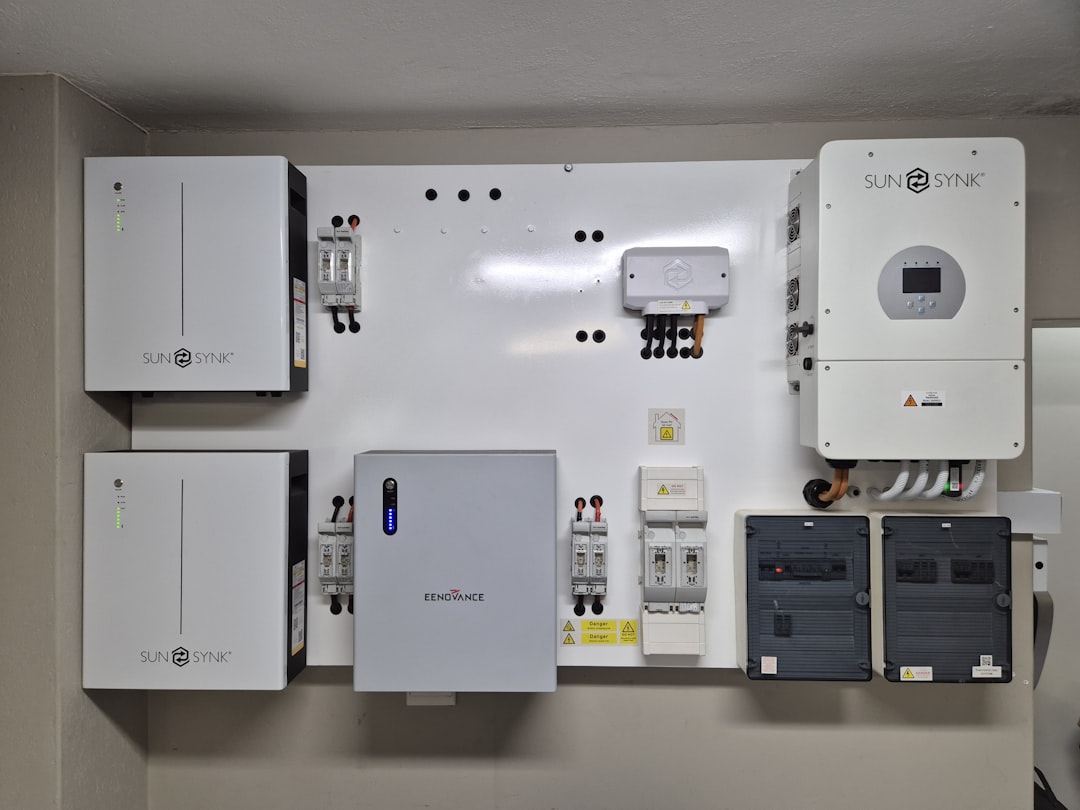
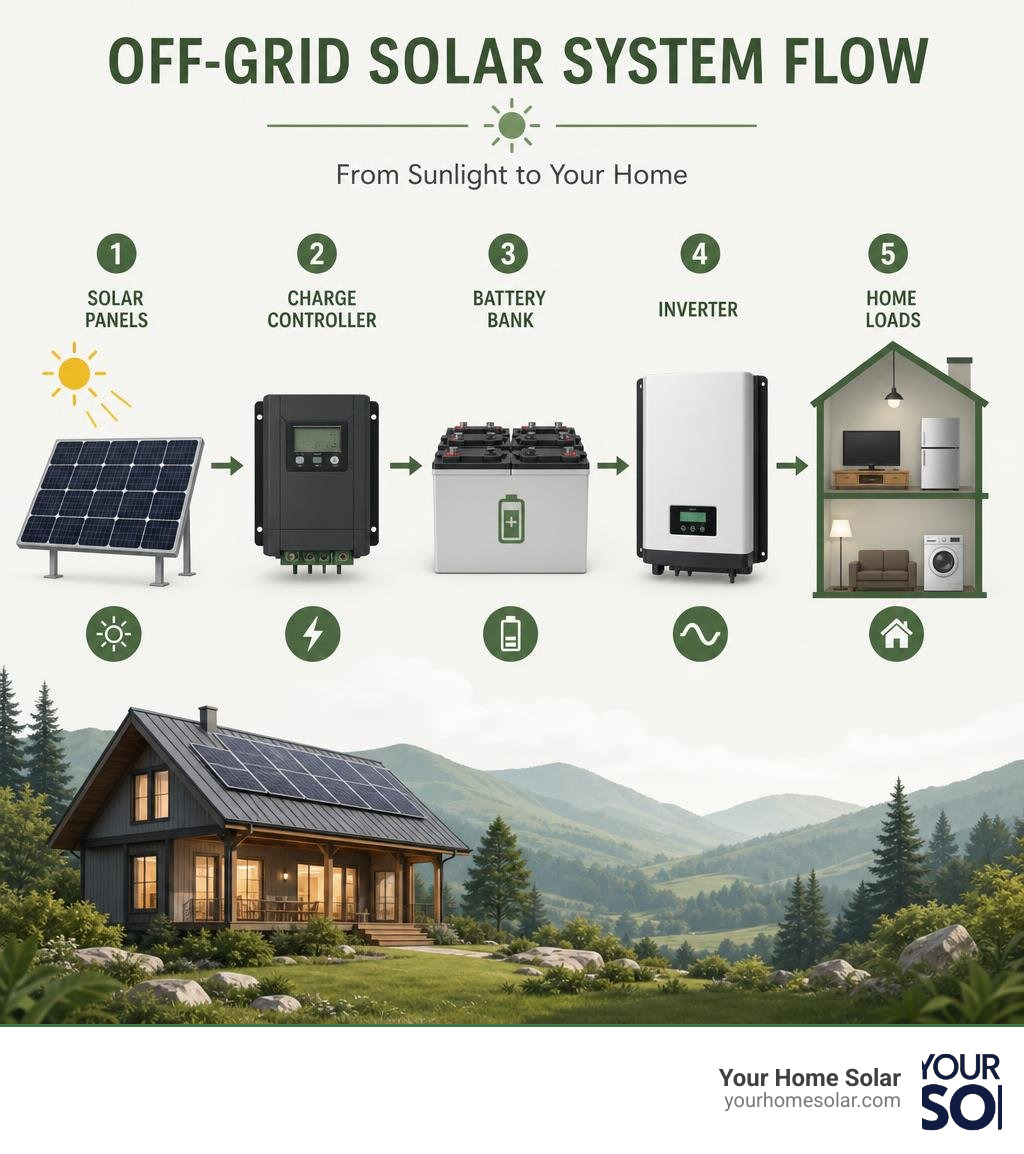
An off-grid solar power inverter converts DC electricity — stored in your battery bank or produced directly by your solar panels — into the AC power your home appliances actually use. Without it, your solar setup is just a pile of panels sitting in the sun doing nothing for your refrigerator, lights, or well pump.
For East Tennessee homeowners thinking about energy independence, the stakes are real. Power outages in this region aren’t rare, and the cost of staying connected to the grid keeps climbing. A properly sized off-grid inverter system means your home keeps running no matter what’s happening on the utility lines.
But with dozens of models, specs, and configurations on the market, knowing where to start is genuinely confusing.
This guide cuts through the noise. I’m Ernie Bussell, founder and CEO of Your Home Solar — East Tennessee’s leading solar contractor — and my background spans nuclear-grade quality assurance in the U.S. Navy, a decade in education, and hands-on leadership scaling a $40 million per year solar operation, all of which I now apply every day to help homeowners design off grid solar power inverter systems they can actually rely on. Let’s walk through everything you need to know to make a confident, informed decision.
Simple off grid solar power inverter glossary:
What is an Off-Grid Solar Power Inverter?
To understand how an off grid solar power inverter works, it helps to think of it as the brain of your independent power station. While solar panels collect sunlight and turn it into Direct Current (DC) electricity, and batteries store that DC power for later, your household appliances run on Alternating Current (AC).
An off-grid inverter’s primary job is DC-to-AC conversion. However, unlike standard inverters, an off-grid model is engineered to operate in complete isolation from the utility grid. It has to establish its own stable voltage and frequency grid profile from scratch, managing the flow of power from the sun and the batteries to keep your lights on.
This level of responsibility makes it The Heart of Your Solar System: Understanding Home Inverters. As technology has advanced, researchers have focused heavily on making these devices smarter and more efficient. For example, recent ORNL Hybrid Inverter Research highlights how advanced inverter topologies can seamlessly integrate local energy sources, manage heavy loads, and support local microgrids—principles that directly improve the reliability of modern off-grid systems.
How It Differs From Grid-Tied and Hybrid Inverters
Understanding the differences between inverter types is crucial for choosing the right equipment:
- Grid-Tied Inverters: These are designed to work in lockstep with the utility company. They do not connect to batteries. Instead, they send solar power directly to your home loads or back to the grid for net metering credits. Because they rely on the grid to match their AC wave, grid-tied inverters automatically shut down during a power outage to prevent backfeeding electricity onto lines where utility employees might be working.
- Off-Grid Inverters: These operate entirely independently of the utility grid. They require a battery bank to function, as they cannot pull power from the grid to stabilize fluctuations. If the sun isn’t shining and your batteries are empty, an off-grid inverter will shut down unless a backup generator is connected.
- Hybrid Inverters: These represent a middle ground. They can connect to solar panels, a battery bank, and the utility grid simultaneously. They offer the grid-tied benefit of net metering while retaining the ability to disconnect from the grid and run on battery backup during an outage.
For true energy self-sufficiency in remote areas of East Tennessee—such as cabins nestled in the Smoky Mountains or homesteads off the beaten path in Cumberland County—a dedicated off-grid configuration is often the most practical and cost-effective choice.
Types of Off-Grid Inverters and Sizing for Whole-Home Use
Not all off-grid inverters are built the same. The internal components and design philosophy determine what kind of appliances they can power and how long they will last under heavy workloads.
Pure Sine Wave vs. Modified Sine Wave Off-Grid Solar Power Inverter
When DC is converted to AC, the resulting electrical wave can take different shapes:
- Modified Sine Wave (MSW): These inverters produce a choppy, stair-step electrical wave. While they are inexpensive, this rough waveform creates high Total Harmonic Distortion (THD), typically between 20% and 40%. This distortion causes sensitive electronics to buzz, runs motors hotter, and can even damage appliances like microwaves, refrigerators, and medical equipment over time.
- Pure Sine Wave (PSW): These inverters produce a smooth, continuous wave that is identical to—or cleaner than—the utility power coming out of your wall outlets. With a THD of ≤3%, pure sine wave models allow appliances to run faster, quieter, and cooler.
For a whole-home system, a pure sine wave inverter is non-negotiable. If you are building a small camper setup or a simple hunting shed, a compact unit like the Renogy 12V 3000W Pure Sine Wave Inverter is an excellent choice for clean, reliable power on a smaller scale. However, for a full-sized residence, you will need to look at larger, higher-voltage options.
Low-Frequency vs. High-Frequency Off-Grid Solar Power Inverter
The physical design of the inverter’s internal transformer defines its performance characteristics:
- Low-Frequency (LF) Inverters: These use massive copper transformers. They are heavy, expensive, and have slightly lower peak efficiency, but they are incredibly durable. Their primary advantage is an exceptional surge capacity—often up to 300% of their continuous rating for several seconds. This makes them ideal for handling heavy inductive motor loads, such as deep well pumps, air conditioners, and air compressors.
- High-Frequency (HF) Inverters: These use electronic switching and smaller transformers. They are lightweight, highly efficient under light loads, and less expensive to manufacture. However, their surge capacity is typically limited to 150% to 200% for only a fraction of a second.
If your East Tennessee home relies on a high-horsepower well pump, a heavy-duty LF unit like the HV-PV series Off-grid vertical low frequency inverter with built-in MPPT controller will easily handle the massive startup surge that might trip a standard high-frequency inverter.
Sizing Your Inverter: Continuous vs. Surge Capacity
Sizing an off grid solar power inverter requires looking at two distinct numbers:
- Continuous Capacity: The total wattage the inverter can output indefinitely. To calculate this, list all the appliances you plan to run simultaneously (e.g., refrigerator, lights, internet router, TV, and washing machine) and add their running wattages together.
- Surge Capacity: The maximum power the inverter can deliver for a brief moment (usually 2 to 10 seconds) to start electric motors. A 3-horsepower well pump or a central air conditioning compressor can draw up to three to five times its running wattage for the first second it turns on.
| Feature | Low-Frequency (LF) Inverters | High-Frequency (HF) Inverters |
|---|---|---|
| Transformer Type | Large, heavy copper transformer | Small electronic high-frequency transformer |
| Surge Capacity | Up to 300% (ideal for motor startups) | 150% to 200% (short duration) |
| Weight | Heavy (often 80+ lbs) | Lightweight (often under 40 lbs) |
| Idle Consumption | Higher idle power draw | Very low idle power draw |
| Best For | Well pumps, HVAC, workshops | Electronics, lights, high-efficiency homes |
For a standard 2,000-square-foot off-grid home, we typically recommend an inverter capacity of 12 kW to 15 kW continuous. This range provides a comfortable safety margin, allowing you to run standard household appliances, kitchen tools, and water pumps without worrying about overloading the system.
All-in-One (AIO) Inverters vs. Modular Component Setups
When planning your system, you have to choose between two main structural approaches: an All-in-One (AIO) unit or a modular component setup. Understanding this choice is a major part of planning Beyond the Grid: A Comprehensive Guide to Off-Grid Solar Panel Systems.
- All-in-One (AIO) Inverters: These combine the inverter, the solar charge controller, and often the battery charger into a single pre-wired cabinet. They drastically simplify installation, save wall space, and lower upfront labor costs.
- Modular Component Setups: This approach uses separate, dedicated units for the inverter, the Maximum Power Point Tracking (MPPT) charge controllers, and monitoring systems. While more complex to wire, modular setups offer excellent system redundancy. If one component fails, you only have to replace that specific part rather than taking down your entire power system.
The Role of Built-In MPPT Solar Charge Controllers
An MPPT (Maximum Power Point Tracking) solar charge controller is the link between your solar panels and your batteries. It tracks the optimal voltage and current of your solar array to harvest the maximum possible energy, even on cloudy days in East Tennessee.
Modern AIO systems integrate highly efficient MPPTs. For instance, the Qoltec Hybrid Solar Inverter Off-Grid 11000W features a built-in 160A MPPT controller that ensures up to 99% efficiency in converting solar energy into usable battery storage. Having this built-in capability simplifies system design, as you do not need to size, mount, and wire external charge controllers separately.
Top-Tier Off-Grid Inverter Models for 2026
For whole-home off-grid power, several excellent options stand out in 2026:
- EG4 12000XP: This high-capacity, transformer-free hybrid inverter has quickly become a industry favorite. It delivers 12,000W of continuous split-phase output (120V/240V) and can handle an impressive 24,000W of PV input across its dual MPPTs. It is highly scalable, supporting up to 16 units in parallel. You can explore its full specifications here: EG4 12000XP Off-Grid Inverter.
- SunGoldPower Inverters: Known for rugged, budget-friendly low-frequency designs, these units are ideal for properties with heavy motor loads. They offer split-phase pure sine wave performance with high surge capacity. You can browse their line of robust equipment here: SunGoldPower Off Grid Solar Inverter.
- Victron MultiPlus & Quattro: The gold standard for modular, ultra-reliable, and quiet systems. They are highly customizable and favored by off-grid purists who want maximum control over their power flows.
Battery Pairing, Autonomy, and System Safety
An off grid solar power inverter cannot run without a battery bank to stabilize the system.

In 2026, Lithium Iron Phosphate (LiFePO4) is the undisputed king of off-grid battery chemistry. Compared to old-school lead-acid batteries, LiFePO4 batteries offer a longer lifespan (often 10 to 15 years), a deeper depth of discharge (up to 90-100% without damage), and zero maintenance requirements. To learn more about how these battery banks function, check out Beyond the Grid: How Solar Battery Banks Keep Your Lights On.
When designing your battery bank, you need to calculate your days of autonomy — the number of days your system can run on battery power alone when there is zero solar production (such as during a heavy winter storm in the Smoky Mountains). For most residential systems, we recommend sizing your battery bank to provide at least 1.5 to 2 days of autonomy.
Safety, Monitoring, and Installation Considerations
Building a safe off-grid system requires paying close attention to several key technical factors:
- Closed-Loop BMS Communication: Ensure your inverter can communicate directly with your battery’s Battery Management System (BMS) via CAN or RS485 protocols. This closed-loop communication allows the battery to tell the inverter exactly how much current it can safely accept, preventing overcharging and extending battery life.
- UL Listing and Code Compliance: Your inverter should carry recognized safety certifications, such as UL 1741, to ensure it meets strict electrical safety standards.
- Rapid Shutdown (NEC 690.12): Even in off-grid locations, safety comes first. Rapid shutdown devices allow first responders to quickly de-energize the solar array on your roof in the event of an emergency.
- Parallel Stacking: If your power needs grow, choose an inverter that supports parallel stacking. This allows you to link multiple units together to increase your continuous output capacity.
Frequently Asked Questions About Off-Grid Inverters
How do I estimate daily energy use for a new off-grid build?
When you don’t have an existing utility bill to look at, you must perform a comprehensive load calculation. List every appliance you plan to use, look up its wattage (usually found on a label on the back or bottom of the device), and estimate how many hours per day it will run. Multiply the watts by the hours to find the daily Watt-hours (Wh) for each device, then add them all together and divide by 1,000 to get your total daily kilowatt-hours (kWh).
What are realistic cost ranges for complete off-grid kits in 2026?
A complete, high-quality off-grid kit—including a 12 kW to 15 kW inverter, a 10 kW to 12 kW solar array, mounting racking, and 20 kWh to 30 kWh of LiFePO4 battery storage—typically ranges from $8,000 to $15,000+ for equipment alone, depending on the scale and brand of components chosen. Installation labor and permitting will add to this baseline.
Can I run a whole-house AC on an off-grid inverter?
Yes, but you must plan for the initial startup surge. Central air conditioning compressors draw massive inrush currents. To protect your inverter and prevent system trips, we highly recommend installing a soft starter on your AC unit. A soft starter gradually ramps up the compressor motor, reducing the startup surge by up to 60-70% and allowing a standard 12 kW inverter to handle the load comfortably.
Conclusion
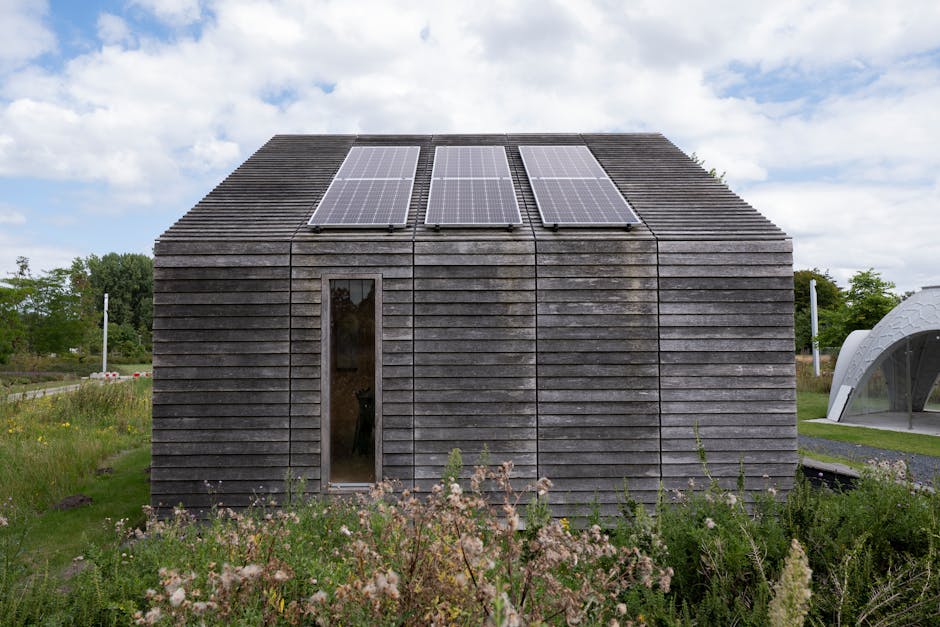
Investing in an off grid solar power inverter is the foundation of true energy self-sufficiency. Whether you are building an off-grid homestead in Sevier County, setting up a backup system for your home in Knoxville, or seeking complete utility independence in the beautiful mountains of East Tennessee, getting your inverter right ensures your home remains a safe, comfortable paradise no matter what happens on the grid.
At Your Home Solar, we specialize in helping our neighbors navigate these complex technical decisions. We don’t believe in one-size-fits-all packages; instead, we focus on delivering tailored, high-performance solar solutions designed for 100% customer satisfaction.
Ready to take the next step toward energy independence? Contact us today to discuss your project and get a custom quote on Your Home Solar Residential Solutions. Let’s build a reliable, self-sufficient energy future together!