What is a Hybrid Solar Setup and How Does It Work?
If you want to protect your home from sudden blackouts while keeping your monthly utility bills as low as possible, a hybrid solar setup is the ultimate solution.
Unlike older systems, a hybrid configuration connects directly to the local utility grid while keeping a dedicated battery bank on standby. This means you can run your home on free sunshine, store excess power for nighttime or high-rate hours, and instantly switch to battery backup if the local power grid goes down.
Quick Summary: What is a Hybrid Solar Setup?
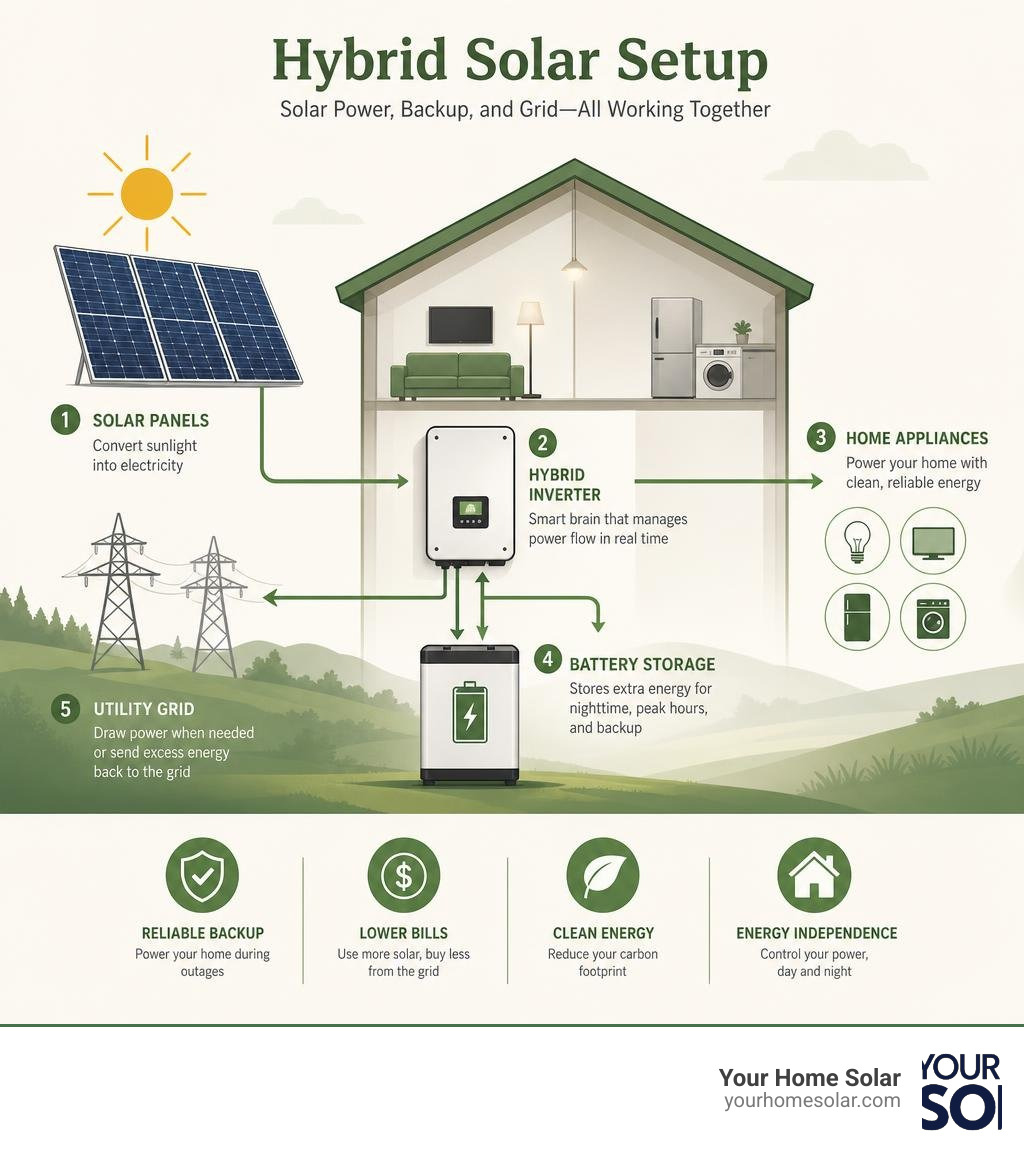
- The Grid Connection: Keeps you connected to your local utility company so you can draw extra power when needed or sell your excess energy back to the grid.
- The Battery Storage: Stores extra daytime solar energy for nighttime use, peak rate periods, or emergency backup.
- The Smart Inverter: Constantly directs power between your solar panels, your home, your batteries, and the utility grid in real time.
- The Big Benefit: It provides the absolute lowest operating costs of any solar configuration, paired with a reliable safety net during regional blackouts.
I’m Ernie Bussell, the founder and CEO of Your Home Solar here in East Tennessee. My background operating nuclear missile systems in the U.S. Navy and managing massive solar operations taught me exactly how to design a safe, reliable, and highly efficient hybrid solar setup that actually delivers on its promises.
Hybrid solar setup terms explained:
To truly appreciate a hybrid solar setup, it helps to understand the landscape of residential solar. When you decide to go solar, you typically choose between three main configurations.
Historically, homeowners installed basic grid-tied systems. While affordable, these systems have a major vulnerability: when the utility grid goes down, your power goes down too—even if the sun is shining bright. On the other end of the spectrum is off-grid solar, which completely detaches you from the utility company but requires massive, expensive battery banks to guarantee you never run out of juice during a week of rainy weather.
A hybrid solar system is the “Goldilocks” solution. It pairs the cost efficiency and safety net of the local grid with the independent security of a battery backup. By Understanding Different Types of Residential Solar Energy Systems, you can see how the hybrid model blends the best of both worlds.
| Feature | Grid-Tied Solar | Off-Grid Solar | Hybrid Solar Setup |
|---|---|---|---|
| Grid Connection | Yes | No | Yes |
| Battery Storage | No | Yes (Large) | Yes (Sized to Need) |
| Power During Outages | No | Yes | Yes |
| Upfront Cost | Lowest | Highest | Moderate |
| Energy Independence | Low | 100% | High |
The Mechanics of a Hybrid Solar Setup
At the heart of this system is a highly coordinated dance of electricity. Your Residential Solar Solutions Guide: Comprehensive Guide to Understanding Solar Panels collect sunlight and generate Direct Current (DC) electricity. Because your home appliances run on Alternating Current (AC), this power must be converted.
A hybrid system manages this conversion while executing three primary operating modes:
- Solar Priority Mode (Daytime): Your panels power your home’s immediate electrical loads. Any excess energy is directed to charge your battery bank rather than being sent immediately back to the grid.
- Battery Priority Mode (Nighttime / Peak Hours): When the sun goes down, your home draws power from the stored energy in your batteries. This is particularly valuable if your utility uses Time-of-Use (TOU) rates, allowing you to avoid expensive peak-hour grid charges.
- Grid Failure Mode (Blackouts): If a storm rolls through and knocks out the local power lines, the hybrid system instantly disconnects from the grid (called “islanding”) and runs your critical household loads directly from your batteries and real-time solar production.
By following systematic design principles, we ensure that these transitions occur seamlessly without damaging sensitive home electronics.
Grid-Tied vs. Off-Grid vs. Hybrid: Key Differences
Choosing the right path requires looking at how each system interacts with your local utility.
A standard Grid-Tied Solar: The Smart Way to Power Your Home and Wallet setup is simple and has the lowest initial installation cost. However, its lack of storage means you are entirely reliant on the grid at night.
Conversely, going Beyond the Grid: A Comprehensive Guide to Off-Grid Solar Panel Systems means you have zero utility bills, but you must size your system to handle the worst-case winter weather. This often requires buying double or triple the battery capacity you would normally need. For many, Living Off the Grid: How Solar Energy Can Make It Possible is an exciting dream, but when asking Can My East Tennessee Home Be 100% Off-Grid? It Depends, most local homeowners find that a hybrid setup is much more practical and cost-effective.
Core Components of a Hybrid Solar Kit
If you are looking at a DIY hybrid solar kit or planning a professional installation, you will need to familiarize yourself with the core hardware. A complete kit consists of:
- Solar PV Panels: High-efficiency monocrystalline or bifacial panels that convert sunlight into DC electricity.
- The Hybrid Inverter: The “brain” of the system that manages grid interaction, battery charging, and household power.
- Lithium Battery Bank: High-density storage to hold your power for when you need it most.
- Balance of System (BOS): Rapid shutdown devices, DC/AC disconnects, smart meters, and mounting racks.

Every component must work in perfect harmony. While the panels capture the energy, The Heart of Your Solar System: Understanding Home Inverters is what keeps the power clean, stable, and safe for your family’s daily use.
Choosing the Right Inverter for Your Hybrid Solar Setup
Your inverter selection will dictate what your system can handle. Traditional grid-tied inverters only convert solar power to AC. A true hybrid inverter, however, is a multi-mode device.
When configuring your hybrid solar setup, look for inverters that offer split-phase 120V/240V output. This is crucial for running heavy-duty American household appliances like well pumps, HVAC units, and electric dryers. Additionally, high-quality inverters feature multiple Maximum Power Point Tracking (MPPT) inputs, which optimize the electrical output of your solar panels even if parts of your roof face different directions or experience temporary shading.
For a deeper dive into choosing the right technology, consult our Residential Solar Solutions Guide: The Ultimate Guide to Solar Inverters.
Battery Storage Options: Capacity, Chemistry, and Placement
The battery bank is where your energy independence lives. Today, Lithium Iron Phosphate (LiFePO4) is the undisputed king of residential solar chemistry. Unlike older lead-acid batteries, LiFePO4 batteries offer:
- Longer Lifespan: Often rated for 6,000 to 7,000+ complete charge cycles (easily lasting 15+ years).
- Higher Depth of Discharge (DoD): You can safely use up to 80-90% of a lithium battery’s capacity without damaging its lifespan, compared to just 50% for lead-acid.
- Safety: LiFePO4 is chemically stable and does not suffer from the thermal runaway risks associated with other lithium-ion chemistries.
When planning your storage, you can choose modular server rack batteries or wall-mounted “powerwall” units. If you plan to install your batteries in an unconditioned garage or outdoors, ensure they have built-in heating elements, as lithium batteries cannot safely charge in freezing temperatures.
To compare your options, check out Everything You Need to Know About Residential Solar Battery Types – What’s Best? and our In-Depth Guide to Solar Battery Backup Comparison.
Weighing the Pros and Cons of Hybrid Solar
Before committing to a hybrid solar setup, it is wise to look at the complete picture.
The Pros:
- True Energy Security: You have continuous power during grid failures.
- Optimized Self-Consumption: You use more of your own clean energy rather than selling it to the utility for pennies and buying it back later at retail rates.
- Peak Shaving / TOU Savings: You can strategically discharge your batteries during high-rate periods to slash your utility bills.
- Grid Stability: On a broader scale, distributed residential batteries help balance local electrical grids. Even researchers at Oak Ridge National Laboratory recognize how smart solar systems can enhance grid stability on a macro level.
The Cons:
- Higher Upfront Costs: Adding a battery bank and a hybrid inverter increases your initial investment compared to a basic grid-tied system.
- System Complexity: More components mean more wiring, permitting, and programming. This makes professional design and installation support highly valuable.
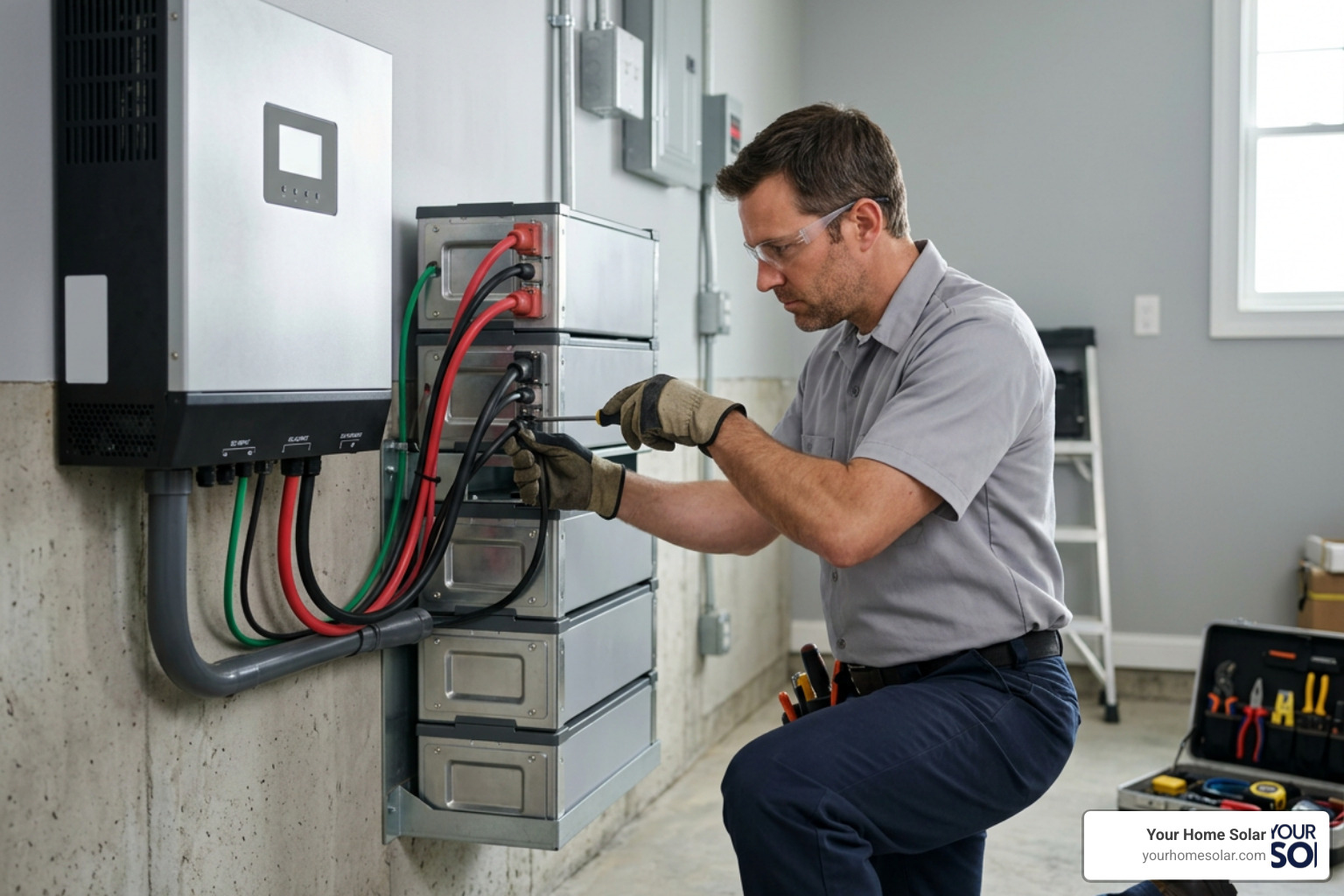
To learn more about how these battery banks operate behind the scenes to protect your household, read Beyond the Grid: How Solar Battery Banks Keep Your Lights On.
Uninterrupted Backup Power During Outages
When the utility grid fails, a hybrid inverter performs a vital safety maneuver called “islanding.” It opens its internal grid relay within 10 to 20 milliseconds—so fast that your computers and TVs won’t even flicker.
Once isolated from the grid, the system creates its own local microgrid, drawing power from your battery bank and continuing to harvest fresh solar energy from your roof. To make your backup power stretch as far as possible, we recommend setting up a “critical loads panel.” This separates your essential appliances (refrigerator, well pump, lights, and Wi-Fi) from non-essential luxury loads (like hot tubs or guest bedroom AC units).
For a complete guide to planning your home’s emergency power strategy, read Power to the People with a Battery Generator Backup and explore the Don’t Be Powerless: Top Home Battery Backup Solutions.
Scalability and System Expansion
One of the greatest benefits of a modern hybrid solar setup is its modularity. You don’t have to purchase a massive system on day one.
You can start with a modest solar array and a single battery, and as your energy needs grow—perhaps you buy an electric vehicle or build an addition on your home—you can easily add more panels or stack additional server rack batteries.
To see how a mid-sized system can scale and perform, take a look at our article on a 10kW Solar System with Battery Storage Explained.
Financial Analysis: Costs, Savings, and Incentives in 2026
Let’s talk numbers. In 2026, the economics of solar are more attractive than ever, but the upfront cost of your system will depend heavily on your location and configuration.
For instance, if you are looking at local data, the cost of solar panels in Kingsport, TN, Sevierville, TN, and Farragut, TN typically ranges from $2.60 to $3.20 per watt before incentives. Adding a high-quality 10kWh to 20kWh lithium battery bank generally adds between $6,000 and $12,000 to the project.
For comparison, homeowners looking at solar costs in Morristown, NJ often face different regional pricing structures due to local labor rates and state utility rules.
While hybrid systems require a higher initial investment than simple grid-tied setups, they protect you from rising utility rates and can significantly increase your property value. To see how this affects your bottom line in our region, read about Solar Energy and Home Resale Value: A Win-Win for East Tennessee Homeowners.
Federal Tax Credits and Local Incentives
Fortunately, you don’t have to shoulder these costs alone. Thanks to the Inflation Reduction Act, eligible homeowners can claim a 30% Federal Income Tax Credit (Section 25D) on the total cost of their solar and battery storage installation. This credit applies to both professionally installed systems and DIY hybrid solar kits, as long as the equipment is safely installed and operational.
Additionally, local net metering policies and regional incentives can drastically shorten your payback period. While some international markets have specific regional subsidy programs, here in East Tennessee, we work closely with local power providers like TVA, local municipal utilities, and cooperatives to maximize your grid connection benefits.
To understand how your system interacts with local power companies, read Residential Solar Solutions Guide: Solar Energy and the Grid and explore our Residential Solar Solutions Guide: Introduction to Solar Energy.
Sizing and Designing Your Hybrid System
Sizing a hybrid solar setup requires a careful balance between your daily energy consumption, your peak power demands, and your budget.
To design your system correctly, follow these steps:
- Perform a Load Audit: Look at your past 12 months of utility bills to find your average daily kilowatt-hour (kWh) usage. Identify your “must-run” critical appliances and calculate their combined starting and running wattage.
- Calculate Peak Sun Hours: In East Tennessee, we average about 4 to 4.5 peak sun hours per day. Multiply your daily target kWh by this factor to determine the size of the solar array you need.
- Establish Your Autonomy Target: Decide how many days of backup power you want your battery bank to provide if the sun doesn’t shine. For most hybrid setups, 1 to 1.5 days of backup for critical loads is the sweet spot.
At Your Home Solar, we back our custom-designed systems with performance assurances so you can invest with absolute confidence. Learn how this works in The Ultimate Guide to Solar Production Guarantees.
Frequently Asked Questions about Hybrid Solar
Can a hybrid solar system run a whole house during a blackout?
Yes, but it depends entirely on your system’s output capacity and your battery storage size. While a standard hybrid setup is designed to run critical loads (lights, refrigeration, well pumps, and basic electronics), a larger system paired with multiple stacked batteries can easily power entire central HVAC systems and heavy appliances during an outage.
Is a hybrid solar system more expensive than an off-grid system?
No. A hybrid system is typically much less expensive than a fully off-grid system. Because a hybrid system can fall back on the utility grid during extended periods of bad weather, you do not need to purchase the massive, oversized solar arrays and battery banks required to survive a dark winter off-grid.
Can I expand my hybrid solar setup later?
Absolutely. Modern hybrid inverters and lithium batteries are highly modular. You can start with a basic solar array and a single battery, and easily add more panels or battery modules as your energy needs, budget, or family size expand over time.
Conclusion
Investing in a hybrid solar setup is one of the smartest ways to secure your home’s energy future. It gives you the ultimate peace of mind: the financial savings of clean, free solar power, the convenience of the utility grid, and a reliable battery safety net that keeps your lights on when the rest of the neighborhood goes dark.
Whether you are looking for solar solutions in Maryville or searching for the best solar options in Johnson City, our team at Your Home Solar is here to help you design the perfect system for your home.
Ready to take control of your power? Contact us today at Top Solar Installer in Knoxville, TN – Your Home Solar to get a customized hybrid solar design tailored specifically to your home and your budget!