Home Solar Inverters: Which Type Fits Your Home?
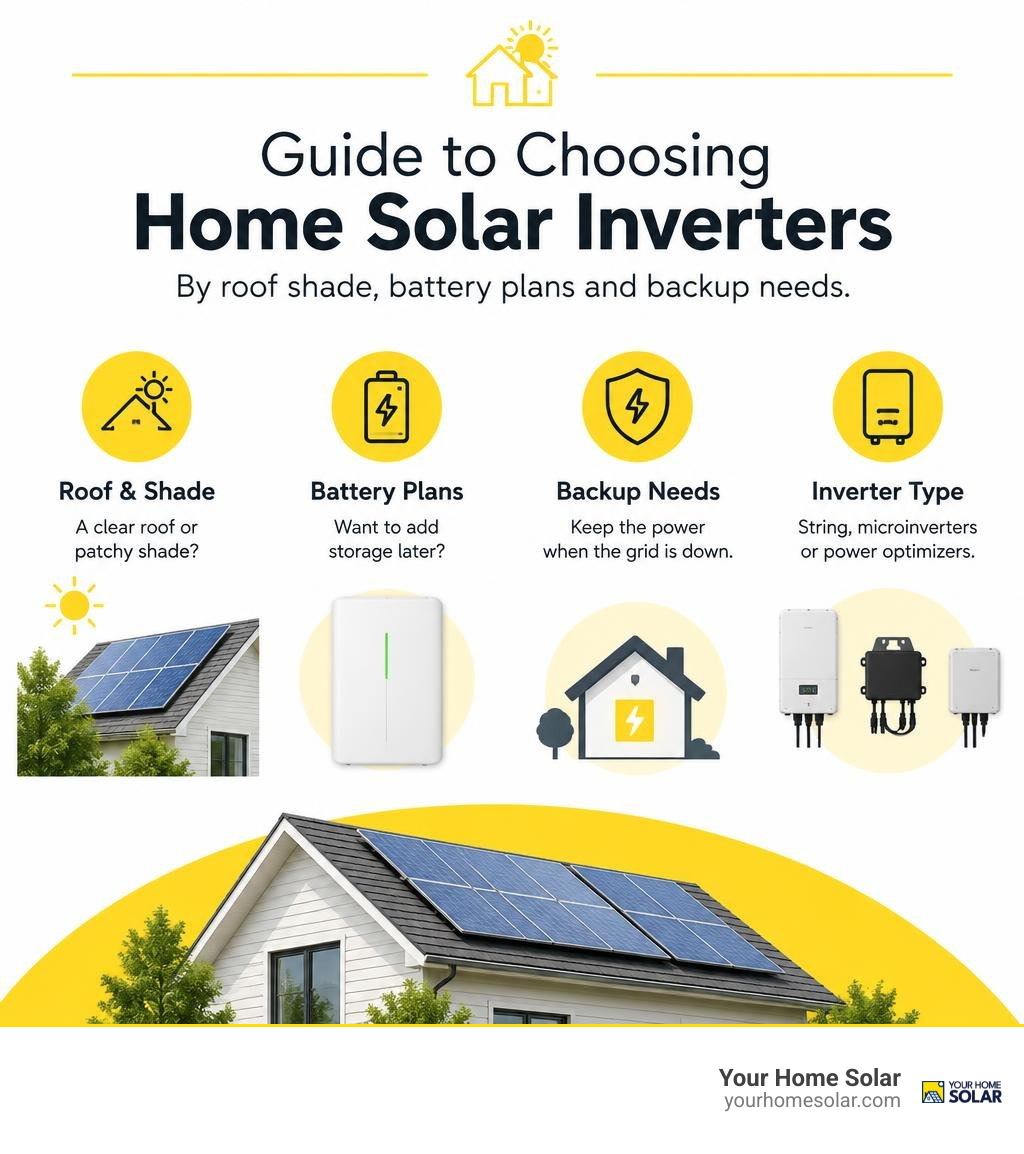
Home solar inverters turn the electricity your panels make into power your home can use. For a simple, sunny roof, a string inverter is often the lower-cost choice. If your roof has several angles or gets patchy shade, microinverters or power optimizers can help panels perform more independently. If you want battery storage later, ask about compatibility before you install. And if outages are your main concern, make sure the design includes backup capability: solar panels alone typically shut off when the grid goes down.
I’m Ernie Bussell, founder of Your Home Solar. Since moving into solar operations in 2020, I’ve helped oversee home solar installations and worked with homeowners to make choices about home solar inverters and long-term system performance.
Terms related to home solar inverters:
What Is a Solar Inverter and Why Does Your System Need One?
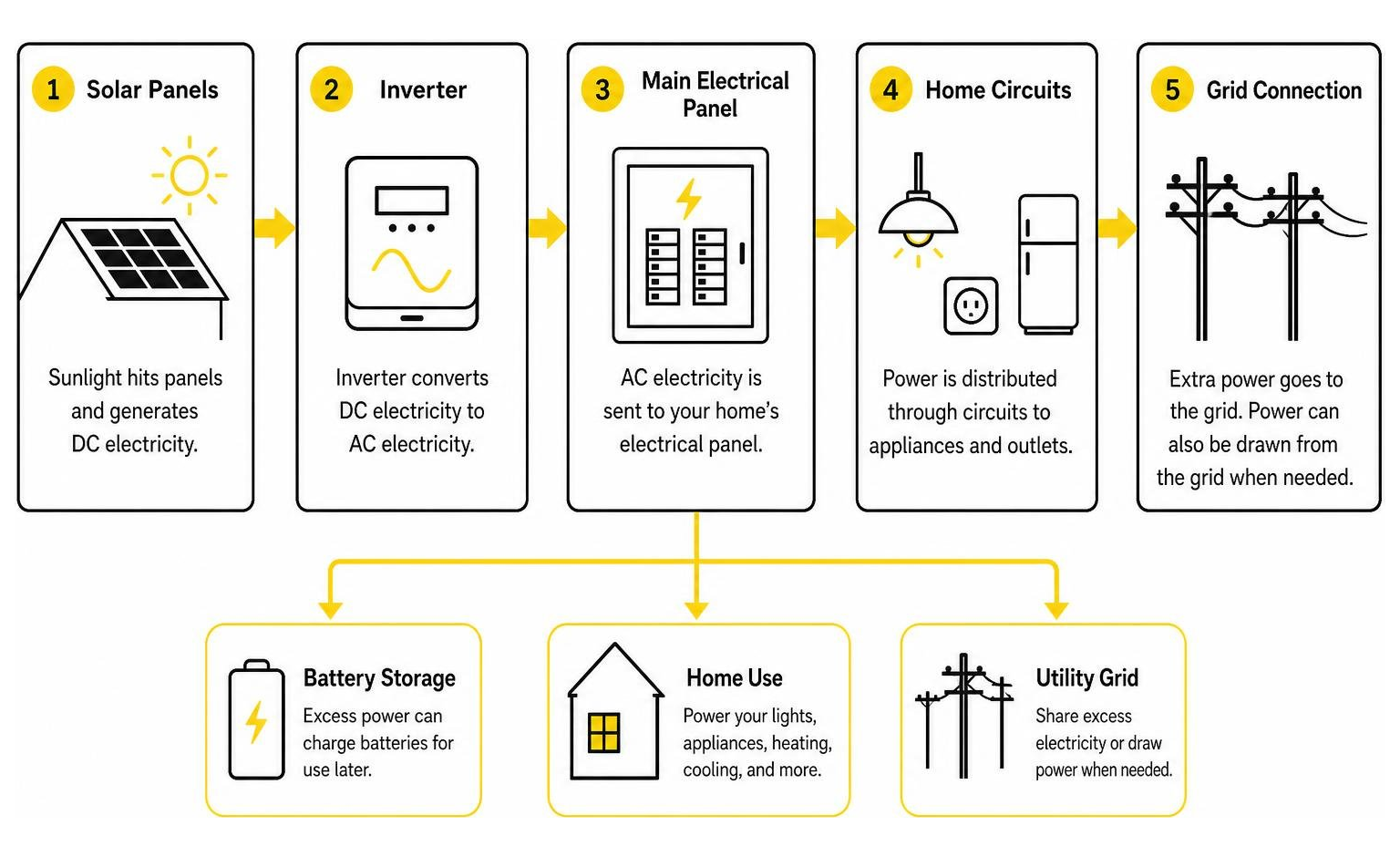
When sunlight hits your rooftop panels, the photovoltaic effect generates direct current (DC) electricity. However, standard household circuits, lighting, and heavy appliances run exclusively on alternating current (AC) power. Without an inverter, the electricity generated by your rooftop array remains unusable inside your home.
The inverter serves as the operational engine of your entire setup. Beyond performing essential DC-to-AC power conversion, it synchronizes your system’s voltage and frequency with the local utility grid. Grid-tied systems rely on the inverter to direct surplus energy back onto the power grid or seamlessly draw supplemental grid electricity whenever household consumption exceeds solar generation.
Modern residential equipment also fulfills vital safety and compliance duties. Under electrical safety codes such as National Electrical Code (NEC) rapid shutdown regulations, solar equipment must rapidly de-energize rooftop wiring during utility outages or emergency conditions to protect utility lineworkers and first responders. Many homeowners explore the heart of your solar system: understanding home inverters alongside an in-depth technical guide to residential solar inverters to see how conversion hardware safeguards both their family and property.
Core Types of Home Solar Inverters and How They Work
Residential solar setups generally rely on four primary inverter technologies: traditional string inverters, microinverters, DC power optimizers, and hybrid inverters.
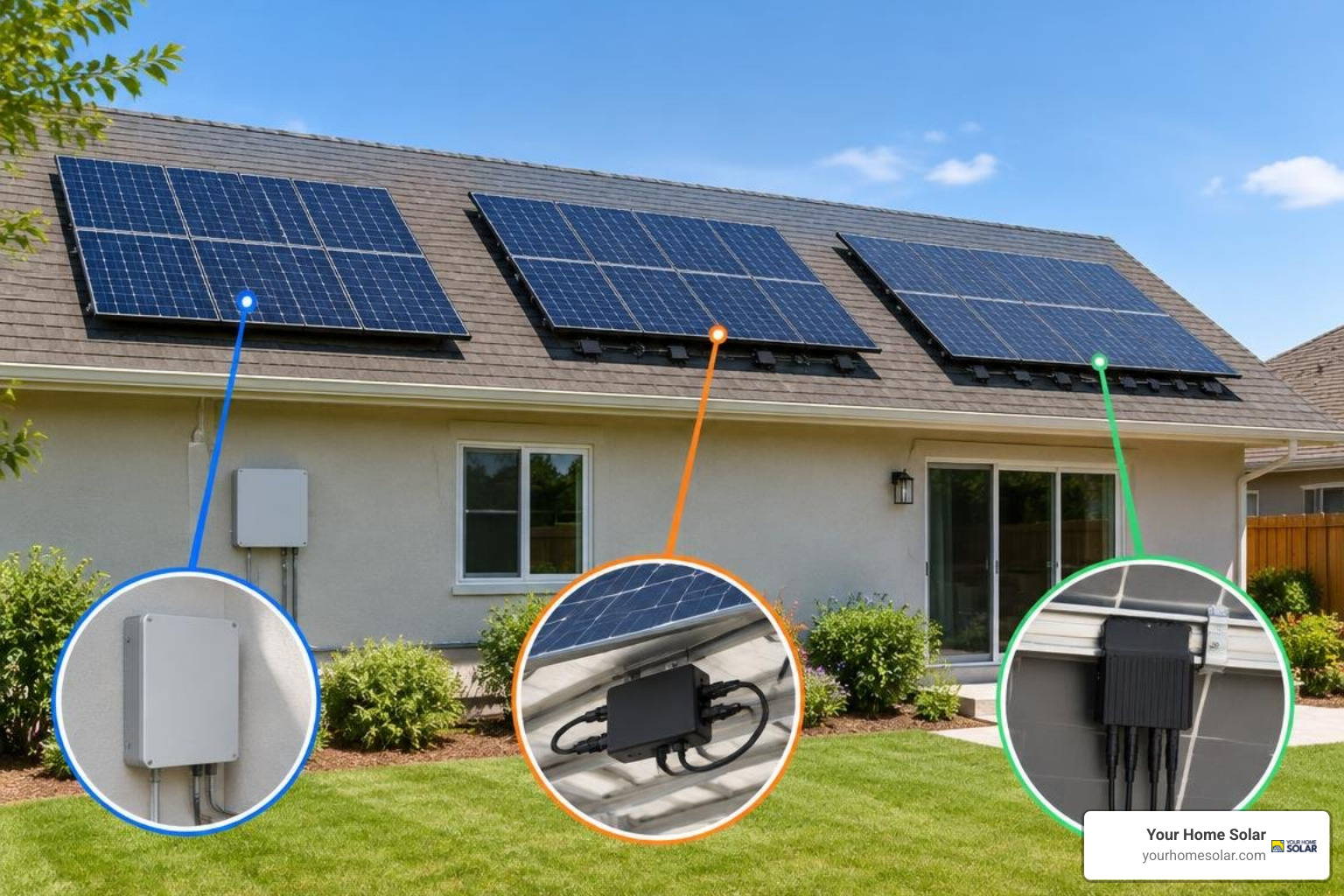
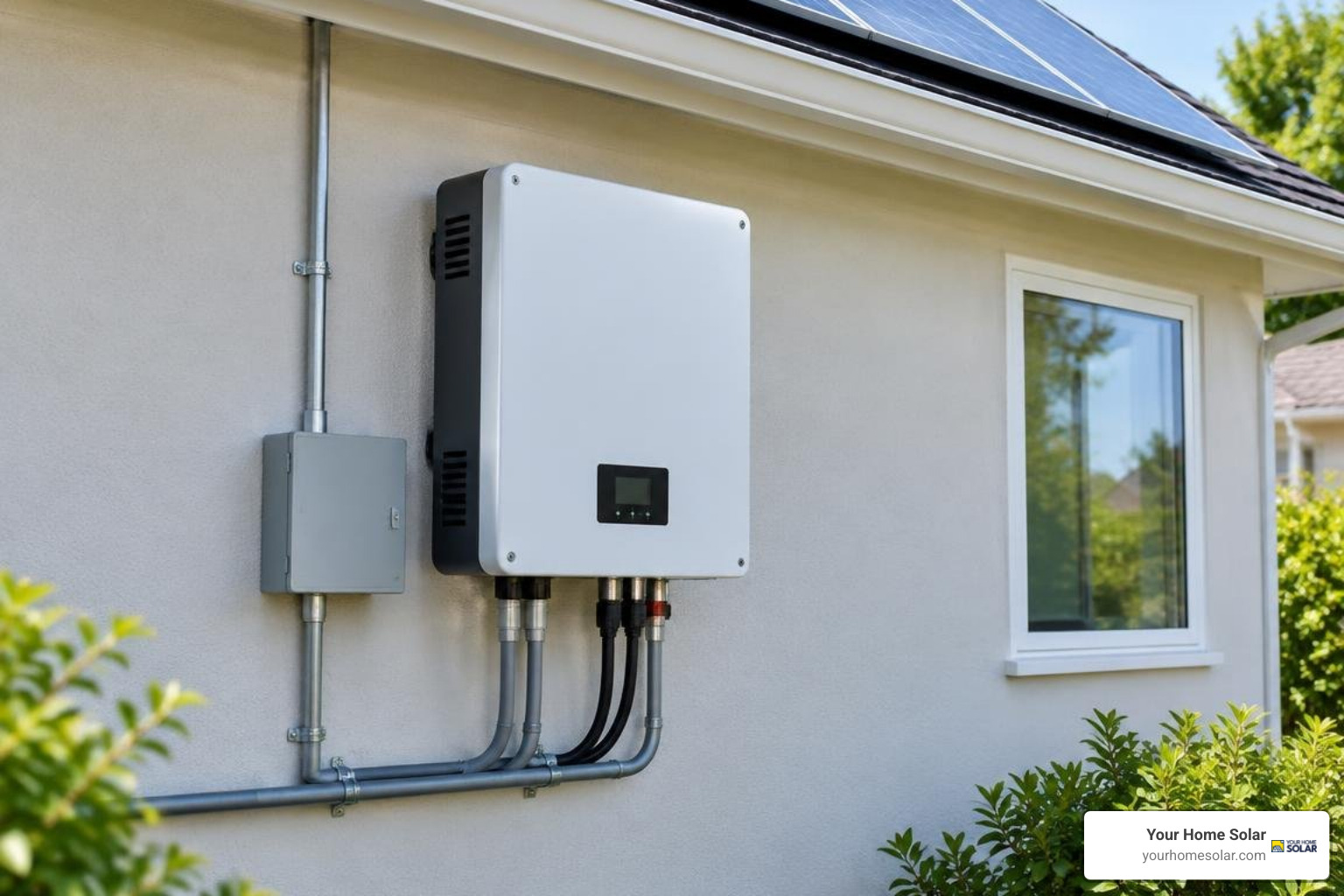
- String Inverters: Panels are wired together in series circuits called “strings.” The combined high-voltage DC electricity flows directly down to a single central unit installed on an exterior wall or inside a garage.
- Microinverters: Small, independent inverters are mounted directly beneath each individual solar panel on the roof. They perform DC-to-AC conversion right at the module level.
- Power Optimizers: Installed beneath each panel like microinverters, optimizers are Module-Level Power Electronics (MLPEs) that condition DC power and track individual panel performance before sending the electricity to a central string unit.
- Hybrid Inverters: These multi-mode units integrate solar array management and battery storage into a single unified enclosure, eliminating the need for separate solar and storage hardware.
Before making an equipment decision, reviewing a comprehensive solar inverter comparison guide for 2026 or checking out a solar inverters guide: how to decide what’s right for you can clarify the physical differences between each setup.
| Inverter Type | Conversion Location | Shading Tolerance | Typical Hardware Warranty | Best Suited For |
|---|---|---|---|---|
| String Inverter | Central wall unit | Low | 10–15 Years | Unshaded, simple single-plane roofs |
| Microinverters | Under each individual panel | High | 25 Years | Multi-pitch roofs, partial shade, future expansion |
| Power Optimizers | Panel-level DC conditioning, central AC conversion | High | 25 Years (Optimizers) / 12 Years (Inverter) | Complex layouts needing central management |
| Hybrid Inverter | Central multi-mode unit | Moderate to High | 10–15 Years | Homes adding seamless solar battery storage |
String Inverters vs. Microinverters: Pros, Cons, and Costs
Standard string inverters are the most budget-friendly upfront option, with the central unit generally costing between $500 and $2,000. However, because panels are wired in series, a string operates only as well as its weakest panel. If a chimney shadow or fallen leaves shade a single panel, the output across the entire string drops. Central units also introduce a single point of failure; if the inverter malfunctions, the whole solar array stops producing electricity.
Microinverters cost more upfront ($150 to $250 per panel), but each panel functions as an independent generating station. Shading on one module has zero effect on adjacent panels. Microinverters also eliminate high-voltage DC wiring across your attic or roof deck and simplify future array expansions. Reviewing realistic inverter installation charges and labor costs breakdown will help you evaluate whether the extra upfront cost fits your overall budget.
Hybrid Inverters and Grid Interaction (AC vs. DC Conversion)
Homeowners planning to add battery storage must decide between AC-coupled and DC-coupled system architectures.
- DC-Coupled (Hybrid) Systems: Solar panels send DC power directly into a hybrid inverter, which routes DC energy straight into your battery bank without unnecessary intermediate conversions. This method provides roughly 3% to 5% higher round-trip electrical efficiency.
- AC-Coupled Systems: Microinverters or standard string units convert DC panel power into AC household electricity. To charge a battery, a dedicated storage inverter converts that AC power back into DC, and then back to AC when powering home appliances. While AC coupling adds conversion steps, it allows seamless battery retrofits to existing solar arrays.
For larger properties requiring heavy load management, discovering everything you need to know about 10kW hybrid inverters will demonstrate how modern hybrid units balance grid power, solar input, and energy storage simultaneously.
Key Criteria for Selecting and Sizing Residential Inverters
Selecting the ideal equipment involves analyzing your roof architecture, total energy targets, and local environmental conditions.
- Roof Geometry and Shading: Multi-azimuth roof planes (facing East, South, and West) and dormers benefit greatly from MLPE architectures. Unshaded, south-facing gable roofs perform efficiently with central string units.
- Conversion Efficiency: Inverter efficiency measures how much DC energy successfully converts into usable AC electricity without turning into waste heat. Leading residential hardware achieves California Energy Commission (CEC) efficiency ratings between 96.5% and 99.0%.
- Local Utility Compliance: Grid-tied hardware must comply with local utility interconnect regulations.
Evaluating technical resources such as a detailed breakdown of Fronius string inverter efficiency and industry advice on how to choose a solar inverter and evaluate performance will ensure you select reliable hardware.
Sizing Home Solar Inverters to Avoid Power Clipping
Solar arrays are typically paired with an inverter rated slightly below the array’s maximum Standard Test Condition (STC) DC rating. This sizing relationship is known as the DC-to-AC ratio (or inverter loading ratio), commonly designed between 1.15:1 and 1.30:1.
Because solar panels rarely operate at lab-rated peak capacity due to ambient temperature, sun angle, and atmospheric haze, slightly oversizing the DC array ensures the inverter operates in its peak efficiency curve for more hours each day. When your panels occasionally generate more power than the inverter’s maximum output threshold, “clipping” occurs, and excess potential energy is shed. A modest amount of clipping on clear summer afternoons is normal and economically preferable to buying an oversized, expensive inverter. Comparing system dimensions, such as finding optimal 5kW solar inverter prices, illustrates how right-sizing hardware maximizes return on investment.
Lifespan, Warranty Protections, and System Maintenance
Because inverters constantly manage high electrical currents and thermal loads, they are statistically the system component most likely to require service over a 25-year period.
Central string inverters typically last 10 to 15 years and carry standard 10-to-12-year warranties. Homeowners should budget between $1,000 and $2,500 for a mid-life replacement during their solar array’s operational life. Conversely, premium microinverters and power optimizers generally feature 25-year warranties that match panel lifespans.
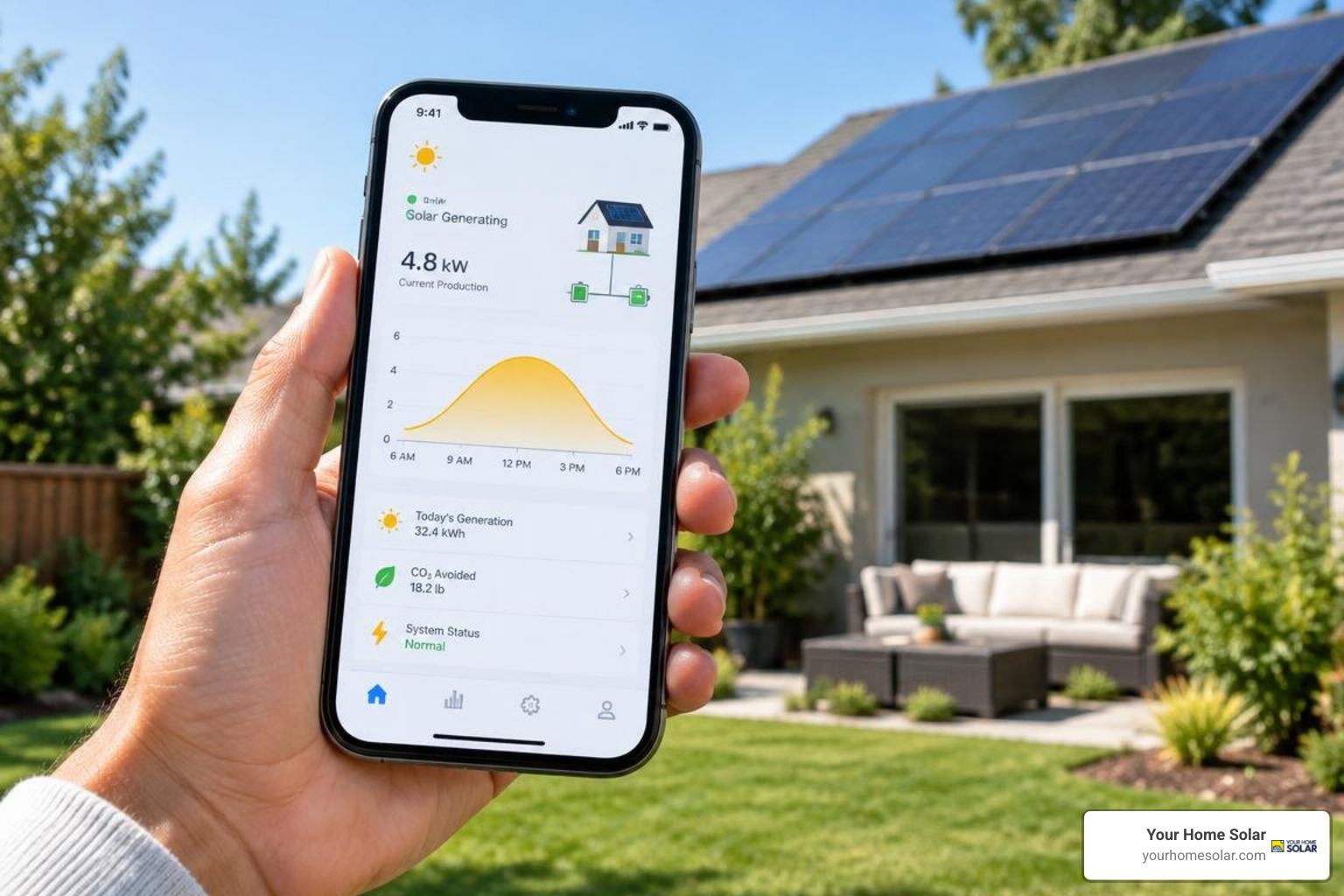
Inverters require minimal hands-on maintenance. Keep the cooling fins and vents clear of dirt, leaves, or pest nesting materials. Modern setups link directly to smartphone apps that track real-time yield and alert you to hardware errors automatically.
Top-Rated Models and Market Leaders for 2026
The residential solar market is led by dependable manufacturers offering proven hardware. In fact, market data shows Enphase and SolarEdge control roughly 85% of US residential solar installations. Homeowners researching hardware can review expert rankings for top solar inverters in 2026 to see how various brands score across real-world testing.
- SolarEdge HD-Wave Series: Operates with module-level DC power optimizers (such as the S440 and S500) to achieve up to 99.0% CEC conversion efficiency with a 12-year standard base warranty.
- Enphase IQ8 Series: Leading microinverters (including the IQ8M, IQ8+, and IQ8H) featuring grid-forming capability, rapid shutdown compliance, and standard 25-year warranties.
- Fronius Primo GEN24: A resilient string inverter platform offering high CEC efficiency (97.6%), flexible string design, and integrated active cooling.
Top-Rated Home Solar Inverters for 2026 Installations
| Inverter Model | Architecture Type | CEC Efficiency | Standard Warranty | Average Hardware / System Price |
|---|---|---|---|---|
| SolarEdge HD Wave 7600H | Optimized String | 99.0% | 12 Years | $2.45 / Watt (Turnkey) |
| Enphase IQ8M | Microinverter | 97.0% | 25 Years | $2.62 / Watt (Turnkey) |
| EcoFlow Ocean Pro Hybrid | Hybrid Central | 97.5% | 15 Years | $2.20 / Watt (Turnkey) |
| Tesla Powerwall 3 | Hybrid Inverter / Battery | 97.0% | 10 Years | $2.23 / Watt (Turnkey) |
| Fronius Primo GEN24 8.0 | Pure String | 97.6% | 10 Years | $0.22–$0.30 / Watt (Hardware) |
| APsystems DS3 | Dual Microinverter | 97.3% | 25 Years | $0.20–$0.28 / Watt (Hardware) |
Frequently Asked Questions About Home Solar Inverters
How long do solar inverters last before needing replacement?
Central string inverters generally operate reliably for 10 to 15 years before internal components wear out, meaning you will likely replace a string inverter once during your solar panels’ 25-to-30-year lifespan. Quality microinverters and power optimizers are engineered to last up to 25 years, aligning with rooftop solar panel warranties.
Can I upgrade or replace my inverter later?
Yes. If your household energy needs increase or you decide to add battery storage down the road, you can replace a standard string inverter with a modern hybrid model or expand a microinverter system by adding extra panels and micros to your roof. Choosing modular hardware upfront makes future expansions simpler and less costly.
Is a higher efficiency inverter always worth the extra cost?
Not necessarily. The real-world difference between a 96.5% and a 98.5% efficient inverter on a standard residential array often accounts for less than $40 in utility savings per year. Investing in proven equipment reliability, generous warranty coverage, and strong local installer support generally delivers far better long-term value than paying a high premium for marginal efficiency gains.
Conclusion
Your home solar inverter is the hard-working hub that transforms raw rooftop sunshine into dependable household power. Whether you select high-efficiency string inverters, panel-level microinverters, or an advanced hybrid system ready for battery storage, matching the right hardware to your home’s roof layout and long-term energy goals is key to maximizing performance.
At Your Home Solar, we provide East Tennessee homeowners—from Knoxville and Oak Ridge to Maryville, Sevierville, and Farragut—with tailored residential energy solutions, including solar arrays, battery backups, and EV chargers. If you are ready to design an energy system engineered for your property, explore our ultimate guide to residential solar inverters and reach out to our team to schedule your personal home consultation.