Why a Home Battery Pack Matters for Solar Households
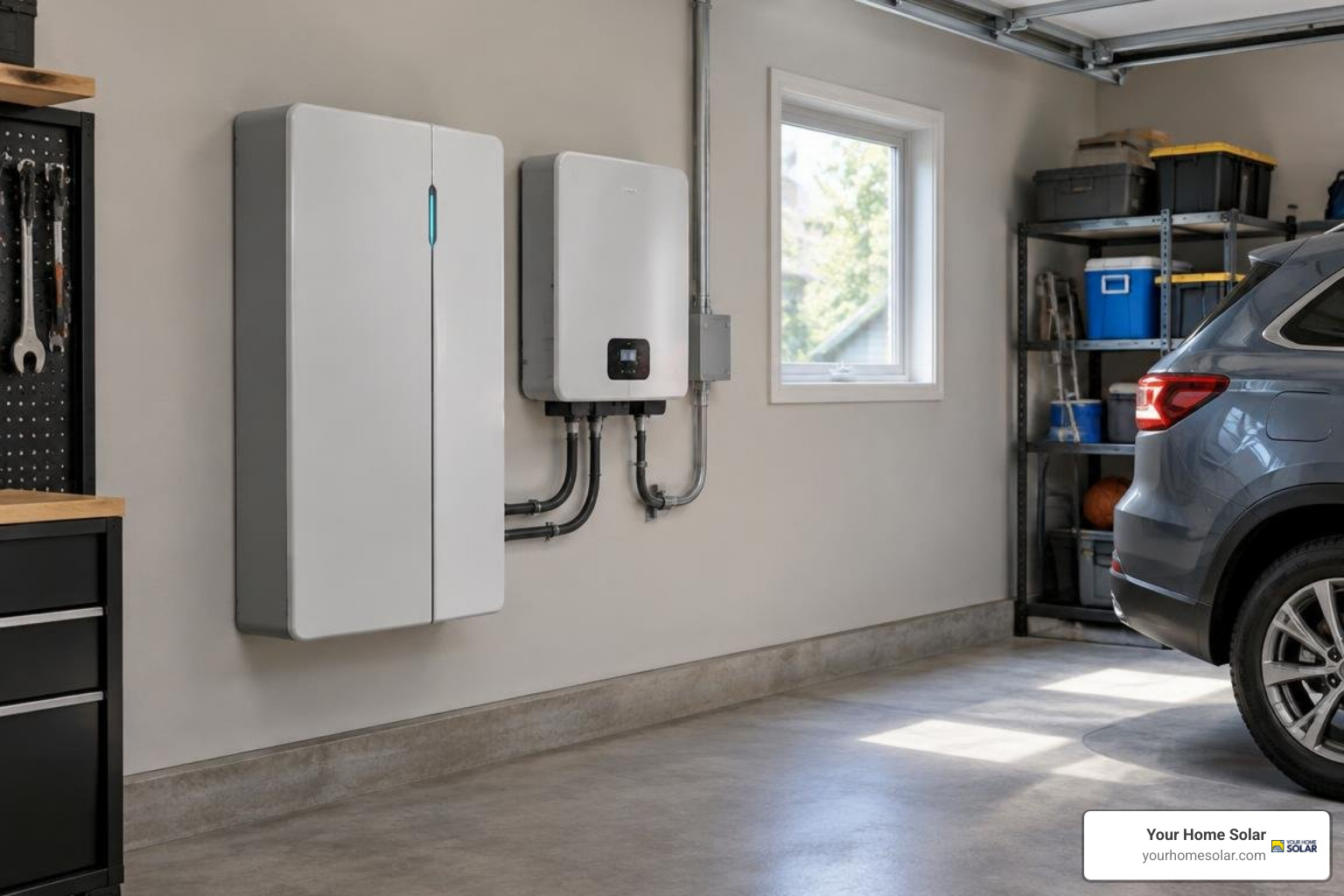
A home battery pack stores electricity from your solar panels for use after sunset or during a power outage. To choose one, start with what you need to keep running: a portable unit may cover a few plugged-in devices, while a professionally installed system can back up selected circuits or more of your home. Check both capacity, which affects how long power lasts, and output, which determines what can run at once.
For East Tennessee homeowners, a battery can make more of their daytime solar power available when they need it. Bill savings depend on your electricity rates and how you use the system, so backup needs are a good place to start.
I’m Ernie Bussell, founder of Your Home Solar, and I’ve spent years leading solar operations and helping homeowners understand their energy choices. I’ll use that experience to help you assess which home battery pack fits your solar setup and outage needs.
Home battery pack vocabulary:
Types of Residential Storage: Portable Units vs. Whole-Home Systems
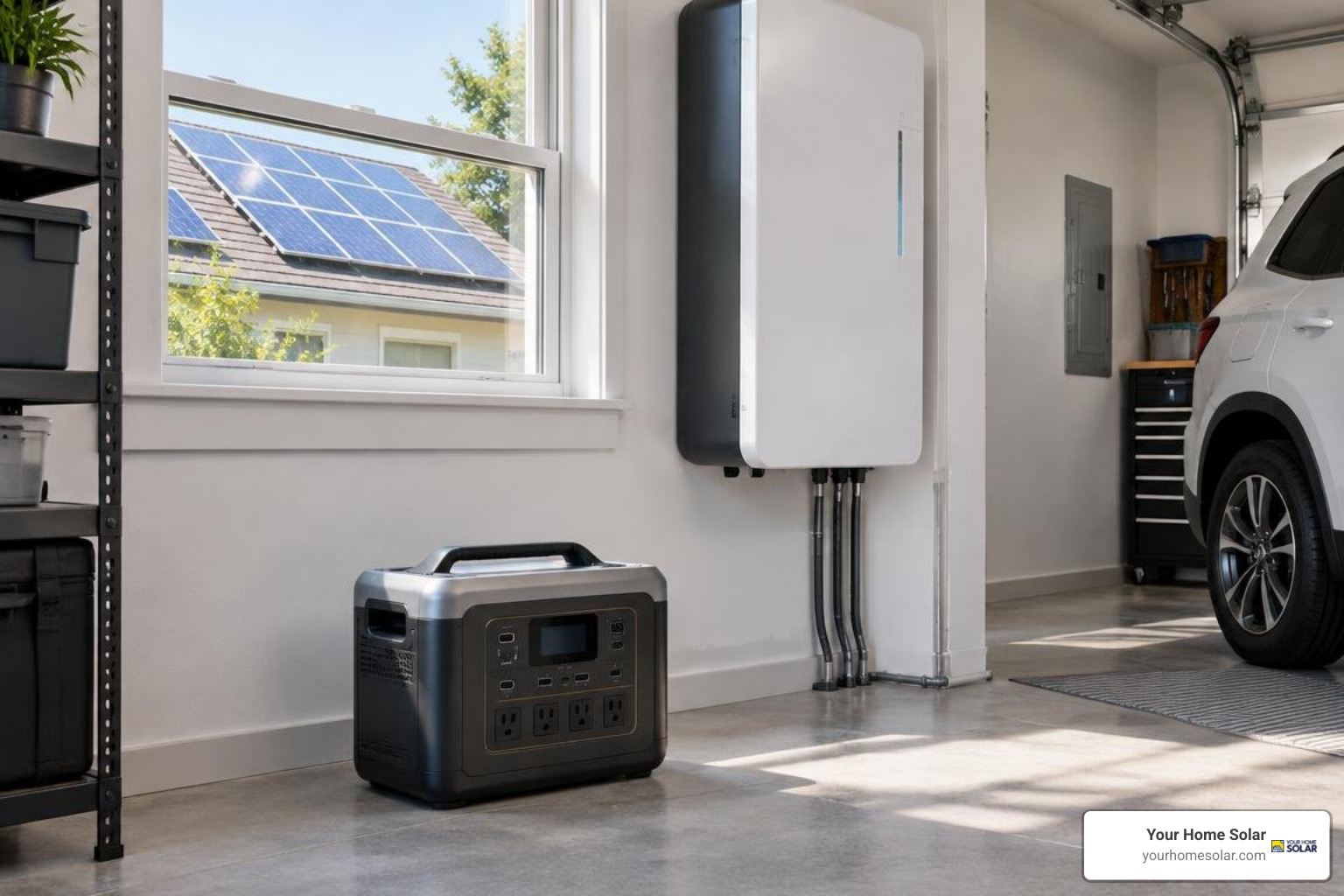
Navigating modern energy options begins with understanding the distinct categories of residential storage. Depending on your living situation, budget, and resilience goals, systems range from lightweight plug-and-play devices to hardwired whole-house energy reserves. Exploring the complete guide to home battery backup options can help clarify how these various setups align with different household energy demands.
| Feature / Metric | Portable Power Stations | Modular Plug-In Batteries | Fixed Whole-Home Storage |
|---|---|---|---|
| Typical Usable Capacity | 1.0 kWh to 3.0 kWh | 1.6 kWh to 6.4 kWh | 9.7 kWh to 40.5+ kWh |
| Continuous Power Output | 1,000 W to 2,000 W | 2,400 W (up to 3,600 W peak) | 5.0 kW to 11.5 kW+ |
| Installation Requirement | None (Fully Plug-and-Play) | Minimal (Standard 120V Outlets) | Professional Electrical Hardwiring |
| Switchover Speed | Manual or ~20–30 ms | ~10 ms (UPS Grade) | Seamless Sub-second Islanding |
| Primary Use Case | Small electronics & mobility | Critical individual appliances | Whole-house loads & HVAC |
Portable and Modular Plug-and-Play Units
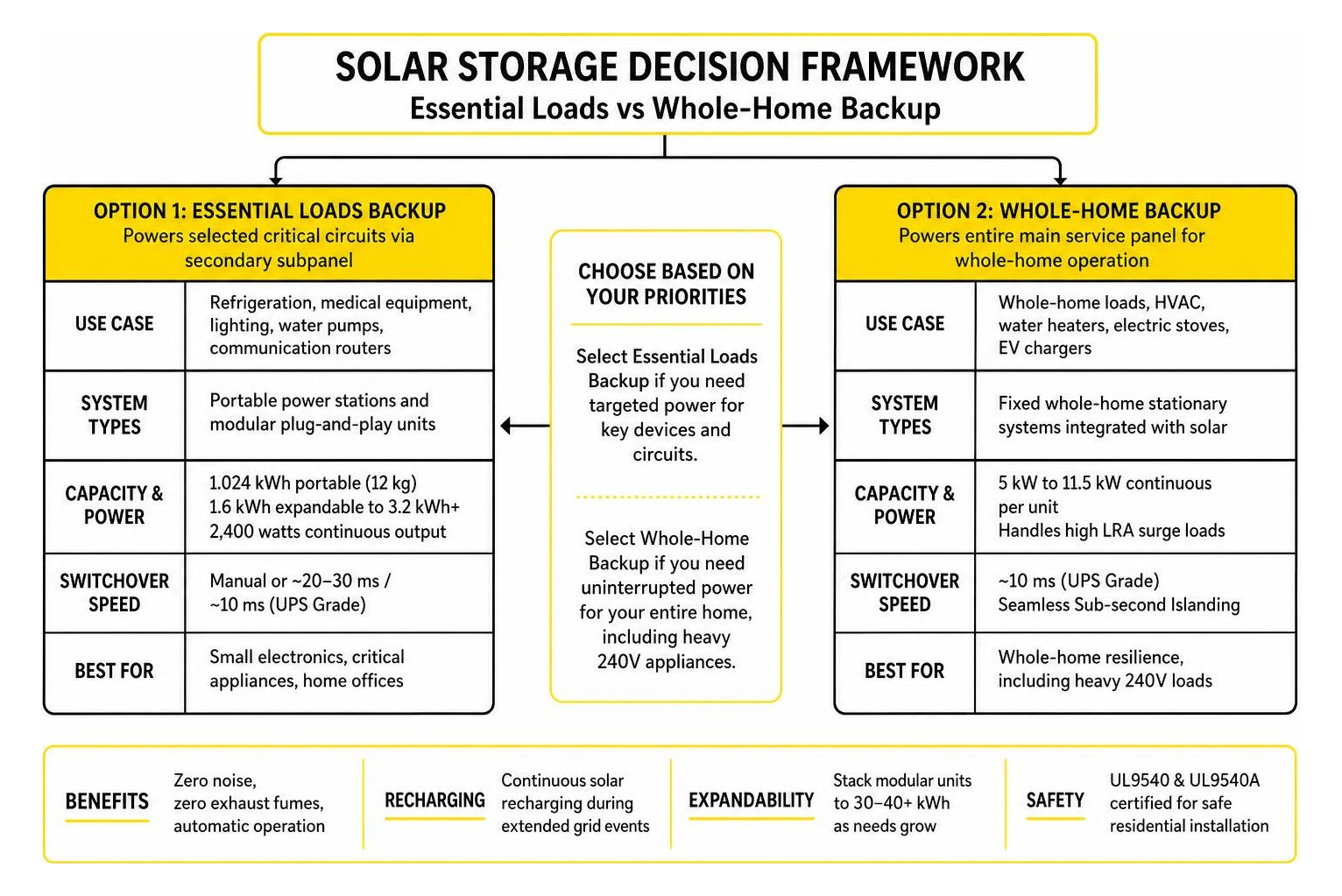
Portable power stations and modular plug-and-play units provide targeted, localized backup without requiring service panel alterations. Units like compact 1,024 Wh portable stations (weighing around 12 kg) are easily transported between rooms to keep essential electronics, lighting, CPAP machines, and internet routers running during sudden local grid failures.
Modular systems, such as 1.6 kWh plug-in units expandable up to 3.2 kWh or more, offer 2,400 watts of continuous output. These systems feature rapid 10-millisecond switchover times that act as an Uninterruptible Power Supply (UPS) for sensitive home offices. Using mesh networking, some modular batteries can synchronize dozens of individual units across different rooms, giving renters and apartment dwellers a clean, tenant-friendly alternative to gas generators.
Fixed Whole-Home Stationary Systems
Fixed residential energy storage systems are hardwired directly into your main electrical service panel or a dedicated backup subpanel. These robust units integrate with your rooftop solar array to deliver uninterrupted, whole-home resilience.
Unlike portable devices, stationary systems supply between 5 kW and 11.5 kW of continuous power per unit. They feature heavy-duty locked rotor amp (LRA) surge ratings capable of instantly handling the intense starting inrush currents of central air conditioners, heat pumps, well pumps, and electric vehicle chargers. Understanding why battery backup for home power outage outshines traditional generators comes down to the benefits of zero noise, zero exhaust fumes, automatic operation, and continuous solar recharging during extended grid events.
Choosing the Best Home Battery Pack for Energy Independence
Selecting an effective storage setup requires matching the physical and electrical specifications of the battery to your household’s unique lifestyle. Key parameters include usable storage capacity (measured in kilowatt-hours, kWh), continuous and peak power delivery (measured in kilowatts, kW), round-trip efficiency, and thermal operating envelopes.
Top-tier hardware options like the SolarEdge Home Battery 400V: Empowering Residential Solutions boast 94.5% round-trip efficiency, minimizing energy losses between your panels and appliances while safely delivering 5 kW of continuous output and 7.5 kW of peak surge power per unit.
Sizing Your Home Battery Pack for Essential vs. Whole-Home Loads
Accurate battery sizing requires evaluating your baseline daily electrical load alongside your peak surge requirements. During an emergency, your energy strategy generally falls into one of two configurations:
- Essential Loads Backup: Powers selected critical circuits wired through a secondary subpanel, such as refrigeration, medical equipment, lighting, water pumps, and communication routers.
- Whole-Home Backup: Powers the entire main service panel, allowing seamless operation of heavy 240V appliances like central heating, ventilation, and air conditioning (HVAC) systems, water heaters, and electric stoves.
Practicing sun by day storage by night the practical guide to battery backed solar systems ensures your system captures surplus midday solar production to comfortably power evening consumption. Stacking modular units (such as combining multiple 9.7 kWh or 13.5 kWh modules) allows East Tennessee homeowners to expand storage up to 30 to 40+ kWh as their household electrification needs grow.
Battery Chemistry and Safety: LFP Longevity and UL9540A Standards
Modern residential energy storage systems predominantly utilize Lithium Iron Phosphate (LFP) chemistry. LFP cells are inherently stable, offering high thermal runaway resistance, non-toxic composition, and superior cycle life—often retaining high capacity over 10-year operational lifespans with daily deep discharging.
When comparing equipment, always look for certified compliance with UL9540 and UL9540A safety standards. The UL9540A unit-level fire test evaluates thermal runaway containment under extreme conditions. Passing this rigorous benchmark confirms that a unit will prevent fire propagation to adjacent walls or battery modules, ensuring safe installation inside attached residential garages or utility rooms across Knox, Blount, Sevier, and Sullivan counties.
Grid Resilience, Outage Backup, and Inverter Integration
When municipal utility lines drop, a modern residential battery system automatically isolates your home from the electrical grid within milliseconds. This process, known as intentional islanding, prevents dangerous back-feeding into external lines while providing continuous power to your household circuits.
Equipped with automated storm detection software, advanced battery systems track local National Weather Service warnings. When severe storms threaten areas from Chattanooga up through Johnson City and Kingsport, these systems automatically charge to 100% capacity from the grid or solar array before the weather hits. Integrated thermal management and internal self-heating keep systems operating reliably in sub-zero ambient temperatures down to -4°F.
How a Modern Home Battery Pack Maximizes Solar Self-Consumption and NEM Savings
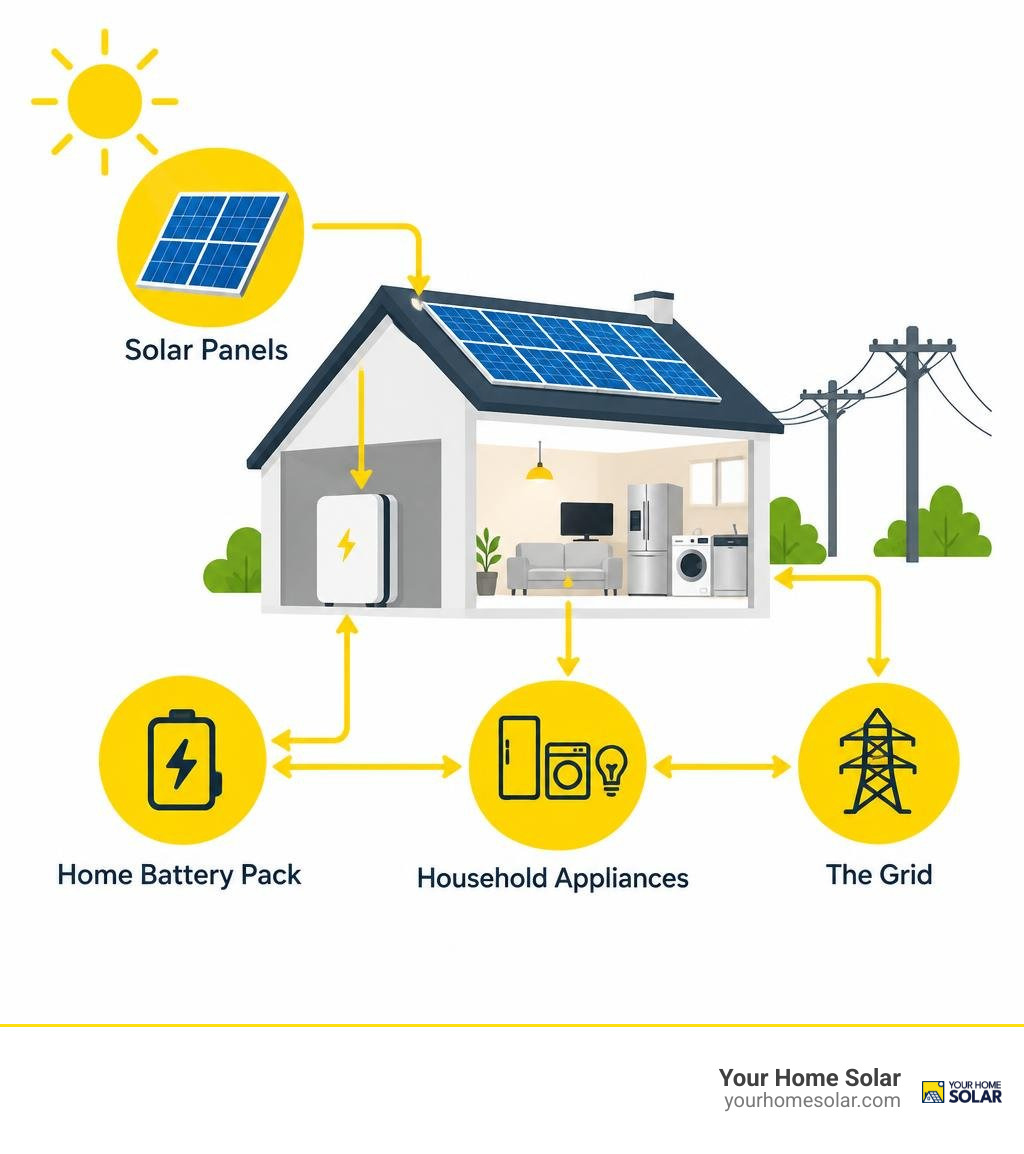
Beyond emergency backup, energy storage systems help reduce daily electricity costs by optimizing solar self-consumption. Instead of sending excess daytime solar generation back to the grid for minimal utility credits, your home stores that surplus electricity locally.
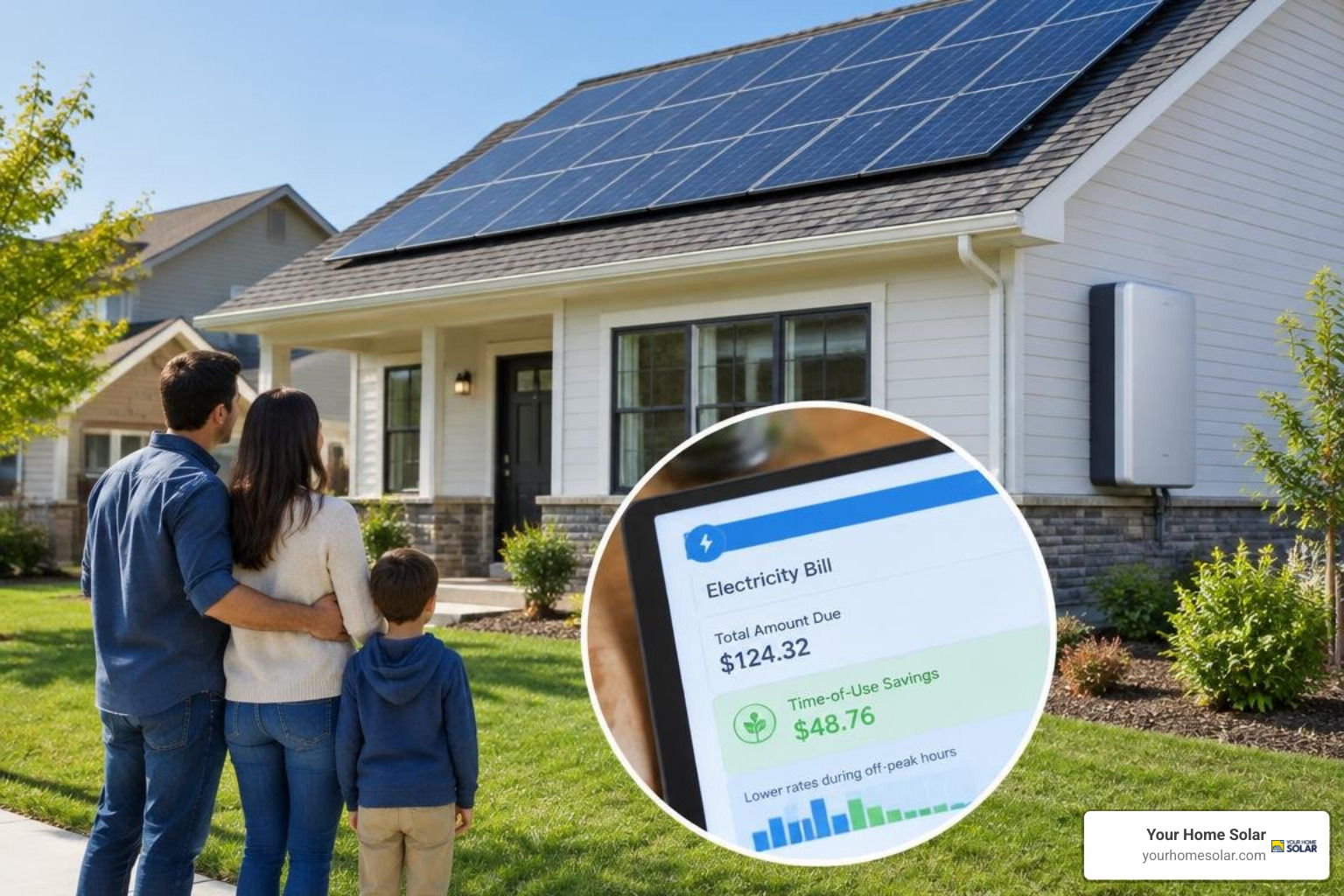
During expensive on-peak hours, the battery automatically discharges to power your household loads, shielding you from high time-of-use rates. This automated load shifting maximizes your clean energy investment and prevents reliance on expensive grid power during peak demand windows.
DC-Coupled vs. AC-Coupled Architecture
Residential storage systems are organized into two primary electrical architectures:
- DC-Coupled Systems: Solar panels feed direct current (DC) electricity directly into the battery pack through a shared hybrid inverter. Because energy avoids the “triple conversion penalty” (DC to AC, AC back to DC for storage, and DC back to AC for consumption), DC-coupled setups achieve up to 94.5% to 97.5% efficiency, capturing up to 10 extra days of usable solar energy each year.
- AC-Coupled Systems: The battery operates with its own dedicated internal inverter, separate from the rooftop solar inverters. While this introduces minor conversion losses, AC-coupling allows flexible retrofitting onto existing rooftop solar arrays without altering existing panel wiring.
Economics, Incentives, and Energy Storage Costs in 2026
Investing in residential energy storage involves weighing upfront equipment and installation costs against decades of energy independence, bill savings, and outage security. In 2026, evaluating regional pricing data—such as reviewing the 2026 Cost of Energy Storage in Maryville, TN alongside comprehensive guides breaking down the cost of solar pv battery storage in 2026—helps homeowners balance equipment specs with long-term financial returns.
Upfront Investment and Long-Term Return on Investment
Turnkey residential battery installations vary depending on usable capacity, system complexity, and service panel requirements. Streamlined DC-coupled and smart stacked configurations can often bypass expensive Main Panel Upgrades (MPUs), cutting installation overhead significantly.
Supported by 10-year manufacturer warranties, residential systems deliver financial value over their lifetime by:
- Offsetting high peak-rate grid electricity through automated daily load shifting.
- Protecting expensive home appliances, frozen food, and sensitive electronics from sudden utility surges and outages.
- Increasing overall residential property value and energy independence.
Utility Subsidies, Virtual Power Plants, and Resilience Programs
Homeowners can significantly offset upfront battery costs through the 30% Federal Clean Energy Tax Credit (Residential Clean Energy Credit), which applies directly to battery equipment and installation labor.
Additionally, forward-thinking utilities and regional grid operators are launching Virtual Power Plant (VPP) initiatives and customer vulnerability support schemes. Across the energy sector, programs are even delivering subsidized or free portable battery packs to medically dependent households on Priority Services registers. Enrolling in VPP networks allows participating battery owners to export small amounts of stored solar energy during peak regional demand events in exchange for recurring utility bill credits.
Frequently Asked Questions About Residential Battery Storage
How long will a residential battery pack power my home during an outage?
Runtime depends on your battery’s total usable kilowatt-hour capacity and your household’s real-time electricity demand. A compact 1.6 kWh unit can run an efficient refrigerator for up to 32 hours or keep a Wi-Fi router active for over 130 hours.
A standard 10 kWh to 13.5 kWh stationary battery can comfortably power essential circuits—including lights, refrigeration, water pumps, and electronics—for 24 hours or more. When paired with an active rooftop solar system, the battery recharges continuously every sunny day, providing indefinite off-grid resilience during multi-day blackouts.
Can I install a battery storage unit without solar panels?
Yes. Stationary and modular home batteries can be installed as standalone backup solutions that charge directly from the electrical grid.
In standalone setups, the battery charges from the grid during low-cost, off-peak hours and remains fully charged to provide instant emergency power during a blackout. However, pairing storage with solar panels provides the added benefit of daytime off-grid recharging and daily clean energy bill savings.
What maintenance is required for a residential battery backup system?
Modern lithium residential battery systems require virtually no day-to-day physical maintenance. They feature integrated, automated Battery Management Systems (BMS) that actively regulate cell temperatures, voltage balancing, and charging cycles.
Homeowners can keep their system running smoothly by:
- Ensuring external ventilation clearances and wall enclosures stay free of debris.
- Keeping mobile management apps updated for access to performance monitoring and firmware patches.
- Allowing automated storm-watch protocols to manage pre-charging before adverse weather.
Conclusion
A home energy storage system turns your rooftop solar installation into a reliable, around-the-clock power source. Whether you choose a compact modular unit for essential medical devices or a high-capacity stationary system to power your entire house, the right battery setup delivers energy independence, lowers peak utility costs, and keeps your lights on when the local grid goes down.
At Your Home Solar, we provide tailored, comprehensive home energy solutions across East Tennessee, including solar arrays, backup systems, and EV chargers. Our team delivers reliable, high-performing installations backed by trusted regional expertise and a commitment to complete customer satisfaction.
Ready to make your home resilient against outages and rising rates? Explore our ultimate guide to solar batteries and energy storage solutions and reach out to our team to design the ideal energy storage system for your home today.