Battery Backup for a Home Power Outage: Where to Start
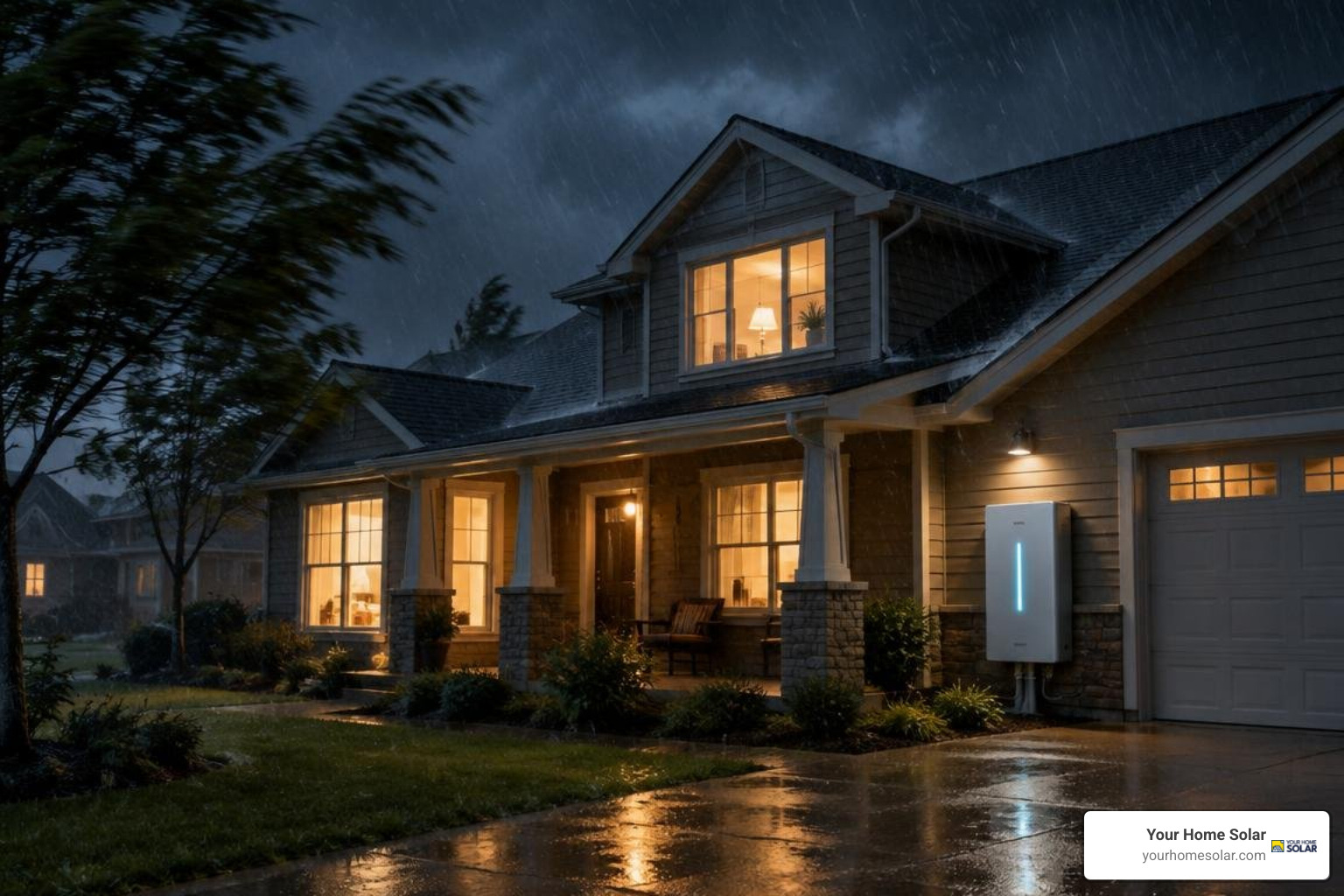
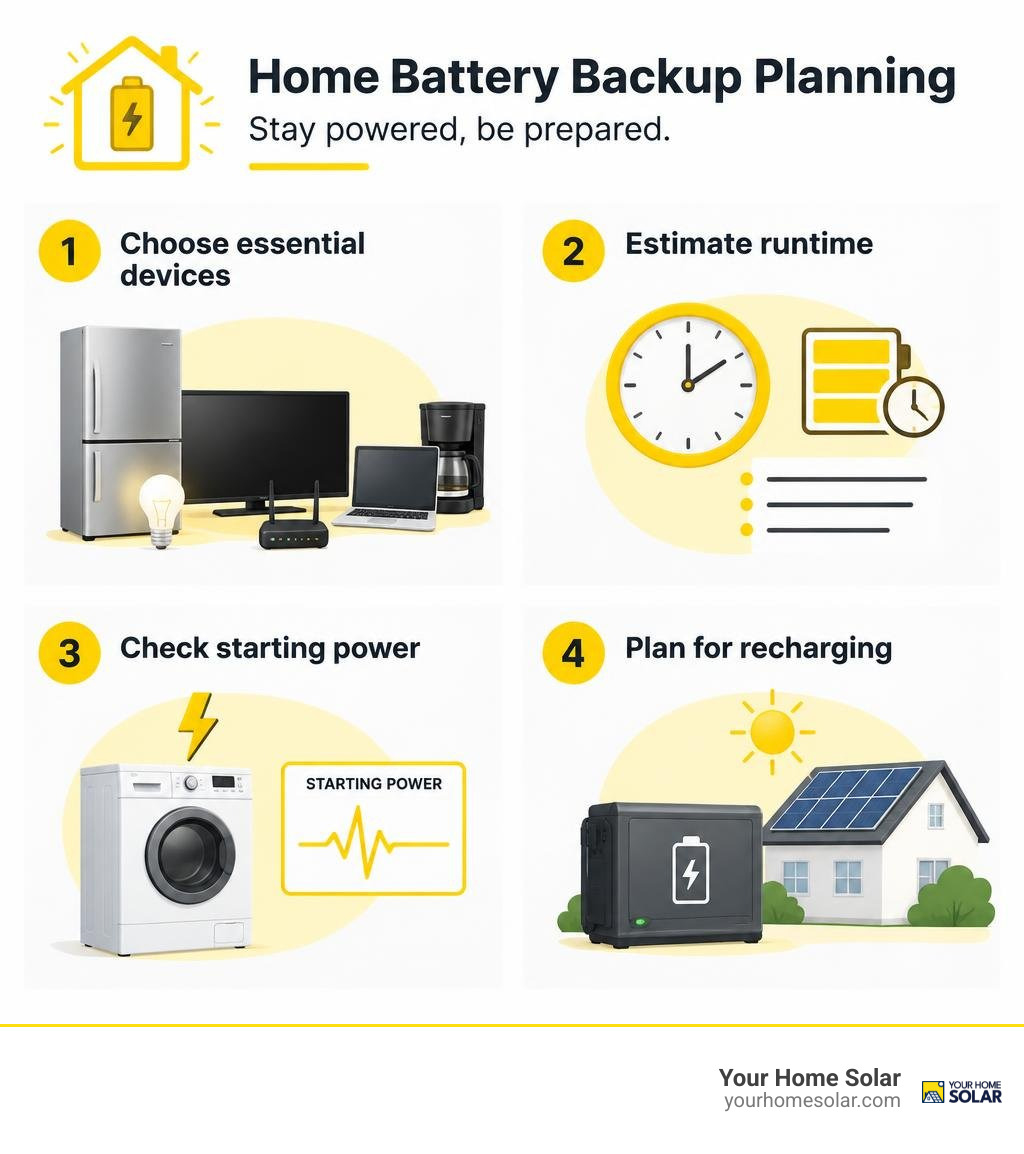
A battery backup for a home power outage can keep your fridge, lights, and other essential devices running without generator noise or exhaust. To choose a size, list the devices you need, add up their power use, and decide how many hours they must run. Check that the system can also handle the brief power surge when appliances start.
A properly installed system can switch to battery power when the grid fails. But its runtime is limited by the energy stored, so a generator may still make more sense for long outages or heavy loads.
I’m Ernie Bussell, founder of Your Home Solar, and I bring years of solar operations experience to battery backup for home power outage planning. My Navy quality-assurance training shapes how I compare backup options for East Tennessee homes.
Battery backup for home power outage helpful reading:
How a Battery Backup for Home Power Outage Works Compared to Generators
When severe weather rolls through East Tennessee—whether it is a summer thunderstorm in Knoxville or a heavy winter freeze in Sevierville—the electrical grid takes a beating. The moment utility lines drop, modern residential energy storage takes over in milliseconds.
At the center of this transition is an automatic transfer switch and an integrated smart inverter. The moment grid voltage drops to zero, the transfer switch physically isolates your home from the external electrical grid (a safety process called islanding). Simultaneously, the inverter pulls direct current (DC) electricity stored inside the battery cells, converts it to alternating current (AC) electricity, and distributes it directly into your main electrical panel or a dedicated critical load panel.
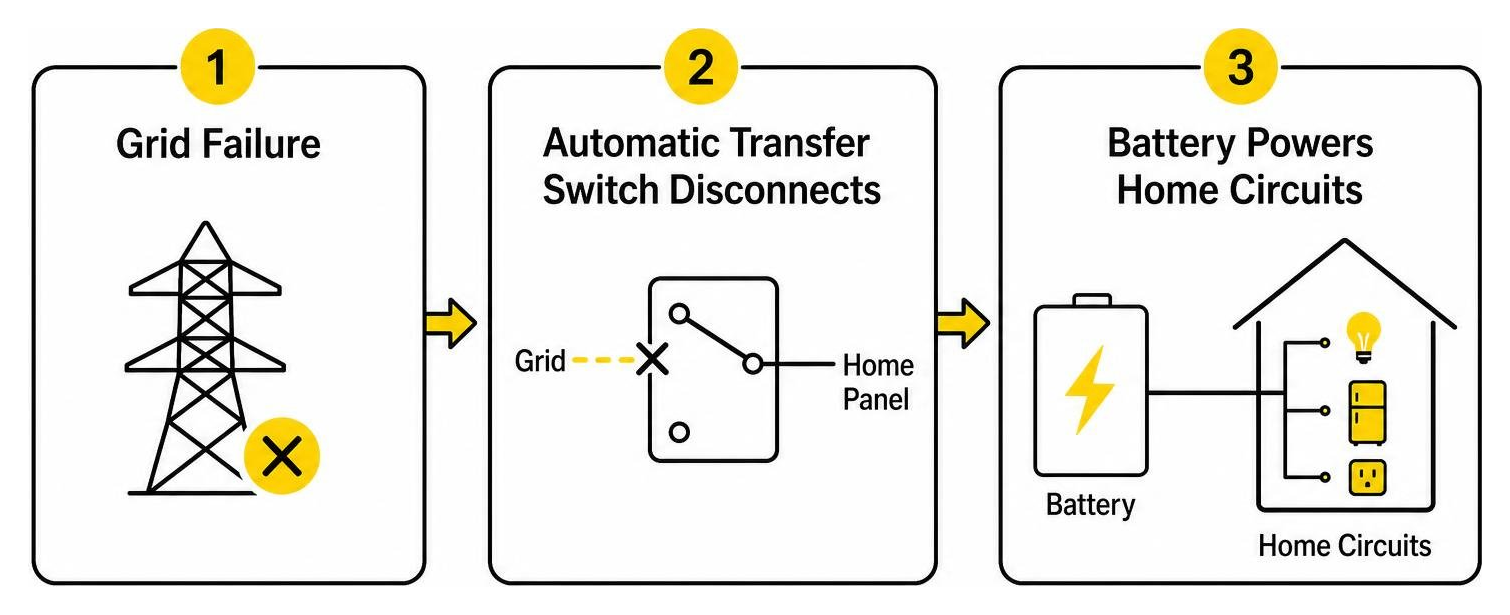
Because this switchover happens within 10 to 20 milliseconds, you rarely notice the disruption. Your desktop computer will not restart, your digital clocks will not reset, and your refrigerator will not skip a beat. Exploring comprehensive home battery backup options helps clarify how modern lithium setups deliver clean, instantaneous energy compared to mechanical alternatives.
In contrast, a traditional fossil fuel standby generator relies on a mechanical engine that must crank, warm up, and stabilize before delivering electricity. This process introduces a 10 to 30-second delay in total darkness. More importantly, combustion engines bring continuous noise, poisonous exhaust fumes, routine mechanical maintenance, and dependence on volatile fuel supplies. According to NOAA insights on home power backup resilience, having dependable, clean energy storage creates a safe indoor environment during severe weather disruptions without the carbon monoxide risks inherent to gas engines.
| Feature | Lithium Home Battery Backup | Standby / Portable Generator |
|---|---|---|
| Switchover Time | 10–20 milliseconds (instant) | 10–30 seconds (mechanical crank) |
| Noise Level | Silent (0–25 dB whisper) | Loud (65–85+ dB engine roar) |
| Direct Emissions | Zero indoor or outdoor emissions | High CO, NOx, and greenhouse gases |
| Operating Cost | $0 per hour (especially with solar) | $5 to $15 per hour in fuel costs |
| Fuel Source | Grid electricity or rooftop solar | Gasoline, diesel, or natural gas/propane |
| Maintenance | Minimal (automated software monitoring) | Oil changes, spark plugs, filters, fuel stabilization |
| Indoor Safety | Safe for garages and utility rooms | Must run outdoors, away from windows |
| Lifetime Expected | 10 to 15 years (3,000 to 6,000+ cycles) | 1,500 to 3,000 engine operating hours |
While gas generators can provide continuous power as long as you have fuel on hand, the convenience, zero-maintenance profile, and silent operation of battery backups make them a practical choice for residential blackout protection.
Sizing and Sourcing the Right Battery Capacity for Blackout Resilience
Determining how much energy storage your home requires comes down to separating your non-negotiable electrical needs from non-essential conveniences. Household energy consumption is measured in kilowatt-hours (kWh), while appliance output demand is measured in continuous and peak kilowatts (kW).
A typical 2,000-square-foot American home consumes between 20 and 30 kWh of electricity per day under standard living conditions. However, during an emergency blackout, you do not need to power every decorative light fixture or run the clothes dryer. Evaluating different home battery backup options will help you decide between critical-load and whole-home coverage.
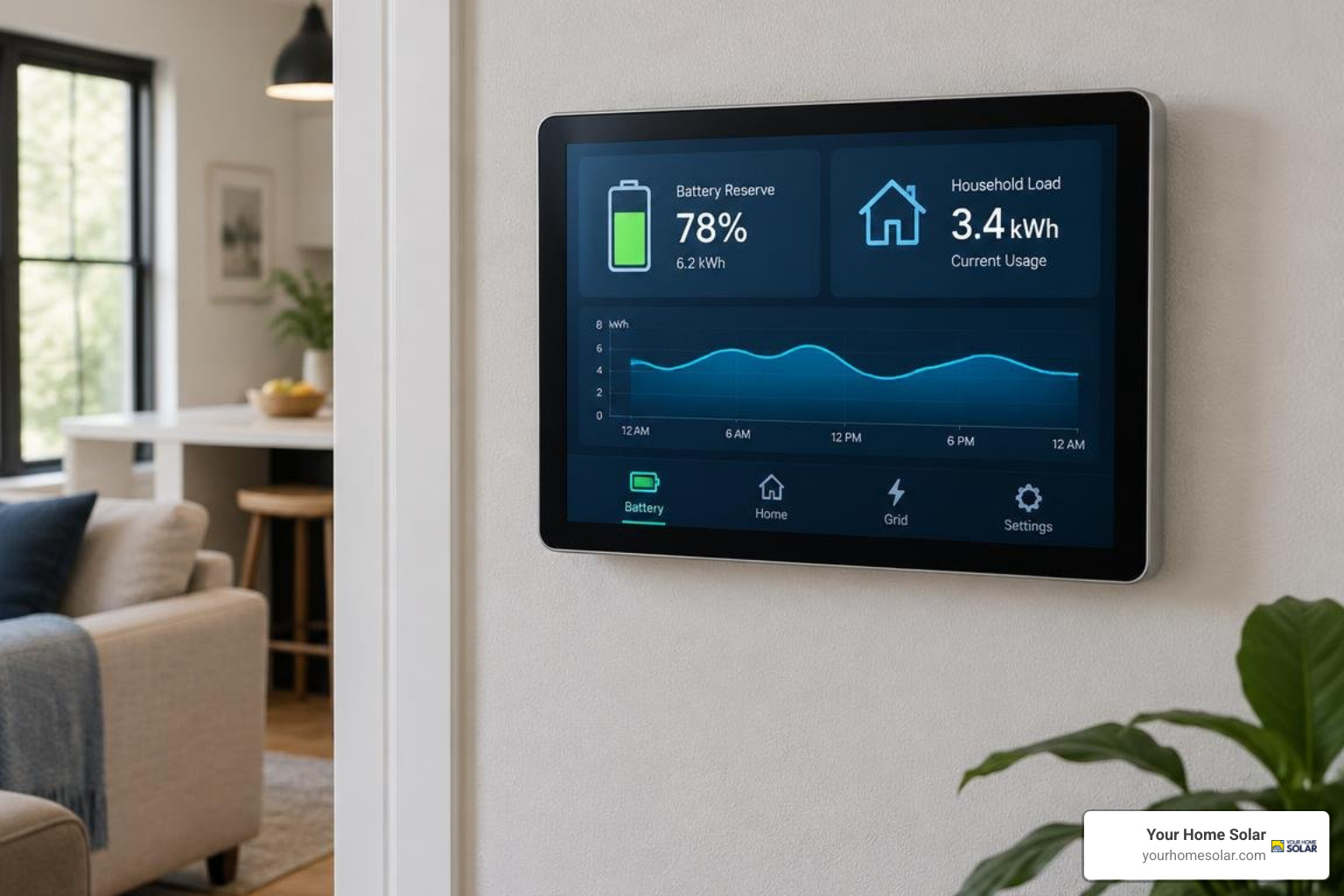
Energy sizing generally falls into two distinct categories:
- Essential-Load Backup (10 to 20 kWh): Powers critical lifestyle and safety circuits—such as your refrigerator, freezer, Wi-Fi router, LED lighting, home security system, CPAP or medical devices, microwave, and well pump.
- Whole-Home Backup (20 to 40+ kWh): Designed to back up your entire 200-amp main breaker panel without compromising your lifestyle, allowing you to run central heating and air conditioning, water heaters, and large kitchen appliances.
To calculate your exact capacity requirement:
- Step 1: List every appliance you need to keep active during an emergency.
- Step 2: Note the running wattage (e.g., modern refrigerator = 150 watts average).
- Step 3: Multiply running wattage by daily operating hours to find total watt-hours (150 watts × 24 hours = 3,600 watt-hours, or 3.6 kWh).
- Step 4: Sum up all appliance totals and divide by 1,000 to determine your daily required kWh capacity.
Selecting the right system size ensures you do not overspend on unneeded capacity or find yourself running low on reserve power during a multi-day storm. Reviewing approaches for choosing home battery backup can streamline this calculation process.
How Long a Battery Backup for Home Power Outage Lasts
A standard residential energy storage unit provides roughly 13.5 kWh of nameplate capacity. With modern Lithium Iron Phosphate (LiFePO4) chemistries, you can safely utilize 90% to 100% of that rated capacity without damaging the internal cells, unlike older lead-acid batteries that degrade if drained below 50%.
In real-world emergency conditions, a single 13.5 kWh battery provides between 8 and 24 hours of continuous backup for a typical 1 to 2 kW critical electrical load. If you manage your consumption—turning off unnecessary lights and relying on efficient appliances—a 13.5 kWh battery can support your essential loads for up to 36 hours.
Reviewing outage duration data and battery longevity analysis demonstrates how pairing your battery system with rooftop solar panels creates an indefinite microgrid. Excess solar energy produced during the daylight hours recharges your battery bank from empty to full within 3 to 5 hours of clear sunshine, keeping your home powered night after night regardless of how long the utility grid remains down.
Running Heavy Appliances on a Battery Backup for a Home Power Outage
One of the most common questions homeowners ask is whether a battery can run power-hungry appliances like central air conditioning, electric heat pumps, or well pumps. The answer depends on two specifications: continuous power output and peak surge capacity.
Every appliance with an electric motor requires a surge of power to start up (starting wattage), which can be two to three times higher than its continuous running draw.
- Refrigerators: Modern Energy Star units draw around 100 to 200 running watts, with a momentary starting surge of 800 to 1,200 watts. Any standard home battery handles this load without difficulty.
- Medical Equipment (CPAP, Oxygen Concentrators): These draw 30 to 120 watts continuously, making battery backup an ideal, flicker-free life-safety safeguard.
- Central Air Conditioning (3 to 5 Ton Units): A central HVAC unit draws 3,000 to 5,000 running watts, but its initial compressor startup surge can spike past 15,000 to 20,000 watts.
To run central HVAC systems without overloading your storage system, we often install a soft-starter on your air compressor. A soft-starter smooths out the initial electrical inrush current by up to 70%, allowing a standard multi-battery system to start and run central cooling reliably. Incorporating proper strategies for staying powered when the grid fails protects both your household comfort and your sensitive electronic equipment.
Costs, Lifespan, and Federal Incentives for Energy Storage in 2026
Investing in home energy resilience involves upfront hardware, electrical engineering, permitting, and certified professional installation. Understanding the breakdown of these costs helps you evaluate the long-term financial picture.
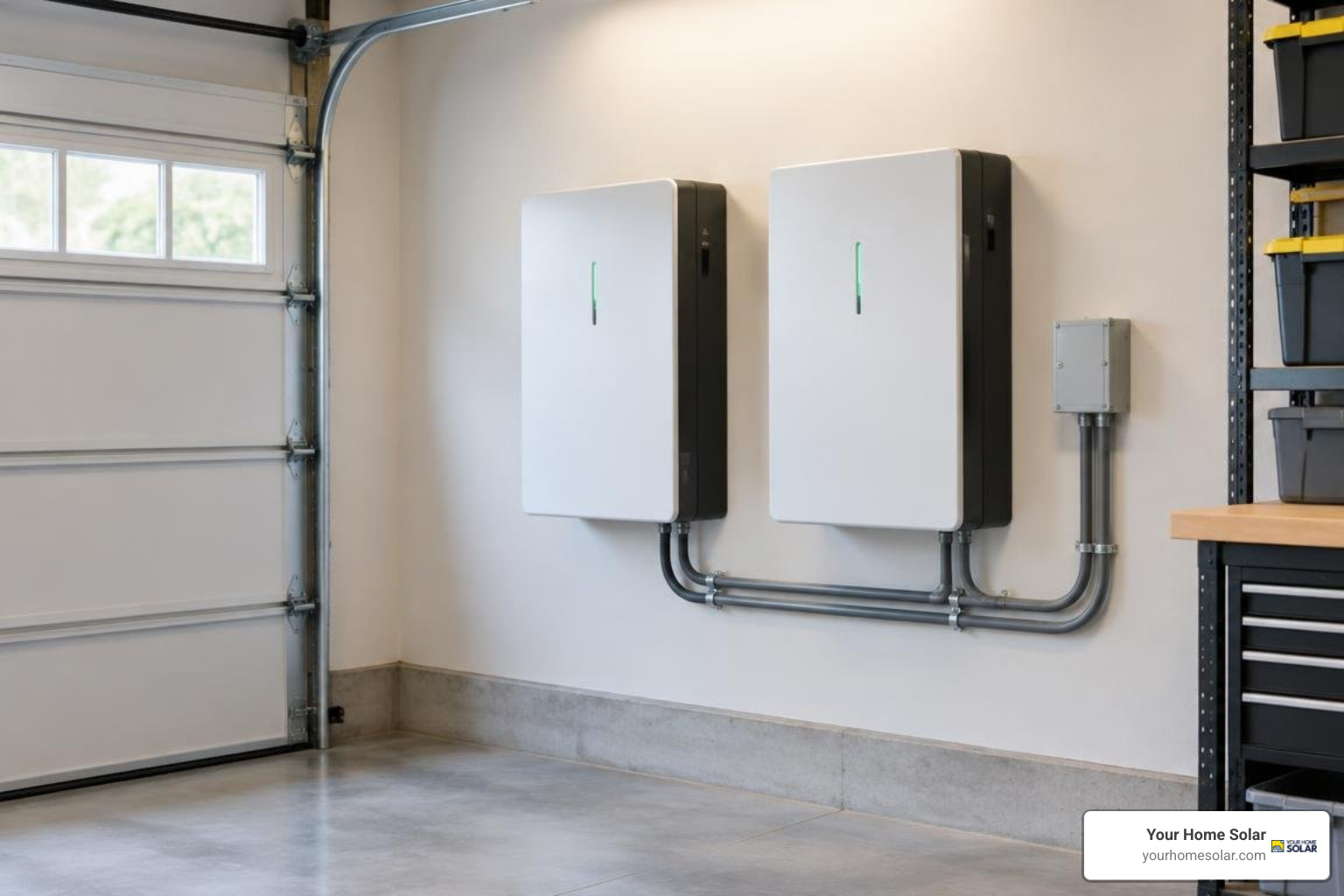
In 2026, total installed turnkey costs for residential battery storage typically range from $10,000 to $25,000+, depending on the total kWh capacity and panel configurations required:
- Hardware Costs: The battery units, integrated inverters, and smart gateway hardware generally range between $7,000 and $16,000.
- Installation and Electrical Labor: Engineering design, utility interconnection agreements, local municipal permitting, critical load subpanel wiring, and master electrician labor usually account for $3,000 to $5,000.
Fortunately, federal policies make residential energy storage significantly more affordable. The federal Residential Clean Energy Credit (Section 25D) provides a 30% tax credit on the total equipment and installation costs of standalone battery storage systems with a capacity of 3 kWh or greater through 2032.
For example, on a $15,000 battery installation, the 30% federal credit reduces your tax liability by $4,500, bringing your net system investment down to $10,500. Detailed overviews in our home battery installation and cost breakdown highlight how localized utility rate structures maximize this return on investment.
When calculating the total cost of ownership, consider operational expenses over a 10 to 15-year period. While a standby fossil fuel generator costs less upfront ($5,000 to $12,000 installed), it incurs recurring maintenance, fuel costs ($5 to $15 per hour during an extended storm), and replacement costs after 1,500 to 2,000 engine hours. A home battery backup operates at $0 per hour, especially when recharged with clean solar power. The Solar United Neighbors battery storage roadmap provides clear consumer frameworks outlining how battery degradation curves maintain over 70% to 80% capacity retention past year 10.
Frequently Asked Questions About Home Battery Storage
Can I install a home battery backup without solar panels?
Yes, you can install a standalone home battery backup without solar panels. When installed without solar, the battery connects directly to your home’s electrical distribution panel and charges from the utility grid during normal operations.
Modern smart storage software continuously monitors local National Weather Service alerts. When severe storms threaten areas like Maryville, Johnson City, or Kingsport, the system enters an automated storm preparation mode, charging the battery cells to 100% capacity from the grid before the storm arrives. Additionally, if your utility implements Time-of-Use (TOU) billing, you can program your battery to charge during cheap off-peak night hours and discharge during expensive peak evening hours, lowering your electric bill even when no blackouts occur.
What maintenance is required for residential lithium batteries?
Residential lithium storage systems require virtually zero routine maintenance. Unlike mechanical generators that require motor oil changes every 50 to 100 operating hours, annual spark plug swaps, carburetor cleaning, and fuel stabilizer treatments, batteries are solid-state electronic devices with no moving internal parts.
The internal battery management system (BMS) automatically balances individual cell voltages, regulates internal thermal management systems, and executes self-diagnostic checks. System health and firmware upgrades are delivered automatically via built-in Wi-Fi and cellular connections, keeping your system up to date with no manual effort required.
What features define a whole-home battery backup system?
A whole-home battery backup system is characterized by high continuous power output (typically 10 kW or higher), large energy capacity (20 to 40+ kWh), and full electrical panel integration. Rather than isolating circuits into a secondary subpanel, a whole-home setup connects directly behind your primary utility meter via a whole-home smart switch.
This configuration allows your storage system to manage high-draw 240V appliances—such as central air conditioners, electric water heaters, well pumps, and EV chargers—using intelligent load management software. Exploring emergency home power planning helps homeowners determine whether whole-home or critical-circuit backup best aligns with their emergency goals.
Conclusion
Power outages across East Tennessee are becoming more unpredictable, but the way you protect your family does not have to involve noisy engines, toxic fumes, or panic at the gas pump. A properly engineered battery backup delivers silent, instantaneous, and automated resilience the second the electrical grid goes down.
By taking advantage of the 30% federal tax credit and pairing energy storage with rooftop generation, you create a long-term microgrid that protects your home while insulating your household against rising energy prices. We at Your Home Solar provide tailored energy solutions across Knoxville, Farragut, Oak Ridge, and the surrounding counties, ensuring your home remains safe and comfortable in every season. Check out our ultimate guide to solar batteries and energy storage solutions to begin designing your home energy backup system today.