How to Choose Home Battery Storage That Fits Your Home
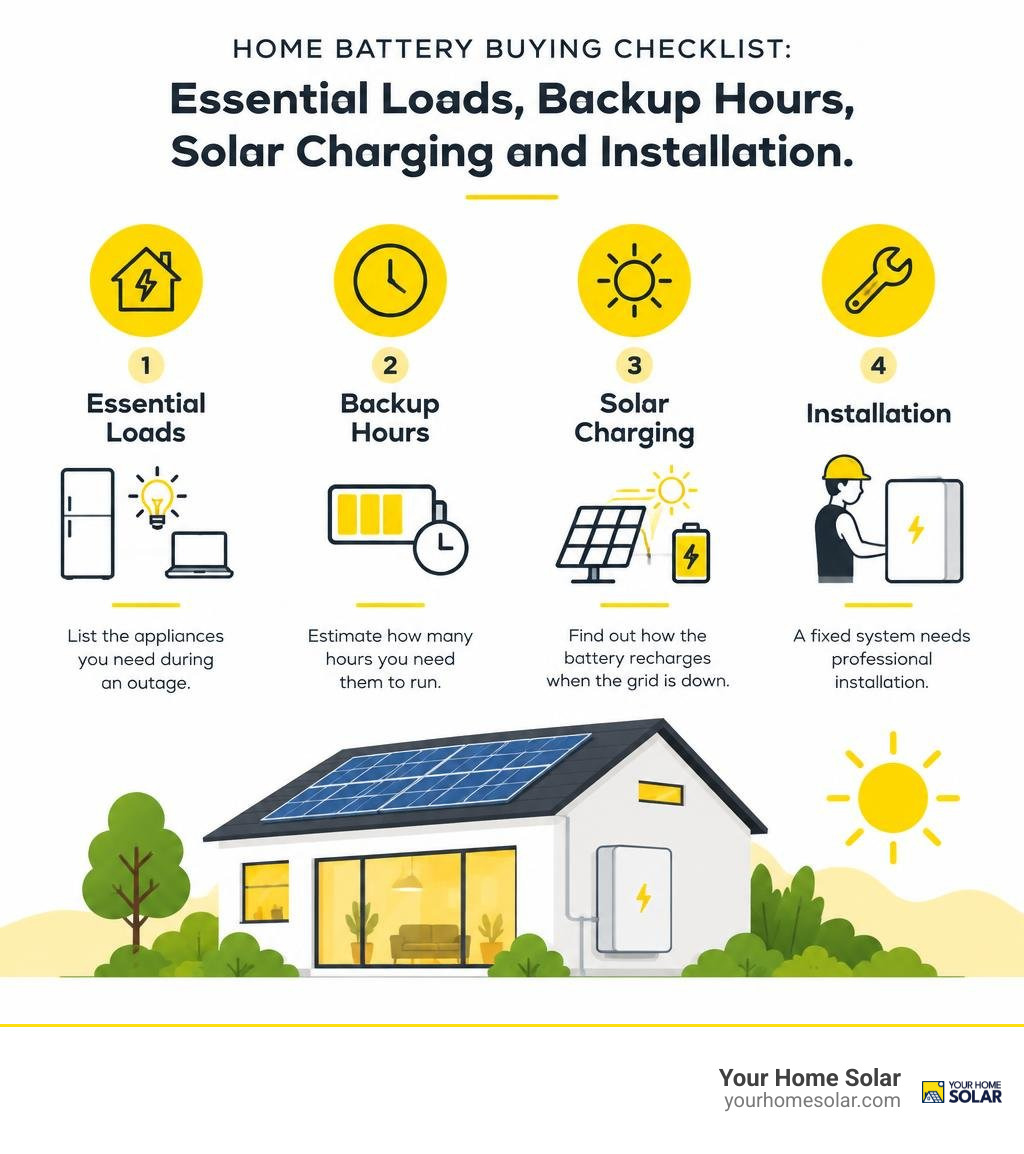
Start with what you need to keep running during an outage. Add up the watts used by essential appliances, estimate how many hours you need them, and choose a battery with enough usable capacity and output power. A portable battery can run devices you plug into it. A fixed system can back up selected home circuits, but it needs professional installation. If you have solar panels, ask how the battery will recharge when the grid is down.
The right setup may also lower your power bill by storing solar energy for later use. Savings depend on your usage and utility rates, so compare the installed cost with both the backup protection and bill savings you expect. According to the U.S. Department of Energy, home energy storage systems can also help households manage time-of-use electricity rates and improve resilience during outages.
I’m Ernie Bussell, founder of Your Home Solar. My work overseeing solar installations in East Tennessee has shown me why, before you buy home battery storage, it pays to size the system around your home’s real needs.
Quick buy home battery storage definitions:
Permanent Home Battery Systems: Why Buy Home Battery Storage
Severe weather across East Tennessee—from sudden winter freezes in Johnson City to summer storm fronts rolling over Knoxville and Sevierville—can knock out grid power without warning. When the local utility network drops offline, standard grid-tied solar panels shut down automatically for line-worker safety. Storing your own clean electricity bridges that gap.
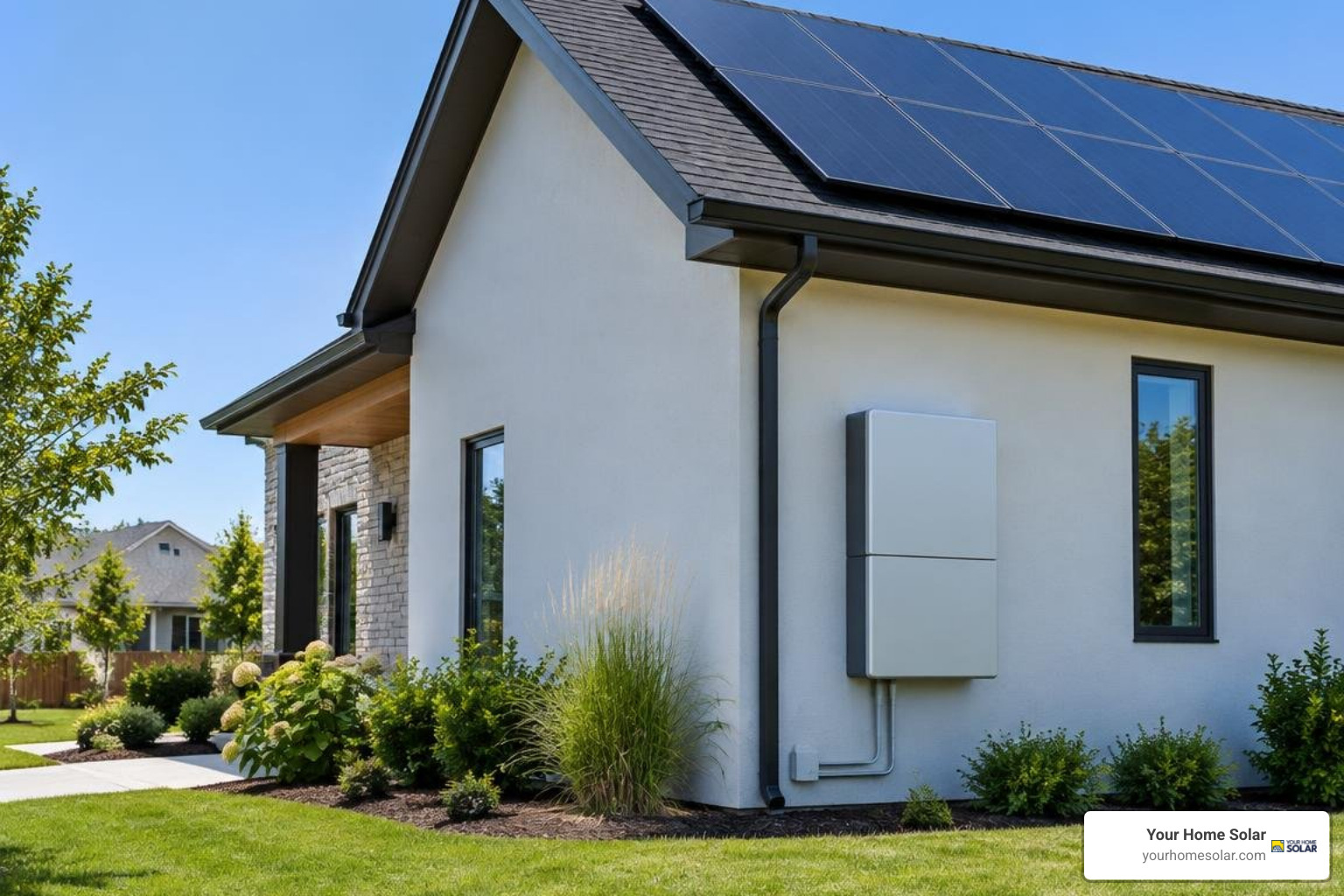
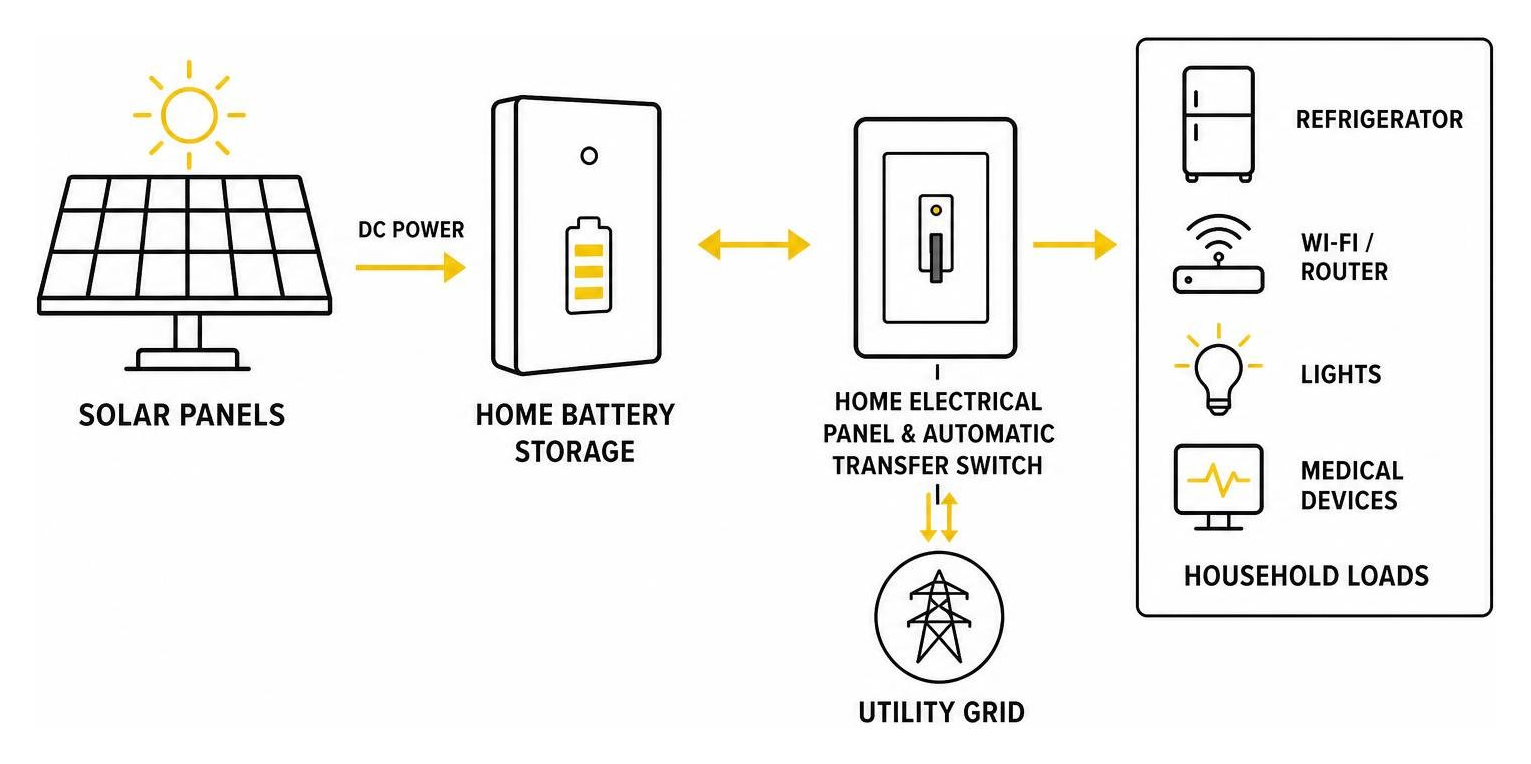
Permanent, wall-mounted battery units connect directly to your home’s electrical panel via an automatic transfer switch. The moment the grid goes dark, the storage system detects the drop and begins powering your circuits within milliseconds.
Exploring diverse residential battery backup options helps pinpoint whether you require a dedicated essential-load configuration or whole-home energy protection.
| Feature | Essential-Load System | Whole-Home Battery System |
|---|---|---|
| Typical Capacity | 5 kWh to 10 kWh | 15 kWh to 30+ kWh |
| Continuous Output | 3.6 kW to 5.0 kW | 7.6 kW to 15.0+ kW |
| Circuits Powered | Refrigerator, Wi-Fi, lights, medical devices | Entire distribution panel (HVAC, well pump, oven) |
| Subpanel Required? | Yes (Critical loads subpanel) | No (Uses smart whole-home isolation switch) |
| Grid Outage Transition | Instant (<20ms UPS transfer) | Instant (<20ms UPS transfer) |
Fixed Home Batteries for Different Backup Needs
Fixed home energy storage solutions mount securely inside garages, utility rooms, or on exterior walls. Unlike small plug-in units, fixed systems integrate with your home’s wiring. When sizing a system, you can choose between keeping a handful of vital appliances running for days or running major equipment normally during a blackout.
A dedicated system lets you establish energy independence, buffering your household against unpredictable grid outages and unstable energy rates.
Single-Phase Backup vs. 240V Heavy Appliance Power Delivery
Standard household electronics run on 120-volt circuits. However, energy-heavy equipment—such as central air conditioning, heat pumps, electric water heaters, and deep well pumps common in rural East Tennessee properties—demands a dedicated 240-volt split-phase supply.
When evaluating a solar battery backup comparison, pay close attention to surge wattage alongside continuous power output:
- Starting (Surge) Wattage: Inductive loads like compressor motors require a massive initial burst of power (often 2 to 3 times running wattage) to start up.
- Continuous Wattage: The steady power required to keep motors turning and heating elements hot.
A single 5 kW inverter easily manages your lighting, network, and food refrigeration. If you need to run central HVAC units or electric cooking ranges during an extended outage, stacking multiple battery modules or selecting high-output hybrid inverters ensures adequate 240V delivery.
Calculating Energy Sizing and Capacity Needs
To size your storage setup correctly, calculate both power (watts) and energy capacity (kilowatt-hours, or kWh). Wattage dictates what you can turn on simultaneously; kilowatt-hours dictate how long those appliances can run.

Sizing Considerations Before You Buy Home Battery Storage
Begin by auditing the circuits you cannot afford to lose. Review our practical guide on selecting a battery backup for house power to avoid sizing mistakes.
Here is a standard baseline for typical essential circuits:
- Modern Refrigerator/Freezer: Consumes roughly 1.2 to 2.0 kWh per day (cycling on and off).
- Home Network & Wi-Fi: Draws roughly 20 to 50 watts continuously (0.5 to 1.2 kWh per day).
- LED Lighting (4–6 rooms): Draws 60 to 100 watts when active (0.4 to 0.8 kWh per day).
- Medical Equipment (e.g., CPAP machine): Draws 30 to 60 watts (0.3 to 0.5 kWh per 8-hour sleep cycle).
- Well Pump (Intermittent run): Consumes 0.5 to 1.5 kWh per day depending on water usage.
A daily essential load tally usually sits between 4 kWh and 8 kWh. A 10 kWh battery provides safe multi-day buffer capacity for these circuits, even if dark storm clouds limit daytime solar recharging.
Modular Capacity Expansion and Scalability
Modern home batteries feature modular designs. Instead of buying an oversized system on day one, you can install a 5 kWh or 10 kWh base unit and add expansion modules as your energy needs increase.
Standard storage architectures scale in 5 kWh increments up to 20 kWh or more on a single inverter. Selecting a scalable deep cycle battery storage for solar system protects your investment, letting you expand storage effortlessly if you add an electric vehicle or switch to a heat pump down the road.
Technical Features: Chemistry, Inverters, and Smart Controls
Battery technology has evolved rapidly over recent years. Understanding core hardware specifications ensures you select safe, high-performing equipment for your residence. Reviewing modern residential solar battery types makes comparing hardware straightforward.
Battery Chemistry, Safety BMS, and Operating Noise
Leading stationary storage systems utilize Lithium Iron Phosphate (LiFePO4 or LFP) chemistry rather than older Nickel Manganese Cobalt (NMC) formulas.
LFP cells offer several distinct advantages:
- Superior Thermal Stability: LFP chemistry resists thermal runaway, operating safely inside indoor utility rooms and attached garages.
- Advanced Battery Management Systems (BMS): Microprocessors continuously monitor cell voltages, state of charge, and temperatures, preventing over-charging, over-discharging, and short circuits.
- Whisper-Quiet Operation: Advanced liquid or passive cooling keeps noise levels around 30 dB during standard operation—comparable to the ambient sound of a quiet library.
AC Coupling, DC Coupling, and Hybrid Inverters
Integrating storage with solar arrays comes down to system coupling:
Hybrid inverters manage both solar power generation and battery storage simultaneously. DC-coupled hybrid systems eliminate unnecessary power conversion steps, ensuring high round-trip efficiency when capturing energy from monocrystalline panels. When upgrading an existing solar array, exploring smart solar battery storage solutions helps you decide between an AC-coupled retrofit or a streamlined hybrid inverter replacement.
Smart App Control, Tariff Optimization, and UPS Switching
Modern energy storage includes comprehensive app-based monitoring. Through an intuitive smartphone dashboard, you can:
- Monitor Real-Time Energy Flow: Track production, storage reserves, and household consumption live.
- Leverage Time-of-Use Arbitrage: Schedule the battery to charge from the grid during cheaper off-peak hours and discharge during high-rate peak windows.
- Maintain Uninterruptible Power Supply (UPS) Reliability: High-speed automatic transfer switches activate backup power in less than 20 milliseconds, keeping desktop computers, routers, and sensitive electronics running without resetting.
Installation, Longevity, and Financial Return
Investing in energy resilience protects your household routine while lowering ongoing utility costs. Understanding the details of home battery installation and costs ensures you maximize your return over the life of the system.
When to Buy Home Battery Storage with Professional Installation
Small portable generators offer plug-and-play convenience for camping trips, but whole-home backup power requires certified electrical work.
Connecting a permanent battery system requires:
- Installing automatic transfer isolation switches to prevent dangerous backfeeding into utility power lines.
- Setting up dedicated critical load panels.
- Securing local municipal electrical permits and utility grid-tie interconnection approvals across East Tennessee jurisdictions.
- Ensuring code compliance to preserve manufacturer warranties.
Our certified installation teams ensure your system is permitted, wired, and inspected according to regional electrical codes.
Battery Cycle Lifespan, Warranties, and Long-Term Value
Premium LFP batteries deliver up to 6,000 complete charge-discharge cycles while retaining over 70% to 80% of original capacity. For a system cycling once daily, 6,000 cycles equals roughly 16 years of reliable service.
Quality manufacturers back their hardware with 10-year comprehensive warranties covering both the battery cells and integrated inverters. By capturing surplus daytime solar generation and shifting load away from peak utility billing windows, a well-managed battery delivers steady financial returns alongside invaluable outage security.
Frequently Asked Questions About Residential Energy Storage
Can a home battery power an entire house during a prolonged blackout?
Yes, provided the system is sized to match your household’s continuous wattage demand and has an adequate solar array to replenish capacity daily. During prolonged grid failures, smart load management—such as moderating heavy heating or cooling use—ensures your stored reserves keep essential lights, refrigeration, water systems, and communications powered indefinitely.
How many years will a lithium iron phosphate (LFP) home battery last?
LFP home batteries provide between 10 and 16 years of reliable daily operation. Because LFP chemistry experiences minimal degradation per cycle compared to legacy lithium chemistries, these batteries routinely surpass their standard 10-year warranty periods with substantial usable capacity remaining.
Is home battery storage worth buying without solar panels?
Yes. Standalone home battery systems can charge exclusively from the electrical grid during off-peak, low-cost hours and discharge during expensive peak rate periods. They also serve as clean, silent emergency backup systems that operate without fuel, exhaust fumes, or maintenance hassles during weather-related outages.
Conclusion
Energy independence is about peace of mind. Choosing the right residential battery system ensures that when utility lines fail across East Tennessee, your home remains warm, well-lit, and fully functional.
At Your Home Solar, we specialize in tailoring resilient, rewarding energy systems matched to your property’s specific demands. Explore our comprehensive guide to solar batteries and energy storage to plan your setup, or reach out to our local team today for an expert consultation.