
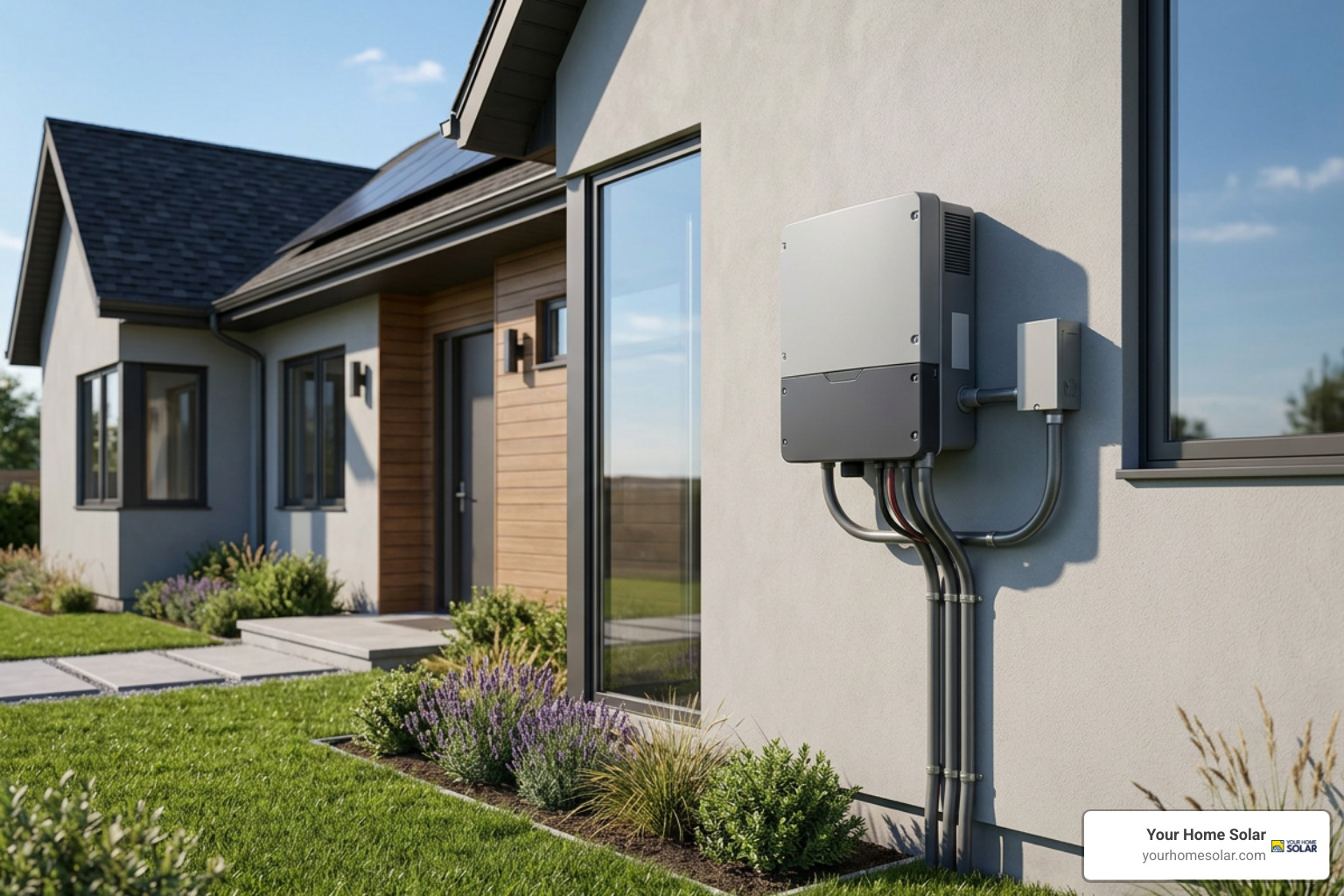
What Inverter Installation Charges Really Include
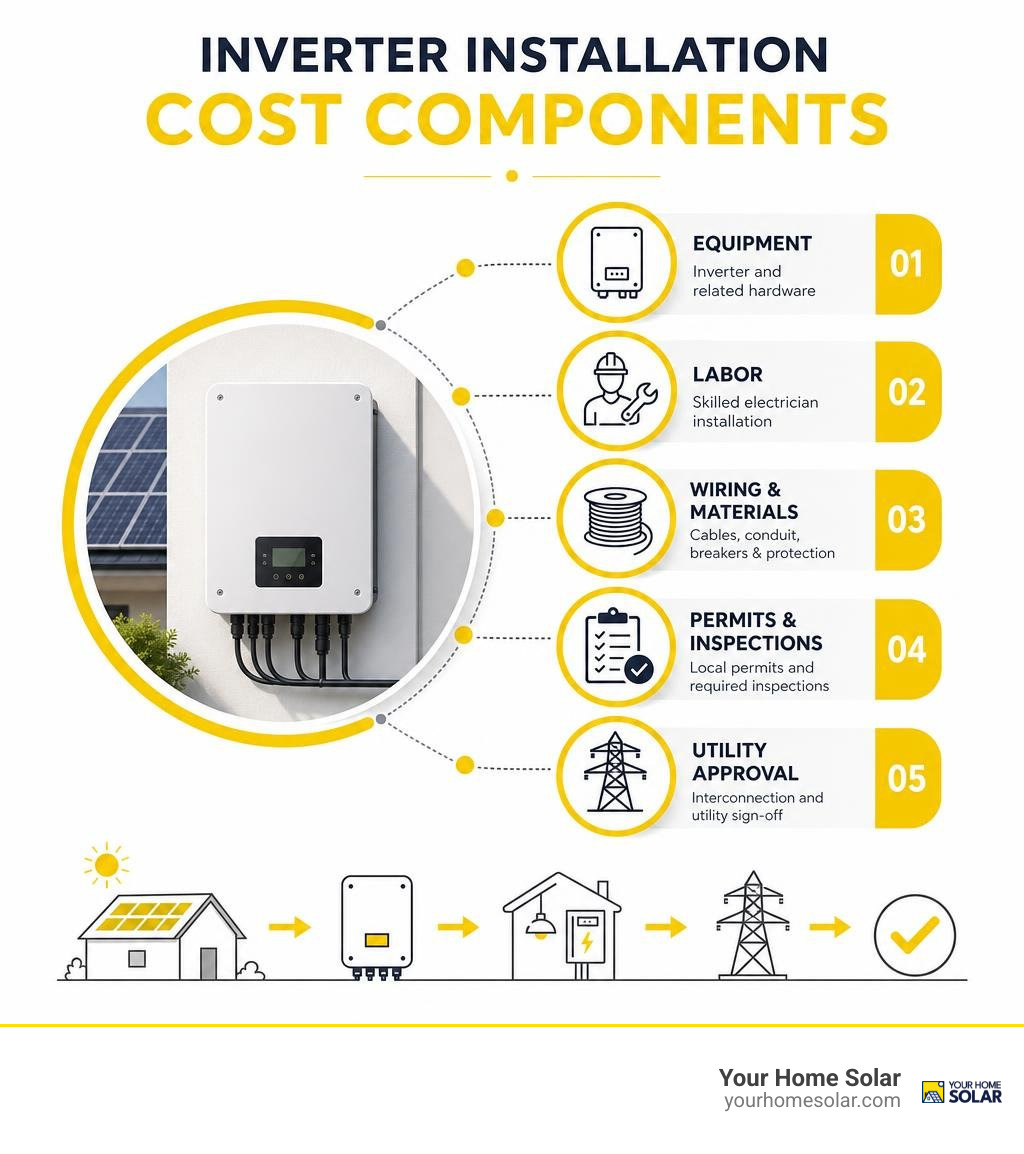
For a solar system, inverter installation charges are not just the cost to mount and connect the inverter. They can include electrical labor, wiring, breakers and surge protection, mounting hardware, permitting, inspections, and utility interconnection. In India, labor-only solar installation commonly runs about ₹3,000 to ₹6,000 per kW, while a complete turnkey system costs far more because it includes panels, structure, safety equipment, and approvals.
For East Tennessee homeowners, the same budgeting rule applies: ask for an itemized, installed price rather than relying on the inverter’s equipment price alone. A clear quote should separate:
- Inverter and battery equipment
- Electrician labor, wiring, conduit, and breakers
- Mounting, roof work, and weatherproofing
- Permits, inspections, and utility interconnection
- Monitoring, warranties, and any service fees
The biggest price swings usually come from battery backup needs, long wire runs, panel or service upgrades, difficult roof access, and the local utility approval process. A grid-tied inverter is generally the simplest option; hybrid and off-grid systems cost more because they require battery integration and more complex electrical design.
I am Ernie Bussell, founder and CEO of Your Home Solar, with hands-on solar operations experience helping homeowners understand system design, installation workflows, and inverter installation charges. My background in quality assurance, operations leadership, and in-house solar installation informs the practical cost questions covered in this guide.
Key terms for inverter installation charges:
Overview of Inverter Installation Charges and Sizing in 2026
When planning a residential energy setup, many homeowners look at online retail prices and assume that purchasing the unit itself represents the bulk of the project expense. In reality, the physical power electronics account for only 15% to 25% of a fully commissioned setup. The hardware must be matched with proper balance of system (BOS) components, robust electrical protection, code-compliant wiring, and utility approval.
Inverters act as the heart of your solar system: understanding home inverters helps clarify why installation requires precision. Direct current (DC) produced by photovoltaic arrays or stored inside battery cells must be converted safely into alternating current (AC) matching the voltage and frequency of your home appliances and the grid.
Proper system sizing directly impacts both labor complexity and balance-of-system requirements. Below is a cost overview illustrating typical equipment prices versus full turnkey installed packages across standard residential capacities in 2026:
| System Capacity | Inverter Hardware Only | Dedicated Installation & BOS | Full Turnkey Installed Package |
|---|---|---|---|
| 3 kW | $800 – $1,400 (₹18,000 – ₹42,000) | $500 – $1,200 (₹35,000 – ₹50,000) | $5,500 – $8,500 (₹1,50,000 – ₹1,95,000) |
| 5 kW | $1,200 – $2,200 (₹45,000 – ₹65,000) | $800 – $1,800 (₹50,000 – ₹75,000) | $8,500 – $13,000 (₹2,60,000 – ₹3,40,000) |
| 10 kW | $2,400 – $4,500 (₹85,000 – ₹1,30,000) | $1,500 – $3,200 (₹90,000 – ₹1,40,000) | $16,000 – $25,000 (₹5,00,000 – ₹6,80,000) |
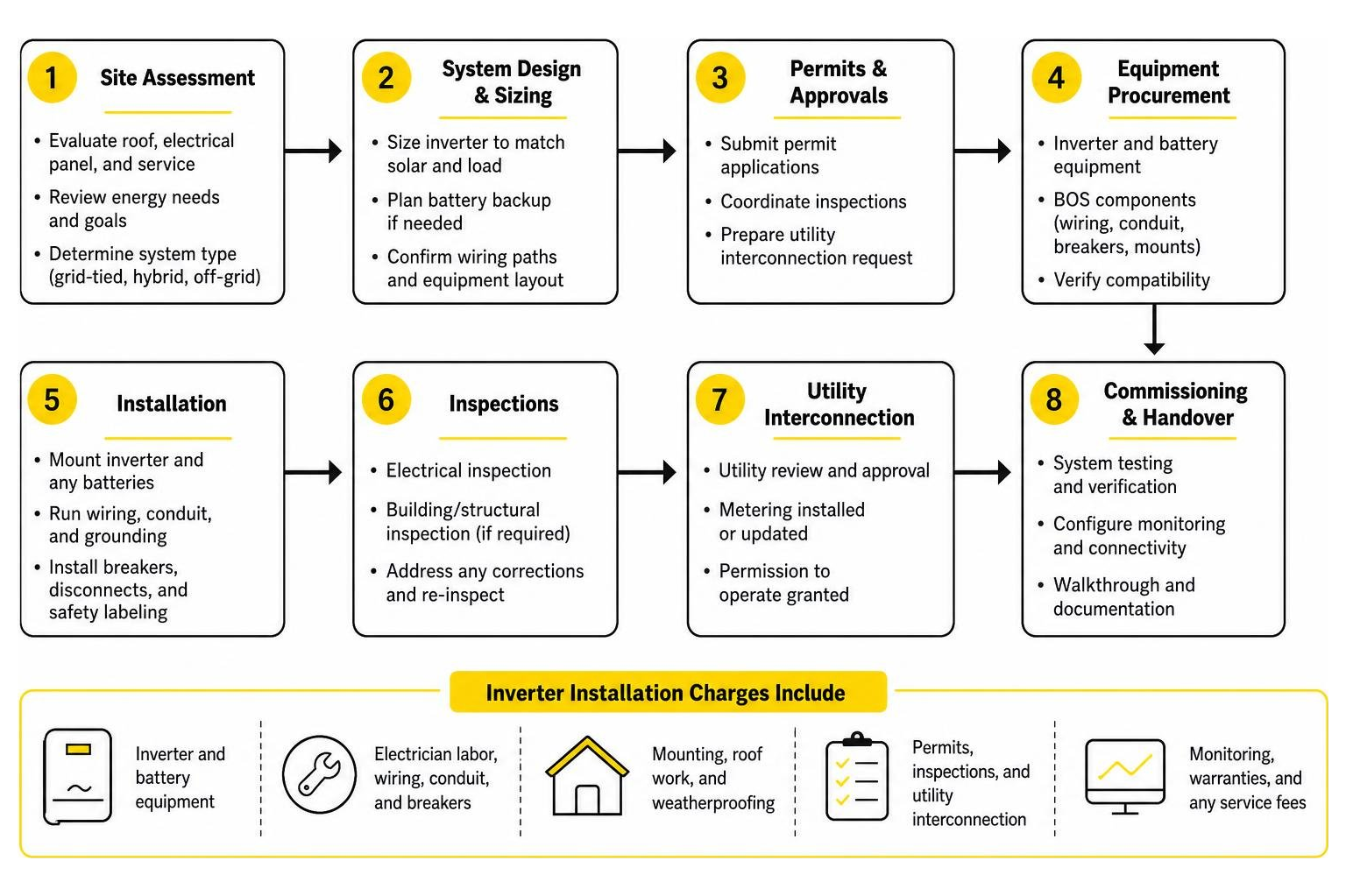
Average Inverter Installation Charges by Capacity (3 kW, 5 kW, 10 kW)
As you scale from a smaller 3 kW setup to a 10 kW system, the labor rate per kilowatt tends to decrease slightly due to fixed mobilization efficiencies, but physical material and conduit requirements scale upward. When setting your solar budget: what to expect for home installation costs depends heavily on matching equipment ratings to panel strings.
- 3 kW Systems: Perfect for smaller households (consuming roughly 300–400 kWh monthly). Installation requires single-phase wiring, a single dual-pole breaker in the main distribution board, and straightforward DC isolator routing. Dedicated installation labor usually takes a two-person team less than a day.
- 5 kW Systems: The standard residential baseline for typical family homes. A 5 kW installation often involves dual Maximum Power Point Tracking (MPPT) inputs to manage separate roof orientations, requiring dual-string DC conduit runs and upgraded circuit protection boxes.
- 10 kW Systems: Common for larger homes, estates, or light commercial properties running multiple HVAC systems. These systems frequently involve three-phase power or split-phase high-amperage subpanels. The electrical service may require main panel upgrades (MPUs) or secondary disconnect switches to comply with electrical safety standards.
On-Grid vs. Hybrid vs. Off-Grid Configurations
The specific inverter architecture you select dramatically alters both equipment costs and installation labor hours:
- Standard Grid-Tied Inverters (String or Microinverters): The most straightforward to install. They sync directly with the utility grid and automatically disconnect during power cuts to prevent line back-feeding. Reviewing our Solar Inverter Comparison Guide 2026 reveals why standard string inverters provide the lowest upfront installation charges.
- Hybrid Inverters (Battery-Ready): These units manage simultaneous inputs from solar panels, battery banks, and the grid. Installing a hybrid inverter involves integrating critical load backup panels, battery management system (BMS) communications wiring, and automated transfer switching. Installation labor increases by 30% to 50% compared to basic string units.
- Off-Grid Inverters: Designed for complete self-reliance away from utility connections or in areas with persistent outages. Off-grid units require high-capacity charge controllers, robust surge handling for motor startup currents, and generator auto-start wiring.
Detailed Breakdown of Labor and Electrical BOS Costs
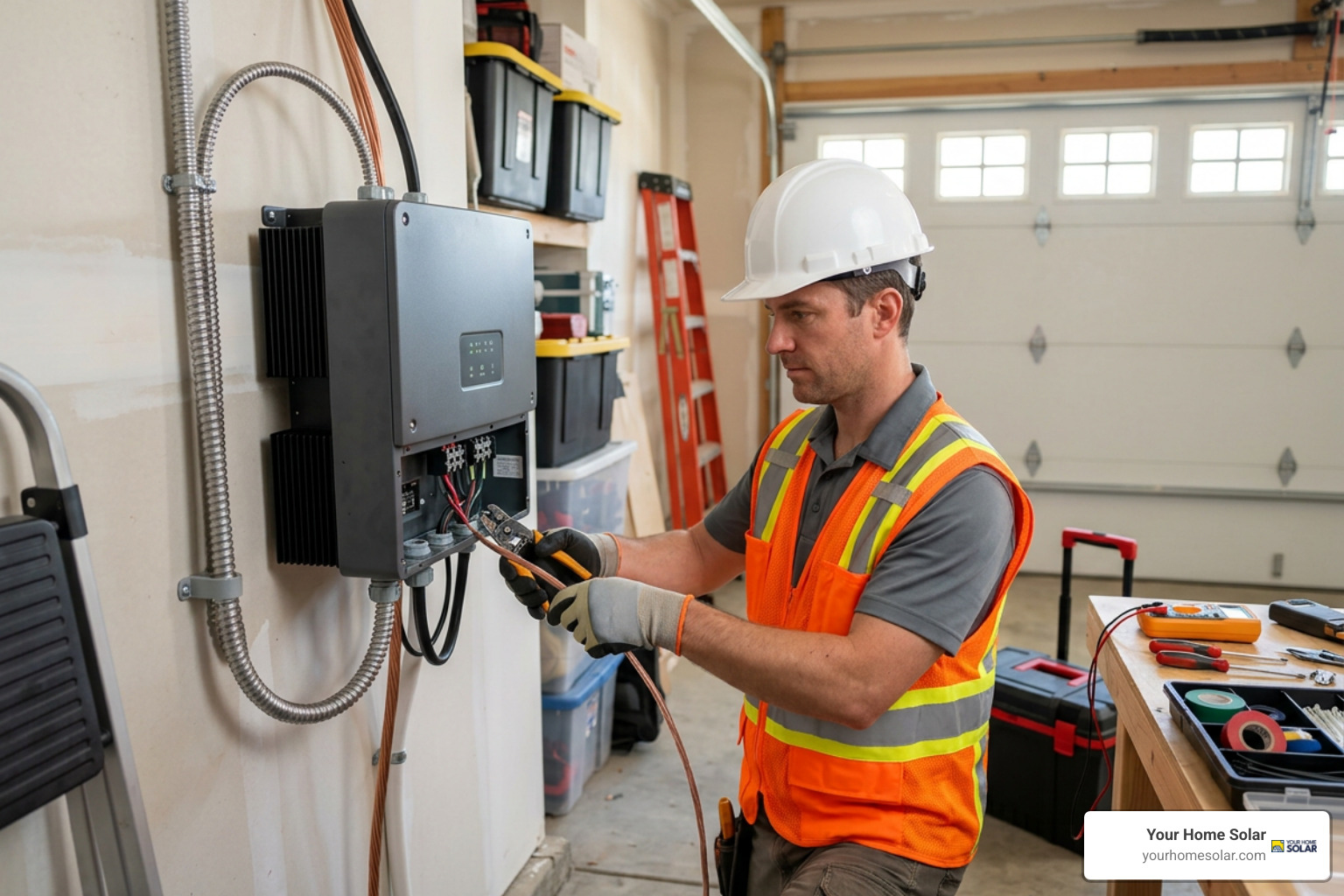
Understanding what happens during a professional installation clarifies why labor rates represent a critical investment in system longevity and property safety. Certified electricians must ensure that continuous currents, thermal thresholds, and isolation protocols align with national and local electrical codes.
Evaluating regional market data, such as local installation studies across the Southeast and data on Johnson City solar cost and payback, highlights that quality labor ensures fewer lifetime service calls and maximizes return on investment.
Electrician Wiring and Labor Charges per kW
Labor-only installation costs typically range from ₹3,000 to ₹6,000 per kW (or roughly $500 to $1,500 total in residential US installations). How long an install takes and what trade specialists charge depends heavily on site accessibility and the age of the existing service panel.
For simple indoor or garage subpanel connections, standard pricing benchmarks in forum discussions like How Much Do Electricians Charge For Inverter Wiring show base trade wiring ranging from ₹1,500 to ₹5,000 for standard home backups, while full-scale solar tie-ins with DC optimizers require specialized solar technicians at dedicated daily rates.
Key tasks handled during the electrical labor phase include:
- Wall-mounting the inverter backing plate with appropriate structural clearance and ventilation.
- Bending and routing metal EMT or heavy-duty UV-resistant PVC conduits.
- Pulling appropriately sized copper or aluminum conductors to avoid voltage drops greater than 1.5% across the run.
- Terminating DC inputs, AC grid lines, and auxiliary backup terminals to precise torque specifications.
Balance of System: Mounting, ACDB/DCDB, and Cabling
The Balance of System (BOS) comprises all supporting hardware required to bridge the solar panels, inverter, and home panelboards safely:
- DC Distribution Box (DCDB): Houses DC surge protection devices (SPDs), fuses, and rotary DC isolator switches. For a 5 kW array, a quality DCDB costs between ₹4,000 and ₹8,000 ($100–$250).
- AC Distribution Box (ACDB): Contains miniature circuit breakers (MCBs) or molded case circuit breakers (MCCBs), residual current circuit breakers (RCCBs), and AC surge arrestors designed to shield the inverter from grid-side voltage spikes.
- Solar DC Cabling: Cross-linked polyethylene (XLPO) insulated, UV-resistant, tinned copper cables. Typical installations require 20 to 60 meters of 4 mm² or 6 mm² wiring, costing ₹80 to ₹150 per meter.
- Mounting Structures: Aluminum or hot-dip galvanized iron (GI) hardware designed to hold balance boxes, conduits, and safety disconnects securely against exterior brick, siding, or masonry.
Hidden Expenses, Site Variables, and Regulatory Steps
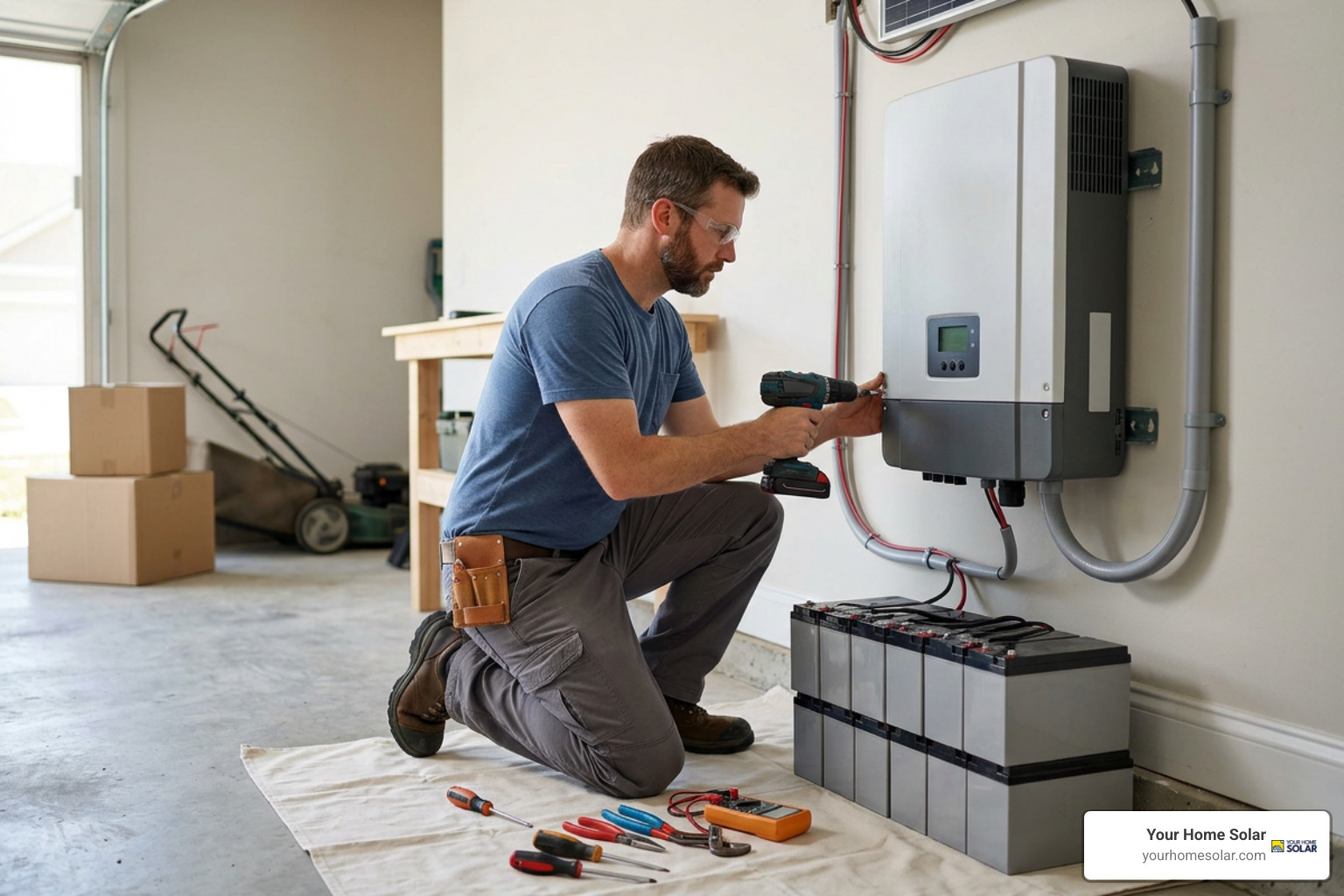
When homeowners encounter unexpected expenses, it is rarely because of the inverter itself; rather, unexpected site conditions and safety compliance rules add items to the final invoice. Working with certified local specialists ensures these details are accounted for early—learn more about finding reliable inverter installers in your area to protect your project from hidden line items.
Hidden Line Items in Inverter Installation Charges
To ensure complete safety and prevent premature equipment breakdown, several auxiliary components must be factored into your budget:
- Dedicated Earthing Pits: A reliable solar installation requires separate, isolated earthing pits—one for DC equipment grounding, one for AC grounding, and one dedicated to lightning protection. Installing chemical earthing electrodes using bentonite or carbon-based backfill compound costs ₹2,000 to ₹4,000 per pit (totaling ₹6,000 to ₹15,000 for a complete three-pit setup).
- Lightning Arrestors (LA): An air terminal mounted at the highest point of the structure protects delicate inverter electronics from induced lightning overvoltages.
- Extended Conduit Runs: If your inverter must be positioned far from your main utility meter or rooftop array, additional copper conductors and heavy conduit can add ₹5,000 to ₹15,000 in material and labor.
- Service Panel Upgrades & Weatherproofing: Older homes with 100-amp main electrical panels often require a busbar derating or an upgrade to a 200-amp service to back-feed solar safely without overloading common distribution bars.
Permitting, DISCOM Fees, and Timelines
Connecting an on-grid or hybrid inverter to the local electrical network requires regulatory processing through your local utility provider (DISCOM). In regional markets across the US, resources such as the Solar Panel Cost Guide in Farragut, TN show how local permitting, engineering stamps, and inspection timelines influence initial milestones.
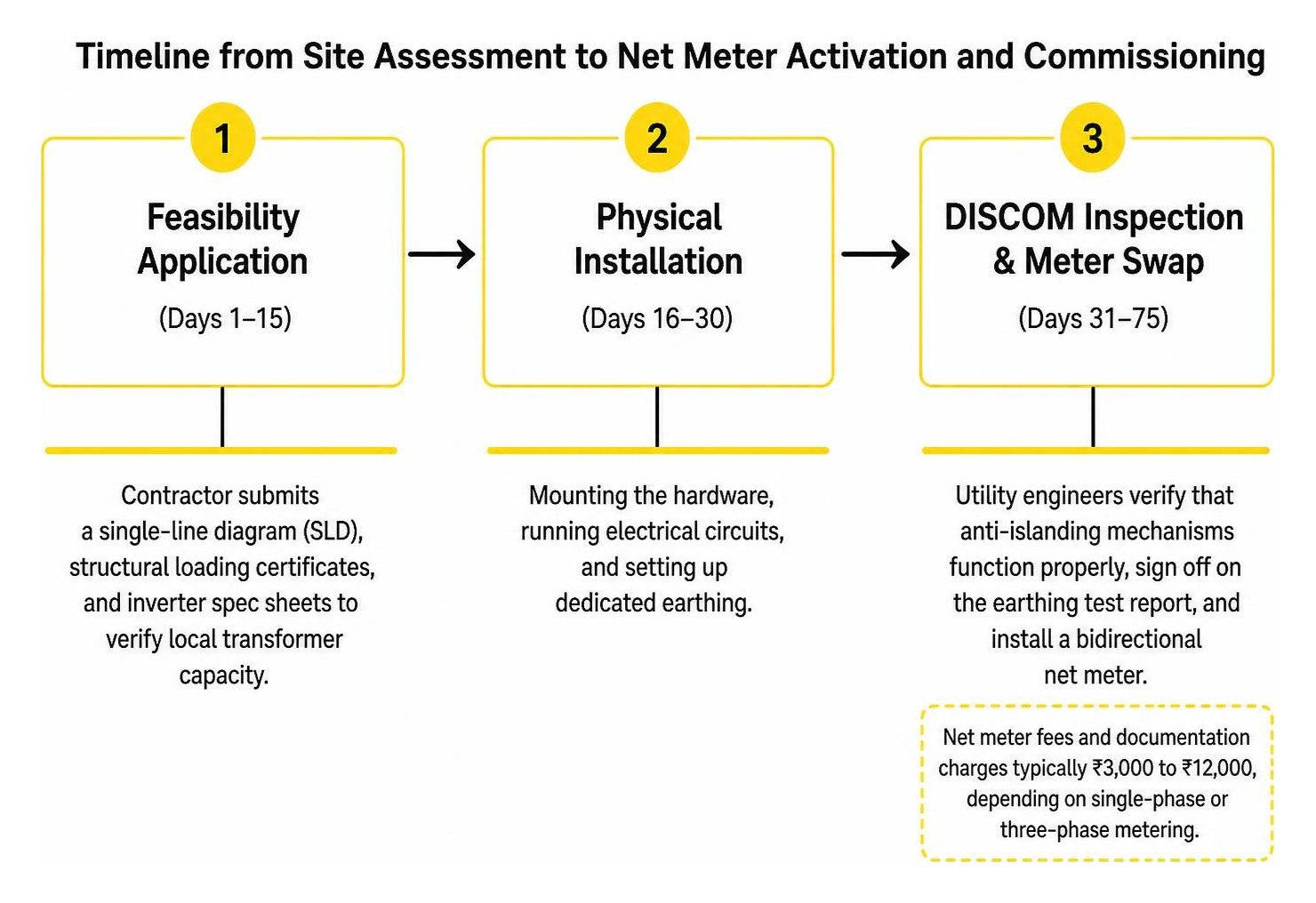
- Feasibility Application (Days 1–15): The contractor submits a single-line diagram (SLD), structural loading certificates, and inverter spec sheets to verify local transformer capacity.
- Physical Installation (Days 16–30): Mounting the hardware, running electrical circuits, and setting up dedicated earthing.
- DISCOM Inspection & Meter Swap (Days 31–75): Utility engineers verify that anti-islanding mechanisms function properly, sign off on the earthing test report, and install a bidirectional net meter. Net meter fees and documentation charges typically cost ₹3,000 to ₹12,000 ($150–$500), depending on whether single-phase or three-phase metering is required.
Subsidies, Payback ROI, and Quote Evaluation
Financial incentive programs make adopting residential clean energy faster and more affordable. Understanding the overall cost and financing of solar systems ensures you maximize available government subsidies and choose financing options that yield immediate positive cash flow.
Subsidy Integration and Payback Calculations
Under modern national initiatives like the PM Surya Ghar scheme in India, residential consumers receive standardized Central Financial Assistance (CFA) calculated on system capacity:
- 1 kW System: ₹30,000 subsidy
- 2 kW System: ₹60,000 subsidy
- 3 kW to 10 kW Systems: Capped at ₹78,000 maximum central subsidy
Because subsidies apply to composite supply contracts (covering hardware, engineering, and installation under a unified 12% GST structure), the net capital outlay drops significantly.
For instance, a standard 3 kW residential installation costing ₹1,70,000 before subsidy requires only ~₹92,000 net investment after the ₹78,000 central assistance. With monthly utility bill savings averaging ₹2,500 to ₹3,500, the capital payback period is achieved in just 3.0 to 4.5 years, leaving over two decades of free electricity generation.
Transparent Quote Checklist and Best Practices
Before signing an installation agreement, run every estimate through this verification checklist:
- Approved Hardware Listings: Ensure the inverter and panels comply with the Approved List of Models and Manufacturers (ALMM) and carry necessary UL/BIS certifications.
- Itemized Balance of System: Verify that the quote explicitly lists the brand, rating, and model of the ACDB, DCDB, SPDs, and cable gauges.
- Earthing Scope: Confirm that 2 to 3 chemical earthing pits with test links are included in the quote rather than billed as an extra on installation day.
- Interconnection & Net Metering: Verify whether the contractor handles all utility filings, testing fees, and bidirectional meter installation end-to-end.
- Warranty Commitments: Look for inverters offering at least a 10-to-12-year manufacturer warranty backed by an installer workmanship warranty covering roof penetrations and wiring.
Frequently Asked Questions About Residential Inverter Setup
What is the typical labor charge for residential inverter installation?
Labor-only rates for solar installations typically range between ₹3,000 and ₹6,000 per kW in India (amounting to ₹15,000 to ₹30,000 for a typical 5 kW system). In the United States, certified electrician installation labor for an inverter generally costs between $500 and $1,500, depending on system complexity, travel distance, and whether battery storage integration is required.
Does the PM Surya Ghar subsidy reduce inverter installation costs?
Yes. The PM Surya Ghar subsidy provides a direct central financial credit of up to ₹78,000 for residential rooftop systems of 3 kW or larger. Because the subsidy is calculated on the total turnkey composite supply invoice (which combines equipment, labor, earthing, and interconnection), it effectively reduces the overall out-of-pocket installation cost.
Is professional installation required for warranty validation?
Almost all Tier-1 inverter manufacturers require professional installation by a licensed electrician or certified solar installer to validate equipment warranties. Self-installing or hiring uncertified handymen can void the 10-to-12-year manufacturer warranty, fail municipal safety codes, and prevent utility approval for grid interconnection.
Conclusion
Navigating inverter installation charges requires looking past the standalone price of the inverter box to evaluate the complete electrical ecosystem—including circuit protection, dedicated earthing, high-grade balance of system components, and certified professional labor. While choosing budget shortcuts or ambiguous lump-sum quotes might seem appealing initially, transparent itemized quotes protect your home from safety hazards, inspection failures, and unexpected change orders.
At Your Home Solar, we are dedicated to providing clear, tailored, and dependable clean energy installations across East Tennessee—serving homeowners in Knoxville, Oak Ridge, Maryville, Johnson City, Kingsport, Morristown, Sevierville, and surrounding communities. For a comprehensive walkthrough of hardware architectures, sizing guidelines, and technology options, explore The Ultimate Guide to Solar Inverters to plan your next energy upgrade with complete confidence.