Why Finding the Right Home Inverter Installer Near You Matters
If you need home inverter installation near me, here’s a quick answer to help you get started fast:
How to find a reliable home inverter installer near you:
- Search for licensed solar or electrical contractors in your area
- Confirm they hold a state electrical license and relevant solar credentials
- Ask about permit handling, utility interconnection, and workmanship warranties
- Request a site assessment and written, itemized quote
- Check verified reviews and confirm they carry liability insurance and workers’ comp
Your home inverter is the core of your solar or battery backup system. It converts the DC electricity your solar panels produce into the AC power your appliances actually use. Without the right inverter — and the right installer — your system simply won’t perform the way you need it to.
For East Tennessee homeowners dealing with outages, rising utility bills, and a genuine interest in energy independence, getting this part right is critical. A poor installation can mean failed inspections, voided warranties, and a system that underperforms for years.
The good news? Finding a qualified, trustworthy installer is straightforward — once you know what to look for.
I’m Ernie Bussell, Founder and CEO of Your Home Solar, the #1 solar energy contractor in East Tennessee, and I’ve spent years helping homeowners navigate home inverter installation near me searches — guiding them from confusion to confidence through transparent education and in-house installation. In this guide, I’ll walk you through everything you need to make a smart, informed decision.
What a Home Inverter Does and Why Professional Installation Matters
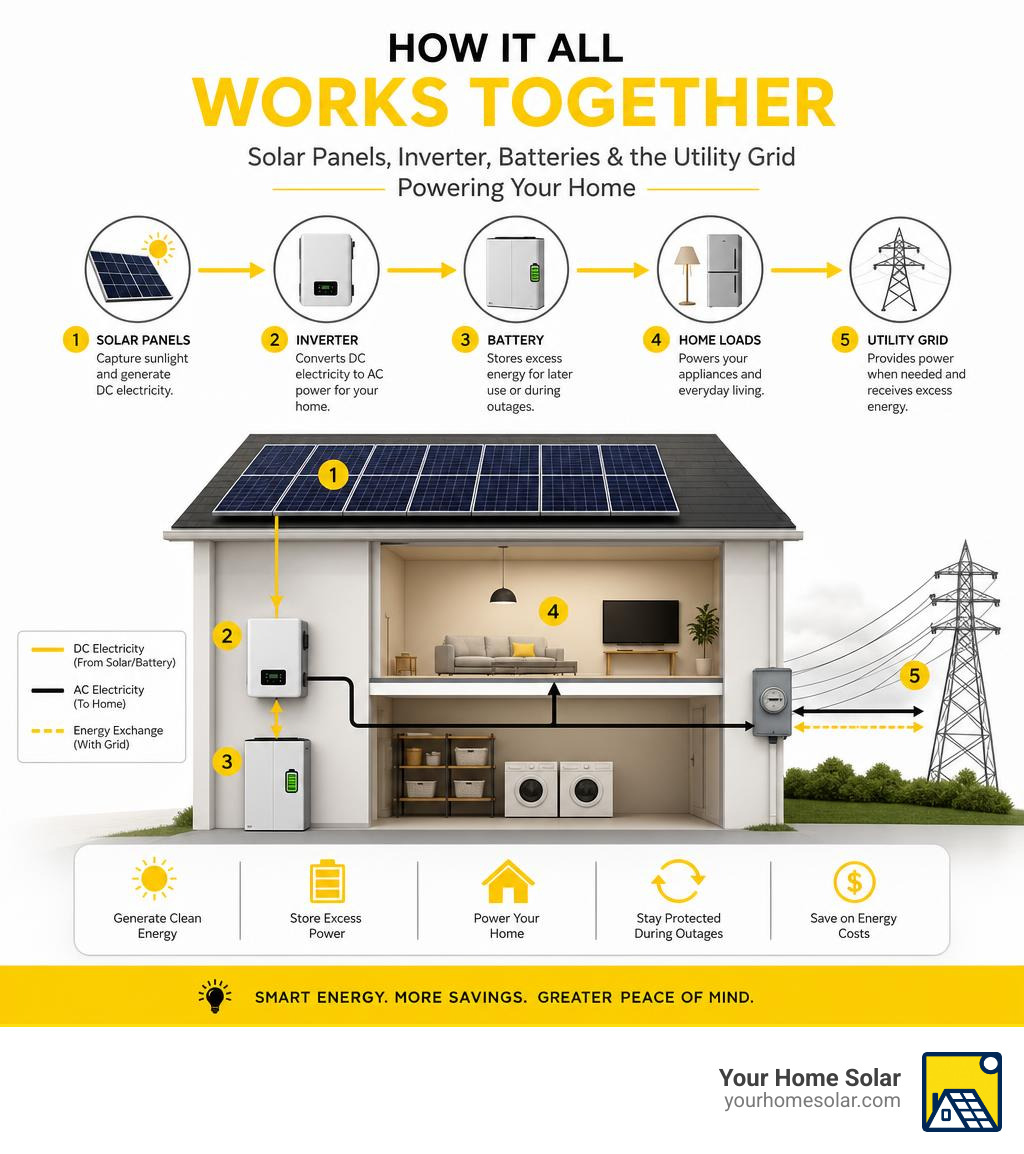
To understand why professional installation is so critical, we first have to look at what the inverter actually does. Often called the “brain” of your solar energy setup, the inverter is responsible for converting raw Direct Current (DC) electricity generated by your solar panels or stored in your batteries into the standard 120V/240V Alternating Current (AC) electricity that powers your lights, refrigerator, HVAC system, and electronics.
Without a properly functioning inverter, your solar panels are essentially just expensive roof decorations.
When you invest in a grid-tied system, your inverter also communicates directly with your local utility provider (such as TVA, Knoxville Utilities Board, or local electric cooperatives). During a power outage, the inverter must instantly shut down its feed to the grid—a safety feature known as “anti-islanding.” This prevents your system from sending electricity back down the power lines, which could otherwise injure utility linemen working to restore power.
Because of these complex electrical pathways, attempting a DIY installation or hiring an unlicensed handyman is incredibly risky. Professional installation ensures strict National Electrical Code (NEC) compliance, proper integration with your main electrical panel, and correct configuration of your critical load panels.
To dive deeper into how these components function, check out our guides on The Heart of Your Solar System: Understanding Home Inverters and our Residential Solar Solutions Guide: The Ultimate Guide to Solar Inverters.
How Inverters Work With Solar Panels, Batteries, and the Grid
In a modern home energy system, electricity flows in multiple directions depending on the time of day, weather conditions, and utility grid status.
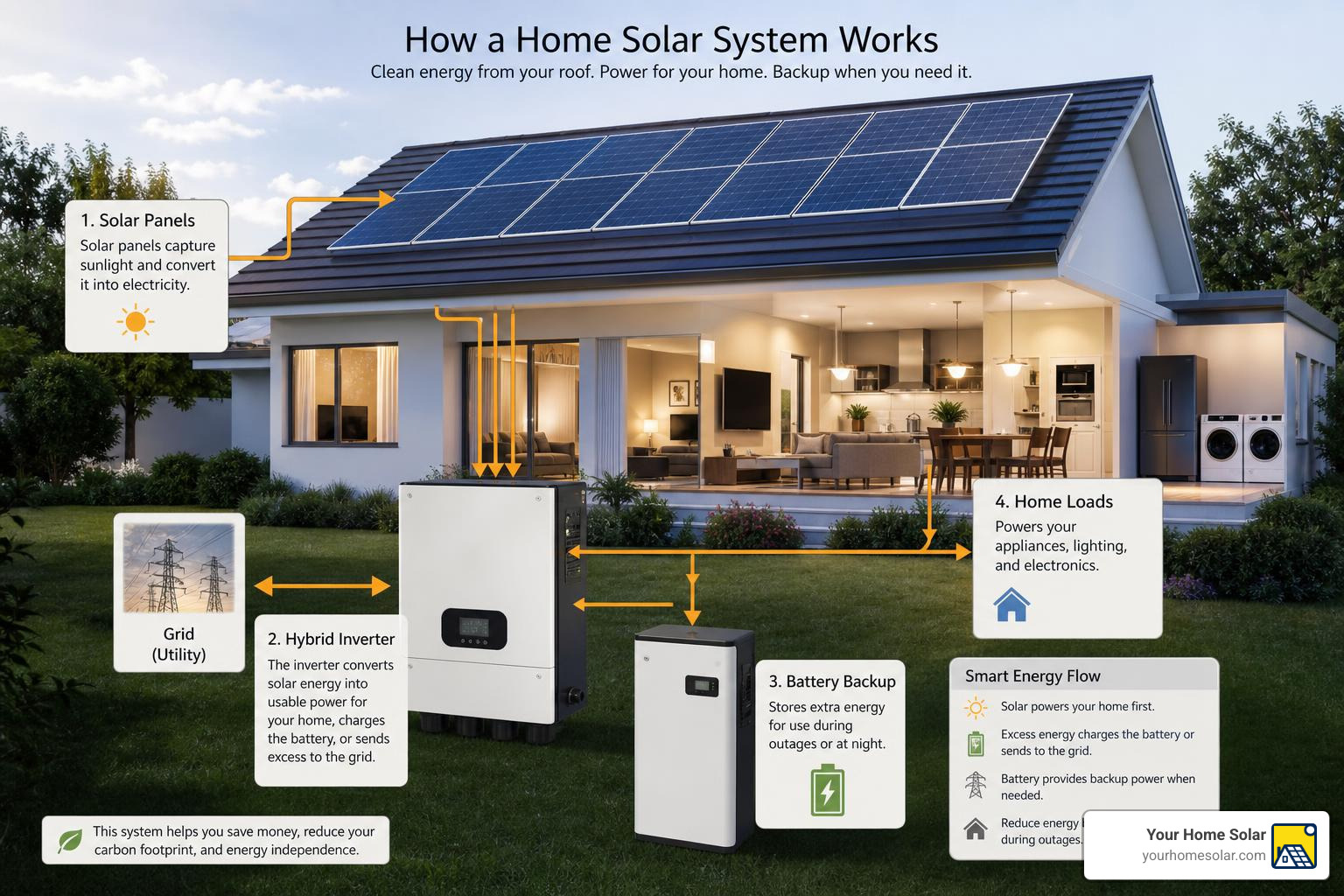
Here is a quick breakdown of how these components interact:
- The Solar Array: Your solar panels absorb sunlight and produce DC electricity.
- The Inverter: The inverter takes that DC electricity and converts it to AC electricity for immediate use by your home’s appliances.
- The Battery Storage: If your solar panels produce more electricity than your home needs, a hybrid inverter routes the excess DC power to charge your home battery backup system.
- The Grid (Net Metering): If your battery is fully charged and your home’s energy demands are met, excess electricity is sent back to the utility grid. In return, you receive credits on your electric bill.
- Nighttime and Outages: At night, or during a storm-induced power outage, the inverter automatically draws power from your battery bank or the grid, using a rapid transfer switch to keep your critical loads running without interruption.
Main Inverter Types for Homes
When researching a home inverter installation near me, you will quickly find that inverters are not one-size-fits-all. The three primary options available in May 2026 include string inverters, microinverters, and hybrid inverters.
| Inverter Type | Average Lifespan | Best Use Case | Battery Compatibility | Maintenance & Monitoring | Cost Range |
|---|---|---|---|---|---|
| String Inverter | 10–15 Years | Unshaded, single-plane roofs | Requires separate battery inverter | Single unit to maintain; system-level monitoring | Low to Moderate |
| Microinverters | 25 Years | Complex roofs with shading | Requires AC-coupled battery system | Individual panel monitoring; harder to access on roof | Moderate to High |
| Hybrid Inverter | 10–15 Years | Homes planning battery storage or off-grid backup | Direct DC-coupled battery integration | Centralized unit; highly integrated smart monitoring | Moderate to High |
For homeowners looking at specific brands, we frequently install Enphase Solar Installation in East Tennessee for microinverter setups, and Tesla Solar Installation in East Tennessee or SolarEdge Systems: Premier Grid-Connected Solar Solution for East Tennessee Homes for optimized string and hybrid solutions.
Which Inverter Type Is Best for Your Home?
Choosing the right inverter depends heavily on your roof’s architecture, shading, and future energy goals.
If your roof has multiple angles facing different directions, or if it experiences partial shading from mature East Tennessee trees, microinverters are usually the best choice. Because they operate at the individual panel level, a shaded panel won’t drag down the performance of the rest of the system.
On the other hand, if you want a system designed from day one to keep your lights on during winter storms or summer blackouts, a hybrid inverter is the gold standard. Hybrid systems allow for seamless DC-coupled battery integration, meaning you can easily connect high-performance battery systems.
For instance, we specialize in Professional HomeGrid Installation in East Tennessee as well as Sol-Ark Solar Battery Installation in East Tennessee and Generac Solar Battery Installation in East Tennessee. These setups allow you to choose between backing up your entire home or routing power exclusively to a designated critical-load panel.
How to Search for home inverter installation near me and Vet Local Pros
When you begin searching for home inverter installation near me, you will likely be flooded with search results ranging from nationwide solar brokers to local independent contractors. To protect your investment, it is vital to vet these professionals thoroughly.
To help you navigate this process, we recommend following these essential verification steps:
- Verify State Licensing: Ensure the contractor holds an active electrical license in the state of Tennessee.
- Check Solar-Specific Credentials: Look for certifications from recognized bodies such as the North American Board of Certified Energy Practitioners (NABCEP).
- Confirm Local Physical Address: Avoid “fly-by-night” out-of-state sales companies that subcontract their labor to the lowest bidder.
- Read Local Reviews: Look for consistent patterns of high ratings and positive feedback on platforms like Google and the Better Bureau.
- Request Proof of Insurance: Verify they carry active general liability insurance and workers’ compensation coverage.
For a complete breakdown of what to expect during this journey, read our detailed guide on What to Expect During a Solar Installation for Your East Tennessee Home.
Questions to Ask Before Hiring for home inverter installation near me
Before signing a contract, schedule a consultation and ask the following targeted questions:
- “Are the electricians performing the actual installation licensed in Tennessee?”
- “Do you have hands-on experience installing hybrid inverters and battery backup systems?”
- “Will your team handle all the local building permits and utility interconnection paperwork with our electric cooperative or KUB?”
- “Can you provide a certificate of insurance showing general liability and workers’ compensation?”
- “What specific workmanship warranties do you offer on top of the manufacturer’s equipment warranty?”
- “Will you walk me through setting up and using the system’s mobile monitoring app once the installation is complete?”
How to Verify Credentials, Reviews, and Insurance
Never take an installer’s word at face value. Take a few minutes to verify their credentials independently. You can look up electrical licenses online through the Tennessee Department of Commerce and Insurance.
When reading reviews, look for detailed, written stories rather than simple star ratings. Pay close attention to how the company handles issues when things don’t go perfectly. A reliable local installer will be fully bonded, carry at least $2,000,000 in property and liability coverage, and actively strive for 100% customer satisfaction.
If you are looking for general electrical work or smart home upgrades alongside your solar project, working with a licensed local electrician can help ensure your home’s electrical infrastructure is fully modernized.
Red Flags When Comparing home inverter installation near me Quotes
As you collect estimates, keep an eye out for these common warning signs:
- No Permit Plan: If an installer suggests bypassing the local permit process or asks you to pull the permits yourself, walk away.
- Vague Equipment Specifications: The quote should clearly list the exact make, model, and quantity of the inverters and panels being installed.
- Cash-Only or High-Pressure Sales Tactics: Avoid companies that pressure you to sign a contract on the spot or offer steep discounts for cash-only deals.
- No Electrical Load Calculations: A professional installer must perform a proper load calculation of your home’s electrical panel before specifying an inverter size.
- Missing Workmanship Warranty Terms: Equipment warranties are standard, but the installer should also provide a clear, written warranty covering their physical labor.
Costs, Permits, Inspections, and Installation Timelines
Understanding the financial and logistical aspects of your project helps prevent unexpected surprises down the road.
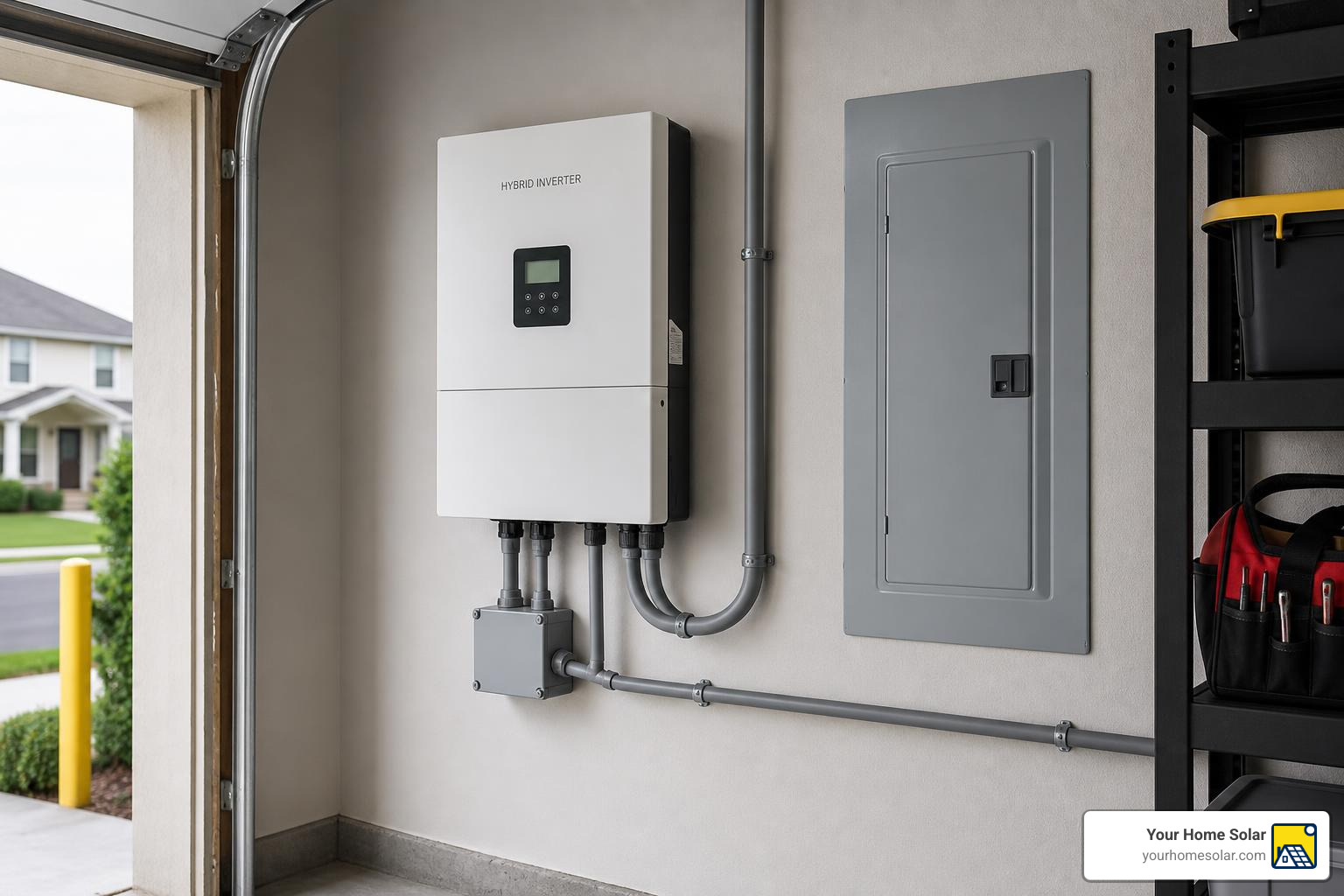
Typical Home Inverter Installation Cost Range
The total cost of a home inverter installation varies depending on whether you are replacing an existing unit, installing a brand-new solar-and-inverter package, or upgrading to a hybrid system with battery capabilities.
- Standalone Inverter Replacement: If you have an existing solar array and simply need to replace a failed string inverter, the equipment and labor typically range from $2,500 to $6,000.
- Hybrid Inverter Upgrade (Battery-Ready): Upgrading your system to a hybrid inverter (like Sol-Ark or SolarEdge) to prepare for battery backup usually costs between $4,500 and $9,500, depending on your existing electrical panel capacity and the complexity of the conduit runs.
- Whole-Home Standby Generator Comparison: For perspective, the average cost to install a whole-home standby generator in the U.S. ranges from $10,682 to $36,895, with a typical average of $16,575. Many homeowners find that pairing a hybrid inverter with a solar battery offers a highly competitive, quiet, and fuel-free alternative to traditional generators. At Your Home Solar, we also provide professional backup generator installations to give you the ultimate flexibility in choosing your home energy backup strategy.
What Permits and Utility Requirements Usually Apply
In East Tennessee, all inverter installations must comply with the National Electrical Code (NEC). This includes the “120% rule,” which dictates how much solar power can safely back-feed into your home’s main electrical panel without overloading the bus bars.
Your installer must secure an electrical permit from your local municipal or county building department (such as Knox County, Sevier County, or Sullivan County). Once the physical installation is complete, a local electrical inspector will visit your home to sign off on the work.
Following a successful inspection, your utility provider must grant “Permission to Operate” (PTO) before you can officially turn on your system and participate in net metering.
How Long Professional Installation Usually Takes
While the physical swap or installation of an inverter typically takes just one to two days, the entire process from contract to activation usually spans 2 to 6 weeks. This timeline is largely determined by the speed of local permit offices and utility interconnection approvals.
- Day 1 (Site Assessment & Design): Technicians evaluate your electrical panel, roof layout, and energy goals.
- Weeks 2–4 (Permitting & Approvals): Your installer submits designs to the local building department and utility provider.
- Days 5–6 (Physical Installation): Electricians mount the inverter, run conduit, wire the electrical panel, and install any critical load subpanels.
- Week 6 (Inspection & Utility Activation): The local inspector approves the system, the utility installs a bidirectional net meter, and your system is officially powered on.
Financing, Rebates, and Tax Credits in 2026
In May 2026, homeowners can take advantage of significant financial incentives to offset the cost of their inverter and solar installations:
- The Federal Residential Clean Energy Credit: This allows you to claim a 30% tax credit on the total cost of your solar and battery backup installation, including the inverter, labor, and necessary electrical panel upgrades.
- Solar Financing Options: Many homeowners choose low-interest solar loans, which allow them to replace their monthly utility bill with a predictable, fixed monthly loan payment.
- Local Utility Rebates: Some local electric cooperatives offer special incentives or simplified net metering terms for grid-tied solar and battery installations.
Warranties, Maintenance, and Repair vs. Replacement Decisions
Like any hard-working electronic device, home inverters require occasional maintenance and will eventually reach the end of their operational lifespan.
What Warranties and Maintenance Plans Should Include
When comparing quotes, pay close attention to the warranty terms.
- Equipment Warranty: String and hybrid inverters typically carry a 10 to 15-year manufacturer’s warranty, while microinverters often come with a 25-year warranty.
- Workmanship Warranty: Your local installer should provide a written warranty (typically ranging from 1 to 10 years) covering their physical labor and wiring.
- Monitoring and Support: A reliable installer will help you register your equipment with the manufacturer to ensure your online monitoring portal is active. This allows both you and your installer to receive automatic alerts if the system ever experiences a fault.
If you are using SolarEdge equipment, you can read more about specialized SolarEdge Installation and Service in East Tennessee to see how local maintenance plans protect your investment.
When to Repair an Existing Inverter
If your inverter is experiencing issues, you don’t always have to replace it. Repairing your existing unit is often the most sensible choice if:
- The inverter is under 10 years old and the issue is covered under the manufacturer’s parts warranty.
- The problem is minor, such as a tripped breaker, a loose wire connection, a blown fuse, or a temporary communication error with your home Wi-Fi network.
- The manufacturer offers a straightforward firmware update or a replaceable internal component (like a cooling fan or a connection board) that can be swapped out by a certified technician.
When to Replace or Upgrade an Inverter
Replacement or upgrading is generally the smarter long-term financial decision if:
- The inverter is 10 to 15 years old and has surpassed its warranty period.
- The unit has suffered significant physical damage, such as water intrusion or a lightning strike.
- You are experiencing repeated system failures, and the cost of multiple service calls is starting to approach the price of a new unit.
- You want to expand your solar array, add an electric vehicle (EV) charger, or integrate a high-performance battery backup system that requires a modern hybrid inverter.
Frequently Asked Questions About Home Inverter Installers
Do I need a solar installer, electrician, or both?
For a safe and code-compliant installation, you need a professional who is licensed as an electrical contractor and specialized in solar technology. While a general electrician can handle basic wiring, integrating a solar inverter requires specialized knowledge of solar design, DC high-voltage safety, utility net metering policies, and battery storage configurations. For your solar and inverter needs, always choose a specialized solar electrical contractor.
Will solar power work during an outage?
A standard grid-tied solar system will not work during a utility power outage. This is a safety design required by utility regulations to prevent electricity from back-feeding into the grid and endangering utility workers.
If you want your solar panels to continue powering your home during a blackout, you must install a hybrid inverter paired with a battery backup system. This setup instantly isolates your home from the utility grid during an outage, creating a safe, self-sustaining “microgrid” for your household.
Is a home inverter the same as a standby generator?
No, they are different technologies, though they serve a similar purpose. A standby generator runs on fossil fuels (like natural gas or propane) and uses a mechanical engine to generate electricity during an outage.
A home inverter, when paired with a battery, provides silent, instantaneous backup power using stored electricity. While battery inverter installations face unique grid challenges in developing regions globally—such as battery inverter installation in Lagos—homeowners in East Tennessee benefit from a highly stable local grid where hybrid inverters and batteries offer an eco-friendly, virtually maintenance-free alternative to traditional fuel-burning generators.
Conclusion
Your home inverter is the single most important component of your solar energy system. When you are searching for home inverter installation near me, taking the time to find a licensed, experienced, and highly rated local contractor is the key to ensuring your system runs safely and efficiently for decades to come.
At Your Home Solar, we provide comprehensive, professional home energy solutions across East Tennessee—from Knoxville and Oak Ridge to Sevierville, Johnson City, and Kingsport. We handle every step of the process in-house, from custom load calculations and permitting to precision electrical integration and utility activation.
If you’re ready to take control of your energy future with a reliable, high-performance inverter setup, we are here to help. Start with residential solar solutions today and request your free, personalized home energy consultation.