Understanding Cost vs. Performance in Cheap Portable Solar Panels
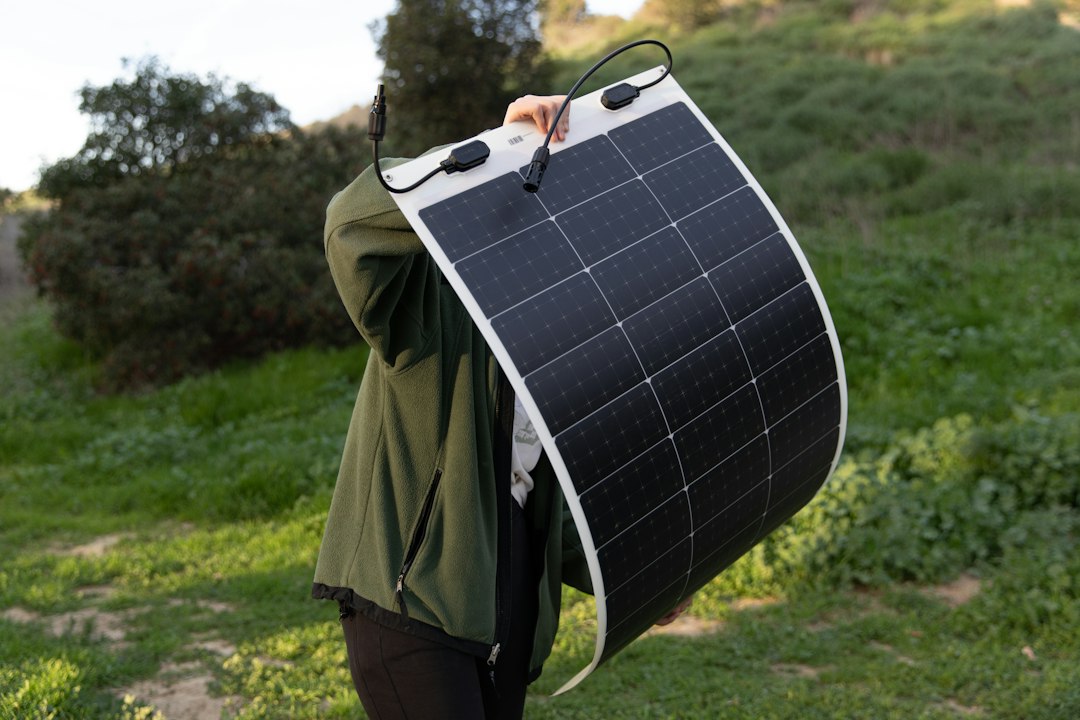
Finding the best cheap portable solar panels comes down to real-world power delivery and cost per measured watt rather than advertised peak numbers. Top budget models deliver between 67% and 91% of their rated capacity in field conditions, with high-value picks like the JJN Bifacial 200W delivering 182W for as low as $0.71 per measured watt, while lightweight hiking chargers start under $40. Selecting efficient monocrystalline cells with durable ETFE coating ensures reliable off-grid power without overspending.
Claimed Wattage vs. Real-World Output
When shopping for budget solar gear, the biggest trap is assuming the wattage printed on the packaging matches what lands in your battery. Solar manufacturers rate panels under Standard Test Conditions (STC): an ideal laboratory setting with 1,000 watts per square meter of sunlight, a cell temperature of 77°F (25°C), and zero atmospheric interference.
Out in the field, conditions are rarely perfect. Heat causes solar cells to lose efficiency, atmospheric haze diffuses direct rays, and slight misalignments with the sun reduce harvest potential. In field reviews and bench tests, portable solar panels generally deliver between 67% and 91% of their advertised capacity.
A bargain 200W panel delivering only 134W operates at 67% efficiency, meaning your charging times will be nearly 50% longer than planned. In contrast, higher-grade designs capture upwards of 88% to 91% of their rating under peak midday sun. Independent gear testers examining field efficiency testing emphasize that understanding this gap prevents off-grid power shortages when weather turns unpredictable.
| Solar Panel Model | Claimed Wattage | Measured Output | Measured Efficiency | Retail Price | Cost Per Measured Watt |
|---|---|---|---|---|---|
| JJN Bifacial 200W | 200W | 182W | 91% | $129.00 | $0.71/W |
| Renogy 200W Portable | 200W | 177W | 88% | $246.00 | $1.39/W |
| Marbero 200W Portable | 200W | 134W | 67% | $187.00 | $1.32/W |
| FlexSolar 100W Foldable | 100W | 70W | 70% | $89.00 | $1.20/W |
| LVYUAN 300W Foldable | 300W | 225W | 75% | $201.99 | $0.90/W |
| GEYOTO S35 USB Panel | 35W | 27W | 77% | $59.00 | $2.18/W |
| Harbor Freight Thunderbolt 9W | 9W | 6W | 66% | $39.99 | $6.66/W |
Calculating Cost Per Measured Watt
The sticker price alone will not tell you if a panel is a bargain. The truest indicator of financial value is the cost per measured watt. Calculate this by dividing the retail price by the actual watts the panel produces during peak sunshine:
Cost Per Measured Watt = Retail Price / Actual Measured Wattage
A 200W panel on sale for $187 that only generates 134W costs $1.32 per measured watt. Meanwhile, the JJN Bifacial 200W generates 182W and sells for roughly $129, driving the cost down to just $0.71 per measured watt—the lowest in its category.
Ultra-compact 5W to 15W USB panels carry higher costs per watt because the manufacturing expense of housing, kickstands, and junction boxes makes up most of the retail price. If you want to expand your setup efficiently, balancing price and output using our sun on a shoestring budget guide can help you plan your gear without overspending.
Key Types of Budget Solar Setups by Use Case
Choosing Cheap Portable Solar Panels for Backpacking and Hiking
When every ounce counts on the trail, rigid frames and heavy glass must stay behind. Hikers need lightweight, foldable solar chargers that pack flat and handle direct sunlight on trail breaks.
For minimalist setups, the Harbor Freight 9 Watt Foldable Solar Panel offers a budget entry point at $39.99, saving roughly 60% compared to legacy outdoor brand equivalents. For small DIY projects or powering remote low-power hardware, micro options like the Voltaic 1.2 Watt 6 Volt Small Solar Panel – ETFE demonstrate how rugged ETFE materials keep gear compact and weatherproof.
If you carry smartphones, action cameras, or GPS units, small USB chargers provide direct power:
- LVYUAN 40W Foldable Solar Panel Charger: Sells for around $23.90 to $49.99, folding down to slip into a pack while offering direct USB-C and USB-A charging.
- GEYOTO 35W Portable Solar Panel: Features a 25.4% monocrystalline cell efficiency rating, weighs 1.54 lbs, and provides 20W USB-C PD output for fast charging phones directly.
- GEYOTO 45W Portable Solar Panel: Offers 25W USB-C PD charging plus QC 3.0 USB-A ports at just 1.65 lbs, making it an ideal field charger for multiple handheld electronics.
Mid-Wattage Foldable Kits for Camping and RV Living
For weekend car camping, overlanding, or keeping 12V RV house batteries topped off, 40W to 100W panels hit the sweet spot between footprint and charging speed. These panels generate enough wattage to run 12V portable fridges, camp lighting, and small power banks.
Essential features to look for in mid-wattage camping kits include:
- Integrated adjustable kickstands to maintain a 45-degree angle toward the sun.
- Durable fabric casing with reinforced carrying handles and corner grommets for staking.
- Multiple output connectors, including 18V DC barrels (DC5521) and standard Anderson ports.
- High cell conversion efficiency (20% to 24%) to maximize limited campsite sun windows.
The FlexSolar 100W panel exemplifies this balance. At $89, it delivers 70 measured watts in a 4.1 lb package that folds down to the size of a laptop. Pairing a mid-tier panel with an off-grid battery setup lets campers stay powered without running loud gas engines. You can review how these panels integrate into mobile rigs in our guide to off-grid portable power.
High-Output Cheap Portable Solar Panels for Power Stations and Emergency Backup
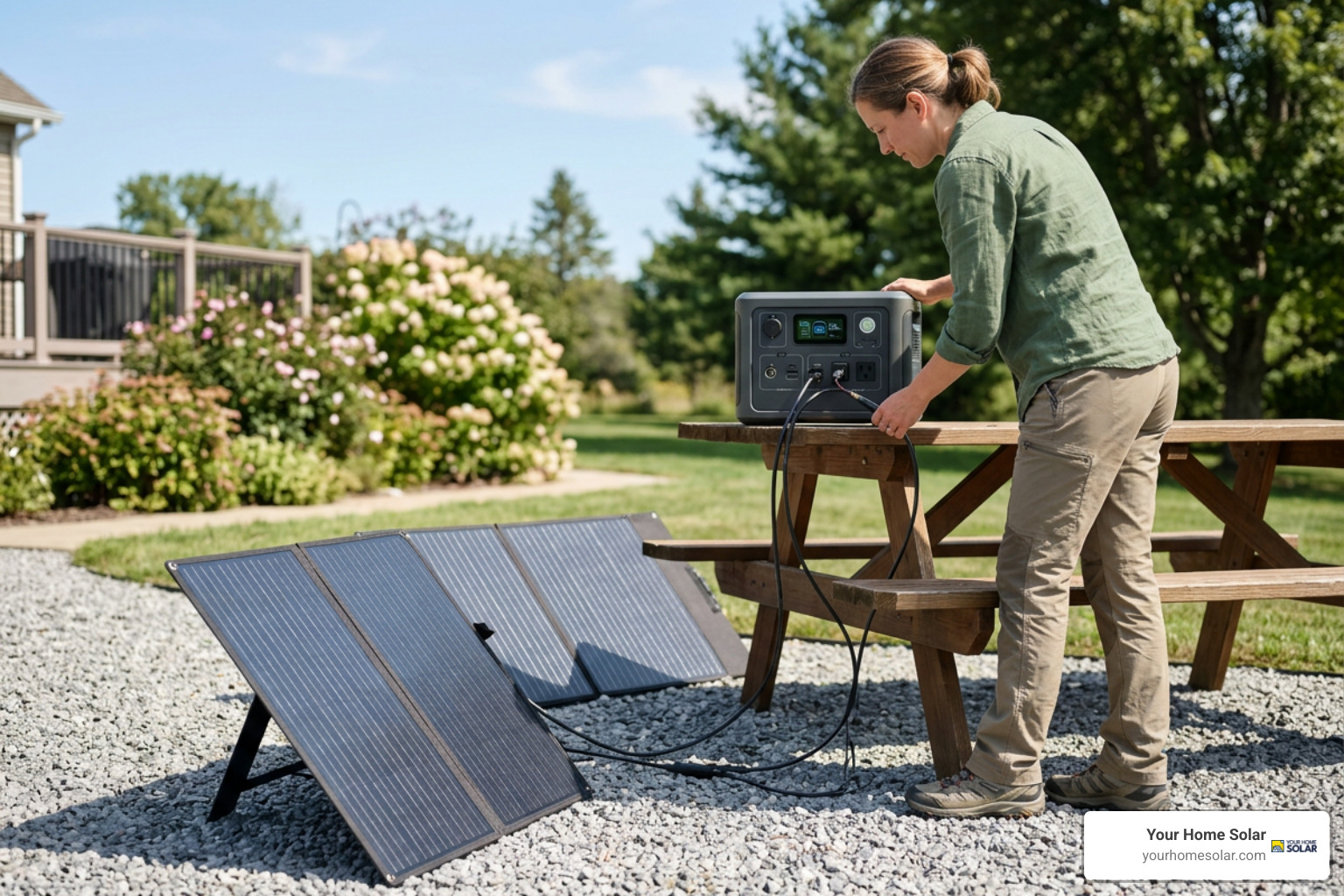
When preparing for severe weather outages or powering an off-grid cabin weekend, 200W to 300W portable arrays are necessary to recharge power stations (500Wh to 2000Wh) in a single afternoon.
- LVYUAN 300W Foldable Solar Panel Kit: Priced at approximately $201.99, this 9-fold monocrystalline unit includes an IP67 waterproof build, MC4 connectors, and DC adapters (XT60, DC7909, DC5521) for power stations.
- HQST 200W Ultra-Light Foldable Portable Solar Panel: Uses high-efficiency N-Type cells delivering up to 25% cell efficiency. At $159.99, it is roughly 37% lighter than rigid framed panels.
- Renogy 200W Portable: Delivers a reliable 177 measured watts (88% efficiency) at $1.39 per measured watt, making it one of the most consistent folding panels for mid-sized solar generators.
If you run larger off-grid basecamps with heavy electrical loads, see our breakdown on powering campsite appliances with high-wattage panels to calculate total energy needs.
Critical Features to Evaluate Before Buying Budget Solar Gear
Cell Efficiency and Lamination Materials
The raw materials protecting your solar cells determine whether a budget panel survives three seasons or degrades after three months.
- Cell Chemistry: Monocrystalline cells (20% to 23% efficiency) outperform older polycrystalline panels (15% to 17%). Advanced N-Type cells offer even better performance in high heat and diffuse light.
- ETFE vs. PET Coatings: Budget panels coated with PET plastic are cheap, but they tend to yellow, haze, and delaminate within 1 to 2 years of UV exposure. Premium ETFE (Ethylene Tetrafluoroethylene) coatings resist high heat, resist scratching, and offer 5 to 7+ years of outdoor durability.
Reviewing core DIY solar kit fundamentals helps clarify how cell lamination directly influences long-term energy yields.
Weatherproofing, Portability, and Connector Compatibility
A low price tag means nothing if a brief afternoon rain shower ruins your equipment. Always check the ingress protection (IP) rating and junction box construction:
- IP67 / IP68 Surface Ratings: Most modern foldable panels offer IP67 or IP68 water resistance on the solar cell surface, protecting them from splashes and rain. However, the fabric borders and open USB junction boxes are rarely submersible and must be kept dry.
- Connectors: Look for standard MC4 outputs or versatile 3-in-1 adapter cables that fit XT60, DC7909, and DC5521 ports. Universal connectors ensure your panels remain compatible even if you switch power station brands later.
- Stand Stability: Flimsy fabric kickstands cause panels to sag, reducing your solar angle and cutting power harvest by 20% to 30%. Look for rigid, locking kickstands.
To dive deeper into matching hardware interfaces and controller specs, read our in-depth guide to portable solar systems.
Frequently Asked Questions About Budget Portable Solar
Can inexpensive solar panels directly charge a phone or power station safely?
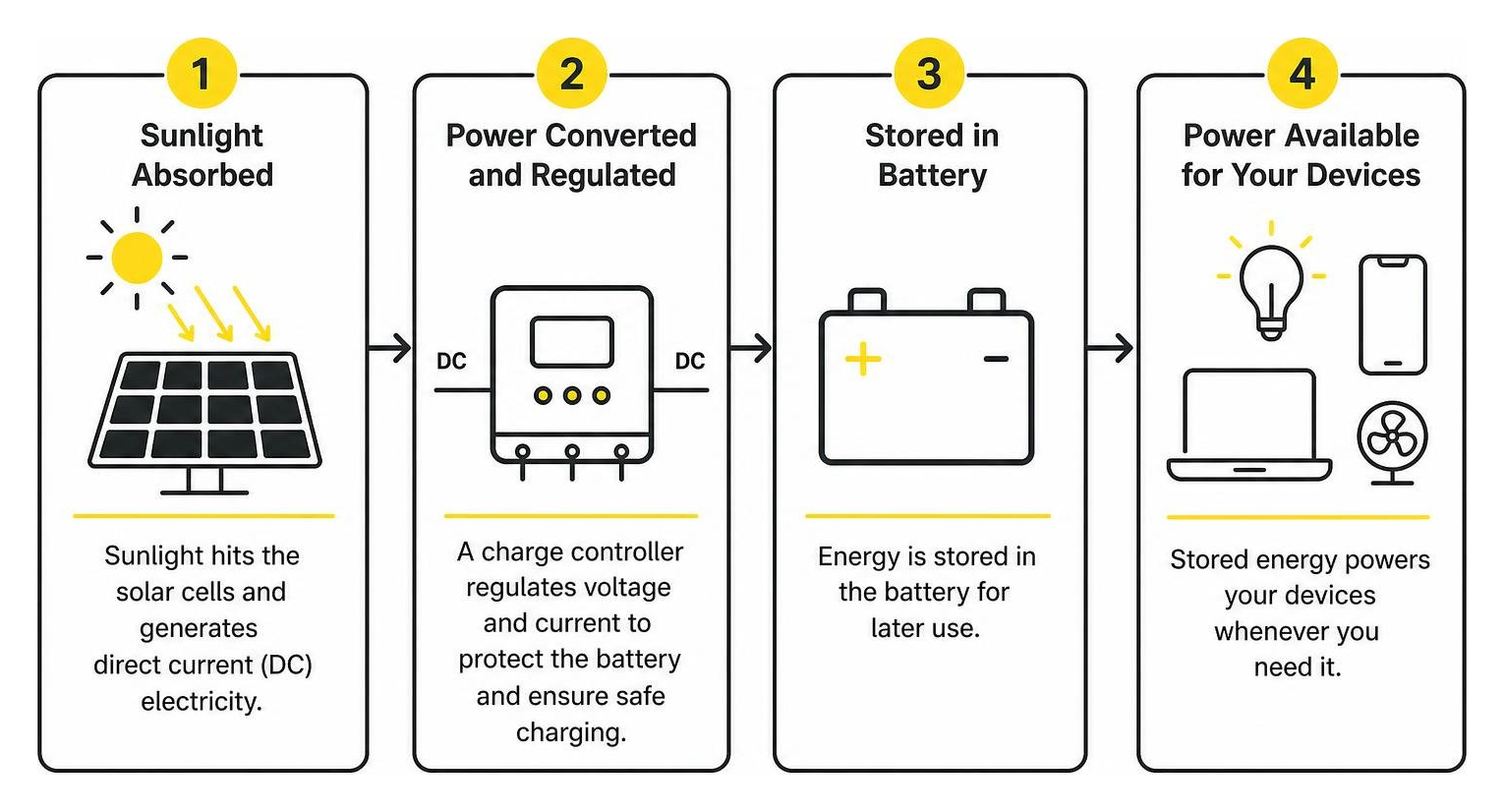
Yes, provided you understand the electrical pathway. Budget panels equipped with direct USB-A and USB-C ports feature internal voltage regulators that step down solar voltage to safe 5V, 9V, or 12V outputs for smartphones.
However, direct charging can be finicky. When a cloud passes overhead, voltage drops. Smartphones often interpret this drop as an unstable power source and stop charging, requiring you to unplug and reconnect the cable. The most reliable approach is using the panel to charge a small power bank first, which then charges your phone at a steady current.
When charging power stations, ensure the panel’s Open Circuit Voltage (Voc) falls within your power station’s maximum input voltage window (typically 12V to 28V DC for compact stations). For permanent residential energy savings and microgrid setups, you can also explore broader regional solar cost trends to see how portable power fits alongside grid-tied installations.
How much power do budget solar panels produce on cloudy days?
On heavily overcast days, expect solar output to drop to 10% to 25% of the panel’s rated capacity. While monocrystalline and N-Type cells capture diffuse ultraviolet radiation through thin cloud layers, thick storm clouds block the photons required to drive current.
To maximize output during hazy conditions:
- Lay the panel flat if cloud cover is uniform, capturing ambient sky glow from all directions.
- Keep the surface completely free of dust, water beads, and debris.
- Remove all partial shading—a shadow over just 5% of a panel can cut total circuit output in half.
What is the typical lifespan and warranty on budget solar chargers?
Inexpensive foldable panels using ETFE lamination generally last between 3 and 5 years of regular seasonal use. PET-laminated budget chargers may begin degrading after 12 to 18 months if left in direct sun and heat for extended periods.
Warranties on budget solar gear typically range from 1 to 3 years. To maximize lifespan, never pack away a folding panel while it is damp, keep the junction box clean and dry, and avoid bending the panel beyond its natural hinge seams.
Conclusion: Maximizing Value on Your Off-Grid Power Investment
Inexpensive portable solar technology has improved significantly. You no longer need to spend top dollar to get reliable off-grid electricity for weekend camping, remote outdoor work, or emergency preparedness. By evaluating panels based on their cost per measured watt, demanding durable ETFE lamination, and choosing hardware with universal connectors, you can assemble a dependable solar setup that respects your budget.
If you are planning to expand from portable gear into a whole-home backup system, battery storage, or a dedicated off-grid cabin installation, our team at Your Home Solar is here to help. Explore our comprehensive off-grid solar guide to learn how to build true energy independence with trusted local expertise.