What You Need to Know Before Buying a Residential Solar Kit
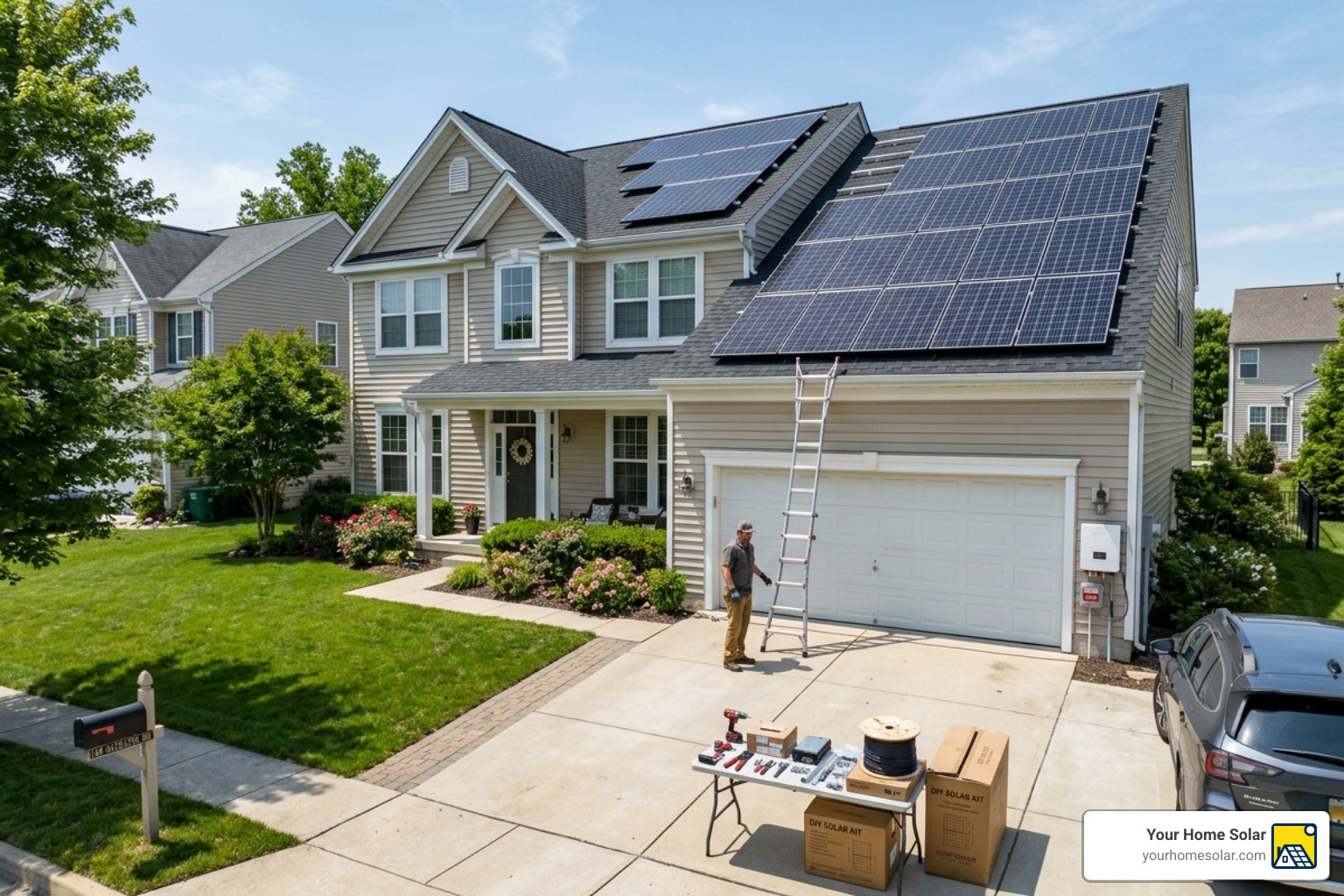
A residential solar kit gives homeowners everything they need to generate their own electricity — panels, inverters, mounting hardware, and sometimes batteries — bundled into one package you can install yourself.
Here’s a quick snapshot of what to know:
| What You’re Looking For | Quick Answer |
|---|---|
| Types available | Grid-tied, off-grid, hybrid |
| Typical system sizes | 2kW (small) to 15kW+ (large home) |
| Average kit cost | $4,600–$16,600+ before tax credits |
| Federal tax credit | 30% of total system cost |
| DIY savings vs. full install | 40–50% less than hiring a solar company |
| Payback period | 5–8 years for grid-tied systems |
The appeal is simple: skip the labor markups, install on your own timeline, and start cutting your power bill.
But not every kit is right for every home. The wrong size, inverter type, or system configuration can leave money on the table — or create real headaches down the road.
This guide walks you through everything, from picking the right kit to understanding local installation requirements in East Tennessee.
I’m Ernie Bussell, founder and CEO of Your Home Solar and East Tennessee’s #1 solar contractor, and I’ve spent years helping homeowners navigate the residential solar kit market — from evaluating components to managing large-scale installations. Let’s break it all down so you can make a confident, informed decision.
Residential solar kit terms to know:
Understanding the Different Types of Residential Solar Kits
When we talk about a residential solar kit, we aren’t talking about a one-size-fits-all box. Depending on whether you want to lower your Knoxville Utilities Board (KUB) bill or go completely off the grid in the mountains near Sevierville, your kit choice will vary significantly.
There are three primary flavors of solar kits available in April 2026: grid-tied, off-grid, and hybrid. Each serves a distinct purpose and comes with its own set of components. To get a deeper look at these, check out our guide on Understanding Different Types Of Residential Solar Energy Systems.
Grid-Tied vs. Off-Grid Systems
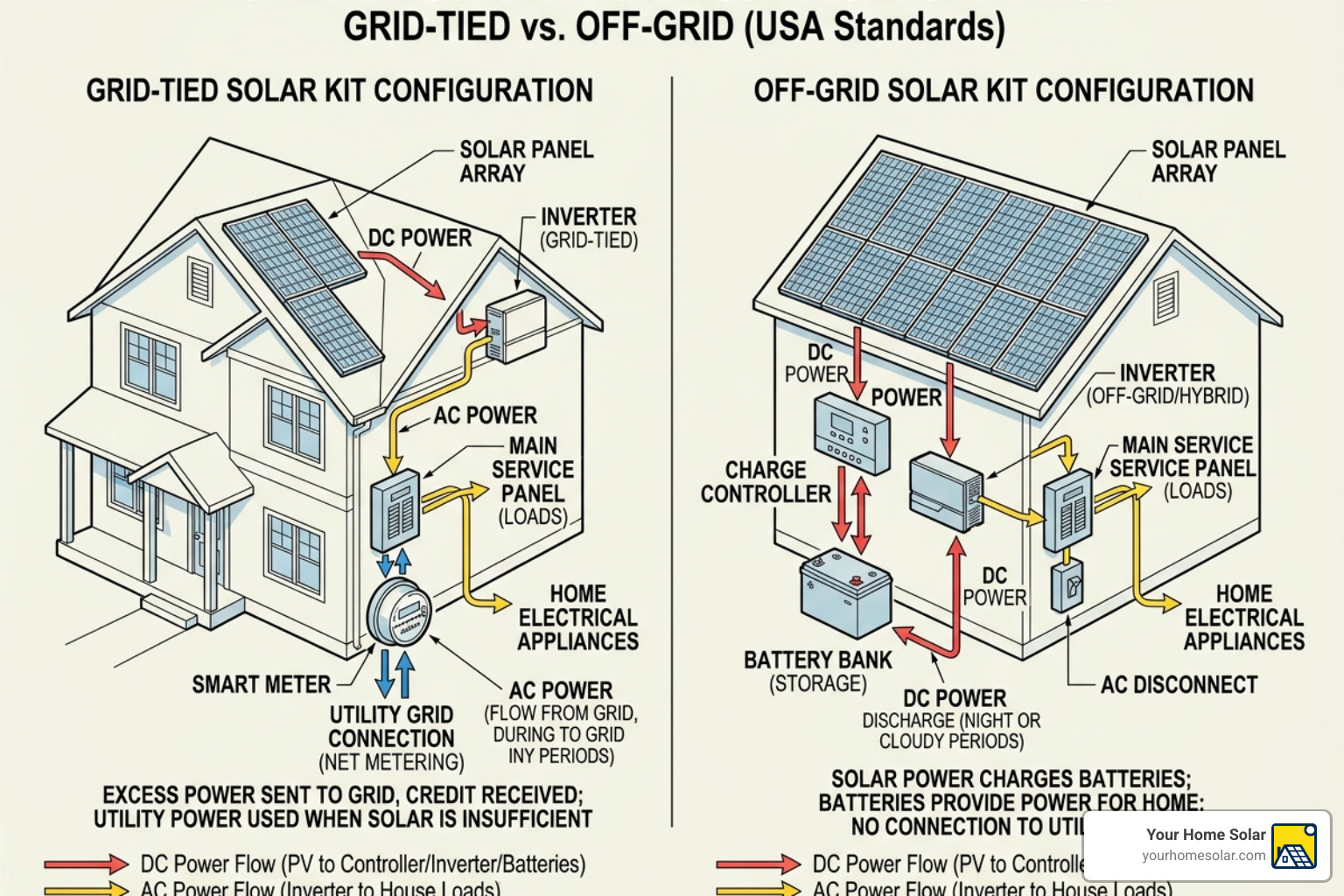
Grid-tied systems are the most common choice for suburban homes in areas like Maryville or Johnson City. These kits are designed to work in tandem with your local utility provider. When your panels produce more power than you use, the excess is sent back to the grid. Through “net metering,” you receive utility credits that offset the power you pull at night. These kits are generally the most affordable because they don’t require expensive battery banks. You can learn more about how this works in our Residential Solar Solutions Guide/Solar Energy And The Grid.
Off-grid systems, on the other hand, are the ultimate path to energy independence. These are ideal for remote cabins in the Cherokee National Forest or properties where running utility lines is prohibitively expensive (sometimes costing upwards of $10,000 per pole!). An off-grid residential solar kit includes a massive battery bank to store every bit of energy for use 24/7. While the upfront cost is higher, you’ll never see an electric bill again.
The Rise of Hybrid Solar Kits
Hybrid kits are the “best of both worlds” option that has exploded in popularity here in East Tennessee. A hybrid kit stays connected to the grid but includes a battery backup. This allows for “peak shaving”—using your stored battery power during the expensive 4 PM to 9 PM window when utility rates often spike.
Most importantly for our neighbors in storm-prone areas like Greeneville or Oak Ridge, hybrid kits provide backup power. When the grid goes down, your house stays lit. For a deep dive into the storage side of things, see Everything You Need To Know About Residential Solar Battery Types Whats Best.
Choosing the Right Residential Solar Kit for Your Energy Needs
Sizing is the most critical step. If you buy a kit that’s too small, you’ll still be writing big checks to the electric company. If it’s too large, you’ve overspent on hardware you don’t need.
| Kit Size | Typical Monthly Production | Best For… |
|---|---|---|
| 5kW | 350–850 kWh | Small homes, high efficiency |
| 7.5kW | 500–1,100 kWh | Average 3-bedroom home |
| 10kW | 700–1,500 kWh | Large homes with high HVAC use |
| 15kW+ | 1,200–2,200+ kWh | Estates, EV charging, and workshops |
To get an idea of local production expectations, Solar for Your Home – BrightRidge provides excellent data for those in the Johnson City and Washington County areas.
Components of a Complete Residential Solar Kit
A truly “complete” residential solar kit should arrive with more than just panels. When we help customers evaluate kits, we look for:
- Monocrystalline Panels: These are the gold standard in 2026. Look for Tier-1 panels with at least 19-20% efficiency. They perform better in the humid, sometimes hazy Tennessee summers.
- The Inverter: This is the “brain” that converts DC power from the sun into the AC power your fridge needs.
- Racking Systems: Hardware to bolt everything to your roof or a ground mount.
- LiFePO4 Batteries: If you’re going hybrid or off-grid, Lithium Iron Phosphate is the way to go. They are safer and last much longer than old-school lead-acid batteries.
- Balance of System (BOS): This includes the wires, fuses, disconnects, and labels required by the electrical code.
For a beginner’s breakdown of these parts, visit our Residential Solar Solutions Guide/Introduction To Solar Energy.
Sizing Your Residential Solar Kit for Maximum Efficiency
To find your perfect size, look at your last 12 months of utility bills. Add up the total kWh used and divide by 12 to find your monthly average. In East Tennessee, we get roughly 4 to 4.5 “peak sun hours” per day.
You also need to consider your roof’s orientation. A south-facing roof in Kingsport is a solar goldmine, while a north-facing roof might require 20% more panels to achieve the same energy offset. Our Residential Solar Solutions Guide offers detailed worksheets to help you nail these calculations.
Inverter Technology: Microinverters vs. String Inverters
The inverter you choose determines how your system handles adversity—like that big oak tree shading your roof in the afternoon.
String Inverters are the traditional choice. All your panels are wired together like a string of Christmas lights. If one panel is shaded, the performance of the entire string drops. They are cost-effective and great for wide-open fields or unshaded roofs.
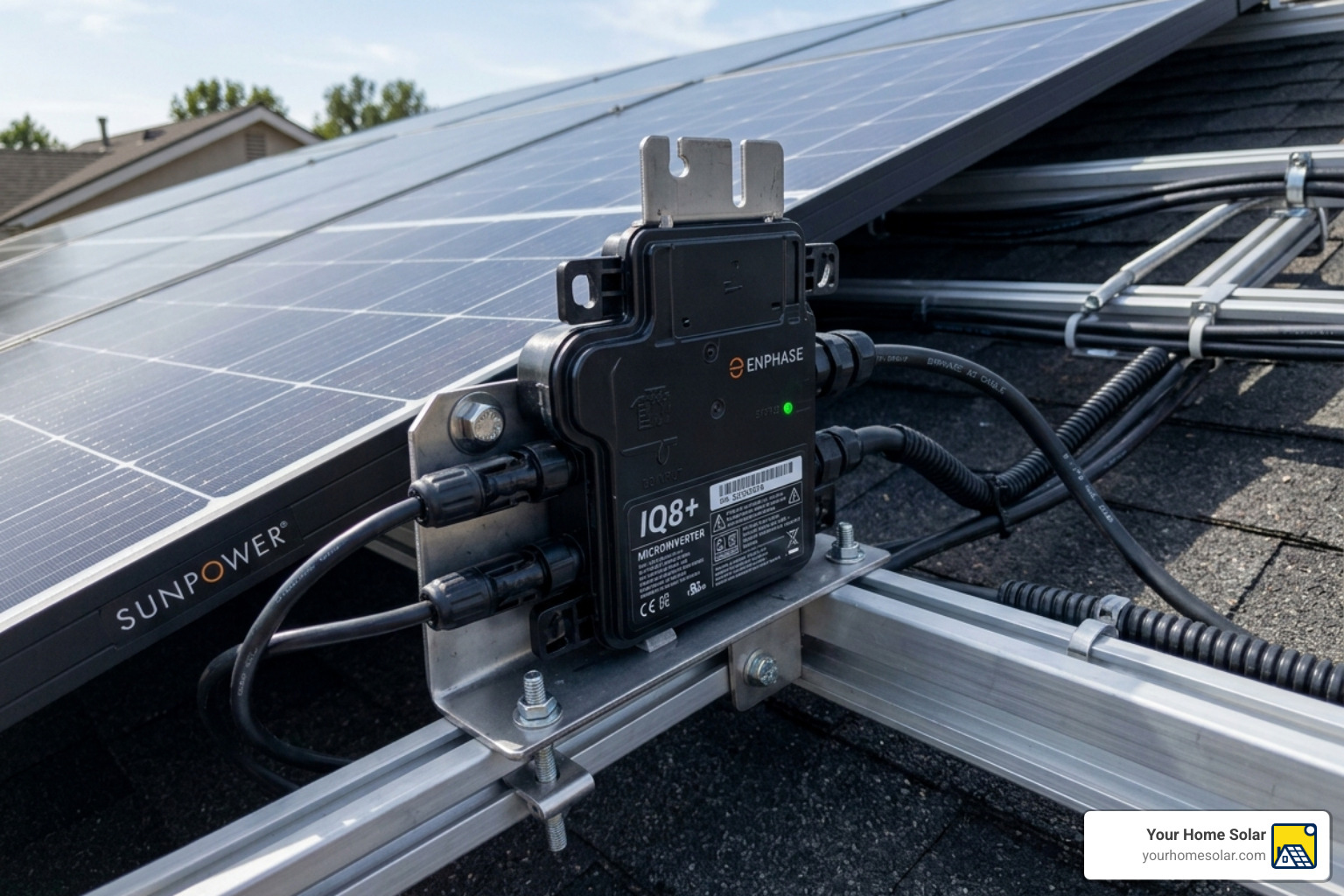
Microinverters are small devices attached to each individual panel. This means if a chimney shades one panel, the rest of the system keeps humming at 100% capacity. They also offer panel-level monitoring, so you can see exactly how much energy your “problem child” panel is producing from your phone.
For more technical details, check out Residential Solar Solutions Guide/The Ultimate Guide To Solar Inverters.
Handling Complex Rooflines
If your home has multiple gables, dormers, or varying roof angles (common in many Farragut and Knoxville neighborhoods), microinverters are almost always the superior choice. They allow each panel to act independently, optimizing the “daily harvest” regardless of which way the panel is pointing at any given hour. This level of optimization is explained further in our Residential Solar Solutions Guide/Comprehensive Guide To Understanding Solar Panels.
The DIY Installation Process and Local Requirements
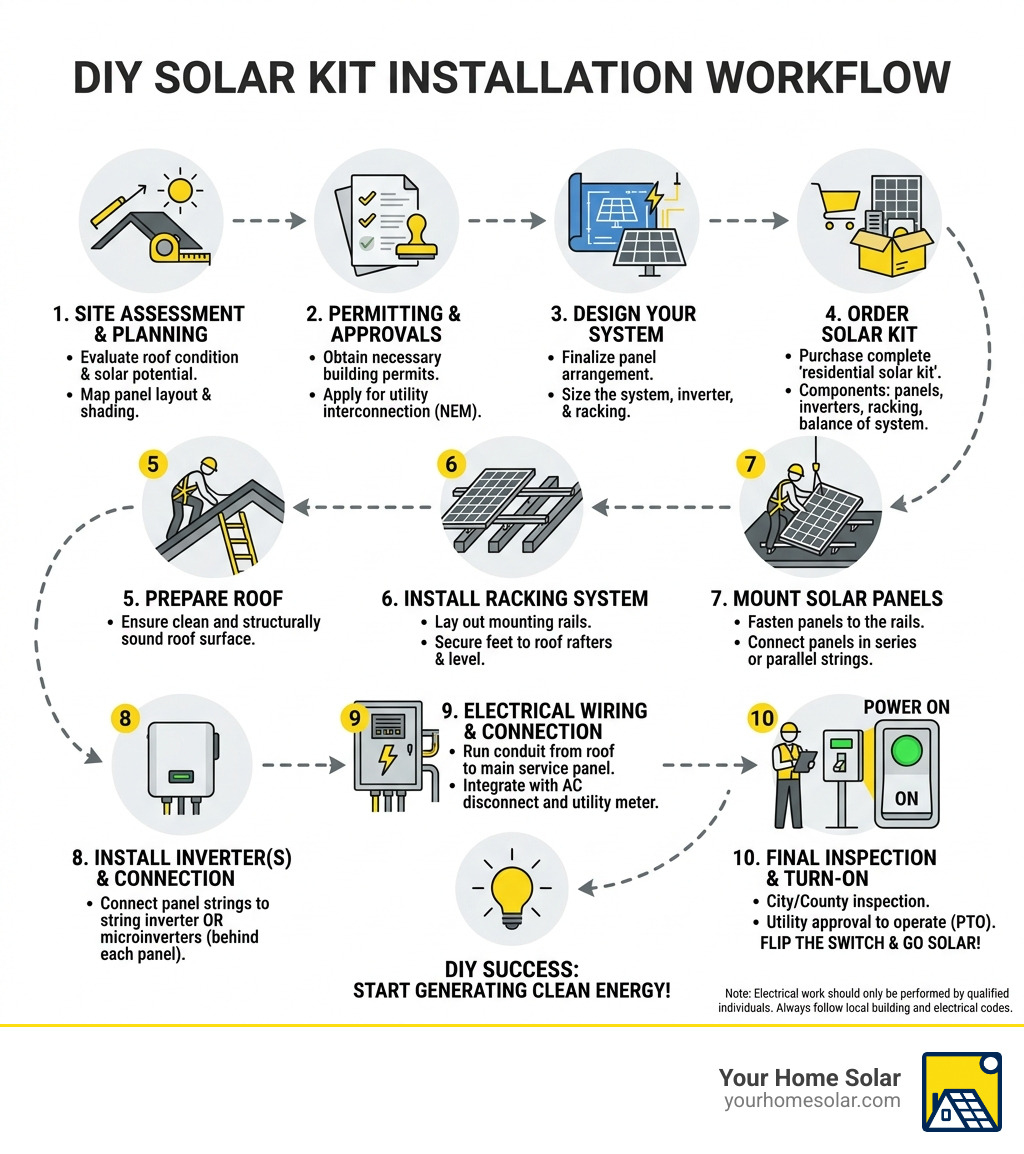
One of the biggest draws of a residential solar kit is the cost savings. By doing the work yourself, you can save 40–50% compared to a full-service installation. However, “DIY” doesn’t mean “no rules.”
In East Tennessee, permitting is a major factor. Whether you are in Knoxville or looking for THE BEST 10 SOLAR INSTALLATION in KINGSPORT, TN – Yelp, you must comply with local building and electrical codes. Most utilities require a professional “Plan Set”—a blueprint of your system—before they allow you to connect. We discuss the specifics of local installs in our Residential Solar Solutions Guide/Knoxville Solar Panel Installation.
Roof vs. Ground Mount Options
Most folks think of solar on the roof, but if you have a couple of acres in Blount or Jefferson County, a ground mount might be better.
- Roof Mounts: Use your existing structure, keeping the system tucked away. However, you have to work around vents and chimneys, and you must ensure your shingles have at least 15 years of life left.
- Ground Mounts: Easier to clean and maintain (no ladders!). You can also tilt them at the perfect angle for maximum sun. The downside? You’ll need to dig trenches for the wiring and pour concrete footings.
For tips on keeping either setup running smoothly, see Residential Solar Solutions Guide/Solar System Maintenance.
Safety and Professional Finalization
We always tell our DIY friends: Do the heavy lifting, but hire a pro for the “magic.”
You can safely mount the racking and bolt down the panels. But when it comes to the final electrical connections into your home’s main breaker panel, we strongly recommend hiring a licensed electrician. This ensures your system is safe, code-compliant, and won’t void your Understanding Residential Solar Warranties In East Tennessee Whats Covered. Plus, most Tennessee utilities require a signed-off electrical inspection before they will “commission” your system and start your net metering credits.
Financial Benefits and the 30% Federal Tax Credit
Is a residential solar kit a good investment in 2026? The numbers say yes. Thanks to the 30% Federal Solar Tax Credit, you can deduct nearly a third of the total kit cost (including shipping and any tools you bought for the install) directly from your federal taxes.
For a look at current pricing and savings trends in our area, check out the Sevierville, TN Solar Panel Cost: 2026 Prices and Savings data.
Calculating Your Solar Payback Period
The “payback period” is the time it takes for your electricity savings to equal the cost of the kit. For a standard grid-tied system in East Tennessee, the average payback is between 5 and 8 years.
Factors that shorten your payback:
- Doing the labor yourself (saving ~45%).
- Taking advantage of sales (like the 25% off Spring Kickoff events often seen in late March).
- Rising utility rates (the more they charge, the more you save).
You can run your own numbers using our guide on Residential Solar Solutions Guide/Cost And Financing Of Solar Systems and learn more about the tax side at Residential Solar Solutions Guide/Incentives And Tax Credits For Solar Systems.
Frequently Asked Questions about Residential Solar Kits
How much can I save with a DIY solar kit?
On average, homeowners save 40–50% by purchasing a kit and performing the installation themselves. This is because you are avoiding the high labor costs and corporate markups associated with full-service solar companies. For a system that normally costs $20,000 installed, a DIYer might spend only $11,000 for the same hardware.
Do residential solar kits qualify for the federal tax credit?
Yes! As long as you own the system (not leasing it), you can claim 30% of the total project cost on your federal income taxes. This includes the panels, inverters, racking, batteries, and even the wiring.
What is the difference between a string inverter and a microinverter?
A string inverter handles the power for a whole “string” of panels at once; it’s cheaper but vulnerable to shading. A microinverter is attached to each panel, optimizing them individually. Microinverters are better for complex roofs or areas with trees, whereas string inverters are great for clear, open spaces.
Conclusion
Taking the leap into solar doesn’t have to mean spending $30,000 on a professional crew. A residential solar kit empowers you to take control of your energy future on your own terms. Whether you’re looking to backup your home in Morristown or offset your EV charging in Knoxville, there is a kit designed for your specific goals.
At Your Home Solar, we are proud to be your local East Tennessee experts. We’ve seen how solar can transform a household’s finances and provide peace of mind during outages. While the DIY path is rewarding, we are always here to help with professional advice, system design, or full-service installations if you decide you’d rather stay off the roof!
Ready to see what solar can do for your home? Start Your Residential Solar Journey Today and join the thousands of Tennessee families who are already soaking up the sun.