
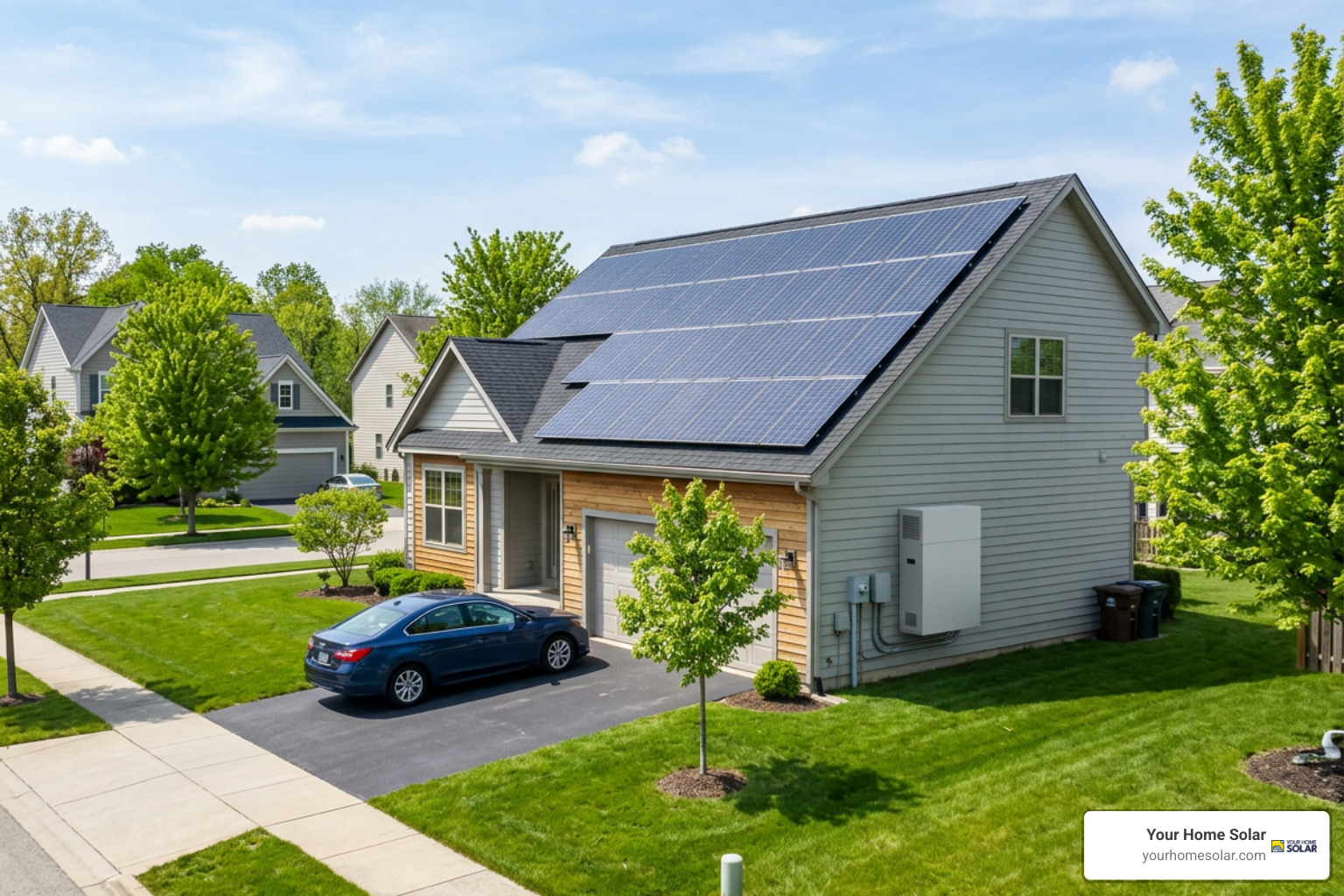
Is a 15kW Solar System With Battery Backup Right for Your Home?
A 15kW solar system with battery backup is built for large, high-energy homes that want lower utility use and power during outages. In the U.S., a 15kW array produces about 21,776 kWh per year on average, but your roof angle, shade, weather, and East Tennessee sunlight will change that result. Adding battery storage lets your home use solar after sunset and keep selected circuits – or, with proper design, much of the home – running when the grid fails.
Before choosing one, focus on three numbers:
- Your annual electricity use: A 15kW array is often a fit for homes with central air, electric heating, EV charging, pools, or other large loads.
- Your peak demand: The inverter and backup panel must handle appliances that run at the same time.
- Your outage goal: A 28-32 kWh lithium battery bank is a common starting point for substantial backup, but runtime depends far more on what you choose to power than on the solar array’s 15kW rating.
A system without batteries averages about $37,050 before incentives in 2026 nationwide. Batteries raise the upfront cost, but they add the capability that panels alone cannot provide: usable electricity when the grid is down.
I am Ernie Bussell, founder and CEO of Your Home Solar, with experience leading solar operations and helping East Tennessee homeowners make practical energy decisions. In this guide, I will explain how to evaluate a 15kw solar system with battery backup based on real home loads, outage needs, equipment, and long-term value.
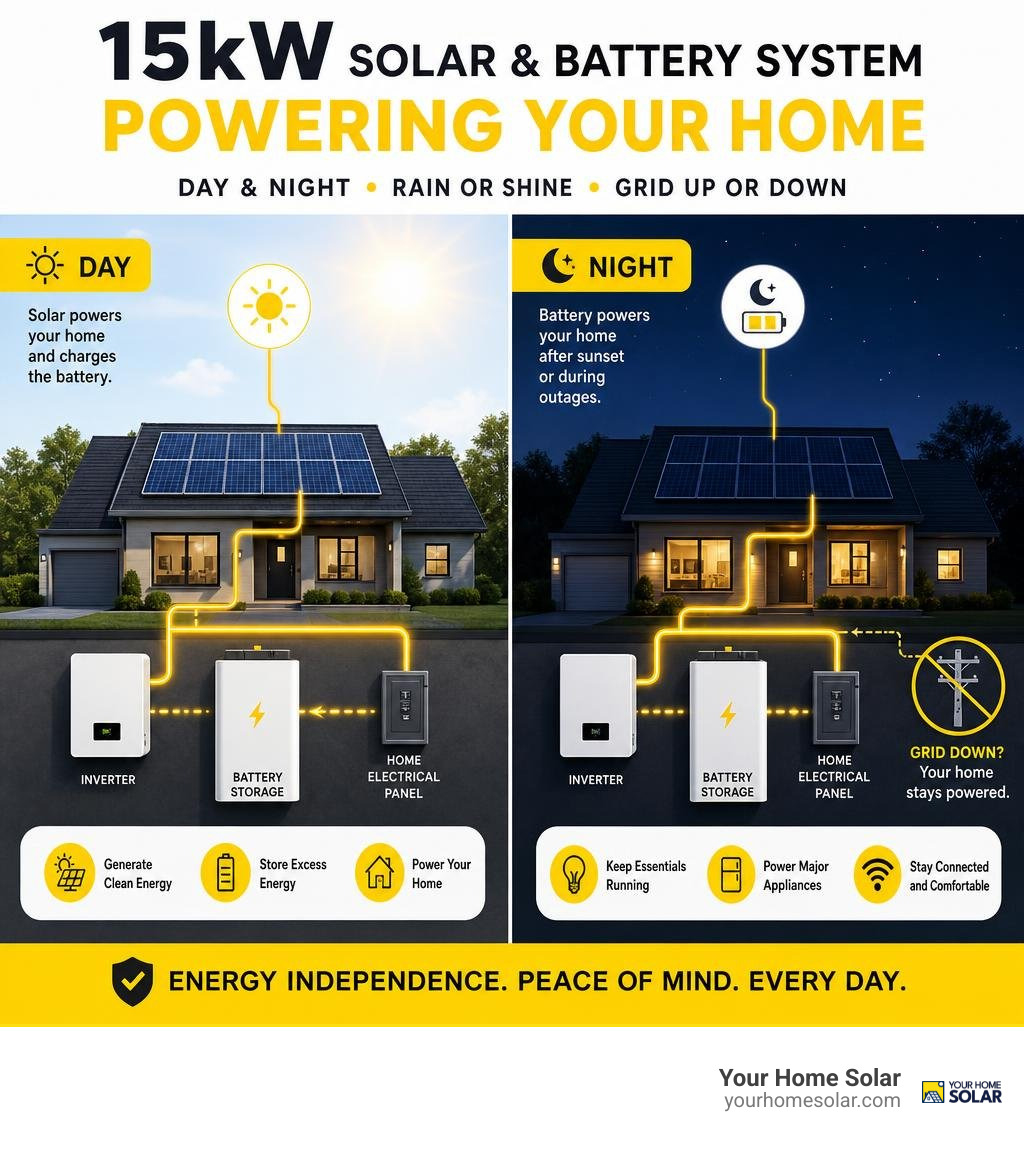
15kw solar system with battery backup basics:
Understanding the Cost of a 15kW Solar System with Battery Backup
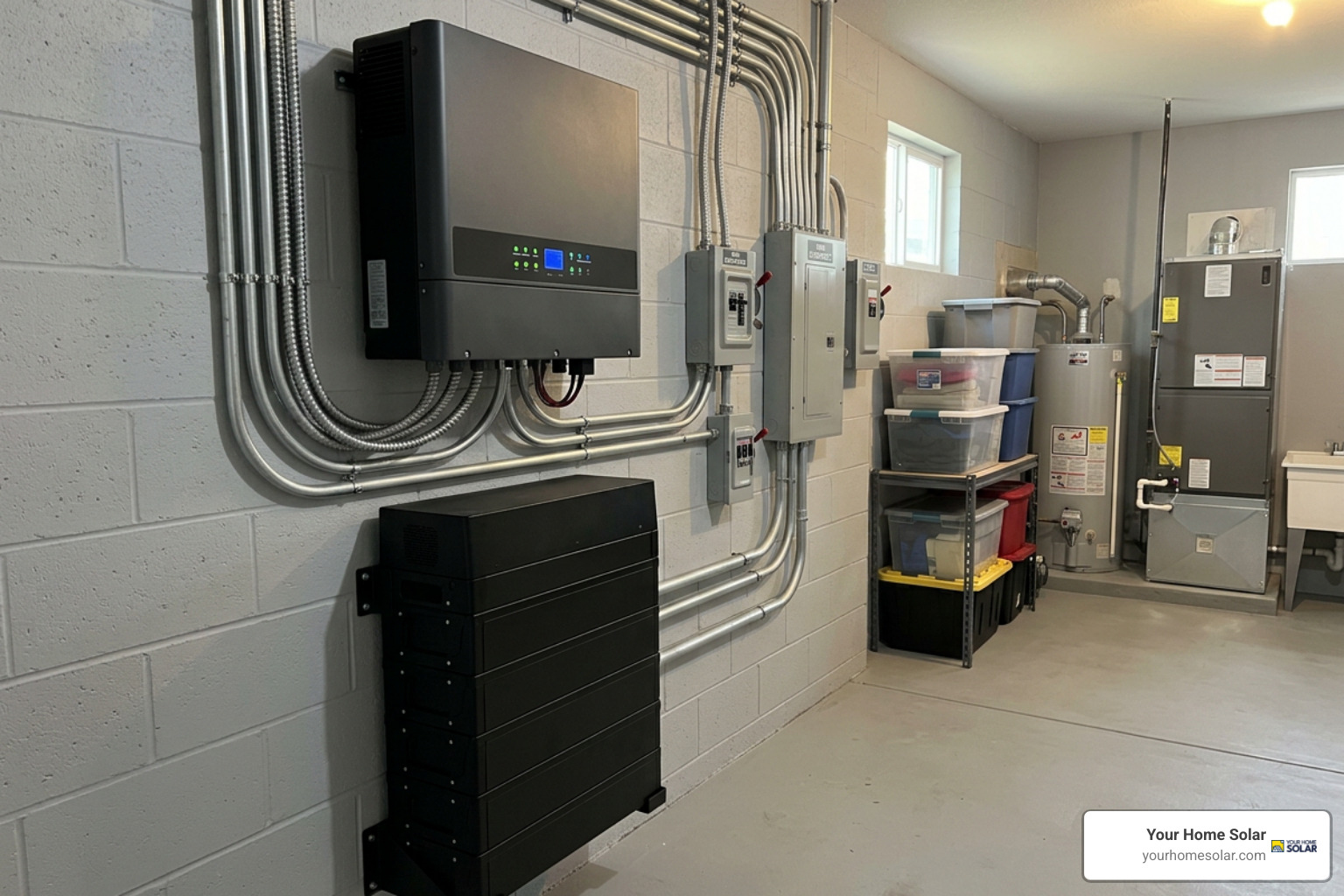
Evaluating the investment for a large-scale residential power system requires looking closely at both hardware and installation components. In 2026, the national average gross cost for a grid-tied 15kW solar system without energy storage sits right around $37,050. When we integrate dedicated energy storage, the total price increases based on the chemistry, capacity, and inverter technology selected.
When breaking down the cost of solar PV battery storage in 2026, storage adds between $12,000 and $22,000 to the initial project invoice depending on whether you install a moderate 14kWh setup or a robust 28–32kWh whole-home battery bank. Federal tax credits significantly lower these figures, bringing premium tier equipment within practical reach for high-demand households.
| System Configuration | Average Gross Cost (2026) | 30% Federal Tax Credit | Estimated Net Cost | Primary Application |
|---|---|---|---|---|
| 15kW Grid-Tied (No Battery) | $37,050 | -$11,115 | $25,935 | Daytime offset & net billing only |
| 15kW Hybrid + 15kWh Storage | $49,500 | -$14,850 | $34,650 | Critical circuits & short outages |
| 15kW Hybrid + 30kWh Storage | $58,200 | -$17,460 | $40,740 | Whole-home backup & multi-day resilience |
Regional Cost Variations and State Pricing
Solar installation costs vary across different markets due to permitting fees, local labor dynamics, and regional supply chains. In Texas, a standard 15kW grid-tied array averages roughly $30,585, while in Massachusetts, higher administrative and labor expenses push identical system capacities to approximately $44,540 before incentives.
Here in our service region, local utility structures like the Tennessee Valley Authority (TVA) power distributors influence the financial return. Looking at local benchmarks like the Johnson City solar cost and payback profile, having battery storage provides vital self-consumption benefits where full retail net metering is not available, allowing you to bank every kilowatt-hour your roof generates.
Financing Options and Complete Kit Packages
Investing in clean energy does not require tying up all your liquid capital. Homeowners across Knox County, Blount County, and Sevier County frequently leverage competitive solar loans, home equity lines of credit (HELOCs), or tailored financing structures that align monthly payments with utility bill savings. Exploring solar home energy financing in East Tennessee allows you to match fixed monthly outlays against volatile electric rates.
For those evaluating equipment packages, pre-engineered kits offer transparency into hardware expenses. Reviewing resources like going big the complete 15kw solar kit price guide shows that complete premium hardware packages—featuring advanced hybrid inverters and 28–32kWh lithium storage—range between $21,000 and $26,000 for equipment alone, establishing a clear baseline before professional engineering, permitting, and labor are factored in.
System Production, Sizing, and Energy Capabilities
A 15kW solar array represents a substantial generation asset capable of producing massive amounts of clean electricity. Understanding how that generation balances against your daily consumption profile is the key to maximizing return. When you look beyond the panels understanding your complete home solar system investment, matching the array output to major appliances—such as dual central air units, well pumps, water heaters, and electric vehicles—ensures you do not leave energy independence to chance.
Energy Production of a 15kW Solar System with Battery Backup
On average across the United States, a 15kW photovoltaic system generates approximately 21,776 kWh annually. However, solar harvest is strictly dictated by local irradiance, azimuth, array tilt, and seasonal cloud cover:
- High Irradiance Zones (e.g., Phoenix, AZ): ~26,468 kWh/year (generating roughly 35% more electricity due to consistent arid sunlight).
- East Tennessee Valley & Foothills: ~20,500 – 22,200 kWh/year (benefiting from excellent sun hours from spring through autumn).
- Lower Irradiance Zones (e.g., Seattle, WA): ~16,404 kWh/year.
Following proven principles for properly sizing a solar system for your East Tennessee home expert tips ensures your roof layout accounts for winter sun angles and surrounding tree lines across our varied topography, from Farragut to Kingsport.
Home Loads and Outage Duration Sizing
How much can you run simultaneously on a 15kW array? During peak sunlight, a 15kW system produces enough instantaneous power to run 15 standard refrigerators, charge an EV at Level 2 speeds, or operate multiple 4-ton central air conditioning units without drawing a single watt from the utility grid.
When assessing the real price of never losing power again, storage runtime during a grid failure depends directly on managed load profiles:
- Essential Loads Only (Refrigeration, Wi-Fi, LED lighting, well pump, basic plugs): A 30kWh battery bank paired with a 15kW solar array provides near-indefinite autonomy, as daytime solar generation fully recharges the storage bank each afternoon.
- Whole-Home Comfort (Central HVAC, laundry, induction cooking, water heating): A 30kWh battery bank will sustain continuous luxury living for 16 to 24 hours without solar contribution. When daily sunshine is present, continuous cycling maintains full home functionality across extended grid blackouts.
Essential Hardware: Inverters, Battery Banks, and System Architecture

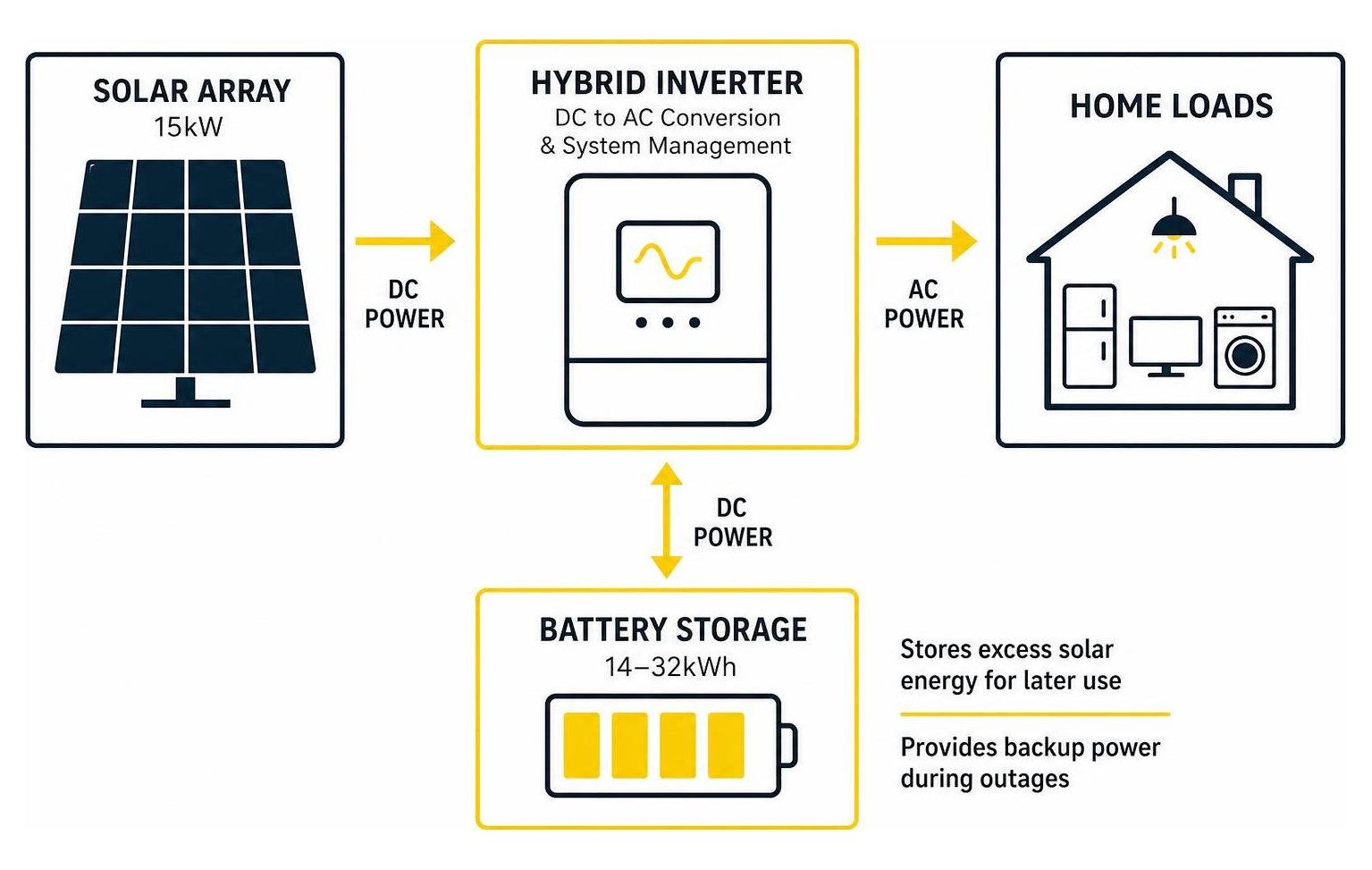
A high-performance solar and storage system requires synchronized components to manage power safely and efficiently. Consulting an in-depth guide to solar battery backup comparison reveals that modern hybrid setups have outpaced older separate AC-coupled battery retrofits in terms of round-trip efficiency, switchover speeds, and installation elegance.
Sizing Storage for a 15kW Solar System with Battery Backup
When pairing energy storage with a 15kW array, battery chemistry matters. Modern systems exclusively use Lithium Iron Phosphate (LiFePO4) chemistry due to its non-toxic construction, thermal stability, and exceptional longevity (typically 6,000+ cycles at 80% to 90% Depth of Discharge).
Reviewing how to choose the best battery storage for your solar PV system highlights why a 28kWh to 32kWh bank is the sweet spot for a 15kW array:
- Charge Acceptance: High-output arrays generate substantial current during peak midday hours. A 30kWh bank can comfortably absorb up to 275A of direct DC charging without thermal throttling.
- Discharge C-Rate: Larger battery banks easily deliver the surge current required to start central AC compressors and deep well pumps without tripping inverter protection circuits.
Hybrid Inverter Specs and System Topologies
The brain of any advanced residential installation is the hybrid inverter. High-capacity all-in-one units like the Sol-Ark 15K provide unparalleled flexibility:
- Continuous Output: 15,000W continuous AC output while grid-tied or running directly from solar PV; 12,000W continuous from battery banks alone.
- Solar Input Handling: Tri-MPPT controllers supporting up to 38.4kW total combined solar input (19.5kW DC coupled and 19.2kW AC coupled).
- Generator Integration: Direct smart management of standby generators up to 24kW with automatic start and stop integration.
- Architecture: 48V nominal battery-agnostic design, ensuring compatibility with modern rack-mount or wall-hung lithium banks.
As detailed in our analysis of beyond the grid how solar battery banks keep your lights on, these inverters execute seamless transfer switching in under 5 milliseconds—so fast your computers, clocks, and televisions won’t even flicker when severe weather knocks out utility power.
Professional Installation, Incentives, and DIY Considerations
While complete DIY packages are sold online, undertaking a 15kW hybrid installation requires significant electrical expertise, heavy structural lifting, and navigating complex utility interconnection agreements.
DIY vs. Certified Professional Installation
A 15kW installation typically involves 30 to 38 large format panels operating at high DC voltages (up to 500V per string). Professional installation ensures:
- National Electrical Code (NEC) Compliance: Full compliance with NEC 2020/2023 rapid shutdown requirements, dedicated battery overcurrent protection, and proper grounding electrode systems.
- Utility Approvals: Frictionless permitting and interconnection processing through local power companies (such as KUB, LCUB, or BrightRidge).
- Warranty Integrity: Maintaining full 10-to-25-year manufacturer warranties, which frequently require certified installation signatures for inverter commissioning and battery warranty activations.
Available Tax Credits, Rebates, and Incentives
Installing a clean energy system in 2026 unlocks powerful financial incentives that substantially offset system costs:
- Federal Residential Clean Energy Credit (Section 25D): Claim a direct 30% federal tax credit against the entire cost of the project, including panels, racking, hybrid inverters, battery storage banks, and professional installation labor.
- Battery Storage Eligibility: Standalone and solar-paired energy storage systems over 3kWh qualify directly for the 30% credit, even if added after initial solar construction.
- Property Tax Exemptions: Many Tennessee jurisdictions exempt the added assessed home value of rooftop solar systems from local property taxes.
Frequently Asked Questions about 15kW Solar Systems
How long can a 15kW solar system with battery backup power a house during an outage?
With a properly sized 28–32kWh lithium storage bank, a 15kW solar system can power essential household circuits indefinitely under sunny conditions. During extended outages, daytime solar production simultaneously powers the home and recharges the battery bank. By managing heavy loads like electric dryers and hot tubs, homeowners comfortably maintain HVAC, refrigeration, lighting, cooking, and water systems through multi-day grid disruptions.
How many solar panels are required for a 15kW array?
The total panel count depends on the individual wattage of the modules selected:
- Using 400W panels, you will need 38 panels.
- Using 450W panels, you will need 34 panels.
- Using 500W commercial-grade residential panels, you will need 30 panels.
On average, a 15kW array requires roughly 700 to 900 square feet of unobstructed, unshaded roof space.
Can a 15kW hybrid solar system run completely off-grid?
Yes. A 15kW hybrid array paired with 30kWh+ of lithium storage and an advanced inverter like the Sol-Ark 15K has the capacity to operate completely independent of the utility grid. For off-grid properties in rural areas or mountainous terrain, integrating an automatic-start standby generator provides an extra layer of winter security during consecutive days of heavy snow or overcast conditions.
Conclusion
A 15kW solar system paired with robust lithium battery storage offers high-demand homes the ultimate combination of utility bill control, energy independence, and storm resilience. By capturing abundant daytime sunlight, storing excess generation in long-lasting LiFePO4 batteries, and utilizing smart hybrid inverters, you secure reliable power regardless of weather events or rising utility rates.
At Your Home Solar, we take pride in delivering trusted expertise, tailored system engineering, and 100% customer satisfaction throughout East Tennessee—from Knoxville and Maryville to Johnson City and Sevierville. Ready to design an energy setup built around your family’s exact needs? Dive deeper with the ultimate guide to solar batteries and energy storage solutions or schedule a custom site evaluation with our certified energy specialists today.