
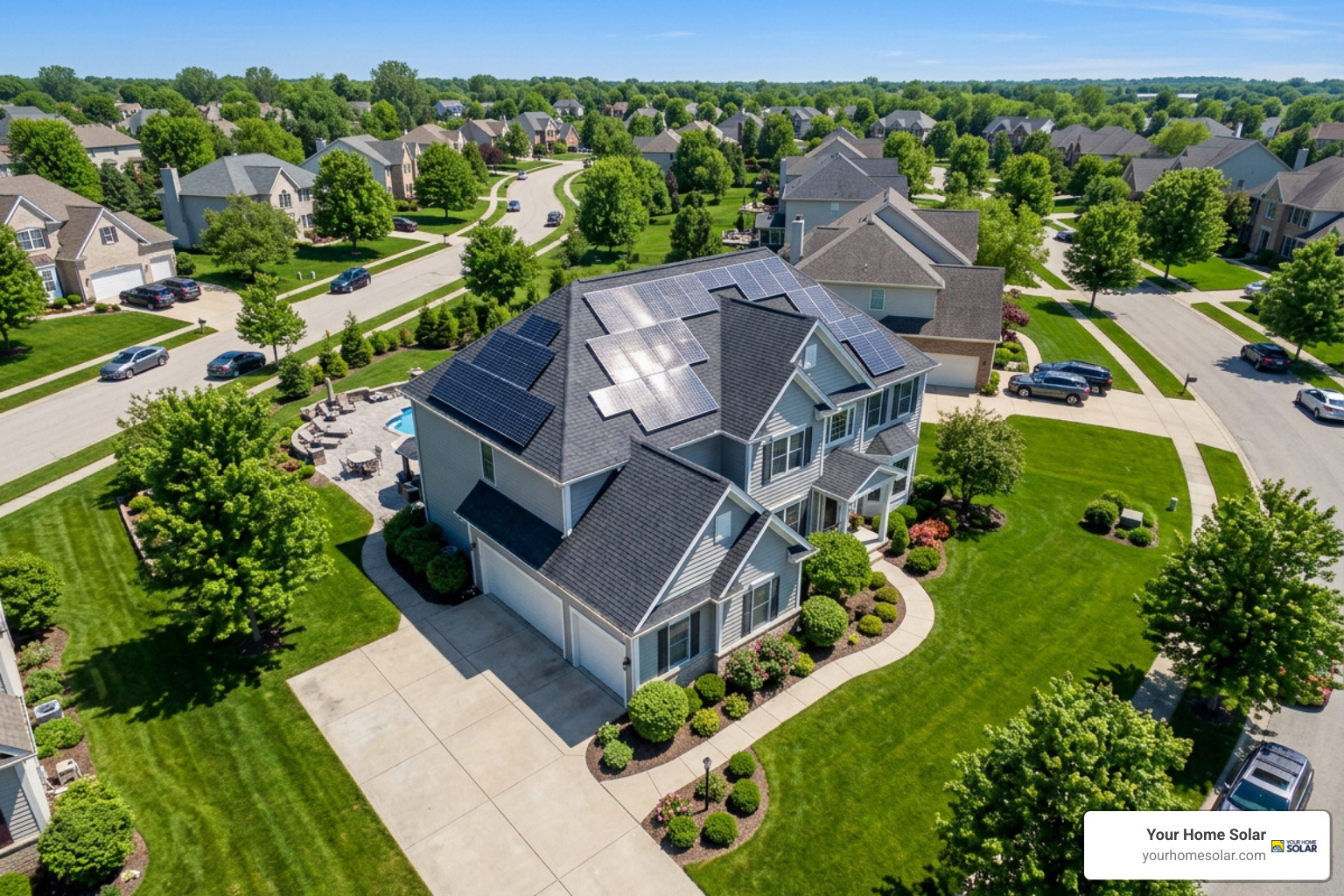
What Does a 15 kW Solar System Actually Cost in 2026?
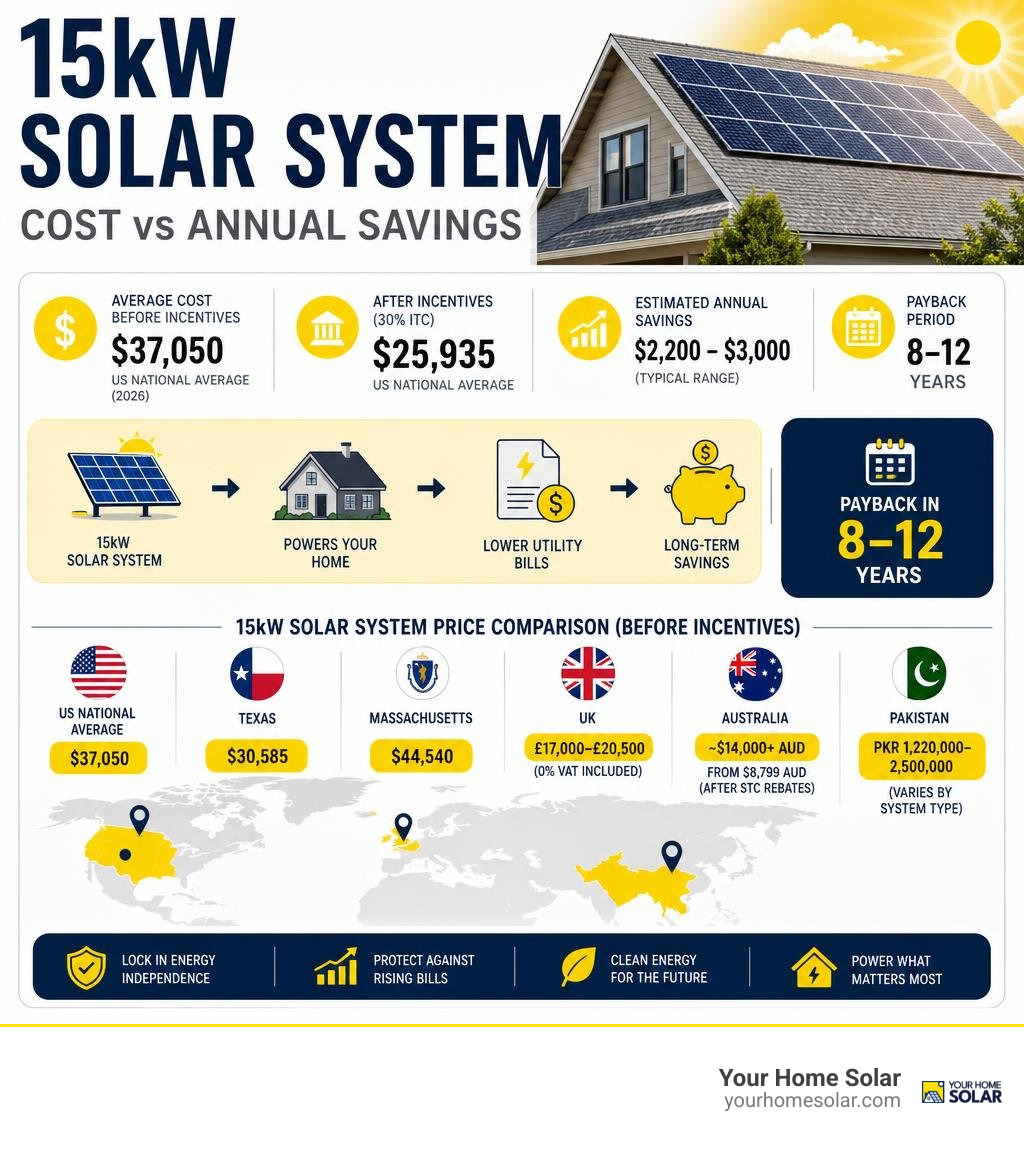
The 15 kW solar system price in the US averages around $37,050 before incentives in 2026. Here’s a fast breakdown by region:
| Location | Estimated Cost (Before Incentives) | After Incentives/Rebates |
|---|---|---|
| US National Average | $37,050 | ~$25,935 (after 30% ITC) |
| Texas | $30,585 | ~$21,410 |
| Massachusetts | $44,540 | ~$31,178 |
| UK | £17,000–£20,500 | Included (0% VAT) |
| Australia | ~$14,000+ AUD | From $8,799 AUD (after STC rebates) |
| Pakistan | PKR 1,220,000–2,500,000 | Varies by system type |
A 15 kW system is a big investment — but it’s also one of the most powerful tools available for slashing energy bills long-term. For East Tennessee homeowners dealing with rising utility costs and unreliable grid power, the numbers deserve a close look before signing anything.
I’m Ernie Bussell, founder and CEO of Your Home Solar and the #1 solar energy contractor in East Tennessee — I’ve spent years helping homeowners navigate every line item behind the 15 kW solar system price, from equipment selection to incentive stacking. In the sections below, I’ll walk you through exactly what drives costs up or down, what you’ll actually get in a quote, and how to calculate your real return.
15 kw solar system price vocab explained:
15 kW Solar System Price Overview in 2026
When evaluating a residential or light commercial solar installation of this magnitude, understanding the overall 15 kw solar system price structure is essential. Across the United States in 2026, a standard 15 kilowatt (15,000 watts) solar panel system carries a national gross average price tag of approximately $37,050 before tax credits and rebates.
On a unit cost basis, this works out to roughly $2.47 per watt installed. Larger residential arrays benefit significantly from economies of scale. Because fixed overhead expenses—such as engineering design, permitting, site evaluation, and mobilization—are spread across a greater number of panels, the cost per watt for a 15 kW array is noticeably lower than that of a standard 6 kW or 10 kW residential setup.
When you factor in the 30% Federal Investment Tax Credit (ITC), the net system price drops from $37,050 down to approximately $25,935. In addition to federal credits, local utility rebates, solar renewable energy certificates (SRECs), and performance-based incentives can compress your net investment even further. To see how overall industry costs have evolved recently, explore our analysis on Solar Panel Costs in 2026: Are They Lower Than You Think?.
Analyzing US Regional 15 kW Solar System Price Differences
Although national averages provide a helpful benchmark, actual out-of-pocket costs vary dramatically depending on geographic market dynamics, local labor rates, equipment availability, and regional permitting requirements.
For instance, looking across state borders highlights these regional pricing swings:
- Texas: Homeowners often secure a 15 kW system for around $30,585 before tax credits due to competitive installer markets and streamlined local permitting.
- Massachusetts: Highly competitive incentive programs and complex administrative requirements drive average gross prices up to roughly $44,540.
- Tennessee & the Southeast: In markets like Knoxville, Johnson City, and Maryville, gross pricing typically falls right around the national benchmark of $35,000 to $38,000, presenting an exceptional value when paired with local solar conditions.
To dive deeper into calculating fair market value per watt for your home, check out our guide on Is 3 Per Watt a Fair Price? Understanding Your Solar Investment. For further state-by-state cost comparisons, you can also review detailed market reports from 15kW Solar Panel Systems: How Much Do They Cost?.
International 15kW Costs: UK, Australia, and Pakistan
Solar pricing dynamics globally illustrate how government policy and local supply chains impact total installation expenses:
| Country | Typical Price Range | Key Regulatory Drivers / Incentives |
|---|---|---|
| United States | $37,050 USD gross (~$25,935 net) | 30% Federal Investment Tax Credit (ITC), state rebates |
| United Kingdom | £17,000 – £20,500 GBP | 0% VAT on residential clean energy installations, Smart Export Guarantee (SEG) |
| Australia | $8,799 – $14,000+ AUD | Small-scale Technology Certificates (STCs) upfront government discount |
| Pakistan | PKR 1,220,000 – 2,500,000 | On-grid vs. off-grid battery configurations, import tariffs |
In the UK market, a 15 kW system averages between £17,000 and £20,500 fully installed, supported by a 0% VAT rate on energy-saving materials. Detailed UK performance metrics are documented in the 15kW Solar System UK: Cost, Output & Payback (2026) report. Meanwhile, in Australia, federal STC rebates lower upfront costs significantly, allowing 15 kW systems to start as low as $8,799 AUD. In Pakistan, prices range from PKR 1.22 million for basic grid-tied systems to PKR 2.5 million for full off-grid setups with heavy battery storage.
How Much Electricity Does a 15kW Solar Kit Produce?
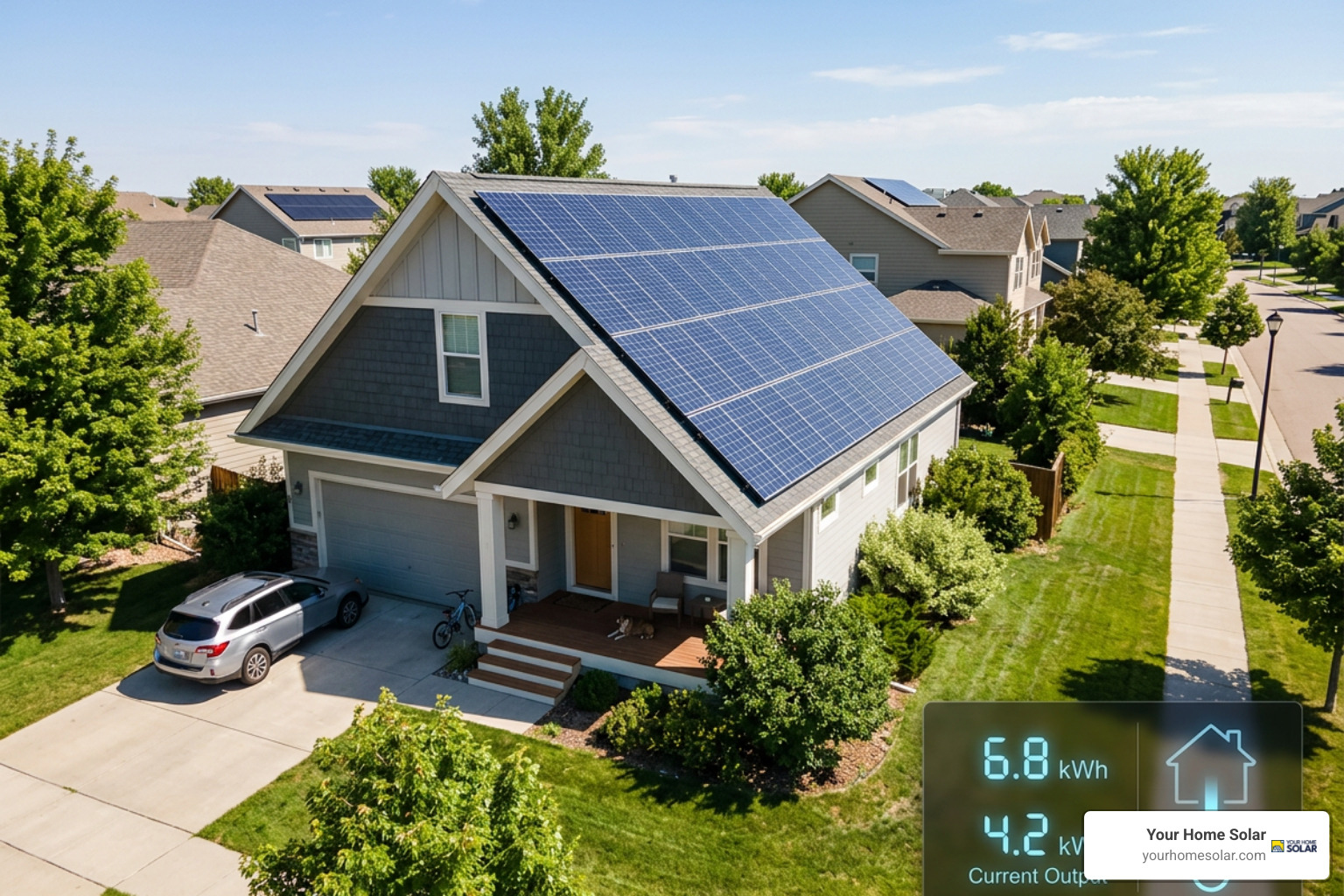
A 15 kW solar kit represents a high-capacity energy generator capable of wiping out massive electricity bills. To put its capacity into context, 15 kW equals 15,000 watts of direct current (DC) rating. On average across North America, a system of this size produces roughly 21,776 kilowatt-hours (kWh) of clean electricity every single year.
That translates into an average daily production of 55 to 65 kWh per day, or about 1,815 kWh per month. For perspective, the typical American household consumes roughly 900 kWh per month, meaning a 15 kW array generates more than double the needs of an average home, making it ideally suited for large estates, multi-generational properties, or high-energy households.
Daily, Monthly, and Annual Generation Yields
Solar production isn’t flat throughout the year; it shifts with seasonal sun angles, daylight duration, and local weather patterns. Regional climate has a massive effect on total output:
- Sunny Sunbelt Regions (e.g., Phoenix, AZ): A 15 kW array can generate upwards of 26,468 kWh per year (over 72 kWh per day) due to abundant peak sun hours.
- Northern or Cloudier Climates (e.g., Seattle, WA): The same 15 kW system yields around 16,404 kWh annually (~45 kWh per day).
- East Tennessee (Knoxville, Kingsport, Oak Ridge): Our region strikes a solid middle ground, producing between 20,000 and 22,500 kWh annually thanks to strong summer solar radiation and temperate spring and autumn weather.
Proper system orientation and roof pitch are vital to maximizing yield. To make sure your home’s geometry is configured for top production, read our guide on Properly Sizing a Solar System for Your East Tennessee Home: Expert Tips.
Roof Space Requirements and System Sizing Criteria
A 15 kW system is physically large. Before committing to an installation, verifying your roof’s physical capacity is step number one.
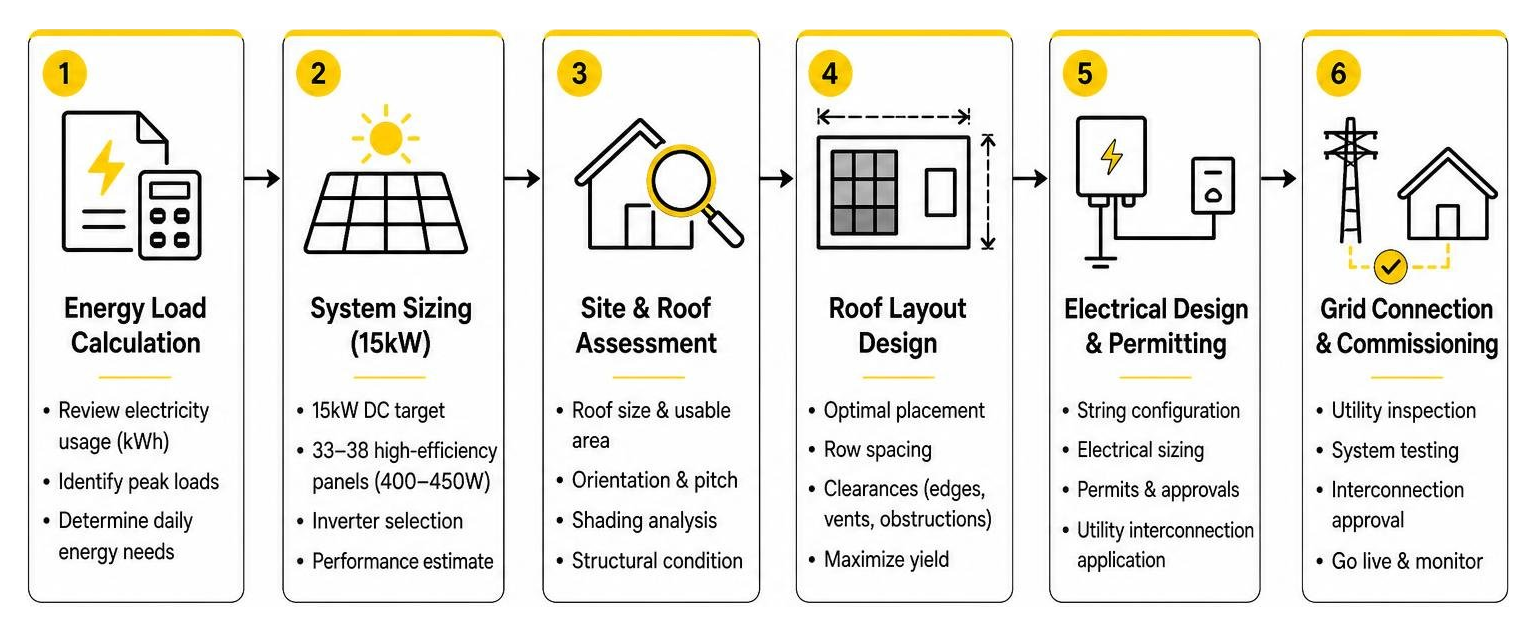
Here are the primary space and layout criteria for a 15 kW array:
- Module Count: Utilizing modern high-efficiency 400W to 450W solar modules, a 15 kW system requires between 33 and 38 individual solar panels.
- Square Footage Needed: You will need approximately 700 to 950 square feet (70–90 square meters) of usable, unshaded roof surface.
- Roof Orientation: South-facing roofs offer peak daily production in North America, though east/west split arrays provide smooth energy production curves throughout the morning and afternoon.
- Structural Pitch: Ideal roof tilts range between 30° and 45°. Flat roofs require tilted ballasted mounting racks to capture optimal light.
Key Factors Influencing Your 15kW Installation Investment
Why do quotes for a 15 kw solar system price vary by several thousand dollars between installers? Several underlying physical and operational factors shape the total final invoice:
- Roof Complexity and Accessibility: Multi-story steep roofs, slate, tile, or metal standing seam installations require specialized mounting hardware and additional safety labor compared to simple composite shingle roofs.
- Electrical Panel Upgrades: Connecting a 15 kW inverter to your home requires significant electrical capacity. If your home’s main service panel is rated at 100 or 150 amps, upgrading to a 200 amp or 400 amp panel is usually mandatory to safely handle the solar backfeed.
- Permitting and Interconnection Fees: Utility application fees, local municipal structural engineering stamps, and electrical inspection permits add direct costs to the installation.
- Labor & Workmanship Standards: Experienced, licensed electricians using NABCEP-certified practices cost more upfront but prevent costly code violations, roof leaks, or dangerous system failures down the road.
For a detailed breakdown of installation variables, take a look at Unpacking Solar Costs: What You Need to Know Before You Buy.
Comparing System Configurations: On-Grid, Hybrid, and Off-Grid
The fundamental architecture of your solar system plays a primary role in determining your total equipment bill.
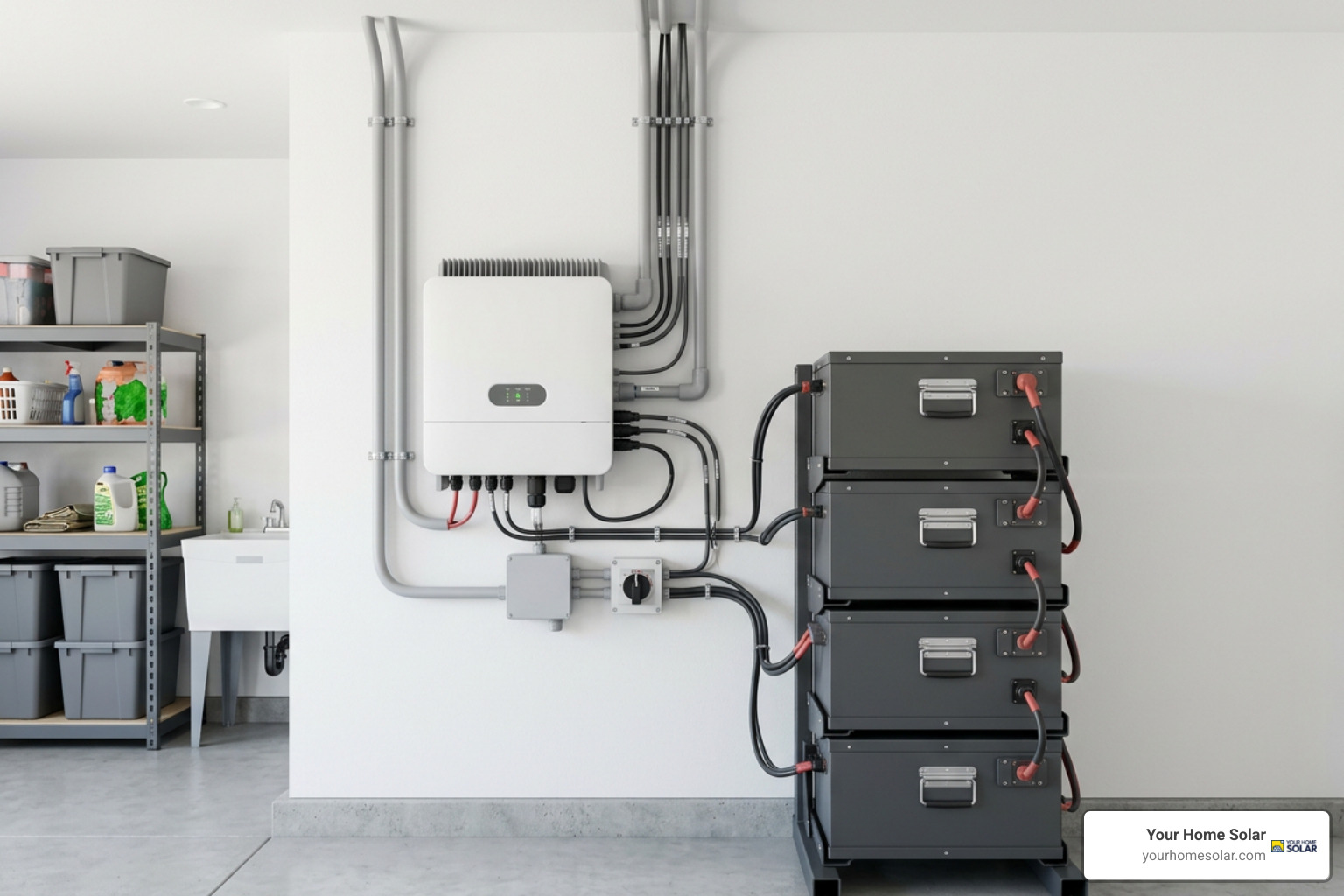
- Grid-Tied (On-Grid): This is the most cost-effective system setup. Your array feeds solar power directly into your home’s breaker panel and exports excess energy back to the local utility power grid.
- Important Note: Standard grid-tied inverters are equipped with mandatory anti-islanding protection. If the utility grid goes down, your solar array automatically turns off to prevent dangerous backfeeding onto power lines, meaning you will not have electricity during blackouts unless backup storage is included.
- Hybrid Systems: A hybrid system combines grid interconnection with a specialized battery-ready inverter and a solar battery bank. During normal operation, you enjoy net metering savings, but during power outages, the hybrid inverter seamlessly isolates your home from the grid to keep your lights, refrigerators, and medical equipment running smoothly.
- Off-Grid Systems: Designed for remote properties without utility grid access, off-grid systems require expansive battery banks, charge controllers, and backup generator integration. While providing complete energy independence, heavy battery requirements increase overall project costs significantly.
Equipment Quality and Warranty Protections
Not all solar components perform equally over a 25-year lifespan. Investing in Tier-1 manufacturers ensures your 15 kW system maintains steady power generation year after year.
- Solar Panels: Premium Tier-1 modules carry a 25-year equipment warranty alongside a 25-year linear performance guarantee. Standard panel degradation rates range between 0.5% and 0.8% annually, ensuring your system still operates at 80% to 88% of its original factory rating in Year 25.
- Inverters: String inverters (such as Huawei, Sungrow, or SMA) carry standard 10-to-12 year warranties, meaning you should budget for at least one replacement cycle during the array’s lifetime. Microinverter systems (such as Enphase) offer 25-year warranties, matching the lifespan of the panels themselves but adding higher upfront cost.
To understand how production guarantees safeguard your long-term investment, explore The Ultimate Guide to Solar Production Guarantees.
Financial Return: Incentives, Battery Storage, and Payback
Investing in a 15 kW solar array is a decision rooted in financial returns. By generating your own clean power, you locked in your electricity costs and insulate your household against utility rate inflation for decades.
Federal Tax Credit and Local Incentives
The single largest financial catalyst for US solar buyers is the Federal Investment Tax Credit (ITC). Set at 30% through current tax regulations, it allows you to deduct 30% of your total solar system installation cost directly from your federal income tax liability.
- Gross 15 kW System Cost: $37,050
- 30% Federal Tax Credit Savings: -$11,115
- Net Investment: $25,935
In addition to federal incentives, local power distributors across East Tennessee (such as TVA-affiliated local power companies) and state clean energy programs offer net metering credits and solar connection pathways. For a complete local breakdown, consult our Solar Incentives Tennessee 2026 Guide.
Calculating Payback Periods and Lifetime Savings
The typical payback period for a 15 kW solar system in the US ranges between 6 and 9 years, depending on your local retail electricity rates.
If your home previously averaged $300 to $450 in monthly power bills, generating ~21,776 kWh annually can save you $2,800 to $4,200 every year in utility charges. Over a 25-year operational lifespan, cumulative net electricity savings frequently exceed $60,000 to $90,000, easily covering the initial net equipment cost multiple times over.
To see how we calculate customized return projections for local homes, visit How Your Home Solar Evaluates Your Solar Savings in East Tennessee.
Battery Storage Integration and 15 kW Solar System Price Considerations
Adding energy storage transforms a standard solar installation into a complete resilience solution.
When pairing battery storage with a 15 kW array:
- Typical Battery Sizing: Most 15 kW system owners install 15 kWh to 30 kWh of lithium iron phosphate (LFP) battery storage to sustain essential home loads overnight or during multi-day grid blackouts.
- Battery Storage Add-On Cost: Adding a dedicated battery storage system adds roughly $9,000 to $18,000 to the total project cost before tax credits.
- Incentive Advantage: Battery storage systems installed alongside solar panels qualify for the same 30% Federal Investment Tax Credit, reducing out-of-pocket storage costs significantly.
Learn more about battery options and pricing in our guide on Breaking Down the Cost of Solar PV Battery Storage in 2026.
Frequently Asked Questions About 15kW Solar Cost
How much roof space is required for a 15kW system?
A 15 kW solar panel array requires roughly 700 to 950 square feet of unshaded roof space. Depending on the exact wattage of individual panels selected (typically 400W to 450W per panel), the installation will consist of 33 to 38 solar panels.
Can a 15kW solar system power an entire large home?
Yes! A 15 kW system yields over 21,700 kWh per year, which easily offsets energy use for large homes (3,000 to 5,000+ sq ft) running heavy power loads like central air conditioning, swimming pool heat pumps, hot tubs, multi-zone HVAC systems, and electric vehicle (EV) charging stations.
What components are included in a 15kW solar installation quote?
A turnkey professional quote should explicitly list:
- Tier-1 solar panels and mounting/racking hardware
- String inverter system or microinverters
- Complete electrical wiring, conduit, disconnect switches, and safety breakers
- Labor, roof flashing, and weatherproofing sealing
- Municipal building permits, engineering stamps, and utility interconnection approval
- System monitoring software setup and customer orientation
- Manufacturer and installation workmanship warranties
Watch out for quotes that hide line items like utility interconnection filing fees or electrical service panel upgrades.
Conclusion
A 15 kW solar system is an empowering investment that delivers long-term energy independence, protects your household against rising utility rates, and dramatically increases property value. While the gross national 15 kw solar system price averages around $37,050 in 2026, federal tax credits and regional incentives lower net costs to a manageable point that delivers substantial lifetime return on investment.
At Your Home Solar, we specialize in delivering tailored, top-tier home energy solutions—from custom-engineered solar arrays to home backup battery systems and EV chargers—across Knoxville, Johnson City, Maryville, Oak Ridge, Kingsport, and surrounding East Tennessee communities. Our team handles every step of the process with trusted expertise and a 100% customer satisfaction commitment.
Ready to see exact pricing and performance projections for your property? Learn more about residential solar solutions and custom financing options and let us design the perfect system for your energy goals today!