What You Need to Know Before You Buy Solar Panels for Your House
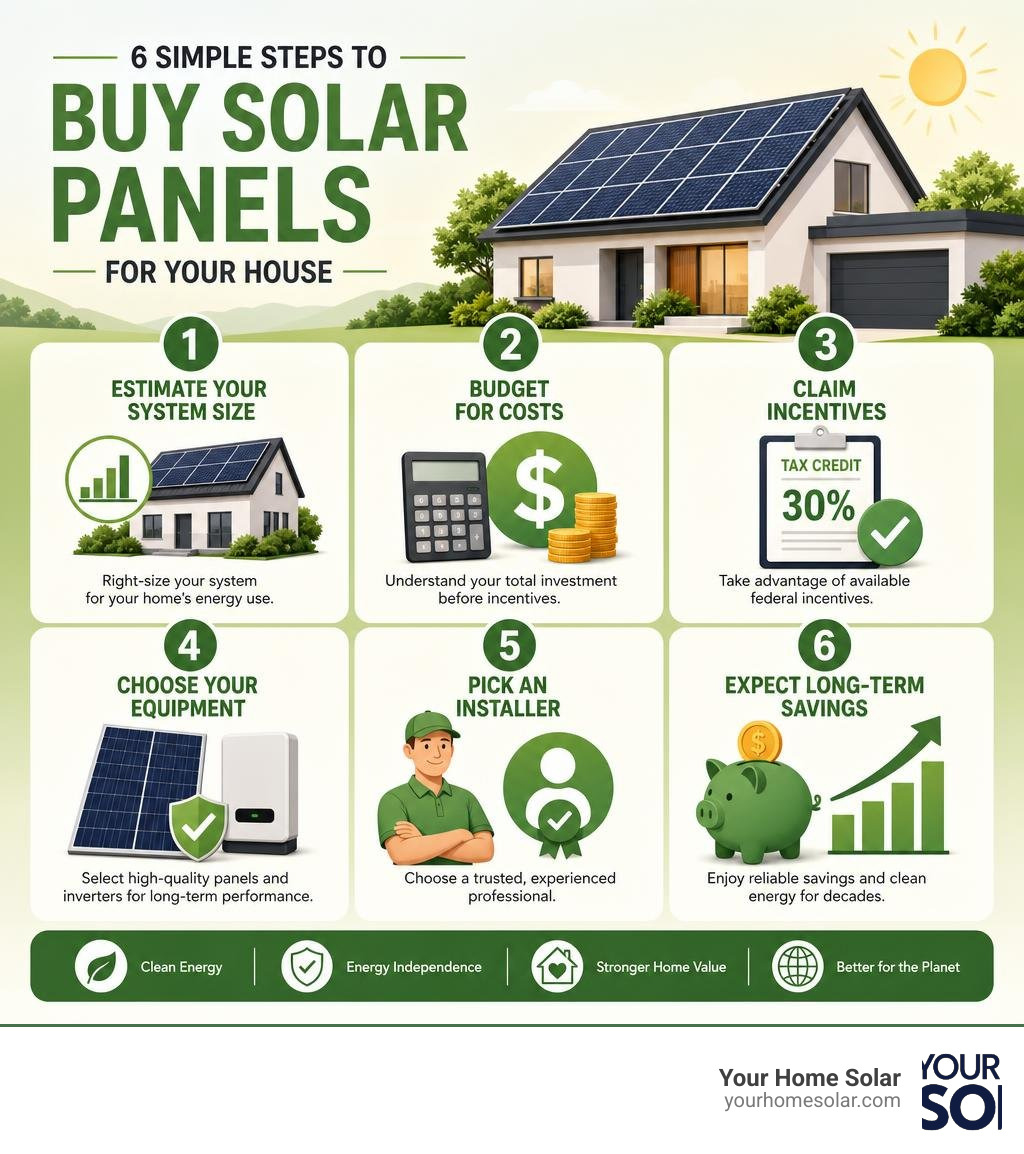
If you’re ready to buy solar panels for my house, here’s a quick snapshot of what to expect:
| Step | What It Involves |
|---|---|
| Estimate your system size | Most homes need 10–12 kW to cover their electricity use |
| Budget for costs | Average cost is ~$2.58/watt, or about $30,500 for a 12 kW system before incentives |
| Claim incentives | The federal tax credit covers 30% of your total installation cost |
| Choose your equipment | Monocrystalline panels and microinverters are the top choice for most homes |
| Pick an installer | Look for NABCEP-certified, local installers with a proven track record |
| Expect long-term savings | Most homeowners save between $37,000 and $154,000 over 25 years |
Going solar is one of the biggest home improvements you can make — and in 2026, it’s more accessible than ever. Electricity bills keep climbing. Power outages are a real concern, especially in East Tennessee. And the upfront cost of solar has dropped significantly over the past decade.
But the process can feel overwhelming. Which panels are best? How big a system do you need? What does it actually cost after incentives? And how do you avoid getting burned by a bad installer?
This guide answers all of that — clearly, without the sales pressure.
I’m Ernie Bussell, Founder and CEO of Your Home Solar, and I’ve spent years in solar operations and installation leadership — helping homeowners across East Tennessee confidently decide whether to buy solar panels for their house and guiding them through every step of the process. Whether you’re just starting to research or ready to get a quote, this guide will give you the clear, honest information you need to make the right call.
Simple buy solar panels for my house word guide:
Why You Should Buy Solar Panels for My House in 2026
If you are asking yourself whether now is the right time to buy solar panels for my house, the short answer is yes. In June 2026, utility rates across East Tennessee—from Knoxville to Johnson City—continue to rise, making energy independence a highly attractive goal.
When you choose to go solar, you are locking in your power costs for the next several decades. This transition offers major benefits:
- Substantial Financial Savings: Instead of renting your power from a utility company month after month, you are investing in an asset that generates free electricity.
- A Shrinking Carbon Footprint: Switching to clean, renewable energy reduces your household’s reliance on fossil fuels, directly lowering greenhouse gas emissions.
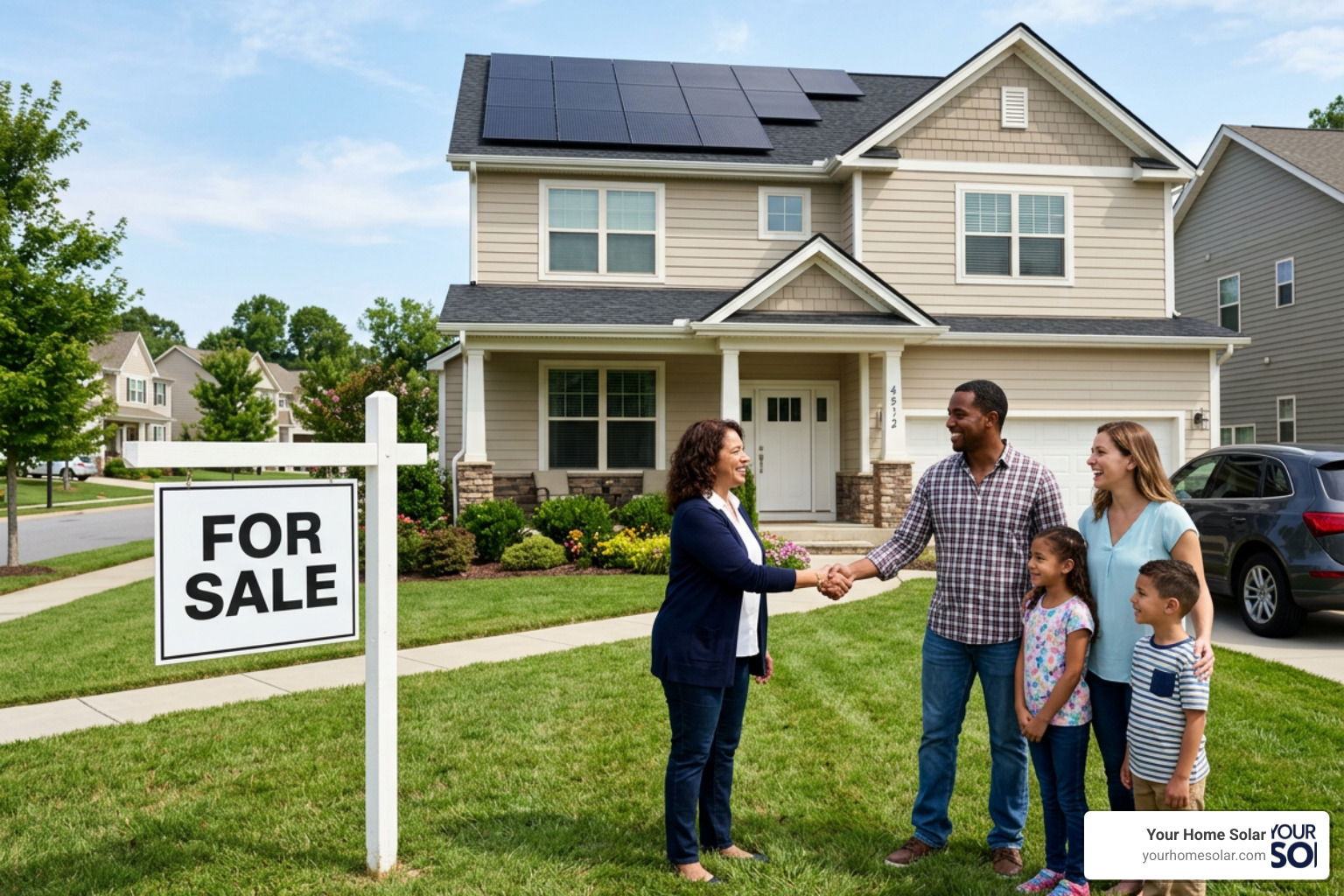
- Increased Property Value: Homes with solar installations sell faster and for more money. Buyers love the idea of moving into a house with low or nonexistent power bills.
For a deeper look into why residential solar is such an effective financial move, check out Why Solar Panels for Home Are a Smart Investment and learn how this upgrade pays off when it comes to real estate in How Solar Panels for Homes Can Increase Your Property Value.
Every home is different, which is why we always weigh both sides of the coin. You can read more about the balance of benefits and considerations in Solar Energy Pros and Cons for a Brighter Home Future and explore the core fundamentals of clean energy in The Bright Side of Life: A Guide to Home Solar Energy Panels and Benefits of Residential Solar. The combination of environmental stewardship and long-term financial security makes installing solar panels one of the smartest upgrades you can make for your home.
Understanding the Costs and Long-Term Savings of Home Solar
One of the first questions we hear is: “What is this going to cost me?”
To understand the economics of going solar, it helps to look at the numbers. On average, a standard 12 kW solar panel installation in 2026 costs $30,505 before incentives. Nationwide, home solar systems average about $2.58 per watt before tax credits and rebates are applied.
However, pricing varies based on your roof’s layout, the equipment you select, and your exact location. For example, local utility structures and regional installation factors can shift the baseline. If you look at The cost of solar panels in Maryville, TN (2026) – EnergySage or examine The cost of solar panels in Sevierville, TN (2026) – EnergySage , you will find that local system sizes and installation complexities play a major role in the final invoice.
To help you visualize the relationship between system size, average upfront cost, and long-term financial return, we have put together this comparison table:
| System Size (kW) | Average Upfront Cost (Before Incentives) | Estimated 25-Year Savings | Typical Payback Period |
|---|---|---|---|
| 6 kW | $15,480 | $18,500 – $77,000 | 9 – 11 Years |
| 12 kW | $30,505 | $37,000 – $154,000 | 9 – 10 Years |
| 18 kW | $46,440 | $55,500 – $231,000 | 8 – 10 Years |
| 24 kW | $61,920 | $74,000 – $308,000 | 8 – 9 Years |
As you can see, larger systems often benefit from a lower cost-per-watt “bulk” pricing effect, which can speed up your return on investment. Over a 25-year lifespan, most homeowners save between $37,000 and $154,000 by generating their own clean electricity.
To dive deeper into these cost structures, check out our resources: An Essential Guide to Solar Panels Cost and The Kilowatt Crunch: Your Guide to Average Solar Panel Costs.
How to Calculate the Budget to Buy Solar Panels for My House
When planning your budget, it is important to realize that the solar panels themselves actually represent only 12% of the total cost of a professional solar installation. The remaining 88% of your investment covers:
- Inverters (which convert DC power to usable AC power)
- Racking and mounting hardware
- Permitting, engineering, and grid interconnection fees
- Professional labor and electrical work
- Operational overhead and warranties
To estimate how many panels you need, look at your monthly electricity bill to find your annual kilowatt-hour (kWh) usage. The typical American home requires about a 12 kW system to fully offset its utility usage.
If you are looking for ways to trim costs, you might wonder if cut-rate components are a safe shortcut. We break down the truth about budget-tier equipment in Cheap Solar Panels for Your Home: Myth or Reality?. Additionally, we explain the basic financial framework of home solar in Solar for Home: A Simple Explanation for Homeowners and Residential Solar Power Explained: Benefits, Tips and More.
Financial Incentives and Tax Credits to Help You Buy Solar Panels for My House
You do not have to shoulder the entire cost of your solar system alone. There are fantastic incentives designed to make clean energy highly affordable in 2026:
- The Federal Residential Clean Energy Credit (Section 25D): This is the single largest incentive available. It allows you to claim a federal tax credit equal to 30% of your total solar installation cost—including panels, labor, inverters, and even qualifying battery storage.
- TVA and Local Utility Programs: While Tennessee does not have a state-mandated solar tax credit, local utilities offer various grid connection and net metering opportunities. You can find official state resources through the Tennessee Department of Environment & Conservation on Residential Solar – TN.gov .
- Local Net Metering: Many municipal utilities allow you to feed your excess solar power back into the grid in exchange for credits on your monthly bill.
To learn how to maximize these savings, read our guide on How to Save Big with Tennessee Solar Incentives and explore the wider regional benefits in Advantages of Installing Solar Panels in Tennessee.
Choosing the Right Solar Equipment: Panels, Inverters, and Batteries
Building an efficient home solar system is like putting together a high-performance puzzle. The components you choose must work in harmony to deliver maximum power and reliability.
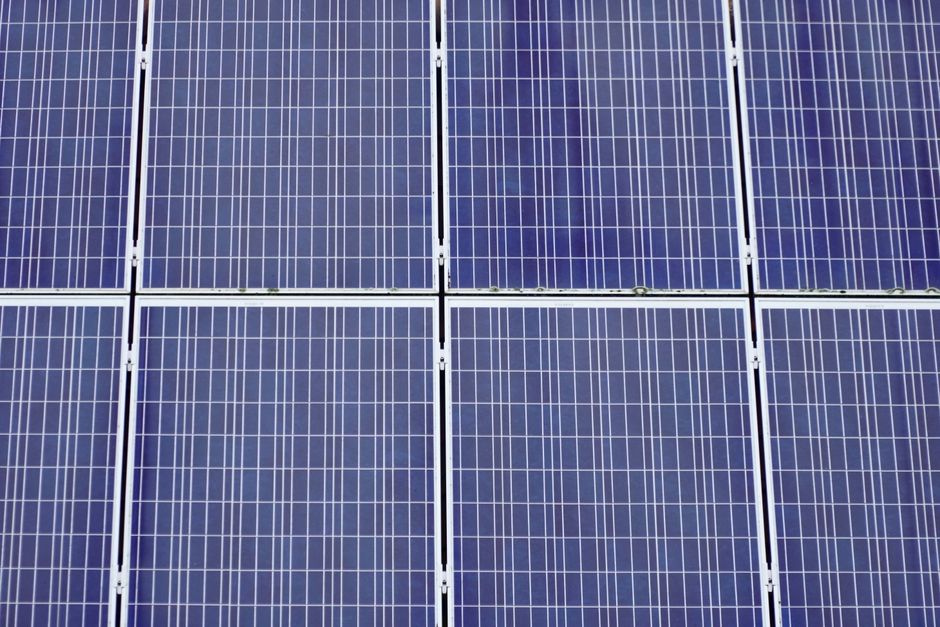
When deciding on equipment, you will choose between pre-packaged kits and custom-designed systems. We break down the pros and cons of both approaches in Kit or Custom: Finding the Perfect Household Solar Panels for Your Needs.
Solar Panel Types and Efficiency Ratings
For residential roofs, monocrystalline solar panels are the gold standard. They are made from single-crystal silicon, which gives them a sleek black appearance and superior performance.
- Efficiency: High-quality monocrystalline panels operate at 18% to 20% efficiency (and sometimes higher), meaning they convert more sunlight into electricity in a smaller footprint than older, blue-tinted polycrystalline panels.
- Advanced Tech: Modern systems often utilize half-cut solar cells (which improve shade tolerance by splitting cell rows) and bifacial panels (which can capture reflected light from the roof surface beneath them).
- Warranties: Premium panels come with two types of protection: a 10-to-12-year product warranty covering physical defects, and a 25-to-30-year performance warranty guaranteeing the panels will still produce at least 80% to 90% of their original rated power at the end of their lifespan.
To learn what to look for in a manufacturer’s warranty, read Understanding Residential Solar Warranties in East Tennessee: What’s Covered?.
Inverters and Battery Storage Options
The solar panels on your roof generate Direct Current (DC) electricity, but your home runs on Alternating Current (AC). That is where your inverter comes in.
- String Inverters: A single central inverter handles the power from all your panels. If one panel is shaded, the output of the entire string can drop.
- Microinverters: Small inverters are installed underneath every individual panel. This ensures that shade on one panel won’t affect the rest of your system. It also allows you to track the performance of each panel individually.
- Hybrid Inverters: These inverters are designed to manage both your solar array and a home battery backup system simultaneously, making it easy to add energy storage later.
Adding a lithium battery backup (such as BYD or other high-voltage lithium ESS options) allows you to store your excess daytime solar energy to power your home through the night or keep your lights on during a grid outage.
Assessing Your Home’s Feasibility for Solar Power
Before you purchase any equipment, we must determine if your specific property is ready for solar.
A thorough feasibility assessment ensures your system will perform optimally for the next 25+ years. You can read more about what makes a property ideal for solar in our guide to Solar Panel Viability in Tennessee.
Roof Suitability, Shading, and Electrical Upgrades
Your roof is the foundation of your solar system. We look at three primary factors:
- Roof Age and Condition: Solar panels last for 25 to 30 years. If your roof is more than 10 to 15 years old, it is highly recommended to replace the shingles before installing solar. This prevents you from having to pay to remove and reinstall the panels for a roof replacement down the road.
- Shading and Obstructions: Heavy tree cover can severely impact your energy production. In some cases, light tree trimming is necessary to open up a clear path to the southern or western sky.
- Electrical Panel Capacity: Your home’s main electrical panel must be capable of handling the dual-directional flow of electricity. Most modern solar installations require a minimum 200-amp service panel. If your home still runs on an older 100-amp panel, you will need to budget for an electrical upgrade.
Permitting, Inspections, and Grid Interconnection
You cannot simply bolt panels to your roof and plug them in. To operate legally and safely, your system must go through a formal approval process:
- Engineering and Building Permits: Local building departments require structural and electrical plans to ensure the system meets local wind, snow load, and electrical safety codes.
- Grid Interconnection Agreements: Your local utility company must approve the system before it can connect to the grid. For instance, municipal utilities like Morristown Utilities have specific policies regarding solar generation and net metering. You can review their requirements directly on Solar Power – Morristown Utilities .
- Final Inspection: Once the physical installation is complete, a local electrical inspector and a utility representative must sign off on the system before the utility grants you “Permission to Operate” (PTO).
Frequently Asked Questions About Buying Home Solar Panels
How many solar panels do I need for my house?
The average home requires between 20 and 30 solar panels to offset 100% of its electricity consumption. The exact number depends on:
- Your annual electricity usage (measured in kWh)
- The wattage of the panels you choose (typically 400W to 450W per panel)
- The amount of daily direct sunlight your roof receives
For example, if your home uses 12,000 kWh of electricity per year and you install 400-watt panels on a roof with good southern exposure, you would need roughly 25 panels to cover your energy needs.
Is it better to buy, finance, or lease solar panels?
Purchasing your system outright with cash always delivers the highest long-term return on investment because you avoid interest charges and own the asset immediately.
However, solar financing (loans) is an excellent option that allows you to go solar with $0 down, replacing your monthly utility bill with a predictable loan payment that eventually disappears once the loan is paid off.
We generally advise against solar leases or Power Purchase Agreements (PPAs). Under a lease or PPA, a third-party company owns the panels on your roof. This means they receive the 30% federal tax credit, not you. Additionally, leased solar panels can complicate the process of selling your home.
What maintenance do residential solar panels require?
Solar panels are incredibly durable and have no moving parts, meaning they require very little maintenance.
- Cleaning: Rainfall will naturally wash away most dust and pollen. However, if you live in an area with heavy dust, agricultural runoff, or bird droppings, a gentle spray with a garden hose (or a professional cleaning using deionized water) once or twice a year will keep your efficiency high.
- Debris Removal: Keep your roof clear of fallen leaves and branches, which can trap moisture and shade your panels.
- Lifespan: You can expect your panels to operate efficiently for 25 to 30 years, after which they will continue to produce power, just at a slightly degraded output rate.
Conclusion
Deciding to buy solar panels for my house is an investment in your home’s value, your financial freedom, and our planet’s future. While the engineering, permitting, and equipment selection might seem complex, you don’t have to navigate the transition alone.
At Your Home Solar, we provide comprehensive home energy solutions across East Tennessee, including customized solar arrays, backup generators, and home EV chargers. From the initial roof assessment to the final utility interconnection, our team is dedicated to delivering trusted expertise, clear communication, and a rewarding installation process.
We proudly serve homeowners throughout Knoxville, Maryville, Sevierville, Oak Ridge, Johnson City, Kingsport, Morristown, and the surrounding counties of East Tennessee.
Ready to see how much you can save? Explore our Residential Solar Services and request your custom, no-pressure solar layout and savings assessment today!