Understanding What a Complete Solar System Really Means
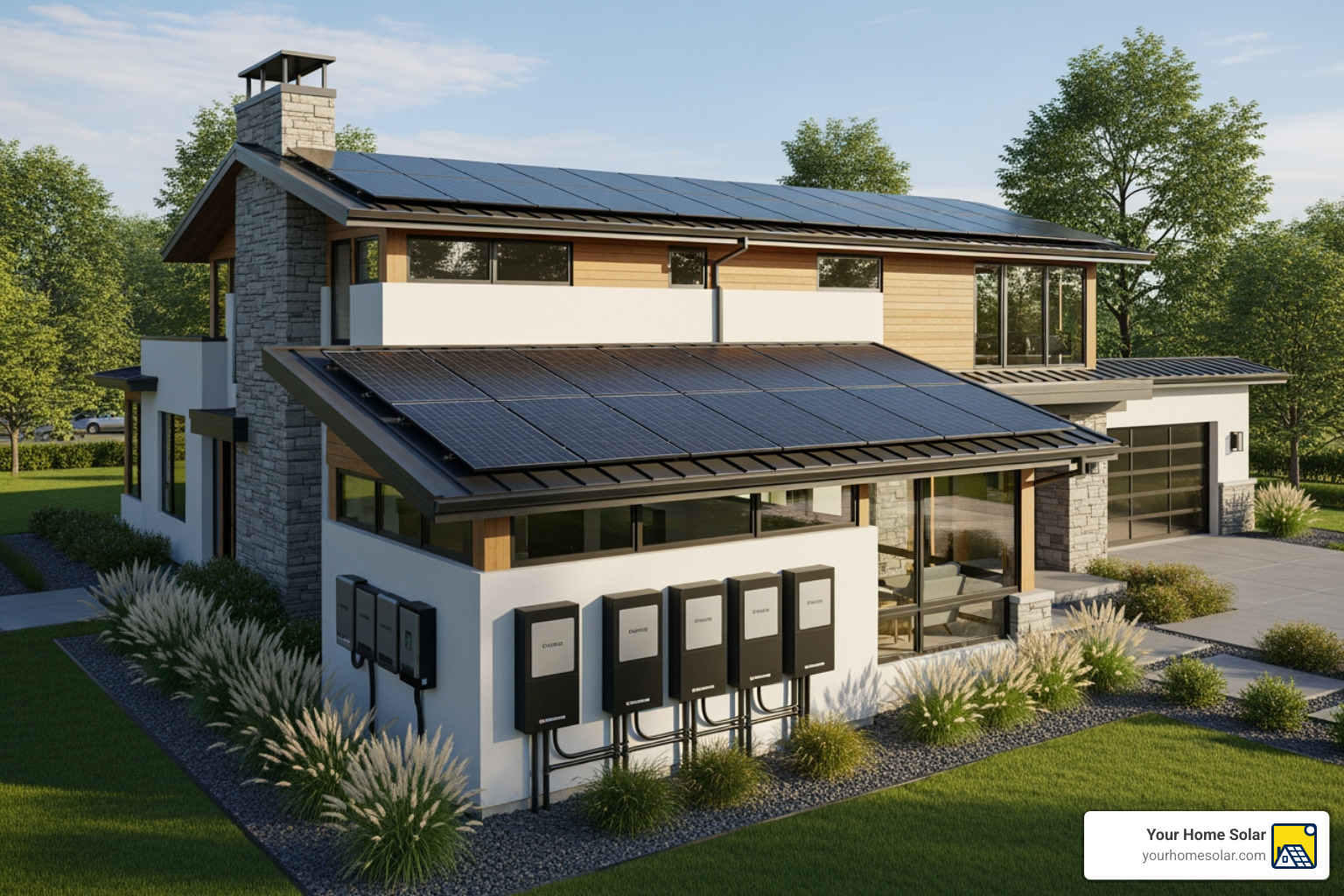
A complete solar system for home is an integrated power plant designed to generate, store, and manage electricity for your household. It includes everything you need to produce clean energy, maintain power during outages, and significantly reduce your electric bills.
Here’s what a complete home solar system includes:
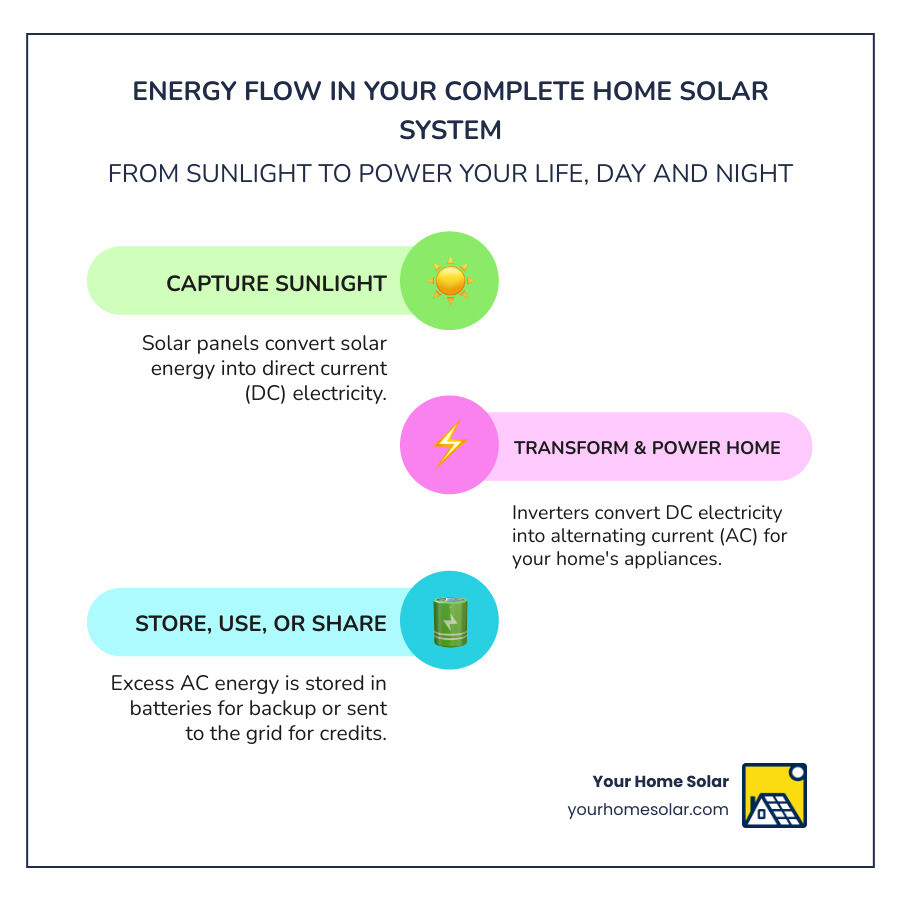
- Solar panels to convert sunlight into DC electricity
- Inverters to transform DC power into usable AC electricity
- Battery storage (optional but recommended) for nighttime use or backup power
- Mounting and racking systems to securely attach panels to your roof or ground
- Monitoring equipment to track energy production and consumption
- Electrical components like breakers and wiring to safely integrate with your home’s electrical system
The goal is to create a reliable energy solution that protects you from rising utility costs, provides backup power, reduces your environmental footprint, and adds value to your property.
I’m Ernie Bussell, founder and CEO of Your Home Solar. Over the past decade, I’ve helped hundreds of East Tennessee homeowners design and install their complete solar systems. My diverse background in military service, education, and solar operations has shown me how a properly designed system can change lives.
The Core Components: Building Your Home’s Power Plant
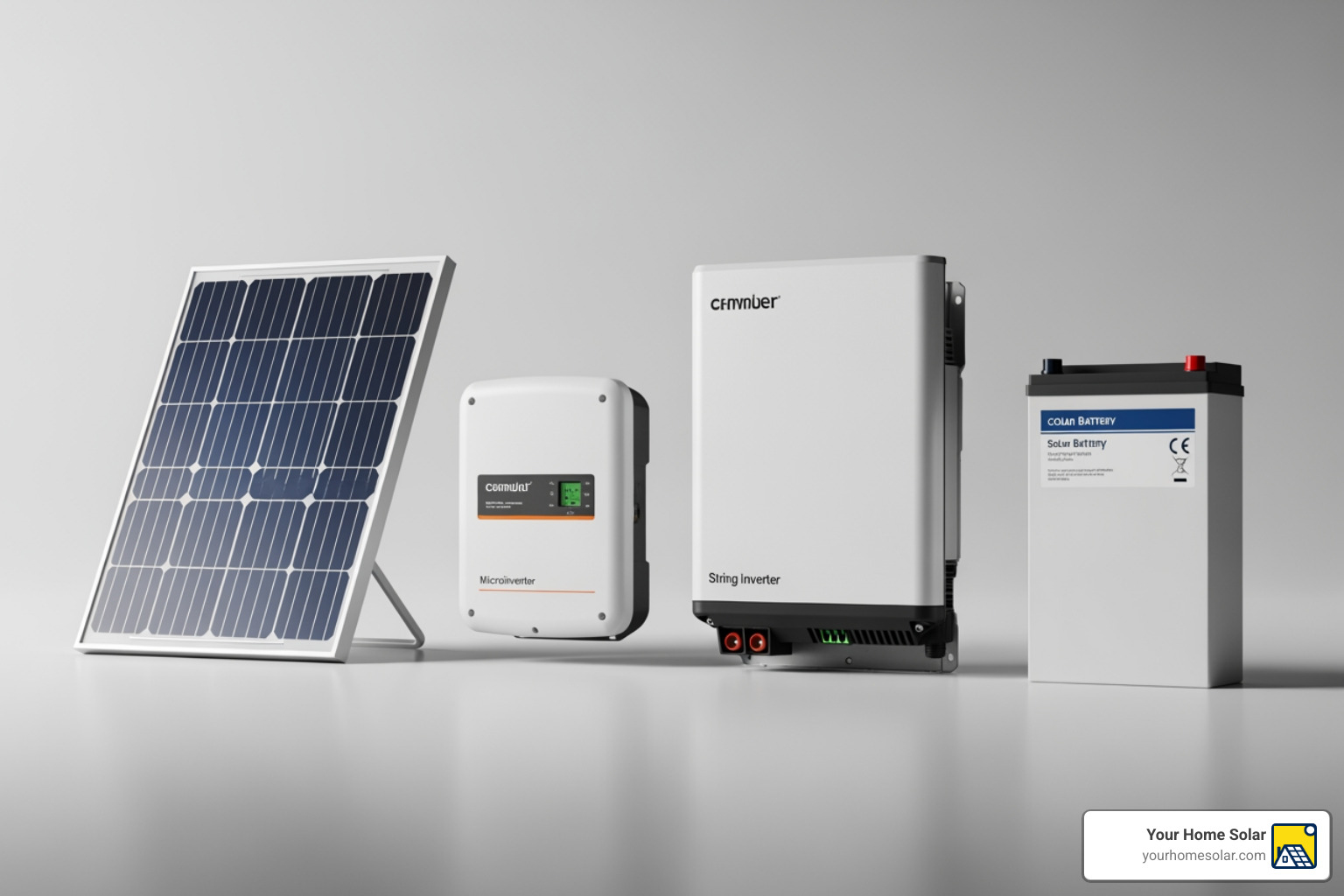
A complete solar system for home is a finely tuned machine. The quality and compatibility of its components are paramount to performance and longevity. At Your Home Solar, we integrate top-tier parts to build a robust power plant for your home. For a deeper dive, explore our Comprehensive Guide to Understanding Solar Panels.
Solar Panels: The Foundation of Your System
Solar panels capture sunlight and convert it into electricity. When selecting panels for your East Tennessee home, we consider:
- Monocrystalline vs. Polycrystalline: Monocrystalline panels are more efficient with a sleeker look, making them a popular residential choice. Polycrystalline panels are a more cost-effective option but are less efficient.
- PERC Technology: Passivated Emitter Rear Cell (PERC) technology improves efficiency by absorbing more light and capturing more electrons. This means more power from the same roof space.
- Efficiency Ratings: Higher efficiency ratings mean fewer panels are needed to produce the same amount of power.
- Durability: Our panels are built to withstand East Tennessee’s harsh weather, from summer storms to winter snow.
- 25-Year Performance Guarantee: High-quality panels include a 25-year performance guarantee, ensuring they produce at least 80% of their rated output after 25 years, a testament to their durability.
Understanding how these panels work is crucial to appreciating your investment. Learn more with our How Solar Panels Work: A Comprehensive Guide.
Inverters: The Brains of the Operation
Inverters convert the DC electricity from your panels into the AC electricity your home and the grid use. We primarily work with two types: string inverters and microinverters.
| Feature | Microinverters | String Inverters |
|---|---|---|
| Performance | Optimized at the panel level, maximizing output even with partial shading. | System-wide optimization, entire string affected by the weakest panel (unless paired with optimizers). |
| Cost | Generally higher upfront cost per watt due to individual units. | Lower upfront cost, but additional cost for power optimizers if panel-level optimization is desired. |
| Monitoring | Panel-level monitoring, allowing precise tracking of individual panel performance. | System-level or string-level monitoring, less granular without optimizers. |
| Shading Tolerance | Excellent. One shaded panel doesn’t significantly impact others. | Poor without power optimizers. Shading on one panel can reduce the output of the entire string. |
| Expandability | Easy to add panels incrementally. | Requires careful planning for expansion, often adding full strings. |
| Safety | DC is converted to AC at the panel, reducing high-voltage DC on the roof. | High-voltage DC runs from panels to a central inverter, requiring careful handling. |
Advanced microinverters can deliver more power, increasing your solar reliance. Leading inverters are highly efficient (around 98%) and come with a solid warranty, typically 12.5 years, for long-term peace of mind.
For an in-depth look at these essential devices, consult The Ultimate Guide to Solar Inverters.
Battery Storage: Opening up 24/7 Solar Power
Batteries are a transformative part of a complete solar system for home. They store excess solar energy generated during the day for use at night or during outages. This boosts your energy independence and provides critical backup power.
Here’s why batteries are a game-changer:
- Backup Power During Outages: During a grid outage, a battery system seamlessly keeps your essential appliances running. The transition is so smooth, you might not even notice the power went out.
- Peak Shaving: Use stored battery power during expensive “peak hours” to avoid high utility rates and save money.
- AC-coupled vs. DC-coupled Systems:
- DC-coupled systems integrate batteries directly with the solar array before the main inverter. This is often more efficient as it avoids multiple DC-to-AC conversions.
- AC-coupled systems add battery storage to an existing grid-tied solar system by converting the solar array’s AC output back to DC to charge the battery, then back to AC for home use or grid export. This offers flexibility for retrofits.
- Battery Chemistry (LiFePO4 vs. AGM):
- Lithium LiFePO4 batteries (Lithium Iron Phosphate) are popular for their longevity and performance, offering around 6,000 cycles (over 15 years of use) with 10+ year warranties. While the upfront cost is higher, their long lifespan makes them cost-effective. They require temperature-controlled environments (60°F-90°F) and cannot charge below 32°F.
- AGM (Absorbent Glass Mat) Carbon Batteries are a more affordable lead-acid option, rated for about 2,000 cycles. Their shorter lifespan means they may need replacement sooner than LiFePO4 batteries. They are a viable option for some budgets.
- 48V vs. 12V Systems: For home solar, 48V systems are generally more efficient than 12V systems. Higher voltage means less energy loss as heat, making them better for handling larger loads.
To dive deeper into energy storage, read The Ultimate Guide to Solar Batteries and Energy Storage Solutions.
Choosing Your Path: System Types & Sizing

Choosing the right complete solar system for home depends on your energy goals. Do you want to reduce bills, ensure backup power, or maximize energy independence? Your answers will guide us in selecting the ideal system for your East Tennessee home. The Department of Energy’s guide to Planning a Home Solar Electric System offers more insights.
Grid-Tied and Hybrid Systems
We specialize in grid-tied and hybrid solar solutions, ideal for homes and businesses across East Tennessee.
Grid-Tied Systems:
- Pros:
- Cost-Effective: Generally the most affordable type of solar system to install.
- Net Metering: Allows you to sell excess electricity back to the utility grid, often earning credits that reduce your bill.
- No Batteries Needed: Eliminates the cost and maintenance of battery storage.
- Reliable Power: You remain connected to the grid, ensuring a constant power supply.
- Cons:
- No Power During Outages: For safety reasons, grid-tied systems automatically shut down during a power outage (anti-islanding protection). This prevents your system from feeding electricity back into a downed grid, which could endanger utility workers.
- Less Independence: You are still reliant on the utility grid.
Hybrid Systems:
- Pros:
- Backup Power: Provides electricity during grid outages, keeping essential appliances running.
- Energy Independence: Reduces reliance on the grid and allows for greater self-consumption of your generated solar power.
- Peak Shaving: Use stored energy during expensive peak utility hours.
- Grid Connection Benefits: You still have the grid for backup if your batteries run low or if solar production is insufficient.
- Cons:
- Higher Cost: The addition of batteries and more complex inverters increases the upfront investment.
- Space Requirements: Batteries require dedicated space, often in a temperature-controlled environment.
- Maintenance: Batteries require some maintenance and have a finite lifespan.
Your Home Solar focuses on solutions that provide peace of mind through grid connectivity and battery backup. We do not typically offer purely off-grid systems for our East Tennessee customers.
How to size a complete solar system for your home
Sizing your complete solar system for home is a crucial, personalized step. It’s not a one-size-fits-all solution and must be based on your unique energy consumption.
- Analyzing Electricity Bills: We start by reviewing your last 12 months of electricity bills to understand your average energy consumption (kWh) and seasonal peak demand.
- Calculating Daily Energy Use (kWh): We calculate your average daily energy usage, which becomes the generation target for your solar system. For example, running a 12000BTU mini-split AC might require 1000-2000 watts of solar and 4-8 kWh of battery storage.
- Factoring in Sunlight Hours: Our experts assess your property’s solar potential, considering East Tennessee’s sunlight hours, roof angle, orientation (south-facing is ideal), and any potential shading.
- Future Needs (EVs, Additions): We also factor in future needs, like an EV purchase or home addition, to ensure your system remains adequate. Solar systems are flexible and can be expanded with more panels or batteries later.
We use advanced tools and our local expertise to accurately size your system, ensuring you get the most out of your solar investment. Find more expert tips on Properly Sizing a Solar System for Your East Tennessee Home: Expert Tips.
From Plan to Power: Your Complete Solar System for Home Installation
Once your complete solar system for home is designed, the next phase is installation. This is where expertise, precision, and adherence to safety standards truly shine. While some might consider DIY options, we strongly recommend professional installation to ensure optimal performance, safety, and compliance with local regulations in East Tennessee. Understanding the process can make it feel less daunting. For a basic overview, see Solar Energy Made Simple: Understanding the Basics of Solar Panel Installation.
Professional Installation by Your Home Solar
Choosing Your Home Solar for your installation means partnering with local experts dedicated to your satisfaction.
- Expertise: Our team comprises highly trained and certified professionals. We understand the specific permitting and interconnection processes unique to East Tennessee, ensuring a smooth and efficient installation. When researching installers, always look for qualified and insured professionals with the proper certification. The solar industry standard certification is from the North American Board of Certified Energy Practitioners (NABCEP), which requires ongoing education and adherence to a strict code of ethics.
- Safety: Safety is our top priority. Our certified electricians handle all high-voltage connections, ensuring your system is installed correctly and safely. We also implement anti-islanding protection, a crucial safety feature for grid-tied solar inverters. This prevents your system from backfeeding into the grid during an outage, protecting utility workers. The system’s inverter output is contingent on detecting a valid grid signal, and it will immediately cease grid-tied output during abnormal grid disconnections.
- Warranty Protection: Professional installation by a licensed and insured company like Your Home Solar ensures that your equipment warranties remain valid and that you are protected by workmanship guarantees. Many equipment warranties can be voided if installation is not performed by a certified professional.
We are committed to delivering top-tier service. Let us help you Power Your Home with Top Solar Installation Services.
Warranties and Long-Term Support
Investing in a complete solar system for home is a long-term commitment, and robust warranties and ongoing support are essential components of that investment. We ensure that our customers in East Tennessee are fully covered:
- Panel Performance Warranty: Our high-efficiency solar panels typically come with a 25-year performance guarantee, ensuring they will continue to produce power efficiently for decades.
- Inverter Warranty: Inverters, being a sophisticated electronic component, usually carry a warranty of 10 to 12.5 years.
- Battery Warranty: Lithium LiFePO4 batteries, for example, often have a 10-year warranty, reflecting their long cycle life of up to 6,000 cycles.
- Workmanship Warranty: Beyond equipment, we stand by our installation quality with a workmanship warranty, providing peace of mind that your system is installed correctly.
- Lifetime Customer Support: We offer lifetime customer and technical support. Our dedicated team of solar professionals is available via phone or email to assist with everything from system selection to installation and beyond, ensuring your system runs smoothly for its entire lifespan.
Understanding what’s covered gives you confidence in your solar journey. Read more about Understanding Residential Solar Warranties in East Tennessee: What’s Covered.
The Financials and Future of Your Solar Investment
A complete solar system for home is not just an environmental choice; it’s a savvy financial investment for your East Tennessee property. Beyond the immediate energy savings, it offers a strong return on investment (ROI) and can significantly increase your property value. We believe in empowering homeowners to understand these benefits fully. Explore why Why Solar Panels for Homes Are a Smart Investment.
How to pay for a complete solar system for home
We understand that the initial cost of a complete solar system for home can seem substantial. However, numerous incentives and flexible financing options are available to make solar energy accessible and affordable for East Tennessee homeowners:
- Federal Solar Tax Credit (ITC): The Inflation Reduction Act offers a significant 30% federal tax credit for residential solar energy systems. This credit directly reduces the amount of income tax you owe. It’s a powerful incentive that can substantially lower your out-of-pocket expenses. We always recommend consulting a tax professional to confirm your eligibility.
- State & Local Incentives: While Tennessee’s state-specific incentives may vary, we stay up-to-date on any available programs that can further reduce your costs. These might include property tax exemptions for the value added by solar or other local rebates.
- Solar Loans: Many financial institutions offer specialized solar loans with favorable terms, allowing you to finance your system with low monthly payments. This can enable you to go solar with little to no upfront cost, and your loan payments may even be less than your previous electricity bills.
- Cash Purchases: For those who prefer to pay upfront, a cash purchase offers the quickest return on investment and maximizes your long-term savings.
We are here to guide you through the financial aspects. Learn more about the Cost and Financing of Solar Systems and explore our Solar Incentives Tennessee 2026 Guide.
Monitoring, Maintenance, and Future-Proofing
Once your complete solar system for home is installed, our commitment to you continues. We equip you with the tools and knowledge to monitor its performance, perform routine maintenance, and ensure it remains future-proof:
- Performance Monitoring Apps: Modern solar systems come with intuitive monitoring apps that allow you to track your energy generation, consumption, and savings in real time, right from your smartphone or computer. This transparency helps you optimize your energy usage and quickly identify any potential issues.
- Troubleshooting: While solar systems are highly reliable, minor issues can occasionally arise. Our lifetime customer support is always available to help you troubleshoot common issues, guiding you through solutions or dispatching a technician if needed.
- Routine Cleaning: Solar panels require minimal maintenance, but occasional cleaning can help maintain optimal efficiency. Rain typically washes away most dust and debris, but a gentle rinse with water a few times a year can be beneficial, especially if you notice significant buildup. Ground-mounted systems offer easier access for cleaning.
- Adding EV Charging Capabilities: As electric vehicles become more common, integrating an EV charger with your solar system is a smart way to power your transportation with clean, free energy. We can assess your system’s capacity and install smart EV chargers that maximize the use of your solar power. Explore our EV Charger Installation Knoxville services.
- System Expandability: Your energy needs might change over time. Our systems are designed to be flexible and expandable. Whether you add more panels, more battery storage, or integrate new smart home technologies, your initial investment can grow with you.
For ongoing care, refer to our Solar System Maintenance guide.
Long-Term Savings and Environmental Impact
The decision to install a complete solar system for home in East Tennessee brings profound long-term benefits, both for your wallet and the planet:
- Reduced Electricity Bills: By generating your own power, you significantly reduce your reliance on the utility company, leading to dramatically lower, or even $0, electricity bills. Many homeowners experience immediate savings.
- Hedging Against Rising Energy Costs: Utility rates are unpredictable and tend to increase over time. Your solar system locks in your electricity costs for decades, protecting you from future price hikes and providing financial stability.
- Reducing Carbon Footprint: Solar energy is clean, renewable, and produces zero greenhouse gas emissions during operation. By switching to solar, you actively contribute to reducing your carbon footprint and combating climate change.
- Supporting a Cleaner Grid: Every kilowatt-hour of solar energy you produce lessens the demand on fossil fuel-powered plants, contributing to a cleaner, more sustainable energy grid for everyone in East Tennessee.
Accept a greener, more economical future. Understand the full Environmental Impact of Solar Energy.
Frequently Asked Questions about Home Solar Systems
We often hear similar questions from homeowners considering a complete solar system for home. Here are some of the most common ones:
How long will my complete solar system last?
A well-installed complete solar system for home is a remarkably durable investment designed for decades of service:
- Panel Lifespan: Solar panels are built to last, with many exceeding their 25-year performance warranty. We typically see panels functioning effectively for 30 years or more.
- Inverter Lifespan: Inverters generally have a lifespan of 10 to 15 years. Microinverters, being distributed across the roof, can sometimes outlast central string inverters due to less exposure to extreme internal temperatures.
- Battery Lifespan: Modern lithium-ion batteries are designed for longevity, typically lasting 10 to 15 years, especially with proper temperature management. For example, LiFePO4 batteries are rated for 6,000 cycles, equating to over 15 years of daily use.
- Importance of Quality Components and Installation: The overall lifespan of your system is heavily influenced by the quality of the components we choose and the expertise of our installation. We prioritize top-tier, reliable products to ensure your system goes the distance.
For more details, check out How Long Does a Residential Solar System Last? Your Home Solar Has the Answer.
Will installing solar panels damage my roof?
This is a common concern, and the answer is a resounding “no,” provided the installation is performed by qualified professionals:
- Professional Installation Techniques: Our certified installers use industry-best practices for mounting solar panels. This involves securing a racking system to your roof’s structural elements, minimizing penetrations.
- Racking and Mounting: The mounting hardware is specifically designed to distribute the weight of the panels evenly and withstand local wind and snow loads.
- Flashing and Sealing: Every penetration point is carefully flashed and sealed using waterproof materials to prevent any leaks. Our workmanship warranty covers these aspects.
- Workmanship Warranties: We stand by our work, offering warranties on our installation to give you peace of mind.
- Roof Age Consideration: We always assess your roof’s condition and age during our initial consultation. If your roof is nearing the end of its lifespan (e.g., less than 5 years old is ideal, as panels have 25-year warranties), we might recommend roof repairs or replacement before solar installation, as removing and reinstalling panels for a new roof can incur additional costs.
We ensure your roof remains safe and sound. Read our expert advice on Will Putting a Solar System on My Roof Damage It? Expert Advice for East Tennessee Homeowners.
What happens during a power outage with a solar system?
The behavior of your solar system during a power outage depends on whether you have a standard grid-tied system or a hybrid system with battery backup:
- Grid-Tied Systems Shut Down (Anti-Islanding): For safety reasons, standard grid-tied solar systems without battery backup will automatically shut down during a utility power outage. This safety feature, called “anti-islanding protection,” prevents your system from sending electricity back into the grid while utility workers are trying to repair it, which could be extremely dangerous.
- Hybrid Systems Provide Backup Power: If you have a hybrid solar system with battery storage, your home can continue to receive power during an outage. The batteries will automatically discharge to power your essential loads. This transition is often seamless, meaning you might not even notice the grid has gone down.
- The Role of the Automatic Transfer Switch: In a hybrid system, an automatic transfer switch detects a grid outage and disconnects your home from the utility, simultaneously activating your battery and inverter to power your home. When grid power is restored, it seamlessly reconnects to the grid.
For reliable power during emergencies, a hybrid system is your best bet. Learn more about Why Solar Panels for Homes Are the Best Choices for Emergency Power Backup.
Conclusion: Take Control of Your Energy Future
Investing in a complete solar system for home is one of the most impactful decisions you can make for your property and the planet. It’s about achieving true energy security, enjoying substantial financial savings, and contributing to a healthier environment for future generations in East Tennessee.
At Your Home Solar, we pride ourselves on our trusted expertise and commitment to 100% customer satisfaction. We don’t just install solar panels; we provide custom, reliable, and rewarding energy solutions that empower you to use energy on your own terms. From the initial consultation to long-term support, we are your partners in building a brighter, more sustainable future for your home in Knoxville, Oak Ridge, Maryville, Johnson City, Kingsport, Morristown, and all across East Tennessee.
Are you ready to take control of your energy future? Explore our Residential Solar Solutions today and let us help you design the perfect complete solar system for your home.