Why Home Solar Energy Panels Matter for East Tennessee Homeowners
Home solar energy panels are photovoltaic systems installed on residential properties that convert sunlight into electricity, allowing homeowners to generate their own clean power. Here’s what you need to know:
Quick Solar Basics:
- What they do: Convert sunlight directly into electricity for your home
- Typical size: 10 kW systems (about 25-30 panels) for average homes
- Cost: $15,000-$25,000 after federal tax credits and rebates
- Savings: 75-80% reduction in electricity bills
- Payback period: 5-10 years with 25+ year lifespan
- How they work: Grid-tied systems with net metering let you bank excess power and draw from the grid when needed
If you’re facing rising electricity bills, frequent power outages, or want to reduce your environmental footprint, solar panels offer a proven path to energy independence. The technology has evolved from niche to mainstream, with costs dropping 90% since 2010 while efficiency continues to improve.
The decision isn’t just financial—it’s about taking control of your energy future. Solar panels protect you from utility rate increases, provide backup power options when paired with batteries, and significantly reduce your carbon footprint. For East Tennessee homeowners, the combination of available sunlight, federal incentives, and local installation expertise makes this an ideal time to explore solar.
I’m Ernie Bussell, founder and CEO of Your Home Solar, and I’ve spent the last several years helping East Tennessee families navigate the solar decision with transparency and expertise. My background includes managing operations for a $40 million solar company and personally guiding thousands of homeowners through the process of understanding and installing home solar energy panels. This guide will walk you through everything you need to make a confident decision about solar for your home.
How Residential Photovoltaic Systems Work
When we talk about solar panels, we are actually talking about Photovoltaics. The word “photovoltaic” (PV) literally means “light-electricity.” It’s a bit of scientific magic where sunlight—made of particles called photons—strikes a semiconducting material and knocks electrons loose, creating a flow of electricity.
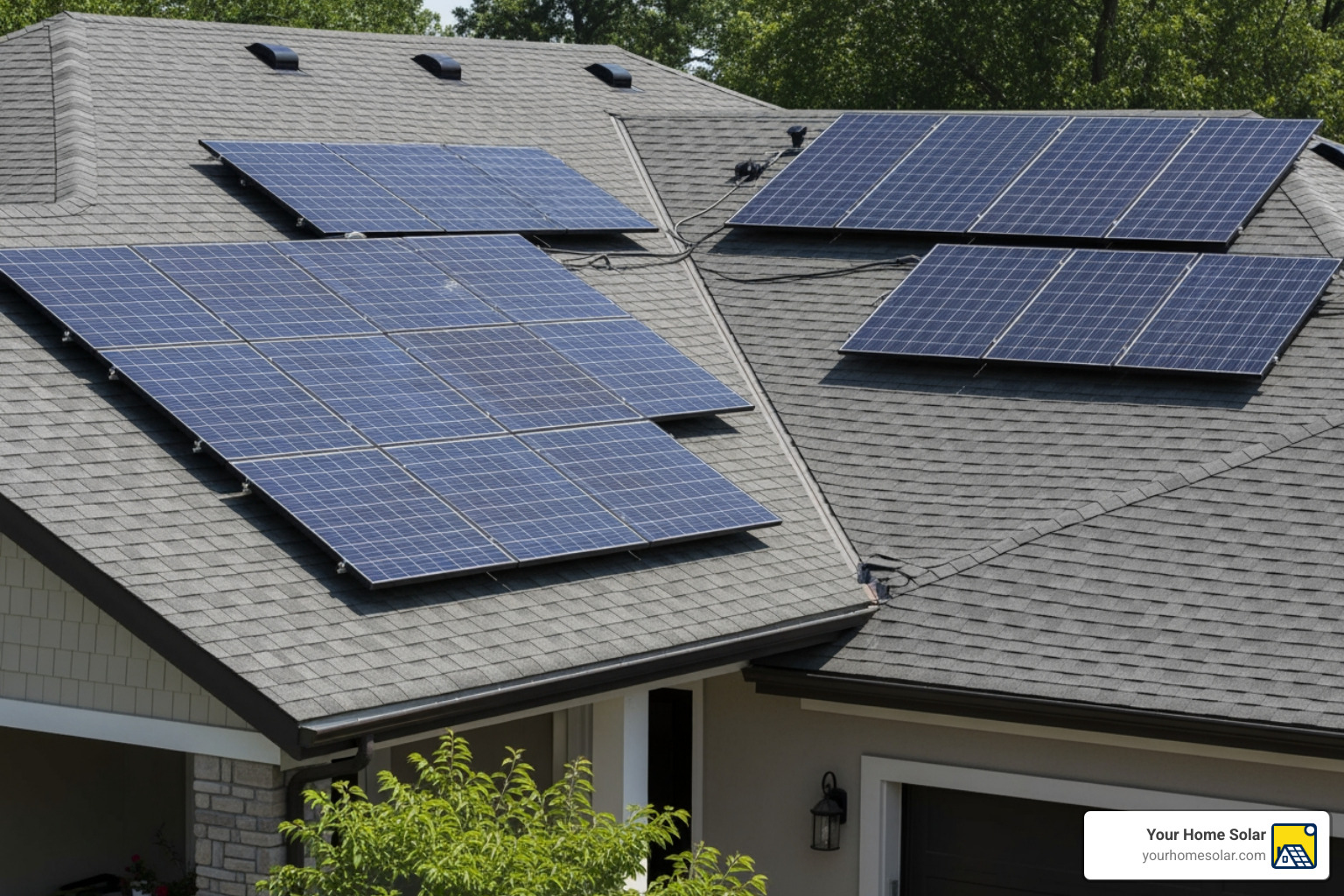
At the heart of every system are PV cells. These cells are small, square semiconductors made primarily from silicon. They are incredibly thin—often less than the thickness of four human hairs! To make them durable enough for a roof in Knoxville or Johnson City, we sandwich these cells between protective materials like tempered glass and a sturdy backsheet.
For a deeper dive into the physics, check out our How Solar Panels Work: A Comprehensive Guide. One of the most exciting developments in the industry is the constant push for higher solar cell efficiency records. While lab-tested cells have reached over 44% efficiency, the panels we install on your home typically operate between 15% and 20%, which is more than enough to power a modern household.
Components of a Residential Solar System
A complete solar setup is more than just the panels on your roof. It is a finely tuned ecosystem of components designed to take the sun’s energy and make it usable for your coffee maker, TV, and EV charger.
- Solar Modules: These are the panels themselves. They are modular, meaning we can scale the system size to meet your specific energy needs.
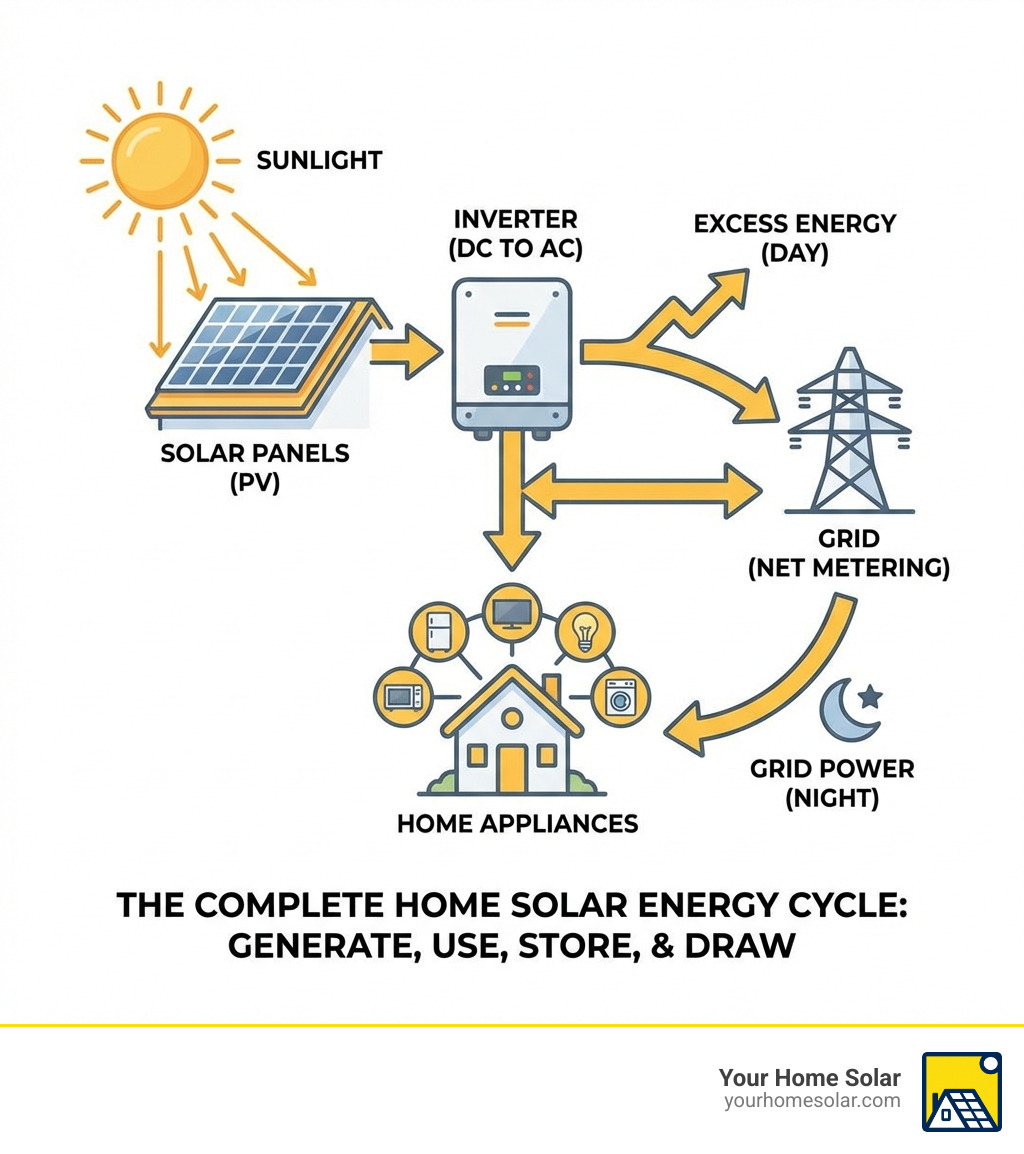
- Solar Inverters: This is perhaps the most critical piece of hardware. Panels produce Direct Current (DC) electricity, but your home runs on Alternating Current (AC). The inverter is the “brain” that performs this conversion. You can learn more in The Ultimate Guide to Solar Inverters.
- String Inverters: These handle the power from a whole “string” of panels at once.
- Microinverters: These are small units attached to each individual panel, allowing for better performance if one panel is shaded by a stray tree branch.
- Racking and Mounting Systems: These provide the stable, durable foundation for your array. Most residential systems use rack mounting on sloped roofs, but we also design ground-mount systems for properties with plenty of acreage.
- Balance of System (BOS): This includes the wiring, switches, and Solar Photovoltaic Technology Basics that connect everything safely to your home’s electrical panel.
Maximizing Output from Home Solar Energy Panels
To get the most out of your home solar energy panels, placement is everything. In the Northern Hemisphere, we always aim to orient panels due south. This allows them to capture the maximum amount of “insolation”—the fancy word for sunlight hitting a surface—throughout the day.
However, even the best panels face enemies: shading and soiling.
- Shading: A small amount of shade on just one cell can cause a “Christmas light effect,” where the output of the whole string drops significantly. We use bypass diodes and advanced inverter technology to mitigate this.
- Soiling: Dust, pollen, and bird droppings can block sunlight. Scientific research on soiling suggests that global energy loss due to dirt is about 3-4% annually.
To keep your system running at its peak, follow the steps in How to Maintain and Extend the Lifespan of Your Home Solar Panels. Generally, a good rainstorm in Tennessee does most of the cleaning for you, but an annual inspection ensures all electrical connections remain tight and safe.
Investing in Home Solar Energy Panels: Costs and ROI
We know the big question: Is it worth the money? For most homeowners in East Tennessee, the answer is a resounding yes. While there are upfront costs, solar should be viewed as a pre-payment of 25 years of electricity at a massive discount.
The cost of a system varies based on size and equipment, but you can find a detailed breakdown in our guide on the Cost and Financing of Solar Systems. The biggest financial boost comes from the Federal Investment Tax Credit (ITC). Currently, you can claim a 30% tax credit on the total cost of your system. You can read more about this in our section on Tax Credits & Incentives.
The typical payback period—the time it takes for the electricity savings to cover the cost of the system—is usually between 5 and 10 years. Given that panels have a 25-year performance guarantee, you’re looking at 15 to 20 years of essentially free power! Beyond the monthly savings, solar is one of the few home upgrades that offers a direct return. Studies show that solar energy can significantly increase your property value, often by the full cost of the system itself. For more on this, see How Solar Energy Can Increase Your Property Value.
Understanding Net Metering and Grid Connection
Most residential systems we install are “grid-tied.” This means you remain connected to the local utility grid. This is actually a great thing because of a policy called Net Metering.
When your home solar energy panels produce more electricity than you are using (like on a sunny Tuesday at noon while you’re at work), that excess power flows back into the grid. Your meter literally runs backward, and you earn energy credits. At night, when the sun goes down, you draw power back from the grid using those credits.
It is a simple 1-for-1 exchange in many areas. While you will still have a small monthly grid connection fee (often around $20 to cover infrastructure maintenance), your actual energy charges can drop to zero. We’ve seen homeowners achieve 75-80% total bill savings, making it clear Why Solar Panels for Home Are a Smart Investment. You can find more details in this Homeowner’s Guide to Solar.
Practical Installation of Home Solar Energy Panels
What does the actual process look like? It starts with a thorough assessment. We look at:
- Structural Integrity: Can your roof handle the weight?
- Roof Age: We recommend your roof be less than 5 years old. Why? Because solar panels last 25+ years. If your roof needs replacing in 10 years, you’ll have to pay to take the panels down and put them back up.
- Shading: Are there trees that need trimming?
- System Sizing: A typical residential system is around 10 kW, but we tailor this to your actual kWh usage.
For a step-by-step look at the big day, check out What to Expect During a Solar Installation for Your East Tennessee Home. We handle all the permitting and engineering to ensure the process is as low-drama as possible. You can also prepare by reading Preparing Your Home for Solar Installation: What You Need to Know.
One thing we often hear is concern about Tennessee weather. Rest assured, these systems are built for durability. Modern panels are tested to withstand hail and extreme temperatures from -40°F to +185°F. You can find more on their resilience in Solar Panel Durability: How Long Do They Last?.
Enhancing Your System with Battery Storage and Efficiency
While net metering is great, many homeowners in areas like Sevierville or Maryville want even more independence. This is where battery storage comes in.
Adding a battery like a Tesla Powerwall allows you to store your own solar energy for use at night or during a grid outage. This provides “whole-home energy security.” If the grid goes down, your lights stay on. It’s also a smart way to maximize your ROI if your local utility doesn’t offer full 1-to-1 net metering. Check out The Ultimate Guide to Solar Batteries and Energy Storage Solutions for a deep dive.
Research on battery viability shows that as battery costs fall, the economic case for “self-consumption” becomes even stronger. We often recommend pairing solar with other high-efficiency upgrades. For example, a 7.6 kW system paired with a modern heat pump can often offset nearly 100% of a home’s heating and cooling costs. You can explore these combinations in Understanding Different Types of Residential Solar Energy Systems.
Frequently Asked Questions about Home Solar
We get a lot of questions at our Knoxville and Maryville offices. Here are the most common ones. You can find a full list at our FAQ page and learn the truth behind common misconceptions in Solar Energy Myths Debunked: Separating Fact From Fiction.
Can solar panels eliminate my electricity bill entirely?
While you can achieve a “net zero” energy balance over the year, you will likely still see a small monthly bill. Most utilities charge a “grid connection fee” or “service charge” (usually $15-$25) just for the privilege of being connected to the lines. However, your actual energy usage charge can absolutely be eliminated.
What maintenance do solar panels require?
Very little! Solar panels have no moving parts, which means there is very little that can break. We recommend a simple visual inspection once a year and a cleaning if you notice a significant buildup of dust or pollen. Inverters typically have a shorter lifespan than panels (about 12-15 years), so you should plan for one inverter replacement during the 25-year life of your panels.
Is my roof suitable for solar panels?
A good solar roof is structurally sound, has plenty of unshaded space, and preferably faces south. If your roof is older than 15 years, we usually recommend replacing it before the solar installation. If your roof isn’t a good fit, don’t worry—we also offer ground-mount solutions for homeowners with extra yard space.
Conclusion
Investing in home solar energy panels is one of the most rewarding decisions you can make for your home. Beyond the clear environmental advantages—like negating thousands of pounds of carbon emissions every year—it provides a level of financial predictability that traditional utilities simply can’t match.
At Your Home Solar, we take pride in being East Tennessee’s trusted partner for these transitions. From Knoxville to Johnson City, we provide tailored, reliable installations backed by our commitment to 100% customer satisfaction. Whether you are looking for a standard grid-tied system or a complex off-grid setup with battery backup, our expertise ensures your system will perform for decades to come.
The future is bright, and it’s powered by the sun. If you’re ready to take the next step toward energy independence, read more about why The Future Is Solar: Why Now Is the Time to Invest in Solar Energy for Your Home or explore our Residential Solar solutions today. We look forward to helping you flip the switch!