Why Electric Solar Panels for Homes Are Changing Energy Independence
Electric solar panels for homes convert sunlight into electricity to power your household. Here’s a quick overview:
- How They Work: Photovoltaic (PV) cells absorb sunlight, creating direct current (DC) electricity. An inverter then converts it to the alternating current (AC) your home uses.
- System Types: Grid-tied systems connect to the utility for credit, while solar-plus-storage systems add batteries for backup power.
- Average Costs: A typical system costs around $19,000, but the 30% federal tax credit lowers this to about $13,300.
- Payback Period: Most systems pay for themselves in under 10 years through bill savings.
- Home Value: Solar panels can increase property value by an average of 6.8%.
- Lifespan: Quality panels last 25-30 years with little maintenance.
Solar energy use is surging, with homeowners recognizing its cost-effectiveness and environmental benefits. For East Tennessee residents facing rising electricity bills and power outages, solar offers a path to energy independence. The technology is proven, and the financial case is strong.
Determining if solar is right for you involves assessing your roof, electricity usage, and available incentives.
I’m Ernie Bussell, founder of Your Home Solar, East Tennessee’s #1 solar contractor. With deep industry experience, I started this company to provide transparent education and trustworthy installations. This guide will walk you through everything you need to know about going solar.
How Electric Solar Panels for Homes Generate Power
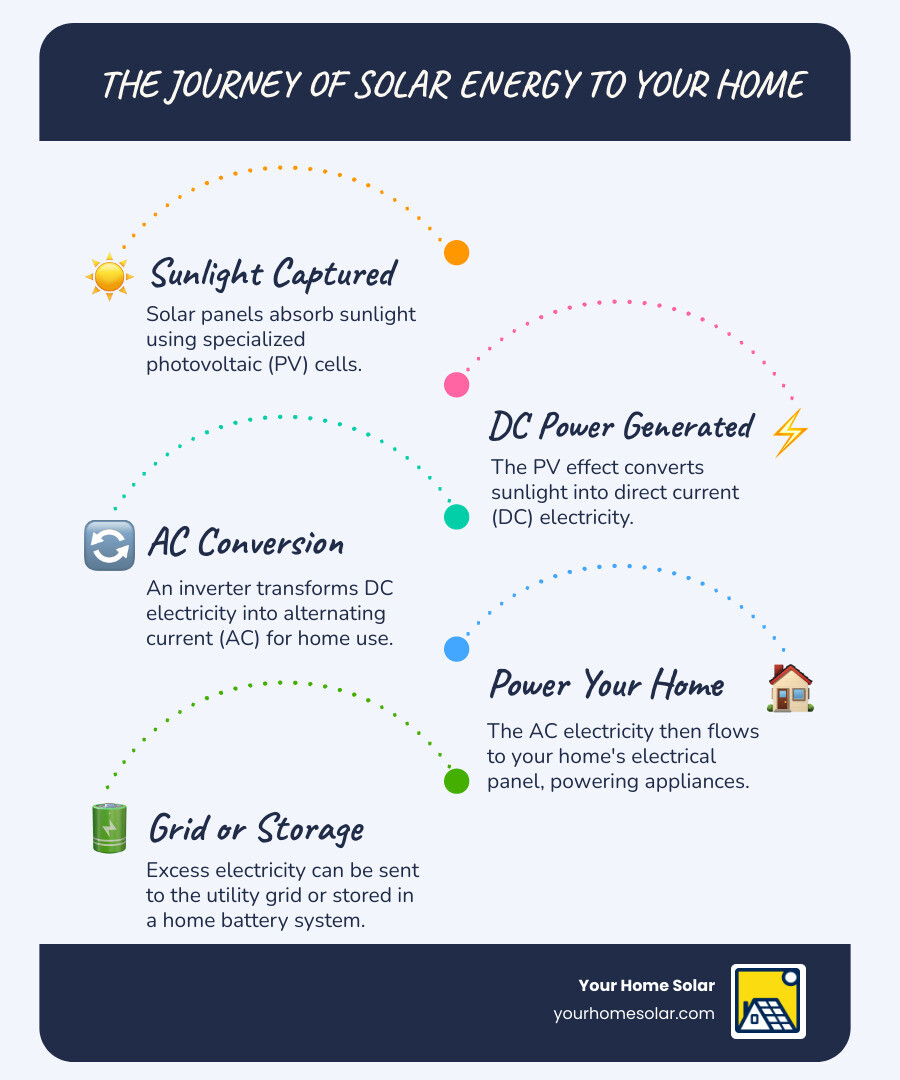
The magic behind solar panels is the photovoltaic (PV) effect. When sunlight strikes a panel, it excites electrons in the specialized material, creating a direct current (DC). Since homes use alternating current (AC), an essential component called an inverter converts this DC power into usable AC electricity. Any excess power can be sent to the utility grid or stored in a battery. This process turns your home into a mini power plant.
For a deeper dive, see our guide on How Solar Panels Work: A Comprehensive Guide or the Solar Photovoltaic Technology Basics from the U.S. Department of Energy.
Understanding the Core Components
A complete solar PV system includes several key components:
- Solar Panels (Modules): Composed of photovoltaic cells, these capture sunlight and convert it into DC electricity.
- Inverters: This crucial device converts DC power from the panels into AC power for your home. Different types (string inverters, microinverters) offer various benefits. Learn more in The Ultimate Guide to Solar Inverters.
- Racking (Mounting): This is the structure that securely holds the panels on your roof or the ground, designed to withstand weather and optimize sun exposure.
- Wiring: The wiring connects all components, ensuring safe and efficient energy transfer from the panels to your home.
Solar PV vs. Solar Thermal
It’s important to distinguish between two types of solar technology:
- Solar PV (photovoltaic) panels generate electricity. This is what most people mean when they talk about electric solar panels for homes.
- Solar thermal panels use sunlight to heat water for your home.
While both use the sun, they serve different purposes. This guide focuses on solar PV panels that produce electricity.
Types of Home Solar Systems and Key Features
Choosing the right electric solar panels for homes depends on your goals, energy use, and desire for independence. Our Residential Solar Solutions Guide can help you decide.
Grid-Tied Systems and Net Metering
The most common setup in East Tennessee is a grid-tied system, which connects your solar panels to the local utility grid.
- Your panels first power your home.
- Excess power is sent to the grid.
- You draw power from the grid when your panels aren’t producing, like at night.
With net metering, you receive credit for the excess electricity you send to the grid, often at a 1:1 rate. This can dramatically lower or even eliminate your electricity bill. Policies vary, so check your local utility’s program. Learn more here: Do East Tennessee Utility Companies Buy Back Solar Power? Find Out Here!.
Note: Standard grid-tied systems shut down during a power outage for safety. For backup power, you need a solar-plus-storage system.
Solar Plus Storage: Your Path to Energy Independence
A solar-plus-storage system combines solar panels with a battery for true energy independence.
- Power During Outages: Your battery provides seamless backup power when the grid fails.
- Optimized Energy Use: Store solar energy from the day to use at night, reducing reliance on the grid.
- Increased Self-Sufficiency: Gain more control over your power supply and protection from rising utility rates.
- Off-Grid Potential: A robust system can enable off-grid living, especially in remote areas.
Batteries are increasingly affordable and a smart addition to many solar installations. Explore The Ultimate Guide to Solar Batteries and Energy Storage Solutions.
Innovative Solutions: Building Integrated Photovoltaics (BIPV)
Building Integrated Photovoltaics (BIPV) integrate solar technology directly into building materials like shingles or facades. This approach combines aesthetics with function, making the solar array a seamless part of your home’s design. BIPV is ideal for homeowners who prefer a low-profile look or for new construction projects. These systems can improve efficiency and even power DC applications like LED lighting or EV charging. Learn More About BIPV Options.
The Financials: Costs, Savings, and Incentives for Solar
Investing in electric solar panels for homes is a major financial decision, but the long-term savings and incentives make it a smart move for many East Tennessee homeowners. Most systems pay for themselves in under 10 years and can increase your home’s value by an average of 6.8%.
The Benefits of Installing Electric Solar Panels for Homes
The advantages of solar go beyond your wallet to include environmental and personal resilience.
- Significant Cost Savings: Generating your own electricity drastically reduces or eliminates your monthly power bill, providing a hedge against rising utility rates.
- Positive Environmental Impact: Solar panels are a source of clean energy that reduces reliance on fossil fuels and lowers carbon emissions. According to Columbia University, solar panels lower emissions more per acre than trees. Learn more about The Environmental Impact of Solar Energy.
- Improved Energy Independence: Gain control over your energy supply. Adding battery storage ensures you have power during grid outages, offering invaluable security. Find more perks in our article on the Benefits of Going Solar in Knoxville, TN.
Understanding Solar Costs and Financing
The national average cost for a solar system is about $19,000, but your actual cost in East Tennessee depends on system size and equipment. For example, a 5 kW system might cost around $18,000, while a 10 kW system could be closer to $28,000.
Several financing options are available:
- Cash Purchase: Offers the lowest total cost and immediate ownership benefits.
- Solar Loans: Similar to home improvement loans, these often have monthly payments lower than your old energy bill. Programs from the Federal Housing Administration (FHA) and Fannie Mae can help.
- Leases and PPAs: These options have little to no upfront cost, but you don’t own the system or receive tax credits.
For a detailed breakdown, see our guide on the Cost and Financing of Solar Systems or this guide to solar financing from the Clean Energy States Alliance.
Maximizing Savings with Solar Incentives
Incentives make electric solar panels for homes more affordable.
- Federal Solar Tax Credit (ITC): This provides a 30% income tax credit on the total cost of your system, including installation and batteries. A $19,000 system could earn you a $5,700 credit.
- State & Local Rebates/Programs: Tennessee and local utilities may offer additional incentives. We stay on top of the latest programs to maximize your savings. Stay updated on our Tax Credits & Incentives page.
These incentives significantly reduce your out-of-pocket cost and shorten the payback period for your investment.
Is Solar Right for You? Key Considerations and Installation
Before installing electric solar panels for homes, it’s important to ensure your property is a good fit. This due diligence guarantees an effective and rewarding investment. The U.S. Department of Energy offers a helpful guide for Planning a Home Solar Electric System.

Factors to Consider Before You Install
Many homes in East Tennessee are great candidates for solar. Here are the key factors we assess:
- Roof Suitability:
- Age and Condition: Since panels last 25-30 years, we recommend a roof replacement if your asphalt shingle roof is over 15 years old to avoid future removal/reinstallation costs.
- Direction and Pitch: South-facing roofs are ideal, but east and west-facing roofs are also viable.
- Space: You’ll need enough unshaded space for the required number of panels (typically 250-350 sq. ft.).
- Sunlight Exposure: Heavy shading from trees or buildings will reduce energy production. We conduct a thorough site assessment to find the optimal placement.
- Local Regulations: We handle all permitting and interconnection with local authorities and utilities to ensure compliance.
- Electricity Usage: Solar provides the best financial return for homes with higher energy consumption (typically over $75/month). Your past 12 months of usage helps us size your system accurately.
For more on this, see our article: Who Are Not Candidates For Solar?.
The Solar Installation Process from Start to Finish
Working with experienced professionals makes installation a smooth process. Here’s a look at Our Process:
- Consultation: We discuss your energy goals and answer your questions.
- Site Assessment: Our experts evaluate your roof, sun exposure, and electrical system.
- System Design: We create a custom solar design and proposal with projected costs and savings.
- Permitting: We manage all paperwork and applications with your local municipality and utility.
- Installation: Our certified team installs the racking, panels, and inverter with minimal disruption.
- Inspection and Interconnection: After inspection and approval, your system is connected to the grid.
We are proud to have experts certified by the North American Board of Certified Energy Practitioners (NABCEP), the industry’s gold standard.
Lifespan, Warranties, and Monitoring Your System
Modern solar systems are durable and reliable.
- Panel Lifespan: Panels last 25-30 years and come with a 25-year production warranty, ensuring your investment pays off for decades. Learn more in our article Solar Panel Durability: How Long Do They Last?.
- Warranties: Your system includes an equipment warranty for components and a workmanship warranty covering the installation. We ensure our East Tennessee customers receive robust warranties.
- Monitoring Software: A user-friendly app allows you to track energy production, monitor home usage, identify issues, and watch your savings grow in real-time.
This transparency gives you control over your energy use and system performance.
Frequently Asked Questions about Home Solar Panels
Here are answers to common questions from East Tennessee homeowners about electric solar panels for homes.
Do solar panels work during a power outage?
Standard grid-tied systems without a battery do not work during a power outage. They automatically shut down for the safety of utility workers. However, a solar system paired with battery storage will provide backup power to your home, giving you true energy security. For more details, explore Why Solar Panels for Homes Are the Best Choices for Emergency Power Backup.
How long do solar panels last and what maintenance is required?
Electric solar panels for homes are durable, with a lifespan of 25-30 years and a 25-year performance warranty. They are also very low-maintenance. In East Tennessee, natural rainfall is usually enough to keep them clean. A simple rinse with a hose can remove any significant buildup of debris. Regular monitoring through your system’s app is the main ongoing task. For care tips, see our guide on Solar Panel Maintenance Knoxville.
How much do solar panels increase home value?
Installing solar panels is a great investment in your property. Studies show that homes with solar sell for more, with an average increase in value of 6.8%. Buyers are attracted to lower utility bills and energy independence. A paid-off system is a particularly strong selling point, making solar a smart, long-term investment. Learn more in Solar Energy and Home Resale Value: A Win-Win for East Tennessee Homeowners.
Conclusion: Take the Next Step Towards Energy Independence
Embracing electric solar panels for homes offers significant cost savings, increased home value, a smaller environmental footprint, and true energy independence. It’s a smart investment in your home’s future and a powerful step toward sustainability.
For homeowners across East Tennessee—from Knoxville and Oak Ridge to Johnson City—the time for solar is now. With proven technology, strong financial incentives, and the expertise of Your Home Solar, the switch to clean energy has never been more accessible.
As trusted experts, we offer custom solutions and guarantee 100% customer satisfaction, guiding you from consultation to installation and beyond.
Stop paying ever-increasing utility bills. Take control of your energy future today. We invite you to Explore your residential solar options and find how easy it is to power your home with the sun.