
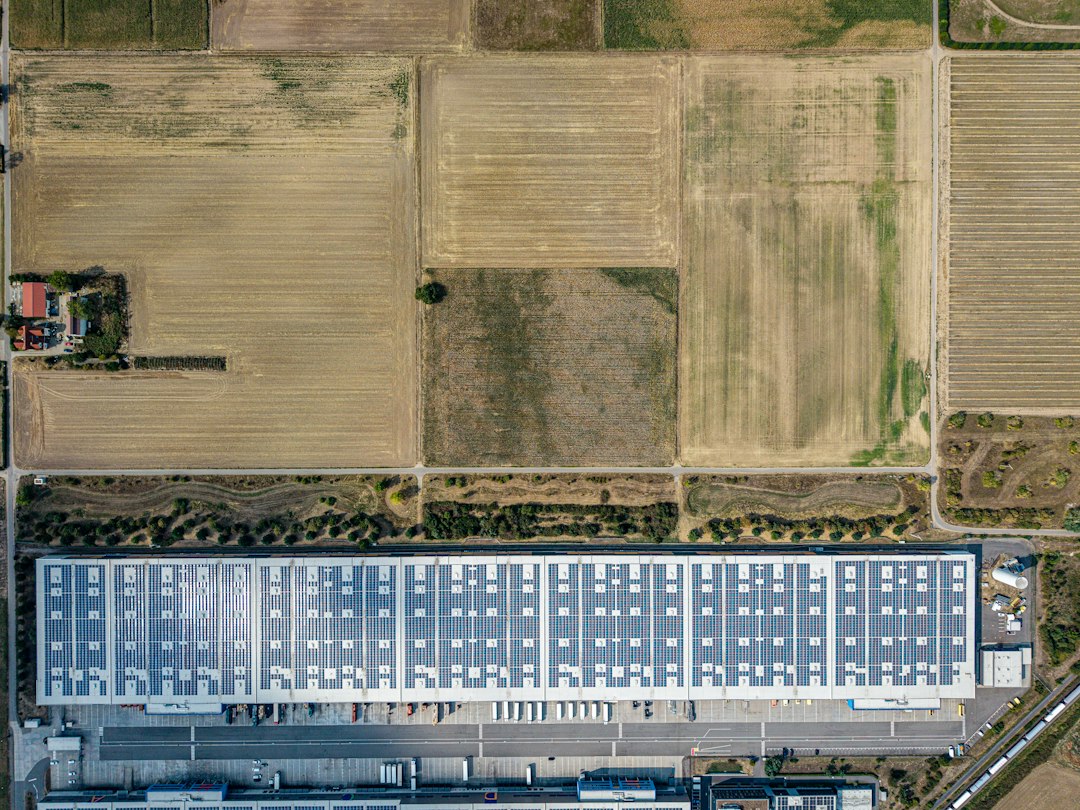
What Does a 200 kW Solar System Cost?
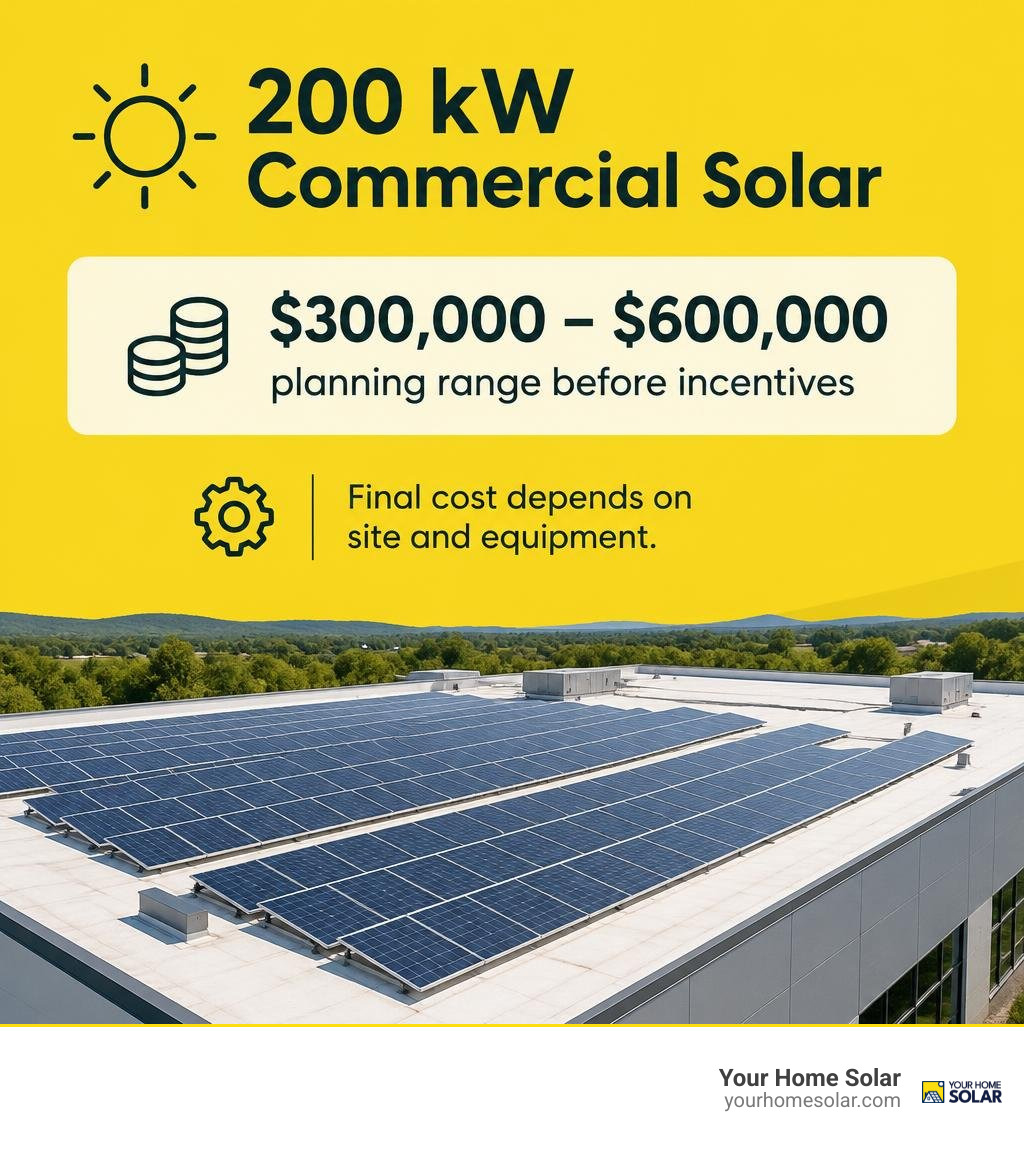
For an East Tennessee commercial project, budget roughly $300,000 to $600,000 before incentives for an installed, grid-tied 200 kW system. That is a planning range, not a local average or a quote. The final 200kw solar system price depends on the roof, electrical upgrades, grid connection, and equipment.
A 200 kW array is much larger than a typical home system. Before comparing prices, check how much power your building uses during the day and whether the roof can support the array. Those two facts help determine whether the investment makes sense.
I’m Ernie Bussell, founder of Your Home Solar. My experience leading solar operations helps me explain what drives the 200kw solar system price and what to look for in an installed quote.
200kw solar system price terms to learn:
200kW Solar System Price Breakdown: Global Benchmarks and Costs
When planning a commercial solar investment, looking at both domestic benchmarks and international pricing provides valuable context. On a turnkey basis, the price of a commercial photovoltaic installation reflects hardware, engineering, permitting, labor, and utility interconnection.
In the United States, commercial solar installations in the 200 kW capacity bracket generally average between $1.50 and $2.50 per watt installed, depending on site conditions, regional labor, and utility interconnection requirements. Understanding the broader cost of commercial solar per watt helps illustrate how economies of scale reduce per-unit costs compared to residential systems.
| Region / Market | Estimated Cost Range (Local Currency) | Estimated Cost (USD Equivalent) | Cost per Watt / kWp | Typical Payback Period |
|---|---|---|---|---|
| United States (East TN) | $300,000 – $500,000 | $300,000 – $500,000 | $1.50 – $2.50 / W | 5 – 8 years |
| Australia (QLD / National) | AUD $180,000 – $380,000 | $120,000 – $250,000 | AUD $0.90 – $1.90 / W | 2.2 – 5 years |
| United Kingdom | £110,000 – £153,000 | $140,000 – $195,000 | £550 – £765 / kWp | 4 – 5 years |
| Europe (e.g., Romania) | €80,000 – €110,000 | $85,000 – $120,000 | €400 – €550 / kWp | 3 – 5 years |
| India | INR 8,960,000 | $105,000 – $115,000 | INR 44.8 / W | 3 – 5 years |
Equipment-only kits—which provide uninstalled panels, inverters, and mounting hardware—can start around $1.09 per watt ($167,700 for basic components). However, turnkey commercial installations require structural engineering, crane rental, heavy electrical infrastructure, safety compliance, and distribution utility coordination.
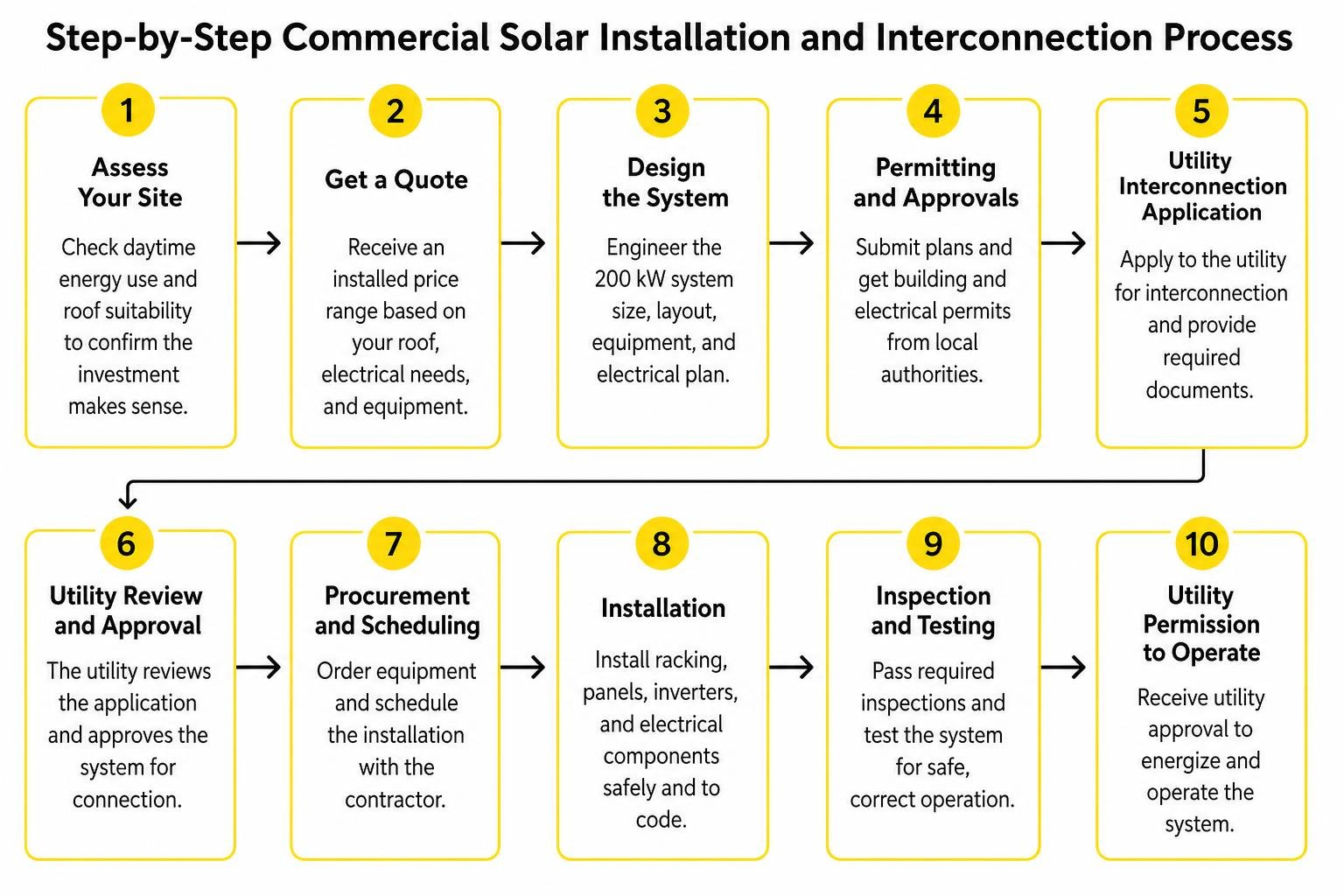
Factors Driving the 200kW Solar System Price Up or Down
Several critical site and design variables dictate where a project lands within the cost spectrum:
- Rooftop vs. Ground Mounting: Standard rooftop installations using ballasted racking on flat membrane roofs or direct attachments on standing-seam metal roofs are generally the most cost-effective. Ground-mounted arrays require geotechnical surveys, pile driving or concrete footings, and specialized mounting structures, which increase civil works costs.
- Trenching and Conduit Distances: If a ground array or an outbuilding roof sits more than 50 to 100 feet from the facility’s main electrical service panel, trenching, backfilling, and large-gauge copper wiring add material and labor expenses.
- Electrical Infrastructure and Switchboards: Older commercial buildings across East Tennessee may have legacy switchboards that lack space or busbar capacity for a 200 kW backfeed. Upgrading main service panels or adding dedicated distribution subpanels can add $5,000 to $25,000 to project costs.
- Roof Condition and Type: Installing solar on an aging roof that requires replacement within five to ten years leads to costly de-installation and re-installation later. Metal roofs offer the lowest installation complexity, while membrane roofs require careful load distribution.
Local pricing across Tennessee communities—including Knoxville, Oak Ridge, Maryville, and Johnson City—is heavily shaped by municipal permitting, electrical inspection timelines, and local utility engineering reviews.
Component Breakdown: Panels, Inverters, and Balance of System
A commercial 200 kW photovoltaic system consists of high-grade components engineered for continuous commercial operation over 25 to 30 years:
- Solar Modules (45%–55% of equipment budget): A 200 kW array requires between 340 high-output commercial modules (e.g., 590W bifacial panels) and 500+ standard panels (e.g., 400W–500W mono-PERC). Bifacial panels are popular for ground mounts or reflective white membrane roofs because they capture reflected light on their rear surface, boosting total energy harvest by up to 10%. Keeping up with recent solar panel costs in 2026 helps ensure you select the best balance of efficiency and price.
- Commercial Inverters (15%–20% of equipment budget): Three-phase commercial string inverters (such as units from SMA, Sungrow, or SolarEdge) convert DC electricity to commercial-grade 480V or 208V three-phase AC power. Modern commercial inverters feature multiple Maximum Power Point Trackers (MPPT) with charging and conversion efficiencies exceeding 98%.
- Racking and Mounting Hardware (10%–15%): Heavy-duty aluminum and galvanized steel racking systems secure modules against high wind loads (engineered for wind speeds up to 110–130 mph) and local snow loads.
- Balance of System (BoS) and Safety Devices (15%–20%): This category includes AC and DC combiner boxes, molded-case circuit breakers (MCBs), surge protection devices (SPDs), copper lightning arrestors, dedicated system earthing electrodes, and commercial-grade conduit and wiring.
System Sizing, Energy Generation, and Space Requirements

A 200 kW solar array is a substantial physical and electrical asset. Sizing the system requires evaluating physical roof or land area alongside your facility’s historic interval energy demand.
Roof Space and Array Layout Guidelines
The amount of space required for a 200 kW solar array depends on panel wattage and layout design:
- Modern High-Wattage Panels (500W–590W Monocrystalline): Require approximately 11,000 to 14,000 square feet of usable roof or land area.
- Standard Commercial Panels (380W–450W Monocrystalline): Require approximately 14,000 to 16,000 square feet.
- Older or Standard Wattage Panels (300W–350W): Require upwards of 17,000 to 19,000 square feet.
On flat industrial roofs, panels are mounted at a 10 to 15-degree tilt to minimize wind resistance while maintaining self-cleaning capabilities during rainfall. Rows must be spaced roughly 4 to 6 feet apart to prevent inter-row shading during low winter sun angles. Clearance pathways must also be maintained for fire department access, HVAC equipment servicing, and roof drainage systems.
Estimated Energy Generation: kWh per Day and Year
Solar generation varies based on local solar insolation (peak sun-hours), array tilt, azimuth, and seasonal weather patterns. In Tennessee and across the Southeast, commercial systems receive an average of 4.5 to 5.0 peak sun-hours per day across the year.
- Daily Generation: A 200 kW array produces an average of 700 to 950 kWh per day. During clear summer days, daily output can exceed 1,100 kWh, while overcast winter days may yield 350 to 500 kWh.
- Monthly Generation: Average monthly production ranges from 21,000 to 28,000 kWh.
- Annual Generation: A well-sited 200 kW commercial array generates between 260,000 and 310,000 kWh per year.
For a commercial facility paying an average blended commercial utility rate of $0.11 to $0.14 per kWh, 280,000 kWh of clean solar electricity offsets approximately $30,800 to $39,200 annually in avoided utility power purchases.
Return on Investment, Payback, and Tax Incentives
A commercial solar installation functions as a capital improvement that provides predictable operational cost savings. Evaluating a commercial solar project involves modeling avoided energy costs, utility rate inflation, tax deductions, and depreciation schedules.
Federal Tax Credits, MACRS, and Commercial Incentives
Commercial solar investments in the United States benefit from federal tax policies that lower the net capital cost:
- Federal Investment Tax Credit (ITC): Section 48 of the Internal Revenue Code allows commercial business owners to claim a base tax credit of 30% of total turnkey installation costs. On a $400,000 installation, the ITC provides a direct dollar-for-dollar tax credit of $120,000, reducing net outlay to $280,000.
- Modified Accelerated Cost Recovery System (MACRS) & Bonus Depreciation: Commercial solar qualifies for 5-year MACRS accelerated depreciation. Businesses can often deduct a significant portion of the system’s depreciable basis in Year 1, creating substantial income tax savings depending on the corporate tax bracket.
- Local Utility Programs & Energy Savings: Navigating state and regional incentives is straightforward when reviewing our solar incentives guide for 2026. In areas with high demand charges or time-of-use tariffs, solar production during peak afternoon hours significantly lowers commercial demand penalties.
When combining the 30% federal tax credit, first-year MACRS depreciation, and direct energy savings, most commercial enterprises in our service area achieve simple payback within 5 to 7 years, followed by 18 to 20+ years of warrantied electricity production.
Estimated 200kW Solar System Price by Installation Type: Grid-Tied vs. Generator-Backed
Commercial facilities select system architectures based on operational resilience requirements:
- Standard Grid-Tied System ($300,000 – $480,000): Operates directly in parallel with the local electric utility. The system feeds facility loads first, with any excess power flowing onto the grid under utility interconnection guidelines. Under standard anti-islanding safety protocols, the solar system shuts down during a utility power outage.
- Grid-Tied with Commercial Backup Generator Integration ($340,000 – $540,000): For commercial facilities, manufacturing plants, or agricultural operations that require uninterrupted operations, Your Home Solar integrates solar arrays with automatic transfer switches and commercial backup generators. When the utility grid fails, the generator supplies baseline power while specialized controls coordinate with the solar array to maintain facility operations.
Comparing 200kW to Other Commercial Solar System Sizes
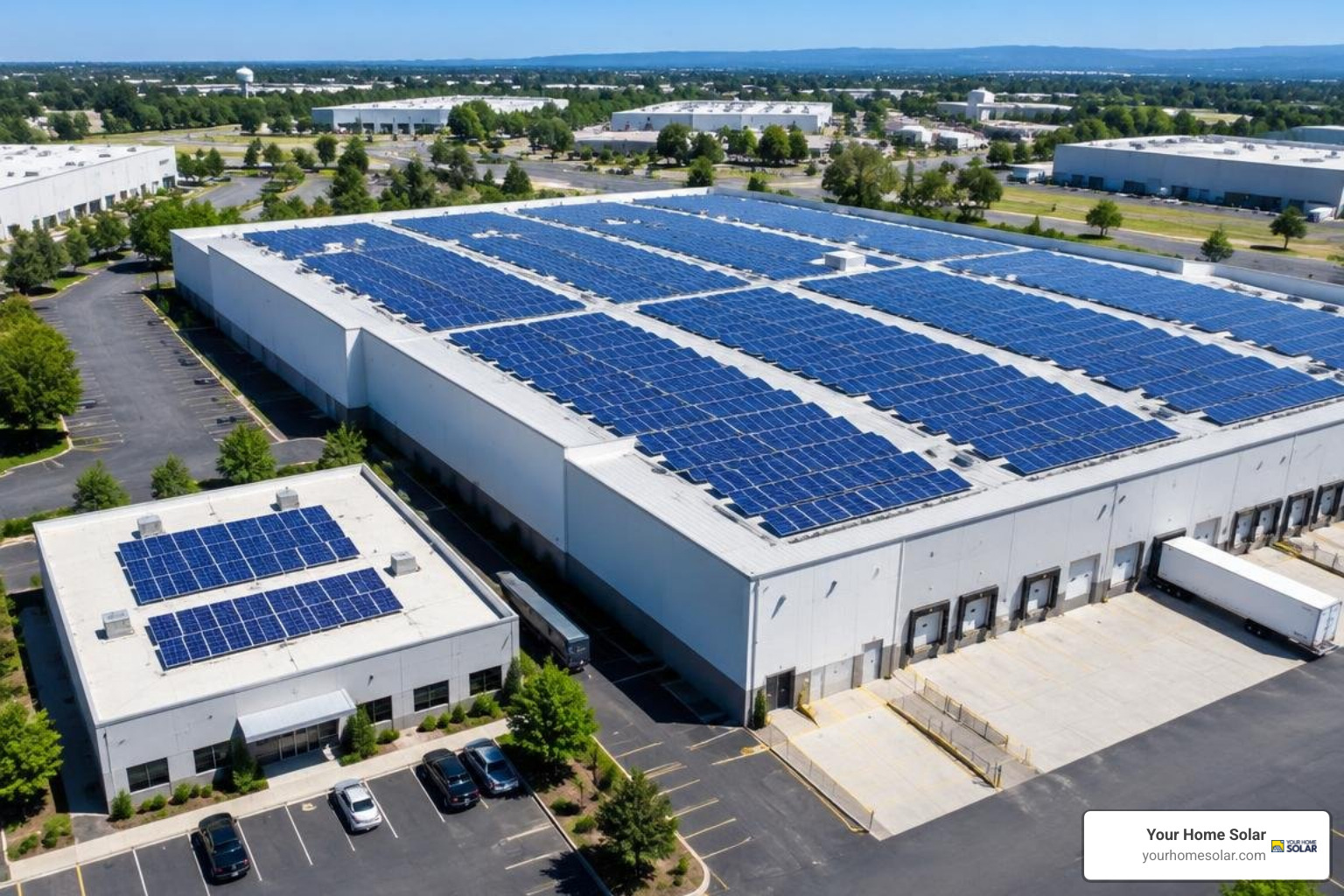
Commercial solar costs demonstrate clear economies of scale. As system capacity increases, fixed costs—including site engineering, structural assessments, crane staging, utility application fees, and project management—are distributed over a greater number of installed watts.
| System Size | Typical Panel Count (500W Modules) | Required Roof / Ground Space | Estimated Installed Cost Range | Estimated Cost per Watt | Average Annual Output (kWh) |
|---|---|---|---|---|---|
| 50 kW | 100 panels | ~3,500 – 4,500 sq ft | $100,000 – $140,000 | $2.00 – $2.80 / W | 65,000 – 75,000 kWh |
| 100 kW | 200 panels | ~7,000 – 9,000 sq ft | $170,000 – $240,000 | $1.70 – $2.40 / W | 130,000 – 155,000 kWh |
| 200 kW | 400 panels | ~13,000 – 16,000 sq ft | $300,000 – $500,000 | $1.50 – $2.50 / W | 260,000 – 310,000 kWh |
| 500 kW | 1,000 panels | ~35,000 – 42,000 sq ft | $650,000 – $1,000,000 | $1.30 – $2.00 / W | 675,000 – 780,000 kWh |
For companies deciding whether to start with a smaller array before scaling up, reading our guide on 100kW solar power plant costs provides a detailed breakdown of mid-sized commercial arrays.
Frequently Asked Questions About 200kW Solar Systems
How much roof space do I need for a 200kW solar array?
A 200 kW solar system requires approximately 13,000 to 16,000 square feet of unshaded roof space using modern commercial monocrystalline panels. If using ultra-high-efficiency 580W+ modules on an unencumbered standing-seam metal roof, required space can drop closer to 12,000 square feet. On flat roofs requiring ballasted mounting, additional space is necessary for row spacing to prevent inter-row shading and maintain walkways for maintenance.
What is the average payback period for a 200kW commercial system?
In the Southeast, the average simple payback period for a commercial 200 kW solar array is between 5 and 8 years. When businesses take full advantage of the 30% Federal Investment Tax Credit (ITC) and 5-year MACRS bonus depreciation, the net capital outlay drops significantly, shortening the payback period. Facilities with high daytime electricity consumption and high demand charges see the fastest financial returns.
Can a 200kW solar system power an entire commercial facility?
Whether a 200 kW array powers 100% of a facility depends on the building’s total energy demand and operating schedule. For light industrial warehouses, logistics centers, corporate offices, and agricultural processing facilities, a 200 kW system generating roughly 280,000 kWh annually can offset 50% to 100% of daytime electrical consumption. Heavy industrial manufacturing facilities with large motor loads may use a 200 kW array to offset base daytime demand, operating in parallel with the local electrical grid.
Conclusion: Getting the Best Value on Your Commercial Solar Project
Installing a 200 kW solar system is a proven strategy for businesses across East Tennessee to stabilize operating costs, hedge against rising commercial electric rates, and capture substantial federal tax benefits. Success requires careful site assessment, professional structural and electrical engineering, and selecting commercial-grade hardware designed for decades of reliable production.
At Your Home Solar, we provide end-to-end commercial and residential energy solutions across Knoxville, Oak Ridge, Maryville, Sevierville, Johnson City, and throughout East Tennessee. From commercial solar arrays to integrated backup generators and EV charging infrastructure, our team delivers tailored, reliable, and rewarding installations backed by trusted local expertise and a 100% customer satisfaction commitment.
To explore system modeling, utility interconnection analysis, and financing structures tailored to your project, explore our detailed guide on the cost and financing of solar systems or contact our team to schedule your commercial site assessment.