
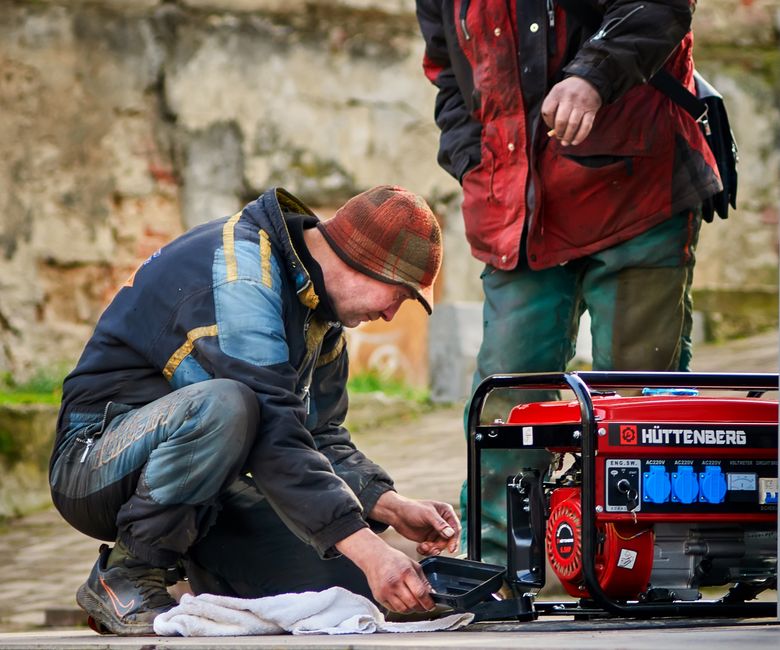
How to Check Backup Generator Parts Availability
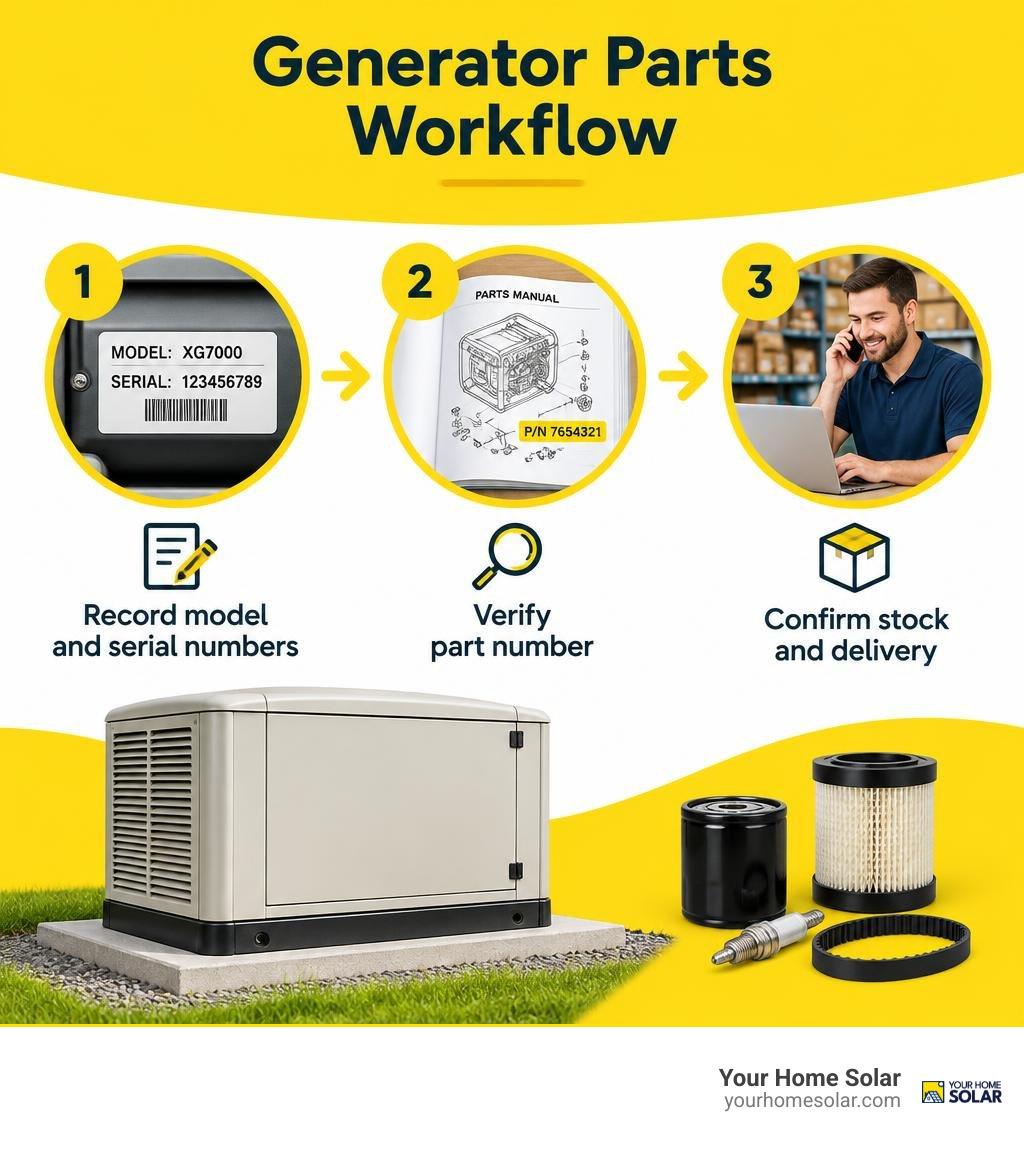
To check backup generator parts availability, start with the model and serial numbers on your generator’s data tag. Use them to find the exact part number in its parts manual, then ask a local parts supplier or online seller to confirm fit, stock, and delivery date before you order. Keep the old part number handy, too: a replacement may be listed under a newer number.
I’m Ernie Bussell, founder of Your Home Solar in East Tennessee. My Navy quality assurance background and experience leading home energy installations shape my approach to backup generator parts availability: check the details first so a wrong part does not add to your downtime.
Backup generator parts availability terms you need:
Most Critical Generator Replacement Components and Diagnostic Checks
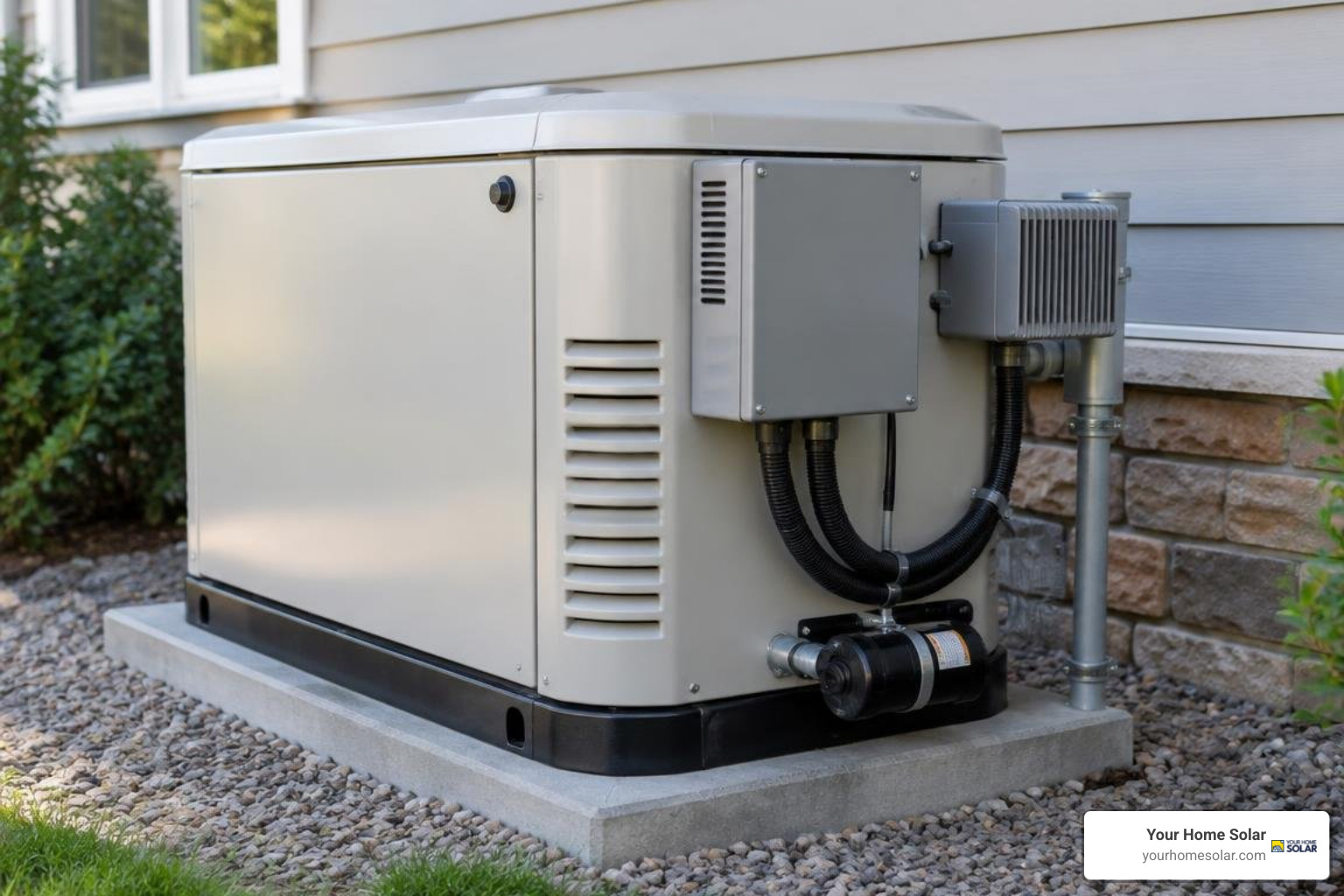
When severe weather rolls across East Tennessee, an unexpected generator breakdown can leave your home in the dark within seconds. Most unplanned generator downtime does not come from a catastrophic mechanical breakdown inside the engine block; it often traces back to a single electronic component, a failing sensor, or a neglected auxiliary heater while the engine itself remains mechanically sound.
Understanding which parts take the most punishment allows you to diagnose problems accurately and source replacements before storm season arrives. Whether you operate a residential whole-house system or rely on the most reliable home generators for heavy-duty backup, knowing how each component functions keeps troubleshooting quick and cost-effective.
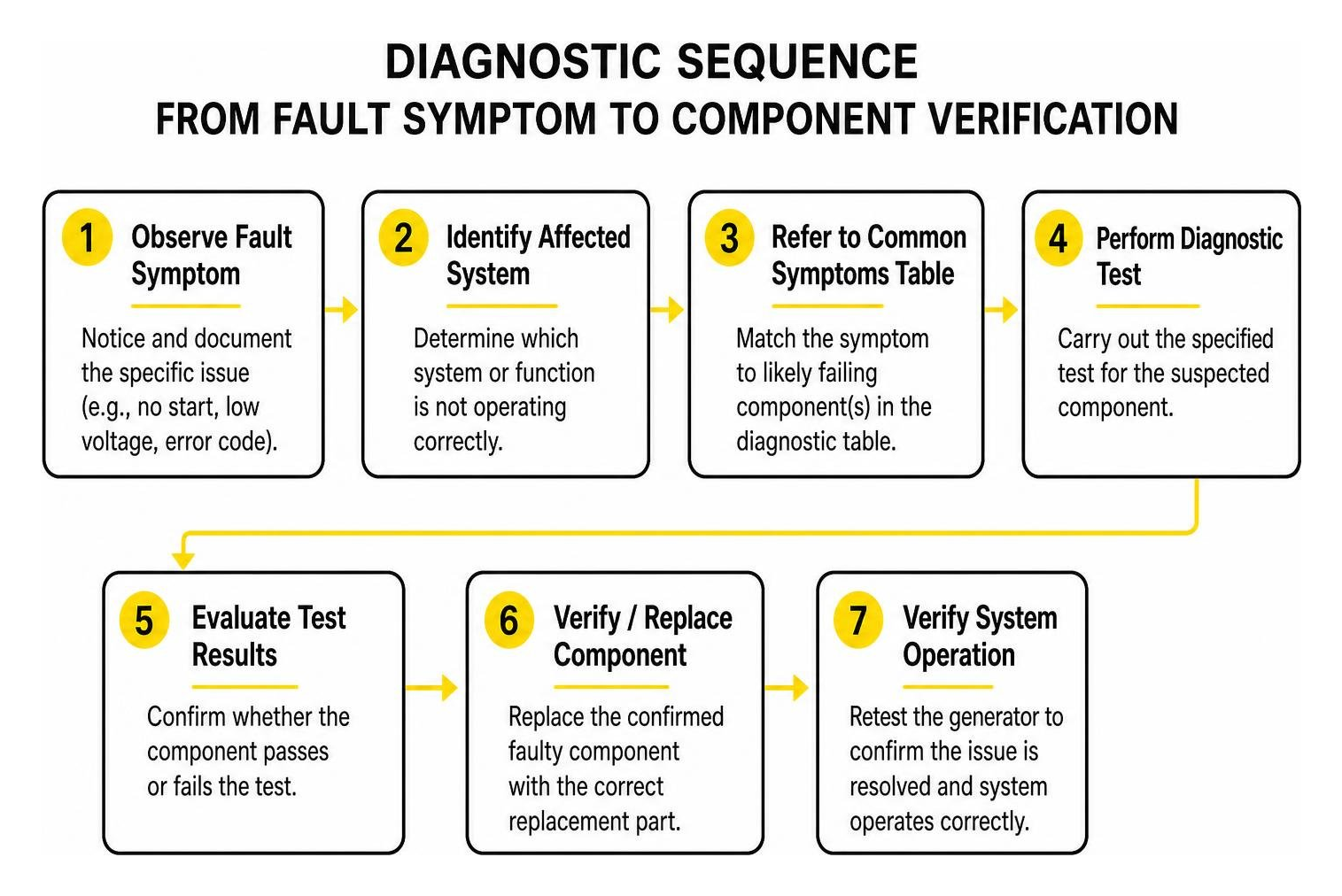
| Component | Common Failure Symptoms | Diagnostic Test | Critical Function |
|---|---|---|---|
| Automatic Voltage Regulator (AVR) | Voltage fluctuates wildly, drops under load, or reads zero volts while the engine runs smoothly. | Check AC output voltage with a digital multimeter at breaker terminals; test exciter field resistance. | Maintains steady output voltage across varying electrical loads. |
| Digital Controller / Control Module | Generator fails to auto-start, displays error codes, or screen remains completely dark. | Inspect DC power supply input (12V/24V), verify terminal continuity, and read diagnostic fault codes. | Manages automated start/stop cycles, safety shutdowns, and utility power monitoring. |
| Engine Block Heater | Engine cranks slowly, sputters, or fails to start during cold snaps; block feels cold to touch. | Measure heating element continuity with an ohmmeter; verify line voltage supply to the heater plug. | Keeps engine coolant warm (100°F to 120°F) for rapid, smooth cold-weather starts. |
| Automatic Battery Charger | Battery voltage drops below 12.4V; starter solenoid clicks rapidly; engine fails to turn over. | Measure DC output voltage at battery terminals while charger is powered (should read 13.2V to 14.4V). | Keeps starting battery at optimal float voltage during standby mode. |
| Starter Solenoid / Motor | Loud click with no engine rotation, or complete silence when start signal is initiated. | Check for 12V signal at solenoid trigger wire; test starter motor draw under load. | Engages flywheel to crank the engine during startup sequences. |
Managing Backup Generator Parts Availability for Critical Electrical Spares
The electrical heart of your generator consists of excitation circuits, voltage regulators, control modules, and transfer switch control relays. Sourcing standby generator parts for sale from specialized distributors ensures you receive components rated precisely for continuous utility backup.
A failing Automatic Voltage Regulator (AVR) is among the most frequent electrical failure points. When an AVR degrades, you will typically notice lights flickering violently or heavy appliances causing the generator to drop voltage entirely. If your system is tied into a complete backup generator setup, a malfunctioning controller or faulty transfer switch relay can prevent the generator from sensing a utility grid loss, leaving your transfer switch stranded in the neutral or utility position.
Sourcing Mechanical and Engine Block Components
Mechanical reliability depends heavily on thermal management and clean fluid delivery. For diesel and heavy gas units operating during freezing Appalachian winters, an engine block heater—such as a Hotstart 1.5 kW or 2.5 kW unit—is essential. These heaters circulate warm coolant through the block, keeping it between 100°F and 120°F so the unit can accept a full electrical load within ten seconds of startup.
Routine mechanical consumables for emergency home power systems include:
- Filtration sets: High-micron oil filters, secondary fuel filters, and air filter elements.
- Ignition hardware: Manufacturer-specified spark plugs gapped to exact factory clearances.
- Cooling system parts: Thermostats, water pump impellers, and heavy-duty fan belts.
- Fuel delivery spares: Fuel lift pumps, replacement injectors, and shutoff solenoids.
How to Check Backup Generator Parts Availability Online and Locally
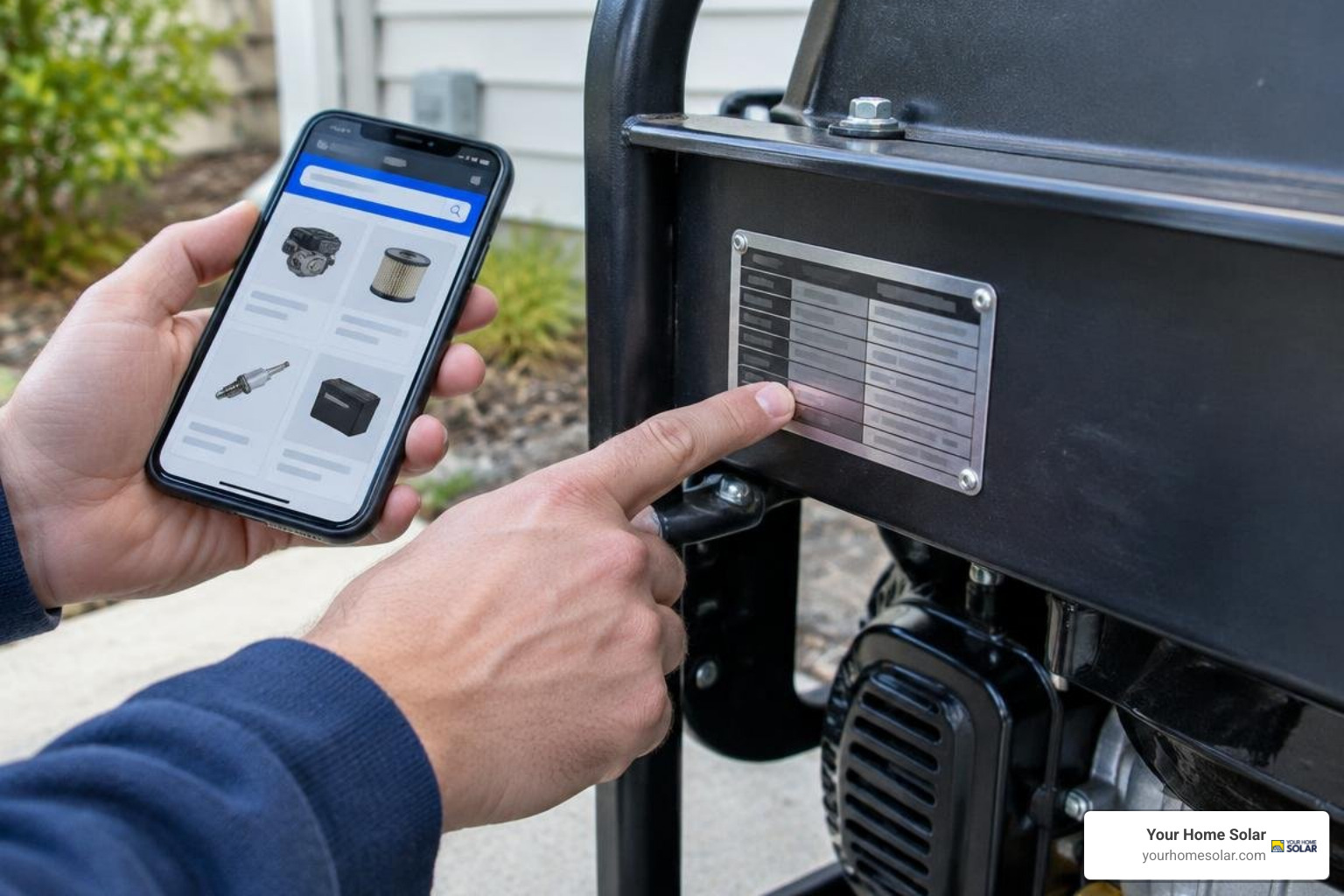
Checking local inventory and online stock requires specific unit data before you make a call or place an order. Guessing a part based on exterior dimensions or general generator wattage leads to mismatched connectors, incorrect voltage ratings, and costly return shipping. Understanding component specifications helps you better plan the real cost to install a generator and maintain it throughout its operational lifespan.
To confirm availability accurately:
- Locate the Data Tag: Find the metal data plate attached to the generator frame or engine shroud. Record the exact Model Number, Serial Number, and Revision/Spec Code.
- Consult Illustrated Parts Catalogs: Use official manufacturer parts portals to identify the exact OEM part number.
- Verify Warehouse Stock: Check whether authorized suppliers have the item on their shelves or require factory drop-shipping.
- Confirm Lead Times: If an item is on backorder, ask your distributor for the direct-from-factory lead time before finalizing the transaction.
Sourcing OEM vs. Aftermarket Parts for Standby Systems
Choosing between Original Equipment Manufacturer (OEM) parts and high-grade aftermarket alternatives depends on your warranty status, system age, and performance requirements.
- OEM Components: Sourced directly from manufacturers like Generac, Cummins, Perkins, or Caterpillar. These parts preserve active factory warranties, match bolt patterns and wiring harnesses exactly, and guarantee factory tolerances.
- Aftermarket Electricals: High-quality third-party suppliers often provide robust universal AVRs (such as Stamford-compatible regulators) or digital control panels (like Deep Sea Electronics or ComAp controllers). Sourcing through a reputable diesel generator parts supplier provides excellent multi-brand compatibility for older commercial and residential systems whose original parts may carry long manufacturer lead times.
Assessing Backup Generator Parts Availability for Discontinued and Hard-to-Find Models
If your generator is more than a decade old, you may find that original part numbers have been superseded or discontinued by the manufacturer. Sourcing components for older home backup generator options requires looking into authorized distributor warehouses that maintain extensive historical inventories.
Specialized distributors stock thousands of line items, including legacy controllers, universal voltage regulation cards, and retrofittable block heaters. When an exact match is unavailable, authorized parts specialists can cross-reference superseded part numbers to provide factory-authorized replacement kits that update legacy wiring harnesses to modern standards.
Lead Times, Shipping Logistics, and International Sourcing
Transit times vary significantly depending on whether your replacement part is stocked in a local branch or requires specialized freight dispatch. For homeowners throughout Knox County, Blount County, and surrounding East Tennessee communities, working with a trusted local generator specialist ensures rapid access to regional distribution hubs rather than waiting weeks on overseas freight.
When ordering electrical panels, AVRs, or parts for a 200 amp transfer switch installation, keep these shipping logistics in mind:
- Domestic Expedited Dispatch: In-stock electronic cards and maintenance kits typically ship via standard ground or express air within 24 to 48 hours.
- Drop-Shipping Networks: Major parts warehouses utilize drop-shipping directly from manufacturing plants when local warehouse stock is depleted, reducing transit time.
- International Logistics: Specialized suppliers provide international shipping for electrical controllers, block heaters, and AVRs. However, international air freight generally restricts complete generator assemblies and heavy automatic transfer switches due to weight limitations, hazardous fluid traces, and regional electrical code certifications.
Frequently Asked Questions About Generator Parts
How do I know if a generator failure is caused by the AVR or the controller?
An AVR failure almost always presents as an electrical generation issue while the engine continues to run smoothly. Symptoms include unstable voltage, voltage dropping under load, or zero AC output.
A controller failure, by contrast, prevents the generator from operating properly as a system. Symptoms include a blank control screen, failure to initiate the auto-start sequence when utility power drops, or persistent engine protection fault codes (such as overcrank, underspeed, or low oil pressure) that halt operation immediately.
What documentation is required before ordering replacement generator parts?
Always have the complete generator data tag information ready, including:
- Unit Model Number
- Unit Serial Number
- Engine Build/Spec Number
- Exact Part Number from the manufacturer’s illustrated parts manual
- Original purchase documentation or controller software version (for digital control modules)
Why are complete generators and transfer switches restricted on international shipments?
Complete generators contain heavy cast-iron engine blocks and can have residual factory fluids (oil or fuel vapors), categorizing them as hazardous freight under standard air transport regulations. Additionally, complete generators and automatic transfer switches must comply with strict regional safety and electrical standards (such as UL listing and National Electrical Code standards in the United States), making cross-border shipping impractical compared to sourcing compact replacement parts like AVRs, sensors, and heaters.
Keeping Your Backup Power System Storm-Ready
A backup generator is only as reliable as its weakest component. Rather than scrambling for critical parts during a winter freeze or severe summer storm, keeping a small inventory of essential spares—such as spare spark plugs, an extra fuel filter, an AVR, and a backup battery charger—ensures your family stays safe and warm when the local grid drops.
At Your Home Solar, we provide comprehensive home energy and backup power solutions across East Tennessee, including Knoxville, Maryville, Oak Ridge, Sevierville, and Farragut. Whether you need assistance diagnosing a faulty component, planning routine seasonal maintenance, or scheduling expert Generac generator installation and maintenance, our factory-trained team is here to help you maintain total energy independence.