Choose a Backup Generator for Your Gas Furnace Before the Next Outage
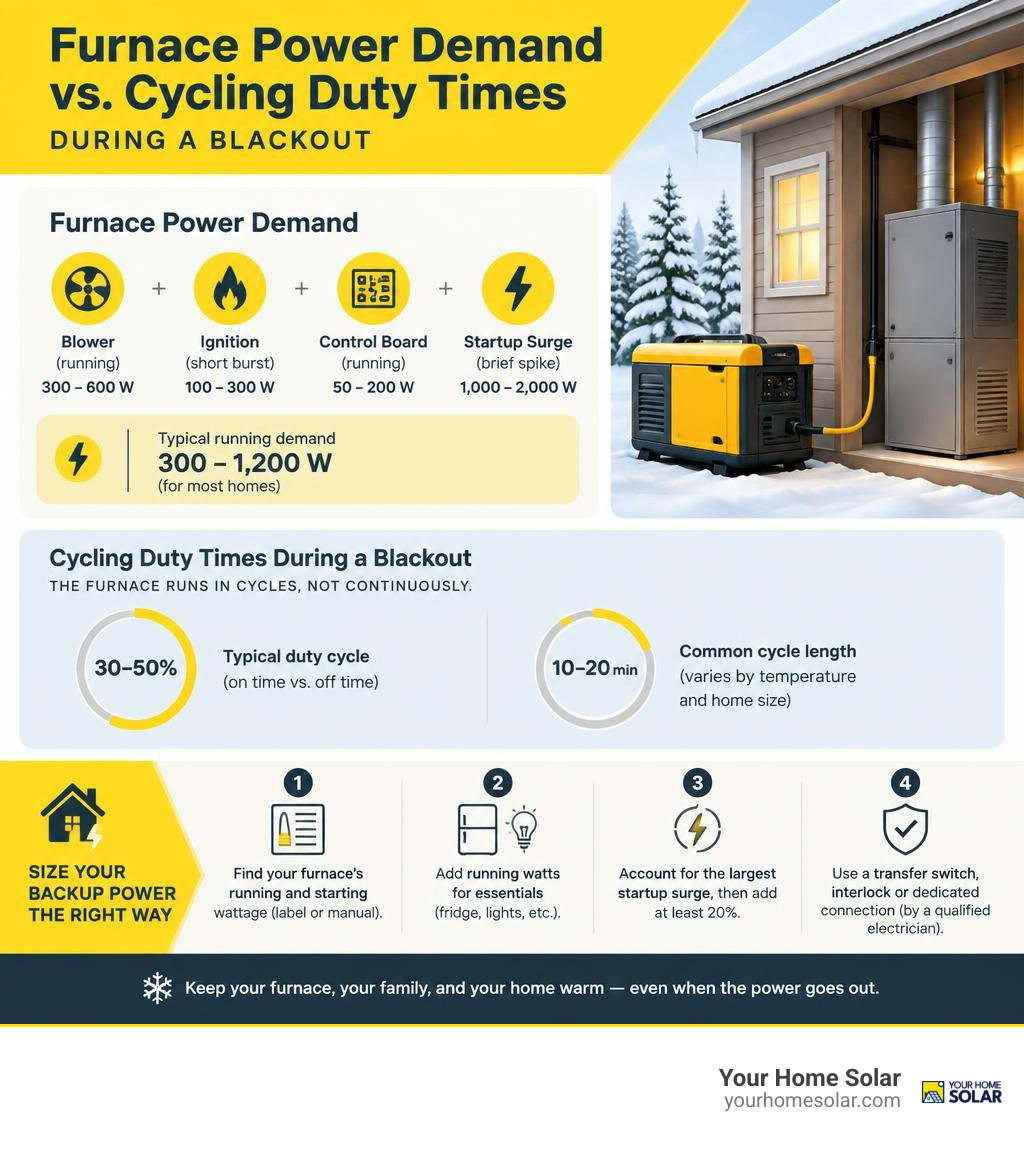
A backup generator for gas furnace should supply enough clean power for the furnace’s blower, ignition, control board, and startup surge – not just its normal running watts. For most homes, plan on about 300 to 1,200 running watts for the furnace, plus higher starting power. A 2,000-watt pure-sine-wave generator can often handle a furnace and refrigerator if you manage startup loads, while a 3,000-watt unit gives more room for lights, a router, TV, and microwave use.
Before choosing a system:
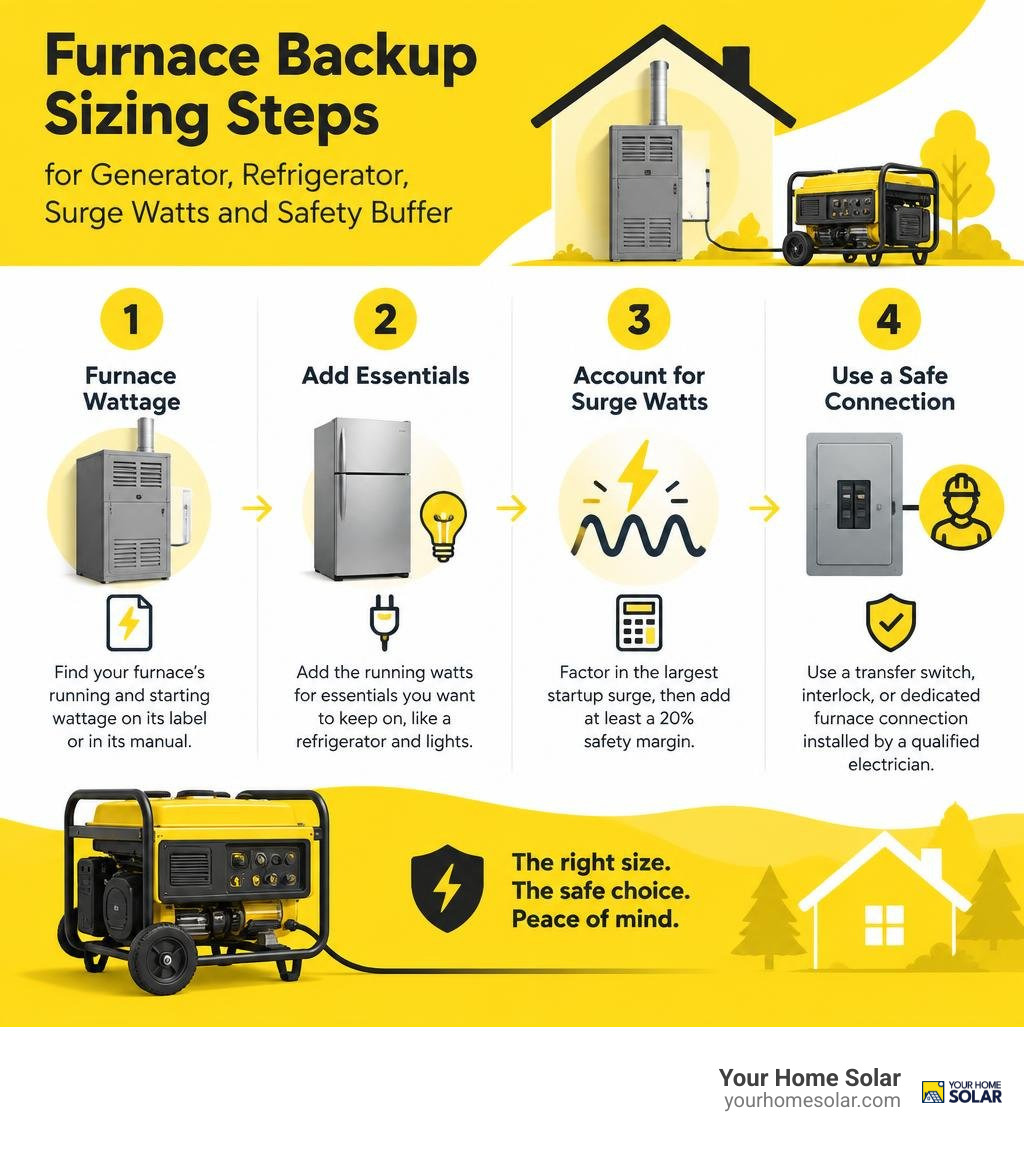
- Find your furnace’s running and starting wattage on its label or in its manual.
- Add the running watts for essentials you want to keep on, such as a refrigerator and lights.
- Account for the largest startup surge, then add at least a 20% safety margin.
- Use a transfer switch, interlock, or dedicated furnace connection installed by a qualified electrician. Never connect a generator directly to a wall outlet or backfeed the utility grid.
Even though the furnace burns gas, it cannot safely make or move heat without electricity. Its electronics, inducer, igniter, and blower all rely on power – which makes the right backup setup especially important during an East Tennessee winter outage.
I am Ernie Bussell, founder and CEO of Your Home Solar. My background in technical quality assurance, operations, and home energy systems helps homeowners evaluate a backup generator for gas furnace use with a focus on safe sizing, dependable installation, and long-term value.
Backup generator for gas furnace vocab to learn:
Understanding Emergency Heating and Power Loss Risks
When winter storms roll across East Tennessee—from the foothills of the Great Smoky Mountains in Sevier County to the neighborhoods of Knoxville and Maryville—they frequently bring heavy ice, wet snow, and falling branches. Across the United States, roughly 87% of major power outages stem from severe weather events, and weather-related blackouts have doubled since 2003.
Losing electrical power during sub-freezing temperatures is far more than an inconvenience. Within hours of grid failure, indoor temperatures can plummet. This drop creates an immediate risk of frozen water pipes, which can burst and cause upwards of $10,000 to $20,000 in structural and water damage. In extreme cases, extended moisture intrusion leads to severe mold remediation costs ranging anywhere from $500 to $30,000.
Many homeowners assume that because their home is heated by natural gas or propane, they will remain warm regardless of grid conditions. However, the mechanical distribution system—especially the furnace blower motor—requires a steady stream of electricity to push heated air through ductwork. Understanding how your heating system operates under grid strain helps you stay ahead of winter emergencies.
Why Gas Heating Systems Depend on Household Electricity
It sounds like a paradox: why does a gas furnace go dark when the electric grid drops? The answer lies in modern efficiency, safety compliance, and automated air distribution. While natural gas or liquid propane supplies the thermal energy to create heat, electricity serves as the furnace’s nervous system, brain, and muscles.
Without consistent line voltage, gas valves cannot open, safety interlocks remain closed, and the blower fan cannot circulate warm air into living spaces. To protect your family, adopting proactive power outage solutions for severe weather is crucial for keeping your home’s central heating online during extended winter storms.
Electrical Components in Modern Gas Furnaces
Modern gas heating systems no longer rely on standing, match-lit pilot lights or gravity-fed ventilation. Today’s high-efficiency systems are packed with complex electrical components:
- Integrated Control Board: The central computer that monitors safety limits, thermostat calls, and operational sequences.
- Draft Inducer Fan: A dedicated motor that runs before ignition to purge residual gases and guarantee proper venting through the flue.
- Electronic Ignition (Hot Surface Igniter or Spark Igniter): Replaces continuous pilot lights, drawing several hundred watts momentarily to ignite gas burners safely.
- Flame Sensors & Limit Switches: Continuous safety circuits that instantly cut the fuel supply if unburned gas or abnormal temperatures are detected.
- Blower Motor: The largest electrical consumer in the cabinet, responsible for pushing hundreds of cubic feet of air per minute through your home.

Calculating Starting and Running Loads for a Backup Generator for Gas Furnace
Sizing a power source for your heating system requires understanding two key electrical values: running wattage and starting (surge) wattage.
A standard residential gas furnace typically consumes between 300W and 1,200W of continuous power while running. However, inductive loads—specifically the electric induction motors powering the draft inducer and primary blower—require a sudden burst of current to overcome initial mechanical resistance. This startup surge can spike to 1,200W, 2,000W, or higher for a fraction of a second.
To size your backup system correctly:
- Identify Running Watts: Check the furnace data plate for Full Load Amps (FLA) and multiply by 120 volts (e.g., $5\text{A} \times 120\text{V} = 600\text{W}$).
- Calculate Startup Surge: Assume an inductive motor startup surge of 2 to 3 times the running wattage (e.g., $600\text{W} \times 2.5 = 1,500\text{W}$ surge).
- Add a 20% Safety Buffer: Adding a 20% buffer on top of surge wattage prevents breaker trips and reduces mechanical strain on your generator.
- Account for Appliance Cycling: Factor in intermittent furnace cycles (typically 15 to 20 minutes per hour) alongside other continuous loads like refrigerators and lighting.
Choosing the Ideal Backup Generator for Gas Furnace Reliability
Not every power source performs identically when connected to sensitive HVAC equipment. Homeowners exploring home backup generator options can choose among standard open-frame portable generators, modern inverter generators, whole-home standby units, and clean solar generator systems.
Inverter Generators and Pure Sine Wave Protection
Standard portable generators produce alternating current directly from the engine’s mechanical rotation, which often introduces Total Harmonic Distortion (THD) exceeding 10% to 25%. This “dirty power” produces choppy electrical waveforms that can confuse microprocessors and overheat inductive components.
Inverter generators, by contrast, convert AC power to DC and then electronically invert it back into an ultra-clean, pure sine wave with less than 3% THD. This clean power mirrors utility-grade electricity, ensuring that your furnace’s sensitive control boards, smart thermostats, and ECM blower motors operate smoothly, quietly, and without premature component wear.
Solar Generators and Portable Power Stations
For quiet, emissions-free backup power, battery power stations paired with solar arrays have become increasingly practical. Modern battery generator backup systems can be safely operated inside the home or basement immediately adjacent to the furnace.
Because gas furnaces draw low continuous wattage (often averaging just 400W to 700W while firing), a sizable lithium iron phosphate (LiFePO4) power station can comfortably run a furnace through the night. When paired with rooftop or portable solar panels, these systems recharge during daylight hours without requiring volatile fuel storage.
What Size Backup Generator for Gas Furnace and Essential Appliances Do You Need?
To maintain a comfortable baseline during a winter grid disruption, most families aim to power their heating system alongside a refrigerator, basic LED lighting, internet communication, and small cooking appliances.
- 2,000-Watt Inverter Generator: Provides enough capacity for a gas furnace (around 600W running / 1,500W surge) and a standard residential refrigerator (around 200W running / 1,200W surge), provided you stagger their initial startup times.
- 3,000-Watt to 4,000-Watt Generator: The practical sweet spot for emergency management. This size effortlessly handles simultaneous furnace and refrigerator cycles while leaving ample headroom for your television, internet modem, LED lighting, and occasional microwave use.
- 7,500+ Watt Standby System: Automatically manages high-demand circuits throughout the home without requiring load shedding or manual fuel handling.
Safe Connection Methods and Code Compliance
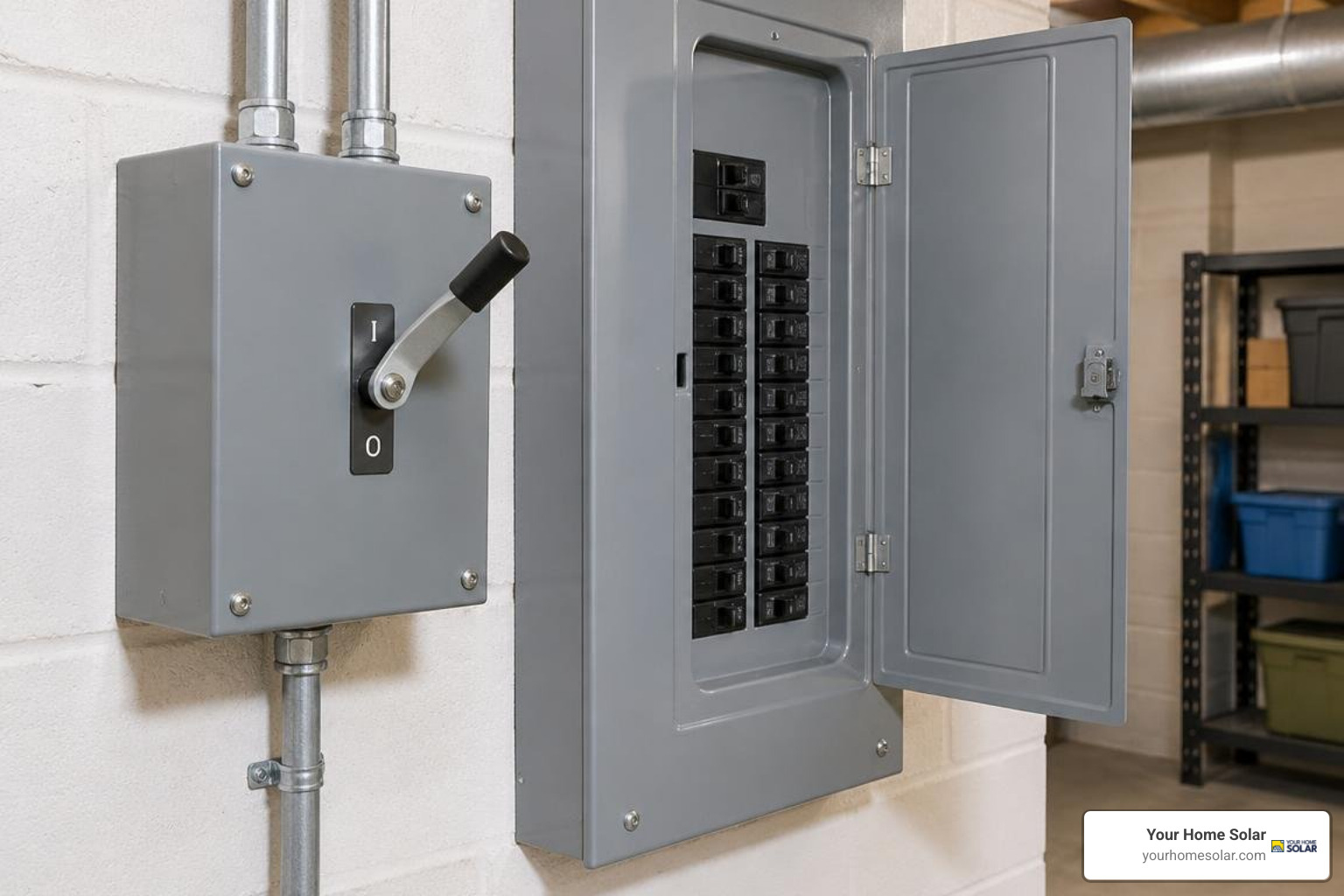
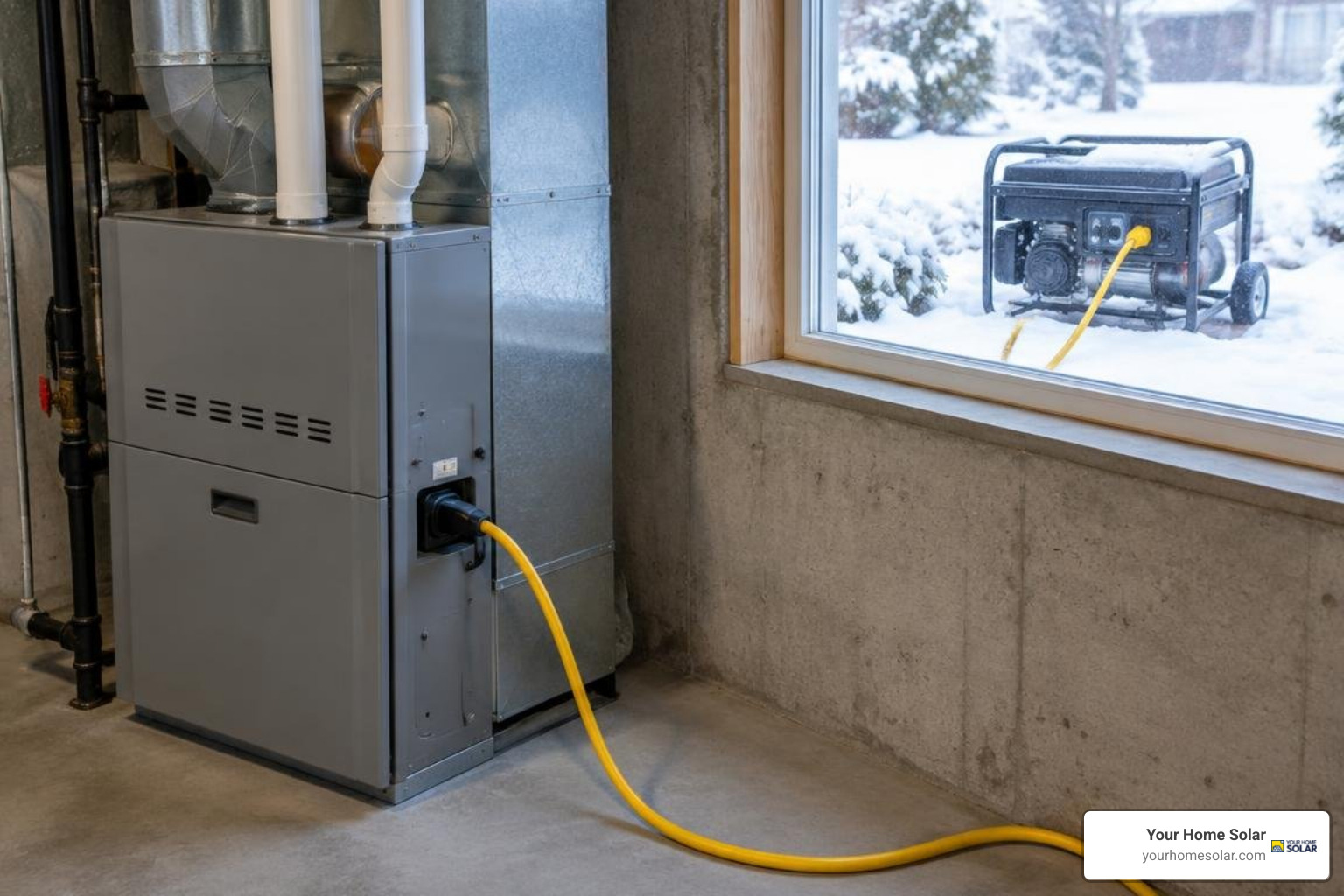
Connecting an external generator or portable power station to a furnace requires strict adherence to the National Electrical Code (NEC). Because furnaces are permanently hardwired into a dedicated branch circuit, you cannot simply plug them into an extension cord without the correct infrastructure.
Following proven emergency power practices ensures you avoid dangerous utility backfeeding, which poses life-threatening hazards to utility line crews working to restore local power.
Manual Transfer Switches and Interlock Kits
The safest, most convenient method for powering hardwired appliances with a portable unit is a manual transfer switch or a mechanical panel interlock kit. Following a compliant transfer switch installation guide ensures your furnace branch circuit is completely isolated from the utility grid before generator power is applied.
- Mechanical Interlock Kits: A sliding metal plate fitted over your main breaker panel that physically prevents the main breaker and the generator backfeed breaker from being turned on at the same time.
- Dedicated Transfer Panels: A subpanel containing 6 to 10 critical circuits (furnace, refrigerator, sump pump, lights) that can be switched individually between “Line” and “Gen” modes.
Dedicated Furnace Outlet and Power Inlet Boxes
Another code-compliant method involves having a licensed electrician install a dedicated single-circuit transfer switch or a specialized furnace power inlet switch directly beside the HVAC unit.
This configuration adds a heavy-duty single-pole, double-throw switch between the utility line and the furnace junction box. When utility power drops, flipping the switch disconnects the furnace from the household grid and connects it directly to a standard inlet plug, allowing you to run a heavy-duty extension cord from an inverter generator or portable power station safely.
Protecting HVAC Control Boards from Dirty Power
Furnace control boards rely on zero-crossing detection circuits to time spark igniters and monitor flame rectification signals. Using an unconditioned modified sine wave generator introduces significant electrical noise and voltage spikes.
If a furnace receives modified square wave power, the flame sensor may fail to detect the burner flame, triggering a safe lockout code that leaves you in the cold. In worse scenarios, transient voltage spikes can fry the transformer or main circuit board entirely. Always verify that your backup power source delivers a true pure sine wave before connecting your HVAC system.
Operating Costs and Efficiency Breakdown
When planning an emergency power strategy, looking at operational fuel costs and long-term maintenance is just as important as the upfront equipment purchase. Evaluating solar versus traditional generators reveals substantial differences in recurring expenses during multi-day winter outages.
Assuming an average residential gas furnace consuming 300W running power operates for 8 hours total runtime per day (a cumulative daily consumption of 2.4 kWh):
| Power Source | Daily Fuel / Energy Consumption | Fuel / Energy Unit Cost | Daily Operating Cost | Key Maintenance Overhead |
|---|---|---|---|---|
| Grid Power (Standard) | 2.4 kWh | ~$0.16 per kWh | $0.38 | Standard seasonal HVAC maintenance |
| Diesel Generator (Portable / Standby) | ~1.2 Gallons (at light/moderate load) | ~$3.90 per Gallon | $4.68 | Oil changes every 100 hrs, fuel stabilizer |
| Solar Generator / Battery Backup | 2.4 kWh (Recharged via Solar Array) | $0.00 (Solar daylight capture) | $0.00 | Zero engine upkeep, zero fuel degradation |
While portable fossil fuel generators offer low upfront acquisition costs, they require active fuel management, carburetor cleaning, and safe storage of stabilized fuel. Solar battery setups have higher initial equipment investments but offer whisper-quiet, zero-maintenance, zero-emission operation with zero ongoing fuel expenses.
Frequently Asked Questions About Furnace Backup Systems
Can a 2,000-Watt Generator Run a Gas Furnace and Refrigerator?
Yes, a 2,000-watt pure sine wave generator can comfortably run both appliances, provided their motor startups are managed properly. A gas furnace typically pulls 400W to 700W running (with a 1,200W–1,600W startup spike), while a modern refrigerator uses roughly 150W to 300W running (with a 1,200W startup spike).
To prevent tripping the generator’s overload protection, start the refrigerator first, allow its compressor to settle into its steady running state, and then turn on the furnace circuit.
How Long Will a Portable Power Station Keep a Furnace Running?
Runtime depends on the battery’s capacity (in watt-hours), inverter efficiency (typically 85% to 90%), and the furnace’s duty cycle. Gas furnaces do not run continuously; they cycle on and off based on thermostat demand, typically running 15 to 20 minutes per hour during normal winter conditions.
For example, a furnace drawing 600W during an active burn uses approximately 150W to 200Wh of energy per hour of real-world operation. A 1,500Wh portable power station can keep a gas furnace cycling and heating your home for roughly 7 to 9 hours on a single charge. Pairing the power station with solar panels or an intermittent generator charge extends this duration indefinitely.
Why Does My Gas Furnace Trip the Generator Breaker on Startup?
If your generator breaker trips immediately when the furnace calls for heat, the issue is almost always inrush current. Electric induction motors require Locked Rotor Amps (LRA) to get moving from a dead stop, which creates a momentary electrical surge 2 to 3 times higher than normal running wattage.
If your generator lacks adequate surge capacity, or if other household loads are already running on the same circuit, this brief current spike exceeds the generator’s peak threshold. Upgrading to a generator with higher surge headroom (such as 3,000W to 4,000W peak) or installing a soft-start kit on heavy blower motors resolves this issue.
Reliable Home Backup Power Solutions for Winter Storms
Staying warm during winter storms across East Tennessee requires dependable equipment, thoughtful load calculation, and code-compliant installation. Whether you are weathering freezing temperatures in Knoxville, Oak Ridge, Maryville, Johnson City, Kingsport, Morristown, or Sevierville, having a resilient backup heating strategy prevents property damage and keeps your family safe.
At Your Home Solar, we specialize in comprehensive home energy resilience throughout Anderson, Blount, Knox, Sevier, and surrounding counties. Our team pairs clean solar and battery installations with seamless, professional Generac generator installation tailored to your home’s exact electrical requirements.
Contact our local power experts today to design a backup heating setup that keeps your gas furnace running smoothly through every winter storm.