Why DIY Off-Grid Solar Power Kits Are the Key to Energy Independence
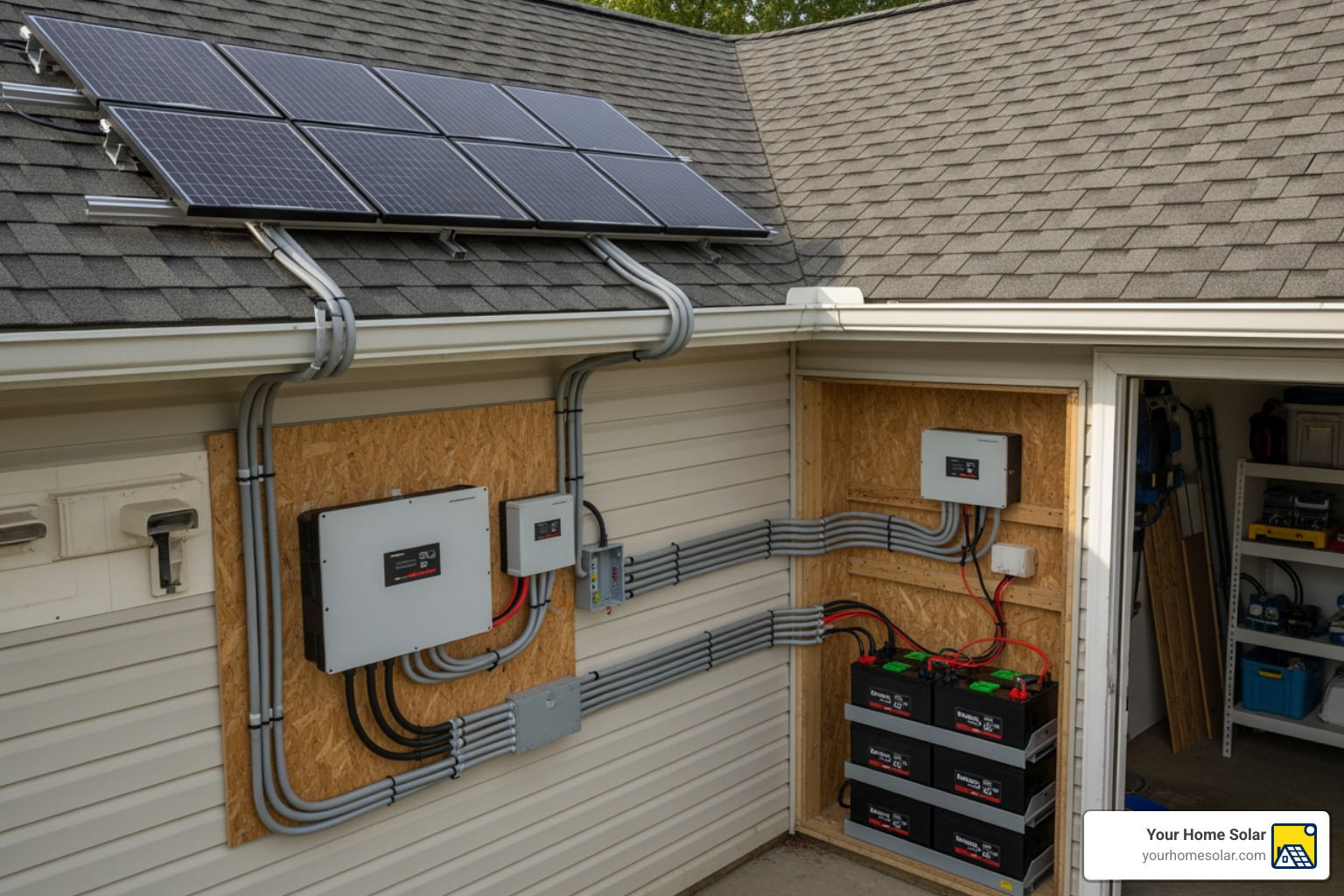
DIY off-grid solar power kits are complete packages that include solar panels, batteries, charge controllers, inverters, and mounting hardware—everything you need to generate and store your own electricity independent of the utility grid. Here’s what makes them work:
Core Components of a DIY Off-Grid Solar Kit:
- Solar Panels – Convert sunlight into DC electricity (typically 100W to 550W per panel)
- Charge Controller – Regulates power flow from panels to batteries (PWM or MPPT type)
- Deep-Cycle Batteries – Store energy for use when the sun isn’t shining (lithium or lead-acid)
- Power Inverter – Converts DC battery power to AC power for household appliances
- Mounting Hardware – Secures panels to roof or ground
- Wiring & Safety Equipment – Connects all components safely
System Sizes: Most off-grid kits range from 400W (small RV/cabin) to 21kW (full home), with battery banks from 1.2kWh to 38.4kWh depending on your energy needs.
Going off-grid with solar isn’t just about cutting your electric bill to zero. It’s about true energy independence—especially valuable in East Tennessee where storms and grid outages can leave families in the dark. For remote properties where connecting to the grid costs $10,000 or more per utility pole, a DIY off-grid solar system for under $20,000 makes perfect financial sense.
The advantages are clear: renewable energy that’s always available, no monthly utility bills, and the satisfaction of building something that protects your family’s comfort and security. Whether you’re powering a cabin in the Smoky Mountains, preparing for the next storm, or simply want freedom from rising electricity costs, understanding how these systems work is your first step toward energy independence.
I’m Ernie Bussell, founder and CEO of Your Home Solar, East Tennessee’s #1 solar energy contractor. With experience managing operations for $40 million solar installations and helping hundreds of homeowners understand their energy options, I’ve seen how DIY off-grid solar power kits can transform lives when sized and installed correctly.
First, Why Go Off-Grid? On-Grid vs. Off-Grid Systems
Deciding between an on-grid and an off-grid solar system is one of the first major choices you’ll make on your journey to solar independence. Both offer distinct benefits, but they serve different purposes and cater to different needs. For many in East Tennessee, the allure of energy independence, especially in remote areas or as a safeguard against power outages, makes off-grid solutions particularly appealing.
Off-grid systems offer complete grid independence, meaning you’re not reliant on utility companies for your power supply. This is particularly beneficial for remote cabins, hunting lodges, or even tiny homes nestled away in the beautiful landscapes of the Smoky Mountains, where extending grid lines can be prohibitively expensive. It’s also an excellent solution for backup power, ensuring your home remains powered during unexpected outages, a common concern in our region. While utility costs can be a driving factor for any solar installation, an off-grid system eliminates them entirely.
To truly understand the choice, let’s break down the main differences. You can learn more about how solar energy interacts with the grid in our guide: Residential Solar Solutions Guide: Solar Energy and the Grid.
On-Grid (Grid-Tied) Systems
On-grid, or grid-tied, systems are the most common type of residential solar installation. These systems remain connected to the local utility grid. When your solar panels produce more electricity than your home consumes, the excess power is sent back to the grid. This often earns you credits through programs like net metering, effectively reducing or even eliminating your electricity bill.
A key characteristic of on-grid systems is that they typically do not require batteries for daily operation, as the grid acts as a massive battery, storing your excess energy. However, if you desire power during a grid outage, you would need to add a battery backup system to your on-grid setup. On-grid systems are ideal for homes in urban and suburban areas of East Tennessee, like Knoxville or Chattanooga, where grid connection is readily available and reliable.
Off-Grid Systems
Off-grid systems, on the other hand, operate completely independently of the utility grid. This means you are solely responsible for generating and storing all your electricity. The most significant implication of this independence is the absolute necessity of battery storage. Without batteries, you would only have power when the sun is shining directly on your panels.
The benefits are profound: no monthly utility bills, complete freedom from grid blackouts, and the ability to establish a power source in any remote location. DIY off-grid solar power kits are perfect for powering RVs, campers, cabins, ice fishing shacks, solar sign lighting, or various DIY solar projects. Imagine Living Off the Grid: How Solar Energy Can Make It Possible in the serene mountains of Sevier County, completely self-sufficient.
The Anatomy of a DIY Off-Grid Solar Power Kit
A DIY off-grid solar power kit is more than just a collection of parts; it’s a carefully balanced ecosystem designed to provide reliable electricity wherever you need it. Understanding each component and how they work together is crucial for a successful installation.
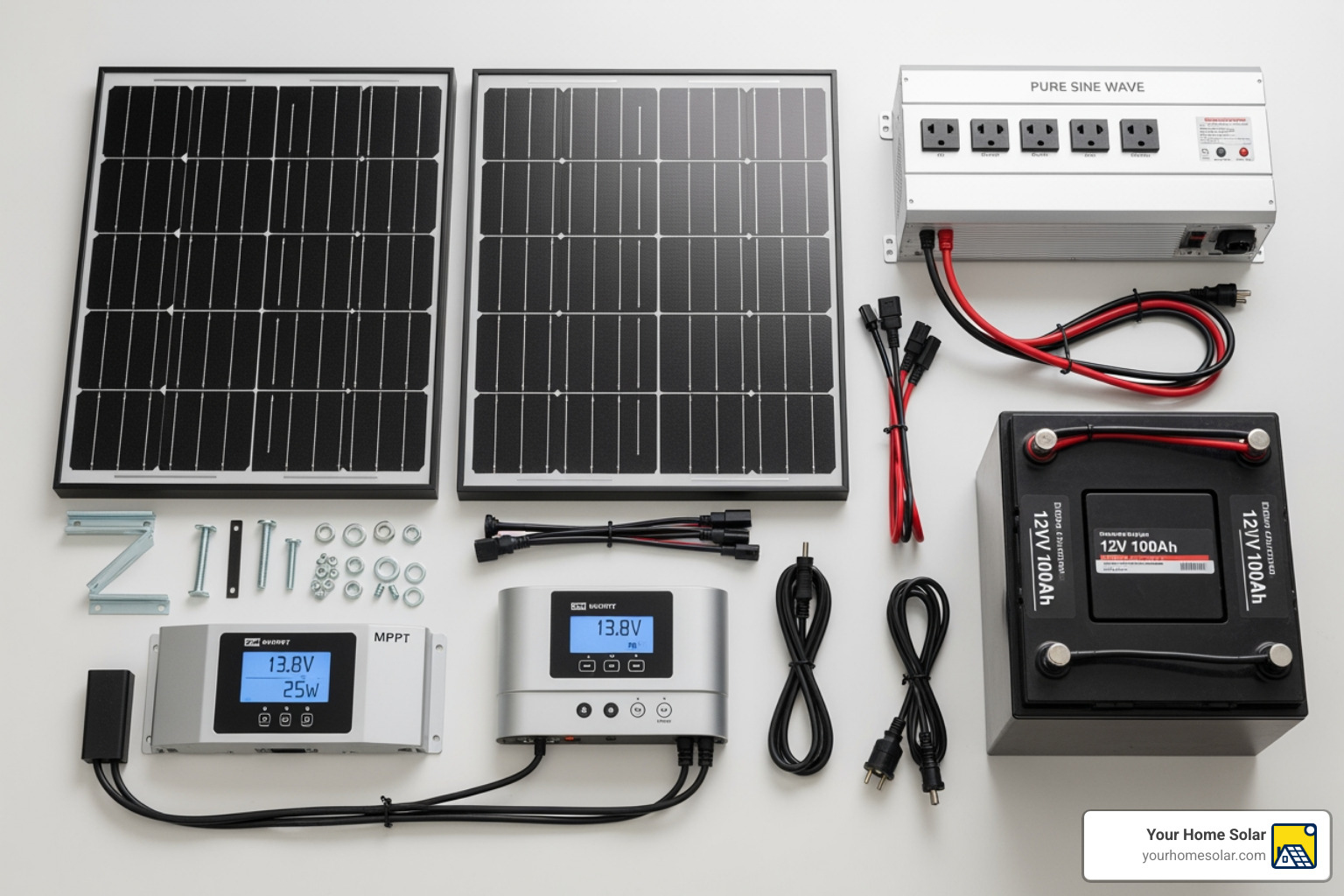
When putting together your kit, compatibility is key. All components must be matched to work efficiently and safely together. While pre-assembled kits offer convenience, building your own allows for greater customization to your specific needs and budget.
Essential Components for DIY Off-Grid Solar Power Kits
Let’s explore the core elements you’ll find in any robust off-grid solar setup:
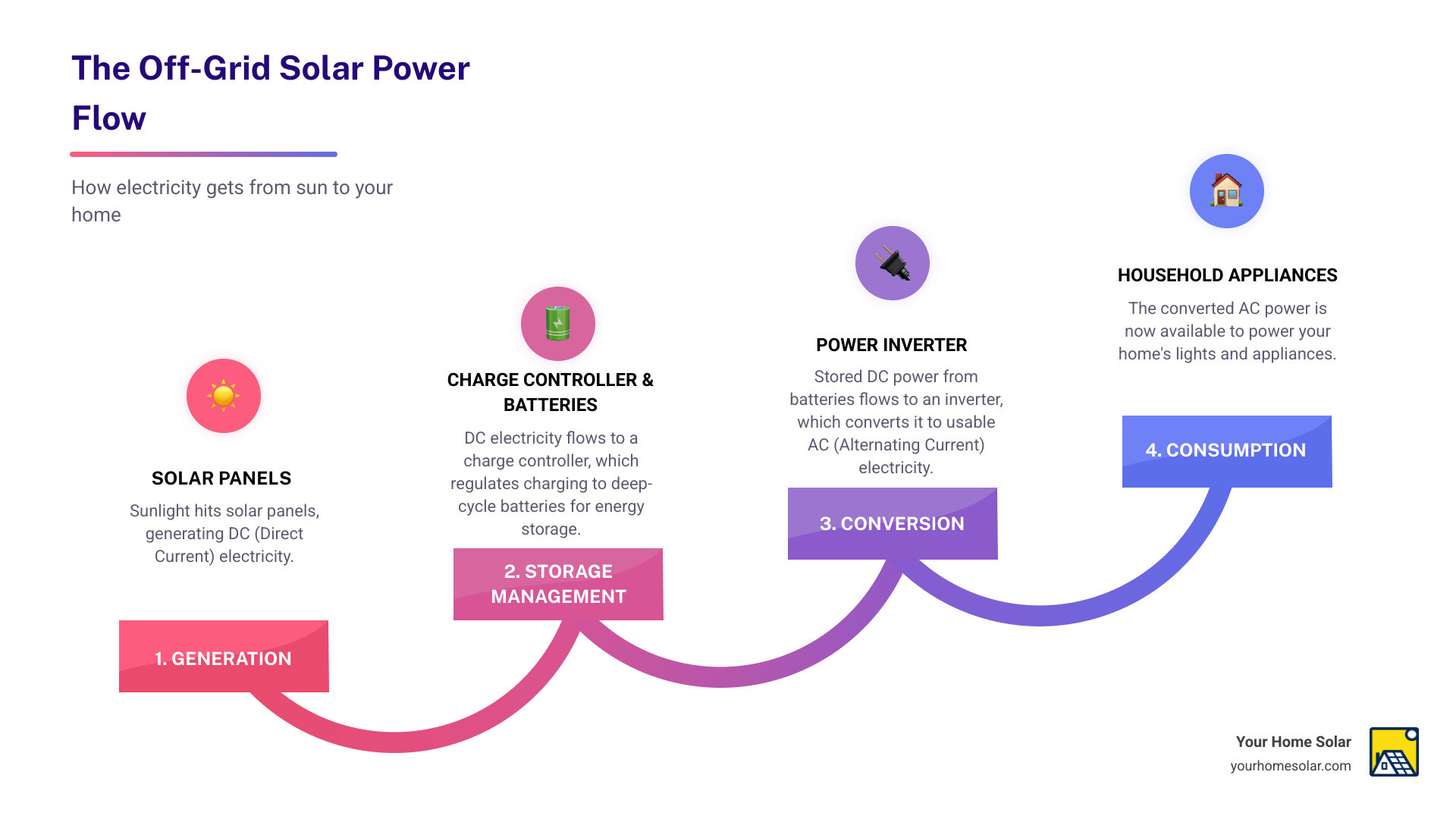
- Solar Panels: These are the workhorses of your system, converting sunlight into direct current (DC) electricity. They typically come in sizes like 100W, 200W, or 300W. We recommend high-efficiency panels, often backed by a 25-year performance warranty, to ensure long-term energy production. For a deeper understanding, explore our Comprehensive Guide to Understanding Solar Panels.
- Charge Controller: This vital component regulates the voltage and current flowing from your solar panels to your battery bank. It prevents overcharging, which can damage your batteries, and ensures they are charged safely and efficiently.
- Deep-Cycle Batteries: The heart of any off-grid system. Unlike car batteries, deep-cycle batteries are designed to be discharged and recharged gradually over many cycles. They store the electricity generated by your panels for use during the night or on cloudy days.
- Power Inverter: Most household appliances run on alternating current (AC) power. Your solar panels and batteries produce or store DC power. The inverter’s job is to convert that DC power into usable AC power for your home. Your inverter size is based on your peak power requirements—the amount of electrical load you want to run at the same time.
- Racking and Mounts: These secure your solar panels in place, ensuring they are at the correct angle to receive the most sunlight. Materials like IronRidge racking are tested and proven to perform in extreme environments, offering durability whether you choose a roof mount or ground mount.
- Wiring and Fuses: High-quality, outdoor-rated cables are essential to connect all your components, safely transmitting the generated electricity. Fuses and circuit breakers protect your system from overloads and short circuits, ensuring safety for you and your equipment.
Choosing Your Core Components
Selecting the right specific components within your DIY off-grid solar power kit is critical for performance and longevity.
Let’s start with batteries, a major decision point for off-grid systems:
| Feature | Lithium (LiFePO4) Batteries | Lead-Acid Batteries |
|---|---|---|
| Lifespan | About 10 years (or 6000 cycles @ 80% DOD) | About 5 years (or 2000 cycles @ 80% DOD) |
| Maintenance | Low maintenance, often with built-in Battery Management System (BMS) | Requires regular maintenance (watering, equalization) |
| Cost | Higher upfront cost (e.g., $0.50 per watt) | Lower upfront cost (e.g., $0.25 per watt) |
| Efficiency | Higher discharge efficiency, deeper discharge cycles possible | Lower discharge efficiency, shallower discharge recommended |
| Weight | Lighter | Heavier |
While lead-acid batteries have a lower initial cost, lithium batteries, particularly Lithium Iron Phosphate (LiFePO4), offer a much longer lifespan and require less maintenance, often making them more cost-effective over the system’s lifetime. Nearly all our off-grid customers today choose lithium batteries for these advantages. For more details, see The Ultimate Guide to Solar Batteries and Energy Storage Solutions.
For solar panels, monocrystalline panels generally offer higher efficiency and a smaller footprint, making them a popular choice for home installations.
When it comes to inverters, they convert the DC electricity from your panels and batteries into AC power. Our guide, The Ultimate Guide to Solar Inverters, provides in-depth information. You’ll need to choose an inverter that supports the energy output you require, matching it to your peak power demand.
Charge controllers come in two main types: Pulse Width Modulation (PWM) and Maximum Power Point Tracking (MPPT). MPPT controllers are more efficient, especially in varying light conditions or with larger systems, as they can extract more power from your solar panels by optimizing the voltage and current.
Lastly, consider your system voltage. A 12V system is suitable for small setups with lower power demands, common in RVs or small cabins. However, a 48V system offers higher voltage and lower current, which results in lower energy losses in the form of heat and an overall more efficient system, especially for larger residential applications.
Sizing Your System: The Critical First Step
This is where the rubber meets the road! Accurately sizing your off-grid solar system is the single most important factor for its success. Too small, and you’ll constantly run out of power. Too large, and you’ll overspend. Designing an off-grid solar system can be complex, but we’re here to help you understand the key factors.
The three main factors to consider when sizing for off-grid solar are:
- Your daily energy usage: This determines the size of your solar panel array.
- Your nightly energy usage: This dictates the capacity of your battery bank.
- Your peak power demand: This influences the size of your inverter.
For expert tips on how to calculate these needs for your East Tennessee home, refer to our guide: Properly Sizing a Solar System for Your East Tennessee Home: Expert Tips.
How to Calculate Your Daily Energy Consumption
The first step is to perform an energy audit to determine your total daily energy consumption in watt-hours (Wh). Don’t worry, it’s not as scary as it sounds!
Here’s how to calculate your daily energy consumption:
- List all appliances: Make a comprehensive list of every electrical device you plan to power with your solar system.
- Find their power ratings (watts): Look for a label on each appliance (often on the back or bottom), check the owner’s manual, or search online for its wattage.
- Estimate daily hours of use: For each appliance, estimate how many hours per day it will be actively used.
- Calculate daily watt-hours (Wh): Multiply the appliance’s wattage by its estimated daily hours of use.
- Example: A 100W light bulb used for 5 hours a day consumes 100W * 5h = 500 Wh per day.
- Sum it up: Add the daily watt-hours for all your appliances to get your total daily energy consumption.
This total daily energy usage will directly inform the size of your solar panel array. The size of your solar panel array determines how much energy you can use at your off-grid property each day.
Sizing Your Battery Bank and Inverter
Once you know your daily energy consumption, you can size your battery bank and inverter.
Your battery bank needs to be large enough to store sufficient energy for when the sun isn’t shining—at night, on overcast days, or during prolonged periods of bad weather. This is often referred to as “days of autonomy.” For instance, if you want your system to power your home for two days without sun, your battery bank needs to store two days’ worth of your calculated energy consumption.
The size of your battery bank determines how much energy you need to use at night, or on overcast days where there’s not much sunlight available. We recommend using deep-cycle batteries, with LiFePO4 being the preferred choice for their longevity and efficiency. The number of batteries you need depends on your daily energy consumption and desired days of autonomy. For more on battery types, check out Everything You Need to Know About Residential Solar Battery Types: What’s Best?.
Inverter sizing is based on your peak power requirements. This is the maximum wattage your appliances will draw simultaneously. If you plan to run a microwave (1500W) and a refrigerator (200W) at the same time, your inverter needs to handle at least 1700W, plus a buffer for surge loads (when appliances briefly draw more power upon startup). For example, to run a 12000BTU mini-split AC unit for several hours daily, you might need 1000-2000 watts of solar and 4-8 kWh of battery, but your inverter must be able to handle the AC’s peak draw.
Installation Guide: From Mounting to Powering On
Installing your DIY off-grid solar power kit is a rewarding project, but it requires careful planning and adherence to safety protocols.

Safety must always be your top priority. Working with electricity and on roofs can be dangerous. Always disconnect power sources before making connections, use insulated tools, and wear appropriate personal protective equipment.
Before you even start, it’s crucial to investigate permits and regulations in your specific East Tennessee location. Even for off-grid systems, local electrical and building codes may apply, especially for larger systems or those connected to a main dwelling. Check with your local building authority in areas like Knoxville, Maryville, or Johnson City to ensure compliance.
You’ll need basic tools like wrenches, screwdrivers, wire strippers, a multimeter, and possibly a drill.
Mounting and Wiring Your System
Choosing between roof and ground mounting depends on your property. Roof mounting is more discreet and uses existing space, which can be great for homes in Farragut or Oak Ridge. Ground mounting will take up additional space but offers easier access for cleaning and maintenance, ideal for a cabin in a more remote area.
Regardless of location, proper panel orientation and angle are critical for maximizing sunlight exposure throughout the day and year. In East Tennessee, panels typically perform best facing south with a tilt angle that matches your latitude (around 35-36 degrees for much of our region), or adjusted for seasonal performance.
Secure the solar panels in position using sturdy racking materials. Once panels are mounted, you’ll need to wire them. Panels can be wired in series (increasing voltage) or parallel (increasing current) to match the input requirements of your charge controller.
Finally, you’ll connect all the components: solar panels to the charge controller, the charge controller to the battery bank, and the battery bank to the inverter. Ensure all connections are tight and correctly polarized (positive to positive, negative to negative).
Common Mistakes to Avoid with DIY Off-Grid Solar Power Kits
Even experienced DIYers can stumble. Here are common pitfalls to avoid:
- Incorrect Sizing: Underestimating your energy needs or not accounting for cloudy days is a recipe for frustration. Always add a buffer to your calculations.
- Ignoring Safety Protocols: This is non-negotiable. Electrical work carries risks, and bypassing safety measures can lead to injury or damage.
- Incompatible Components: Ensure your panels, charge controller, batteries, and inverter are all compatible in terms of voltage and current. Mismatched components can lead to inefficiency or even damage.
- Improper Wiring: Using undersized cables can cause voltage drop and overheating. Incorrect polarity can short-circuit your entire system. Always double-check your wiring diagrams.
- Neglecting Battery Management: Batteries are expensive. Without proper charging and discharging managed by a good charge controller and potentially a Battery Management System (BMS) for lithium batteries, their lifespan will be significantly reduced.
- Mismatched Battery Storage and Usage Time: Your battery bank needs to be sized for your nightly energy usage and desired days of autonomy. If it’s too small, you’ll be rationing power.
- Skipping the Testing Phase: Before connecting your main loads, thoroughly test each component and the system as a whole to ensure everything is functioning correctly.
- Improper Panel Positioning: Panels not angled correctly or shaded by trees will severely limit energy production.
Avoiding these mistakes will save you headaches, money, and ensure your DIY off-grid solar power kit operates effectively. For more insights on avoiding pitfalls, read our article on How to Get Solar Without Getting Scammed.
System Maintenance and Longevity
Just like any other system, your DIY off-grid solar power kit will benefit from regular maintenance to ensure its longevity and peak performance. A well-maintained system will provide reliable power for years to come.
Here’s what typical maintenance looks like:
- Routine Checks: Periodically inspect all visible components for wear and tear, loose connections, or corrosion. Check wiring for any signs of damage from pests or weather.
- Cleaning Panels: Dust, dirt, leaves, and bird droppings can reduce your panels’ efficiency. A simple cleaning with water and a soft brush a few times a year, or after heavy storms, can make a significant difference. You can find more tips in Solar Energy Maintenance 101: Tips for Keeping Your System Running Smoothly.
- Battery Maintenance: For lead-acid batteries, this means regularly checking electrolyte levels and topping up with distilled water. Lithium batteries are generally maintenance-free. Regardless of type, ensure battery terminals are clean and free of corrosion.
- Connection Inspection: Ensure all electrical connections are tight and secure. Loose connections can lead to resistance, heat buildup, and energy loss.
- Monitoring System Performance: Many charge controllers and inverters come with monitoring features or apps. Keep an eye on your system’s output and battery state of charge. Any significant drop in performance could indicate an issue.
With proper care, your solar panels can last 25 years or more (as many come with a 25-year performance warranty), and quality lithium batteries can last around 10 years. Understanding how long your system can last is key to your investment: How Long Does a Residential Solar System Last? Your Home Solar Has the Answer.
Frequently Asked Questions about DIY Solar
Can I power my entire home with a DIY solar kit?
It absolutely depends on your energy consumption, the size of your system, and the amount of sunlight available in your East Tennessee location. If you have plenty of sunshine and a solar energy system that’s correctly sized for your home’s energy demands, you might be able to run your entire home. However, if your energy usage is very high or you experience prolonged periods of low sunlight, you might need a larger system or other supplemental power sources. A thorough assessment of your energy needs and solar potential is crucial to determine if solar alone is enough.
Are there permits required for an off-grid solar installation?
Permit requirements vary significantly by location, even within East Tennessee. While off-grid systems are not connected to the utility grid, local electrical and building codes may still apply, especially for larger systems or those integrated into a permanent dwelling structure. For example, jurisdictions in Knoxville, Maryville, Johnson City, or any of the surrounding counties might have specific regulations. Always check with your local building department or county planning office before beginning any installation to ensure compliance and avoid potential issues.
Can I expand my DIY system later?
Yes, most well-designed DIY off-grid solar power kits are built with future expansion in mind. It’s a smart strategy to choose components like charge controllers and inverters that have some headroom, meaning they can handle a larger capacity than your initial setup. This makes it much easier to add more solar panels or increase your battery bank size later if your energy needs grow. For example, if your charge controller has a maximum input of 100VDC and 60A, you can add panels as long as you stay within those limits when wiring them in series or parallel.
Conclusion: Accept Your Energy Independence
Starting on the journey of building your own home solar power system with a DIY off-grid solar power kit is an incredibly empowering experience. It offers you the freedom of energy independence, the peace of mind that comes with reliable backup power, and the satisfaction of contributing to a sustainable future. From understanding the essential components to carefully sizing your system and carefully installing it, each step brings you closer to using the sun’s power for your home in East Tennessee.
While the DIY approach is incredibly rewarding, we understand that complex projects can sometimes benefit from professional expertise. For those in East Tennessee seeking a professional touch or a comprehensive consultation to ensure a safe, efficient, and perfectly sized system, our team at Your Home Solar is here to help. We pride ourselves on trusted expertise and 100% customer satisfaction, offering custom, reliable, and rewarding installations that truly open up your energy independence.
The future is solar, and now is the time to invest in your home’s energy future: The Future Is Solar: Why Now Is the Time to Invest in Solar Energy for Your Home.
Ready to take the next step towards energy independence? Explore Your Residential Solar Options with Your Home Solar today.