How Energy Storage Systems Turn Solar Power Into Reliable Backup
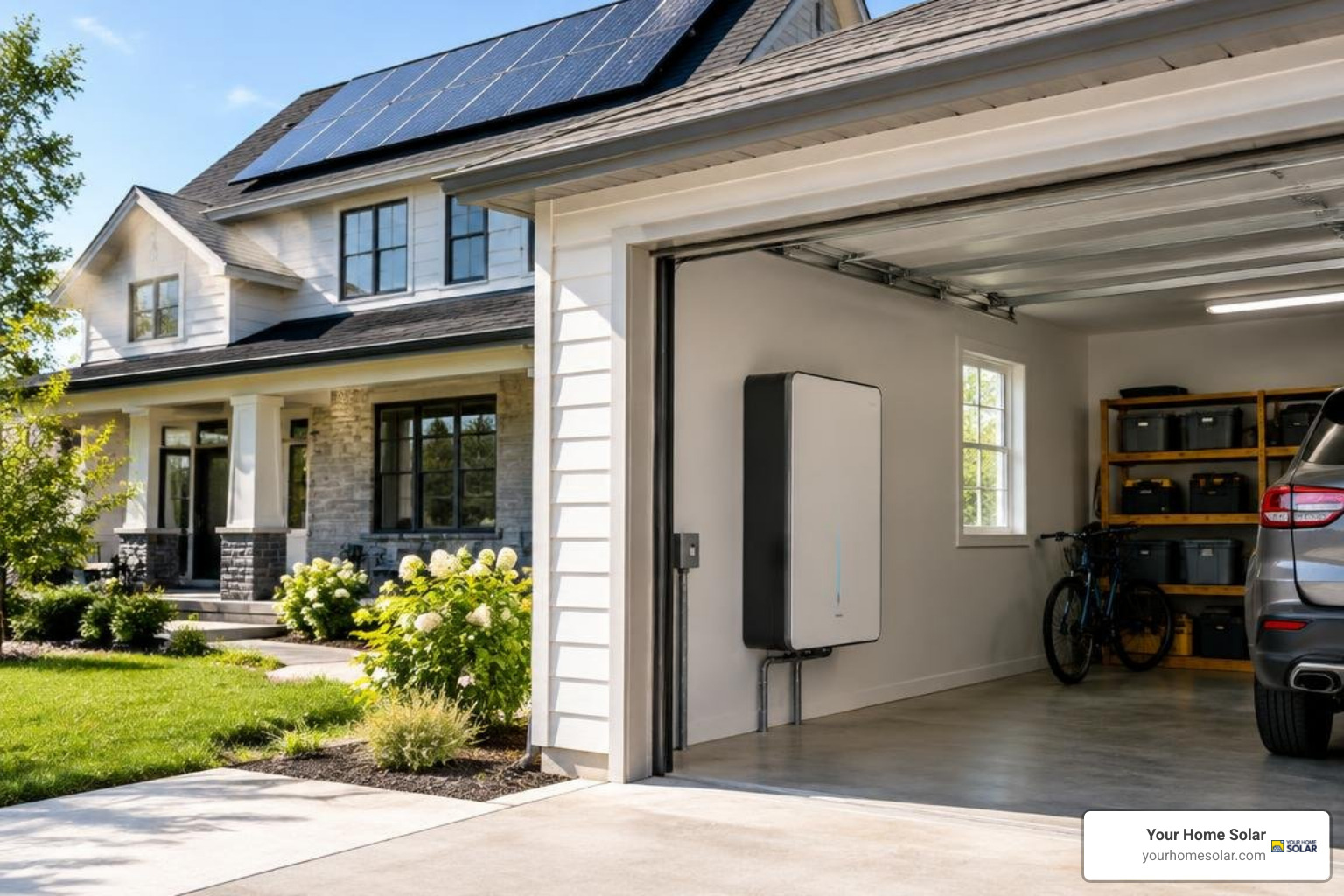
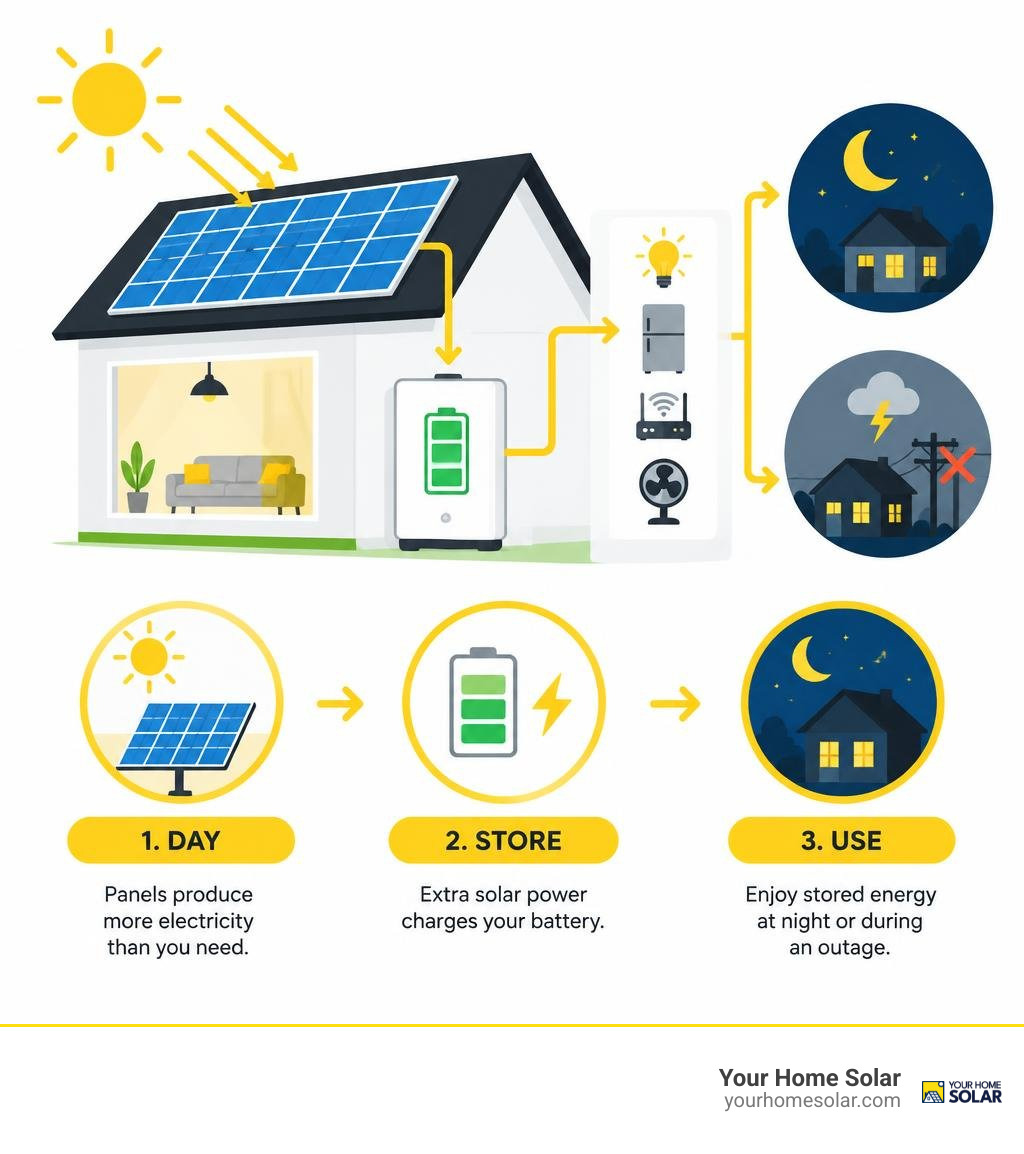
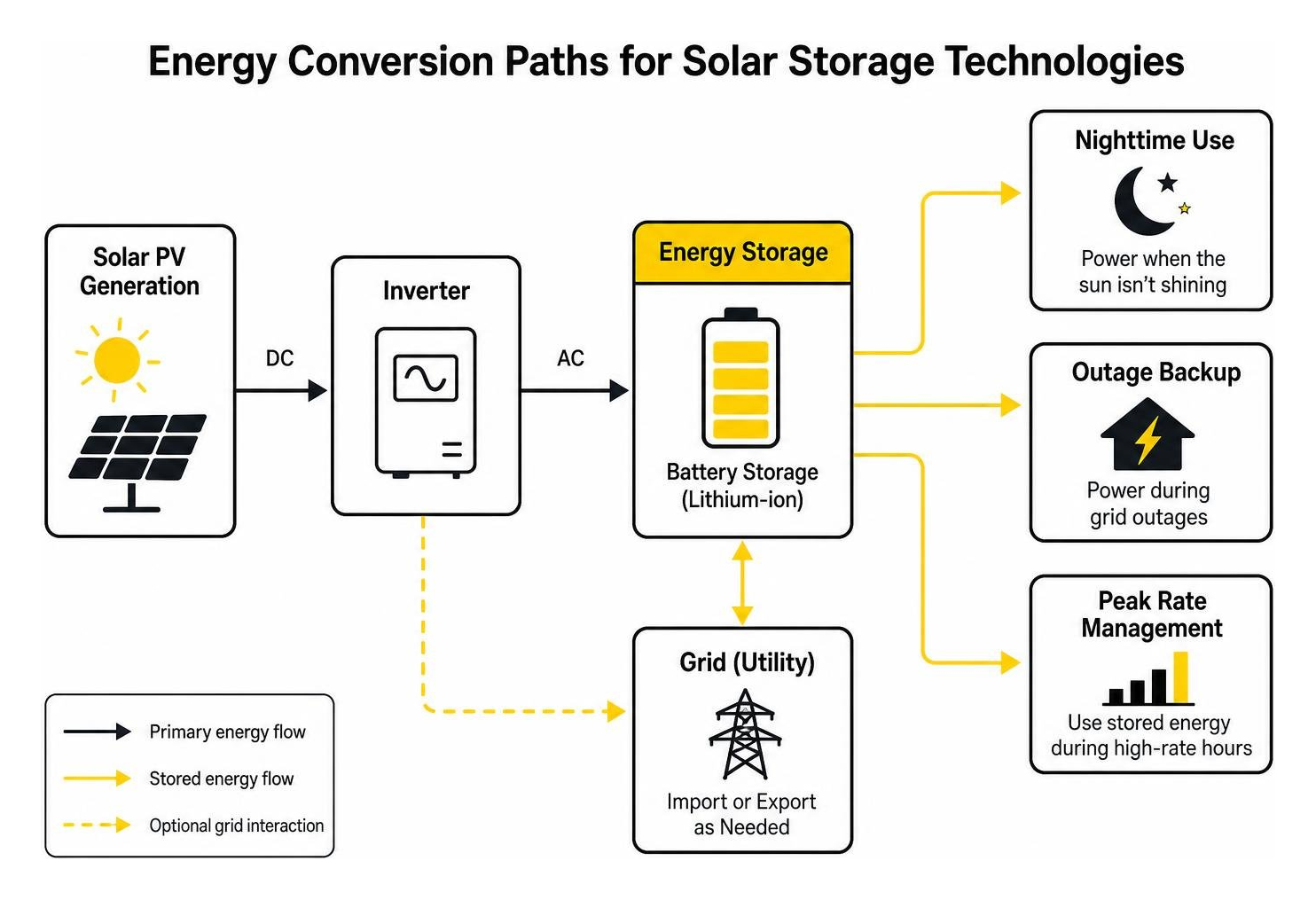
Energy storage systems for solar power save extra electricity your panels make during the day so you can use it at night, during high-rate utility hours, or when the grid goes down. For most homes, this means a solar battery charges from midday surplus and powers selected essential loads – or, with the right design, much of the home – when sunlight is not available.
Storage helps solve solar’s biggest timing challenge: your panels often produce the most power around midday, while your household may need the most electricity in the morning and evening. A properly sized solar-plus-storage system can help you:
- Keep lights, refrigeration, internet, and other critical loads running during an outage.
- Reduce purchases of expensive grid electricity during peak-rate periods.
- Use more of the clean energy your own roof produces.
- Gain more control over your home’s energy use without relying solely on the utility.
For East Tennessee homeowners, battery backup is not just about lowering bills. It can add a practical layer of resilience during storm-related outages. The best system depends on your daily energy use, the appliances you want to back up, your existing solar equipment, and whether your goal is savings, outage protection, or both.
I’m Ernie Bussell, Founder and CEO of Your Home Solar. My background in solar operations, system design, and homeowner education helps me explain energy storage systems for solar power in clear, real-world terms so you can make a confident decision.
Energy storage systems for solar power definitions:
- Solar battery storage solutions
- Deep cycle battery for solar storage
- Battery storage for solar pv system
Core Types of Energy Storage Systems for Solar Power
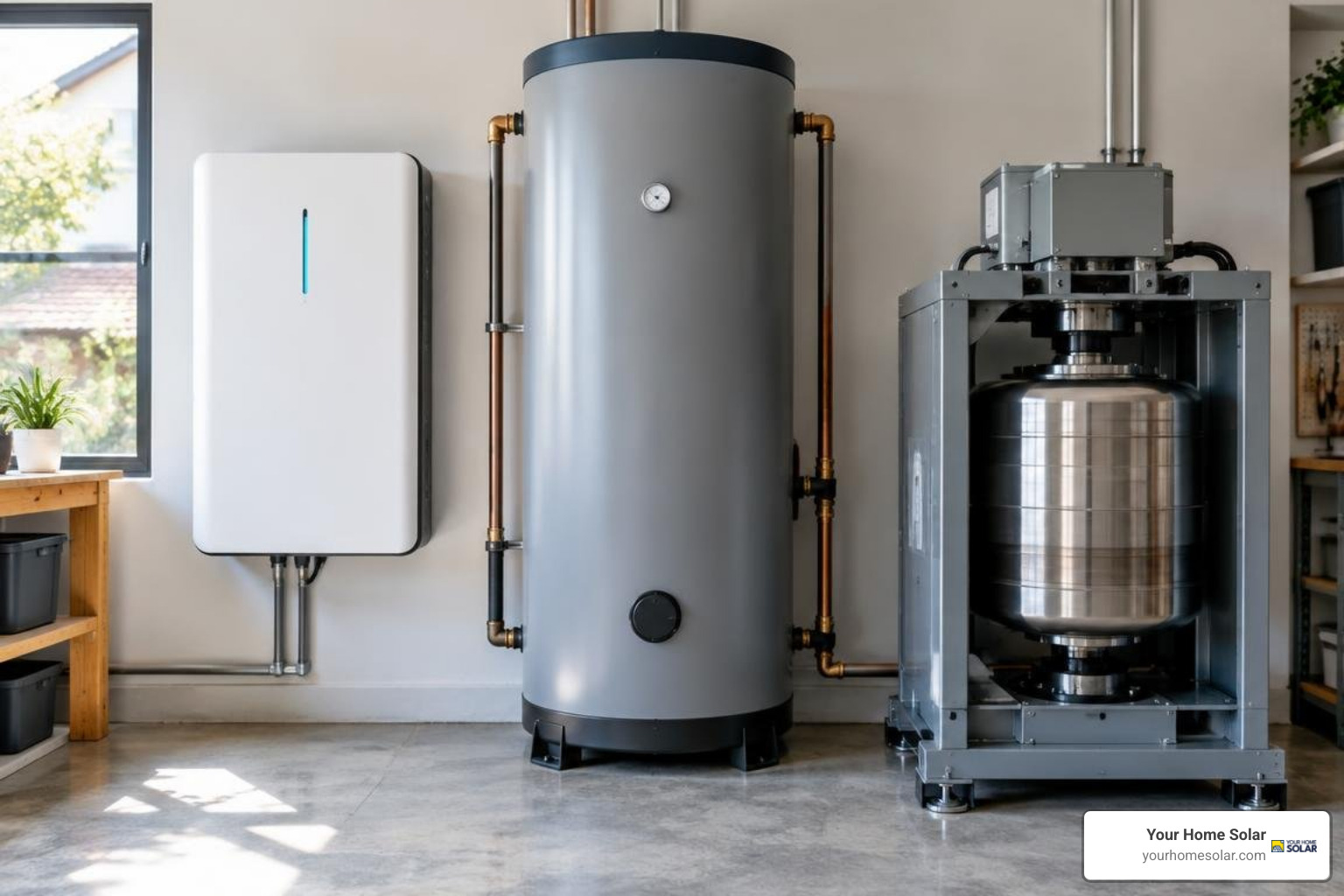
When pairing storage with solar arrays, energy can be captured in electrochemical, mechanical, thermal, or chemical forms. While electrochemical batteries dominate residential rooftops across Knoxville and the surrounding valleys, larger industrial facilities and utilities deploy multiple methods to balance generation and demand across different time horizons.
Electrochemical Batteries: LFP vs. NMC Chemistries
Residential systems rely almost exclusively on lithium-ion chemistry. Understanding the differences among residential solar battery types helps clarify why the industry has shifted toward Lithium Iron Phosphate (LiFePO4 or LFP) over Nickel Manganese Cobalt (NMC).
LFP chemistry offers high thermal stability. The chemical bond between iron, phosphorus, and oxygen is structurally resilient, significantly reducing the risk of thermal runaway. Furthermore, LFP cells deliver exceptional lifespan: modular units like the Pylontech US2000C and US3000C series achieve over 8,000 charge/discharge cycles at 25°C with a depth of discharge (DoD) up to 95%, while industrial cabinets such as the OASIS L261 provide up to 9,000 cycles at 90% DoD.
In contrast, NMC chemistries offer higher gravimetric energy density (250–350 Wh/kg), making them compact and lightweight. However, NMC degrades faster under high cycle counts (often rated for 3,000–4,000 cycles) and operates within a narrower safe temperature window. Traditional lead-acid batteries, while cheap upfront, suffer from low round-trip efficiencies (75–85%), heavy mass, and restricted 50% DoD limits.
| Characteristic | Lithium Iron Phosphate (LFP) | Nickel Manganese Cobalt (NMC) | Deep-Cycle Lead-Acid |
|---|---|---|---|
| Round-Trip Efficiency | 92% – 97% | 90% – 95% | 75% – 85% |
| Cycle Life (to 70-80% EOL) | 6,000 – 10,000 cycles | 3,000 – 5,000 cycles | 500 – 1,500 cycles |
| Usable Depth of Discharge (DoD) | 90% – 100% | 80% – 90% | 50% |
| Thermal Runaway Onset | ~270°C (High stability) | ~210°C (Moderate stability) | N/A (Risk of off-gassing) |
| Expected Lifespan | 15+ years | 10–12 years | 3–5 years |
Long-Duration Mechanical, Thermal, and Chemical Storage
When we look beyond residential installations, grid-scale renewable integration requires storage durations spanning days, weeks, or even seasons. Detailed research in the techno-economic analysis of long-duration energy storage highlights several non-electrochemical pathways:
- Pumped Storage Hydropower (PHS): Accounts for the vast majority of worldwide bulk storage capacity. Water is pumped to an upper reservoir during solar overproduction and released through turbines during deficit periods. PHS provides a low levelized cost of storage (LCOS) between $0.05 and $0.10/kWh and minimal lifecycle carbon emissions (1–10 kg CO2/kWh), though it requires specific mountainous geography.
- Thermal Energy Storage (TES): Captures excess solar heat in molten salts or solid media, retaining energy to run steam turbines hours later.
- Liquid Air Energy Storage (LAES) & Compressed Air (CAES): Ambient air is cooled to a liquid state (-196°C) or compressed in underground caverns, then expanded through turbo-generators when the grid needs power.
- Green Hydrogen: Excess solar electricity drives electrolyzers to split water into hydrogen and oxygen. Stored in high-pressure tanks or geological formations, hydrogen can support capacities up to 1,000 MWh. Projections show its levelized cost dropping by up to 60% by 2040 as production scales.
System Architecture: AC-Coupled vs. DC-Coupled Configurations
Integrating energy storage with solar panels requires power conversion between direct current (DC) and alternating current (AC). Selecting between AC-coupled and DC-coupled architectures determines installation complexity and overall efficiency. Exploring modern energy storage solutions helps determine which topology matches your home setup.

AC-Coupled Storage for Retrofitting Existing Solar PV
In an AC-coupled configuration, the solar array and the battery system use independent inverters. Solar panels send DC power to a solar inverter, converting it to AC for household appliances. Excess AC energy is then converted back to DC by a dedicated battery inverter to charge the pack. When discharging, the battery inverts DC back to AC.
While this triple conversion (DC to AC to DC, and back to AC) incurs minor efficiency losses of 2–4%, AC coupling is an excellent option for retrofitting an established solar PV system without replacing the existing inverter. Adding modular battery packs for home solar systems allows existing arrays to function normally while layering on blackout protection.
DC-Coupled Hybrid Systems for Maximum Efficiency
DC-coupled architectures use a single hybrid inverter that manages inputs from both the solar array and the battery bank. High-voltage DC power generated by the panels flows through a charge controller straight into the battery bank without undergoing conversion to AC. Power is inverted to AC only once, when supplying home loads or exporting to the grid.
DC coupling captures up to 95–97% round-trip efficiency and avoids inverter clipping. If a solar array generates more power than the inverter’s AC output limit during midday peaks, the surplus DC power is redirected into charging the battery rather than being lost.
Grid Services and Performance Economics of Battery Storage
Battery Energy Storage Systems (BESS) do more than provide standalone backup power. On both sides of the meter, storage transforms variable renewable generation into dispatchable electricity.
When thousands of homes and commercial facilities store solar power, they unlock key grid-support functions:
- Peak Shaving and Load Shifting: Midday solar overproduction is stored to suppress steep evening demand peaks, flattening the famous utility “duck curve.”
- Frequency and Voltage Regulation: Advanced grid-interactive inverters inject or absorb reactive power within milliseconds, maintaining grid stability during sudden load spikes.
- Operating Reserves and Transmission Relief: Rapid-discharge utility units, like the 5,016 kWh SolBank 3.0 system with a 93–94% round-trip efficiency, provide instant operating reserves. This flexible capacity delays the need to build expensive distribution substations.
Evaluating Energy Storage Systems for Solar Power by Performance Metrics
Selecting the right equipment requires balancing several performance criteria:
- Round-Trip Efficiency (RTE): The percentage of electricity put into a battery that is retrieved after discharge losses. Quality lithium-ion setups achieve 90–97% RTE.
- Depth of Discharge (DoD): The percentage of total capacity that can be used safely without degrading cell life.
- Continuous vs. Peak Power Output: Continuous output (kW) dictates the steady electrical load your battery can run, while peak surge output (kW) determines if the unit can start heavy motor loads like heat pumps or well pumps.
- Levelized Cost of Storage (LCOS): The total lifecycle cost of the system divided by its cumulative lifetime energy throughput. Analyzing the figures when breaking down solar PV battery storage costs in 2026 helps weigh upfront capital against long-term throughput value. Currently, lithium-ion yields an LCOS of roughly $0.15–$0.30/kWh.
Environmental Lifecycle, Carbon Footprint, and Battery Recycling
Evaluating energy storage requires an honest look at its environmental impact. Manufacturing lithium-ion battery cells currently produces an embodied carbon footprint of roughly 60–100 kg CO2 per kWh of manufactured capacity, primarily from raw mineral extraction (lithium, cobalt, nickel) and high-temperature processing.
However, operational carbon offset over a 15-year lifespan yields net-negative emissions when paired with solar panels. Furthermore, hydrometallurgical closed-loop recycling processes can recover more than 95% of critical metals from spent cells, reducing the need for virgin mining and lowering the embodied carbon of subsequent battery generations.
Practical Guide to Sizing, Safety Standards, and System Selection
Sizing Energy Storage Systems for Solar Power for Home Resilience
Proper sizing begins with an audit of your electrical panel. Homeowners choose between critical-load backup (refrigeration, lighting, water pumps, medical devices, internet) and whole-home backup (including central heating, ventilation, and air conditioning).
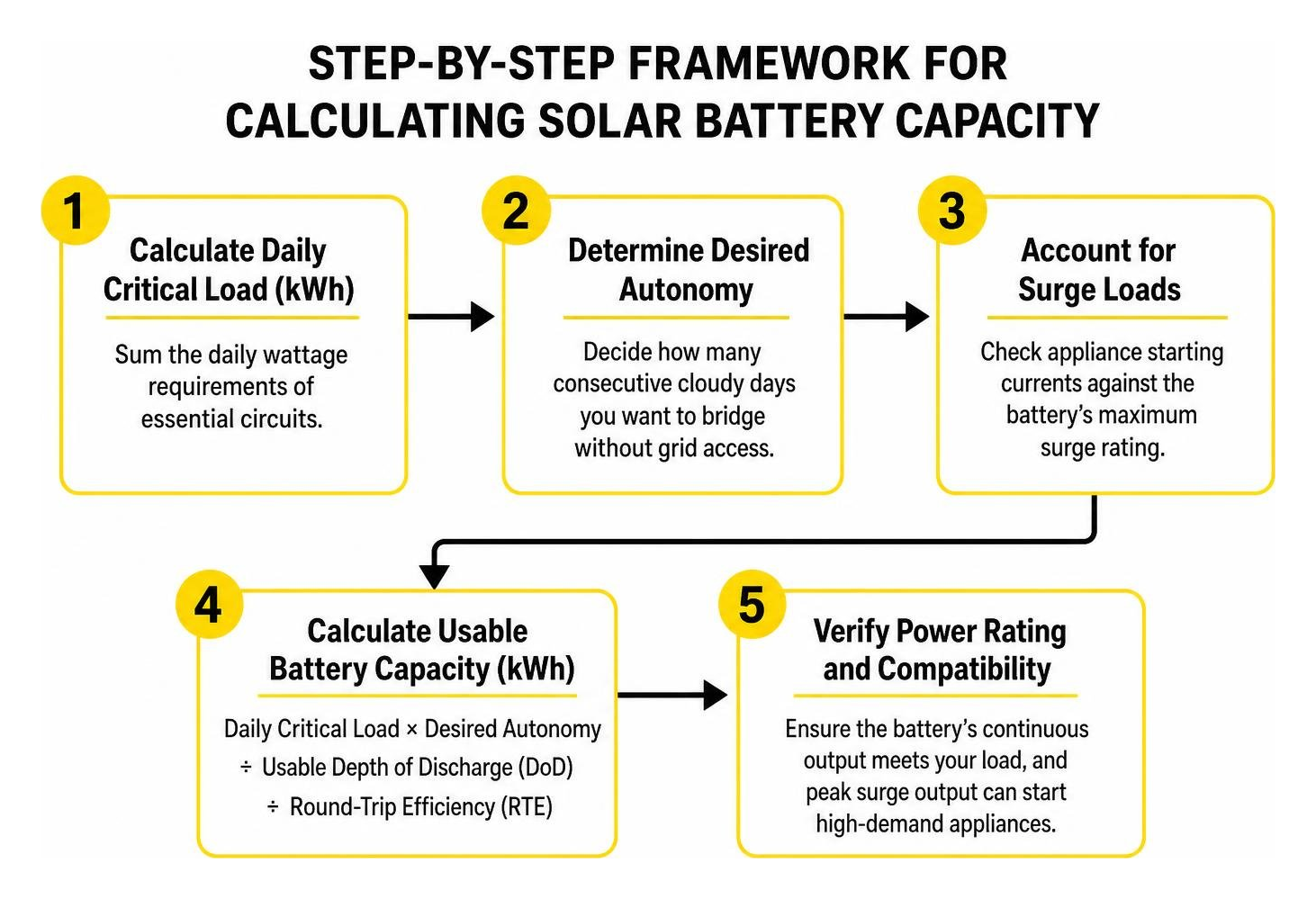
- Calculate Daily Critical Load (kWh): Sum the daily wattage requirements of essential circuits.
- Determine Desired Autonomy: Decide how many consecutive cloudy days you want to bridge without grid access.
- Account for Surge Loads: Check appliance starting currents against the battery’s maximum surge rating. For higher-demand residences, pairing a 10kW solar system with battery storage ensures adequate solar harvest to recharge the battery bank daily.
Reviewing the key steps for choosing the best battery storage for solar PV ensures the selected power conversion equipment matches your property’s daily lifestyle.
Critical Safety Certifications and Fire Mitigation Standards
Because energy storage systems pack high energy density into compact footprints, rigorous manufacturing and installation standards are mandatory:
- UL 1973: Tests battery cell and module safety under severe electrical, thermal, and mechanical stress.
- UL 9540 & UL 9540A: Evaluates the entire integrated system (battery, inverter, enclosure) and tests fire propagation risks under forced thermal runaway.
- NFPA 855: The standard for the installation of stationary energy storage systems, specifying setback distances, maximum allowable unit capacities, and ventilation standards.
- Advanced Liquid Cooling: Enclosure architectures increasingly implement closed-loop liquid thermal management, which maintains uniform cell temperatures and reduces auxiliary power consumption by up to 30%.
Frequently Asked Questions about Solar Energy Storage
What is the expected cycle life and lifespan of a residential solar battery in 2026?
Modern residential LFP solar batteries are rated for 6,000 to 10,000 full charge-discharge cycles. Under normal daily cycling conditions, this translates to an operational lifespan of 15 years or more, retaining 70% to 80% of original nameplate capacity at end-of-life.
Can a solar-plus-storage system keep my home powered indefinitely during a grid outage?
Yes, provided your solar array produces enough daytime energy to power the home while fully recharging the battery bank before sunset. Pairing the system with smart load-management panels allows you to shed non-essential loads during extended stormy periods, preserving power for essential appliances.
What is the difference between peak power output and usable energy capacity?
Usable energy capacity (measured in kilowatt-hours, kWh) represents the total “fuel tank” volume of electricity stored in the battery. Peak power output (measured in kilowatts, kW) is the maximum instantaneous burst of power the battery can supply to start heavy inductive loads, such as well pumps or air conditioner compressors.
Conclusion
Combining rooftop solar panels with dedicated battery storage turns variable solar energy into round-the-clock power. As weather patterns become more unpredictable and time-of-use utility rates expand, on-site energy storage delivers true energy independence and resilience.
At Your Home Solar, we provide customized solar, backup battery, generator, and EV charging installations across Knoxville, Maryville, Johnson City, Oak Ridge, and throughout East Tennessee. Our team focuses on engineering dependable systems tailored to your specific energy needs with trusted expertise and complete customer satisfaction.
Explore our comprehensive guide to solar batteries and energy storage solutions to begin designing a resilient energy system for your home.