Why Off-Grid Solar Kits Are the Key to True Energy Independence
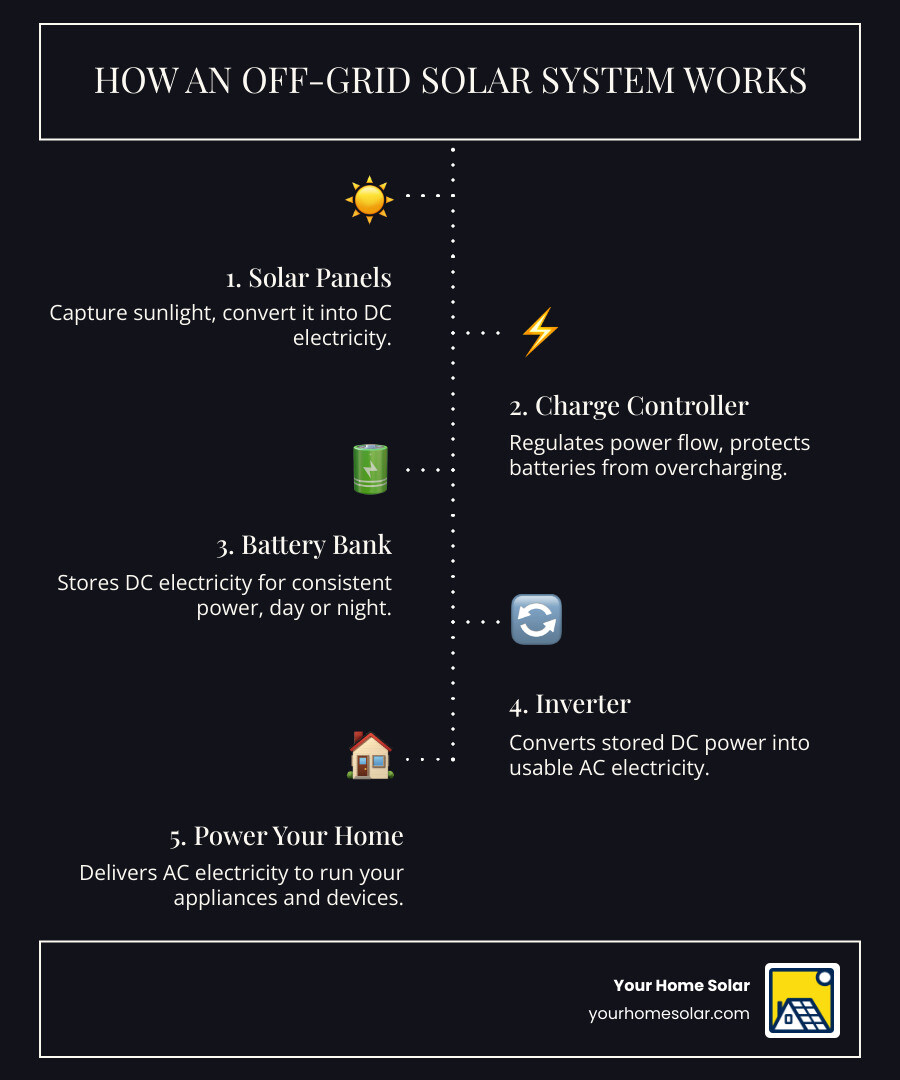
Off grid solar kits are complete, pre-configured solar power systems designed to generate, store, and deliver electricity without any connection to the utility grid. They typically include solar panels, a charge controller, a battery bank, and an inverter, along with all necessary hardware for installation. These kits are ideal for remote cabins, RVs, backup power, and any property without utility access.
For homeowners in East Tennessee, the value of reliable power is clear. Rising electricity costs and frequent storm-related outages are driving more people to seek energy independence. Whether you’re powering a cabin in the Smoky Mountains or preparing for the unexpected, off-grid solar offers a proven path to self-sufficiency. It’s about taking control of your power supply, protecting your family during outages, and investing in a sustainable future.
This guide walks you through everything you need to know about off grid solar kits, from how components work together to sizing a system for your needs. We’ll cover installation, maintenance, costs, and long-term benefits to help you make an informed decision.
I’m Ernie Bussell, founder of Your Home Solar. With years of hands-on experience designing and installing custom solar solutions in East Tennessee, I have unique insight into what works in our region’s climate and terrain. My team and I have helped countless homeowners achieve energy independence, and we’re here to guide you on your journey.
Understanding the Core Components of an Off-Grid Solar System
A complete off grid solar kits is more than just panels. Each part plays a critical role in generating, storing, and delivering power reliably to your home, cabin, or RV. Let’s break down these essential components.
Solar Panels: The Power Generators
Solar panels are the workhorses of the system, converting sunlight into electricity through the photovoltaic effect. For a deeper dive, see our guide on How Solar Panels Work: A Comprehensive Guide.
- Monocrystalline Panels: Made from a single silicon crystal, these are highly efficient and have a longer lifespan, making them ideal for situations where space is limited or maximum production is needed.
- Polycrystalline Panels: Made from multiple silicon crystals, these are a more cost-effective option, though typically less efficient than monocrystalline panels.
For East Tennessee’s variable weather, high-efficiency monocrystalline panels often provide the most reliable performance.
Charge Controllers: The System’s Brain
The charge controller is the unsung hero, regulating power from the panels to the batteries to prevent overcharging and damage. This ensures a healthy and efficient energy transfer.
- PWM (Pulse Width Modulation) Controllers: A basic, less expensive option suitable for smaller systems.
- MPPT (Maximum Power Point Tracking) Controllers: More advanced and up to 30% more efficient, MPPT controllers are ideal for larger systems as they maximize the power harvested from your panels.
Larger home systems often use 24V or 48V configurations, which are more efficient than 12V systems due to lower energy losses.
Battery Storage: Your Personal Power Plant
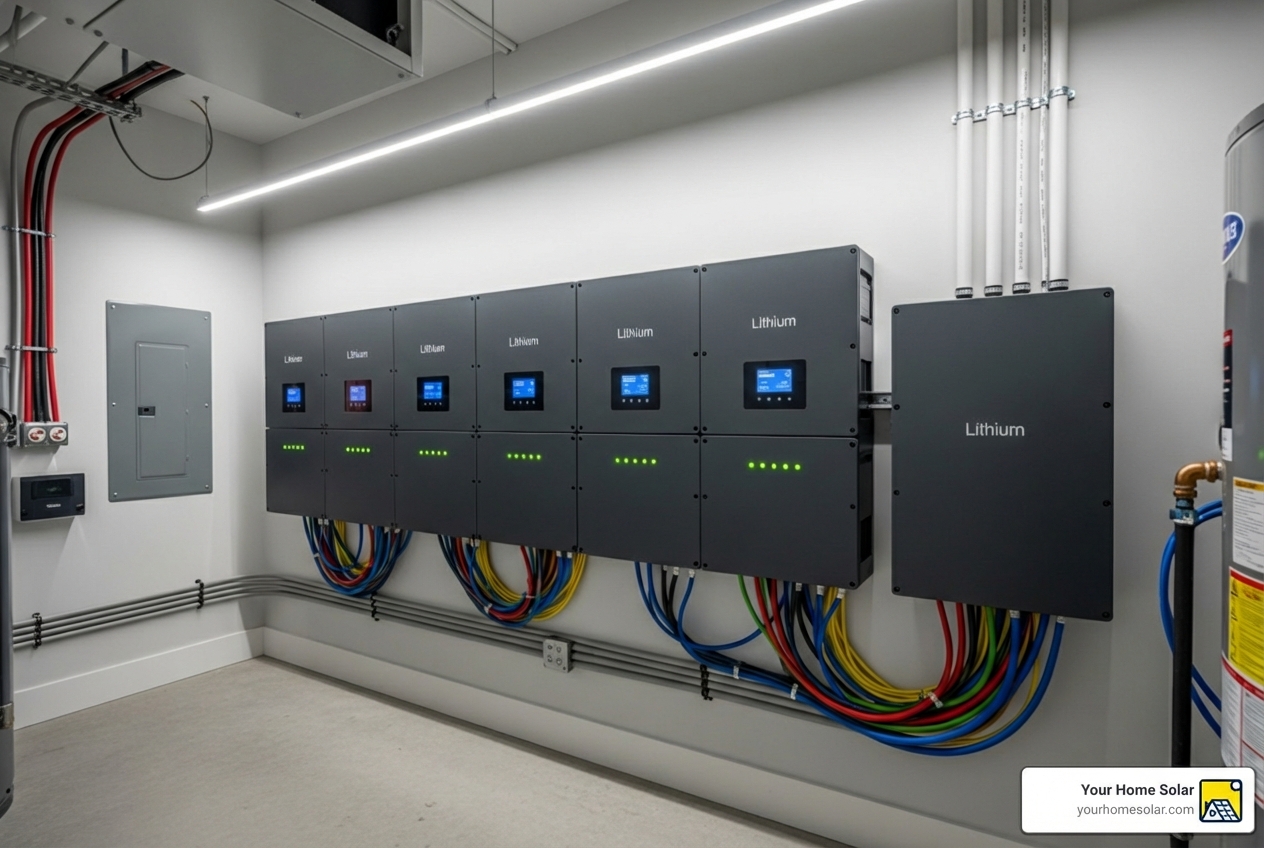
Batteries are the heart of an off-grid system, storing energy for use at night or on cloudy days. They are your personal power plant. Learn more in our guide on Everything You Need to Know About Residential Solar Battery Types: What’s Best?.
- Lead-Acid Batteries: The traditional, more affordable choice, but they require maintenance, have a shorter lifespan, and are sensitive to deep discharges.
- Lithium-ion Batteries (LiFePO4): The modern standard for off-grid living. They offer a much longer lifespan, are maintenance-free, more efficient, and can be discharged more deeply without damage. Self-heating models are an excellent choice for cold East Tennessee winters.
Battery capacity is measured in kilowatt-hours (kWh) and determines how long you can run your home without sun.
Inverters: Converting Power for Your Appliances
The final crucial component is the inverter, which converts the DC power from your batteries into the AC power your household appliances use. For an in-depth look, explore The Ultimate Guide to Solar Inverters.
- Modified Sine Wave Inverters: A less expensive option that can power basic appliances but may damage sensitive electronics.
- Pure Sine Wave Inverters: Produces clean, grid-quality power that is safe for all appliances, from refrigerators to computers and medical equipment. This is the recommended choice for any home system.
Your inverter’s capacity (in watts) must be large enough to handle the peak load of all appliances you might run simultaneously.
Sizing Your System: How to Choose the Right Off-Grid Solar Kit
Choosing the right size for your off grid solar kits is the most critical step for success. An undersized system means power shortages, while an oversized one is a wasted investment. This guide will help you find the perfect fit for your energy needs.
Step 1: Calculate Your Daily Energy Needs (Load Analysis)
Before choosing components, you must know how much electricity you use daily. This is called a load analysis.
- List Appliances: List every electrical device you plan to power.
- Find Wattage: Note the power consumption in watts (W) for each item from its label.
- Estimate Daily Use: Realistically estimate how many hours per day you’ll use each appliance.
- Calculate Daily kWh: For each appliance, multiply its wattage by its daily hours of use to get watt-hours (Wh). Sum these up and divide by 1000 to get your total daily kilowatt-hours (kWh).
Here’s a list of common appliance wattages to help you get started:
- Refrigerator (Energy Star): 100-200 W (runs 8-12 hours/day)
- LED Light Bulb: 7-15 W
- Laptop: 50-100 W
- Television (LED 40″): 50-100 W
- Microwave: 600-1500 W (short bursts)
- Coffee Maker: 800-1500 W (short bursts)
- Well Pump: 500-1500 W
- Ceiling Fan: 15-75 W
Step 2: Determine Your Battery Bank and Inverter Size
With your daily kWh calculated, you can size your battery and inverter.
- Battery Capacity: Your battery bank must store enough energy for your daily needs, plus a buffer for cloudy days (known as “days of autonomy”). If you use 4 kWh per day and want 2 days of autonomy, you’ll need at least 8 kWh of usable battery storage.
- Inverter Size: Your inverter must handle the maximum power (in watts) drawn by all your AC appliances running at the same time. Sum the wattage of all concurrent appliances to find your peak load and choose an inverter with a slightly higher capacity.
Step 3: Calculate Your Solar Array Size
Finally, determine how many solar panels you need to generate your required energy.
- Find Peak Sun Hours: This is the daily average of intense sunlight your location receives, which varies by season. East Tennessee has good solar resources, but winter hours are lower.
- Factor in Inefficiencies: Account for energy loss in wiring and components (typically 20-30%).
- Calculate Panel Wattage: A simplified formula is: (Daily kWh consumption / Peak Sun Hours) * 1.5 (Safety Factor) = Required Solar Panel Wattage. The safety factor accounts for weather and system losses.
For example, if you use 4 kWh (4000 Wh) per day and get 4 peak sun hours: (4000 Wh / 4 hours) * 1.5 = 1500 watts of solar panels needed.
This methodical approach ensures your off grid solar kits are perfectly sized. Going completely off-grid is a big decision; learn more about its feasibility in our region by reading Can My East Tennessee Home Be 100% Off Grid? It Depends..
The Benefits and Long-Term Value of Going Off-Grid
Choosing off grid solar kits is a lifestyle choice with tangible benefits for your wallet, peace of mind, and the environment.
Energy Independence and Resilience
The core promise of going off-grid is freedom. You disconnect from the utility grid, freeing yourself from rising electricity costs and unexpected rate hikes. For remote properties, like a cabin in the Smoky Mountains, off-grid is often the only practical choice.
Most importantly, off-grid systems provide unparalleled resilience. When severe weather causes a grid blackout—a common event in East Tennessee—your lights stay on, your food stays cold, and your home remains powered. This provides invaluable peace of mind.
Financial Savings and Return on Investment (ROI)
While the initial investment is significant, the long-term savings are substantial. You eliminate monthly electricity bills forever, saving tens of thousands of dollars over the system’s lifespan. Federal solar Tax Credits & Incentives can also dramatically reduce the upfront cost. A well-designed system increases your property value by offering self-sufficiency and lower operating costs. Learn how we calculate your savings in How Your Home Solar Evaluates Your Solar Savings in East Tennessee.
Off-Grid vs. Other Power Solutions
Here’s how off-grid solar compares to other power options:
| Feature | Off-Grid Solar Kits | Grid-Tied Solar Systems | Traditional Gas Generators |
|---|---|---|---|
| Cost | High initial investment, no ongoing utility bills | Moderate initial investment, reduced utility bills | Low initial purchase, high ongoing fuel & maintenance costs |
| Reliability | High; unaffected by grid blackouts | No power during grid outages without battery backup | Moderate; depends on fuel supply and mechanical upkeep |
| Maintenance | Low; panel cleaning, occasional checks | Very Low; occasional panel cleaning | High; requires fuel, oil changes, and regular testing |
| Environmental Impact | Very Low; clean, renewable energy | Very Low; clean, renewable energy | High; emissions, noise pollution, fossil fuel use |
Off grid solar kits are the clear winner for remote locations, complete energy independence, or ultimate resilience. For even greater security, integrating a backup generator provides a robust hybrid solution for periods of low sun or high demand. We explore this in Comparing Solar with Traditional Gas Generators for East Tennessee Homes.
Installation, Maintenance, and Troubleshooting for Your Off-Grid Solar Kits
A well-installed and maintained system will provide reliable power for decades. Understanding the process and basic care is key to getting the most from your investment.
The Installation Process: DIY vs. Professional
Installing off grid solar kits can be a DIY project for small systems, but whole-home solutions require professional expertise.
DIY Considerations:
- Electrical Skills: A strong understanding of electrical wiring and safety is non-negotiable. Mistakes can be dangerous.
- Simple Kits: Smaller, plug-and-play kits for RVs or tiny homes are often designed for DIY installation.
- Challenges: You may face wiring issues, mounting difficulties, or local code complications.
Benefits of a Professional Installer: For larger systems, we strongly recommend hiring a certified professional like Your Home Solar.
- Expertise & Safety: We ensure your system is properly sized, safely installed to code, and optimized for performance across East Tennessee.
- Efficiency & Warranties: Professional installation protects equipment warranties and ensures all components work together efficiently.
- Permitting: We handle all necessary permits and inspections.
Learn more about our process in What to Expect During a Solar Installation for Your East Tennessee Home.
Essential Maintenance for System Longevity
Off grid solar kits are low maintenance, but regular care ensures peak performance.
- Clean Solar Panels: Periodically rinse panels to remove dirt, pollen, and leaves that reduce efficiency.
- Check Connections: Inspect wiring and battery terminals for tightness and signs of wear or corrosion.
- Monitor Performance: Use your system’s monitoring app to track power production and battery health, which helps you spot issues early.
For more tips, visit Solar Energy Maintenance 101: Tips for Keeping Your System Running Smoothly.
Troubleshooting Common Issues with off grid solar kits
Here’s how to approach common problems:
- Low Power Output: Check for shading on panels, clean them if dirty, and check your controller for error codes. Overcast days will naturally lower production.
- Batteries Not Charging: Verify all wiring is secure, check the charge controller for errors, and ensure your energy usage isn’t exceeding your solar production.
- Inverter Error Codes: An overload error means you’re running too many appliances at once. A low voltage error means your batteries are depleted. Check connections, and if the problem persists, consult your manual or a professional.
For any complex or high-voltage issues, it’s always safest to call a professional technician.
Frequently Asked Questions
Here are answers to some of the most common questions about off grid solar kits.
What are the different types of off-grid solar kits available?
Off-grid kits are diverse and designed for a wide range of needs and budgets. They generally fall into three categories:
- Pre-packaged Kits: Designed for specific uses like RVs, boats, or small cabins. These kits often include everything needed for a basic setup.
- Customizable Kits: This modular approach allows you to select each component (panels, controller, batteries, inverter) to perfectly match your energy needs and installation challenges, which is ideal for the varied terrain of East Tennessee.
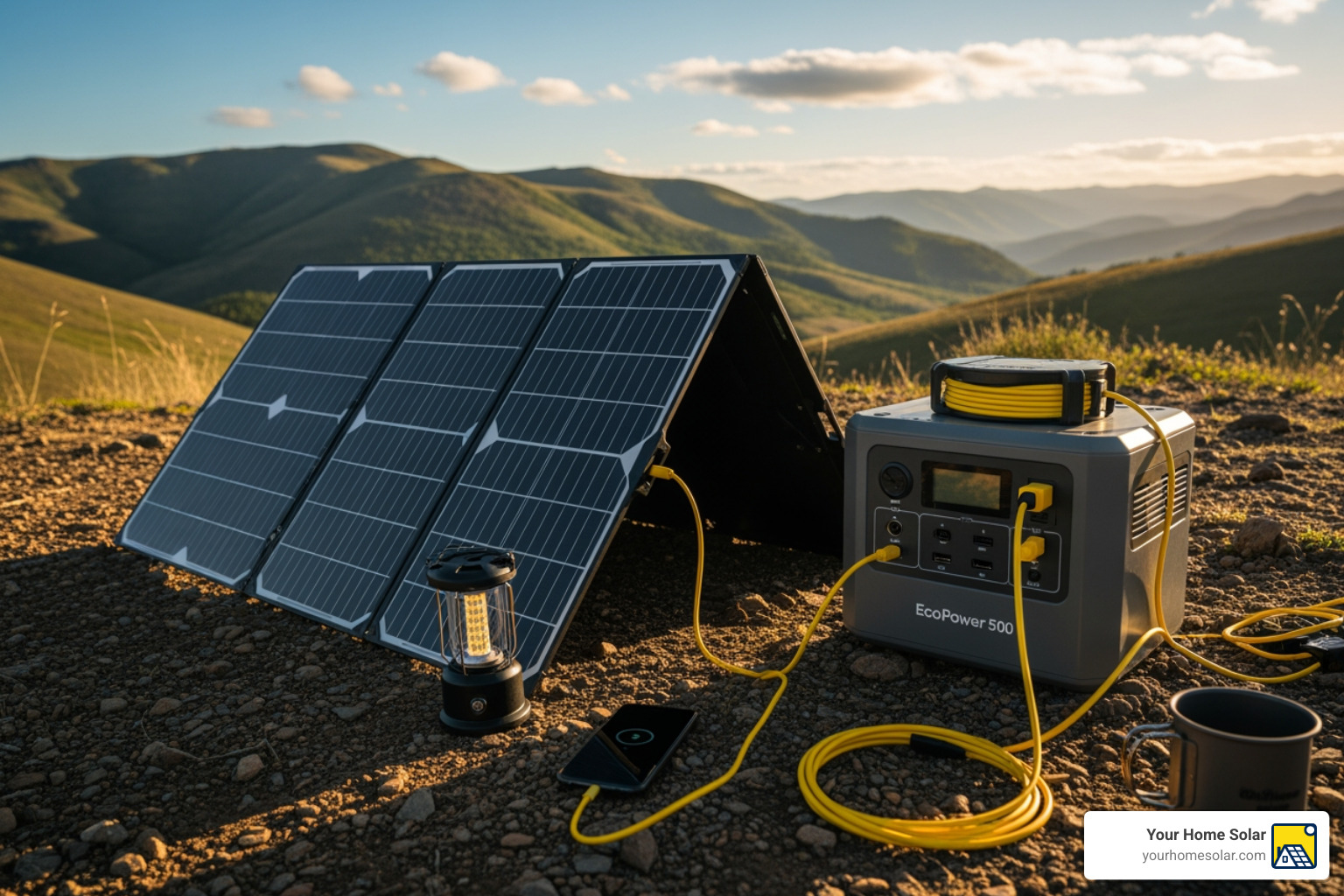
- All-in-One Power Boxes: These popular units combine the charge controller, battery, and inverter into a single, often portable box. You simply connect your solar panels and appliances.
What is the typical cost range for off-grid solar kits?
Costs vary significantly based on size, capability, and component quality.
- Small Portable Kits (Camping/RV): $200 to $1,500
- Medium Cabin/RV Kits: $1,500 to $10,000
- Full Home Systems: $25,000 to $70,000+
Key cost factors include the system’s total wattage (kW), the type and size of the battery bank (lithium is more expensive but better), inverter capacity, and professional installation costs.
Can my off-grid system be expanded in the future?
Yes, most off grid solar kits are designed to be modular and expandable. As your energy needs grow, you can add more panels and batteries. The ability to expand depends on the capacity of your initial charge controller and inverter. It’s wise to plan for future expansion when first designing your system, ensuring your initial investment remains valuable for years to come. We can help you design a scalable system from the start.
Conclusion: Your Path to Energy Independence
Going off-grid is an empowering step towards self-sufficiency, financial freedom, and a sustainable lifestyle. While the prospect of disconnecting from the traditional power grid might seem daunting, the availability and sophistication of modern off grid solar kits make this dream more attainable than ever before. Success begins with a well-planned system custom to your unique energy needs, ensuring every component, from the high-efficiency solar panels to the robust battery bank and reliable inverter, works harmoniously.
For residents in East Tennessee, navigating this journey with a trusted local expert ensures a safe, reliable, and rewarding installation. Here at Your Home Solar, we pride ourselves on our trusted expertise and 100% customer satisfaction. We offer custom, reliable, and rewarding installations, whether you’re powering a remote mountain retreat in Sevier County, seeking backup power for your home in Knoxville, or embracing full energy independence in Johnson City.
We understand the unique challenges and opportunities of our region, from specific weather patterns to local regulations. Our team is dedicated to designing and installing the perfect off-grid solution for your property, providing you with peace of mind and true energy freedom.
Ready to take control of your power? Explore Your Residential Solar Solutions and let us help you build a sustainable future.