Why Understanding Solar Panel Cost Per Watt Matters for Your Investment
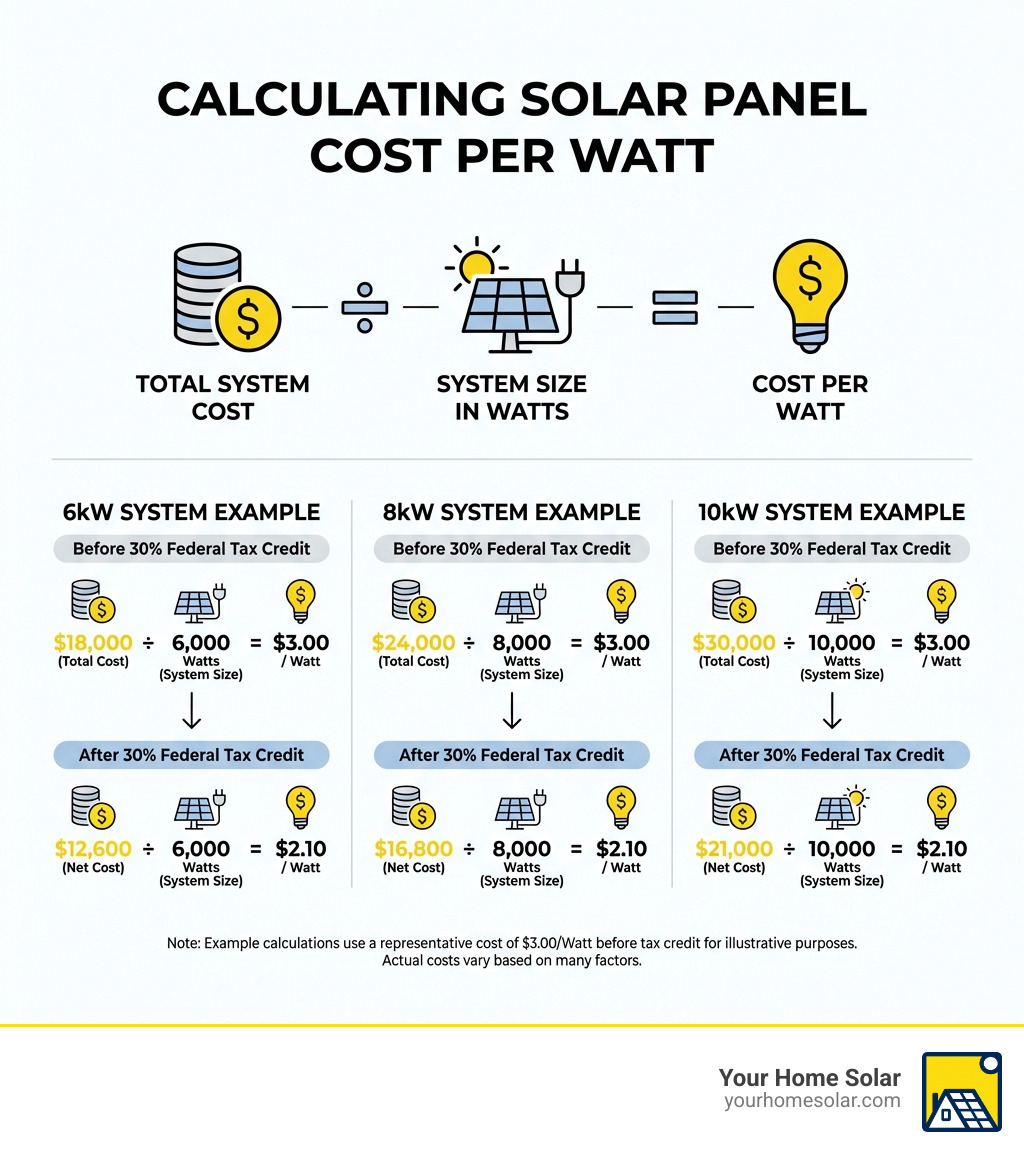
The average solar panel cost per watt in the United States is currently $3.03 for residential installations. Key price points include:
- Residential: $2.53 to $3.15 per watt (before incentives)
- Commercial: Approximately $1.83 per watt
- Utility-scale: Around $1.06 per watt
- With financing: Averages $3.62 per watt due to interest and dealer fees
- After federal tax credit: Net cost drops by 30% to roughly $1.77 to $2.21 per watt
For a typical 7.2 kW system, the cash price is about $21,816, while a loan might bring the total to $26,004. While that seems steep, the long-term electricity savings make solar a worthwhile investment.
Understanding cost per watt is the key to comparing quotes fairly and making a confident decision. However, this number is just a starting point. Factors like equipment quality, roof complexity, and local incentives all influence your final price. For homeowners in East Tennessee, knowing what a fair price looks like is crucial for protecting your investment.
I’m Ernie Bussell, founder of Your Home Solar. I’ve spent years helping East Tennessee homeowners steer their solar options, and my goal is to provide the clarity you need to make an informed choice about your energy future.
What is the Average Solar Panel Cost Per Watt in the US?
The average solar panel cost per watt is a benchmark for understanding the expense of going solar. While your specific costs will vary, it’s a useful starting point.
According to data from sources like the National Renewable Energy Laboratory and the U.S. Energy Information Administration, the national average solar panel cost per watt for residential installations is around $3.03. In Tennessee, the average is slightly lower at approximately $2.97 per watt. For a typical 6.7 kW system in the state, this translates to about $21,198 before incentives, or $14,839 after the federal tax credit.
Understanding the Average Cost Per Watt for Residential Solar
Residential solar installations are designed to offset a household’s electricity use, with systems typically ranging from 3 kW to 10 kW. Using the national average of $3.03 per watt, a common 7.2 kW system would cost around $21,816 if purchased with cash. This price includes panels, inverters, racking, labor, and other “soft costs.”
Many homeowners finance their systems, which increases the overall cost. The average cost per watt for a loan can climb to $3.62 due to interest and dealer fees, which often add nearly 20% to the loan principal. For that same 7.2 kW system, a 20-year loan could bring the total cost to over $31,000. It’s crucial to understand the full financial picture, not just the initial price.
How Commercial and Utility-Scale Costs Differ
It’s helpful to see how costs change for larger projects. Commercial and utility-scale solar benefit from economies of scale, resulting in a lower average solar panel cost per watt.
Commercial installations average around $1.83 per watt. Businesses buy equipment in bulk and spread fixed costs (like permitting and design) over a larger system, reducing the per-watt price.
Utility-scale systems (over 2 MW) are even more cost-effective, averaging just $1.06 per watt. Their massive scale allows for maximum efficiency in every aspect of the project. This highlights why residential systems have a higher per-watt cost—they are custom-designed and involve more individualized labor.
Key Factors That Influence Your Final Cost Per Watt
The average solar panel cost per watt is a starting point, but your final investment is shaped by several key factors unique to your home. Just like buying a car, the base price changes with added features and specific conditions. Understanding these factors is key to getting an accurate estimate for your home in East Tennessee.
Solar Equipment: Panels and Inverters
The equipment you choose is a primary driver of your average solar panel cost per watt. Not all panels and inverters are created equal in price or performance.
Here’s a look at the main types of solar panels:
| Panel Type | Average Price Per Watt | Efficiency & Lifespan |
|---|---|---|
| Thin-Film Panels | $1.50 to $2.50 | Cheaper due to less material and simpler manufacturing; lower efficiency and shorter lifespans, but versatile. |
| Polycrystalline Panels | $2.00 to $3.00 | Made from melted silicon fragments, offering a balance of cost and efficiency; good for larger, less space-constrained installations. |
| Monocrystalline Panels | $2.50 to $3.50 | Made from pure silicon, offering the highest efficiency and durability; sleek design, ideal for limited roof space and maximizing energy output. |
Monocrystalline panels are often preferred in East Tennessee for their high efficiency, which maximizes energy production on limited roof space.
Inverters, which convert DC electricity to usable AC electricity, are also critical. String inverters are cheaper but can be less efficient if a panel is shaded. Microinverters are more expensive but optimize each panel’s performance, making them ideal for roofs with complex shading. Our team at Your Home Solar can help you select the right equipment for your needs. For more details, see our The Ultimate Guide to Solar Inverters.
How System Size Impacts the Average Solar Panel Cost Per Watt
Counterintuitively, a larger solar system often has a lower average solar panel cost per watt. This is due to economies of scale. Many “soft costs” like permits, design, and inspection are fixed regardless of system size. On a larger system, these fixed costs are spread across more watts, driving the per-watt price down.
Here’s how the cost per watt typically decreases as system size increases:
- 4kW system: ~$3.64 per watt
- 5kW system: ~$3.36 per watt
- 6kW system: ~$3.19 per watt
- 7kW system: ~$3.07 per watt
- 8kW system: ~$2.98 per watt
- 9kW system: ~$2.92 per watt
- 10kW system: ~$2.86 per watt
While a larger system has a higher total price, you often get more value on a per-watt basis.
Installation and Roof Characteristics
Your home’s physical characteristics, especially your roof, directly impact labor costs and your average solar panel cost per watt. A simple, south-facing roof is ideal, but complex roofs with multiple angles, dormers, or steep pitches require more labor and safety equipment, increasing the cost. We also assess shading from trees or chimneys, which might require a more complex layout or microinverters. Finally, your roof’s age and condition are vital; we may recommend repairs before installation to avoid the significant cost of removing and reinstalling panels later. These factors, along with local labor rates, contribute to the final installation price. Our Power Your Home with Top Solar Installation Services account for all these details to ensure a safe and cost-effective installation.
Beyond the Panels: Additional System Costs
When calculating the average solar panel cost per watt, it’s important to consider components beyond the panels themselves. These additions can improve your system’s aesthetics, resilience, and energy independence.
The Cost of Solar Shingles and BIPV
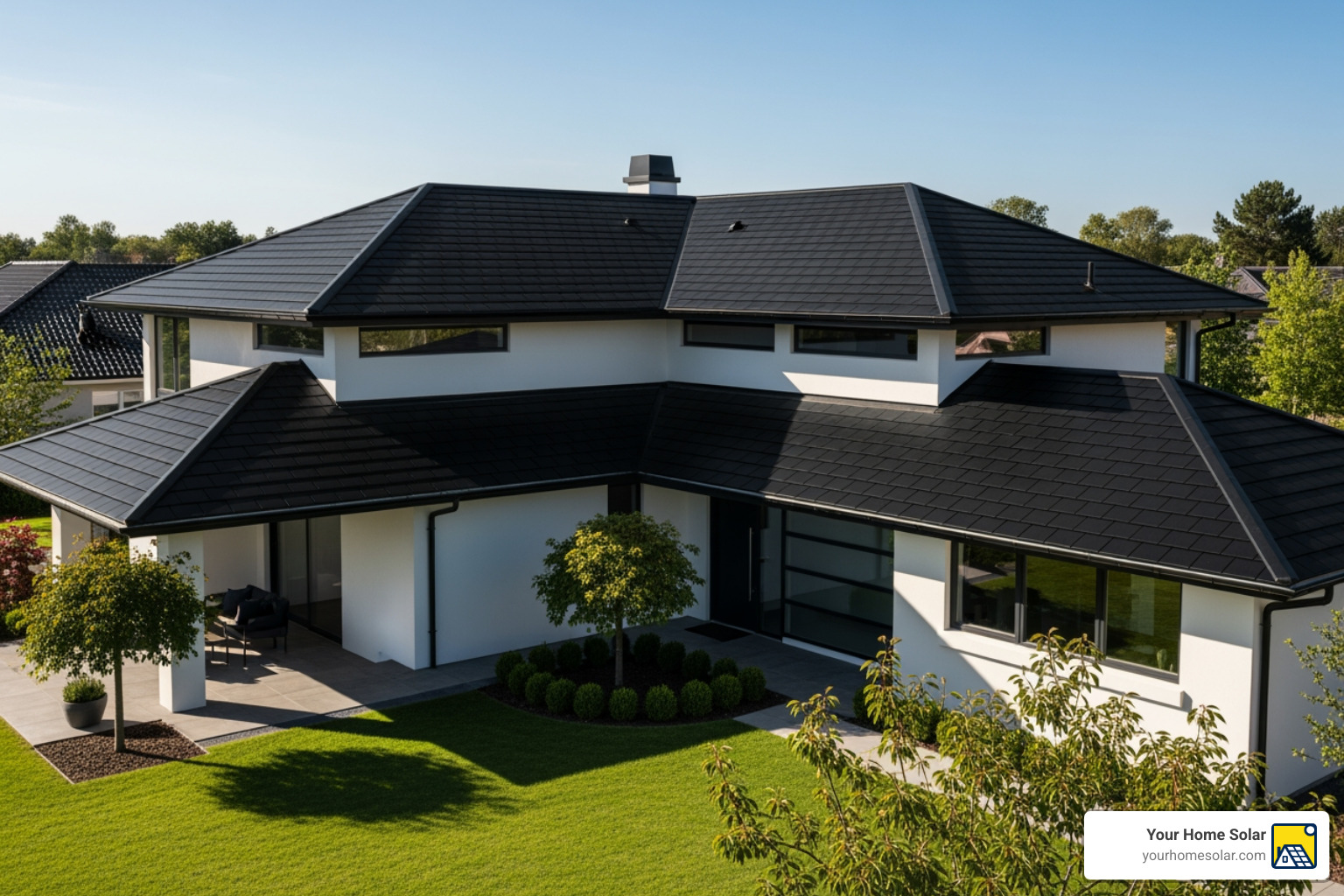
For homeowners prioritizing aesthetics, solar shingles and Building-Integrated Photovoltaics (BIPV) offer a seamless look by integrating directly into the roof. This dual-functionality—providing both weather protection and electricity generation—comes at a premium.
- Average Cost Per Watt for Solar Shingles: Typically ranges from $4.00 to $7.50. This reflects their specialized manufacturing and complex installation.
- Average Cost Per Watt for BIPV: Averages between $3.00 to $4.50.
While more expensive than traditional panels, these options can be a worthwhile investment for those seeking a sophisticated, integrated look. However, their efficiency can sometimes be lower than traditional panels due to less ventilation.
Factoring in Solar Battery Storage
For true energy independence and resilience, especially in East Tennessee where power outages are a concern, solar battery storage is a key addition. A battery stores excess solar energy for use at night or during grid outages, keeping your essential appliances running.
- Energy Independence & Backup Power: A battery reduces your reliance on the grid and provides crucial backup power, offering security and peace of mind.
- Average Cost of Battery Systems: Adding a battery can increase your total system cost by $15,000 or more, depending on its capacity and technology.
- Impact on Total System Cost Per Watt: Integrating a battery raises the total system cost, which increases the effective average solar panel cost per watt. You’re investing more to gain valuable storage capabilities.
Despite the added expense, many homeowners find battery storage invaluable. Learn more in our guide on Residential Solar Power Explained: Benefits, Tips, and More.
How Incentives Dramatically Reduce Your Effective Cost
Understanding the sticker price of solar is one thing, but understanding the effective cost after incentives is where the real magic happens. Government programs, both federal and local, are designed to encourage solar adoption, and they can dramatically reduce your out-of-pocket expenses and accelerate your return on investment.
These incentives are a cornerstone of making solar a financially viable option for homeowners in East Tennessee. They help bridge the gap between the initial investment and the long-term savings, making clean energy more accessible and affordable.
The Federal Residential Clean Energy Credit
The most significant incentive for residential solar in the United States is the Federal Residential Clean Energy Credit, often referred to as the federal solar tax credit.
- 30% Tax Credit Explained: This credit allows you to deduct 30% of the total cost of your solar energy system from your federal income taxes. This isn’t just a deduction; it’s a dollar-for-dollar reduction in your tax liability. This powerful incentive applies to new installations and is set to remain at 30% until 2032, making now an excellent time to invest.
- Eligible Expenses: The credit applies to the entire cost of your solar system, including the panels, inverters, mounting equipment, wiring, labor for installation, and even any battery storage systems installed concurrently with your solar panels.
- How it Lowers Your Net Cost: For an average 7.2 kW system costing $21,816, the 30% federal tax credit would save you approximately $6,544. This brings the effective cost of that system down to $15,272. This reduction significantly lowers your average solar panel cost per watt and makes solar much more affordable.
We always advise our clients in Sevierville, Farragut, and surrounding areas to consult with a tax professional to understand how this credit applies to their specific financial situation. For official details, you can refer to the IRS information on the Residential Clean Energy Credit.
State and Local Incentives
Beyond the federal tax credit, homeowners in Tennessee may also be eligible for various state and local incentives that further reduce the cost of going solar. These programs can vary, so it’s always worth exploring what’s available in your specific county or municipality.
Here are some potential types of incentives that can impact your average solar panel cost per watt:
- Property Tax Exemptions: In some areas, adding solar panels increases your home’s value without increasing your property taxes. This is a valuable benefit, as it means you gain the increased home value and energy savings without a corresponding rise in your annual tax bill.
- Sales Tax Exemptions: Some states offer exemptions from sales tax on solar equipment, which can shave a few percentage points off your upfront costs.
- Utility Rebates: Local utility companies, such as TVA or specific municipal power providers in East Tennessee, sometimes offer rebates or incentives for installing solar. These can come in the form of direct payments or credits on your electricity bill.
- State-Specific Tax Credits: While Tennessee doesn’t currently offer a statewide income tax credit specifically for solar similar to some other states, the landscape of incentives can change. It’s always best to stay informed.
At Your Home Solar, we’re dedicated to helping our clients steer these opportunities. We often guide homeowners through the available programs in Knox County, Blount County, Hamilton County, and other areas we serve. To keep up-to-date on all the savings opportunities, check out our comprehensive Solar Incentives Tennessee 2026 Guide. Our goal is to ensure you claim every eligible incentive to maximize your savings.
Frequently Asked Questions about Solar Panel Costs
We understand that investing in solar brings up many questions. Here are answers to some common inquiries from East Tennessee homeowners.
Are solar panels a good investment?
Yes, for most homeowners, solar panels are an excellent investment. While the upfront cost is a factor, the long-term financial and environmental benefits are compelling.
- Payback Period: The average system pays for itself in electricity savings in about 10 years.
- Long-term Savings: After the payback period, you can enjoy 15-20+ years of free electricity, protecting you from rising utility rates.
- Increased Home Value: Homes with solar panels sell for about 4% more and 20% faster than comparable homes without them.
- Environmental Benefits: You’ll reduce your carbon footprint and support a cleaner environment.
For a deeper look, read Why Solar Panels for Homes Are a Smart Investment.
What are “soft costs” and why do they matter?
When discussing the average solar panel cost per watt, it’s crucial to understand “soft costs.” These are the non-hardware expenses that make up a significant portion of the final price.
- Definition of Soft Costs: Soft costs include everything besides the physical equipment: permitting and inspection fees, system design and engineering, installer overhead (insurance, office staff), customer acquisition, and profit margin.
- Percentage of Total Cost: Collectively, these soft costs can represent over 50% of your total system price. For example, the panels themselves might only be 12% of the cost, while soft costs like installer overhead and customer acquisition can be 19.5% and 15%, respectively.
Soft costs are a primary reason smaller systems have a higher average solar panel cost per watt, as these fixed expenses are spread over fewer watts.
How much do solar panels save on electricity bills?
The amount you save on your electricity bills with solar panels can be substantial, but it depends on several key factors:
- System Size: A larger system that generates more electricity will naturally offset a greater portion of your bill.
- Energy Usage: If your household uses a lot of electricity (e.g., over 11,500 kWh per year), you have more potential savings to capture.
- Local Rates: Homeowners in areas with higher electricity rates (e.g., over $0.17 per kWh) will see their savings accumulate faster, as each kilowatt-hour produced by solar is worth more. While Tennessee’s electricity rates are generally lower than the national average, they are subject to change, and solar provides stability against future rate hikes.
- Net Metering: This policy, available through many utilities in East Tennessee, allows you to send any excess electricity your panels generate back to the grid. In return, you receive credits on your bill, further reducing your overall energy costs. This ensures that every bit of power your system produces is put to good use.
At Your Home Solar, we conduct a thorough analysis of your historical energy consumption and local utility rates to provide a precise estimate of your potential savings. We’re committed to helping you understand How Your Home Solar Evaluates Your Solar Savings in East Tennessee, ensuring you make the most informed decision for your home and budget.
Get an Accurate Solar Quote for Your Home
While the national average solar panel cost per watt of $3.03 serves as a valuable benchmark, it’s crucial to remember that it’s just that—a benchmark, not a final price for your home. Your actual investment will be uniquely custom to your specific needs, property characteristics, and the incentives available to you in East Tennessee.
At Your Home Solar, we understand that every home in Knoxville, Oak Ridge, Maryville, and across our service areas is different. Your choice of equipment, the complexity of your roof, your family’s energy consumption, and the local incentives you qualify for will all play a role in determining your personalized cost per watt.
That’s why relying on trusted local expertise is key for an accurate assessment. We don’t believe in one-size-fits-all solutions. Instead, we offer comprehensive evaluations to design a solar system that meets your energy goals, fits your budget, and maximizes your long-term savings.
Ready to find out what solar could cost for your home and how much you could save? Contact Your Home Solar today for a personalized consultation. To understand all your options, explore our complete guide on the Cost and Financing of Solar Systems. We’re here to make your solar journey simple, transparent, and rewarding.