Why Residential Solar Power Systems Installation Matters for East Tennessee Homeowners
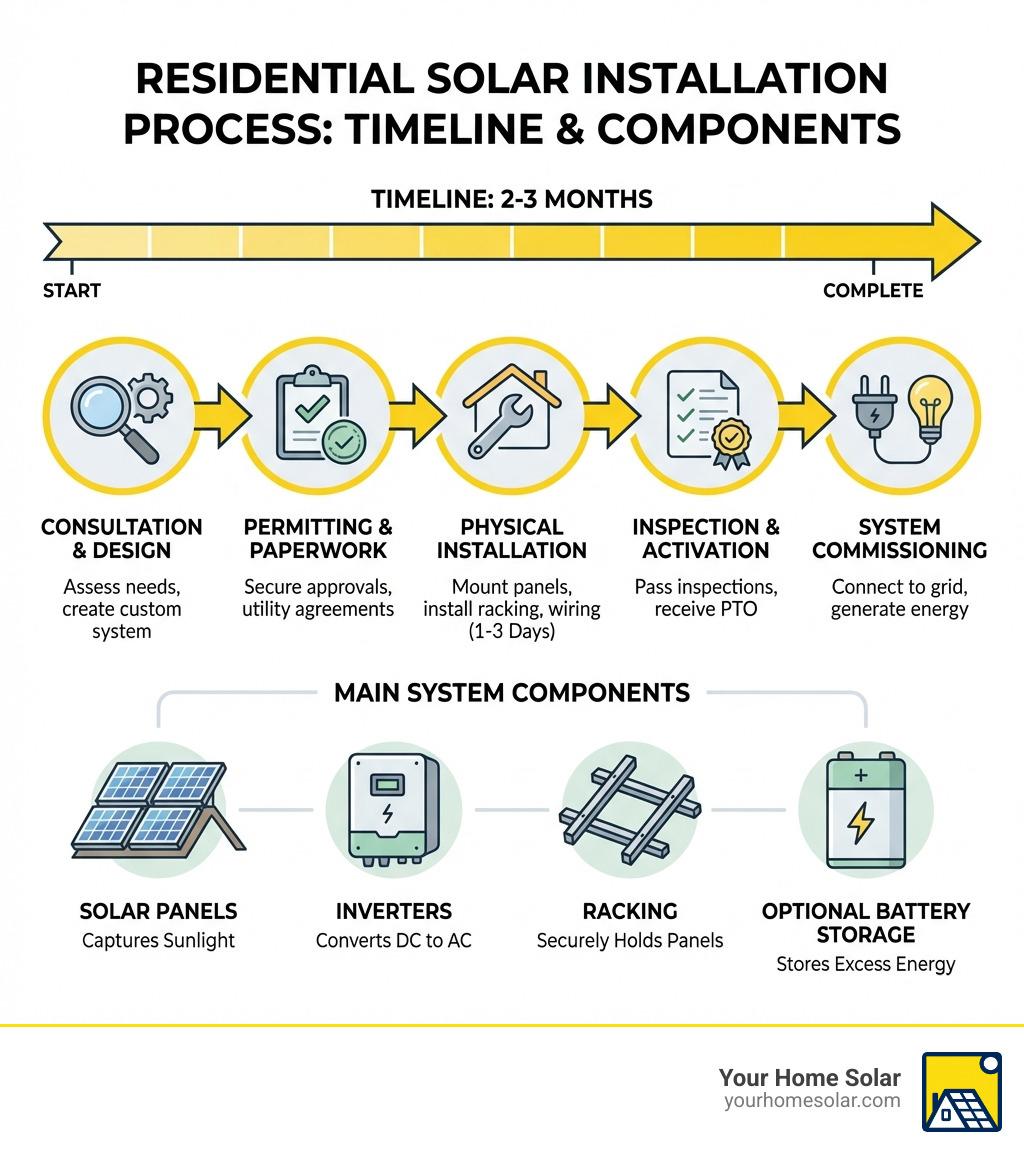
The residential solar power systems installation process takes about 2-3 months from consultation to activation. Here’s a breakdown:
Key Steps in the Installation Process:
- Consultation and Design – Assess your energy needs and create a custom system
- Permitting and Paperwork – Secure local permits, utility agreements, and HOA approvals
- Physical Installation – Mount panels, install racking, and complete electrical wiring (1-3 days)
- Inspection and Activation – Pass final inspections and receive Permission to Operate (PTO)
- System Commissioning – Connect to the grid and start generating clean energy
What You’ll Need:
- A roof in good condition (ideally less than 10 years old)
- 12 months of electricity bills to calculate system size
- South-facing roof space with minimal shading
- Space for inverters and potentially battery storage
East Tennessee homeowners face rising energy costs and frequent power outages. Solar offers a proven solution that delivers energy independence, long-term savings, and protection against utility rate increases.
The average solar installation costs between $25,000 and $30,000 before incentives, but federal tax credits and local rebates can significantly reduce your upfront investment. Most homeowners save around $60,000 over 25 years while protecting their households from grid failures.
I’m Ernie Bussell, founder of Your Home Solar. With a background in Navy nuclear operations and solar management, I’ve helped hundreds of East Tennessee families go solar. This guide uses our real-world experience to help you maximize your solar investment and avoid common pitfalls.
Pre-Installation: Is Your Home Ready for Solar?
Before starting your residential solar power systems installation, it’s crucial to determine if your home is a good candidate. This involves assessing several factors to ensure your investment is as effective as possible.
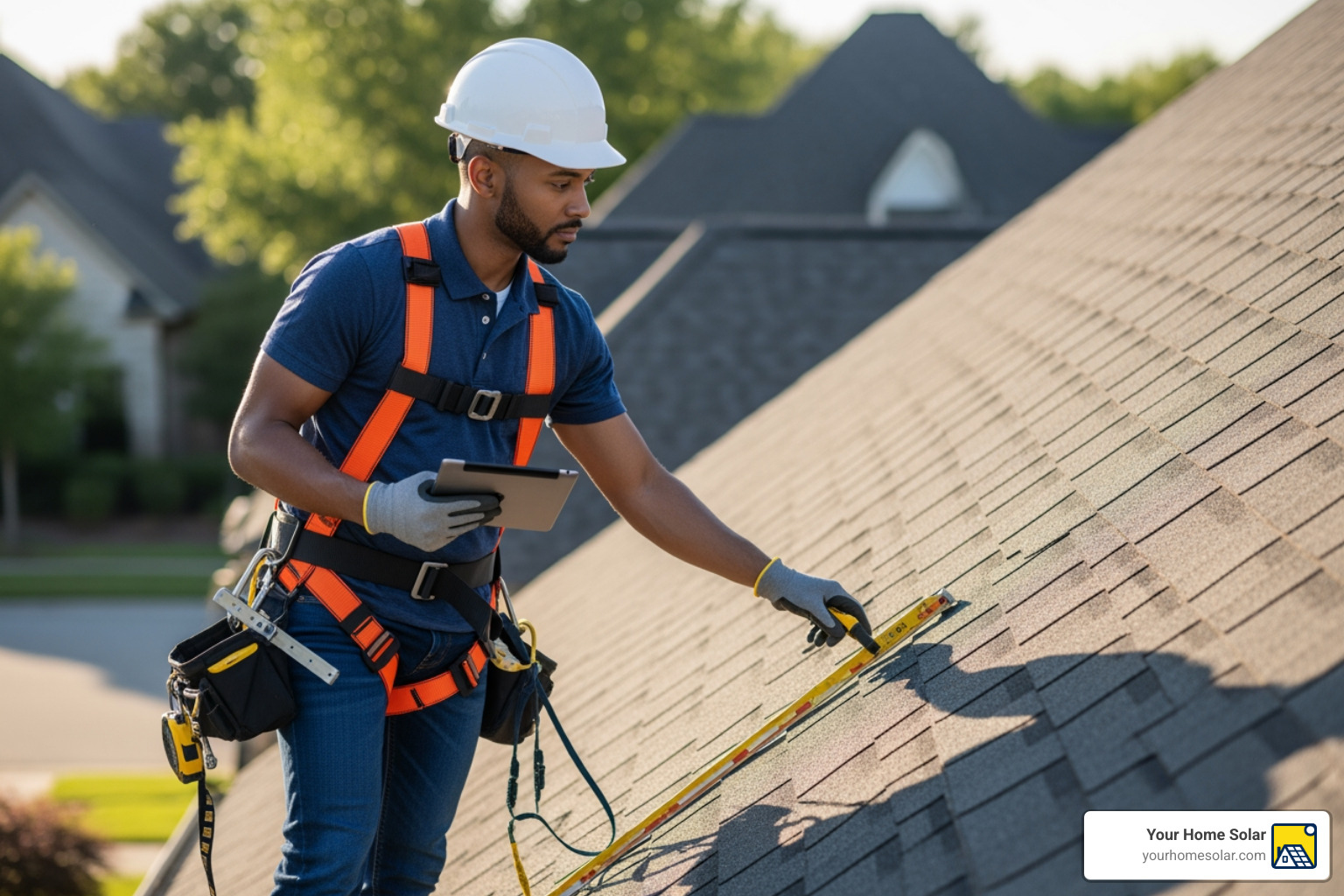
When we evaluate your home’s suitability for solar, we’ll look at key elements such as:
- Roof Condition and Age: Your solar array will last 25-30 years, so your roof must be in good condition to match that lifespan, ideally less than 10 years old. It’s more cost-effective to handle any needed roof repairs before installation to avoid the hassle and cost of removing the system later. You can learn more by reading our guide on Preparing Your Home for Solar Installation: What You Need to Know.
- Roof Orientation and Pitch: A south-facing roof is ideal in East Tennessee for maximum sun exposure, but east and west-facing roofs can also work well. Optimal roof pitches are between 5/12 and 18/12 (23º to 56º) for performance and snow shedding.
- Shading Analysis: Shade from trees or buildings can reduce a panel’s efficiency. We conduct a thorough shading analysis and design your system to minimize its impact, sometimes using micro-inverters to ensure shaded panels don’t affect the entire system’s output.
- HOA Approval: If you have a Homeowners Association (HOA), we’ll help you steer their regulations. While most HOAs are solar-friendly, some have aesthetic guidelines. We can help meet these requirements or explore alternatives.
We believe solar is a fantastic investment for most homeowners, but it’s not for everyone. If your home has significant structural issues, severe shading, or if you’re planning to move very soon, solar might not be the best fit. We’re always upfront about these factors, and you can explore more in our article Who Are Not Candidates for Solar?.
Assessing Your Energy Needs
Understanding your home’s energy consumption is paramount to designing an effective residential solar power systems installation.
We start with an electricity bill analysis, reviewing your past 12 months of bills to understand your annual and seasonal power consumption. This data helps us size your solar system correctly to meet your needs.
We also discuss your future energy usage. Planning to buy an EV, add a home office, or install a pool? We’ll factor these changes into your system design to ensure it remains adequate for years. We can even include EV Charger Installation Knoxville in your plan. Thinking ahead ensures your system remains adequate, maximizing your savings and energy independence.
For expert tips, check out our guide on Properly Sizing a Solar System for Your East Tennessee Home: Expert Tips.
How to Choose a Qualified Solar Installer
Choosing the right solar installer is a critical part of your long-term investment. Here are some questions to ask a potential installer:
- Are you familiar with local East Tennessee permitting and interconnection?
- Can you provide local customer references?
- Are you licensed and certified (e.g., North American Board of Certified Energy Practitioners – NABCEP)?
- What are the system warranties, and who handles operation and maintenance?
- Do you have any pending judgments or liens against your company?
- What is the total installed cost (hardware, labor, permits)?
- What is the system’s capacity (kW) and estimated energy production (kWh)?
- What maintenance is required, and is it included?
- Who handles utility interconnection and inspections?
- Who monitors system performance?
- Who is the contact for system issues?
We recommend vetting installers thoroughly. Ask for proof of licensure and insurance (we are fully insured with a 5MM Commercial Liability Policy). Check online reviews and get at least three comparable bids for your residential solar power systems installation. Pay close attention to both equipment and workmanship warranties.
For more insights, visit our pages on Expert Solar Installers in Knoxville, TN and Avoiding Solar Scams.
Understanding Your System: Components and Options
When we talk about residential solar power systems installation, we’re referring to a sophisticated setup designed to capture sunlight and convert it into usable electricity for your home. It’s an integrated solution that brings energy independence right to your doorstep.
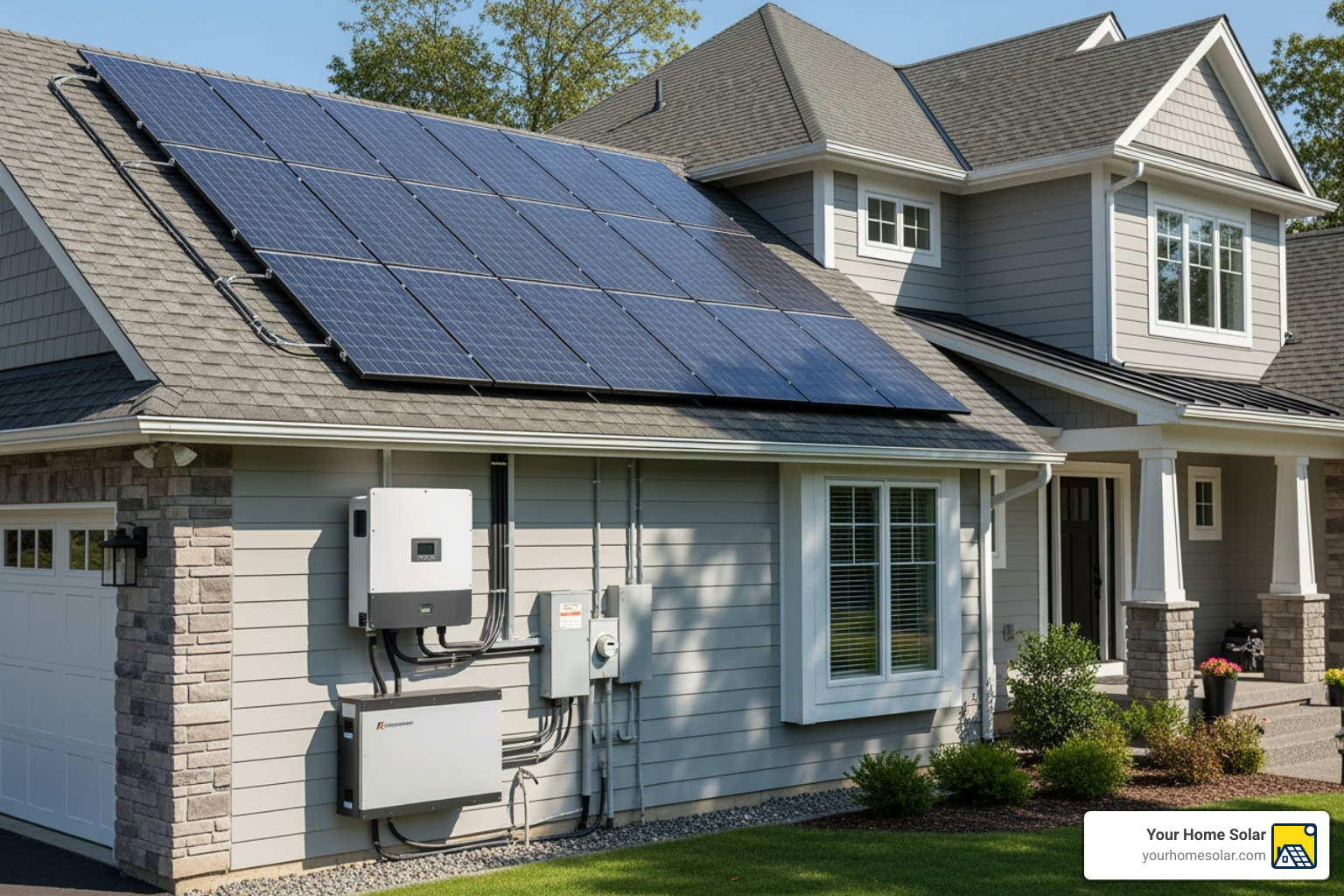
Today’s systems are more efficient, reliable, and aesthetically pleasing than ever before. We encourage you to dive deeper into the science behind it all with our Comprehensive Guide to Understanding Solar Panels.
Main Components of a Residential Solar System
Let’s break down the essential elements you’ll find in most residential solar power systems installation:
- Solar Panels (Photovoltaic): Solar panels, made of photovoltaic (PV) cells, convert sunlight into direct current (DC) electricity. Panel power ratings typically range from 250 to over 400 Watts. We use high-quality panels to maximize your energy production.
- Inverters (DC to AC Conversion): Inverters convert the DC electricity from your panels into the alternating current (AC) used by your home and the grid. The main types are:
- String Inverters: These manage a series, or “string,” of panels.
- Micro-inverters: Mounted under each panel, they convert DC to AC at the panel level, which is ideal for roofs with partial shading.
- Power Optimizers: These optimize DC power at each panel before sending it to a central string inverter. We’ve got a detailed breakdown in The Ultimate Guide to Solar Inverters.
- Racking: Racking is the mounting system that secures panels to your roof. We use durable, weather-resistant systems bolted into roof joists for pitched roofs or weighted ballasts for flat roofs to ensure a secure, long-lasting installation.
- Battery Storage: Battery storage is a popular option for storing excess solar energy. This allows you to use solar power at night or during a power outage, providing energy independence and critical backup power. Our guide, The Ultimate Guide to Solar Batteries and Energy Storage Solutions, explains more.
System Types: Grid-Tied, Hybrid, and Off-Grid
When planning your residential solar power systems installation, we’ll help you choose the right system type:
- Grid-Tied Systems: The most common and economical option, grid-tied systems connect your solar panels to the utility grid. You send surplus power to the grid and draw from it when your panels aren’t producing enough energy, like at night.
- Net Metering Explained: With net metering, your utility credits you for surplus electricity sent to the grid. You can use these credits to offset the cost of electricity you draw from the grid, maximizing your savings. Find out more in Do East Tennessee Utility Companies Buy Back Solar Power? Find Out Here!.
- Note: Standard grid-tied systems do not provide backup power during a grid outage for safety reasons.
- Grid-Tied with Battery (Hybrid) Systems: A hybrid system adds battery storage to a grid-tied setup. You get the benefits of net metering plus backup power during an outage. When the grid goes down, your batteries automatically provide power to your home, offering resilience and peace of mind. Learn why these are excellent for emergency power in Why Solar Panels for Homes Are the Best Choices for Emergency Power Backup.
- Off-Grid Systems: Off-grid systems are not connected to the utility grid, providing complete energy independence. They rely on solar panels and a large battery bank to meet all electricity needs. While offering ultimate freedom, they are more complex and expensive, often requiring a backup generator. Explore the possibilities of Living Off the Grid: How Solar Energy Can Make It Possible.
The 5-Step Residential Solar Power Systems Installation Process
We’ve streamlined the residential solar power systems installation process into a clear, five-step path. While the physical installation only takes 1-3 days, the full process from consultation to activation is typically two to three months due to permitting and utility timelines.
Let’s walk through what you can expect during your solar installation:
Step 1 & 2: Consultation and System Design
Our process begins with an initial consultation to understand your energy goals and review 12 months of electricity bills. We’ll also discuss future plans, like adding an EV charger, to size your system correctly.
Next, we move to custom system design. Our team analyzes your roof’s orientation, pitch, and shading to create an efficient, cost-effective system custom to your home. We then present a comprehensive proposal detailing the equipment, design, and expected savings.
Step 3: Permits and Paperwork for Your Residential Solar Power Systems Installation
This step can be the longest, but we handle all the paperwork for your residential solar power systems installation.
- Local Permits: We prepare and submit all documentation to your local building department to secure permits, ensuring your system meets all safety and structural codes. Learn more at Local solar permits.
- Utility Interconnection Agreement: We work with your local utility (TVA, KUB, etc.) to get the agreement that allows your system to connect to the grid for net metering.
- Homeowners Association (HOA) Approval: We assist in getting approval from your HOA to meet their guidelines.
We keep you informed throughout this process, which can take several weeks.
Step 4 & 5: Physical Installation and System Activation
With approvals secured, our certified team begins the physical residential solar power systems installation, which usually takes 1-3 days.
- Racking and Panel Installation: We securely install the racking system on your roof, sealing all penetrations, and then mount the solar panels.
- Electrical Wiring: Our team wires the panels to the inverters and connects the system to your home’s electrical panel according to the highest safety standards.
- Final Inspections and Activation: After installation, local inspectors and your utility company conduct final inspections. Once they grant Permission to Operate (PTO), we activate your system, and you start generating clean energy.
You can see a detailed overview on our Our Process page and learn more in What to Expect During a Solar Installation for Your East Tennessee Home.
Costs, Incentives, and Long-Term Value
Investing in a residential solar power systems installation delivers remarkable long-term value through savings, incentives, and increased home value. While the average pre-incentive cost is $25,000 to $30,000, most homeowners save around $60,000 over the system’s 25-year lifespan.
Solar is a tangible asset that increases your home’s value and provides energy independence by locking in energy costs. This protects you from unpredictable utility rate hikes and saves you money for years to come. Read more about this in How Solar Energy Can Increase Your Property Value and Unlocking Your Home’s Potential: How Solar Energy Can Save You Money.
Understanding the Costs of Residential Solar Power Systems Installation
The total cost of your residential solar power systems installation depends on several factors:
- Price Per Watt: This metric helps compare costs, and it has decreased dramatically over the last decade.
- System Size: Larger systems cost more but offset more of your electricity bill. We design the most cost-effective system for your goals.
- Equipment Quality: The brand and efficiency of panels, inverters, and batteries affect the cost. Higher-quality components often have better warranties and performance.
Dig into this topic further in our Cost and Financing of Solar Systems guide.
We offer several financing options to make solar accessible:
- Purchasing Outright: Offers the lowest long-term cost and allows you to claim all incentives.
- Solar Loans: These reduce upfront costs, and your monthly payment can be less than your old electricity bill. Some programs let you integrate solar financing into your mortgage.
- Solar Leases and PPAs: These options have no upfront cost, but a third party owns the system. You pay a fixed monthly rate (lease) or a set price per kWh (PPA) but are not eligible for tax credits.
For a comprehensive look, we recommend the Homeowner’s Guide to Solar Financing from the Clean Energy States Alliance.
Solar Incentives and Rebates
Incentives can significantly reduce the net cost of your residential solar power systems installation.
- Federal Solar Tax Credit (ITC): This valuable credit allows you to deduct 30% of your system’s cost from your federal taxes for systems installed through 2032.
- State, Local, and Utility Incentives: East Tennessee may offer other programs like property tax exemptions or utility rebates. We stay current on all available incentives to maximize your savings. For a detailed look, check out our Solar Incentives Tennessee 2026 Guide and Tax Credits & Incentives.
Maintenance, Lifespan, and Performance
Solar systems are remarkably low-maintenance, designed for decades of reliable operation with no moving parts.
| Task | Frequency | Notes |
|---|---|---|
| Panel Cleaning | Annually or as needed | Rain often keeps panels clean, but dusty environments or coastal areas (not relevant to East Tennessee) might require occasional cleaning with water to remove debris, pollen, or bird droppings. |
| System Monitoring | Ongoing (via app) | Keep an eye on your system’s performance through the monitoring app. Ensure your internet connection is stable for continuous data. Reconnect monitoring if your internet provider or password changes. |
| Vegetation Trimming | As needed | Trim any growing tree branches that might begin to shade your panels, impacting their efficiency. |
| Inverter Firmware Updates | As recommended by manufacturer | Your installer may perform these during routine checks or if a specific issue arises. |
| Component Inspection/Replacement | Rarely; under warranty if issues arise | If a component fails, your installer will diagnose and replace it under warranty. |
| Electrical System Check | Periodically (by qualified technician) | A professional can ensure all wiring and connections remain secure and efficient. |
Solar panels have a lifespan of 25 to 30 years, while inverters typically last 10 to 12 years. Major components come with robust product and performance warranties, and we provide a workmanship warranty for our installation. Solar panels are built to handle East Tennessee’s weather:
- Snow: Light snow melts quickly, and while heavy snow can temporarily reduce output, this is factored into annual production estimates.
- Clouds: Panels still produce power on cloudy days, just at a reduced rate.
- Temperature: Panels are slightly less efficient in extreme heat, but our designs account for local climate to ensure optimal year-round performance.
For a deep dive, check out How to Maintain and Extend the Lifespan of Your Home Solar Panels, Solar Panel Durability: How Long Do They Last?, and Home Solar Energy Output: How Temperature Affects Performance.
Conclusion
Starting on a residential solar power systems installation is a major decision with profound benefits for your finances, home, and the environment. This guide has covered the essential steps, from home readiness and system components to the installation process and financial incentives.
Our key takeaways are simple: solar energy is a robust, reliable, and affordable solution for East Tennessee homeowners. It offers long-term savings, increased home value, energy independence, and a smaller carbon footprint.
Making an informed decision is crucial. Partnering with a trusted local expert like Your Home Solar ensures a reliable and rewarding installation custom to your needs. We pride ourselves on our expertise and 100% customer satisfaction, delivering custom installations that last.
Ready to harness the power of the sun for your home? Explore our residential solar solutions to get started and let us help you achieve energy independence!