What a 24kW Home Backup Generator Can Run
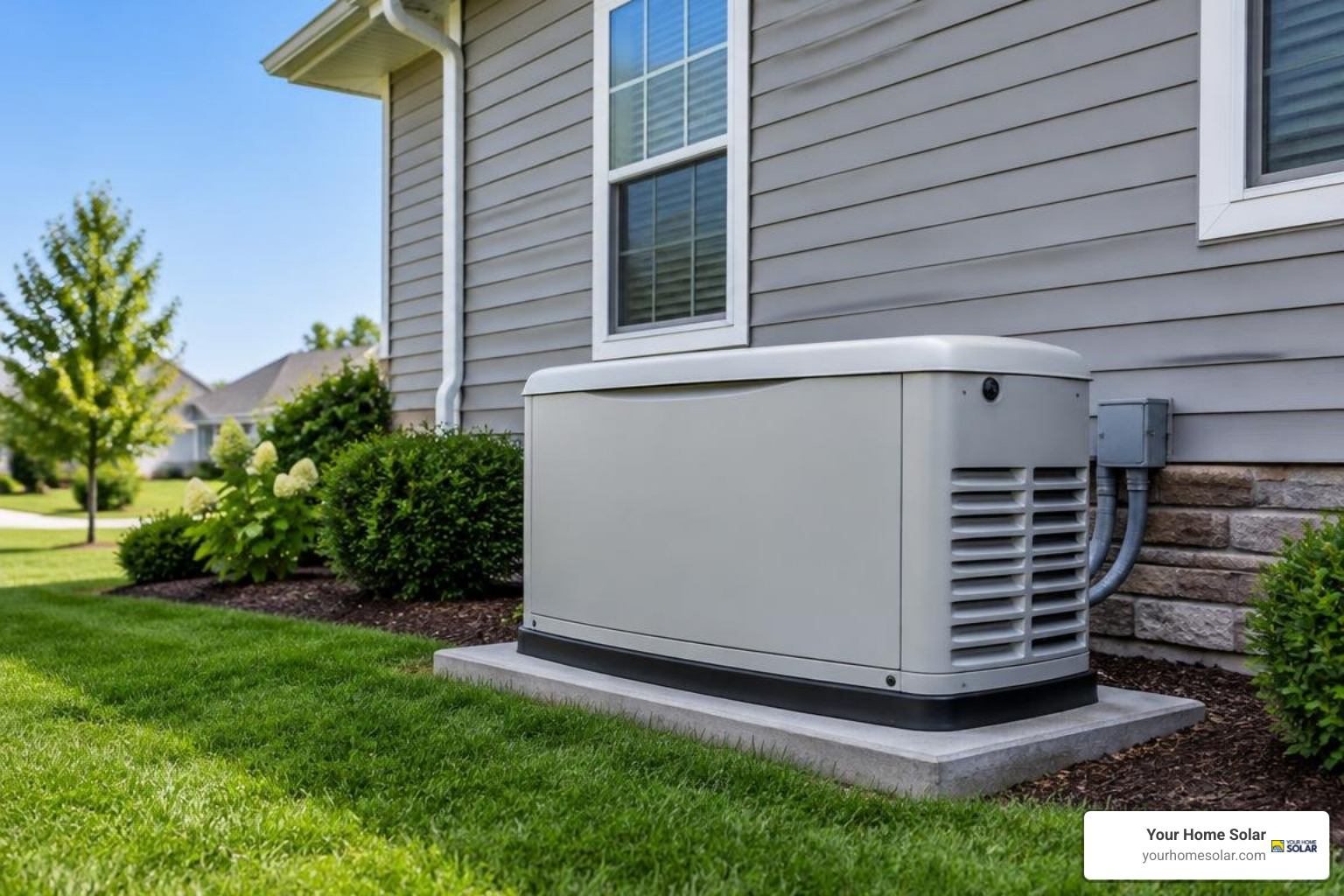
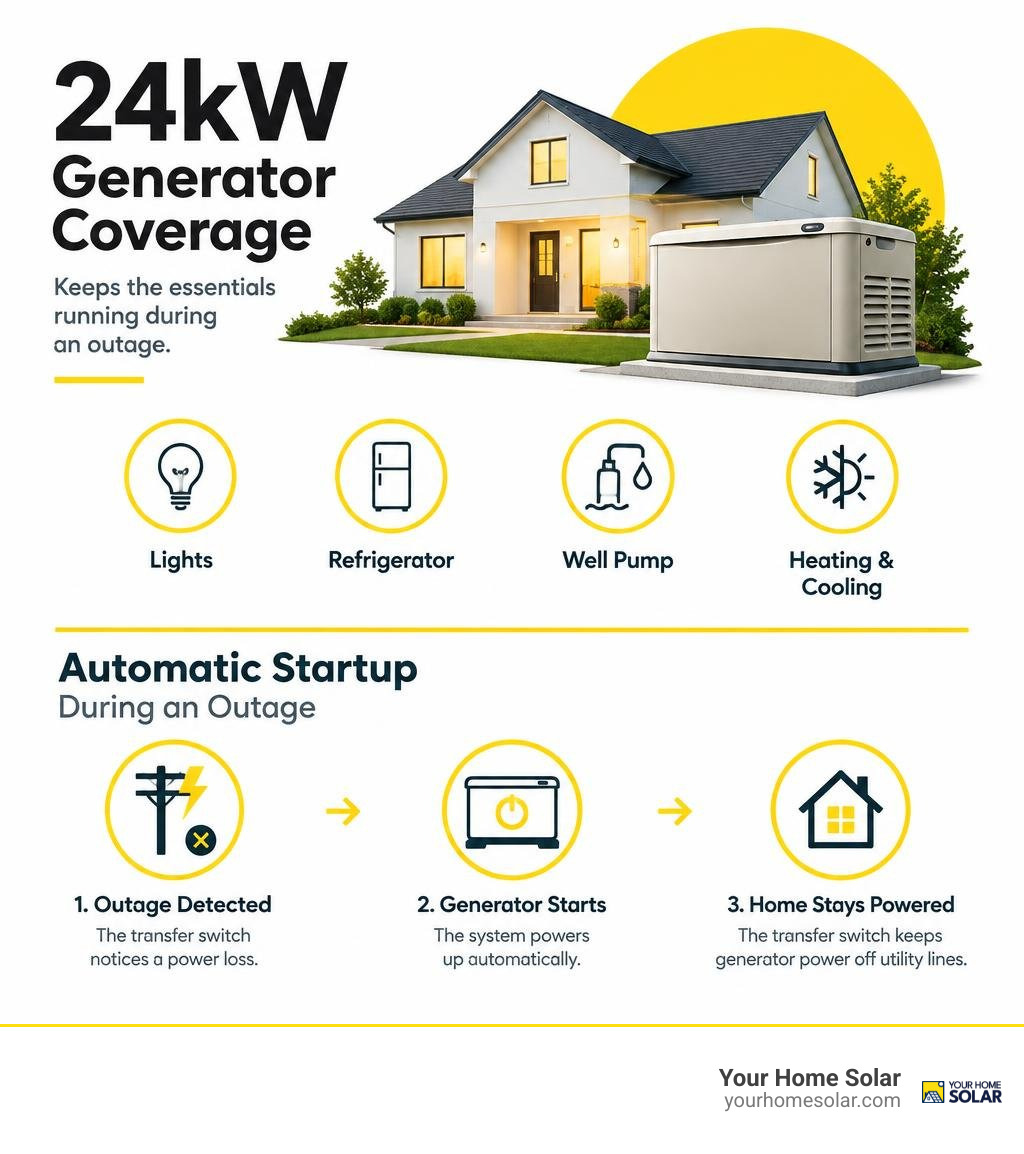
A 24kw home backup generator can provide up to 24,000 watts of power. That is enough for many homes to keep lights, a refrigerator, a well pump, and heating or cooling running during an outage. It does not guarantee that every appliance can run at once. Actual coverage depends on the generator’s fuel type, your home’s power use, and the extra power motors need when they start.
Unlike a portable generator, a standby unit starts automatically when an automatic transfer switch detects an outage. The switch also keeps generator power from flowing back onto utility lines.
I’m Ernie Bussell, founder of Your Home Solar. My Navy quality assurance work and years leading home energy projects shape how I evaluate whether a 24kw home backup generator is a safe, practical fit for a home.
24kw home backup generator terms to know:
Capacity and Coverage: What a 24kW Home Backup Generator Can Power
When we look at modern residential backup power, a 24kW generator represents the upper tier of air-cooled standby capacity. Rated for up to 24,000 watts of continuous electrical output on liquid propane (and slightly lower, typically around 21,000 watts, on natural gas), a unit of this size delivers 100 amps of continuous power at 240 volts. That amount of juice transforms how your household experiences a blackout across East Tennessee.
To understand real-world capacity, we perform a whole-house electrical load calculation. We tally your continuous running loads alongside the starting wattage required by high-demand appliances. A 24kW unit easily covers essential systems and luxury circuits simultaneously:
- Heavy HVAC Systems: Standard 3-ton to 5-ton central air conditioning units and high-efficiency heat pumps.
- Water Infrastructure: Deep well pumps (often pulling 1,500 to 2,500 running watts) and sump pumps.
- Water Heating & Laundry: Hybrid or standard electric water heaters, plus high-voltage clothes dryers and washing machines.
- Kitchen Essentials: Multiple refrigerators, deep freezers, electric ranges, induction cooktops, and microwaves.
- Modern Necessities: Home automation hubs, security systems, mesh Wi-Fi networks, and critical medical devices like oxygen concentrators or CPAP machines.
Reviewing comprehensive backup generator options gives you a clear sense of how sizing changes your lifestyle during severe weather. With a 24kW unit, you rarely have to choose between keeping the milk cold and keeping your living room comfortable.
Sizing Comparison: 24kW Home Backup Generator vs. Smaller Standby Units
Choosing between a 24kW system and smaller standby units (such as 14kW or 18kW models) comes down to whole-home coverage versus selective load shedding. Smaller units require critical-circuit subpanels or strict digital load management, meaning certain appliances stay locked out until primary motors cycle off.
A 24kW generator eliminates most power deficits for medium to large homes:
| Generator Size | Continuous Running Watts | Starting Surge Capacity | Typical Home Square Footage | Major Appliances Supported Simultaneously |
|---|---|---|---|---|
| 14kW Unit | ~14,000 W (LP) / ~12,000 W (NG) | ~16,000 W | Up to 2,000 sq. ft. | 1 central A/C unit, refrigerator, lights, basic outlets, well pump (with load shedding). |
| 18kW Unit | ~18,000 W (LP) / ~16,000 W (NG) | ~20,500 W | 2,000 to 3,000 sq. ft. | 1 large A/C unit, well pump, water heater, refrigerator, microwave, and lights. |
| 24kW Unit | ~24,000 W (LP) / ~21,000 W (NG) | ~27,000 W | 3,000 to 5,000+ sq. ft. | 2 central A/C units or heat pumps, well pump, electric range, water heater, and all standard circuits. |
How a 24kW Home Backup Generator Handles Surge Demands and Voltage Spikes
The true test of any backup generator is not just handling steady electrical loads, but weathering sudden motor inrush spikes. When large inductive loads—like an air conditioner compressor, deep well pump, or refrigerator motor—kick on, they demand three to five times their normal running wattage for a fraction of a second.
A 24kW system features advanced digital voltage regulation and electronic governors that respond instantaneously to these surge demands. By stabilizing the sine wave and maintaining clean, utility-grade electricity with low total harmonic distortion (THD), the unit prevents lights from flickering and shields sensitive microprocessors in computers, smart TVs, and variable-speed HVAC drives from harmful voltage dips.
Fuel Sources and Operational Runtimes: Natural Gas vs. Liquid Propane
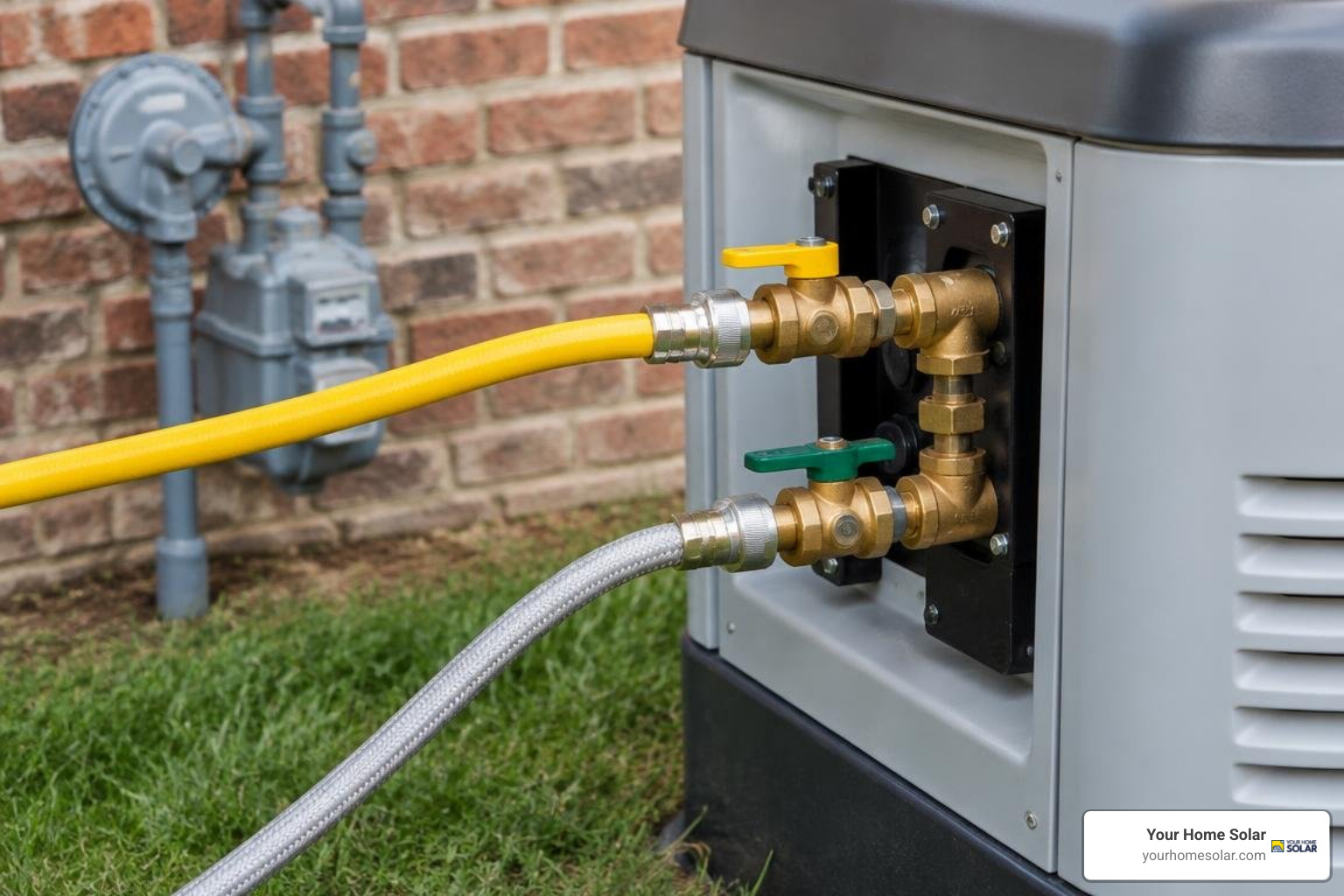
A standby generator relies on a steady fuel supply to keep your home energized for days or weeks at a time. Most 24kW units are configured with dual-fuel capability, engineered to run on either municipal natural gas or stationary liquid propane (LP) tanks.
Natural Gas Reliability vs. Propane Storage Needs
Natural gas hookups offer unmatched convenience because the fuel flows directly from your municipal utility line. You never have to schedule a fuel truck, monitor tank gauges, or worry about deliveries being delayed during icy mountain road conditions. However, natural gas has a slightly lower energy density than propane, which Derates the top-end electrical capacity of the engine by roughly 10% to 15%.
Liquid propane offers maximum power output, allowing the engine to produce its full 24,000-watt rating. Propane also does not degrade over time, making it ideal for on-site emergency fuel storage. The trade-off is logistical: you must install a dedicated 500-gallon or 1,000-gallon tank on your property and monitor your reserves during prolonged outages.
Fuel Consumption Rates and Grid Independence
Understanding fuel consumption is vital for emergency planning. A 24kW standby unit burns fuel proportionally to the electrical load it supports:
- At 50% Electrical Load (~12kW output): Consumes approximately 2.0 to 2.4 gallons of liquid propane per hour, or roughly 200 to 240 cubic feet of natural gas per hour.
- At 100% Full Load (~24kW output): Consumes approximately 3.5 to 3.9 gallons of liquid propane per hour, or roughly 310 to 350 cubic feet of natural gas per hour.
When operating off a standard 500-gallon propane tank (filled to an 80% working capacity of 400 gallons), large whole-house generators run from 120 to 250 hours under typical cycling conditions. That gives your family 5 to 10 days of continuous off-grid security before needing a fuel delivery.
Professional Installation, Concrete Pads, and Automatic Transfer Switches
Installing a permanent standby generator is a specialized home improvement project that requires certified electrical labor, structural mounting, and precise gas plumbing. Equipment purchase prices for modern whole-house generators generally fall between $3,400 and $7,000, while total installation costs range from $5,000 to $10,000 or more depending on gas line distance, panel upgrades, and site preparation. Homeowners can review our detailed breakdown of professional generator installation costs to plan their budget accurately.
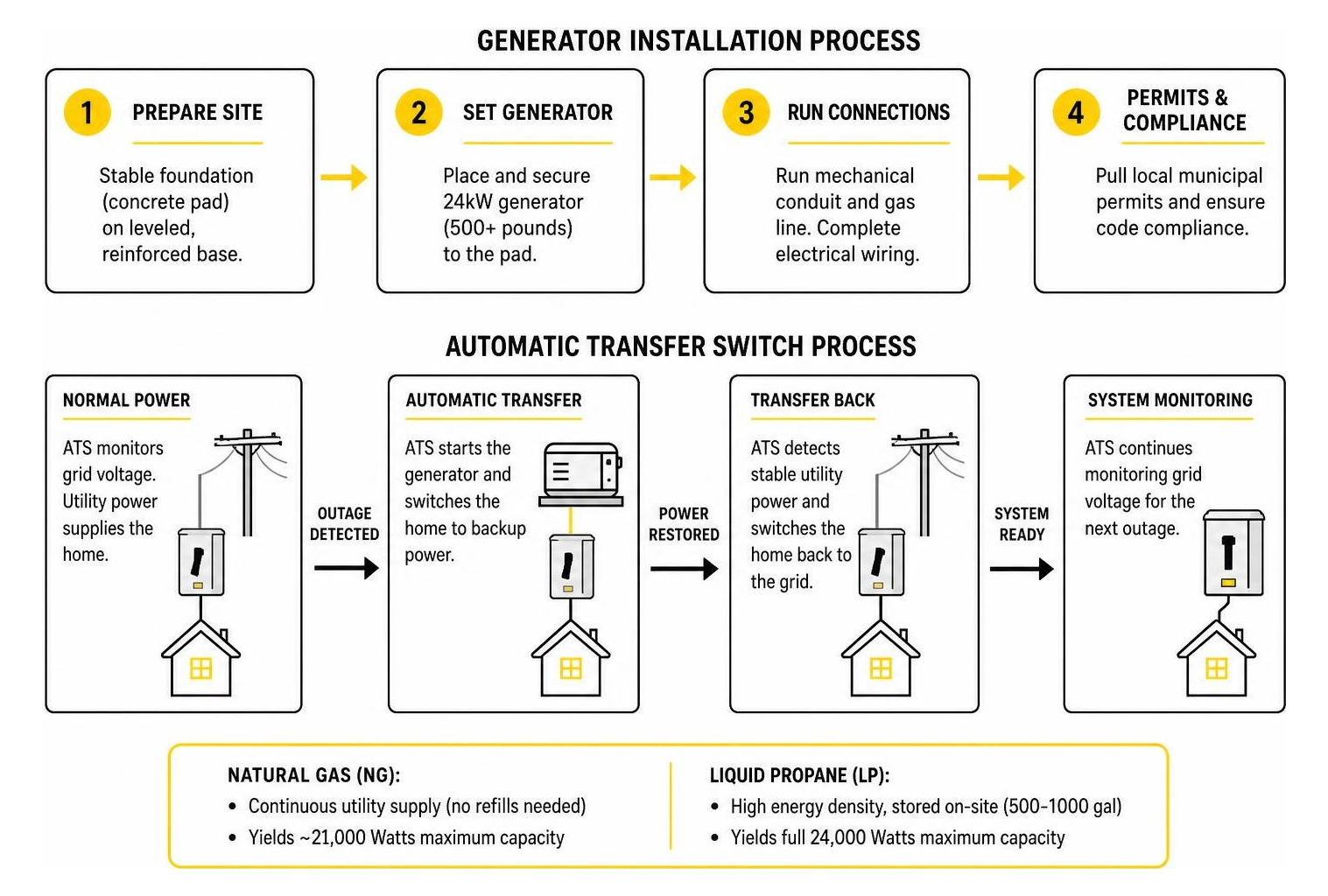
Every installation begins with a stable foundation. A 24kW generator weighs upwards of 500 pounds and vibrates during operation, requiring a leveled, reinforced concrete pad or an engineered composite pad set over crushed stone. Certified technicians secure the chassis, run mechanical conduit, and pull local municipal permits to ensure code compliance.
The Role of the Automatic Transfer Switch in Outage Response
The automatic transfer switch (ATS) acts as the brain of your backup system. Hardwired between your main utility meter and the distribution panel, the ATS constantly monitors grid voltage:
- Utility Failure Detection: When grid power drops below acceptable voltage thresholds, the ATS signals the generator engine to start.
- Warm-Up and Verification: Within 10 to 20 seconds, the generator reaches operational speed and stabilizes its output frequency.
- Load Transfer: The ATS safely disconnects your home from the utility grid and engages generator power.
- Backfeeding Prevention: This mechanical isolation prevents electricity from backfeeding into neighborhood power lines, protecting utility line workers from dangerous high-voltage shocks.
- Seamless Utility Restoration: When grid power returns and stays stable for several minutes, the switch transfers your home back to utility power and runs the generator through a brief cool-down cycle.
Site Preparation, Clearance Rules, and Carbon Monoxide Safety
Stationary engines produce exhaust fumes containing carbon monoxide (CO), an odorless, colorless gas that poses severe health hazards if mismanaged. In 2025, the CPSC reported findings from a case study of CO poisoning incidents involving stationary generators in Louisiana following Hurricane Ida, documenting 105 homes that suffered CO exposure caused by stationary units.
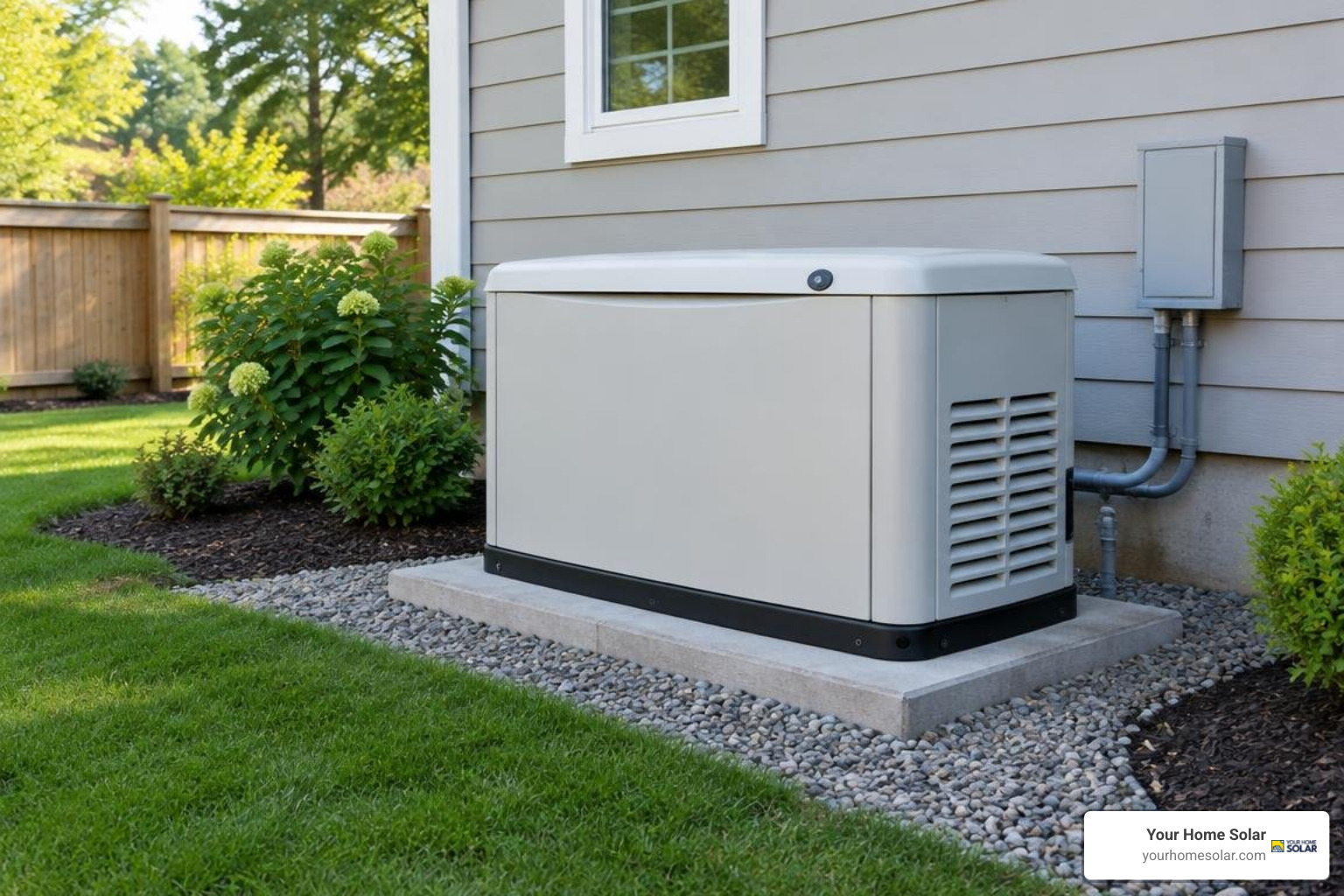
Preventing carbon monoxide intrusion requires strict adherence to safety standards:
- Distance Clearances: The CPSC recommends installing a standby generator at a distance of 25 feet from the home and neighboring structures whenever lot dimensions allow.
- Opening Setbacks: Keep the exhaust port at least 5 feet away from operable windows, exterior doors, dryer vents, soffit openings, and fresh-air HVAC intakes.
- Structural Sealing: Caulk and seal any plumbing penetrations or foundation gaps near the installation footprint.
- Alarm Installations: Install UL 2034-certified carbon monoxide detectors on every level of your home, especially near sleeping quarters, and test them regularly.
Standby Generators and Solar for Whole-Home Resilience
While a 24kW standby unit delivers dependable brute-force power during winter ice storms or summer grid failures, relying solely on fossil fuels has inherent limits during multi-week crises. Fuel supplies can dwindle, propane delivery trucks may struggle on blocked mountain roads, and ongoing fuel costs add up quickly.
That is why many homeowners across Knox County, Blount County, and Sevier County combine clean rooftop solar energy, battery storage, and standby generators into a hybrid microgrid. Solar panels carry daytime household loads and recharge battery banks for quiet nighttime operation, while the standby generator automatically fires up only when solar reserves run low or when high-draw heat pumps require heavy starting surges.
We walk through the direct advantages of pairing these technologies in our guide comparing solar systems with traditional gas generators. This unified setup lowers your overall fuel burn, extends engine life, and guarantees complete energy independence year-round.
Frequently Asked Questions About Whole-Home Power Backup
How long can a whole-house generator run continuously during an extended outage?
A standby generator can run continuously for multiple days or weeks, provided it has an uninterrupted fuel supply (such as municipal natural gas or a large propane tank) and adequate motor oil levels. However, small air-cooled engines require routine maintenance during prolonged operation. Most manufacturers recommend shutting the engine down every 48 to 100 hours of continuous runtime to check the oil level, top off fluids, and inspect air filters.
What is the average total cost to buy and install a 24kW unit?
The total investment typically ranges between $9,000 and $16,000. The 24kW generator and matched 200-amp automatic transfer switch usually cost between $4,500 and $6,500. Professional installation—including the concrete mounting pad, electrical wiring, gas line plumbing from the meter or propane tank, municipal permitting, and commissioning—adds $4,500 to $9,500 depending on your property layout.
What ongoing maintenance does a standby generator require?
Standby generators feature automated self-diagnostic test cycles (exercising the engine for 5 to 12 minutes weekly or bi-weekly) to keep internal components lubricated and verify battery readiness. Homeowners should schedule an annual service inspection to replace synthetic motor oil, change spark plugs, install fresh oil and air filters, and test transfer switch operation under load.
Conclusion
A 24kW home backup generator delivers the peace of mind that comes with knowing severe weather, failing transformers, and rolling blackouts will not disrupt your family’s routine. From keeping high-draw heat pumps running during freezing winter nights to keeping medical gear, food storage, and well water functioning, an appropriately sized system covers your entire household without compromise.
At Your Home Solar, we specialize in delivering tailored, reliable energy solutions across East Tennessee, including Knoxville, Oak Ridge, Maryville, and the surrounding counties. Whether you need a standalone standby unit or a hybrid system paired with solar and battery storage, our team handles every step from precision load calculations and concrete pad mounting to electrical commissioning. Contact us today for expert home standby generator installation and take control of your home’s energy security.