Choosing Residential Solar Panels in Blount County
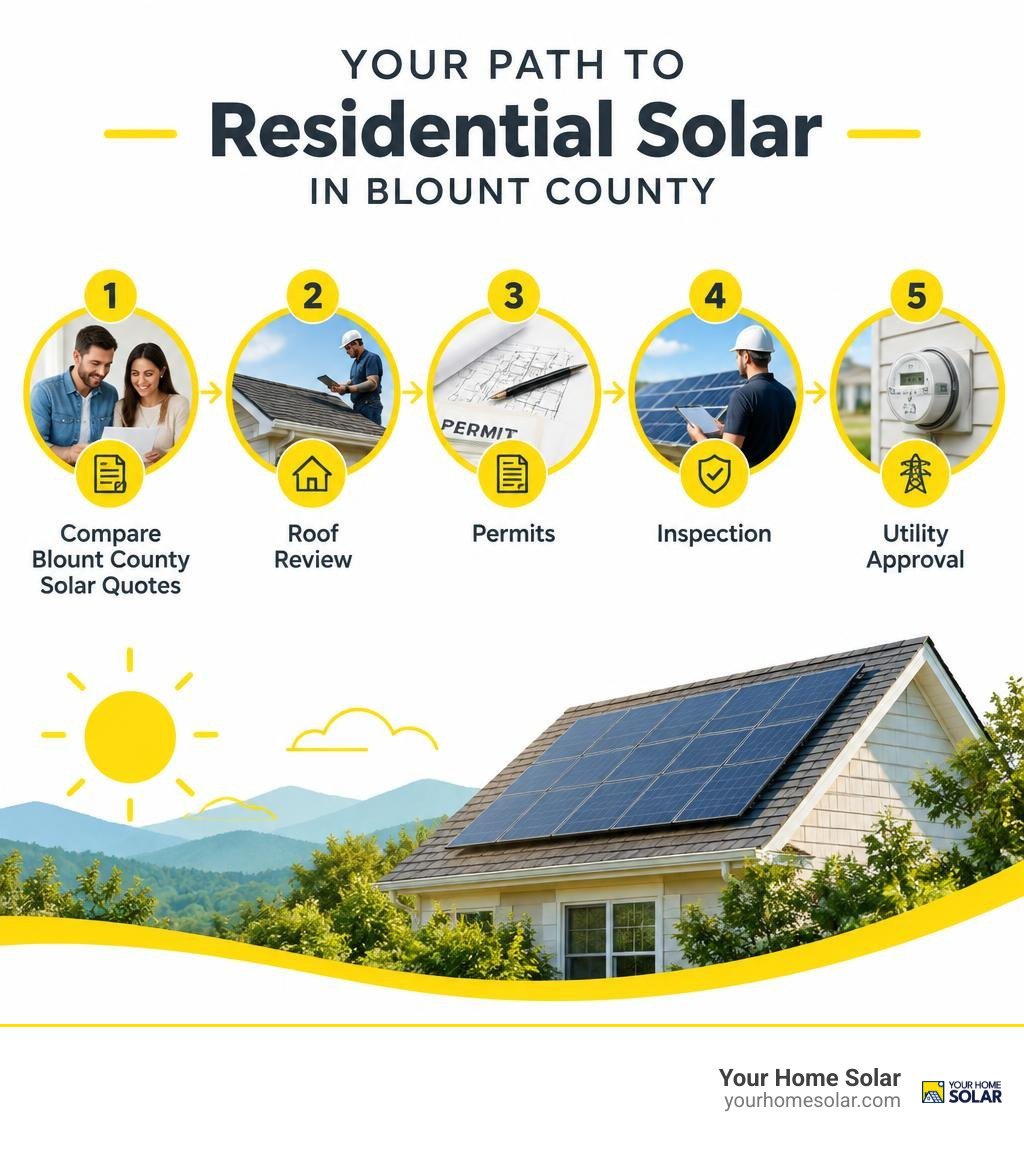
If you’re looking for residential solar panels in Blount County, start with three written quotes from installers who work in East Tennessee. Ask each one to check your roof, estimate yearly power output, explain your local utility’s rules, and show the full price before you sign. Compare who will do the work, what the warranties cover, and who handles permits and utility approval.
A good quote should fit your electric bill and roof, not just a county average. It should also say plainly whether the system will provide power during an outage; standard grid-connected solar panels usually will not.
I’m Ernie Bussell, founder of Your Home Solar, and I know a search for residential solar panels blount county should lead to clear answers, not a sales pitch. I’ve worked in solar operations since 2020, helping East Tennessee homeowners make sense of installations and long-term service.
Residential solar panels blount county terms to know:
Residential solar panels in Blount County: costs, payback, and savings
Switching to solar power in East Tennessee requires looking closely at your real monthly power bills rather than high-pressure promises. In Blount County, the typical household uses about 1,385 kilowatt-hours (kWh) of electricity every month, resulting in an average monthly electric bill of roughly $175.72. The local retail electricity rate historically benchmarks around 12.68¢ per kWh (with some broader regional model estimates around 14.5¢ per kWh).
When budgeting for residential solar, pricing is evaluated by system capacity in watts. Regional benchmark pricing in Blount County has averaged around $4.01 per watt upfront before incentives. A standard 5 kilowatt (kW) system will produce a healthy portion of baseline energy, while an extensive 12 kW array can offset higher electrical usage for large properties or all-electric heating.
Understanding these differences helps homeowners explore tailored solar services in Blount TN and evaluate custom residential solar options that match their actual energy profile.
| System Size | Estimated Upfront Cost (Gross) | Post-Tax Credit Cost (30% Federal Credit) | Estimated Annual Production | Modeled 20-Year Net Savings |
|---|---|---|---|---|
| 5 kW | $20,050 | $14,035 | ~6,500 kWh | $22,123 – $28,137 |
| 8 kW | $32,080 | $22,456 | ~11,647 kWh | $25,000 – $30,000 |
| 10 kW | $40,100 | $28,070 | ~14,559 kWh | $32,000 – $38,000 |
| 12 kW | $48,120 | $33,684 | ~17,470 kWh | $38,000 – $45,000 |
What do residential solar panels in Blount County cost compared with the national average?
A 5 kW system in Blount County costs approximately $14,035 out-of-pocket after applying the 30% federal clean energy tax credit, compared to a nationwide average of about $12,523 for a similar system size. For larger properties requiring a 12 kW setup, the upfront price sits at roughly $48,120 before incentives, dropping to approximately $33,684 once the federal credit is deducted.
While equipment costs per watt in East Tennessee can trend slightly higher than national averages due to local labor markets and permitting variables, regional systems benefit from strong solar exposure that yields substantial lifetime electricity production.
How long is the payback for residential solar panels in Blount County?
Payback periods in Blount County vary depending on local utility tariffs, roof layout, and export agreements:
- Fast Payback Scenarios (7 to 11 Years): Common when an appropriately sized 5 kW to 8 kW system directly offsets expensive tiered retail power usage during peak sunshine hours.
- Moderate Payback Models (14.7 Years): Observed in aggregate countywide models balancing modest power rates against 25-year panel production lifetimes.
- Extended Payback Estimates (Up to 24.5 Years): Typical when sizing very large systems (such as 13 kW arrays in Maryville) under utility structures where surplus power sent back to the grid receives lower wholesale credit rates rather than full retail net metering.
Over a 20-year span, an efficient 5 kW system in Blount County can yield net financial savings between $22,123 and $28,137.
Incentives, utility rates, and backup generators in Blount County
As of November 2026, Blount County homeowners can leverage the 30% Federal Residential Clean Energy Tax Credit on qualifying solar energy systems. Under current state regulations, Tennessee also offers a sales tax exemption for clean energy technology installed under certified guidelines. While there are no direct cash rebates for standard residential arrays from the state government, rural small businesses and agricultural producers in surrounding areas can explore USDA REAP grants, which cover significant portions of total installation costs.
For larger business entities, programs such as TVA Green Invest provide opportunities to source solar, though they do not apply to private residential rooftops. Navigating these details is straightforward when reviewing state-specific programs like the official Tennessee residential solar guidelines and our solar incentives Tennessee 2026 guide.
Are residential solar panels in Blount County worth it with a backup generator?
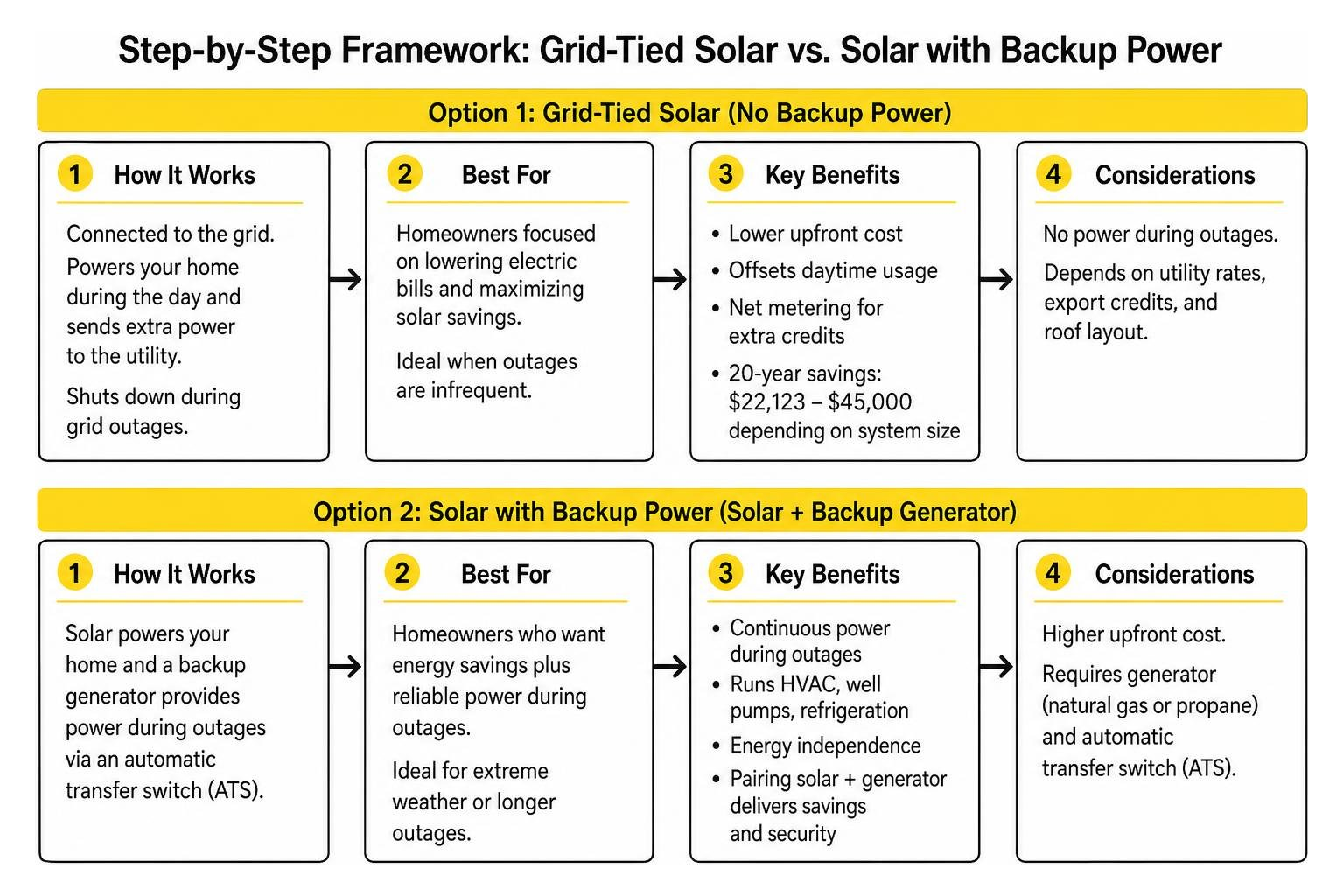
Standard rooftop solar setups automatically shut down during grid outages for utility line-worker safety. In Blount County, where customers experience an average of 1.49 power interruptions per year lasting around 144 minutes, integrating an automatic standby backup generator provides dependable resilience.
Whole-home backup generators fueled by natural gas or propane integrate with solar electrical systems via an automatic transfer switch (ATS). When the grid fails, the generator delivers continuous, heavy-duty power to HVAC systems, well pumps, and refrigeration. Combining solar arrays for day-to-day utility bill reductions with a whole-home generator for outage security gives homeowners complete energy independence without relying on fragile battery capacity during long winter storms.
Blount County solar potential, home value, and environmental benefits
Blount County has an estimated rooftop solar generation potential of 31.9 gigawatt-hours (GWh) annually across 73,087 qualifying residential and commercial structures. Detailed data from the Blount County rooftop solar potential project highlights the area’s strong solar climatology.
The median viable residential roof in Blount County offers approximately 965 square feet of usable space, capable of supporting a 13.5 kW DC capacity system that produces up to 16,200 kWh of clean electricity annually. Homeowners can explore local solar production dynamics in our Maryville solar guide.
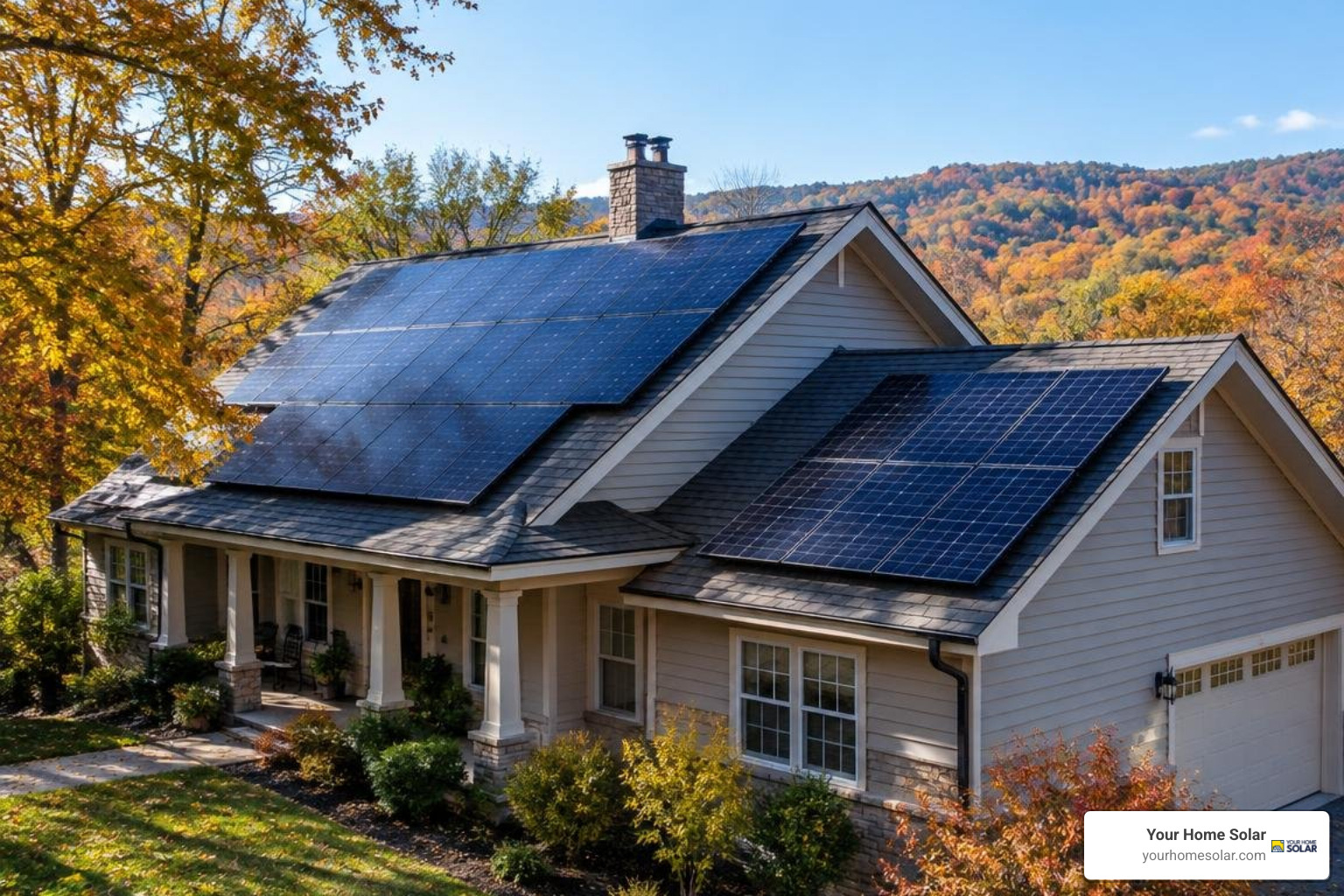
What solar production can a Blount County roof support?
A single standard modern 325-watt panel installed on a south-facing roof in Blount County produces roughly 437.1 kWh of electricity each year after accounting for standard 22% system losses (including heat, wiring, and atmospheric soiling). Homes with mature East Tennessee tree cover or non-south roof planes can optimize production using microinverters or explore ground-mounted arrays if acreage permits.
How can solar affect home value and carbon emissions?
Installing a homeowner-owned solar array increases long-term property appeal by significantly lowering operational utility expenses. Because the system directly offsets grid-generated electricity, it delivers measurable environmental benefits. Realizing the full 31.9 GWh countywide potential would avoid approximately 11,900 tonnes of carbon dioxide emissions each year—an impact equivalent to taking 2,576 gasoline-powered vehicles off the road or powering 3,042 average households.
How to choose an installer and complete a solar installation
Selecting a qualified installation partner protects your investment for decades. Tennessee does not mandate a state solar license, making it critical to verify that your contractor holds an active Tennessee Department of Commerce and Insurance contractor’s license (required for jobs over $25,000) and carries comprehensive liability insurance. Working with teams certified by the North American Board of Certified Energy Practitioners (NABCEP) ensures your project meets the highest technical standards.
To learn more about the end-to-end process, review our residential solar solutions guide and our local Maryville service page.

What should homeowners ask before hiring a solar installer?
Before signing an installation agreement, ask your contractor the following questions:
- Do you have active installations completed in Blount County that I can review?
- Does your quote provide itemized pricing for equipment, labor, permitting, and grid interconnection?
- What are the specific terms of both the 25-year equipment warranty and your internal workmanship warranty?
- Will in-house technicians handle the installation, or do you employ third-party subcontractors?
- Who manages the local municipal building permits and utility interconnection paperwork?
What permits and utility approvals are part of the process?
A typical installation moves through distinct regulatory steps:
- Site and Engineering Survey: Assessment of structural rafters, roof condition, and main electrical panel capacity.
- Permit Acquisition: Filing for local electrical and building permits through Blount County or the City of Maryville/Alcoa code enforcement.
- On-Site Installation: Mounting racking, placing photovoltaic panels, and wiring inverters (typically completed within 1 to 3 days).
- Code Inspection: City or county electrical inspectors verify adherence to the National Electrical Code.
- Utility Interconnection & PTO: The local electric utility reviews the connection, swaps the meter, and grants formal Permission to Operate (PTO).
Frequently Asked Questions about Residential Solar in Blount County
What electricity rate should Blount County homeowners use in a solar estimate?
Homeowners should calculate their preliminary savings using a baseline rate of 12.68¢ to 14.5¢ per kWh. Always review your recent monthly statements to account for fixed customer charges and your utility provider’s current solar export compensation terms.
Are there local solar tours or homeowner programs?
While programs like the “Solar Tour Alabama” exist in neighboring states, Blount County, Tennessee homeowners can engage directly with regional clean energy workshops. TVA’s Green Invest program is dedicated to industrial and municipal entities, so residential customers should focus on rooftop solar arrays paired with home backup solutions.
How can solar and a backup generator work together?
Solar panels generate affordable power to offset daytime utility costs, while a standby generator provides automatic backup power during weather-related outages. An integrated smart transfer switch coordinates both systems, protecting your home’s electrical panel during grid failures.
Conclusion
Making the move to solar power in East Tennessee requires looking beyond generic online estimates. By analyzing your monthly energy use, choosing quality equipment, and securing reputable installation support, you can protect your home against rising utility rates.
As a dedicated team providing tailored home energy solutions across Maryville, Alcoa, and all of Blount County, Your Home Solar delivers custom solar panel systems, backup generators, and EV charging setups built for lifelong performance. Connect with the top solar installer in Knoxville TN to schedule your personalized on-site solar assessment today.