More Than 4 Million Homes Are Already Doing It — Is Your Roof Next?
A residential solar rooftop system is one of the most practical ways to cut your energy bills, protect your home from power outages, and reduce your carbon footprint — all at the same time. Here’s a quick look at the main installation types available to homeowners today:
| Installation Type | Best For | Key Benefit |
|---|---|---|
| Rooftop solar panels | Most homeowners | Lower bills, home value boost |
| Ground-mounted solar | Large lots, poor roof angle | Flexible positioning |
| Solar shingles | New builds or roof replacements | Aesthetic integration |
| Community solar | Renters or unsuitable roofs | No installation required |
| Solar + battery storage | Outage-prone areas | Energy independence |
More than 4.4 million American homes now run on solar power — roughly 1 in every 30. And with average residential solar costs dropping to $3.00–$3.30 per watt in 2025 (down from over $8 in 2010), going solar has never been more accessible.
Still, not every home needs the same solution. Your roof shape, energy use, budget, and local utility policies all affect which setup makes the most sense. That’s exactly what this guide covers — every major residential solar option, explained clearly, so you can make a confident decision.
I’m Ernie Bussell, Founder and CEO of Your Home Solar, and I’ve spent years leading solar operations and installations across East Tennessee — including helping homeowners navigate every type of residential solar rooftop setup from basic grid-tied systems to full off-grid solutions. Let’s walk through everything you need to know.
Residential solar rooftop definitions:
Understanding the Residential Solar Rooftop: How It Works and Why It Matters
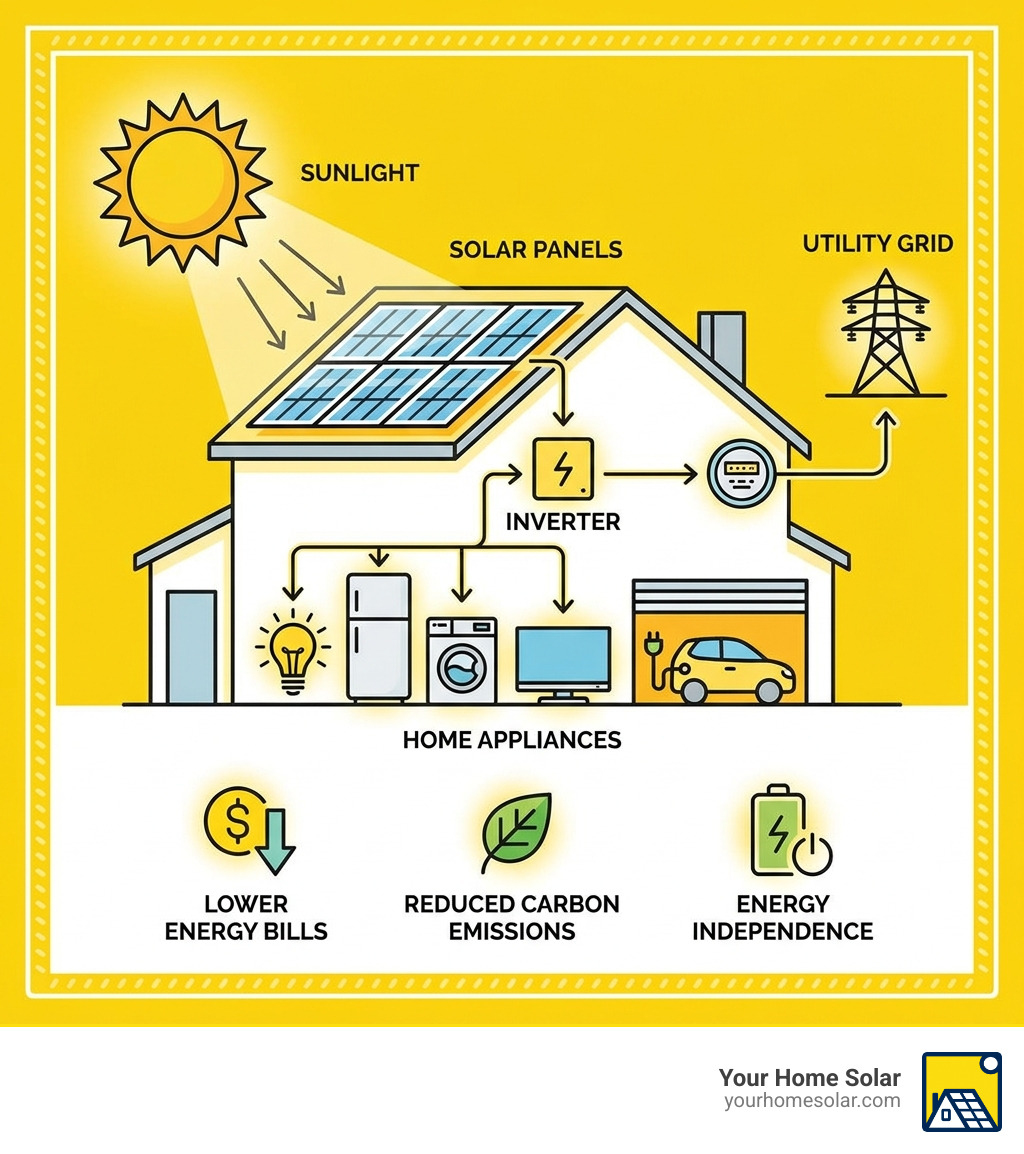
At its core, a residential solar rooftop system is a mini power plant sitting right above your head. It uses the “photovoltaic effect” to turn sunlight into electricity. When sunlight hits the silicon cells in your panels, it knocks electrons loose, creating a flow of direct current (DC) electricity.
Since your toaster and TV run on alternating current (AC), we use an inverter to “translate” that power. For a deep dive into the science, check out our guide on How Solar Panels Work: A Comprehensive Guide.
Why does this matter in 2026? Because energy independence isn’t just a buzzword anymore; it’s a financial strategy. By generating your own power, you create an “energy offset.” This means you use your own solar power first, only pulling from the utility grid when your panels aren’t producing (like at night). According to Rooftop Solar | ENERGY STAR, these systems are a primary pillar of modern home efficiency.
In East Tennessee, most of our neighbors opt for “grid-tied” systems. These allow you to stay connected to the local utility while reaping the rewards of solar. For the basics of how we get these systems onto your home, see Solar Energy Made Simple: Understanding the Basics of Solar Panel Installation.
Key Components of a Residential Solar Rooftop System
A high-performing system is more than just blue or black rectangles on the shingles. Here are the “big three” components we focus on:
- Solar Panels: Most homeowners today choose monocrystalline panels. They are sleek, black, and highly efficient. While standard panels hit about 18–22% efficiency, premium versions can reach 24%.
- Inverters: This is the brain of the system. You might choose a single string inverter or microinverters. We often recommend Enphase Solar Installation in East Tennessee because microinverters allow each panel to work independently. If one panel is shaded by a stray chimney shadow, the rest of the system keeps humming at 100%.
- Racking and Monitoring: The racking holds the panels securely (even in Tennessee windstorms), while monitoring software lets you track your production on your phone.
You might wonder, “How long will this last?” Solar panels are incredibly hardy. Most are built to withstand hail and heavy snow for decades. You can learn more about their longevity in our article, Solar Panel Durability: How Long Do They Last?.
The Financial Benefits of a Residential Solar Rooftop in 2026
Let’s talk numbers. The average homeowner can save roughly $60,000 over 25 years by switching to solar. When utility rates have climbed significantly over the last decade, locking in your power price is a massive win.
Beyond the monthly savings, there is the “Zillow Effect.” Research shows that homes with solar panels sell for about 4.1% more than those without. That’s like adding a renovated kitchen to your home, but one that pays your electric bill every month! The Homeowner’s Guide to Solar | Department of Energy confirms that solar is one of the few home improvements that offers a clear, measurable ROI.
If you are curious about the specific numbers for our region, check out An Essential Guide to Solar Panels Cost and our localized breakdown of Solar Panel Installation Knoxville Cost.
Assessing Your Home for a Residential Solar Rooftop Installation
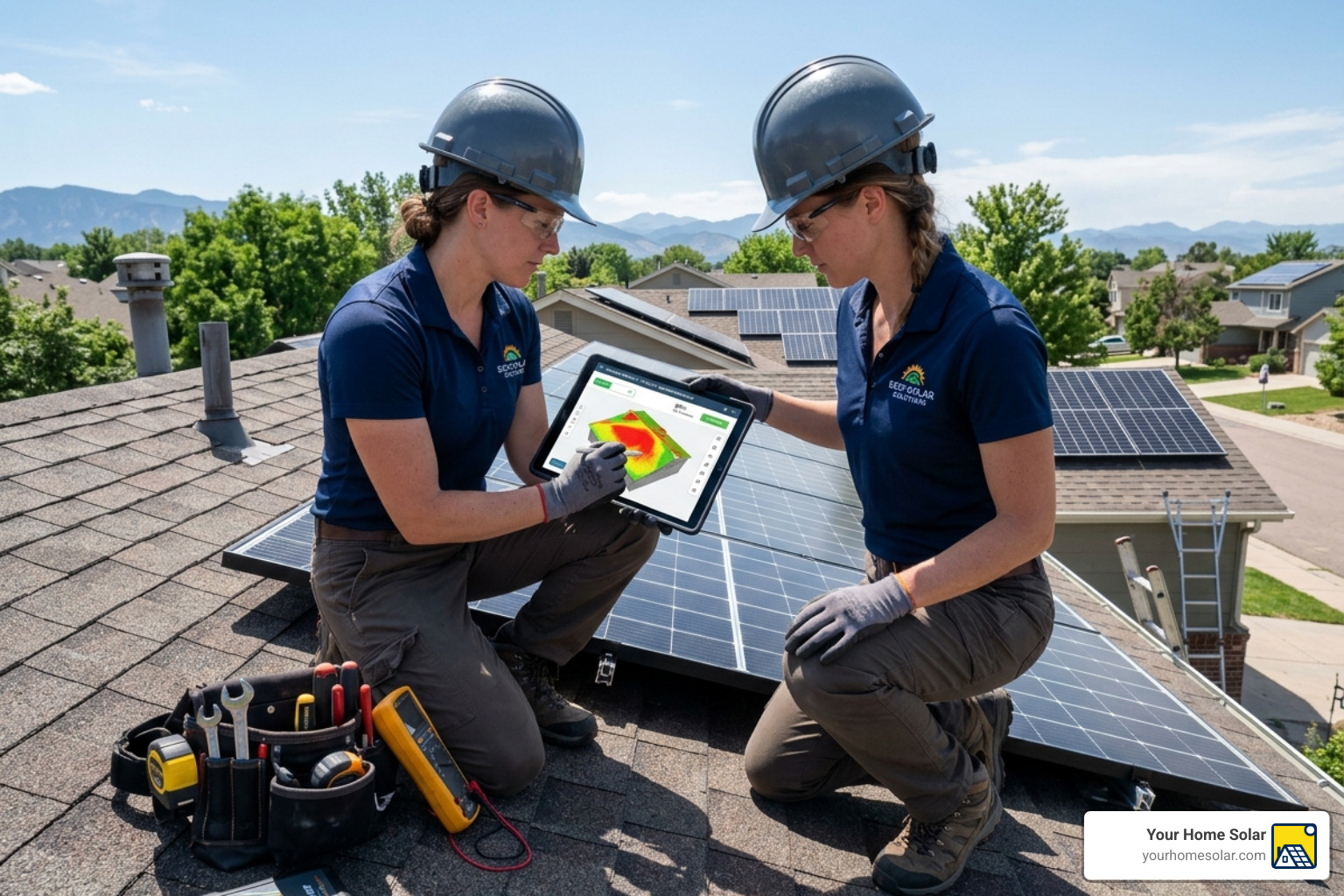
Not every roof is a “solar superstar” right out of the gate. When we visit homes in Knoxville, Maryville, or Johnson City, we look at several critical factors:
- Orientation: In the Northern Hemisphere, south-facing roofs are the gold standard because they catch the most sun throughout the day.
- Pitch: An angle between 15 and 40 degrees is usually perfect. If your roof is too flat or too steep, we may need special racking to tilt the panels correctly.
- Shading: Trees are great for shade, but not for solar. We use digital tools to see how shadows move across your roof during different seasons.
- Roof Condition: This is huge. Since solar panels last 25+ years, you don’t want to put them on a roof that needs replacing in three years. If your roof is older than 10–15 years, we often suggest a roof refresh first.
One common worry we hear is: “Will those heavy panels break my roof?” The answer is almost always no, provided the home is up to code. We’ve addressed this in detail here: Will Putting a Solar System on My Roof Damage It? Expert Advice for East Tennessee Homeowners.
For a step-by-step look at how we evaluate and prep a site, see A Practical Guide to the Solar Installation Process.
Financing and Incentives: Making Solar Affordable
In 2026, you have more ways to pay for solar than ever before. Choosing the right one depends on whether you want the highest long-term savings or the lowest upfront cost.
| Option | Ownership | Best For | Incentives |
|---|---|---|---|
| Cash Purchase | You own it | Maximum ROI | You keep the 30% tax credit |
| Solar Loan | You own it | $0 down, monthly savings | You keep the 30% tax credit |
| Solar Lease/PPA | Third-party owns it | Low hassle, no maintenance | Provider keeps the tax credit |
The 30% Federal Tax Credit (officially the Investment Tax Credit or ITC) is still the heavy hitter here. It allows you to deduct 30% of your total system cost—including panels, labor, and even battery storage—from your federal taxes. We have a full breakdown of this and other perks at Tax Credits & Incentives.
For those in our service areas like Knoxville or Farragut, we specialize in Affordable Solar Installation in Knoxville, TN, helping you navigate local utility policies. While Tennessee doesn’t have a statewide “Net Metering 3.0” like California, many local utilities offer programs that credit you for the power you send back to the grid.
As noted in Your Guide To Home Solar In 2026 | EnergySage, the market has shifted toward ownership (cash or loan) because it offers the best financial return and adds the most value to your property.
Beyond the Roof: Ground Mounts and Community Solar Alternatives
What if your roof is covered in beautiful, 100-year-old oak trees? Or what if you live in a historic home in Jonesborough where you can’t alter the roofline? You still have options!
Ground-Mounted Solar If you have a bit of land, a ground-mounted system is a fantastic alternative. These arrays are often more efficient because we can point them perfectly south and set them at the ideal angle. They also stay cooler than rooftop panels, which actually helps them produce more power. You can see our various Residential Solar configurations to see if a ground mount fits your backyard.
Community Solar and Renters For those who rent or live in condos, “Community Solar” is the answer. You essentially “subscribe” to a large solar farm nearby and receive credits on your utility bill. It’s a great way to support clean energy without turning a single screw into a roof. As mentioned in Solar Rooftops | Los Angeles Department of Water and Power, these programs are expanding access to millions who previously couldn’t go solar.
Solar Shingles If you are building a new home or need a total roof replacement, solar shingles (like those from GAF or Tesla) integrate the solar cells directly into the roofing material. They are the ultimate “stealth” solar option, though they usually come at a higher price point than traditional panels.
Frequently Asked Questions about Residential Solar
How long does a residential solar system last?
Modern systems are marathons, not sprints. Most solar panels come with a 25-year power production warranty, meaning they are guaranteed to produce at least 80–85% of their original power after two and a half decades. The actual lifespan can often reach 30 or 40 years. For more details, see How Long Does a Residential Solar System Last? Your Home Solar Has the Answer and our Detailed Guide to Solar Panel Warranty.
Does a solar rooftop work during a power outage?
This is a common “gotcha.” Standard grid-tied systems actually shut down during a blackout. Why? To prevent your panels from sending electricity back into the lines while utility workers are trying to fix them.
If you want the lights to stay on when the grid goes down, you need battery storage. By pairing your panels with a system like Enphase’s IQ Battery, you can create a “microgrid” for your home. We cover this extensively in our Enphase Solar Installation in East Tennessee guide.
What maintenance do solar panels require?
Solar panels have no moving parts, so they are incredibly low-maintenance. In East Tennessee, our rain usually does a good job of keeping them clean. However, a buildup of pollen, dust, or bird “gifts” can drop your efficiency by 5–10%.
We recommend a quick visual inspection twice a year and a professional cleaning if you notice a dip in production. Check out our tips at Solar System Maintenance and Solar Panel Maintenance Knoxville. For a DIY checklist, see Solar Energy Maintenance 101: Tips for Keeping Your System Running Smoothly.
Conclusion
Whether you are in the heart of Knoxville or the hills of Sevierville, a residential solar rooftop is more than just an environmental statement—it’s a smart investment in your home’s future. In 2026, the technology is more reliable, the financing is more flexible, and the savings are more significant than ever before.
At Your Home Solar, we pride ourselves on being East Tennessee’s trusted experts. We don’t believe in “one size fits all” energy. We offer tailored, reliable, and rewarding installations designed to make you 100% satisfied. From the first shading analysis to the moment you flip the switch, we’re with you every step of the way.
Ready to see what your roof can do? Start your journey with Residential Solar today and let’s put the sun to work for your home!