What Does an Automatic Home Generator Cost?
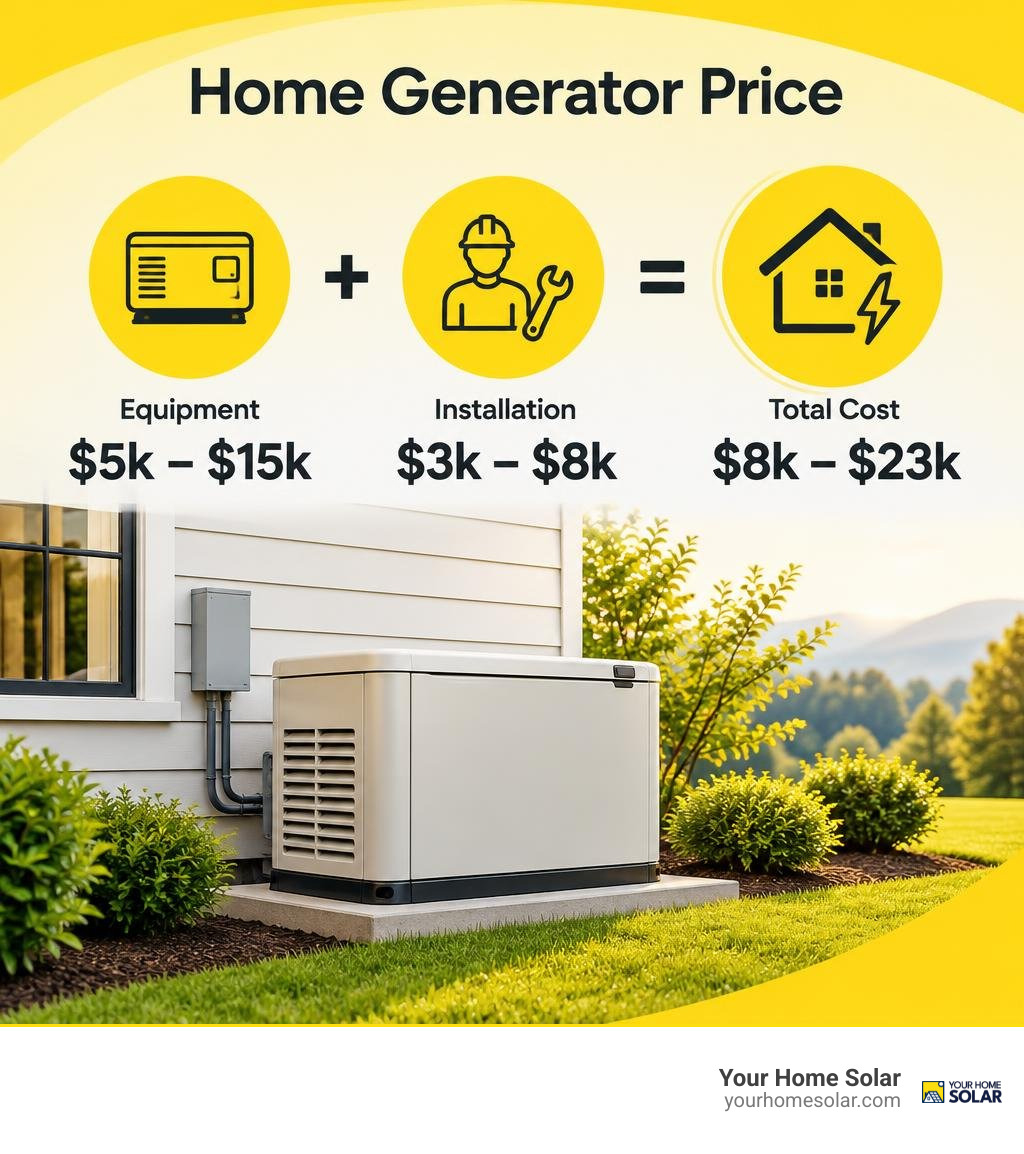
An automatic whole-house generator typically costs $8,000 to $23,000 installed. The generator itself runs about $5,000 to $15,000, while professional installation adds roughly $3,000 to $8,000. These systems provide seamless, hands-free, whole-home backup whenever the power grid goes down.
The price depends on how much of your home you want to power, your fuel source, and the work needed to connect the system safely. This guide breaks down those costs so you can compare options for your East Tennessee home.
I’m Ernie Bussell, founder of Your Home Solar. My years in home energy operations help me explain the price of an automatic generator for a home in plain terms.
Handy automatic generator price for home terms:
Understanding the Automatic Generator Price for Home Backup Systems
When you invest in an automatic standby generator, you are purchasing an integrated home energy security system rather than just an engine in a steel box. Unlike temporary options that require you to drag heavy machinery out of a garage, uncoil extension cords during freezing rain, and manage volatile liquid gasoline, an automatic standby generator is permanently wired into your home electrical distribution panel and plumbed directly to your existing utility fuel supply.
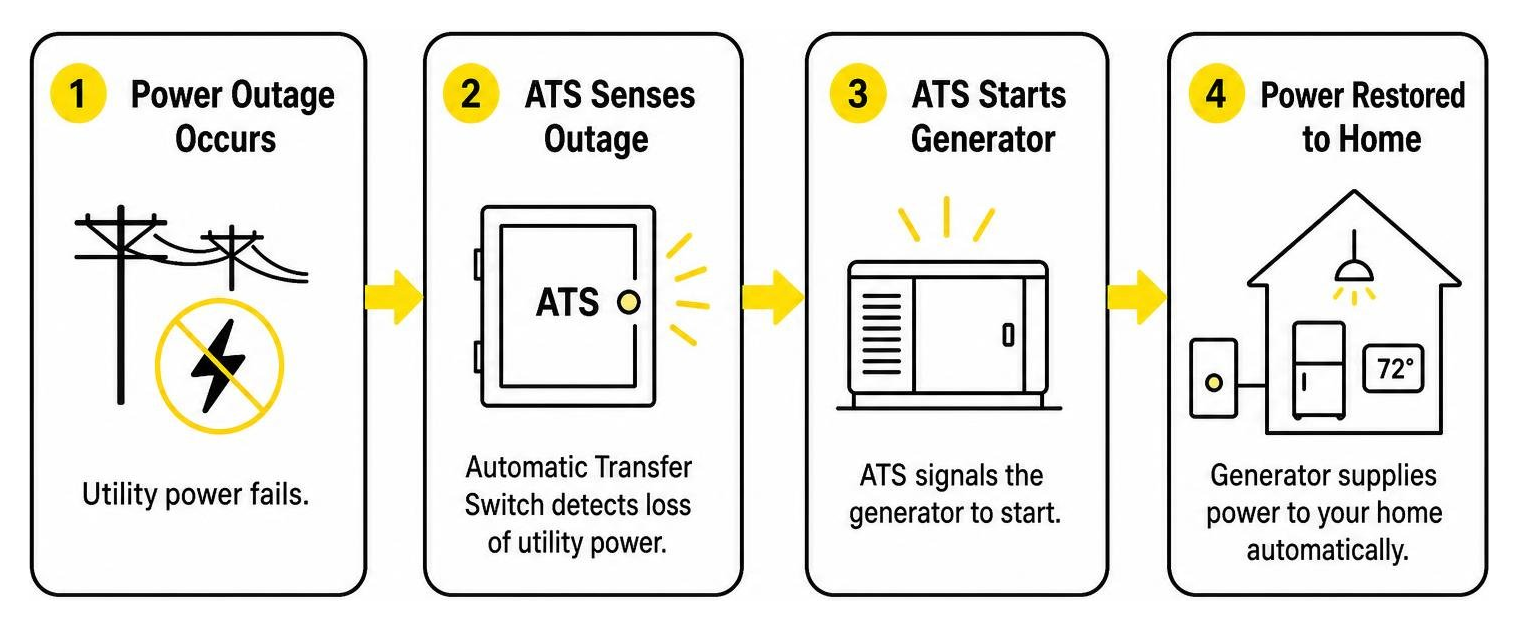
The total cost of these systems breaks down into two core buckets: the standalone equipment and the licensed trade labor required to integrate the hardware into your home safely. The machinery itself consists of the internal combustion engine, the alternator, the digital control board, the weather-resistant acoustic enclosure, and an Automatic Transfer Switch (ATS). The ATS serves as the brain of the entire setup. Within seconds of utility power failing, the switch disconnects your home from the electrical grid to prevent dangerous backfeeding and signals the generator engine to start up, restoring your lights, refrigeration, and climate control automatically.
Equipment pricing scales with electrical capacity, engine design, and enclosure materials. Professional labor costs fluctuate based on the distance between your gas meter, electrical panel, and outdoor generator mounting pad. Understanding how these elements balance allows you to find the ideal balance between power capacity and budget.
| Generator Capacity (kW) | Typical Home Size (Sq. Ft.) | Coverage Type | Standalone Equipment Price | Total Installed Price Range |
|---|---|---|---|---|
| 7 – 10 kW | Under 1,500 | Essential circuits (fridge, lights, Wi-Fi) | $3,000 – $4,500 | $6,000 – $9,000 |
| 11 – 14 kW | 1,200 – 2,000 | Core appliances + small heat pump | $4,200 – $5,800 | $7,500 – $11,500 |
| 15 – 20 kW | 1,800 – 2,800 | Whole-home coverage + central AC | $5,000 – $6,500 | $8,500 – $14,000 |
| 22 – 26 kW | 2,400 – 4,000+ | Large whole-home + multiple HVACs | $5,200 – $7,500 | $9,500 – $16,500 |
| 30 – 48 kW+ | 4,500+ / Estate | Luxury estate, workshops, luxury loads | $12,000 – $25,000+ | $18,000 – $35,000+ |
Equipment Costs by Kilowatt Capacity
Standalone equipment pricing is dictated directly by kilowatt (kW) output. A small 10 kW system designed to manage a dedicated emergency subpanel generally starts around $3,000 to $4,500 for the unit alone. While these units keep your refrigerator cold, your router active, and a few lighting circuits illuminated, they cannot manage high-draw inductive loads such as central heat pumps, electric water heaters, or well pumps.
Mid-tier units rated from 14 kW to 18 kW typically cost between $4,200 and $6,000. These systems provide balanced coverage for moderate single-family properties, handling baseline household demands alongside single central air conditioning units when paired with smart electrical load management modules.
For comprehensive, uncompromised whole-home backup, units in the 20 kW to 26 kW range represent the residential standard across East Tennessee, priced between $5,200 and $7,500 for the bare equipment. For homeowners analyzing the real cost to install a generator, these high-capacity air-cooled units provide enough surge capacity to start heavy compressor motors without experiencing sudden electrical brownouts or flickering lights.
Professional Installation and Labor Expenses
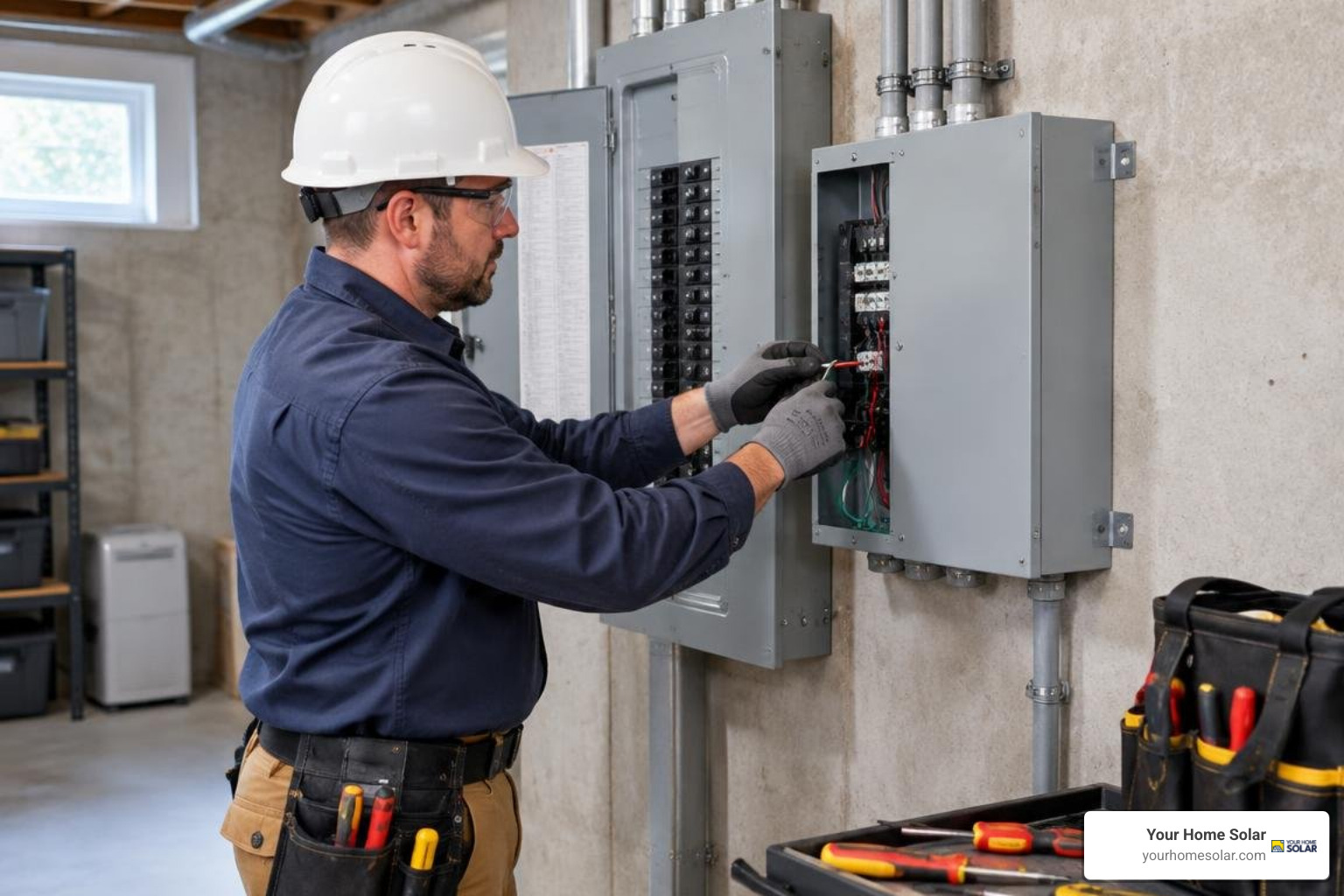
Installation labor represents an essential portion of your total project investment. Installing a permanent standby system is not a do-it-yourself project; it requires coordinated trade work across high-voltage electrical engineering, municipal permitting, structural pad preparation, and high-pressure gas plumbing.
According to our generator installation cost guide for 2026, standard residential installation labor typically ranges from $3,000 to $8,000, driven by the physical layout of your property:
- Electrical Infrastructure and ATS Wiring ($1,200 – $2,500): A master electrician must mount the automatic transfer switch directly adjacent to your main breaker panel, reroute main service cables, and install dedicated control wiring to the outdoor unit.
- Gas Plumbing and Pressure Regulation ($800 – $2,200): A mechanical piping specialist must tap into your existing natural gas line or liquid propane storage tank, run rigid iron or coated poly pipe underground to the mounting site, and install safety shutoff valves along with pressure regulators.
- Site Excavation and Pad Preparation ($400 – $1,200): The generator must rest on a stable, level surface that will not settle over decades of operation. This requires clearing topsoil, framing, and installing a pre-cast reinforced concrete pad or pouring an on-site slab.
- Permitting, Code Compliance, and Utility Interconnect ($250 – $800): Standby units require municipal building and electrical permits. East Tennessee utilities also require strict verification to ensure equipment prevents hazardous grid backfeeding.
Comparing Automatic Standby Generator Configurations
Choosing backup power requires weighing operational independence against long-term maintenance needs. While solar battery storage units offer distinct advantages, permanent standby systems deliver uninterrupted power during prolonged regional grid outages.
According to utility guidelines for residential generators, proper configuration and certified transfer switch equipment ensure safe, seamless operation without hazardous grid backfeeding. Exploring our comprehensive guide to home backup generator options shows that standby machinery delivers the lowest cost per continuous kilowatt of any automatic backup solution on the market.
| Configuration / Fuel Type | Typical Installed Cost | Automatic Transfer? | Continuous Whole-Home Power? | Fuel Source | Routine Lifespan |
|---|---|---|---|---|---|
| Natural Gas Standby Generator | $8,000 – $21,000 | Yes (<10 seconds) | Yes (15 – 26+ kW) | Utility Natural Gas | 15 – 30 Years |
| Liquid Propane Standby Generator | $8,500 – $23,000 | Yes (<10 seconds) | Yes (15 – 26+ kW) | Stationary LP Tank | 15 – 30 Years |
| Solar + Whole-Home Battery Storage | $14,000 – $30,000+ | Yes (Instantaneous) | Load-limited (5 – 10 kW continuous) | Solar PV / Grid Recharge | 10 – 15 Years |
Total Price of Automatic Generator Systems for a Home
When comparing comprehensive installed prices across different power technologies, you can easily evaluate equipment costs alongside the operational value and convenience provided by each system design:
- Automatic Standby Generators ($8,000 – $23,000 Installed): The gold standard for complete household protection. While they carry higher upfront installation requirements, they offer automated activation, continuous fuel supplies, and power capacities capable of running high-tonnage HVAC systems effortlessly.
- Whole-Home Solar Battery Systems ($14,000 – $30,000+ Installed): Battery systems offer silent, zero-emission instantaneous backup power that can recharge daily via solar panels. However, delivering equivalent continuous surge capacity to power whole-home electric heat, well pumps, and air conditioning across multi-day winter storms often requires multiple stacked battery units, increasing initial capital costs.
Fuel Cost and Efficiency: Natural Gas vs. Propane
The fuel running your generator affects both your installation requirements and long-term operating costs. Most residential automatic standby systems operate on either natural gas or liquid propane (LP).
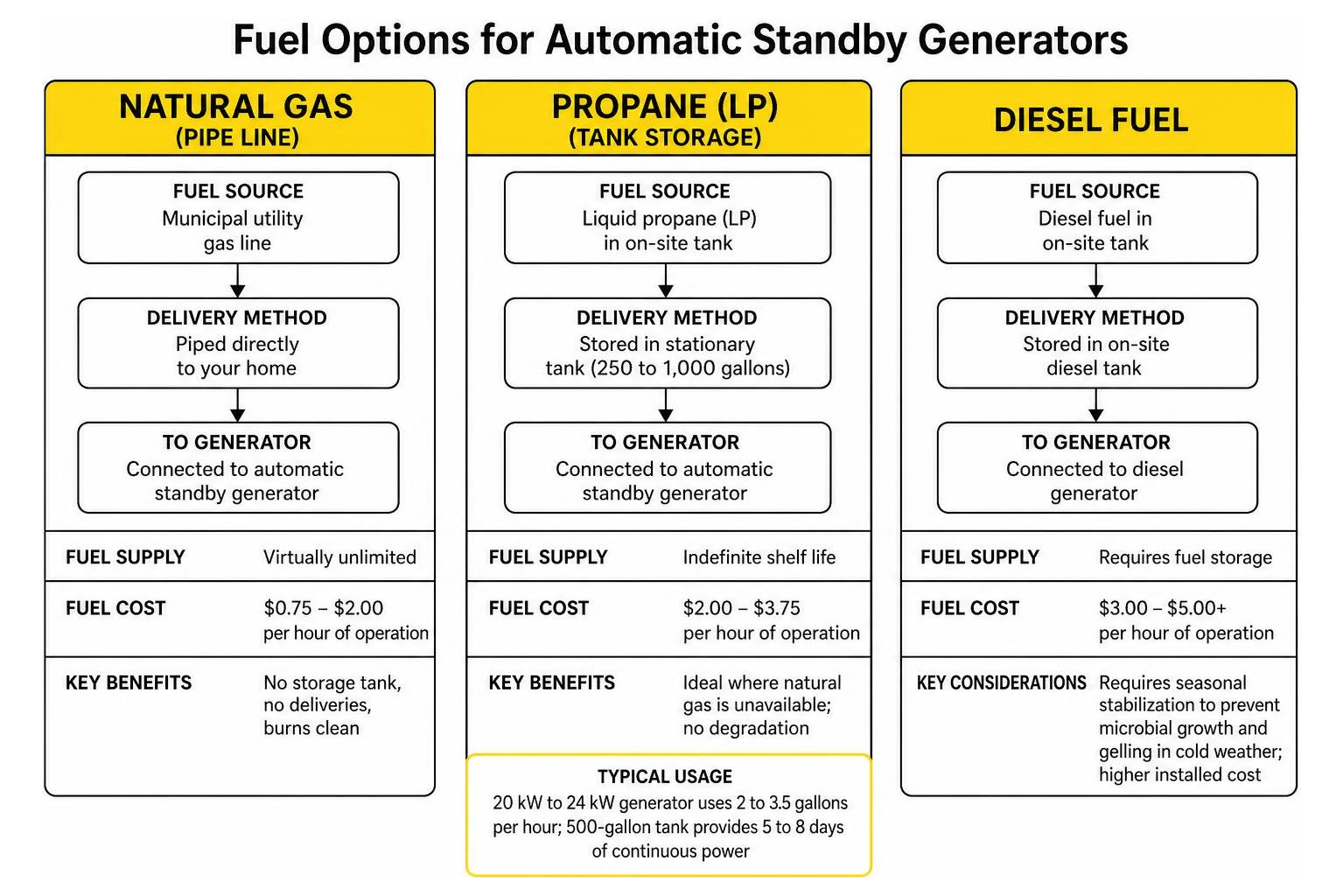
- Natural Gas ($0.75 – $2.00 per hour of operation): If your home is connected to a municipal utility gas line, natural gas is the most cost-effective and convenient fuel available. Because it is piped directly to your home, fuel supply is virtually unlimited, eliminating the need for scheduled deliveries or on-site storage tanks. Natural gas burns cleanly, resulting in less engine carbon buildup over extended runtimes.
- Liquid Propane ($2.00 – $3.75 per hour of operation): Propane is the premier solution for rural and suburban homes throughout Knox, Blount, and Sevier counties where municipal gas mains are unavailable. Propane does not degrade over time, giving it an indefinite shelf life inside stationary storage tanks (typically 250 to 1,000 gallons). A typical 20 kW to 24 kW standby generator consumes approximately 2 to 3.5 gallons of propane per hour under standard electrical loads, allowing a 500-gallon tank to provide continuous power for 5 to 8 days of extended grid collapse.
Sizing Your System: How Capacity Impacts Cost and Value
Accurately sizing a home standby generator requires calculating both continuous running wattage and initial surge wattage. Running wattage represents the electrical energy an appliance consumes steadily while operating. Surge wattage accounts for the brief, intense burst of current required by electric motors—such as central air conditioner compressors, well pumps, and refrigeration units—to spin up from a dead stop. Motor startup demands can be two to three times higher than steady-state operating requirements.
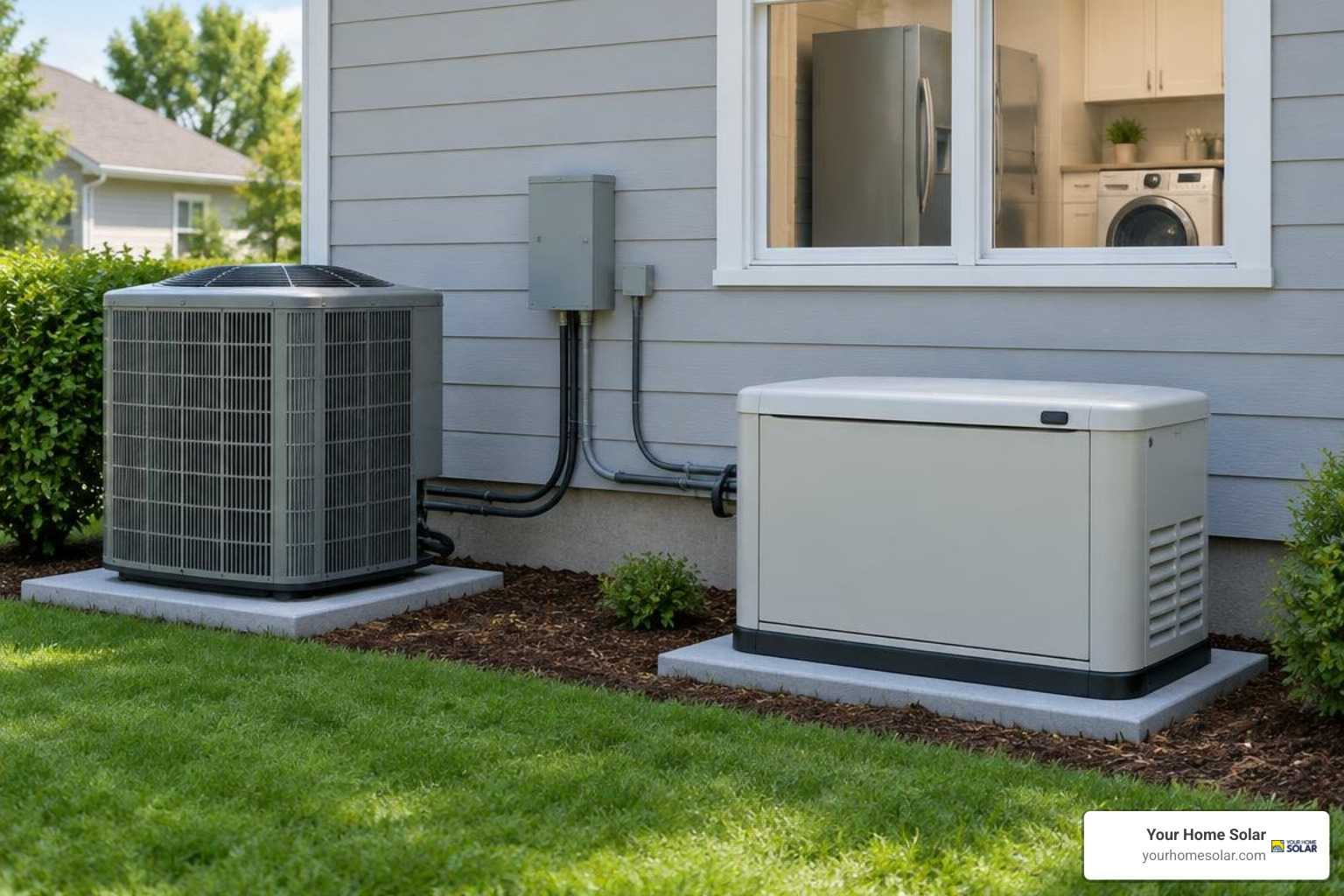
Undersizing a standby generator to shave a few hundred dollars off the purchase price can lead to system overload shutdowns during power transfers. Conversely, dramatically oversizing a unit increases upfront equipment expenses, installation pipe sizing, and ongoing fuel consumption during weekly self-test cycles.
Determining Required Wattage for Whole-House Loads
To calculate your ideal generator size, add the continuous wattages of your essential circuits, identify the single largest motor-driven appliance, and add its startup surge rating to the running total.
For example, a typical modern home’s heavy electrical loads include:
- Central Air Conditioner (3-ton to 5-ton): 3,500 to 5,000 running watts; 10,000 to 12,000 surge watts.
- Deep Well Water Pump (1/2 HP to 1.5 HP): 1,200 to 2,000 running watts; 3,000 to 4,500 surge watts.
- Electric Water Heater (50-gallon standard): 4,500 running watts; 4,500 surge watts.
- Kitchen Refrigerator and Freezer: 800 to 1,200 running watts; 2,000 to 2,500 surge watts.
- Sump Pump (1/2 HP): 900 running watts; 1,800 to 2,200 surge watts.
- Electric Clothes Dryer: 4,000 to 5,500 running watts; 5,500 surge watts.
A homeowner can see what a 24kW generator can run during an outage to appreciate why 22 kW to 26 kW models have become the most popular whole-house capacity across the region. These systems power whole-home air conditioning, kitchen appliances, and domestic water systems simultaneously without requiring complex load-shedding switches.
Estimating the Automatic Generator Price for Home Resale Value and ROI
Beyond providing safety and comfort during severe weather, a permanently installed standby generator is classified as real property that enhances your home’s equity. Real estate market data shows that installing a whole-home standby generator typically increases property resale value by 3% to 5%. In suburban and rural neighborhoods across East Tennessee that experience severe winter ice storms and summer grid strain, backup power systems serve as a strong selling point for prospective homebuyers.
When planning a project like a Maryville whole house generator installation, you also protect your home against the expensive hidden costs of extended power outages:
- Preventing thousands of dollars in water damage from burst frozen plumbing lines when heating systems fail during deep winter freezes.
- Eliminating basement flooding by keeping sump pump systems fully operational throughout heavy mountain rain events.
- Avoiding food loss ($300 to $800 per occurrence) from spoiled refrigerators and deep chest freezers.
- Protecting expensive sensitive home electronics from sudden voltage spikes and line surges during chaotic grid restoration cycles.
10-Year Total Cost of Ownership and Ongoing Maintenance
Evaluating a standby backup system requires looking beyond the initial installation quote to calculate the 10-year Total Cost of Ownership (TCO). A well-maintained residential generator delivers a reliable service life of 15 to 30 years. Factoring in routine preventative maintenance, periodic fuel consumption during automated testing, and long-term service contracts provides an accurate picture of your ongoing investment.
Over a 10-year operational window, a premium 24 kW standby generator system typically averages an overall investment of $12,800 to $15,200, including initial equipment, turnkey professional installation, annual tune-ups, and fuel costs. This translates to an accessible operational cost of approximately $106 to $127 per month for complete, hands-free home energy security.
| Expense Category | 24 kW Whole-Home Standby Generator | 10 kWh Modular Solar Battery System |
|---|---|---|
| Initial Equipment Purchase | $5,200 | $8,500 |
| Installation & Transfer Switch | $4,000 | $3,500 |
| 10-Year Preventative Maintenance | $2,500 – $4,000 | $0 – $500 |
| 10-Year Fuel / Operating Costs | $1,100 – $2,000 | $0 (Solar Recharged) |
| 10-Year Total Investment | $12,800 – $15,200 | $12,000 – $16,500 |
| Monthly Amortized Cost | $106 – $127 / month | $100 – $137 / month |
Annual Servicing and Operating Expenses
Like any finely tuned engine, a standby generator requires periodic maintenance to perform reliably during an emergency. Most manufacturers recommend professional servicing every 100 to 200 operating hours, or at least once per calendar year.
Homeowners should budget $200 to $600 annually for a comprehensive preventative service agreement. When finding a local generator professional, ensure your annual maintenance contract includes:
- Synthetic Engine Oil & Filter Changes: Replacing lubricating fluids to ensure clean cold-weather startup performance.
- Spark Plug and Air Filter Replacements: Maintaining optimal combustion efficiency and fuel economy.
- Valve Lash Adjustments: Calibrating engine intake and exhaust valves to factory tolerances.
- Battery Health and Charging Circuit Diagnostics: Testing the 12-volt starting battery to prevent unexpected startup failures.
- Transfer Switch Safety Diagnostics: Simulating utility power loss to verify that the transfer switch mechanisms operate smoothly within rated switchover times.
- Automated Exercise Verification: Ensuring the unit runs its weekly 5-minute low-RPM self-diagnostic cycle to lubricate internal seals and prevent fuel system varnishing.
Financing Options and Long-Term Warranty Coverage
To help manage initial project expenses, modern backup power systems can be structured with attractive residential financing options. Many homeowners choose monthly payment plans that spread equipment and installation costs across 5- to 12-year terms, matching low monthly payments with immediate emergency preparedness.
Leading standby generator manufacturers back their systems with standard 5-year limited warranties, with optional 7-year or 10-year comprehensive extended warranties available for extra protection. When exploring Knoxville generator installation services, our certified team manages every detail from initial sizing and permitting through final utility sign-off, protecting your factory warranty with fully code-compliant workmanship.
Frequently Asked Questions About Home Standby Generator Costs
How much does it cost to install a whole-house generator for a 2,000-square-foot home?
For a standard 2,000-square-foot single-family home in East Tennessee, powering major appliances, central HVAC, water heating, and refrigeration typically requires an 18 kW to 24 kW standby unit.
The bare generator equipment for this size ranges between $4,500 and $6,200. Professional installation labor, permitting, automatic transfer switch wiring, and gas line plumbing typically add $3,000 to $5,000, bringing the total turnkey installed price to $7,500 to $11,200.
Is it cheaper to run an automatic generator on natural gas or propane?
Operating an automatic generator on natural gas is generally less expensive than running on liquid propane. Natural gas delivered via municipal utility lines costs roughly $0.75 to $2.00 per hour of operation under standard electrical loads and provides continuous fuel during extended outages.
Propane averages $2.00 to $3.75 per hour depending on regional fuel delivery rates. However, propane remains the gold-standard solution for off-grid or rural properties because it stores indefinitely without degrading, making it an exceptionally reliable emergency fuel source.
Does an automatic standby generator increase property value?
Yes. A permanently installed standby generator is classified as real property and can increase your home’s overall market resale value by 3% to 5%. Beyond appraisable equity, backup power systems provide a strong selling point in the East Tennessee real estate market, assuring prospective buyers that the home is protected against grid disruptions and extreme seasonal weather.
Conclusion
Investing in an automatic home generator provides long-term peace of mind, reliable safety, and continuous comfort when severe weather threatens the electrical grid. While equipment sizing, fuel access, and electrical infrastructure all influence final costs, a properly sized standby system protects your home, family, and investments for decades to come.
At Your Home Solar, we provide comprehensive, turnkey home energy solutions tailored specifically to East Tennessee homeowners. Whether you need seamless backup power, a custom solar integration, or whole-home electrical upgrades, our team delivers trusted expertise and 100% customer satisfaction from design through final inspection.
Ready to protect your home with reliable automatic power? Contact us today to schedule generator installation in Knoxville and get your customized whole-home backup estimate.