Immediate Response Protocols and Emergency Kit Basics
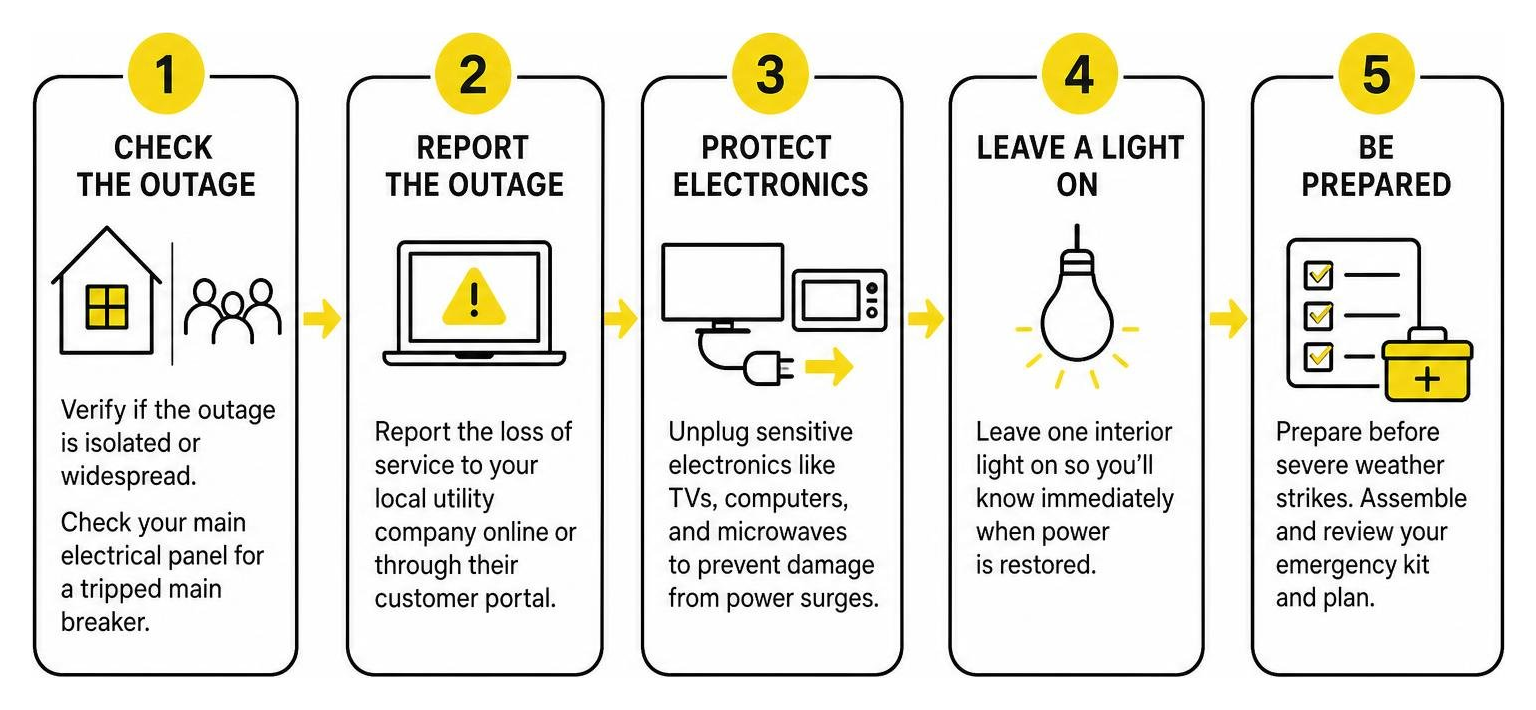
When the lights go out unexpectedly across Knox County or surrounding areas, immediate action keeps your home safe. Start by verifying if the blackout is isolated to your house or widespread. Check your main electrical panel for a tripped main breaker. If your neighbors are also in the dark, the grid is down.
Promptly report the loss of service to your local utility company. Residents in Maryville can use the online portal to Report an Outage, while others can contact their respective providers like Oak Ridge Electric or Hendricks Power. Reporting helps line crews locate system faults quickly.
Next, unplug sensitive electronics like televisions, computers, and microwave ovens. When grid power returns, it often comes with a sudden electrical surge that can fry delicate circuit boards. Leave one interior light switched on so you will immediately know when service is restored.
To prepare before severe weather strikes, review our detailed guide on Don’t Get Caught Off Guard: The Ultimate Guide to Emergency Home Power.
Essential Checklist for an Emergency Outage Kit
Every East Tennessee household should keep a dedicated, easy-to-grab emergency supplies kit stored in a accessible location.
- Lighting Supply: LED flashlights and headlamps for hands-free mobility. Keep extra fresh lithium batteries on hand, as they offer a longer shelf-life than standard alkaline options.
- Potable Water Storage: Store at least one gallon of bottled water per person per day. If your home relies on an electric well pump, double this amount to cover basic sanitation needs.
- Non-Perishable Food: Pack a three-day supply of canned goods, dried fruit, nuts, and energy bars, along with a manual can opener.
- First Aid Kit: Stock sterile bandages, antiseptic wipes, burn ointment, prescription medications, and scissors.
- Communication Devices: Keep a hand-crank or battery-powered NOAA weather radio to track severe weather updates and local news without cell service.
Food Preservation and Critical Medical Device Safety
Protecting food supply and critical health equipment are two urgent priorities during an extended blackout. Understanding temperature thresholds prevents foodborne illness and safeguards expensive medical therapies.
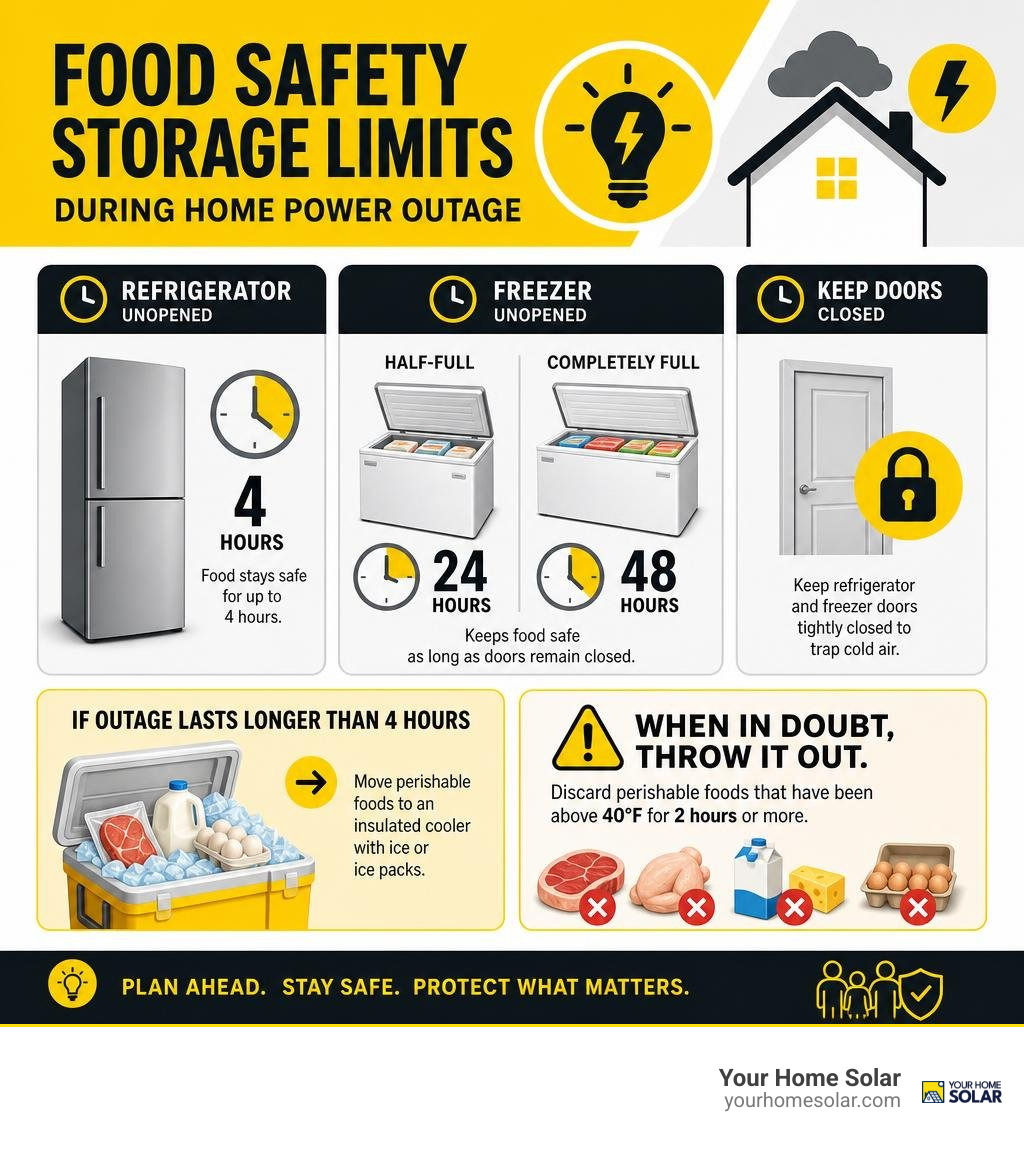
According to official safety guidelines, an unopened refrigerator keeps food cold and safe for approximately four hours. An unopened freezer holds its internal temperature for about 24 hours if half-full, and up to 48 hours if packed completely full.
Keep doors tightly closed to trap cold air. If an outage stretches beyond four hours, transfer perishables like meat, poultry, dairy, and eggs into a portable ice cooler packed with ice blocks. If you are tracking regional utility advisories during major weather events, resources like the Outages & Storm Center | Georgia Power offer broad regional storm guidance.
Always throw away perishable food that has been exposed to temperatures above 40°F for two hours or longer. When in doubt, throw it out.
Off-Grid Power Outage Solutions for Life-Critical Medical Devices
For individuals relying on oxygen concentrators, CPAP machines, or temperature-sensitive medications like insulin, an unannounced blackout is a serious medical hazard.
Contact your medical device provider to establish a clear emergency backup plan. Keep a dedicated battery backup unit connected directly to medical equipment. Advanced portable units like the Jackery HomePower 1000 v2 feature sub-10ms automatic switchover times, keeping sensitive medical gear running without rebooting or interrupting power supply.
Look for battery power systems featuring priority routing technology. These smart units automatically shut off non-essential USB or AC ports when capacity drops below preset thresholds, reserving remaining watt-hours strictly for critical life-safety devices and medical refrigeration.
High-Performance Power Outage Solutions: Solar, Batteries, and Generators
When seeking dependable long-term protection, homeowners generally choose between traditional fossil-fuel generators, portable battery stations, and permanent solar battery systems.
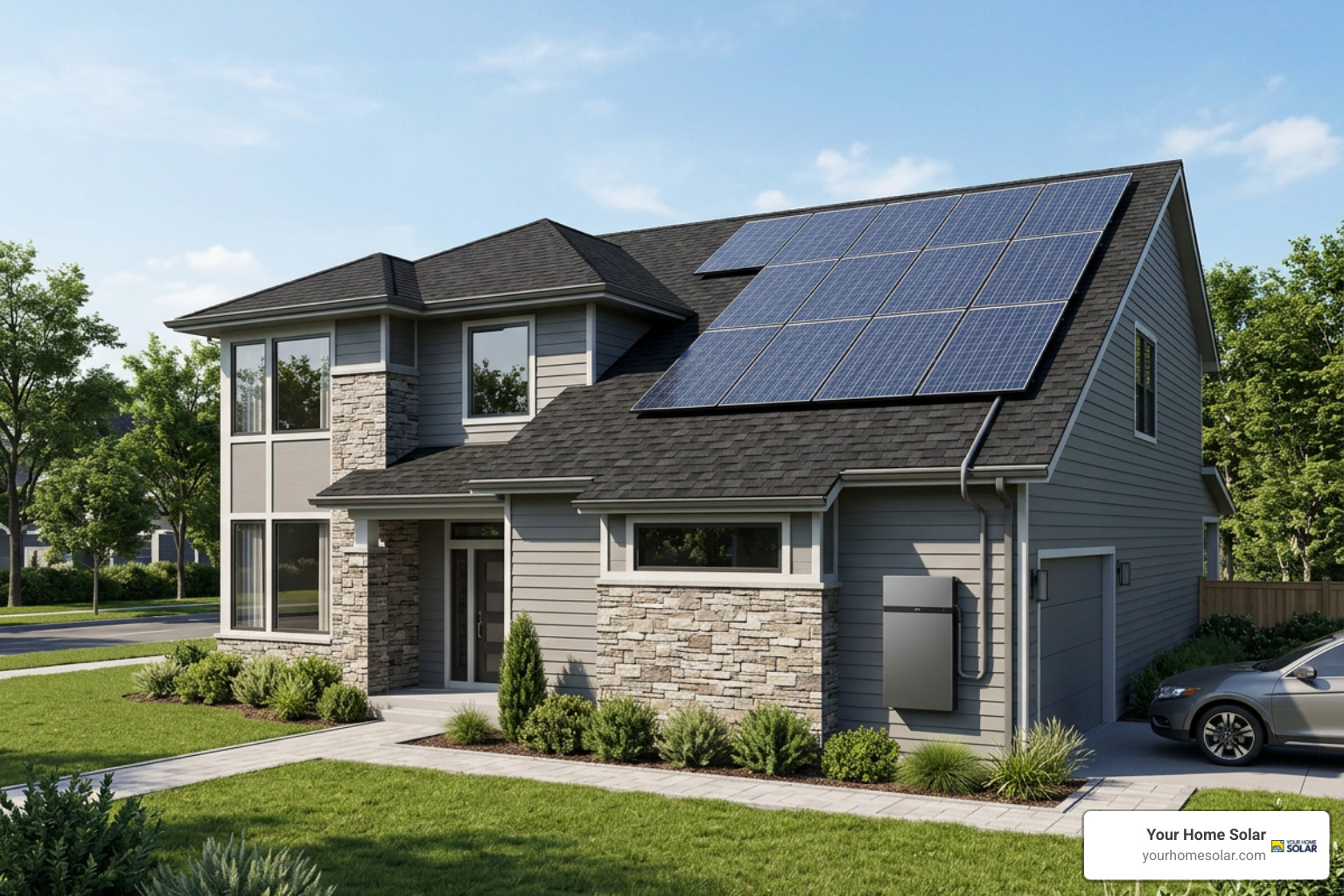
Understanding these technologies ensures your property stays fully operational through seasonal severe weather. For an in-depth breakdown of system choices, check out our resource on Comparing Solar with Traditional Gas Generators for East Tennessee Homes.
Modern Battery Backup Units vs. Traditional Fuel Generators
Fossil-fuel generators deliver heavy wattage, but demand constant manual maintenance, fresh gasoline or propane fuel, and outdoor engine operation. Modern solar battery units, built with advanced Lithium Iron Phosphate (LiFePO4) chemistry, offer whisper-quiet, zero-emission power that operates safely indoors.
| Feature / Spec | Gas Standby / Portable Generator | Modern Solar Battery Backup System |
|---|---|---|
| Fuel Source | Gasoline, Propane, or Diesel | Solar Radiation & Stored Grid Power |
| Noise Level | High (65 dB to 85+ dB) | Silent / Minimal (under 30 dB) |
| Indoor Safe? | No (Strictly Outdoors, Carbon Monoxide Risk) | Yes (Zero Dangerous Emissions) |
| Maintenance | Oil Changes, Spark Plugs, Fuel Stabilization | Maintenance-Free |
| Lifespan / Cycle Count | 500 – 3,000 Running Hours | 4,000 to 6,000+ Cycles (15+ Years) |
| Recharge Speed | Instant (Requires Manual Refueling) | 50 min AC Fast-Charge or Solar Input |
| Utility Bill Savings | None (Ongoing Fuel Expense) | Yes (Time-of-Use Peak Shaving) |
| Tax Incentives | None | 30% Federal Investment Tax Credit (ITC) |
High-capacity systems like the Anker SOLIX F3000 + Expansion Battery + 6-Circuit Manual Transfer Switch can easily power an 8 cu. ft. refrigerator for nearly two full days on battery reserve alone, recharging rapidly in under two hours via optimal solar panel input.
Many energy utilities now provide regional guidance regarding grid integration; review options via Backup Power Solutions | SCE or check local service offerings through Residential Electric Services by SCES.
To discover how energy storage keeps your essential lights on without fumes, read Beyond the Grid: How Solar Battery Banks Keep Your Lights On.
Harnessing Solar Energy for Long-Term Grid Independence
While portable units provide temporary relief, pairing rooftop solar arrays with permanent home battery storage gives complete grid independence during extended regional outages.
When utility lines collapse, grid-tied solar systems without batteries automatically shut down to protect line workers from dangerous back-feeding. Adding smart solar storage allows your inverter to isolate your home from the grid instantly, using direct sunshine to power household loads while charging the battery bank for overnight protection.
To understand why renewable backup is superior during major blackouts, read Why Emergency Solar Power is the Brightest Idea for Your Next Outage.
Safe Generator Operation, Extreme Weather Comfort, and DIY Hacks
Operating backup power equipment incorrectly poses fatal risks. Understanding generator safety and clever low-tech survival strategies keeps your family safe and comfortable during seasonal temperature extremes.
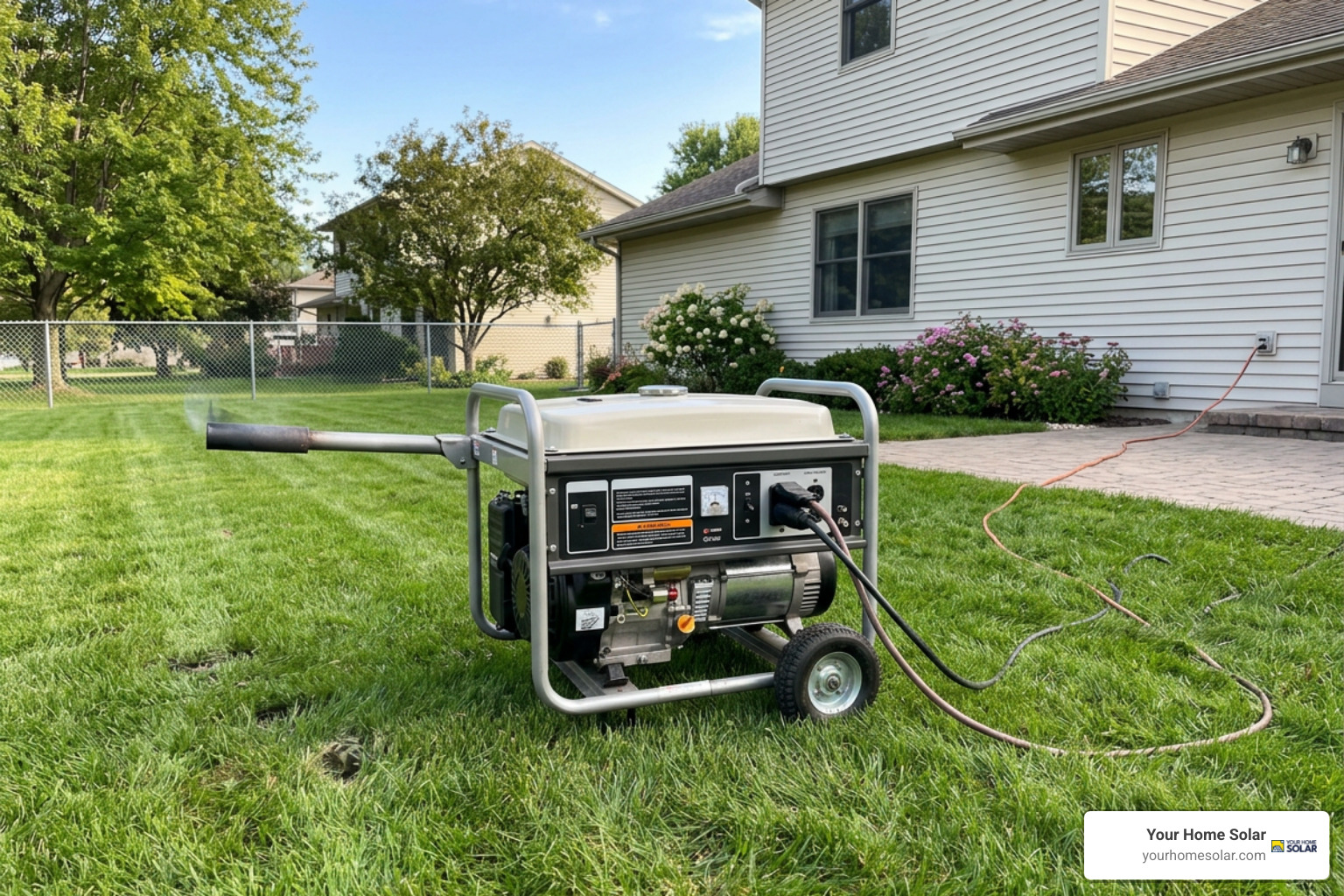
Safe Generator Placement and Carbon Monoxide Prevention
Portable gas generators produce invisible, odorless carbon monoxide (CO) gas that can build up quickly indoors. Never run a generator inside a home, garage, basement, crawlspace, or covered porch.
- The 20-Foot Clearance Rule: Always position portable generators outdoors at least 20 feet away from any house windows, doors, or open ventilation intake vents. Point exhaust gases away from living spaces.
- Proper Extension Cords: Use heavy-duty, outdoor-rated extension cords sized properly for the appliance amperage load.
- Refueling Precautions: Always shut down a gas generator and allow the engine to cool completely before refueling. Spilling gasoline over a hot engine block or muffler can cause an immediate fire or explosion.
- CO Detectors: Install battery-operated carbon monoxide alarms on every floor level of your home, especially near sleeping areas.
Ingenious DIY Power Outage Solutions and Emergency Lighting Hacks
When battery supplies run low, simple household DIY hacks can improvise room lighting and keep basic gear operating.
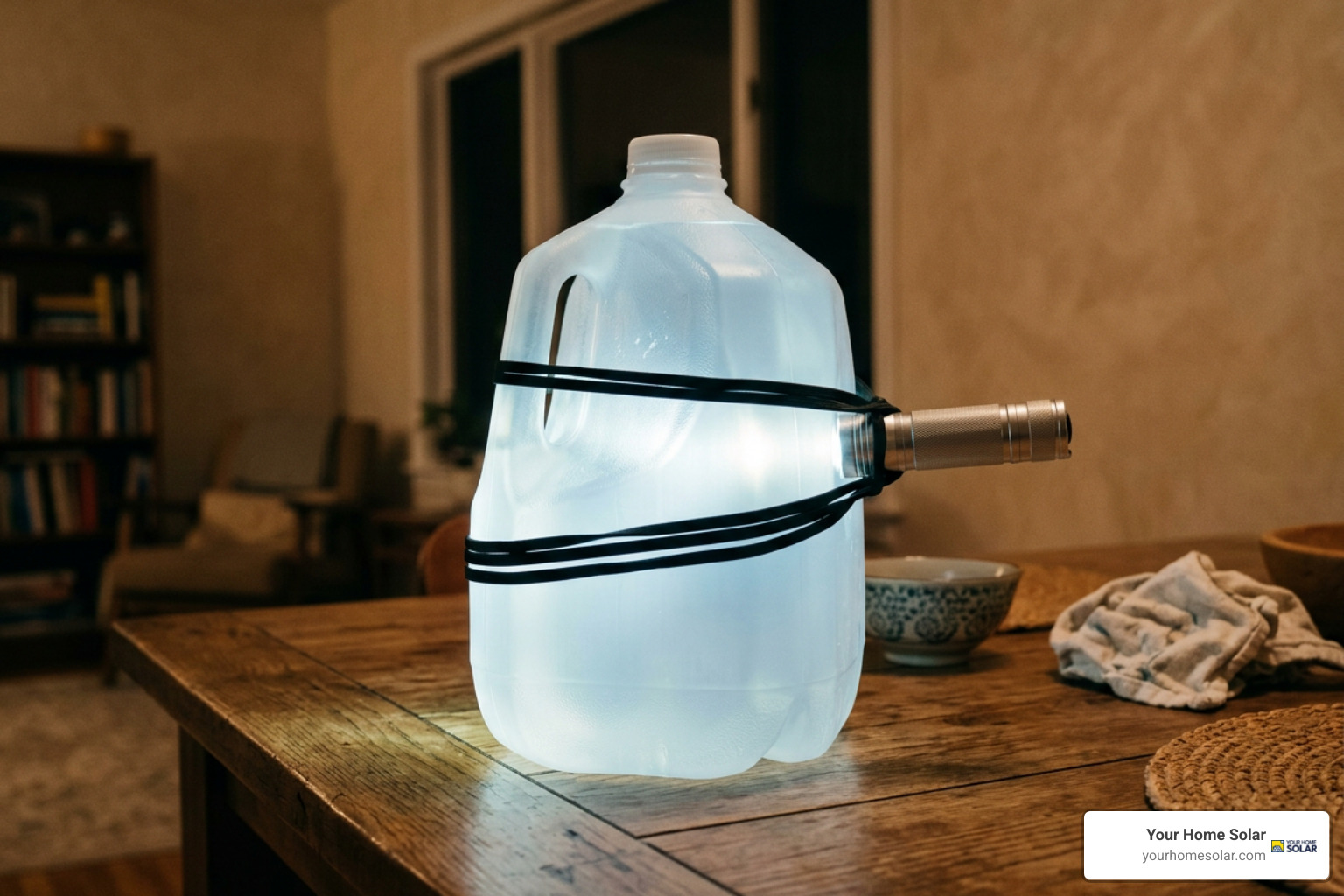
- The Water Jug Ambient Lantern: Strap an LED flashlight or headlamp facing inward against the side of a clear plastic gallon jug filled with clean water. The water refracts the intense beam into a soft, 360-degree ambient glow similar to a 55-watt light bulb, lighting up an entire room.
- Solar Garden Light Trick: Bring outdoor solar garden stake lights inside at dusk and stick them in small vases or cans for free night lighting. Re-place them outside under sunny skies during the day to recharge.
- Foil Battery Adapter: In a tight spot, convert a smaller AAA battery to fit a device needing a AA battery by rolling a small ball of aluminum foil and inserting it tightly into the gap at the negative terminal end. (Use only for low-draw devices like remote controls or small LED flashlights).
- Washing Machine Ice Chest: If your cooler is full, load your washing machine drum with ice to store sealed drinks and canned food. As the ice melts, it drains harmlessly down the washing machine drain pipe without creating a wet floor mess.
Safety Note regarding heating: Never use gas stovetops, ovens, or open flame charcoal grills for interior home heating. Avoid makeshift terracotta pot candle heaters, as exposed flames create serious home fire hazards and toxic indoor fumes.
Post-Outage Safety Protocols and Grid Recovery
When power is restored, take careful, measured steps to bring your home back online safely and minimize appliance damage.
- Inspect Your Property: Walk around your property to check for downed utility wires, tree branches resting on power lines, or structural damage. Stay at least 30 feet away from any downed wire and call your utility provider immediately.
- Reconnect Electrical Loads Gradually: Wait 10 to 15 minutes after power returns before plugging back in major appliances like air conditioners, heat pumps, water heaters, and refrigerators. This prevents overloading local transformers during grid restoration.
- Inspect Food Temperatures: Check the internal temperature of your refrigerator and freezer using a food thermometer. Discard any perishable food item that has reached 40°F or above for longer than two hours.
- Check Water Safety: If municipal water pressure dropped significantly during the blackout, check local public health alerts for boil water advisories before drinking tap water or using ice machines.
For additional storm recovery guidance specific to East Tennessee, read Don’t Be Powerless Against Tennessee Storms.
Frequently Asked Questions
How long will food remain safe in a refrigerator or freezer during a blackout?
An unopened refrigerator will keep food safely cold for about 4 hours. A full freezer retains safe frozen temperatures for approximately 48 hours, while a half-full freezer holds temperature for about 24 hours if the door remains completely closed.
Can I use a gas stove or oven to heat my home during a winter power outage?
No, never use a gas stovetop or oven to heat your home. Doing so creates an extreme risk of lethal carbon monoxide poisoning, introduces dangerous fire hazards, and can damage your cooking appliances.
How far away should a portable generator be placed from the home?
Portable generators must always be operated outdoors, at least 20 feet away from any windows, exterior doors, air conditioning intakes, or attached garages, with the engine exhaust pointed directly away from your residence.
Conclusion
Preparing effective power outage solutions is essential for maintaining household safety, health, and everyday comfort when the electrical grid fails. From organizing an emergency outage kit to investing in permanent residential backup systems, taking proactive steps today keeps your home running smoothly through any storm.
At Your Home Solar, we specialize in delivering tailored, reliable energy solutions across Knoxville, Maryville, Oak Ridge, and surrounding East Tennessee communities. Whether you need integrated rooftop solar arrays, quiet battery generators, or complete home energy backup, our expert team provides trusted guidance backed by 100% customer satisfaction.
Take control of your home’s energy security today. Explore our complete guide to The Ultimate Guide to Solar Batteries and Energy Storage Solutions and protect your household before the next storm rolls in.