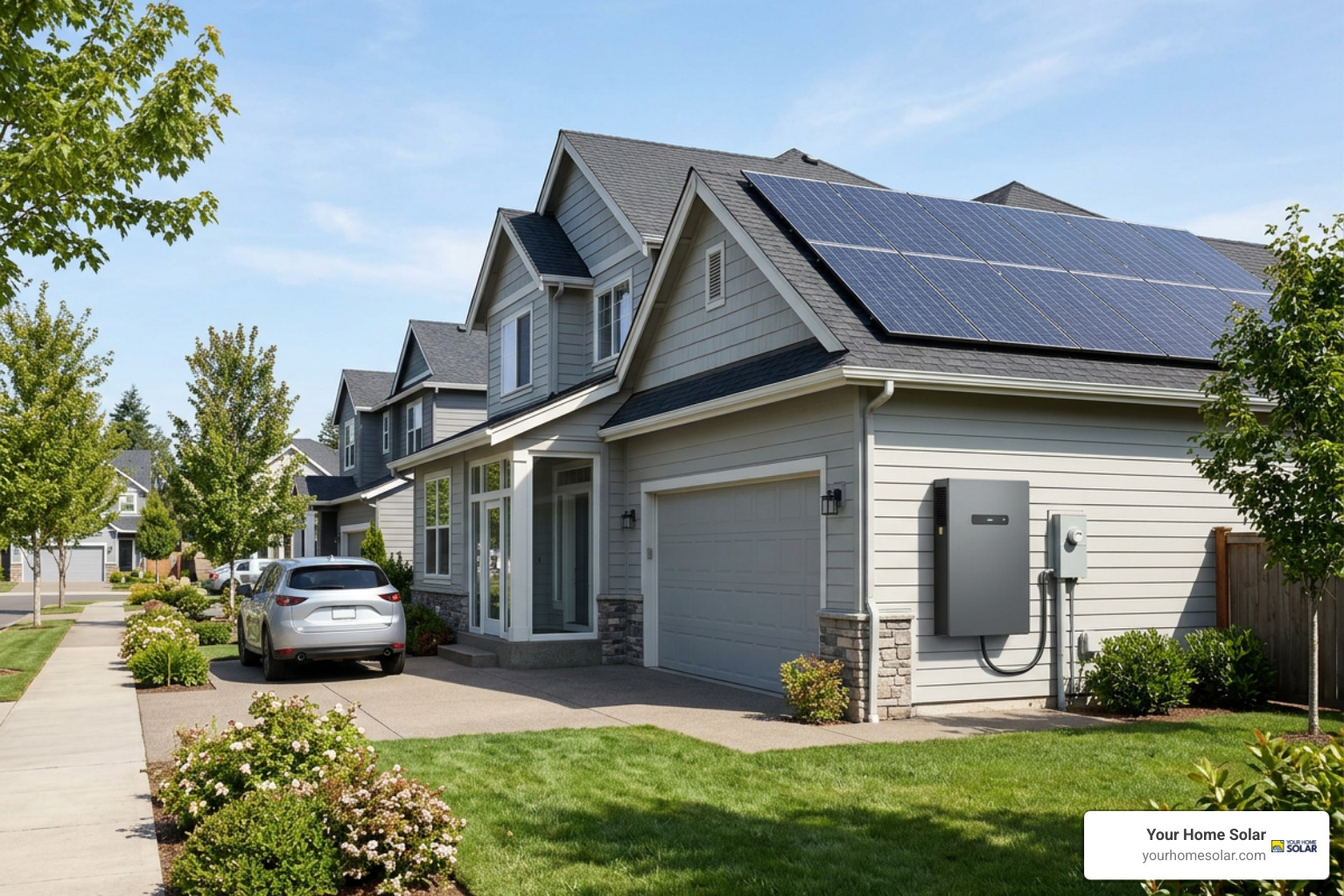
Why Modern Energy Storage Solutions Matter for Every Homeowner
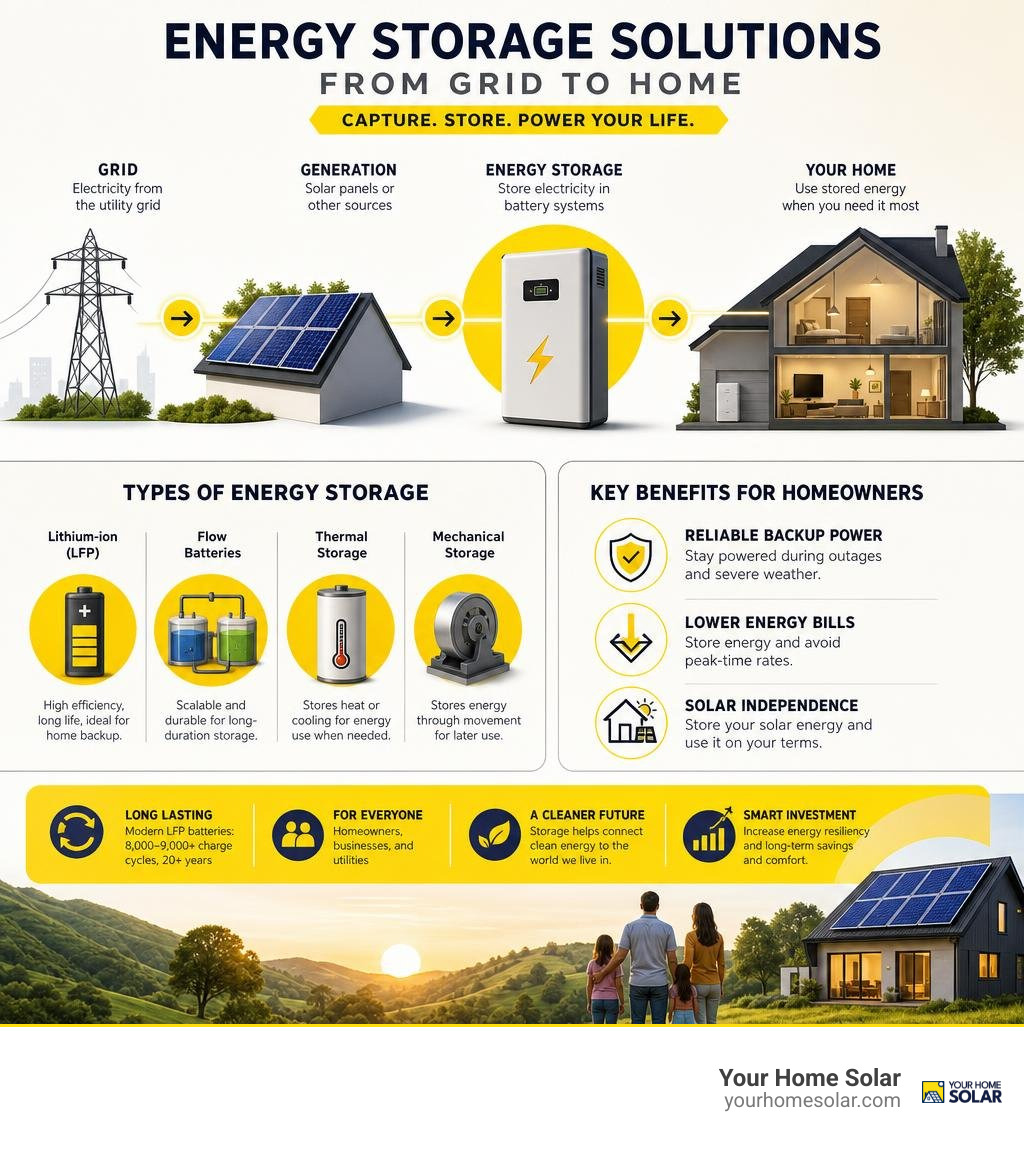
Energy storage solutions are systems that capture electricity — from the grid, solar panels, or other sources — and hold it for use when you need it most.
Here’s a quick breakdown of what you need to know:
| Question | Quick Answer |
|---|---|
| What does energy storage do? | Stores electricity so you can use it during outages or peak price hours |
| What types exist? | Lithium-ion (LFP), flow batteries, thermal, and mechanical systems |
| Who uses them? | Homeowners, businesses, and utilities |
| Key benefit for homeowners? | Backup power during storms, lower energy bills, solar independence |
| How long do they last? | Modern LFP batteries: 8,000–9,000+ charge cycles, 20+ years |
Whether a severe storm knocks out your neighborhood’s power or your electricity bill keeps climbing, energy storage gives you a way to stay in control. One Connecticut homeowner put it simply: installing solar and battery backup gave their family real peace of mind every time storm season approached.
The stakes are real. By 2050, nearly 50% of grid electricity is projected to come from renewable sources — and without storage, that energy can be wasted the moment it’s generated. Storage is the bridge between clean energy and reliable power.
I’m Ernie Bussell, founder and CEO of Your Home Solar, and I’ve spent years guiding East Tennessee homeowners through the full picture of energy storage solutions — from solar integration to battery backup systems — drawing on my background in military quality assurance, operations management, and leading a $40 million solar installation business. In this guide, I’ll walk you through everything you need to make a confident, informed decision.
Easy Energy storage solutions word list:
- Solar battery backup
- Cost of backup battery for a residential solar systems
- Battery storage for solar pv system
Understanding Next-Generation Energy Storage Solutions
When we talk about modern energy storage solutions, we are looking at systems designed to bridge the gap between energy production and energy consumption. Electricity has historically been a “use-it-or-lose-it” commodity. When power plants generated electricity, it flowed immediately through transmission lines directly into homes and businesses across Knoxville, Maryville, and the rest of East Tennessee. If you did not turn on a light bulb at that exact millisecond, that extra power dissipated into thin air.
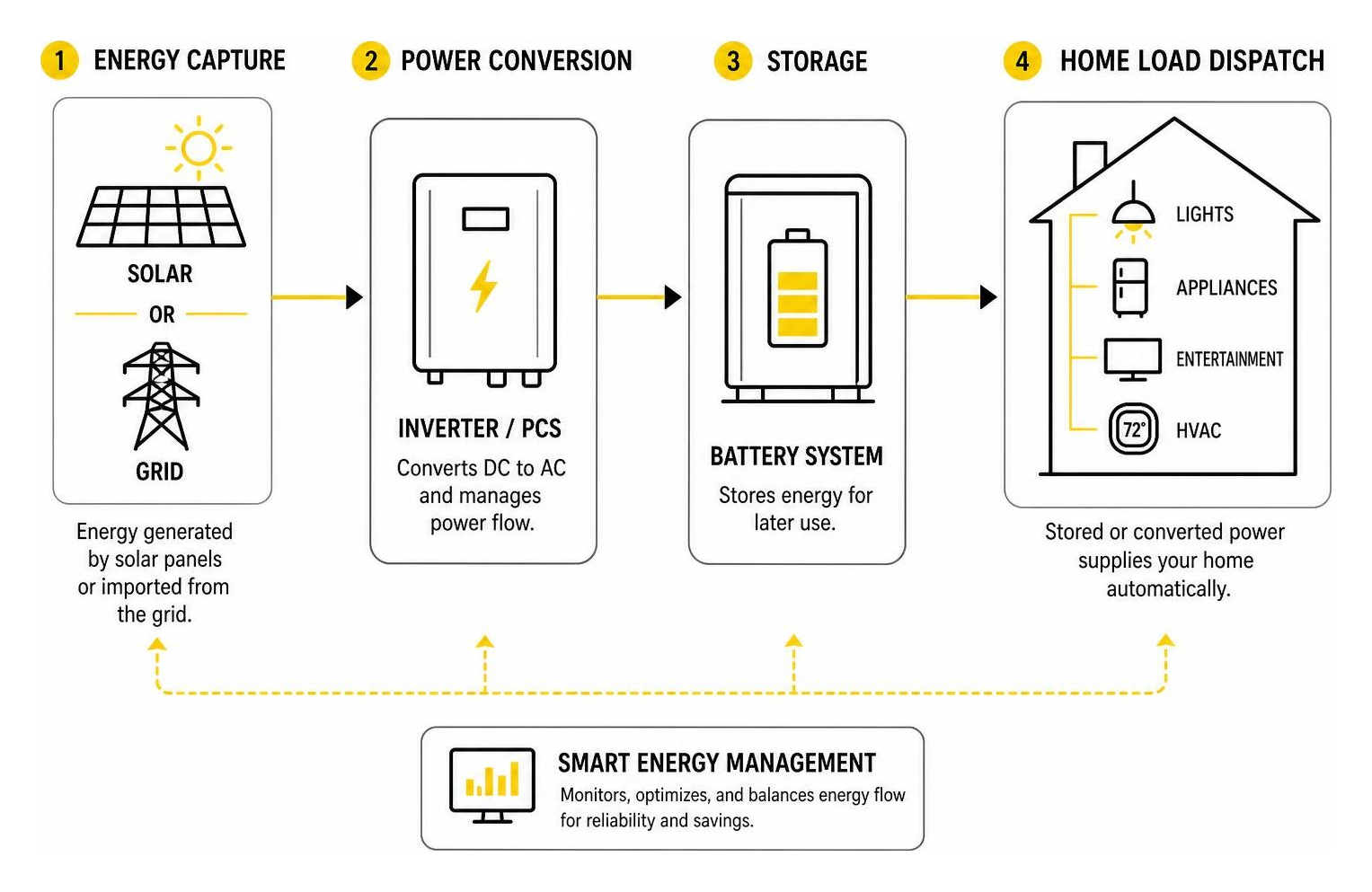
Today’s storage solutions change that equation fundamentally. By introducing advanced power electronics and high-capacity battery units, we can smooth out the grid’s natural fluctuations, store surplus power during times of low demand, and deploy it instantaneously when demand spikes or the electrical grid fails.
A core metric used to judge any storage technology is round-trip efficiency (RTE). RTE measures the total percentage of energy fed into a storage device that can be retrieved later. Modern energy storage technology routinely achieves round-trip efficiencies between 89% and 94%. That means almost all the electricity you pump into your battery stays right there, waiting for you to flip the switch.
How Battery and Mechanical Systems Work
To truly grasp how storage works, it helps to break it down into its major technological categories: electrochemical and mechanical.
Electrochemical storage is what most homeowners picture when thinking of a battery backup. These systems rely on chemical reactions inside sealed cells to absorb direct current (DC) power and discharge it on demand. An integrated inverter then converts that DC power into alternating current (AC) power, which runs your household appliances. If you are curious about how these units integrate into residential spaces, check out our comprehensive guide to residential solar battery types.
Mechanical and thermal energy storage work on larger physical scales:
- Pumped Hydroelectric Storage: Water is pumped uphill to a high reservoir during periods of cheap power and released downward through turbines to produce electricity when demand rises.
- Compressed Air & Flywheels: Mechanical kinetic systems store energy as compressed gas or rotational force, providing high burst power for grid stability.
- Thermal Storage: Concentrating solar plants heat materials like molten salt to store thermal energy for continuous steam turbine power generation even after sunset.
While mechanical storage serves massive regional infrastructure, electrochemical battery systems are the unquestioned champions of residential, commercial, and microgrid installations.
Core Chemistries and Technologies
Not all batteries are created equal. The energy storage industry has moved rapidly through several chemical generations, settling heavily on specific lithium-based architectures due to their compact size, density, and longevity.
Here is how the dominant battery chemistries line up:
- Lithium Iron Phosphate (LFP / LiFePO4): LFP chemistry is the absolute gold standard for home and commercial stationary storage in 2026. LFP batteries offer extraordinary thermal stability, pose virtually zero threat of thermal runaway, avoid toxic heavy metals like cobalt, and deliver an incredible cycle life of 8,000 to 9,000+ full charge cycles.
- Nickel Manganese Cobalt (NMC): Popular in electric vehicles because of its high energy-to-weight ratio, NMC is less commonly favored for fixed home storage due to lower thermal limits and shorter lifespan under heavy daily cycling.
- Flow Batteries: Utilizing liquid electrolyte tanks pumped past membrane electrodes, flow batteries allow capacity scaling simply by using larger fluid tanks. They are excellent for multi-hour industrial storage but remain too bulky for residential garages.
To explore how these chemistries perform side by side in practical home setups, take a look at our detailed battery comparison guide.
Comparing Residential, Commercial, and Utility-Scale Systems
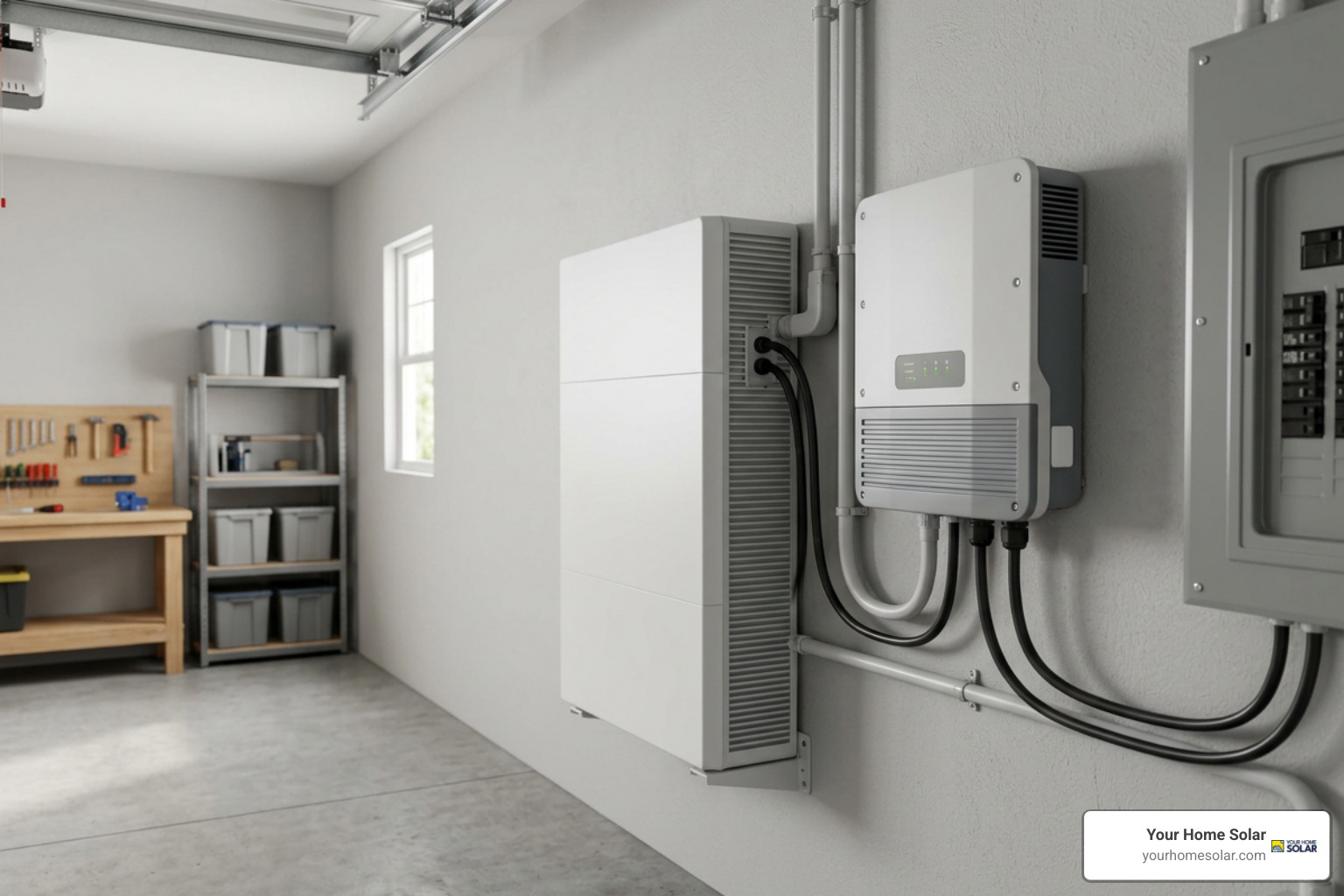
As we evaluate energy storage solutions, scale plays a critical role in system architecture, engineering design, and financial return. A single-family home in Farragut requires a vastly different system than an industrial manufacturing plant in Oak Ridge or a regional power supplier servicing entire counties.
Key Benefits of Residential Energy Storage Solutions
For homeowners throughout Knox County, Blount County, and Sevier County, residential energy storage provides three game-changing advantages:
- Seamless Emergency Backup: When extreme weather knocks down transmission lines, an automatic transfer switch isolates your home microgrid in under 20 milliseconds, running your HVAC, refrigeration, lights, and medical devices without a hiccup.
- Energy Independence: Paired with rooftop solar, home storage captures daytime solar overflow and powers your home through the night, minimizing grid reliance.
- Time-of-Use (TOU) & Peak Optimization: Smart energy management software allows your battery to discharge during peak utility pricing periods, saving you money automatically every day.
When evaluating equipment, working out proper sizing and circuit prioritization is essential. You can learn more about picking the right match by reading our advice on choosing the best battery storage for solar and exploring the top home battery backup solutions.
Commercial and Grid-Level Applications
When we move up to commercial facilities and grid utilities, the primary operational focus shifts toward power demand management and grid stabilization.
For businesses, peak demand charges can represent up to 50% of a monthly commercial electric bill. Utility providers charge extra based on the single highest 15-minute window of electricity consumption during the billing cycle. Commercial battery storage systems perform peak shaving—discharging stored energy during high-load facility operations (like starting up heavy machinery) to keep utility demand flat and cut overhead costs.
Innovations in commercial hardware have created compact powerhouses:
- Units such as an 80kW liquid-cooled commercial BESS pack 216kWh of usable capacity into a tiny cabinet footprint of just 1.4 square meters, offering integrated multi-channel MPPT solar connectivity.
- Larger industrial parks and microgrids utilize containerized setups like 1MW containerized storage solutions delivered in pre-engineered 20-foot standard ISO enclosures.
| System Scale | Typical Capacity | Core Applications | Key Characteristics |
|---|---|---|---|
| Residential | 10 kWh – 30 kWh | Home outage backup, TOU management, solar self-consumption | Compact wall-mount or stackable cabinets, ultra-quiet operation |
| Commercial (C&I) | 100 kWh – 2 MWh | Peak shaving, demand charge reduction, facility resilience | Liquid-cooled modular cabinets, high PV oversizing options |
| Utility-Scale | 5 MWh – 500+ MWh | Grid frequency regulation, peaker plant replacement, black start | Containerized 20ft platforms, high energy density (up to 360 MWh/acre) |
Pairing Solar PV with Storage for Ultimate Resilience
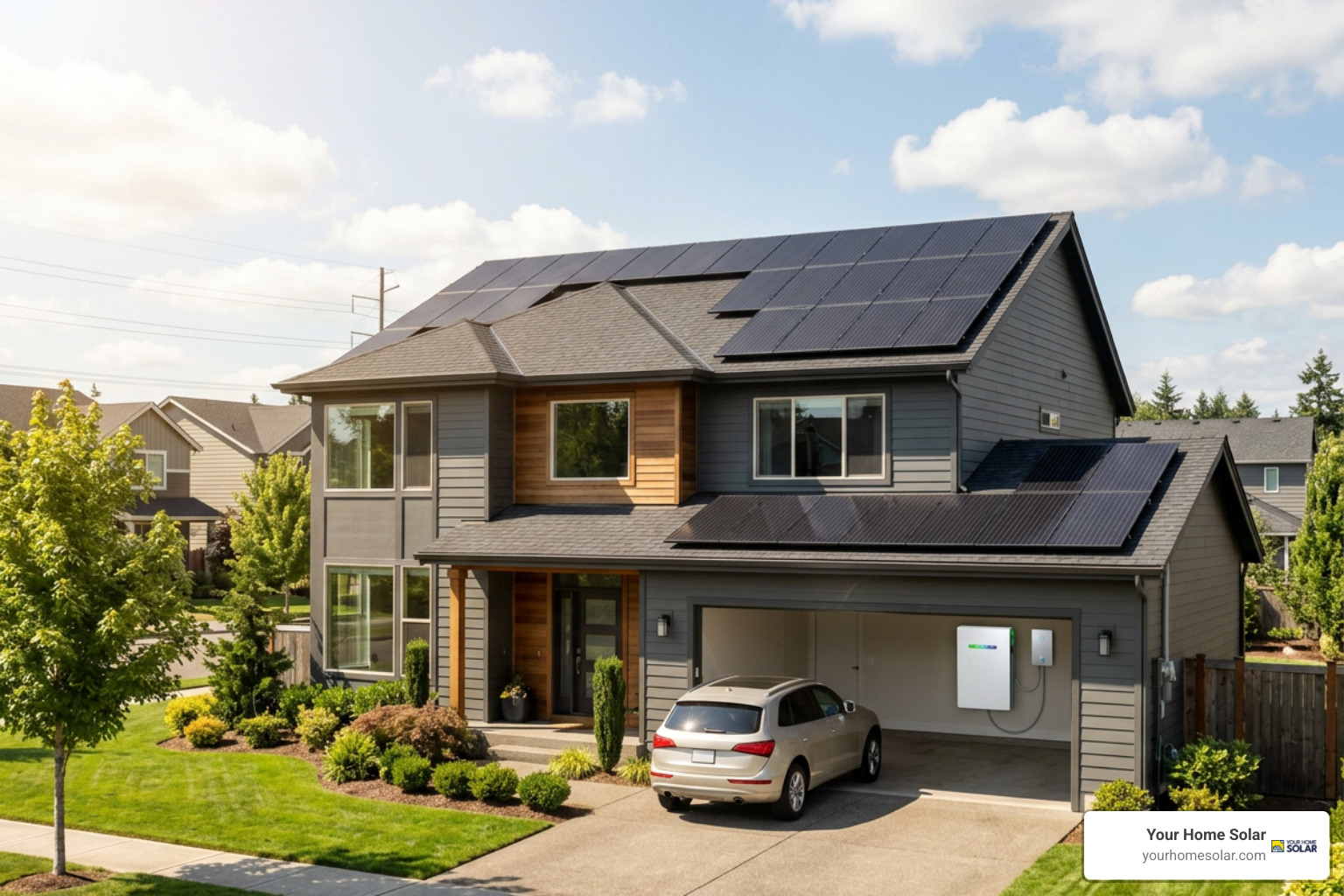
Solar panels alone are fantastic at generating clean energy during daylight hours, but standard grid-tied solar systems have a major vulnerability: when the power grid goes down, your inverter automatically shuts off to prevent energizing power lines while utility crews work. That means without a battery, your solar panels sit idle during a daytime blackout!
By combining solar photovoltaic (PV) arrays with energy storage solutions, you unlock islanding mode. During a grid failure, your home system disconnects safely from the utility grid, creating a standalone microgrid. Your solar panels continue producing power, running your home, and recharging your battery bank simultaneously.
Extreme Weather Preparedness and Backup Power
East Tennessee is no stranger to sudden severe weather, from heavy summer thunderstorms to unexpected winter ice storms across the Smoky Mountains. During severe power outages, traditional backup generators carry significant drawbacks: fuel shortages, maintenance headaches, harmful exhaust emissions, and deafening engine noise.
By contrast, modern LFP solar battery banks operate in total silence with zero direct emissions. They do not depend on gas stations staying open during natural disasters. As long as the sun rises, your continuous loop of generation and storage keeps essential home circuits online indefinitely.
To discover how continuous solar recharging works during multi-day grid disruptions, read our guide on how solar battery banks keep lights on and see how sizing works with our breakdown of understanding 10kW solar systems with battery storage.
Safety Standards and Compliance Certifications
Because stationary storage systems hold significant electrical capacity, international safety standards and strict building codes govern their design and installation. Modern residential and commercial battery systems undergo rigorous testing to guarantee absolute home safety.
When reviewing equipment with our installation team, we look for key safety certifications:
- UL 1973: Tests cell and battery pack structural integrity under electrical, mechanical, and environmental stress.
- UL 9540: Evaluates the safety of the fully integrated energy storage system (battery, inverter, software, and enclosure working together).
- UL 9540A: A specialized thermal runaway test standard that proves a single cell failure cannot cascade into neighboring cells or fire risks.
- NFPA 855: Standards set by the National Fire Protection Association governing physical installation spacing, location, and containment requirements.
Modern enclosures come standard with multi-layered safety features, including aerosol fire suppression, gas detection sensors, dynamic thermal isolation, and automated circuit cutoffs.
Cutting-Edge Advancements in High-Density Storage
The pace of technology in the energy storage industry is moving faster than ever. Standard manufacturing capacity reached 80 GWh per year globally by mid-2026, lowering equipment costs while boosting energy density to unprecedented heights.
Liquid Cooling and Next-Gen LFP Cells
One of the single biggest technological leaps over recent years has been the shift from forced-air cooling to active liquid cooling.
Batteries generate heat as they charge and discharge. Traditional cooling fans often create temperature imbalances within a battery cabinet, leading to uneven cell wear. Liquid cooling circulates thermal fluid directly through internal cold plates surrounding each cell pack.
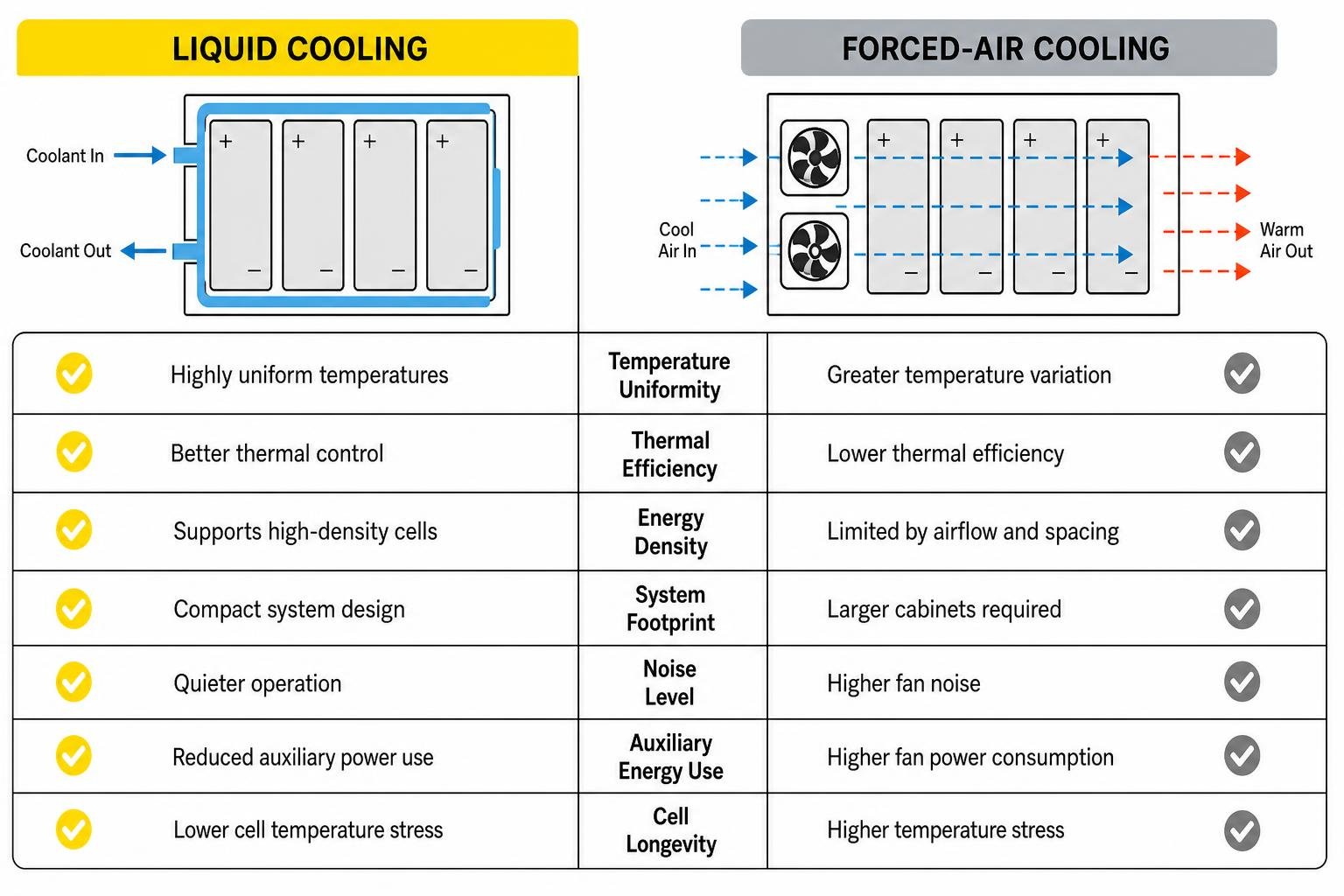
This advanced thermal management offers crucial benefits:
- Consistent Temperature Control: Keeps internal cell temperature variations under 3°C, extending overall operational battery lifespan by 20% to 30%.
- High-Density Cell Integration: Enables manufacturers to utilize massive 314Ah LFP cell designs, packing incredible storage capacity into minimal square footage.
- Footprint Reduction: High-density utility solutions like 5.0 MWh LFP container specs fit 5,016 kWh into a single standard 20-foot container, cutting project land usage by up to 35%.
- Scalable Infrastructure: Utility platforms such as high-density utility battery platforms can now deliver up to 360 MWh of storage per acre, providing massive grid support.
Incentive Programs and Utility-Scale Energy Storage Solutions
Financial incentives play a huge role in lowering upfront costs and accelerating home battery adoption across the nation.
For instance, dedicated public utility incentive programs—such as the landmark Connecticut Energy Storage Solutions program—have established dual-tier incentive structures that combine upfront purchase discounts with long-term performance payouts to compensate homeowners for supporting grid stability during peak summer heatwaves. You can review how state policy frameworks operate by checking out the official Connecticut Energy Storage Solutions program overview.
Across East Tennessee, local power companies and federal tax incentives (such as the 30% Federal Investment Tax Credit under the Inflation Reduction Act) substantially reduce residential installation expenses. To analyze payback timelines and long-term utility savings, check out our full home battery backup cost analysis.
Frequently Asked Questions About Energy Storage Solutions
What is the difference between upfront rebates and performance-based incentives?
An upfront rebate is an immediate discount applied directly toward purchasing and installing your energy storage equipment, lowering your out-of-pocket capital cost.
A performance-based incentive is an ongoing financial payout earned over time. In performance programs, your utility provider compensates you (often biannually or annually) for allowing them to discharge a tiny fraction of your stored battery energy during high-demand grid events—like hot summer afternoons—helping prevent local brownouts without affecting your emergency backup reserve.
How long can a battery storage system power essential home appliances?
The duration your battery lasts depends on three main variables: your total battery storage capacity (kWh), the total wattage of the appliances you choose to run, and whether you have solar panels actively recharging the system during the day.
For example, a typical 10 kWh to 15 kWh residential LFP battery powering essential critical loads (refrigeration, LED lighting, Wi-Fi router, device chargers, and well pump) will easily cover your home for 24 to 36 hours on a single charge. When paired with rooftop solar panels, that timeline extends indefinitely because your solar array recharges the battery bank every sunny morning.
Why are lithium iron phosphate (LFP) batteries preferred over older battery types?
Lithium Iron Phosphate (LFP) is widely considered the superior choice for home energy storage because of its unmatched safety profile and thermal stability. Unlike older lead-acid batteries or earlier cobalt-based lithium chemistries, LFP batteries:
- Do not suffer from toxic off-gassing or thermal runaway hazards.
- Offer an astounding operational lifespan exceeding 8,000 to 9,000 full charge-discharge cycles (over 20 years of daily use).
- Require zero liquid maintenance or periodic acid topping.
- Support 100% Depth of Discharge (DOD) without damaging cell health.
Conclusion
Navigating modern energy storage solutions doesn’t have to be overwhelming. Whether your goal is protecting your family from unexpected storm blackouts, lowering your monthly energy bill, or achieving complete energy self-reliance, today’s battery storage technology delivers incredible performance, thermal safety, and long-term financial savings.
At Your Home Solar, we are proud to serve communities across Knoxville, Oak Ridge, Maryville, Johnson City, and throughout East Tennessee. Our team brings trusted technical expertise, tailored installations, and a commitment to 100% customer satisfaction every step of the way.
Ready to take control of your home’s energy future? Explore the ultimate guide to solar batteries and energy storage solutions or reach out to our team today to design a reliable, custom-tailored storage system built for your home!