
What You’ll Pay to Charge at Home: The Real Numbers
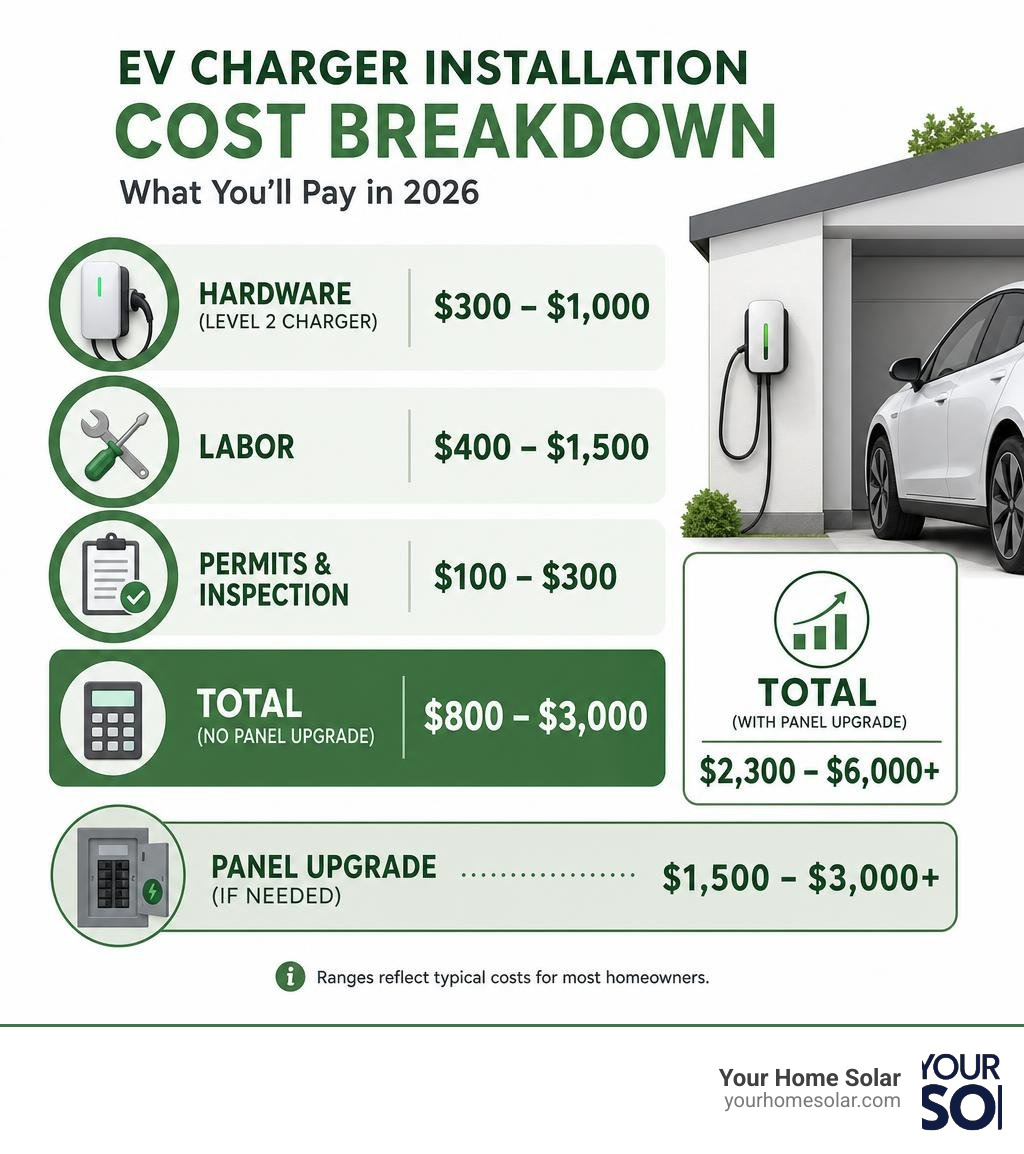
The average cost of EV charger installation in 2026 ranges from $800 to $3,000 for most homeowners — and that’s before you factor in the charger unit itself.
Here’s a quick snapshot so you can budget right away:
| Cost Item | Typical Range |
|---|---|
| Charger hardware (Level 2) | $300 – $1,000 |
| Installation labor | $400 – $1,500 |
| Permits and inspection | $100 – $300 |
| Total (no panel upgrade) | $800 – $3,000 |
| Panel upgrade (if needed) | $1,500 – $3,000+ |
| Total (with panel upgrade) | $2,300 – $6,000+ |
The national average sits around $1,200 per charger, with most homeowners landing somewhere between $900 and $2,500 all-in for a standard Level 2 setup.
If you’ve just bought an electric vehicle, you already know the question that follows almost immediately: how do I charge this thing at home without waiting three days? The answer — a Level 2 home charger — is straightforward. The cost, however, is where things get murky fast.
Search online and you’ll see everything from $500 to $5,000. That spread isn’t wrong. It just reflects how much a single variable — like the distance from your electrical panel to your parking spot, or the age of your home’s wiring — can swing the final number.
This guide cuts through the noise. You’ll find clear cost breakdowns, the factors that push prices up or down, available incentives, and exactly what to expect when an electrician shows up at your door.
I’m Ernie Bussell, Founder and CEO of Your Home Solar, East Tennessee’s #1 solar energy contractor, and I’ve helped hundreds of homeowners navigate the average cost of EV charger installation as part of a broader home energy strategy. My background in nuclear-grade quality assurance and operations management means I approach every installation with the same standard: get it right the first time, no shortcuts.
Average cost of ev charger installation word guide:
What Is the Average Cost of EV Charger Installation in 2026?
As we move through 2026, home EV charging has transitioned from a high-tech luxury to a standard home upgrade. If you are relying on the standard Level 1 charger that came with your vehicle, you already know the pain of “trickle charging.” Pluggable into a standard 120-volt wall outlet, Level 1 charging only adds about 3 to 5 miles of range per hour. For a full charge, you could be waiting over 50 hours!
By contrast, a Level 2 charging station utilizes a 240-volt circuit—the same kind used by heavy-duty appliances like clothes dryers—to deliver 25 to 40 miles of range per hour of charging. This means you can comfortably plug in your car before bed and wake up to a fully charged battery every single morning.
According to recent data, the typical total cost range to purchase and install a Level 2 charger in a residential home is between $1,000 and $4,000+, with most standard installations landing in the $1,200 to $3,000 range before incentives. If you want to understand the complete financial landscape, check out the Home EV Charger Installation Cost 2026: Complete Guide for a comprehensive look at what homeowners are paying nationwide.
To help you visualize the difference in performance and setup costs, we have put together a comparison table:
| Charging Level | Voltage | Range Added Per Hour | Average Equipment Cost | Typical Installation Cost |
|---|---|---|---|---|
| Level 1 | 120V | 3 – 5 miles | $0 (included with vehicle) | $0 (uses standard outlet) |
| Level 2 | 240V | 25 – 40 miles | $300 – $1,000 | $400 – $1,500+ (without upgrades) |
For a deeper dive into how these levels translate to daily driving and monthly utility bills, read our article on Budgeting for Juice: Your Guide to 240V EV Charging Costs.
Hardware vs. Labor: Breaking Down the Average Cost of EV Charger Installation
When you receive a quote for installing an EV charger, it will generally be split into two main buckets: hardware (the physical charging unit itself) and professional labor (the electrical work, permitting, and materials).
- The Hardware ($300 – $1,000): Level 2 home chargers vary in price based on brand, amperage capacity (typically 32 to 48 amps), and whether they have “smart” features. Basic “dumb” chargers simply plug in and charge. Smart chargers, on the other hand, connect to your home Wi-Fi, allowing you to track energy usage, schedule charging times to take advantage of cheaper off-peak electricity rates, and integrate with home solar systems. Popular high-quality units like the ChargePoint Home Flex, Wallbox Pulsar Plus, or Tesla Universal Wall Connector generally retail between $350 and $600.
- Labor and Materials ($400 – $1,500): This is where the average cost of EV charger installation can fluctuate. A licensed electrician must mount the charger, run heavy-duty conduit and wire from your main electrical panel to the charger location, install a new double-pole circuit breaker, and perform safety testing. Materials like 6 AWG copper wire (which is required for a standard 48-amp charger on a 60-amp circuit) can cost $3 to $5 per foot, meaning long wire runs quickly add up.
- Permit and Inspection Fees ($100 – $300): In almost all municipal jurisdictions, adding a high-voltage 240V circuit requires an electrical permit and a subsequent safety inspection. This ensures the work complies with the National Electrical Code (NEC) and protects your home insurance coverage.
To understand how these individual pieces come together to form your final estimate, you can explore The Definitive Guide to 240V EV Charger Installation Cost.
Regional Variations and the Average Cost of EV Charger Installation
Where you live plays a significant role in what you will pay for professional trade labor. Electrician hourly rates vary by as much as 40% across the United States. While homeowners in high-cost-of-living metropolitan areas on the West Coast or Northeast might see labor rates of $150+ per hour, pricing in the South is generally much more reasonable.
For those of us living in East Tennessee—including Knoxville, Oak Ridge, Maryville, Johnson City, Kingsport, Sevierville, and the surrounding counties—the local averages are highly competitive. While the national average project cost for a Level 2 installation is around $1,200, the average installation cost in Tennessee is closer to $1,032, with simple garage installations often starting as low as $430 to $500. In Knoxville and Sevierville, typical non-upgrade installations average right around $1,020.
To see how local labor rates, home age, and structural layouts interact to shape pricing in your specific zip code, you can test out the EV Charger Installation Cost Calculator (2026).
Key Factors That Influence Your Installation Bill
No two homes are built exactly alike, which means no two EV charger installations are identical. When an electrician evaluates your home, they look at several physical and structural variables to determine the complexity of the job.
The single biggest physical cost driver is the distance from your electrical panel to your parking spot. Electricians call this the “length of the run.” If your main electrical panel is located on the back wall of your garage, and you want the charger mounted just five feet away on the adjacent wall, you are in luck. This is a “simple garage install” that requires minimal conduit and wire, keeping labor and material costs to a minimum.
However, if your panel is in a basement on the opposite side of the house, the electrician will have to thread heavy-gauge wire through finished drywall, around structural joists, or potentially even trench underground through your yard to reach a detached garage or outdoor parking pad. Every ten feet of conduit and wire run can add $50 to $100 or more to your final bill due to material costs and the labor required to route it.
For a detailed look at how these physical hurdles translate to your bottom line, check out our guide on Unplugging the Mystery: How Much to Install a Level 2 EV Charger.
Electrical Panel Capacity and Upgrades
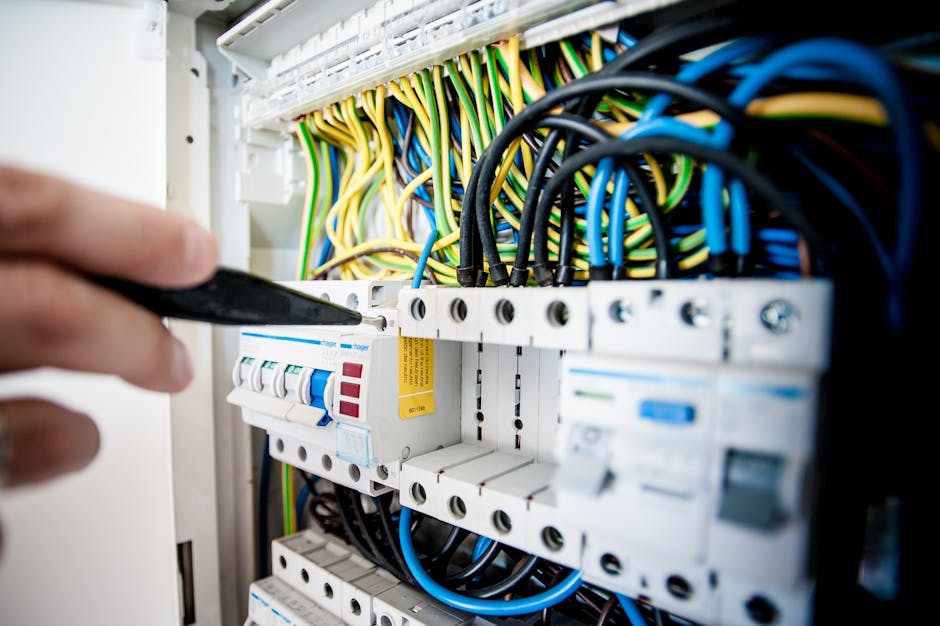
Before you can safely draw 32 to 48 amps of continuous power to charge your vehicle, your home’s electrical panel must have the capacity to handle it.
Most modern homes built within the last 30 years are equipped with a 200-amp main service panel, which usually has plenty of spare capacity to support an EV charger alongside standard household appliances. However, older homes—particularly those built before the 1980s—often only have 100-amp or 125-amp service.
If your panel is already running a central air conditioner, an electric clothes dryer, an electric oven, and a hot tub, adding a continuous 40-amp draw from an EV charger could overload your system. In these cases, you have two options:
- A Main Service Panel Upgrade ($1,500 – $3,000+): This involves hiring an electrician to coordinate with your local utility provider (such as KUB in Knoxville or LCUB in Lenoir City) to pull your electrical meter, install an entirely new, modern 200-amp panel, and upgrade the service entry wires coming into your home. While expensive, this future-proofs your home for solar, battery backups, and other electric appliances.
- Smart Load Management ($500 – $1,200): If a panel upgrade is cost-prohibitive, we can install a smart load-management device. These systems monitor your home’s real-time electricity draw and dynamically throttle down the EV charger’s speed when high-draw appliances (like your HVAC or oven) are running, keeping your home safe without requiring a panel replacement.
To learn more about determining your current panel capacity and whether you might need an upgrade, read Level Up Your Home Charging with an EV Charger Installation.
Hardwired vs. Plug-In (NEMA 14-50) Installations
When installing a Level 2 charger, you must decide between hardwiring the unit directly into your electrical system or installing a heavy-duty 240V outlet (specifically a NEMA 14-50 outlet) and plugging the charger into it.
- Plug-In (NEMA 14-50) Installations: The primary benefit of a plug-in setup is portability. If you move, or if your charger needs to be sent in for warranty repair, you can easily unplug the unit yourself without touching live electrical wires. However, under the updated National Electrical Code (NEC 2023), any 240V outlet installed in a garage or outdoor location must be protected by a Ground Fault Circuit Interrupter (GFCI) circuit breaker. These specialized breakers cost $100 to $200 more than standard breakers and are prone to “nuisance tripping” when paired with smart EV chargers that have their own built-in ground-fault protection.
- Hardwired Installations: Hardwiring is generally our recommendation. By connecting the charger directly to your home’s electrical wiring, you bypass the need for an expensive GFCI breaker (as permitted by code in most jurisdictions), eliminating nuisance tripping entirely. Hardwiring also allows you to unlock faster charging speeds. While plug-in units are safety-limited to a maximum of 40 amps (drawing from a 50-amp circuit), hardwired units can safely support 48 amps (on a 60-amp circuit), delivering up to 20% faster charging.
For a side-by-side comparison of the safety, cost, and convenience of these two methods, explore DIY or Pro: Your 240V EV Charger Installation Questions Answered.
Professional Quotes and Cost-Saving Strategies
When budgeting for your home charging setup, getting a comprehensive, transparent, and itemized quote is key to avoiding unpleasant surprises.

A professional installation quote should clearly outline all required components, including:
- The specific model of EV charger (if purchased through the installer).
- All electrical permit and local inspection coordination fees.
- The exact gauge and length of copper wiring to be used.
- The size and brand of the new circuit breaker.
- The labor hours required to complete the physical installation and safety testing.
To ensure you are partnering with an installer who utilizes high-quality materials and follows strict safety standards, read our guide on Expert Hands, Safe Charges: Selecting Your EV Charger Installation Partner.
Typical Exclusions to Watch Out For
When comparing quotes, it is equally important to look at what is not included. Electricians are experts in wiring, but they are generally not dry-wallers, painters, or landscapers. Standard quotes typically exclude:
- Drywall Repair: If your wire run requires cutting holes through finished walls or ceilings to route the conduit, the electrician will leave those holes open for inspection. You will need to patch, sand, and paint the drywall yourself or hire a handyman.
- Trenching and Landscaping: If you need a wire run to a detached garage or an outdoor parking pad, the electrician will charge extra to dig a trench to the required depth (usually 18 to 24 inches depending on local codes). If you want to save money, you can sometimes offer to dig the trench yourself before they arrive.
- Subpanel Installations: If your main panel is full but has plenty of electrical capacity, the electrician may need to install a small electrical subpanel near the charger. This adds $600 to $1,200 to the job.
For a complete breakdown of what to look for in a standard electrical contract, consult the EnergySage guide on How Much Does an EV Charger Installation Cost?.
Federal, State, and Utility Incentives
Fortunately, you do not have to shoulder the average cost of EV charger installation entirely on your own. There are several excellent financial incentives available in 2026 to help offset your out-of-pocket expenses:
- Federal 30C Tax Credit: Under the federal Inflation Reduction Act, homeowners who install a qualified Level 2 EV charger can claim a federal tax credit of 30% of the total cost of equipment and installation, up to a maximum credit of $1,000. Under current IRS rules, this residential credit is targeted toward properties located in non-urban or low-income census tracts. It is highly recommended to verify your address eligibility beforehand.
- Local Utility Rebates: Many local municipal utilities and electric cooperatives throughout East Tennessee offer rebates, discounted off-peak charging rates, or special time-of-use (TOU) plans for EV owners. These programs can save you hundreds of dollars on both the upfront installation and your ongoing monthly electricity costs.
To learn how to calculate your net costs after applying these credits, utilize the Home EV Charger Installation Cost Calculator 2026 — by State.
Frequently Asked Questions about EV Charger Installation
Deciding on the right home charging setup can raise a lot of questions. Here are the answers to some of the most common concerns we hear from homeowners in East Tennessee.
How long does a typical home EV charger installation take?
For a standard installation where the electrical panel has plenty of capacity and is located in the garage near the desired mounting spot, the physical work usually takes 2 to 4 hours. More complex jobs—such as running wire through finished basements, trenching outdoors, or performing a full main panel upgrade—can take anywhere from 6 hours to a full working day.
Once the physical installation is complete, a local electrical inspector will need to visit your home to sign off on the permit, which we coordinate on your behalf. To learn more about what to expect on installation day, read The Ultimate Guide to Home EV Charging.
Can I install a Level 2 EV charger myself?
While there are plenty of DIY home improvement projects out there, installing a 240V, 50-amp electrical circuit is not one of them. Working with high-voltage electricity carries significant risks of severe shock, electrocution, and home electrical fires if the wire gauge is undersized or the connections are not torqued to exact specifications.
Furthermore, performing unpermitted electrical work can void your home insurance policy, void your EV charger’s manufacturer warranty, and make it difficult to sell your home in the future. Always hire a licensed, insured, and experienced electrician to handle your installation.
Does installing an EV charger increase home value?
Yes! As EV adoption continues to climb rapidly, home buyers are increasingly looking for properties that are already “EV-ready.” Having a high-quality, professionally installed Level 2 charger in your garage or carport is a fantastic selling point that future-proofs your home, adds modern appeal, and can set your property apart in a competitive real estate market.
Conclusion
Installing a home EV charger is one of the smartest upgrades you can make as an electric vehicle owner, offering unparalleled convenience and massive savings compared to public commercial charging stations. While the average cost of EV charger installation can vary based on your home’s unique layout and electrical capacity, working with an experienced local partner ensures you get a safe, reliable, and cost-effective setup tailored to your exact needs.
At Your Home Solar, we provide comprehensive residential energy solutions throughout East Tennessee—including Knoxville, Oak Ridge, Maryville, Sevierville, Johnson City, and surrounding communities. Whether you are looking for a standalone charger setup or want to integrate your EV charging with a home solar panel system and battery backup to achieve near-zero-cost driving, our team is committed to delivering 100% customer satisfaction.
Ready to take control of your home energy? Schedule your EV charger installation with Your Home Solar today for a personalized, professional estimate.