
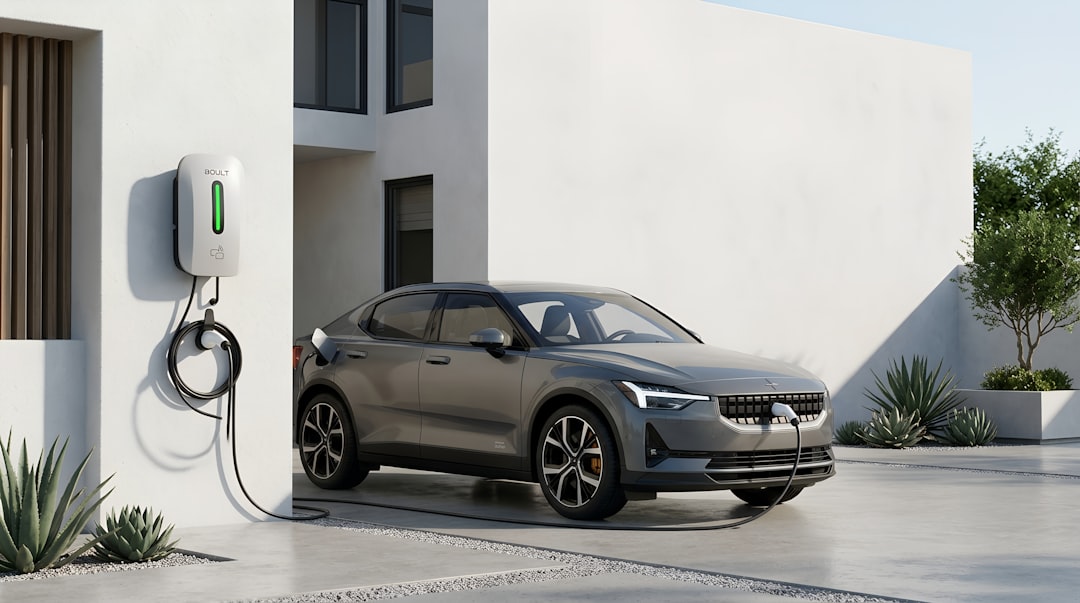
Power Up Your Ride: Your Guide to Level 2 Charger Install
Installing a Level 2 charger install at home is a game-changer for any electric vehicle (EV) owner. It brings fast, convenient charging right to your garage or driveway. With EV ownership growing rapidly by April 2026, a reliable home charging solution is more important than ever.
Here’s what you need to know about a Level 2 charger install:
- What it is: A 240-volt EV charger. It’s significantly faster than a standard 120-volt wall outlet (Level 1).
- Charging Speed: Expect to add 25-40 miles of range per hour. This means waking up to a full battery every morning.
- Why Upgrade: Level 2 charging ensures your EV is always ready for daily commutes and longer trips. It offers superior convenience and efficiency.
- Installation: For safety and code compliance, a licensed electrician is almost always required. This involves installing a dedicated 240-volt circuit.
- Typical Cost: The average total cost for a Level 2 charger install ranges from $500 to $2,500. This includes the charger, permits, and professional labor.
- Timeline: The entire process, from initial assessment to final inspection, typically takes 3 to 6 weeks.
Many homeowners in East Tennessee are looking for smart ways to power their homes and vehicles. A Level 2 charger install provides independence from public charging stations. It also makes EV ownership more practical and affordable in the long run.
I’m Ernie Bussell, Founder and CEO of Your Home Solar. My background in technical operations and leadership has given me a deep understanding of complex electrical systems. I bring this expertise to every Level 2 charger install project, ensuring safety and efficiency for your home.
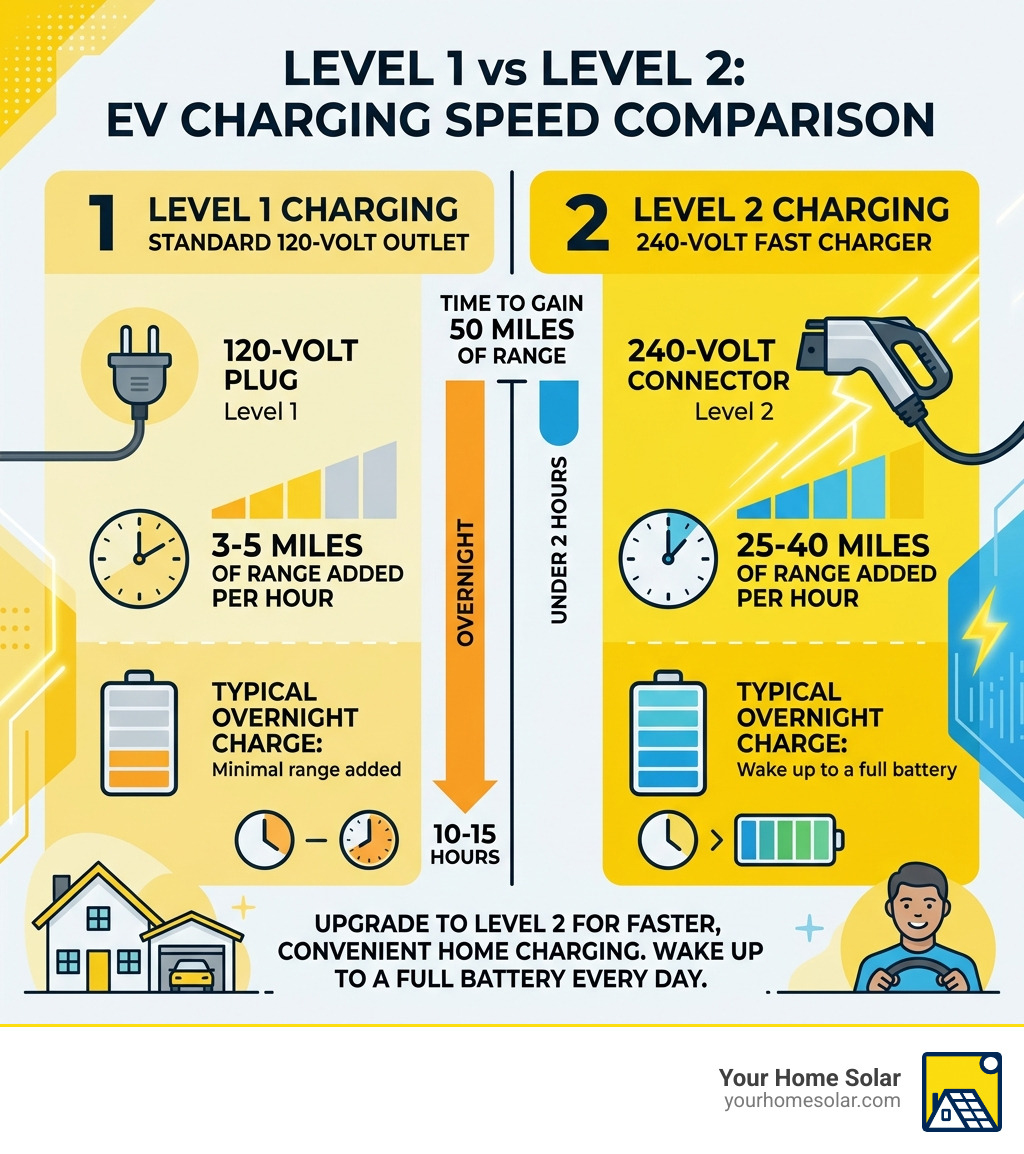
Level 2 charger install terms simplified:
Understanding the Level 2 Charger Install: Why Upgrade?
If you’ve been relying on the standard 120-volt “trickle” charger that came with your car, you know the struggle. It’s like trying to fill a swimming pool with a straw. In EVs, Level 1 charging is often called “emergency charging” for a reason—it only adds about 3 to 5 miles of range per hour. For many of us in East Tennessee, whether you’re commuting from Maryville to Knoxville or taking a weekend trip to the Smokies, that’s just not enough.
Upgrading to a Level 2 charger install changes the math entirely. By moving from a standard 120V outlet to a 240V circuit—the same kind used by your clothes dryer or oven—you unlock significantly higher speeds. A typical Level 2 station adds 25 to 40 miles of range per hour of charging.

Beyond just speed, there are several key benefits to consider:
- Convenience: You can fully charge most modern EVs in 4 to 10 hours. You plug in when you get home from work, and you wake up with a “full tank” every single day.
- Battery Health: Level 2 charging is often considered the “sweet spot.” While DC fast chargers are great for road trips, they can generate significant heat. Level 2 charging operates at a moderate power level that is ideal for daily use and long-term battery longevity.
- Cost Savings: By charging at home, you can take advantage of off-peak electricity rates. In many parts of Tennessee, electricity is significantly cheaper than gasoline, often equivalent to paying about $1.20 per gallon.
- Smart Features: Many Level 2 units come with Wi-Fi connectivity, allowing you to monitor your energy usage, schedule charging via an app, and even integrate with your home solar system.
To see the technical breakdown of how these units compare, check out this Level 2 EV Charging: Complete Cost & Installation Guide.
| Feature | Level 1 Charging | Level 2 Charging |
|---|---|---|
| Voltage | 120 Volts | 240 Volts |
| Amperage | 12–16 Amps | 16–80 Amps (32–40 common) |
| Range Added per Hour | 3–5 miles | 25–40 miles |
| Full Charge Time | 24+ hours | 4–10 hours |
| Installation Requirement | Standard household outlet | Dedicated 240V circuit |
Preparing Your Home for a Level 2 Charger Install
Before we start pulling wires through your walls, we need to make sure your home’s electrical system is ready for the “heavy lifting.” A Level 2 charger is one of the highest-demand appliances you can add to a residential property. In 2026, as homes become more electrified with heat pumps and induction stoves, managing that load is critical.
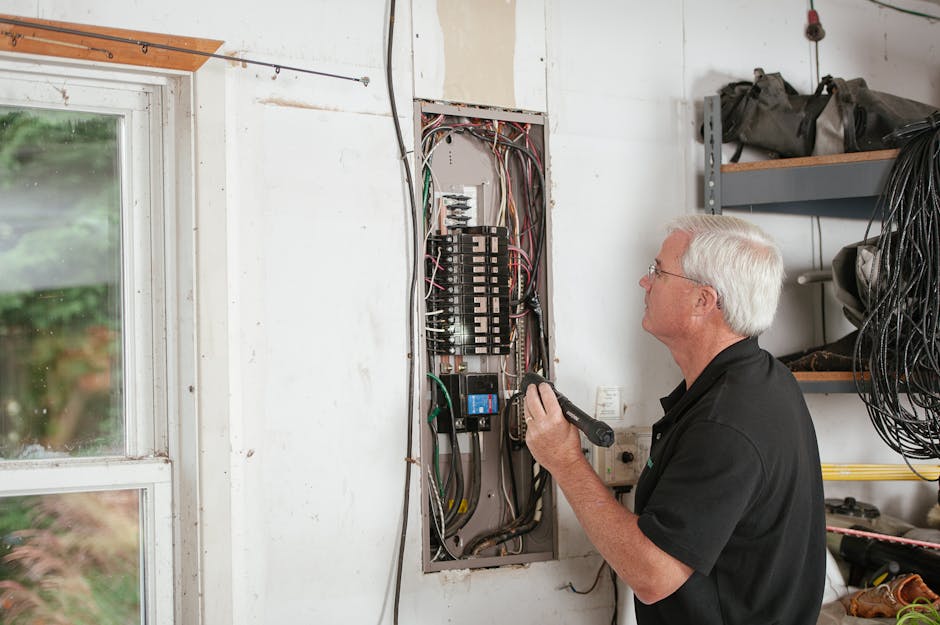
Preparation begins with an audit of your current setup. We look at three main things: your total service capacity, the physical space in your breaker box, and the distance from the panel to your preferred parking spot. If you’re wondering about the financial side of this preparation, our Budgeting For Juice Your Guide To 240V Ev Charging Costs and The Definitive Guide To 240V Ev Charger Installation Cost are excellent resources to help you plan.
Assessing Your Electrical Panel Capacity
Most modern homes built after the 1980s have 200-amp service, which is usually plenty for a Level 2 charger install. However, older homes in historic parts of Knoxville or Johnson City might still have 100-amp or even 60-amp panels.
Here is what we look for during the assessment:
- Total Amperage: If you have 200-amp service and two empty vertical slots in your panel, you’re likely in great shape. If you have 100-amp service, we have to perform a formal load calculation to see if your home can handle the extra 40 to 50 amps without an upgrade.
- The 125% Rule: Per the National Electrical Code (NEC), EV charging is considered a “continuous load.” This means the circuit breaker must be sized at 125% of the charger’s rating. For example, a 40-amp charger requires a 50-amp circuit breaker.
- Double-Pole Breaker: Unlike a standard light switch breaker, a Level 2 charger requires a double-pole breaker that connects to both 120V bus bars in your panel to provide 240V.
If your panel is full, don’t panic! We can often install a subpanel or use smart load-management devices that intelligently share power between appliances. For a deeper look at the technical side, read our Electrify Your Ride A Deep Dive Into Ev Charger Wiring Schematics.
Choosing the Right Location for Your Level 2 Charger Install
Location is everything. Not just for your convenience, but for your wallet too. The “run”—the distance of wire between your electrical panel and the charger—is one of the biggest factors in the total cost.
Consider these factors when picking a spot:
- Garage vs. Outdoor: Most chargers are installed in the garage, but many modern units are rated NEMA 3R or NEMA 4, meaning they are perfectly safe for outdoor mounting in our Tennessee weather.
- The Charging Port Location: Where is the port on your car? Teslas usually have them in the rear driver-side, while others might be in the front or passenger-side. You want the cable to reach comfortably without becoming a tripping hazard.
- Cable Reach: Most charger cables are 18 to 25 feet long. It’s best to mount the charger in a spot where you can reach the car even if you park a little differently than usual.
- Wi-Fi Signal: If you’re buying a “smart” charger, make sure your home Wi-Fi reaches that spot in the garage so you can use all those cool app features.
For more on planning your driveway setup, see this Level 2 EV Charger Installation: A Complete Homeowner’s Guide.
Step-by-Step Guide to the Installation Process
When we arrive for a professional Level 2 charger install, we follow a strict process to ensure everything is up to code and safe for your family. While it might look like just “plugging things in,” there is a lot of precision involved.
- Permit Acquisition: Before a single wire is cut, we secure the necessary electrical permits from your local municipality (whether that’s the City of Knoxville or a county office). This ensures the work is documented and will be inspected for safety.
- Mounting the Hardware: We securely mount the charger (the EVSE) to your wall. If it’s a heavy unit, we ensure it’s anchored into a stud.
- Running the Conduit: We install protective conduit (metal or plastic tubing) from the electrical panel to the charger location. This protects the heavy-gauge wires from damage.
- Pulling the Wire: We pull the appropriate gauge wire—usually 8 AWG for 40A circuits or 6 AWG for 48A-50A circuits—through the conduit.
- Connections and Torque: We connect the wires to the new double-pole breaker and the charger terminals. We use a torque wrench to meet the manufacturer’s exact specifications, as loose connections under high heat can cause fires.
- Testing: We power up the unit, check for proper grounding, and verify that the car is communicating correctly with the charger.
For a balanced look at why this is a job for the pros, check out Diy Or Pro Your 240V Ev Charger Installation Questions Answered.
Hardwired vs. Plug-In Level 2 Charger Install Options
One of the first questions we’ll ask you is: “Do you want it hardwired or plug-in?”
- Plug-In (NEMA 14-50): This involves installing a high-quality 240V outlet (like a dryer outlet). You then simply plug your charger into it. This is great for portability—if you move, you can take the charger with you. However, plug-in setups are generally limited to 40 amps of output.
- Hardwired: The charger is wired directly into a junction box. This is the “gold standard” for reliability. Hardwiring allows for higher power delivery (up to 48 or 80 amps) and eliminates a potential point of failure (the outlet). It’s also the better choice for outdoor installations where moisture could be an issue.
Learn more about making this choice in our guide: Level Up Your Home Charging With An Ev Charger Installation.
Safety Inspections and Permitting
We cannot stress this enough: don’t skip the permit. In East Tennessee, a new 240V circuit requires an official inspection.
Why does this matter?
- Insurance: If an unpermitted electrical project causes a fire, your homeowner’s insurance might deny the claim.
- Home Sales: When you go to sell your home in Farragut or Morristown, a savvy inspector will look for permits for that EV charger. Unpermitted work can hold up a sale.
- Safety: The city or county inspector acts as a second pair of eyes to ensure the electrician followed every safety rule in the National Electrical Code.
For a 2026 perspective on the permitting landscape, see this How to Get an EV Charger Installed at Home (2026 Guide) | Recharged.
Costs, Incentives, and Savings in 2026
Let’s talk numbers. By April 2026, the market for EV chargers has matured, but the costs still depend on your home’s unique setup.
Typical Cost Breakdown:
- Charger Hardware: $400 – $1,000 (depending on smart features and amperage).
- Labor and Materials: $400 – $1,500 (more if the run is long or through difficult areas).
- Permits and Inspections: $50 – $300.
- Panel Upgrade (if needed): $1,500 – $3,000.
The “Free Money” Section: The good news is that you rarely have to pay the full sticker price.
- Federal Tax Credit: As of 2026, the federal government offers a 30% tax credit on the purchase and installation of home EV charging equipment, up to $1,000.
- Utility Rebates: Many local utility companies in East Tennessee (like TVA or local co-ops) offer rebates ranging from $200 to $800 to encourage off-peak charging.
- Manufacturer Incentives: Some car brands will include a home charger or a credit toward installation when you buy a new EV.
By using a smart charger, you can save even more. These devices can be set to only charge when electricity is at its cheapest, typically between midnight and 6:00 AM. For more on smart charging in our area, check out Smart Ev Charger Installation In Knoxville.
Frequently Asked Questions about Level 2 Charging
Can I install a Level 2 charger myself?
Technically, if you are extremely handy and follow every code, some areas allow it. However, we strongly advise against it. You are dealing with 240 volts of electricity, which is high enough to be lethal. Furthermore, many charger manufacturers will void your warranty if the unit isn’t installed by a licensed professional. It’s simply not worth the risk to your home, your car, or your life.
How long does the installation process take?
The physical installation usually takes about 4 to 8 hours. However, the “end-to-end” timeline is usually 3 to 6 weeks. This includes the time it takes to get an assessment, wait for permit approval from the local building department, and schedule the final inspection after the work is done.
Will a Level 2 charger increase my home value?
Absolutely. In 2026, an “EV-ready” home is a major selling point. Studies have shown that homes with Level 2 chargers can sell for 1.5% to 3.5% more than comparable homes without them. Buyers in hot markets like Knoxville and Sevierville are increasingly looking for homes that are ready for the future. To learn more about future-proofing your garage, read Future Proofing Your Ev What 800V Charging Means For Your Garage.
Conclusion
A Level 2 charger install is one of the most rewarding upgrades you can make to your home. It transforms the EV experience from a logistical puzzle into a seamless, “set-it-and-forget-it” routine. At Your Home Solar, we pride ourselves on being the trusted experts for home energy solutions across East Tennessee—from the Tri-Cities down to Chattanooga.
Whether you’re in Oak Ridge, Maryville, or right here in Knoxville, we are dedicated to providing tailored, reliable installations that guarantee 100% customer satisfaction. We don’t just pull wires; we help you build a more sustainable and independent lifestyle.
Ready to wake up to a full battery every morning? Schedule your professional EV charger installation in Knoxville with us today and let’s power up your ride!