Can You Really Make an ac run on solar power?
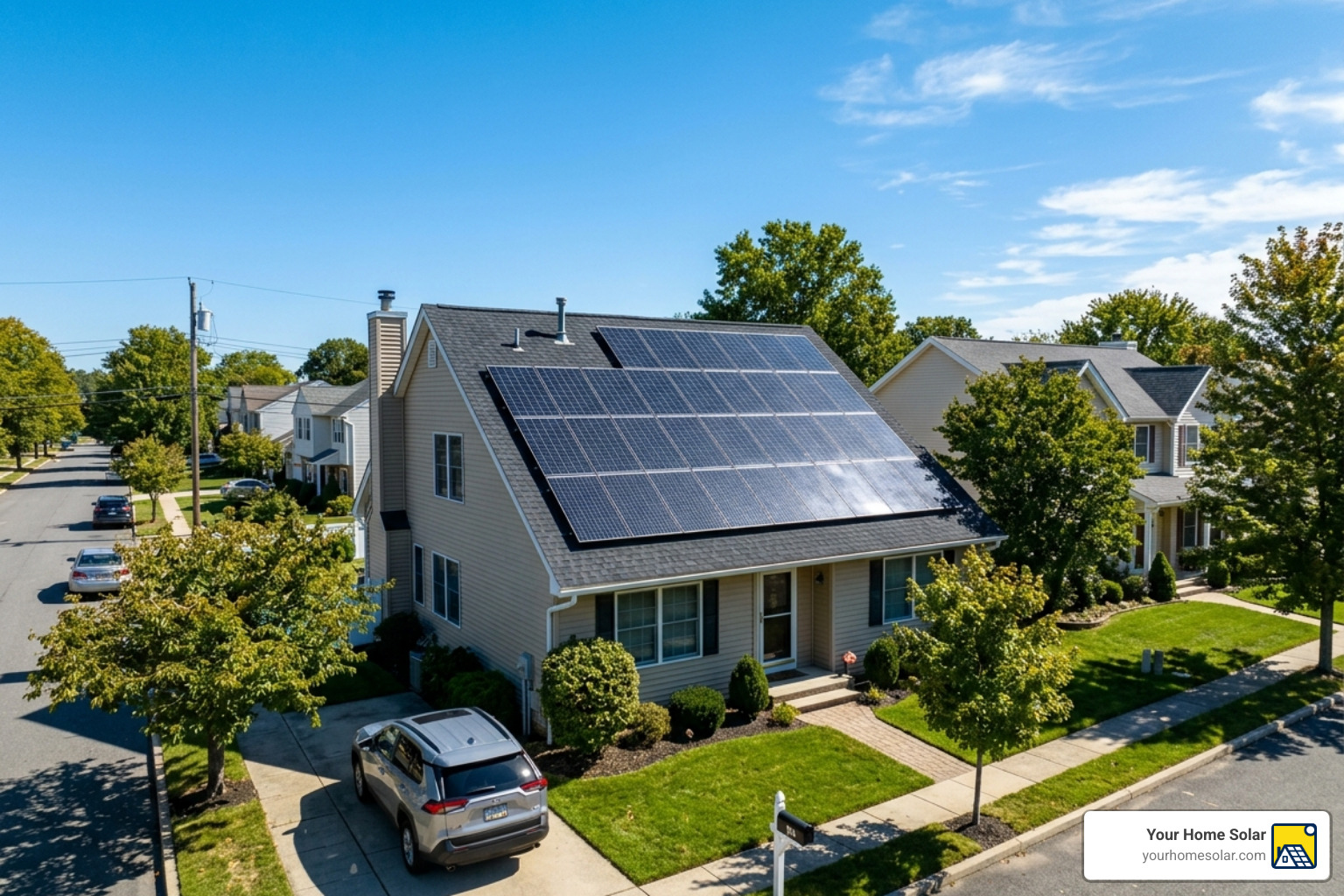
Running ac on solar power is not only possible — it’s something thousands of homeowners are doing right now to cut energy bills and stay cool even when the grid goes down.
Here’s a quick answer to get you started:
| Question | Quick Answer |
|---|---|
| Can AC run on solar power? | Yes, with the right system size and components |
| What do you need? | Solar panels, inverter, charge controller, and usually batteries |
| Best system type? | Hybrid (grid-tied + battery) for most homeowners |
| How many panels for central AC? | Typically 10–20 panels depending on AC size and location |
| Can it run at night? | Yes, but only with battery storage or grid connection |
| Payback period? | Around 5–7 years on average |
Air conditioning is the single biggest energy draw in most American homes — accounting for roughly 20% of total household electricity use, or about 2,000 kWh per year. In East Tennessee, where summer heat and unpredictable grid outages are a real concern, that number hits especially hard on your utility bill.
The good news? Solar technology has advanced quickly. Today’s panels, inverters, and battery systems can handle even the demanding power needs of a central AC unit. But there are important things to understand before you dive in — especially around startup surges and system sizing — so you don’t end up with an underpowered setup that lets you down on the hottest day of the year.
I’m Ernie Bussell, founder and CEO of Your Home Solar, and after years leading solar operations and installations across East Tennessee, I’ve helped hundreds of homeowners figure out exactly how to make ac run on solar power in a way that actually works for their home and budget. Let’s walk through everything you need to know.
Similar topics to ac run on solar power:
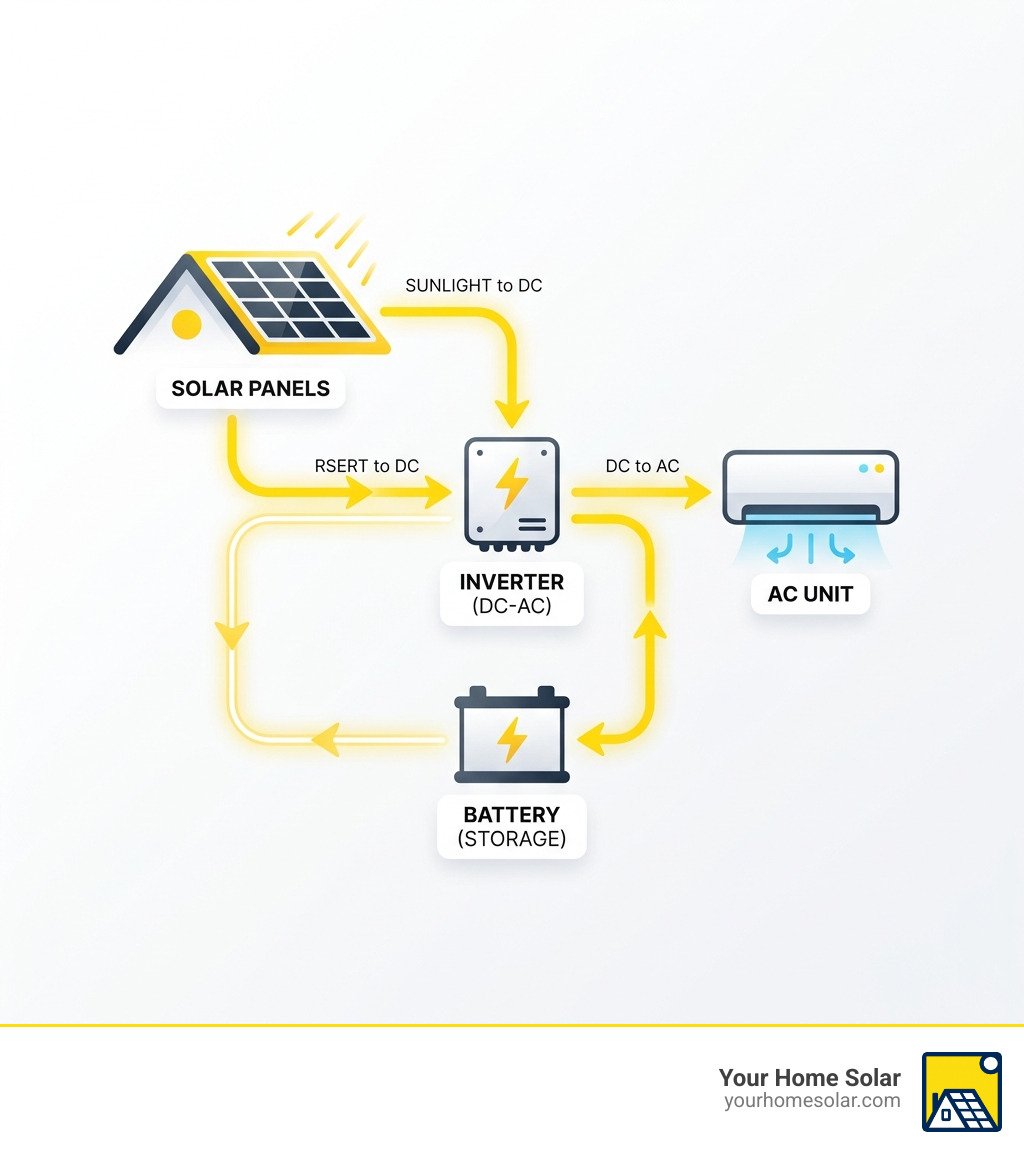
The short answer is a resounding yes. However, it isn’t as simple as plugging a window unit into a single solar panel. To make an ac run on solar power, we have to bridge the gap between how solar panels produce energy (Direct Current or DC) and how your home appliances use it (Alternating Current or AC).
In Residential Solar Power Explained: Benefits, Tips, and More, we focus on creating a balanced ecosystem. Most modern air conditioners are “energy hogs” because they require a massive amount of power to get the compressor moving. Once it’s running, the energy demand drops, but that initial “kick” is what trips up most DIY systems.
As noted in this How to Run an AC on Solar Power: The Definitive 2025 Expert Guide, you generally have three paths:
- Daytime Supplementation: Using solar to offset the cost of running your AC while the sun is out.
- Hybrid Cooling: Using a mix of solar, batteries, and the grid to ensure 24/7 comfort.
- Full Independence: A completely off-grid setup that powers your cooling regardless of utility status.
For our neighbors in Knoxville or Johnson City, the most feasible approach is usually a hybrid system. This allows you to harvest the abundant Tennessee sun during the day to keep your home like an icebox, while using stored battery power or the grid to maintain that temperature overnight.
Power Requirements and Startup Surges
The “Elephant in the Room” when it comes to solar cooling is the startup surge, also known as Locked Rotor Amps (LRA). Think of it like pushing a stalled car; it takes a massive heave to get it rolling, but once it’s moving, you can keep it going with just one hand.
A standard central AC unit might only need 3,500 watts to stay running, but it could demand 10,000 to 15,000 watts for a fraction of a second just to start the compressor. If your solar inverter isn’t sized to handle this “inrush current,” your system will shut down immediately to protect itself.
| AC Unit Type | Typical Running Watts | Startup Surge (Watts) |
|---|---|---|
| Small Window Unit (5k BTU) | 500W | 1,500W |
| Medium Window/Mini-Split | 1,000W – 1,500W | 3,000W – 5,000W |
| 3-Ton Central AC | 3,500W | 10,000W – 15,000W |
| RV Air Conditioner | 650W – 1,500W | 1,800W – 3,500W |
How to Tame the Surge
To make an ac run on solar power more efficiently, we often recommend two things:
- Soft Starters: These are small devices we can install on your AC unit that “ramp up” the power slowly, reducing the startup surge by up to 70%. This can turn a 125A surge into a manageable 30A load.
- Variable-Speed/Inverter ACs: Newer “Inverter” style air conditioners (like many mini-splits) don’t have a massive surge. They start slowly and adjust their speed based on the room temperature, making them the “gold standard” for solar-powered homes.
Calculating the Watts Needed for an ac run on solar power
To size your system correctly, we have to look at your daily kilowatt-hour (kWh) consumption. If you run a 1,500W unit for 8 hours a day, you need 12 kWh of energy. However, solar systems aren’t 100% efficient. We typically factor in a 25% loss for energy conversion (DC to AC) and heat.
In East Tennessee, we average about 4.5 to 5 “peak sun hours” per day. When Properly Sizing a Solar System for Your East Tennessee Home: Expert Tips, we use this formula:
- Daily kWh Need ÷ Peak Sun Hours = Required Solar Array Size.
- Example: 12 kWh ÷ 4.5 hours = ~2.6 kW of solar panels.
Essential Components and Inverter Selection
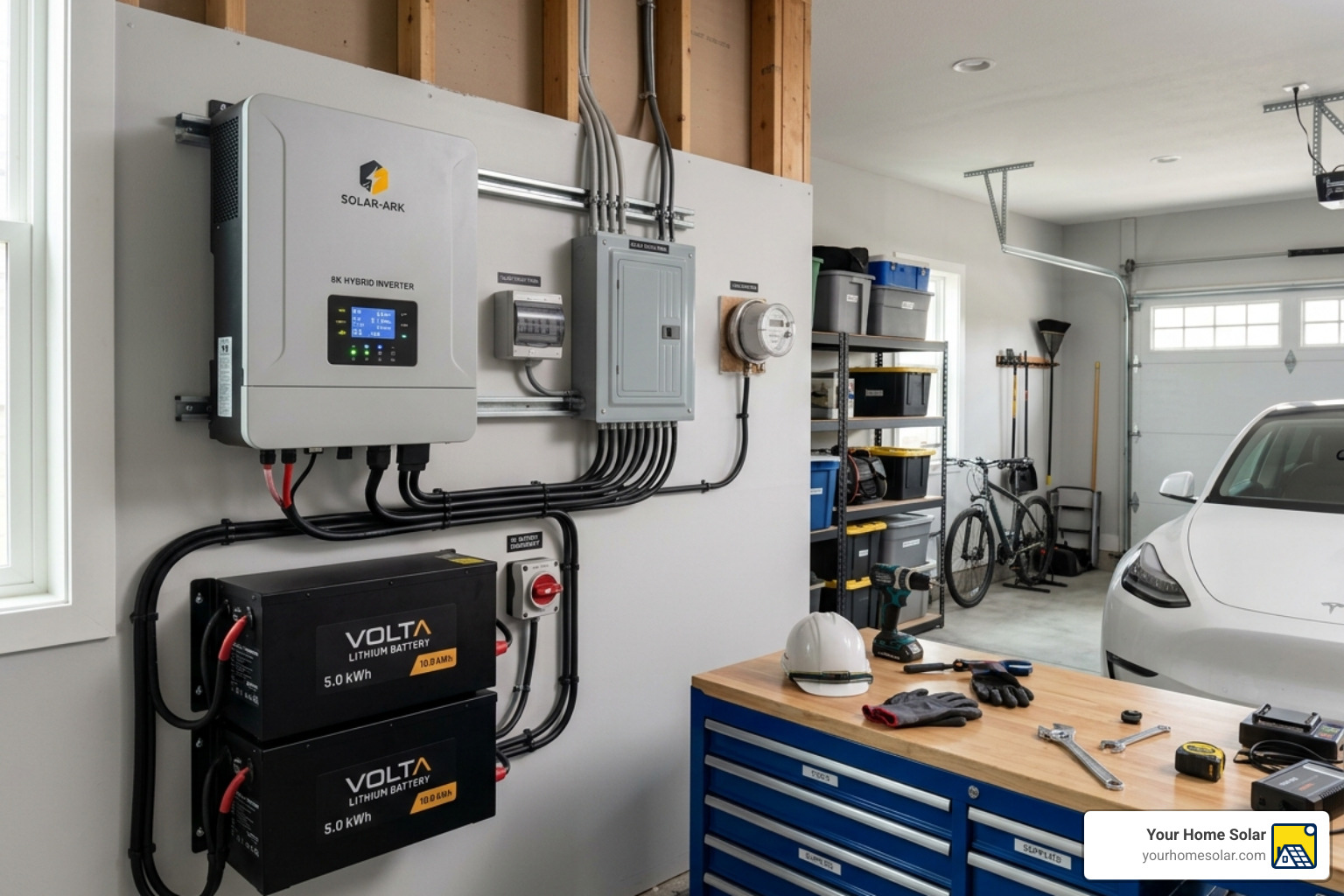
To successfully make an ac run on solar power, you need a “team” of components working in harmony:
- Photovoltaic (PV) Panels: These catch the sunlight. We recommend high-efficiency monocrystalline panels for East Tennessee roofs where space might be limited.
- MPPT Charge Controller: This acts as a traffic cop, ensuring the power from the panels goes into your batteries at the perfect voltage.
- Solar Battery Bank: This is your “energy bucket.” For AC loads, you want lithium-ion (LiFePO4) batteries. They can handle deep discharges and high current draws much better than old-school lead-acid batteries. Check out Everything You Need to Know About Residential Solar Battery Types: What’s Best for a deep dive on why lithium is king for cooling.
- The Inverter: This is the brain of the operation.
Choosing the Right Inverter for an ac run on solar power
The inverter’s job is to turn DC battery power into the 120V or 240V AC power your air conditioner craves. For AC units, a Pure Sine Wave inverter is non-negotiable. “Modified sine wave” inverters can actually damage your AC’s sensitive compressor motor over time.
When selecting an inverter, you must look at two ratings:
- Continuous Rating: Must be higher than the AC’s running wattage.
- Surge/Peak Rating: Must be high enough to handle that split-second startup “kick” we discussed earlier.
Modern hybrid inverters are particularly great for homes in Sevierville or Oak Ridge because they can pull power from the panels, the batteries, and the grid simultaneously to handle a heavy AC load. You can learn more about these setups in The Ultimate Guide to Solar Batteries and Energy Storage Solutions.
Comparing On-Grid, Off-Grid, and Hybrid Setups
Which path should you choose to make your ac run on solar power? It depends on your goals:
1. The “Day-Tripper” (Grid-Tied, No Battery)
This is the most affordable setup. You install panels that feed power back into the grid. During the day, your solar offsets the cost of the AC. If it’s cloudy, the grid kicks in. The downside? If the power goes out in Maryville during a heatwave, your AC stays off. This is a great way to handle Solar Energy and the Grid while lowering your monthly bill.
2. The “Pragmatist” (Hybrid System)
This is what we recommend for most Tennessee homes. You have panels and a battery backup. During the day, you run the AC on solar. At night, you use the battery. If the battery runs low, you still have the grid as a safety net. This provides the best of both worlds: bill savings and blackout protection.
3. The “Purist” (Fully Off-Grid)
This is for remote cabins or those who want total independence. As discussed in Running Air Conditioning on Solar Power: Is It Really Possible?, this requires a massive solar array and a very large battery bank to ensure you stay cool through three days of rain. It’s expensive, but for some, the peace of mind is worth every penny.
Sizing Your System and Overcoming Challenges
Sizing a system to make an ac run on solar power isn’t a “one size fits all” job. Here in East Tennessee, we have to deal with humidity, shading from our beautiful trees, and shorter winter days.
Steps to Sizing Your Solar AC System:
- Audit Your AC: Check the yellow “EnergyGuide” sticker or the manufacturer’s plate for Amps and Volts. (Watts = Amps x Volts).
- Determine Runtime: How many hours do you realistically need the AC? (Maintaining temperature takes about 50% less energy than cooling a hot house).
- Calculate Battery Capacity: If you want to run a 1,500W unit for 4 hours at night, you need 6,000Wh (6kWh) of battery storage. We recommend adding a 20% safety margin.
- Count Your Panels: Divide your daily Wh need by (Panel Wattage x Peak Sun Hours).
Common Challenges:
- Shading: Even a small branch over one panel can drop the output of an entire string. We use micro-inverters or optimizers to solve this.
- Nighttime Use: Solar doesn’t work at night (obviously!). Without a battery or grid connection, your cooling stops when the sun goes down.
- Cloudy Days: A week of rain in Morristown can deplete a battery bank quickly. This is where Comparing Solar with Traditional Gas Generators for East Tennessee Homes comes in handy—a hybrid solar-generator setup is the ultimate “fail-proof” cooling solution.
Frequently Asked Questions about Solar AC
How many solar panels do I need for a 5,000 BTU window unit?
A small 5,000 BTU window unit typically uses about 500 watts. To run this for 6 hours a day, you’d need about 3,000Wh of energy. In Tennessee, three 400-watt solar panels would generally produce enough power during the day to cover this usage and charge a small battery for evening use.
Can I run my air conditioner on solar at night?
Yes, but you must have a battery storage system. The solar panels charge the batteries during the day, and the inverter draws that stored energy to keep the AC running after sunset. Without batteries, you would need to switch back to grid power at night.
Is a soft starter necessary for central AC on solar?
While not “mandatory” if you have a massive, expensive inverter, it is highly recommended. A soft starter is a fraction of the cost of upgrading to a larger inverter and significantly reduces the strain on your entire solar system. It’s the smartest $300 investment you can make for a solar-powered home.
Conclusion
Making an ac run on solar power is no longer a futuristic dream — it’s a practical reality for homeowners from Chattanooga to Kingsport. While the upfront cost is higher than a standard grid-tied system, the Return on Investment (ROI) is significant. Most solar AC setups pay for themselves in 5 to 7 years through utility savings alone.
Beyond the money, there’s the comfort of knowing that when the Tennessee humidity is at its worst and the grid is struggling, your home will remain a cool sanctuary. At Your Home Solar, we specialize in designing these high-demand systems to ensure you’re never left sweating.
Ready to see how many panels your home needs? Whether you’re in Knoxville, Maryville, or anywhere in East Tennessee, we’re here to help you navigate Residential Solar. Let’s build a system that keeps you cool, saves you money, and gives you the energy independence you deserve.