Why Understanding 2kW Solar System Pricing Matters for East Tennessee Homeowners
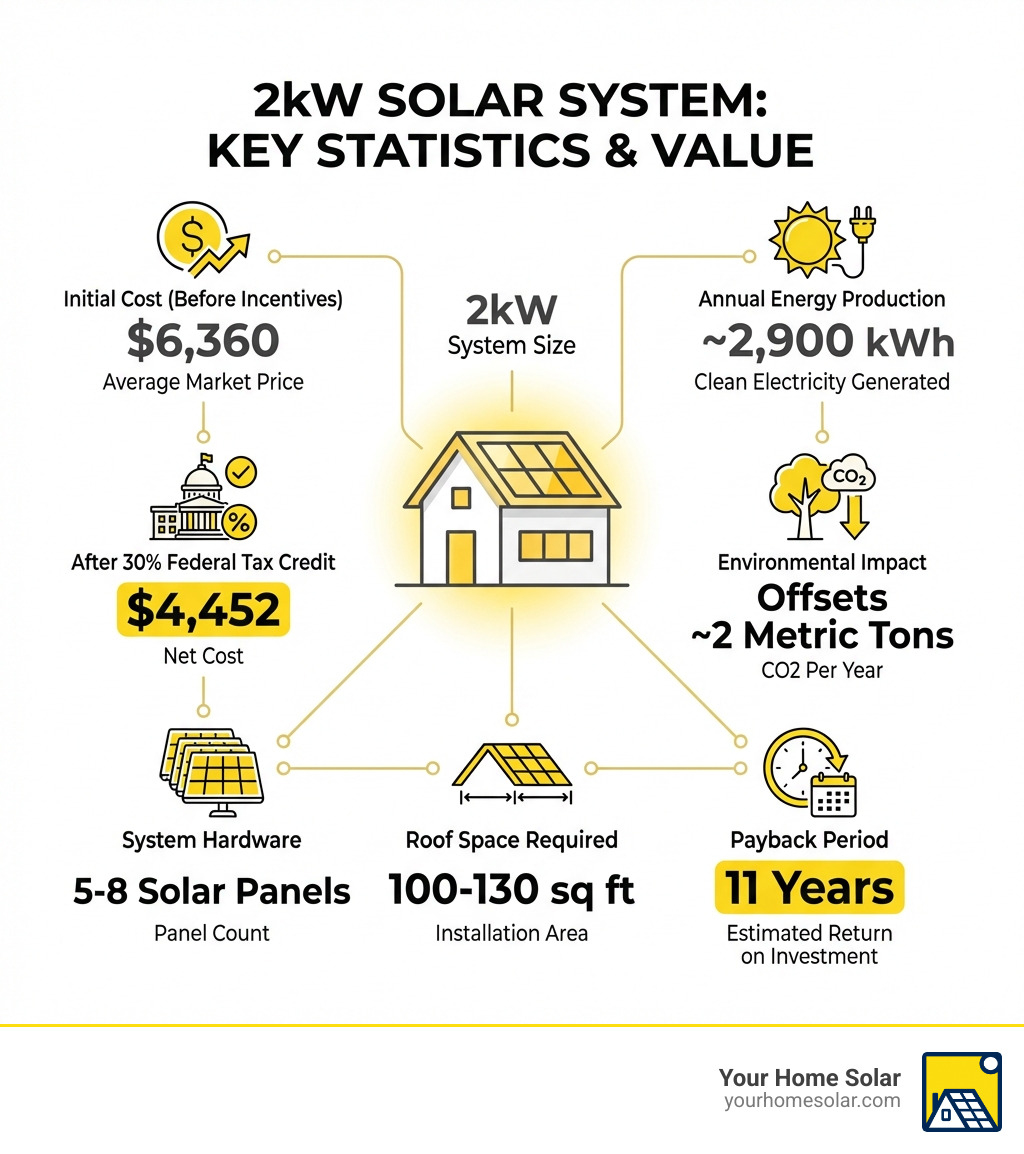
2 kilowatt solar system price ranges from $4,000 to $6,360 before incentives in 2025. After applying the 30% federal solar tax credit, your net cost drops to approximately $2,800 to $4,452. Here’s what you need to know:
Quick Price Breakdown:
- Before Incentives: $4,000–$6,360
- After Federal Tax Credit (30%): $2,800–$4,452
- Annual Energy Production: 2,600–2,904 kWh
- Number of Panels Needed: 5–8 panels
- Roof Space Required: 100–130 square feet
- Payback Period: Approximately 11 years
If you’re watching your electricity bills climb month after month or worrying about the next power outage, a 2kW solar system offers an affordable entry point into solar energy. While it won’t power your entire home, it can offset 20-40% of a typical household’s energy use, reducing your dependence on the grid and lowering your monthly costs.
The 2 kilowatt solar system price has dropped significantly over the past few years, making solar more accessible than ever. In 2025, these smaller systems represent a practical option for homeowners who want to start small, test the benefits of solar, or supplement their existing power without a major upfront investment.
But price is only part of the story. Understanding what you actually get for your money—how much electricity you’ll generate, which incentives you qualify for, and whether this system size fits your home’s needs—makes all the difference between a smart investment and a missed opportunity.
I’m Ernie Bussell, founder and CEO of Your Home Solar, and I’ve spent years helping East Tennessee homeowners steer solar decisions, including evaluating the true 2 kilowatt solar system price and determining if it’s the right fit. My background in the U.S. Navy, education, and solar operations has taught me that clarity beats hype every time—so let’s break down exactly what you’re paying for and what you’ll get in return.
Understanding the 2 kilowatt solar system price in 2025
In 2025, the 2 kilowatt solar system price is an investment in long-term savings. The average cost for a 2kW system is around $6,360 before incentives, though this is just a starting point. The final price for your East Tennessee home will depend on several unique factors.
Upfront costs are a major consideration, and we help clients steer the Cost and Financing of Solar Systems. A 2kW system is a smaller, cost-effective entry point into solar, especially after incentives.
Factors Influencing the Final Price
The final 2 kilowatt solar system price isn’t just about the panels; it’s the entire ecosystem designed to power your home. Here’s what goes into that final figure:
- Equipment Quality and Panel Efficiency: High-quality, efficient panels generate more power in less space and have better warranties. While they may increase the initial cost, they offer greater long-term value and mean you’ll need fewer panels for a 2kW output.
- Inverter Type: The inverter converts DC power from panels to AC for your home. Options include traditional string inverters, microinverters for optimized performance under each panel, and hybrid power optimizers. Microinverters offer more placement flexibility and maximize output in shaded conditions, though they may slightly increase the cost.
- Roof Complexity: Your roof’s design and condition are key factors. Complex roofs with multiple angles or older surfaces may need more labor and specialized hardware. We always assess your roof’s condition first. If it’s old, repairing or replacing it beforehand is wise, as our panels have long warranties.
- Local Labor Costs: The cost of skilled labor in East Tennessee regions like Knoxville and Maryville is a factor. Professional installation ensures your system is safe, correctly installed, and meets local codes for maximum performance. Learn more about local costs in our guide to Solar Panel Installation Knoxville Cost.
- Permits and Fees: Every solar installation requires permits and inspections to ensure it meets safety and building codes. These administrative costs are a necessary part of the process and vary by municipality within East Tennessee.
A Typical 2kW Solar System Cost Breakdown
To give you a clearer picture, here’s a breakdown of estimated costs for a typical 2kW system before incentives:
- Solar Panels: Typically $1,500–$2,500. Modern, efficient panels mean fewer units are needed to reach 2kW.
- Inverters: Ranging from $400–$800, these convert solar energy for home use. The price depends on the type (string vs. microinverter).
- Mounting Hardware: Approximately $300–$600 for racking and hardware to secure panels, ensuring a robust, weather-resistant system.
- Installation Labor: Usually $1,000–$1,500, this covers expert installation, from wiring to system commissioning.
- Permits & Fees: Typically $100–$300 for permits and inspections to ensure your system is safe and compliant with local regulations.
What to Expect from a 2kW Solar System: Power, Panels, and Space
Beyond the 2 kilowatt solar system price, it’s important to understand what this investment delivers in power, panel count, and space requirements. A 2kW system is an excellent entry point into solar, providing a consistent stream of clean energy.
A 2kW solar system typically generates 2,600 to 2,904 kilowatt-hours (kWh) annually, or about 8 kWh per day. This output can significantly reduce your reliance on the grid. Learn more in our How Solar Panels Work A Comprehensive Guide.
However, production isn’t static. It’s influenced by sunlight, weather, temperature, and panel cleanliness.
How Much Electricity Can You Generate?
Your system’s output depends on your location. East Tennessee’s favorable sunshine offers a great environment for solar production, with strong performance across the region.
For a precise estimate in East Tennessee locations like Knoxville or Johnson City, we use tools like the NREL’s PV Watts calculator to benchmark local solar production.
It’s also crucial to account for “system losses.” A 2kW system generates 2,000 watts of DC power, but factors like weather and temperature can cause a slight decrease in efficiency, typically around 5% due to system losses. This means real-world output may be slightly less than the 2kW rating.
What can 2,600 to 2,904 kWh per year power? A 2kW system can offset the energy use of small to medium loads like lighting, televisions, and kitchen appliances. It’s a great way to target high-consumption areas and see immediate savings on your utility bill.
How Many Panels and How Much Roof Space?
A common question is, “How many panels are needed for a 2kW system?” The answer depends on the wattage and efficiency of the panels we install.
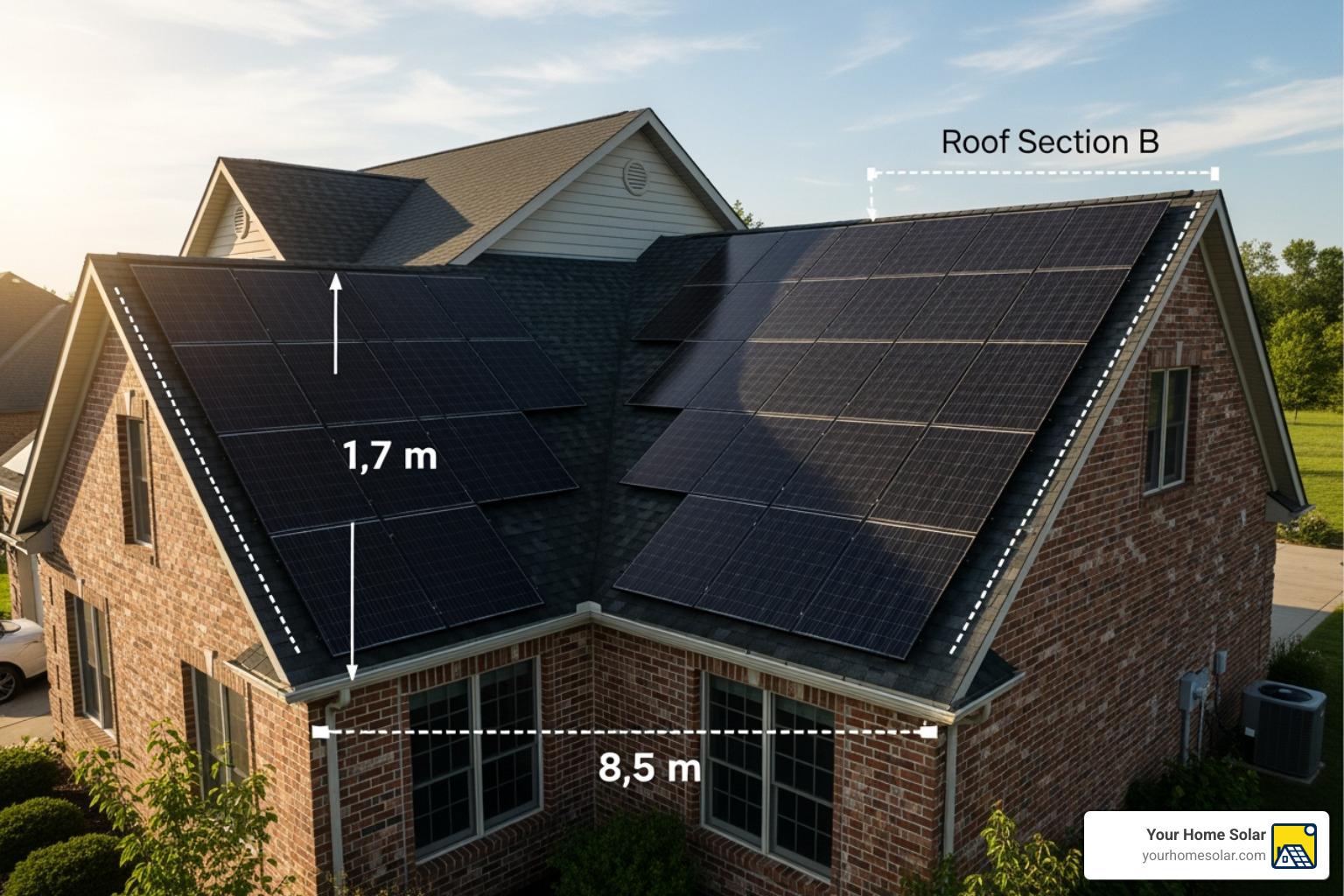
- Number of Panels: A 2kW system typically requires 5 to 8 solar panels. The exact number depends on panel wattage; for example, you’d need five 400W panels or eight 250W panels. Modern technology allows us to achieve high wattage with fewer, more efficient panels. Learn more in our Comprehensive Guide to Understanding Solar Panels.
- Required Roof Space: A 2kW system typically needs 100 to 130 square feet of roof space. The exact area depends on the number of panels, but more efficient panels reduce this footprint.
- Placement Flexibility: Every roof is unique, and our designers optimize panel placement for any configuration. Microinverters offer greater flexibility in placement, direction, and angle, which is ideal for roofs with shading or limited space. This ensures we maximize your energy harvest despite architectural challenges.
Maximizing Your Return: Savings, Incentives, and Payback Period
Investing in a 2kW solar system is more than just buying equipment; it’s a strategic move towards financial freedom and environmental responsibility. We’re here to help you understand how to maximize your return on this smart investment.

The financial benefits of going solar are compelling, and a 2kW system is no exception. It’s a tangible step towards reducing your monthly expenses and increasing your home’s value. For a deeper understanding of why this is a smart financial move, read our guide on Why Solar Panels for Homes Are a Smart Investment.
Let’s look at the numbers. Based on an average system cost of $3,700 after incentives (using the $4,000-$6,000 range and the 30% federal tax credit), and an estimated annual savings of $338 (assuming average electricity costs), the payback period for a 2kW solar system is approximately 11 years. This means that within about a decade, your system will have paid for itself through the electricity savings it generates. After that, every kilowatt-hour produced is pure savings in your pocket. Over 25 years, you could see long-term savings of over $8,450. Imagine keeping that money instead of sending it to the utility company!
Financial Incentives That Lower the 2 kilowatt solar system price
One of the most powerful tools for making solar affordable is the array of financial incentives available. These programs are designed to encourage homeowners to adopt clean energy, significantly lowering the effective 2 kilowatt solar system price.
- Federal Solar Tax Credit (ITC): This is the big one! The federal solar Investment Tax Credit currently allows you to claim 30% of the cost of your solar system as a tax credit. For a 2kW system costing $6,360, this means a direct tax reduction of about $1,908. It’s crucial to act soon, as this credit is scheduled to expire after December 31, 2025. We help our clients steer these powerful incentives to ensure they get the maximum benefit. You can learn more about this and other perks in our Incentives and Tax Credits for Solar Systems guide.
- Tennessee-Specific Incentives: While Tennessee doesn’t have as many state-level incentives as some other states, local utility programs and property tax exemptions can still make a difference. We stay up-to-date on all available programs in East Tennessee, including specific areas like Knoxville, Chattanooga, and the surrounding counties, to ensure our clients benefit from every opportunity. Our Solar Incentives Tennessee 2026 Guide provides comprehensive details.
- Net Metering: This policy allows you to send any excess electricity your solar panels produce back to the grid in exchange for credits on your utility bill. It’s like having a solar-powered savings account! Net metering policies vary by utility provider in East Tennessee, but they are a fantastic way to maximize your savings. We can explain how this works with your local utility in areas like Knox, Blount, and Sevier counties. Find more about how this works in our article, Do East Tennessee Utility Companies Buy Back Solar Power Find Out Here.
Environmental Impact and Benefits
Beyond the financial gains, choosing a 2kW solar system for your East Tennessee home contributes significantly to a healthier planet. We believe in making a positive impact on our communities and the environment.
- Carbon Footprint Reduction: Every kWh generated by your solar panels means less electricity produced from fossil fuels. A 2kW solar system can offset approximately 2 metric tons of CO2 annually. To put that into perspective, that’s equivalent to planting about 35 trees per year, removing half a car from the road annually, or saving over 220 gallons of gasoline each year. This is a powerful contribution to local air quality and the global fight against climate change. Dive deeper into this topic with our guide on The Environmental Impact of Solar Energy Reducing Your Carbon Footprint.
- Clean Air, Healthy Communities: By reducing carbon emissions, we’re not just helping the planet; we’re also improving the air quality in our East Tennessee communities. Cleaner air means better health for everyone, a benefit we’re particularly passionate about. Learn more about the direct link between solar energy and community health in Solar Energy and Health Clean Air Clean Energy in East Tennessee Communities.
Is a 2kW System the Right Choice for Your Home?
Deciding whether a 2kW solar system is the perfect fit for your home involves understanding your energy needs and long-term goals. While it might not be a one-size-fits-all solution, it’s an incredibly effective option for many homeowners in East Tennessee.
A 2kW system is ideal for supplemental power, meaning it significantly reduces your electricity consumption from the grid rather than completely eliminating it. It’s a fantastic choice for:
- Small Homes: If you live in a smaller home with lower overall energy consumption, a 2kW system can cover a substantial portion of your electricity needs, potentially offsetting 20-41% of an average American home’s monthly usage (which is around 920 kWh).
- Tiny Homes & RVs: For those embracing minimalist living or frequently on the go, a 2kW system can provide ample power for essential appliances and lighting.
- Homes with Low Energy Consumption: If you’re conscious about your energy use and have already implemented efficiency measures, a 2kW system might be all you need to reach your solar goals.
- Offsetting Specific Loads: You can target specific high-usage appliances or areas of your home to be powered by solar, like your kitchen appliances or home office setup.
A 2kW system is an excellent starting point for homeowners looking to reduce their energy bills and contribute to a greener future without committing to a larger, more expensive installation initially. For a comprehensive overview of residential solar options, explore our Residential Solar guide.
Comparing 2kW to Larger Solar Systems
While a 2kW system offers a cost-effective entry point, it’s helpful to understand how it compares to larger systems, especially if you’re considering future energy needs.
- Cost per Watt Comparison: Generally, larger solar systems tend to have a lower “cost per watt” than smaller systems. This means that while a 6.6kW or 10kW system will have a higher overall price tag, the cost for each unit of power generation might be more efficient. For example, a 6.6kW system might start around $5,500 before incentives in 2025, and larger systems like 15kW or 25kW can range from $36,300 to $60,500 before incentives.
- Scalability: The good news is that solar systems are often scalable. You can start with a 2kW system and, if your energy needs grow or your budget allows, expand it later. This flexibility makes a 2kW system a smart first step for many East Tennessee homeowners.
- Future Energy Needs: When considering your solar investment, it’s wise to think about your future energy consumption. Are you planning to purchase an electric vehicle? Will you add an extension to your home? These factors might influence whether a 2kW system is sufficient long-term or if a larger system would be more beneficial from the outset. We can help you assess your current and future energy needs to recommend the most suitable system size.
Professional Installation: Why Choose Your Home Solar?
While some might consider a DIY approach for smaller systems, we at Your Home Solar strongly advocate for professional installation for a multitude of reasons, especially when it comes to long-term performance, safety, and leveraging incentives.
- Safety First: Installing solar panels involves working with electricity and at heights, which can be dangerous without proper training and equipment. Our certified installers are experts in safe practices, ensuring the protection of your home and everyone involved.
- Warranty Protection: Professional installation by a reputable company like Your Home Solar ensures that your equipment warranties remain valid. Many manufacturers will void warranties if systems are not installed by certified professionals. This protects your investment for years to come.
- Incentive Eligibility: To qualify for valuable incentives like the federal solar tax credit and net metering, your system must typically be installed by a licensed professional and pass all local inspections. Our team handles all the necessary paperwork and ensures your system meets all requirements.
- Local Expertise: As a company deeply rooted in East Tennessee, we understand the specific building codes, weather patterns, and utility regulations unique to areas like Knoxville, Oak Ridge, and Maryville. This local knowledge is invaluable for designing and installing a system that performs optimally for decades. Check out our Expert Solar Installers in Knoxville TN to see our commitment to quality.
- Ongoing Support: From your initial consultation to system monitoring and any future maintenance needs, we provide comprehensive support. We’re not just installing a system; we’re building a relationship with our clients, ensuring their satisfaction and the longevity of their solar investment.
Frequently Asked Questions about 2kW Solar Systems
We get a lot of great questions from East Tennessee homeowners considering solar. Here are some of the most common ones about the 2 kilowatt solar system price and what these systems can do.
Can a 2kW system power an entire house?
This is a popular question, and the short answer for most homes is: no, not entirely. A 2kW solar system is generally designed to provide supplemental power. While it won’t take your average home completely off the grid, it can significantly reduce your reliance on grid electricity.
For instance, the average American home uses about 920 kWh per month. A 2kW system, generating around 2,600-2,904 kWh annually (or 216-242 kWh per month), could offset 20% to 41% of that average usage. This is a substantial reduction, but it means you’ll still draw power from the utility grid for the remainder of your needs.
However, for very low-energy homes, tiny homes, or those with exceptionally low consumption habits, a 2kW system might come closer to meeting all demands. It’s also excellent for offsetting specific loads, meaning you can significantly reduce the cost of powering certain appliances or areas of your home. If you’re curious about going fully off-grid in East Tennessee, we explore the possibilities in Can My East Tennessee Home Be 100 Off Grid It Depends.
What is the real 2 kilowatt solar system price after incentives?
Understanding the “net cost” is key to grasping the true 2 kilowatt solar system price. While the upfront cost might seem significant, incentives drastically reduce what you actually pay.
As we discussed, a 2kW solar system in 2025 costs approximately $6,360 before incentives. The most impactful incentive is the 30% federal solar tax credit.
Let’s do the math:
- Initial Cost: $6,360
- Federal Tax Credit (30%): $6,360 x 0.30 = $1,908
- Net Cost After Federal Tax Credit: $6,360 – $1,908 = $4,452
This means your real investment drops to around $4,452. This calculation provides a clear picture of the affordability of solar power. Additionally, any state or local incentives available in East Tennessee could further reduce this cost. We help homeowners in areas like Johnson City, Kingsport, and Morristown evaluate their total potential savings. Our guide on How Your Home Solar Evaluates Your Solar Savings in East Tennessee offers more insights into this process.
How long do 2kW solar panels last?
Solar panels are built to be durable and long-lasting, designed to withstand the elements and provide clean energy for decades. Our clients in East Tennessee can expect their 2kW solar panels to have a lifespan of 25 to 30 years or even more.
Most high-quality solar panels come with robust manufacturer warranties, typically guaranteeing performance for 25 years. These warranties often cover power output, ensuring that your panels will still produce a certain percentage of their rated power (e.g., 80%) even after 25 years. This longevity means that your investment continues to pay off long after the initial payback period.
Solar panels do experience a very gradual performance degradation over time, usually less than 1% per year. This is a normal part of their operation and is accounted for in their design and warranties. To learn more about the durability and expected lifespan of solar panels, we recommend reading Solar Panel Durability How Long Do They Last.
Conclusion: Start Your Solar Journey in East Tennessee
Exploring the 2 kilowatt solar system price reveals a compelling opportunity for East Tennessee homeowners. It’s a cost-effective and accessible entry point into solar energy, offering significant financial and environmental benefits without requiring a massive upfront investment.
By choosing a 2kW system, you’re not just installing solar panels; you’re making a smart decision to:
- Reduce your monthly electricity bills and gain greater control over your energy costs.
- Contribute to a cleaner environment by significantly reducing your carbon footprint.
- Increase your home’s value and appeal with a modern, sustainable energy solution.
- Leverage powerful financial incentives like the 30% federal solar tax credit, making solar more affordable than ever.
At Your Home Solar, we pride ourselves on being your trusted partner in this journey. Our expertise and commitment to 100% customer satisfaction mean you’ll receive a custom, reliable, and rewarding installation experience, whether you’re in Knoxville, Maryville, Johnson City, or any of our East Tennessee service areas.
Ready to take the next step towards energy independence and savings? We invite you to get a Free Estimate from our team. We’ll assess your home’s unique needs, explain all your options, and provide a clear, transparent quote. You can also Learn more about solar financing options to see how easily solar can fit into your budget. Let’s make your home a shining example of sustainable living!