Understanding the True Cost of a 300-Watt Solar Panel
300 watt solar panel cost typically ranges between $299 and $500 for a single panel at retail prices. Here’s what you need to know:
- Retail price range: $299-$500 per panel
- Wholesale pricing: $0.10-$0.30 per watt ($30-$90 per panel before markup)
- Cost per watt: Approximately $1.00-$1.67 per watt retail
- Complete kit pricing: $299-$1,989 depending on components included
- Bulk discounts: Available when purchasing multiple panels or pallets
The 300-watt solar panel has been a workhorse in the solar industry for years. While many major manufacturers have shifted focus to higher-output panels, 300W panels remain popular for supplemental home power systems, RV installations, and smaller off-grid applications.
This guide breaks down exactly what you’ll pay for a 300-watt solar panel and the factors that drive those costs. We’ll look at retail versus wholesale pricing, technology differences, warranty coverage, and the long-term value these panels deliver. You’ll also learn about available incentives that can reduce your upfront investment.
As the founder and CEO of Your Home Solar, I’ve helped hundreds of East Tennessee homeowners steer solar pricing and understand the true 300 watt solar panel cost beyond just the sticker price. My experience in operations management for a $40 million solar operation taught me that the cheapest panel isn’t always the best value.
Breaking Down the Average 300 Watt Solar Panel Cost
When we talk about the 300 watt solar panel cost, it’s crucial to understand that this isn’t a fixed number. It’s a dynamic figure influenced by where you buy, how many you buy, and what’s included in your purchase. For a single 300-watt solar panel, you can generally expect to see retail prices fall between $299 and $500. This translates to a retail cost per watt of roughly $1.00 to $1.67.
However, the solar market has many layers. If you’re looking at wholesale prices, perhaps for a larger installation or if you’re a distributor, the cost per watt drops significantly. Wholesale prices for standard 300W monocrystalline panels can range from approximately $0.10 to $0.30 per watt. This means an individual 300-watt panel could be as low as $30 to $90 before shipping, duties, and any retail markup. It’s clear that buying in bulk can lead to substantial savings, with some manufacturers offering panels for as little as $14 to $25 per unit for minimum orders of 100 pieces, or even $0.18-$0.20 per watt for minimum orders of 10,000 watts.
Understanding these different pricing tiers is essential for anyone budgeting for a solar project. For more comprehensive insights into the entire installation process, check out our guide on More info about solar panel installation.

Price Range for a Single Panel
Let’s dive a little deeper into the individual panel cost. When you’re just looking to purchase one or two 300-watt solar panels, perhaps for a small off-grid setup or to supplement an existing system, you’ll be paying retail prices. These prices, as mentioned, are typically in the $299 to $500 range.
What accounts for this variation? Several factors play a role. Brand reputation, for instance, can significantly affect the price. Established brands with a long history of reliability and strong warranties often command a higher price. Retail markup is another key component; stores and online vendors need to cover their operational costs, marketing, and profit margins. Lastly, shipping costs can add a surprising amount to the final price, especially for bulky items like solar panels. A high-quality 320-watt monocrystalline panel, for example, might be listed around $400, while another brand’s 370-watt panel could be slightly more. These prices reflect the individual panel cost before any bundled deals.
The typical 300 watt solar panel cost for home solar packages
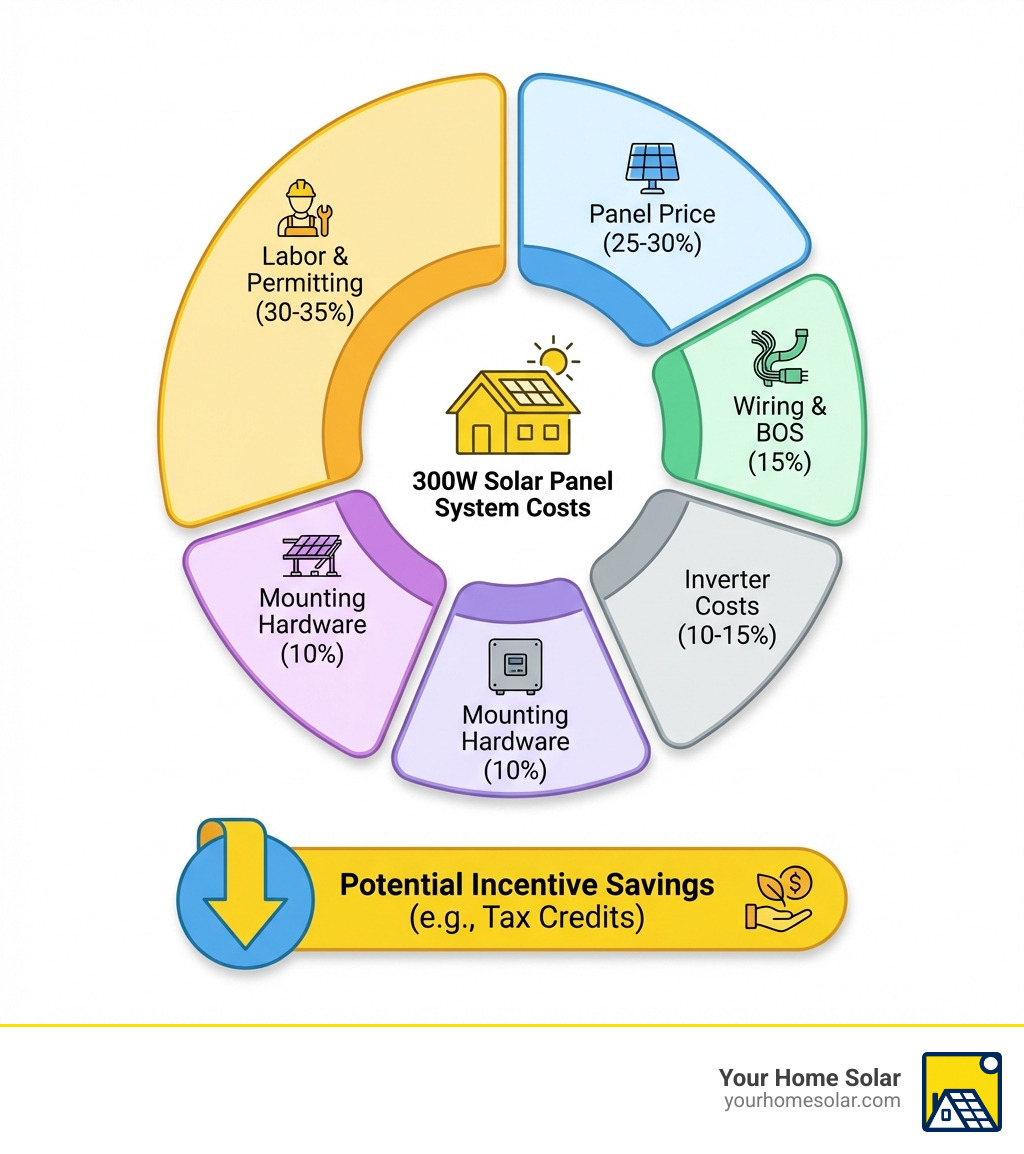
For homeowners in East Tennessee considering a complete solar energy solution, the 300 watt solar panel cost goes beyond just the panels themselves. A complete home solar package, whether it’s a small system for supplemental power or a larger array to significantly reduce your electricity bill, includes several vital components. These typically encompass the solar panels, an inverter to convert DC electricity to AC, wiring, and mounting hardware to secure the panels to your roof or a ground mount system. Some kits also include charge controllers for battery charging.
The price range for these packages can vary widely depending on the number of panels, the quality of components, and whether it’s a DIY-friendly kit or a professionally installed system. For instance, a basic 300W solar panel RV kit, which includes the panel and a charge controller, might be priced around $500. A portable 300W solar panel kit, designed for convenience, could come in closer to $300. On the higher end, a set of six 330-watt solar panels could total nearly $2,000, excluding other system components like an inverter or batteries.
While DIY kits can offer a lower upfront 300 watt solar panel cost, we always recommend professional installation for residential grid-tied systems. This ensures optimal performance, safety, and compliance with local building codes, which is paramount in areas like Knoxville, Oak Ridge, and Maryville. Professionals can also help design a system perfectly custom to your energy needs and roof specifics. To understand more about the brain behind your solar system, check out The Ultimate Guide to Solar Inverters.
What Factors Influence the Price Tag?
Understanding the raw 300 watt solar panel cost is just the first step. To truly grasp the value, we need to dig into the factors that influence that price tag. It’s like buying a car; two cars might get you from A to B, but their price tags reflect differences in engine, features, safety, and brand. Similarly, solar panel prices are shaped by a blend of technological advancements, manufacturing quality, rigorous certifications, and even the panel’s country of origin. Panels with higher efficiency, for example, might cost more per panel but could require fewer units to meet your energy needs, potentially saving on installation time and mounting hardware.
Technology: Monocrystalline vs. Polycrystalline
One of the most significant factors influencing the 300 watt solar panel cost is the type of solar cell technology used. The primary contenders are monocrystalline and polycrystalline panels.
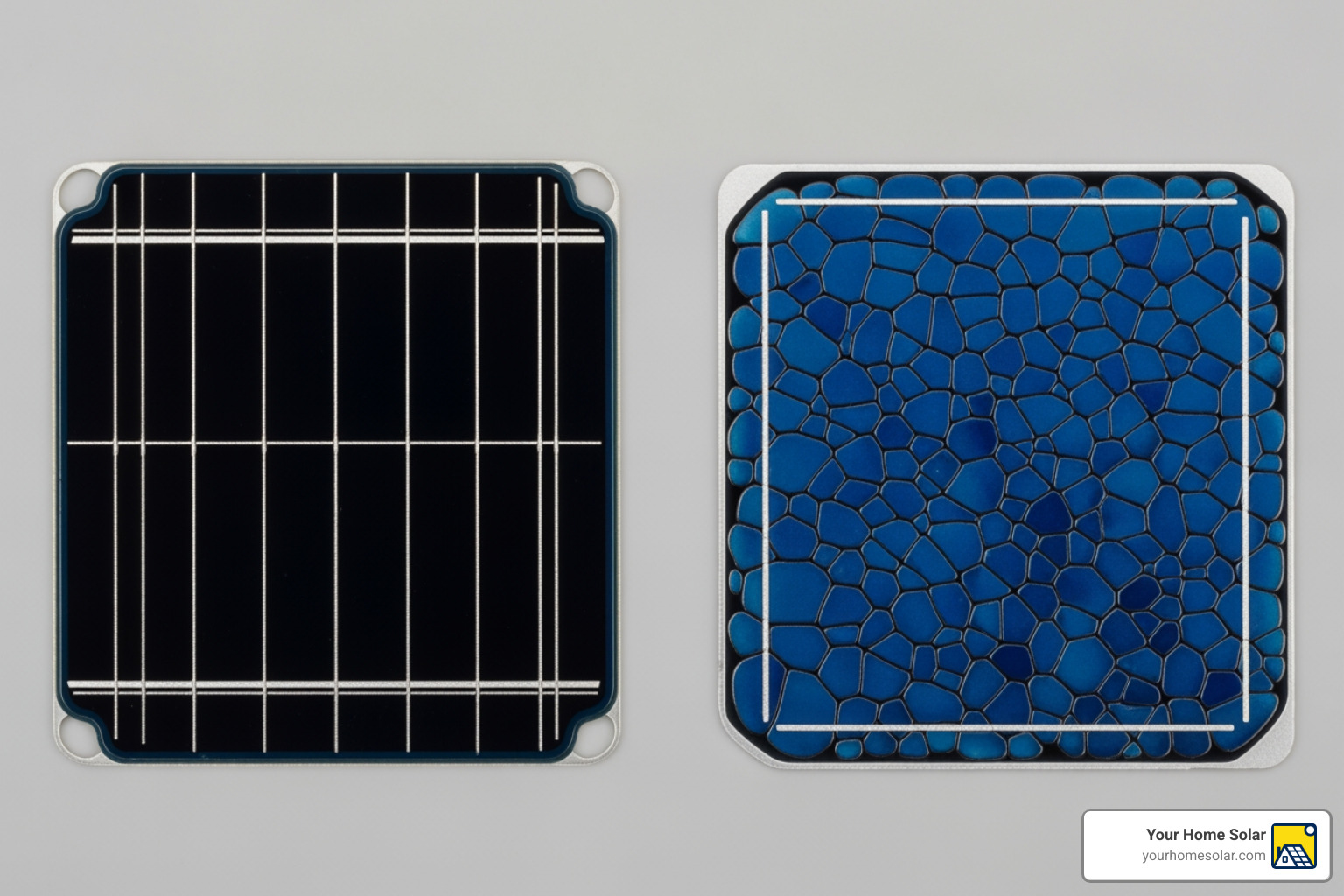
- Monocrystalline Panels: These panels are made from a single, pure crystal of silicon, giving them a uniform dark appearance. Their single-crystal structure allows electrons to move more freely, resulting in higher efficiency rates. This means a monocrystalline panel can convert more sunlight into electricity per square foot, making them ideal for homes in East Tennessee with limited roof space. Because of their higher efficiency and more complex manufacturing process, monocrystalline panels generally come with a higher price tag. They are also the predominant type for 300W and higher wattage panels today.
- Polycrystalline Panels: These panels are made from multiple silicon fragments melted together, giving them a speckled blue appearance. While less efficient than monocrystalline panels, they are typically more affordable to produce and, consequently, to purchase. However, due to their lower efficiency, you might need more polycrystalline panels to achieve the same total power output as a monocrystalline system, which could offset some of the initial cost savings in terms of space and mounting. For 300W panels, monocrystalline is becoming the standard due to its superior performance.
Beyond efficiency, aesthetics also play a role, especially for residential installations. “All-black” monocrystalline panels, which blend seamlessly with darker roofs, offer a sleek look that many homeowners prefer, sometimes at a slight premium. For a deeper dive into the different types of solar panels and their characteristics, we recommend our Comprehensive Guide to Understanding Solar Panels.
Understanding Warranty Coverage and Its Value
When evaluating the 300 watt solar panel cost, it’s easy to focus solely on the upfront price. However, savvy homeowners in Knoxville, Johnson City, or any of our service areas know that the long-term value is heavily tied to the warranty coverage. A solar panel isn’t just a purchase; it’s an investment that should deliver reliable power for decades.
Solar panel warranties typically come in two main forms:
- Product Warranty (or Workmanship Warranty): This covers defects in manufacturing, materials, or construction. It usually ranges from 10 to 25 years. For example, some premium panels offer a 20-year product warranty, while other brands might provide a 10-year product warranty. A strong product warranty gives you peace of mind that the panel itself will hold up under normal conditions.
- Performance Warranty (or Linear Power Output Warranty): This guarantees that your panels will produce a certain percentage of their rated power output over time. Most performance warranties extend for 25 to 30 years, typically guaranteeing 80-90%+ of the original output at the end of the warranty period. Premium panels often guarantee less than 0.5% annual degradation, meaning they’ll perform strongly for decades.
Why is this important? The long-term cost-effectiveness of your solar system hinges on its consistent power production. A panel with a robust 25-year performance warranty from a reputable “Tier 1” manufacturer (a classification indicating financial stability and advanced manufacturing processes) ensures that your investment will continue to generate significant electricity and savings for many years. Choosing a panel with a weaker or shorter warranty might offer a lower upfront 300 watt solar panel cost, but it could lead to higher costs down the line if the panel fails or degrades faster than expected. We at Your Home Solar prioritize panels that offer excellent warranty coverage, because we believe in delivering reliable and rewarding installations to our East Tennessee customers.
The Bigger Picture: Long-Term Value and Savings
While the initial 300 watt solar panel cost is a significant consideration, the true genius of solar power lies in its long-term value and the substantial savings it can bring. For homeowners in East Tennessee, investing in solar panels isn’t just about reducing your carbon footprint; it’s a smart financial decision that offers a compelling return on investment (ROI) and a relatively quick payback period. Beyond the monthly savings on your electricity bill, solar panels also increase your property value, making your home more attractive to potential buyers. Imagine the satisfaction of achieving energy independence, knowing you’re generating your own clean power right from your rooftop. This shift to self-sufficiency is one of the many Benefits of Residential Solar we champion.
Lifespan, Degradation, and Overall Cost-Effectiveness
Solar panels are built to last, and their impressive lifespan is a key factor in their overall cost-effectiveness. The typical lifespan of a high-quality solar panel is 25 to 30 years, and often much longer. We’ve seen systems continue to produce power well beyond this period. This longevity means that your investment continues to pay dividends for decades.
However, it’s important to understand that solar panels do experience a slight decrease in efficiency over time, a process known as degradation. Reputable panels come with a linear power output warranty that guarantees their performance. This warranty typically states that panels will degrade by approximately 0.5% per year. So, a panel guaranteed to produce 90% of its original output after 25 years is considered excellent. This minimal annual degradation allows us to accurately calculate the lifetime energy production of your system and forecast your long-term savings.
When considering the 300 watt solar panel cost, we also look at the Levelized Cost of Energy (LCOE). This metric helps us understand the true cost of electricity generated by your solar system over its entire lifespan, factoring in all costs (initial investment, maintenance, financing) against the total energy produced. Often, solar’s LCOE is lower than traditional utility rates, making it a wise financial choice in the long run. To learn more about how long your residential solar system can last, explore How Long Does a Residential Solar System Last Your Home Solar Has the Answer.
Reducing the initial 300 watt solar panel cost with Incentives
The upfront 300 watt solar panel cost can seem daunting, but thankfully, there are significant government incentives and rebates available that can dramatically reduce your out-of-pocket expenses. These programs are designed to encourage the adoption of clean energy, making solar power more accessible and affordable for homeowners in East Tennessee.
The most impactful incentive is often the Federal Solar Tax Credit, also known as the Investment Tax Credit (ITC). This allows homeowners to deduct a substantial percentage of the cost of installing a solar energy system from their federal taxes. This credit applies to the entire cost of your system, including panels, inverters, mounting hardware, and installation labor.
Beyond the federal level, residents of Tennessee can often benefit from state and local rebates or programs. While Tennessee doesn’t have as many state-specific incentives as some other states, local utilities or municipalities sometimes offer their own programs. Additionally, net metering policies allow you to send excess electricity generated by your solar panels back to the grid in exchange for credits on your utility bill, further enhancing your savings. We stay up-to-date on all available incentives to ensure our customers in areas like Sevierville, Morristown, and Kingsport take full advantage of these financial benefits. For a detailed breakdown of what’s available, check out our Solar Incentives Tennessee 2026 Guide and learn More about tax credits.
Frequently Asked Questions About 300W Panel Pricing
We often get excellent questions from homeowners curious about the practical aspects of 300 watt solar panel cost and performance. Let’s tackle some of the most common inquiries to help you understand what a 300W panel can realistically do for your home in East Tennessee.
How much energy does a 300-watt solar panel produce?
A single 300-watt solar panel, under ideal conditions, will produce 300 watt-hours (0.3 kWh) of electricity for every hour it actively generates power. However, “ideal conditions” (Standard Test Conditions or STC) are rarely met in the real world. Factors like weather, panel orientation, and geographic location significantly influence actual output.
Assuming an average of 4-6 hours of effective sunlight per day in East Tennessee, a 300-watt panel can typically produce:
- Daily Production: Between 1.2 kWh and 1.8 kWh (e.g., 300W x 4 hours = 1200Wh or 1.2 kWh; 300W x 6 hours = 1800Wh or 1.8 kWh). Some sources suggest a 75% maximum power production factor for variable conditions, leading to around 1.35 kWh per day for 6 hours of sunlight.
- Annual Production: Multiplying the daily production by 365 days, a 300-watt panel can generate approximately 438 kWh to 657 kWh per year. Some estimates, accounting for various efficiencies and locations, suggest annual outputs of around 492.75 kWh, 900 kWh (assuming 8 hours of daily sunlight), or even 1,100-1,500 kWh per year in very favorable locations.
The intensity of sunlight, known as Solar irradiance, is crucial. East Tennessee generally enjoys good solar irradiance, but factors like shading from trees or buildings, and the precise direction and tilt of your panels, will affect the actual energy harvest. We always perform a detailed site assessment to give you the most accurate production estimates for your specific property.
How many 300-watt panels do I need for my home?
Determining the number of 300-watt panels you need for your home is one of the most critical steps in designing your solar system. It all starts with understanding your energy consumption. The average home in the U.S. consumed 10,572 kWh annually in 2024. Your home’s actual usage in East Tennessee might be higher or lower depending on factors like home size, insulation, appliance usage, and HVAC systems.
Here’s a simplified system sizing formula:
- Total Annual kWh Needed / Annual Production per 300W Panel = Number of Panels
Let’s use an example for a typical Tennessee home. If your home uses the national average of 10,572 kWh annually, and we estimate a 300-watt panel in East Tennessee produces about 900 kWh per year (a conservative average considering various factors):
- 10,572 kWh / 900 kWh per panel ≈ 11.75 panels
So, you would need approximately 12 x 300-watt solar panels to offset 100% of your energy consumption. If you use less energy, you’ll need fewer panels. If you have higher energy demands, or if you’re planning to add an EV charger or backup battery, you might need more panels. Our expert team at Your Home Solar conducts a thorough analysis of your past electricity bills and your property’s solar potential to design a system that precisely meets your needs and budget.
Are 300-watt panels being phased out?
It’s true that the solar industry is constantly evolving, and we’ve seen a trend towards higher wattage panels. Many major manufacturers have largely shifted their focus to producing panels in the 400W+ range for grid-tied residential and commercial applications. This is primarily driven by technological advancements that allow more power to be generated from a similar physical footprint, increasing space efficiency and reducing installation costs per watt.
However, this doesn’t mean 300-watt panels are obsolete or being entirely phased out. They continue to hold significant relevance, especially for specific applications:
- Supplemental Home Power: For homeowners in East Tennessee looking to supplement their grid power without a massive upfront investment, 300W panels can be a cost-effective choice.
- Off-Grid Systems: For RVs, cabins, sheds, or other off-grid setups where space and weight might be less critical than cost, 300W panels remain a popular and practical option.
- DIY Projects: Their manageable size and often lower individual price make them attractive for DIY enthusiasts.
- Replacements: For existing systems that need a panel replacement, a 300W panel might be the perfect match.
So, while the market trend favors higher wattage for new, large-scale installations, 300-watt panels still have their place. Their continued availability from various brands ensures they remain a viable option for many of our customers.
Conclusion: Getting the Best Value for Your Investment
Navigating the 300 watt solar panel cost can feel like a journey through a complex landscape of numbers and technical specifications. We’ve explored how prices vary from retail single units to wholesale bulk purchases, and how factors like monocrystalline versus polycrystalline technology, brand reputation, and warranty coverage all play a significant role in the final price tag.
Getting the best value for your investment isn’t just about finding the lowest upfront 300 watt solar panel cost. It’s about taking a long-term perspective. It means prioritizing quality panels from reputable manufacturers, ensuring robust warranty coverage, and understanding how these elements contribute to decades of reliable energy production and substantial savings. The initial investment, especially when offset by federal tax credits and potential state incentives, quickly transforms into a powerful asset that increases your home’s value and secures your energy independence.
This is where the value of professional installation truly shines. At Your Home Solar, we pride ourselves on being the trusted experts in East Tennessee, providing custom solar solutions that ensure 100% customer satisfaction. We don’t just sell panels; we design, install, and support comprehensive home energy systems that are reliable, rewarding, and perfectly suited to your unique needs. We believe in transparency and helping you understand every aspect of your solar journey, from the initial 300 watt solar panel cost to the long-term financial benefits.
Ready to explore how solar can empower your home? Learn more about solar financing options and let us help you make a smart investment in your energy future.