Why an Inverter for Home Use is the Key to Your Energy Independence
An inverter for home use is the critical component that transforms the power your solar panels generate into electricity your home can actually use. Whether you’re exploring solar energy, considering backup power, or just trying to understand how these systems work, knowing which inverter fits your needs is essential to making a confident decision.
Quick Answer: What You Need to Know About Home Inverters
- Solar Inverters convert DC power from solar panels into AC power for your home and integrate with your electrical system
- Inverter Generators are portable, fuel-powered backup units that produce clean electricity for emergencies or recreational use
- Three Main Solar Inverter Types: String inverters (cost-effective), microinverters (panel-level optimization), and hybrid inverters (include battery storage)
- Key Selection Factors: System size, efficiency rating (aim for 96%+), warranty length, and compatibility with your energy goals
Understanding the Core Function
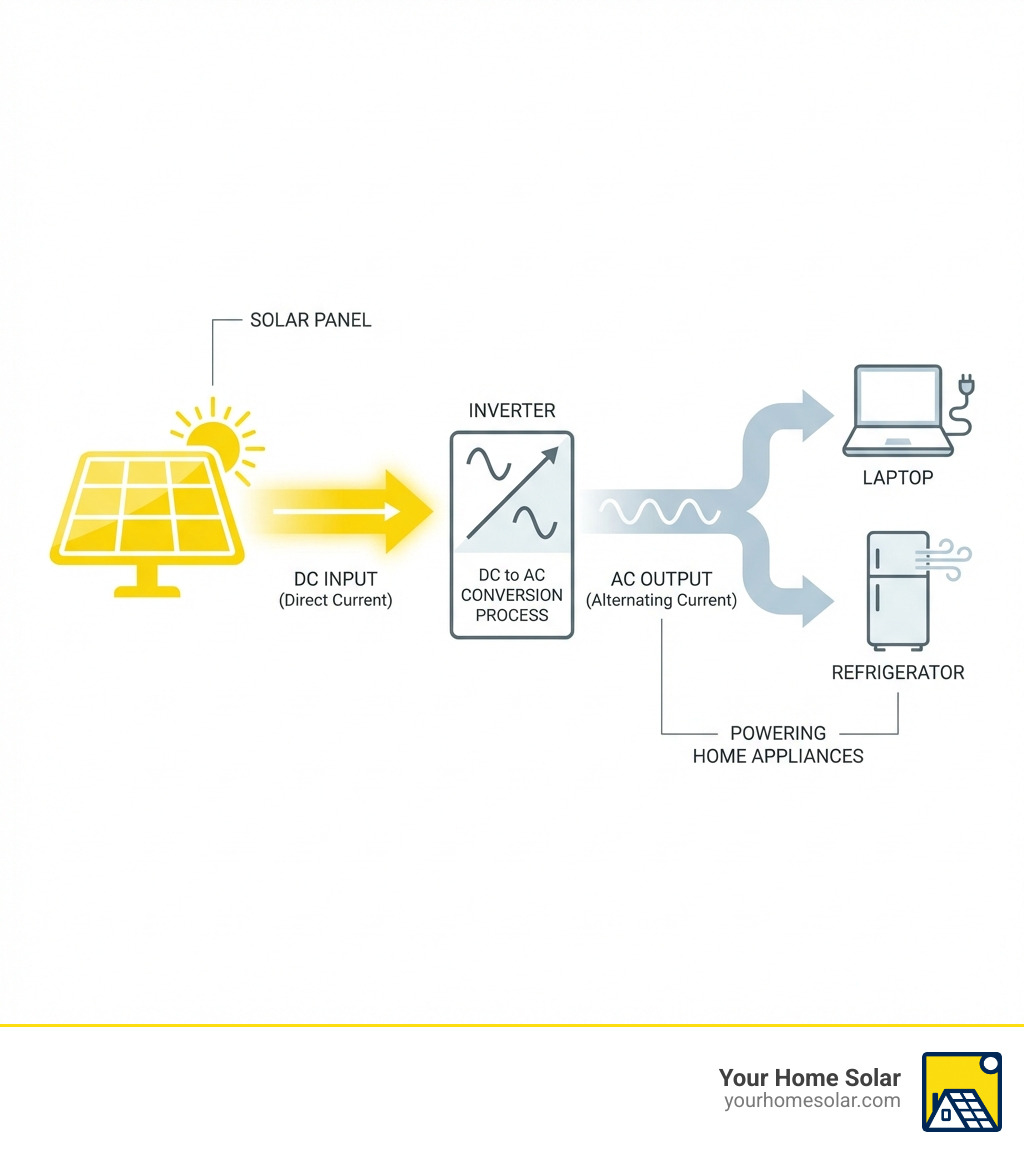
A home inverter changes direct current (DC) power into alternating current (AC) power. Solar panels generate DC electricity, but your refrigerator, lights, TV, and virtually every appliance in your home runs on AC power. Without an inverter, the energy your panels produce would be unusable.
For East Tennessee homeowners facing frequent storm-related outages and rising utility costs, choosing the right inverter isn’t just a technical decision—it’s about reliability, independence, and long-term savings.
The Two Paths: Solar Systems vs. Backup Generators
When people search for “inverter for home use,” they’re usually looking at one of two solutions:
- Solar inverters that permanently integrate with a rooftop solar system
- Inverter generators that provide portable, temporary backup power using fuel
Both use inverter technology to produce clean, stable electricity that’s safe for sensitive electronics like laptops and medical equipment. But they serve different purposes and work in fundamentally different ways.
As Ernie Bussell, founder and CEO of Your Home Solar, I’ve helped hundreds of East Tennessee families steer these choices after spending years in solar operations and energy systems. Understanding which inverter for home use fits your situation—whether it’s a permanent solar solution or a backup generator—starts with knowing how each technology works and what it can deliver for your household.
Solar Inverters vs. Inverter Generators: Clarifying the Technology
When we talk about an inverter for home use, it’s easy to get confused between solar inverters and inverter generators. While both involve converting power, their roles, power sources, and integration into your home are quite distinct. Let’s clear up the confusion.
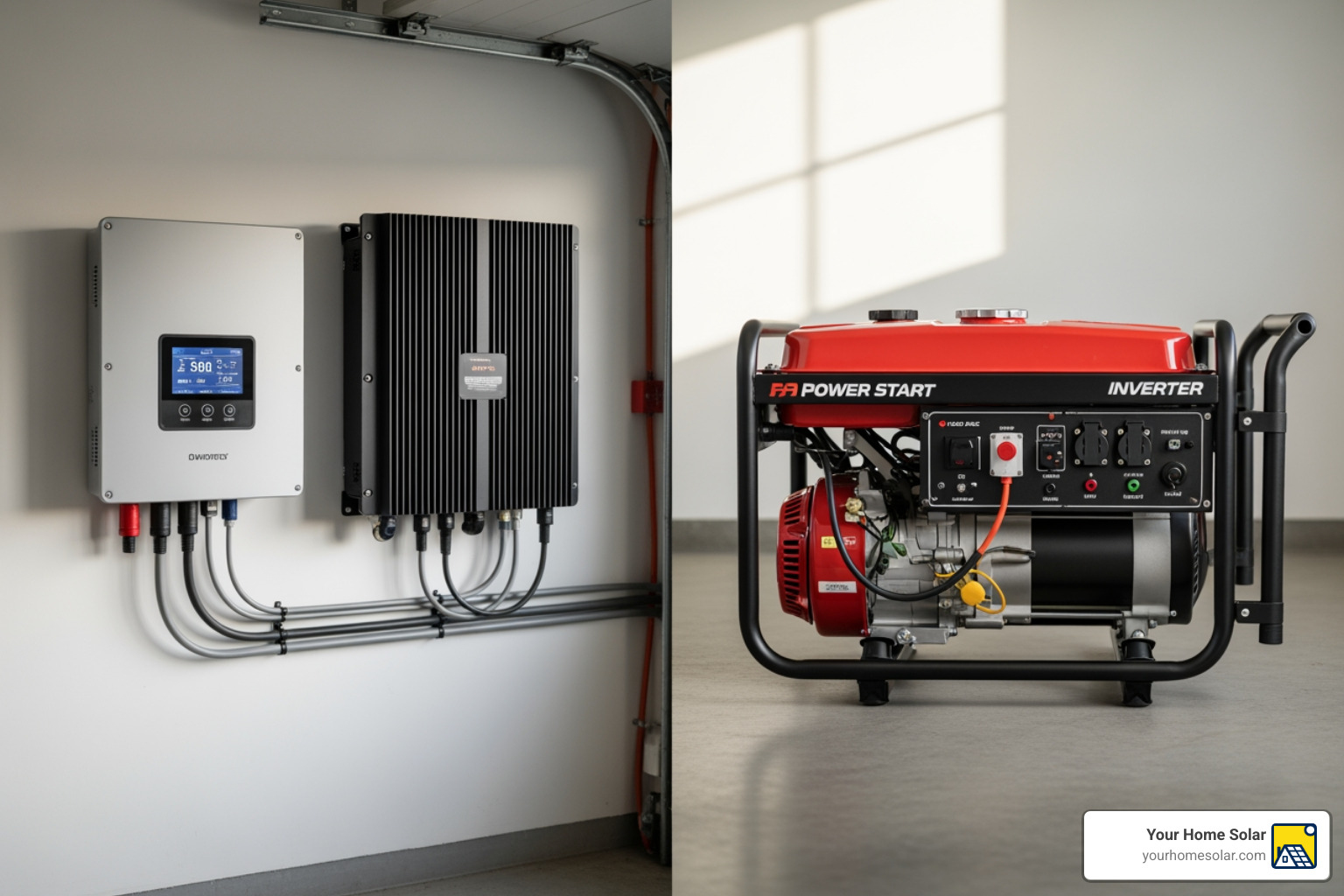
A solar inverter is the brain of your solar energy system, permanently installed and working silently to convert the sun’s energy. An inverter generator, on the other hand, is typically a portable, fuel-powered device that you bring out when you need temporary electricity. Think of it this way: one is a permanent fixture enhancing your daily energy independence, while the other is a trusty companion for emergencies or off-grid adventures.
| Attribute | Solar Inverter | Inverter Generator |
|---|---|---|
| Power Source | DC electricity from solar panels | Fuel (gasoline, propane, natural gas, diesel) |
| Primary Use | Convert solar energy for daily home consumption | Portable backup power, recreational use, job sites |
| Integration | Permanently installed, wired into home’s electrical | Standalone unit, plugs into appliances or transfer switch |
| Energy Type | Renewable, sustainable | Fossil fuel (typically), some dual-fuel options |
What is a Solar Inverter?
A solar inverter is a crucial component of any solar energy system. Its primary job is to take the direct current (DC) electricity produced by your solar panels and convert it into alternating current (AC) electricity. Why is this so important? Because virtually all your home appliances and the entire electrical grid operate on AC power. Without this conversion, the clean energy from your solar panels would be unusable in your East Tennessee home.
Solar inverters are key for a smooth-running home solar system, managing the flow of electricity, and, in grid-tied systems, even synchronizing with the utility grid to send excess power back. We dig deeper into this technology in our comprehensive guide: The Ultimate Guide to Solar Inverters.
What is an Inverter Generator?
An inverter generator is a type of portable generator that provides clean, stable power, making it an excellent choice for sensitive electronics. Unlike conventional generators that run at a constant, high RPM, an inverter generator’s engine speed adjusts according to the load it’s supplying. This intelligent design leads to significantly higher fuel efficiency and much less noise emission.
Inverter generators produce power with a low Total Harmonic Distortion (THD), typically less than 5%, which is crucial for safely powering devices like laptops, smartphones, and smart TVs without risk of damage. They often feature an aesthetically pleasing, fully enclosed, suitcase-style design, making them more portable and quieter than their conventional counterparts. However, open-frame inverter generators also exist, offering higher power output for those who need it.
These versatile units can deliver anywhere from 1,000 starting watts for compact models up to 17,000 starting watts for the most powerful ones. This wide range makes them suitable for various users, including homeowners needing backup power during outages, RV owners, tailgaters, and even craftspeople or construction professionals. While not a permanent solution like a solar system, they offer flexible and reliable temporary power. For a general understanding of how backup generators work, you can watch this video: How a Home Backup Generator Works.
Exploring the Types of Solar Inverters for Your Home
When we design a solar energy system for your East Tennessee home, one of the most important decisions we make is the type of solar inverter to integrate. This choice significantly impacts your system’s performance, efficiency, and cost. There are three main types of inverters, each with its own advantages custom to different home energy requirements and solar panel configurations.

Understanding these types is crucial for maximizing your solar investment. For a broader view of how these fit into a complete system, check out our guide on Understanding Different Types of Residential Solar Energy Systems.
String Inverters: The Cost-Effective Standard
String inverters are what we might call the “traditional” choice in solar systems. In this setup, multiple solar panels are wired together in a “string,” and this entire string connects to a single, centralized inverter. This design makes string inverters generally less expensive than other types, offering a cost-effective option for budget-conscious homeowners in East Tennessee looking to install a solar energy system.
Their centralized design also simplifies installation, which can be a plus for straightforward roof layouts. String inverters often come with warranties of 10 years or more, and their typical lifespan ranges from 10 to 15 years. However, a key consideration with string inverters is how they handle shading. If even one panel in a string is shaded (perhaps by a chimney, a tree, or even fallen leaves), the output of the entire string can be reduced to that of the lowest-performing panel.
Microinverters: Maximizing Panel-by-Panel Performance
Microinverters represent a more decentralized approach to solar power. Instead of one inverter for a string of panels, each individual solar panel gets its own microinverter. This configuration offers a significant advantage: panel-level optimization. If one panel is shaded or underperforming for any reason, it doesn’t affect the output of the other panels in your array. Each panel operates independently, maximizing energy harvest even with partial shading or damage.
While microinverters are typically pricier upfront than string inverters, they can boost overall energy output and system reliability, especially for homes with complex rooflines or potential shading issues throughout the day. They also often come with module-level monitoring capabilities, allowing us to track the performance of each individual panel. Microinverter models are robust, often designed for a lifespan of 25 years or more, matching the typical warranty of many solar panels. We’re proud to offer solutions like these to our customers; you can Learn about Enphase Solar Installation in East Tennessee.
Hybrid Inverters: The All-in-One Power Hub
Hybrid inverters are the best of both worlds, combining the functions of a solar inverter and a battery charger into a single unit. This innovative design allows your solar energy system to operate in both on-grid and off-grid modes. What does this mean for your home? It means that even during grid outages—a common concern for many of us in East Tennessee—your hybrid inverter can provide power to your home, ensuring an uninterrupted electricity supply.
Hybrid inverters are gaining popularity because they seamlessly integrate solar power generation with battery storage. They feature advanced battery charging algorithms that optimize the charging process, extending battery lifespan. This makes them ideal for homeowners looking for true energy independence, backup power, and the ability to store excess solar energy for use when the sun isn’t shining. They can even adapt to future grid requirements, making them a forward-thinking choice. If you’re considering integrating battery storage with your solar system, a hybrid inverter is likely the heart of that solution. Learn more about how these systems can benefit you: When a Sol-Ark Home Solar System Makes Sense for East Tennessee Residents.
Key Factors for Choosing the Right Inverter for Home Use
Selecting the perfect inverter for home use is a crucial step in designing an efficient and reliable solar energy system. It’s not just about picking the latest model; it’s about matching the technology to your specific energy needs, budget, and long-term goals. We consider several key factors to ensure your East Tennessee home gets the most out of its solar investment.
When we help homeowners choose an inverter, we always encourage them to think about these critical points. Here are some top questions we recommend asking:
- What is the optimal size (wattage) for my home’s energy consumption and future needs?
- What is the inverter’s efficiency rating, and how does it impact my energy savings?
- What kind of warranty does the inverter come with, and what does it cover?
- Is the inverter compatible with battery storage if I decide to add it later?
- What are the monitoring capabilities, and how easy is it to track my system’s performance?
Sizing and Wattage: Matching Power to Your Needs
The inverter’s capacity, measured in kilowatts (kW), must be carefully matched to the total DC power output of your solar panels. An undersized inverter won’t be able to handle all the electricity your panels produce, leading to wasted energy. An oversized inverter, while offering some flexibility for future expansion, might operate less efficiently at lower loads and could be an unnecessary upfront cost.
We always analyze your home’s average and peak energy consumption, as well as the output potential of your solar array, to determine the ideal inverter size. Understanding your energy requirements and peak usage periods is essential for proper inverter sizing, ensuring optimal performance and maximizing your long-term savings by reducing reliance on grid power.
Efficiency and Clean Power for Sensitive Electronics
The efficiency of an inverter tells us how much of the DC power from your panels is successfully converted into usable AC power for your home. High-quality photovoltaic inverters typically boast an efficiency level above 96%. This means very little energy is lost during the conversion process, directly boosting your energy savings.
Beyond efficiency, the quality of the AC power output is paramount, especially for modern homes filled with sensitive electronics. Inverters that produce a “pure sine wave” output are essential. This means the electricity mimics the smooth, consistent waveform of grid power, with a low Total Harmonic Distortion (THD). Why is this important? Because sensitive devices like laptops, smart TVs, medical equipment, and even some smart appliances require this clean, stable power to operate correctly and avoid damage. Modified sine wave inverters, while cheaper, can cause humming, overheating, or even permanent damage to these devices. We prioritize pure sine wave output to protect your valuable electronics.
Durability, Warranty, and Maintenance
An inverter for home use is a significant investment, and its durability and the support behind it are critical. High-quality inverters are built to last. While string inverters typically come with warranties of 10 years or more and have a lifespan of 10-15 years, microinverters are often designed for a lifespan of 25 years or more, often matching the lifespan of your solar panels. Always consider the warranty period and terms when selecting an inverter. You can often find detailed information like this in documents available for Download Warranty Information.
To ensure your inverter performs optimally throughout its lifespan, regular maintenance is key. This includes:
- Regular Cleaning: Keep the inverter and the area around it clean to prevent dust and debris accumulation, which can hinder cooling and efficiency.
- Visual Inspections: Periodically inspect all connections and wires for any signs of damage or wear.
- Performance Monitoring: Use the inverter’s display panel or associated software to monitor its performance and spot any potential issues early. Review the user manual for error codes and simple troubleshooting steps.
- Professional Servicing: We recommend considering professional servicing for regular checks and to prevent expensive repairs, ensuring your system remains in top condition for years to come.
Understanding the Role of an Inverter Generator for Home Use
While solar inverters are about using the sun’s power, an inverter for home use can also refer to an inverter generator—a fantastic tool for portable power needs. These generators are a world apart from older, noisier conventional models, offering a blend of efficiency, quiet operation, and clean power that’s perfect for a variety of situations beyond just home backup.
Whether you’re in one of East Tennessee’s beautiful state parks, tailgating before a Volunteers game, or just need temporary power during an outage, an inverter generator provides a reliable and convenient solution. They are designed to deliver clean power with low THD, making them safe for sensitive electronics.
Benefits: Fuel Efficiency, Quiet Operation, and Portability
The primary benefits of an inverter generator stem from its intelligent design:
- Fuel Efficiency: Unlike conventional generators that run at a constant high speed, an inverter generator’s engine speed adjusts automatically based on the electrical load. This means if you’re only powering a few lights, the engine idles down, consuming less fuel. This smart technology leads to significantly higher fuel efficiency, saving you money on gas or propane.
- Quiet Operation: Because the engine isn’t always running at full throttle, inverter generators are remarkably quieter than conventional models. Many “quiet” models operate below 60 dB, which is comparable to a normal conversation. The fully enclosed, suitcase-style design of many inverter generators also contributes to their reduced noise levels, making them ideal for camping, RVs, or even close to your home without disturbing the peace. While the enclosed, suitcase-style design is popular, open-frame inverter generators also exist, often offering higher power outputs while still benefiting from inverter technology.
- Portability: Many inverter generators are designed to be compact and lightweight, often in a convenient suitcase-style casing. This makes them easy to transport and store, whether you’re taking it to a remote job site or simply moving it from your garage to your patio.
Sizing and Applications for an inverter generator for home use
Inverter for home use in the context of generators means choosing the right size for your specific needs. These units come in a wide range of wattage categories, each suited for different applications:
- Compact Inverter Generators (around 1,000 watts): Weighing 30 to 40 pounds, these are perfect for light-duty tailgating, camping, or powering a few essential devices like a phone charger, a fan, and some lights.
- Small Inverter Generators (1,500 to 2,500 watts): Typically weighing 50 to 60 pounds, these offer basic backup power. They can comfortably run a refrigerator, some lights, and charge multiple devices, making them ideal for essential backup during a short power outage in East Tennessee.
- Mid-sized Inverter Generators (2,500 to 5,000 watts): Weighing 80 pounds or more, these are great for recreational use, powering a small RV, or running a few larger appliances like a microwave or a small window AC unit. However, they generally lack the 220V connections needed to connect to a home’s electrical panel via a transfer switch for hardwired appliances like water heaters.
- Large Inverter Generators (5,000 watts or more): These powerful units, weighing from 150 to 300 pounds, can generate enough power to run a significant portion of your home, or even an entire house, when connected directly to your electrical panel using a transfer switch. They often feature 220V outlets, allowing them to power larger appliances.
These versatile generators are used by homeowners for emergency backup, RV owners for off-grid comfort, and professionals for powering tools at job sites.
Key Features and Safety Systems
Modern inverter generators come equipped with a range of features designed for convenience and safety:
- Starting Systems: You’ll find various starting options, including traditional recoil (pull-start), electric start (push-button), and even remote start systems for ultimate convenience.
- Fuel Types: While many run on gasoline, dual-fuel models (gasoline and propane) are popular for their flexibility. Some larger units might even have natural gas options, or be integrated into solar systems.
- Runtime Specifications: Manufacturers typically list runtime at a specific load, often @50% load or @25% load. For example, a unit might offer 6.1 hours at 50% load or 19 hours at 25% load, giving you an idea of how long it can power your essentials.
- Safety Features: This is paramount for any generator used near your home. Common safety features include:
- CO Shutoff: Carbon Monoxide (CO) shutoff sensors are crucial. These systems automatically shut down the generator if hazardous levels of CO accumulate, protecting you and your family. It’s vital to remember that all generators, even smaller inverter models, emit CO and must always be operated outdoors in a well-ventilated area, far from windows and doors.
- Overload Protection: This feature prevents damage to both the generator and your connected appliances by shutting down power if the load exceeds the unit’s capacity.
- Low Oil Shutdown: Automatically turns off the engine if oil levels drop too low, protecting the engine from severe damage.
- Automatic Voltage Regulation (AVR): Ensures a stable and consistent power output, further protecting sensitive electronics.
- USB Power Ports: Many models now include USB ports for direct charging of phones and other small devices.
Frequently Asked Questions about Home Inverters
We often hear similar questions from East Tennessee homeowners as they explore their options for an inverter for home use. Let’s address some of the most common ones.
How long do home solar inverters last?
The lifespan of a home solar inverter varies significantly depending on its type:
- String Inverters: Typically have a lifespan of 10 to 15 years. They often come with warranties of 10 years or more.
- Microinverters: These advanced units are designed for greater longevity, often lasting 20 to 25 years or more. Their warranties frequently reflect this, matching the 25-year warranty periods of many solar panels.
- Hybrid Inverters: Their lifespan is generally comparable to string inverters, around 10-15 years, but their integrated technology can mean components are designed for robust, long-term performance.
Factors affecting longevity include the quality of the unit, environmental conditions (like extreme heat or cold), and proper maintenance. Investing in a high-quality inverter from a reputable brand can significantly extend its operational life.
Can an inverter power my entire house?
Yes, an inverter can power your entire house, but it depends on the type of inverter, the size of your solar array (for solar inverters), or the wattage of your generator (for inverter generators), and whether it’s properly integrated with your home’s electrical system.
- With Solar Inverters: For solar systems, a large enough solar array combined with a powerful hybrid inverter and a robust battery bank can provide whole-home backup, allowing you to run your entire household independently of the grid during an outage. This often involves an “essential load panel” or a full home energy management system to manage power distribution.
- With Inverter Generators: Large inverter generators (5,000 watts or more) are capable of powering an entire house. To do this safely and effectively, they must be connected to your home’s electrical panel via a professional-installed transfer switch. Smaller inverter generators (1,500-5,000 watts) can power essential items like a refrigerator, some lights, and a phone charger, but typically cannot power hardwired appliances like a well pump or water heater due to lacking 220V connections needed for a whole-home connection.
The key is proper sizing and professional installation to ensure the inverter’s capacity matches your home’s demand.
What kind of maintenance does a home inverter require?
Maintaining your home inverter is generally straightforward, but crucial for ensuring its longevity and optimal performance:
- Regular Visual Inspections: Periodically check the inverter for any visible signs of damage, wear, or corrosion. Ensure all connections are secure.
- Keep it Clean and Clear: Dust, dirt, and debris can accumulate around the inverter, potentially impeding its cooling system. Regularly clean the unit and ensure the area around it is clear of obstructions to allow for proper ventilation.
- Monitor Performance: Most modern inverters come with a display panel or can be monitored via an app or software on your smartphone, tablet, or computer. Regularly check this interface for any error codes or unusual readings, which can indicate a problem. Consult your user manual for explanations of common error codes and basic troubleshooting steps.
- Professional Check-ups: We recommend annual professional check-ups by qualified technicians. They can perform diagnostic tests, inspect internal components, and ensure all electrical connections are safe and secure. This preventative maintenance can catch small issues before they become expensive repairs.
Conclusion: Empower Your Home with the Right Energy Solution
Choosing the right inverter for home use is a pivotal decision that directly impacts your energy independence, savings, and comfort. Whether you opt for a permanent solar inverter to harness the sun’s power daily or a versatile inverter generator for reliable backup, understanding the technology ensures you make an informed choice that truly empowers your home.
At Your Home Solar, we pride ourselves on being East Tennessee’s trusted experts in comprehensive home energy solutions. We understand the unique needs of homeowners in Knoxville, Oak Ridge, Maryville, Johnson City, Kingsport, and across the region, from navigating outages to embracing sustainable living. Our commitment to 100% customer satisfaction means we tailor every installation to provide reliable, rewarding energy solutions. We’re here to guide you through the complexities, ensuring your home benefits from the most efficient and effective inverter technology available.
Ready to take control of your home’s energy future? We’re ready to help.
Take the next step and explore your residential solar options