
Affordable Solar Starts With the Right System, Not Just the Lowest Price
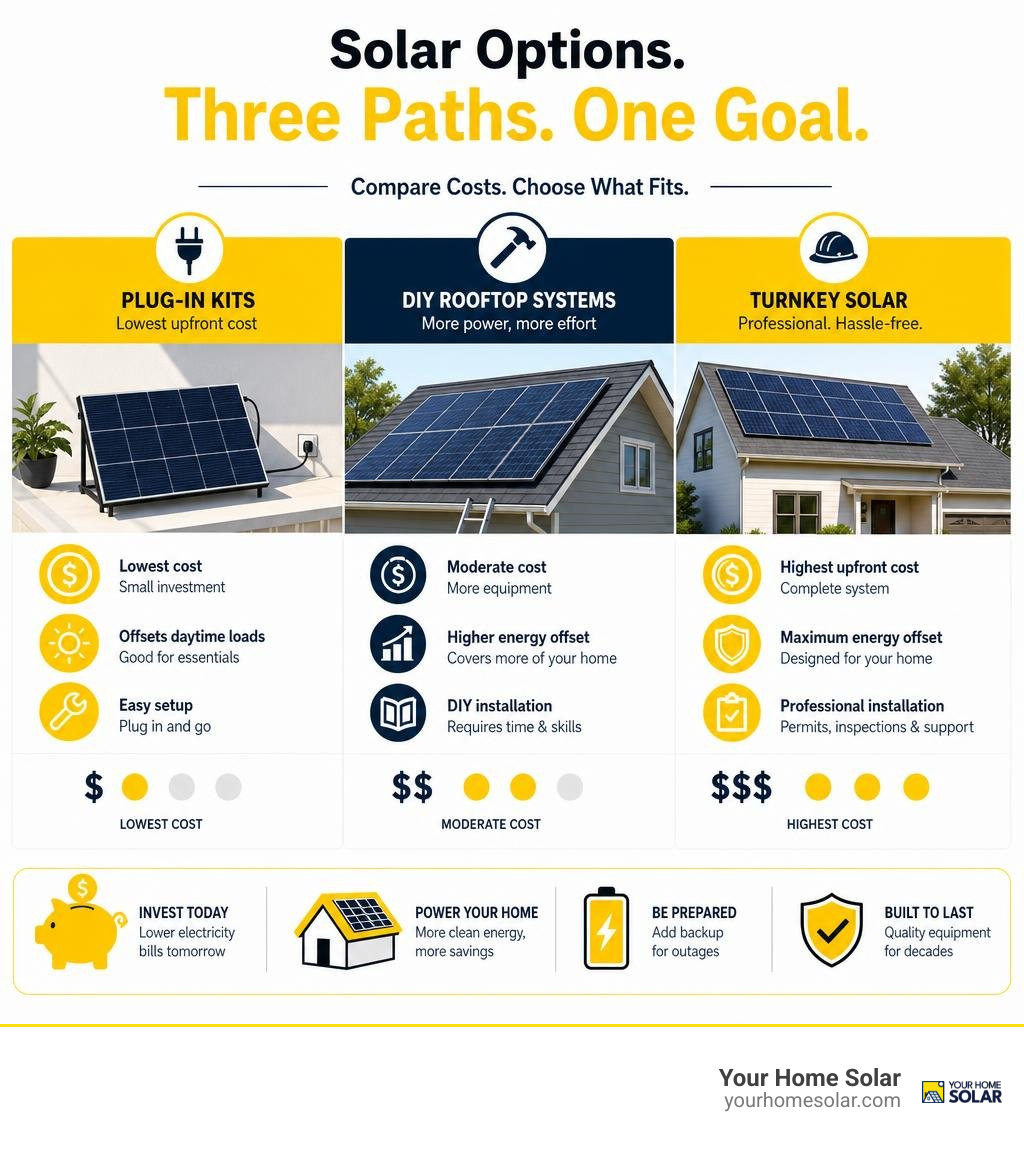
To get affordable solar panels for home, property owners can install pre-packaged DIY grid-tied kits, purchase clearance pallets of Tier 1 modules, use portable plug-in setups, or claim the 30% federal clean energy tax credit. Finding the best value means matching equipment to your energy consumption, roof space, and local utility regulations rather than simply buying the cheapest components.
Pre-packaged DIY packages lower upfront expenses by eliminating installation labor, while sourcing wholesale pallets provides substantial contractor-level markdowns on high-efficiency bifacial or TOPCon modules. For renters or smaller budgets, modular plug-in systems directly offset baseline daytime electrical loads. Pairing these strategies with federal and regional incentives minimizes your out-of-pocket investment.
I am Ernie Bussell, founder and CEO of Your Home Solar, with hands-on solar operations experience since 2020 and a background built around quality control, education, and practical problem-solving. In this guide, I will break down affordable solar panels for home so you can compare real costs, likely savings, and the tradeoffs behind each option.
Handy affordable solar panels for home terms:
5 Smart Ways to Find Affordable Solar Panels for Home Energy
Finding budget-friendly solar equipment does not require cutting corners on quality or safety. In August 2026, advances in module efficiency, microinverter hardware, and direct-to-consumer logistics offer several viable avenues to lower your clean energy costs.
Whether you are seeking a weekend DIY project, a compact portable system, or wholesale pallets for a larger array, here are five practical paths to secure affordable solar panels for home installations.
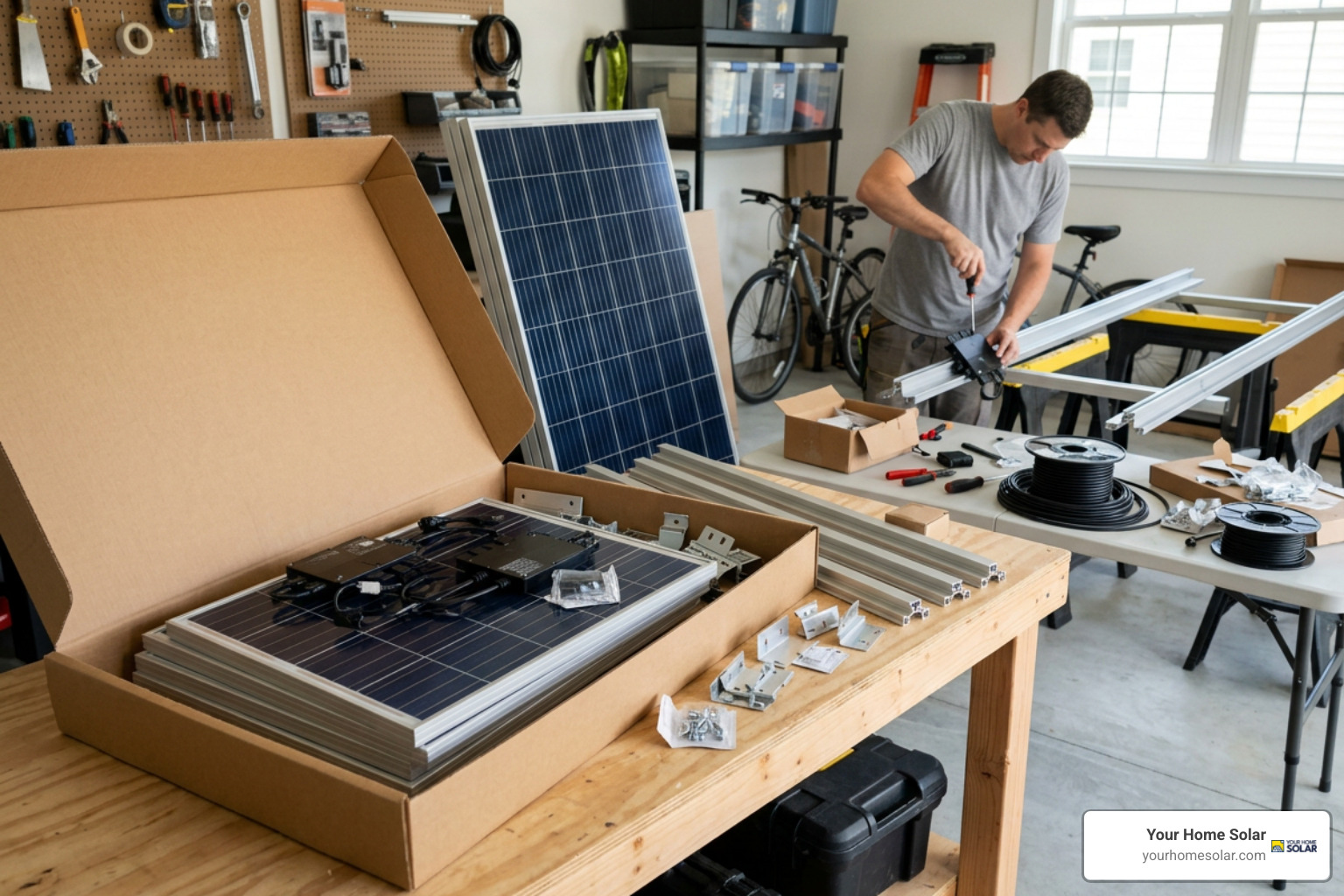
1. Pre-Packaged DIY Grid-Tied Kits vs. Turnkey Installations
For hands-on property owners, pre-packaged grid-tie solar kits provide substantial upfront savings by bundling panels, microinverters, and racking hardware into one shipment. Exploring the kilowatt crunch your guide to average solar panel costs reveals that labor and permitting represent a significant portion of turnkey pricing, which DIY packages eliminate.
For example, a complete 40-panel 40 Panel (17.6kW) Complete DIY Solar Kit – Solar Circle Cooperative is priced at approximately $14,539.66, bringing equipment costs down to roughly $0.83 per watt. Complete systems like the Fox ESS Grid-Tie Solar Kit with Tier 1 Talesun 450W Solar Panels range from 5.4 kW to 22.5 kW, delivering hardware rates between $0.69 and $1.02 per watt.
These packages typically feature high-grade microinverters—such as APsystems units maintaining a balanced 1.38 DC/AC ratio—backed by explicit 25-year warranties for self-installers. However, balance-of-system electrical parts like exterior conduit, sub-panels, and circuit breakers must still be sourced separately.
2. Plug-In Balcony Systems: Affordable Solar Panels for Home Renters and Apartments
For renters or families facing costly roof replacements, modular plug-in solar kits offer an entry point into residential solar without permanent roof alterations. An entry-level $400 plug-in setup (or an 800-watt kit around $1,600) can plug into an exterior-rated circuit through specialized microinverters.
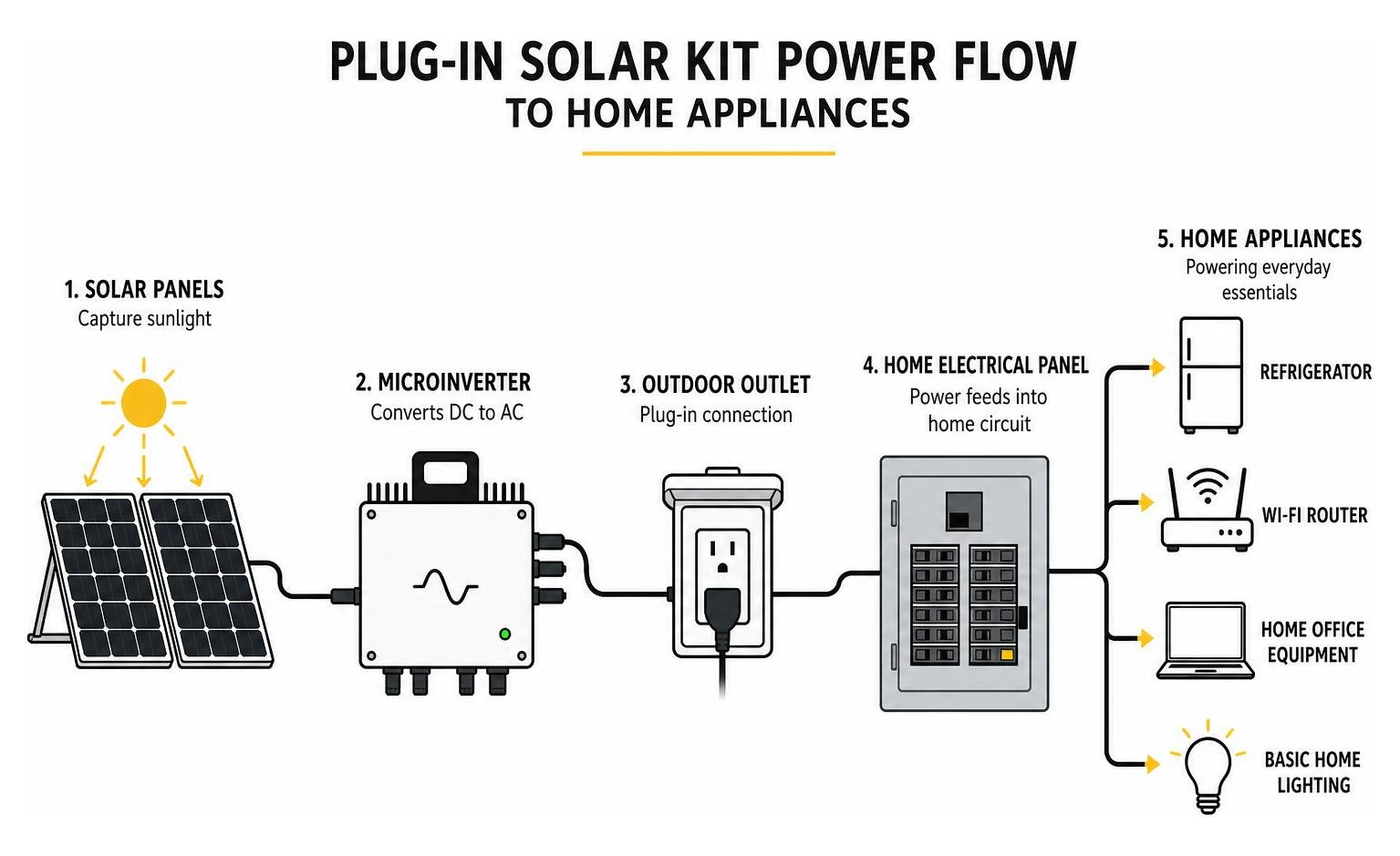
These systems capture enough daylight to generate 600 to 800 watts during peak sun, directly offsetting baseline household loads such as refrigerators, Wi-Fi routers, and home office gear. Because they reduce immediate utility draw, plug-in units can trim 5% to 10% from monthly bills, creating a rapid payback period of just 2 to 3 years. Renters can quickly unmount the lightweight panels and transport the system when relocating.
3. Sourcing Wholesale Pallets and Clearance Modules
Procuring solar modules by the full pallet (typically 31 to 32 panels) allows homeowners to secure bulk contractor rates. When considering if cheap solar panels for your home myth or reality, buying clearance pallets from major distributors is one of the most reliable ways to access authentic Tier 1 panels at major markdowns.
End-of-season clearance sales frequently offer 20% to 25% discounts on full pallets:
- 450W Mono PERC pallets (32 panels): Starting around $4,950
- 500W Mono Black PERC pallets (32 panels): Starting around $5,690
- 560W Bifacial N-Type pallets (32 panels): Starting around $7,199
When ordering bulk freight, always inspect the pallets before signing the delivery slip. Checking for hairline microcracks or shattered bottom modules ensures you can file freight insurance claims immediately if transit damage occurs.
4. High-Efficiency Bifacial and TOPCon Clearance Panels
Technological upgrades have made premium cell architectures surprisingly affordable. Clearance listings now feature high-output bifacial modules like the Talesun Solar 415W Solar Panel 108 Cell PERC Bifacial All-Black TP7G54M(H)-415-BB Clearance – A1 SolarStore for $146.41 ($54.59 off standard retail) and the Hyundai Energy Solutions 640W Solar Panel 156 Cell N-Type TOPCon Bifacial HiS-T640NJ Clearance – A1 SolarStore for $151.64.
Commercial-scale modules, such as the Astronergy 650W Solar Panel 132 Cell PERC Bifacial CHSM66M(DG)/F-BH-650 Wholesale 31 panels per pallet – A1 SolarStore , deliver 20.9% efficiency and a 30-year linear performance warranty. Bifacial dual-glass construction absorbs reflected light from behind the panel (albedo effect), boosting total energy yield by 10% to 30% when mounted over light-colored shingles, light gravel, or winter snow.
5. Ground-Mount and Shed Kits for Restricted Roofs
If your home’s roof is shaded, heavily dormered, or facing north, ground mounts and outbuilding arrays present a versatile alternative. Ground-mounted systems allow you to orient panels true South at an optimal tilt angle to maximize annual kilowatt-hour harvest.
For detached garages, workshops, and agricultural barns, pole mounts and standalone shed kits keep installation hardware simple. When building off-grid shed arrays, always route DC panel output through a dedicated MPPT solar charge controller before connecting to deep-cycle battery banks to protect storage cells from overcharging damage.
Key Technical Specs and Equipment Comparisons
Comparing solar panel options requires evaluating module efficiency, physical footprint, cell chemistry, and per-watt pricing:
| Solar Panel Model | Cell Technology | Wattage Rating | Module Efficiency | Estimated Cost / Unit | Linear Performance Warranty |
|---|---|---|---|---|---|
| Talesun TP7G54M(H) | PERC Bifacial Mono | 415W | 21.25% | $146.41 (Clearance) | 25 Years (84.95% retention) |
| Talesun N-Type | N-Type Dual Glass | 450W | 21.80% | ~$170.00 (In Kit) | 30 Years (87.40% retention) |
| Hyundai HiS-T640NJ | N-Type TOPCon Bifacial | 640W | 22.90% | $151.64 (Clearance) | 30 Years (87.40% retention) |
| Astronergy CHSM66M | PERC Bifacial Mono | 650W | 20.90% | ~$210.00 (Wholesale) | 30 Years (84.95% retention) |
| SunGoldPower Bulk | Monocrystalline PERC | 450W | 20.70% | ~$154.68 (Pallet rate) | 25 Years (84.80% retention) |
Calculating Cost-Per-Watt and Payback Periods
To evaluate solar equipment value, divide the total purchase price by the system’s total DC wattage rating. When checking solar panel costs in 2026 are they lower than you think, you will find that equipment-only hardware kits frequently land between $0.69/W and $1.26/W depending on system scale and racking inclusions.
Payback periods depend heavily on local electric rates and system design:
- Small Plug-In Solar Kits (400W–800W): 2 to 3 years payback by trimming continuous daytime baseline loads.
- DIY Rooftop Arrays (5kW–17kW): 4 to 7 years payback, factoring in self-installation labor and local utility grid interconnection.
- Turnkey Professional Installations: 7 to 10 years payback, factoring in comprehensive engineering, full permitting, certified electrical labor, and long-term service guarantees.
Technical Specs to Look for in Affordable Solar Panels for Home Systems
When reviewing module spec sheets, prioritize these technical benchmarks:
- Module Efficiency: Target 20.5% to 23% efficiency to maximize power output per square foot of roof space.
- Temperature Coefficient: Look for figures between -0.29%/°C and -0.35%/°C. Lower ratings ensure panels maintain steady voltage output during hot summer afternoons.
- Mechanical Load Ratings: Confirm front-load ratings of at least 5,400 Pa (for heavy snow and hail) and rear-load ratings of 2,400 Pa (for high winds).
- Linear Degradation Warranties: Reputable manufacturers guarantee no more than 1% to 2% degradation in year one and 0.40% to 0.55% annual degradation thereafter, ensuring ~85% to 87.4% output after 25 to 30 years.
Legal Rules, Safety Codes, and Financial Incentives
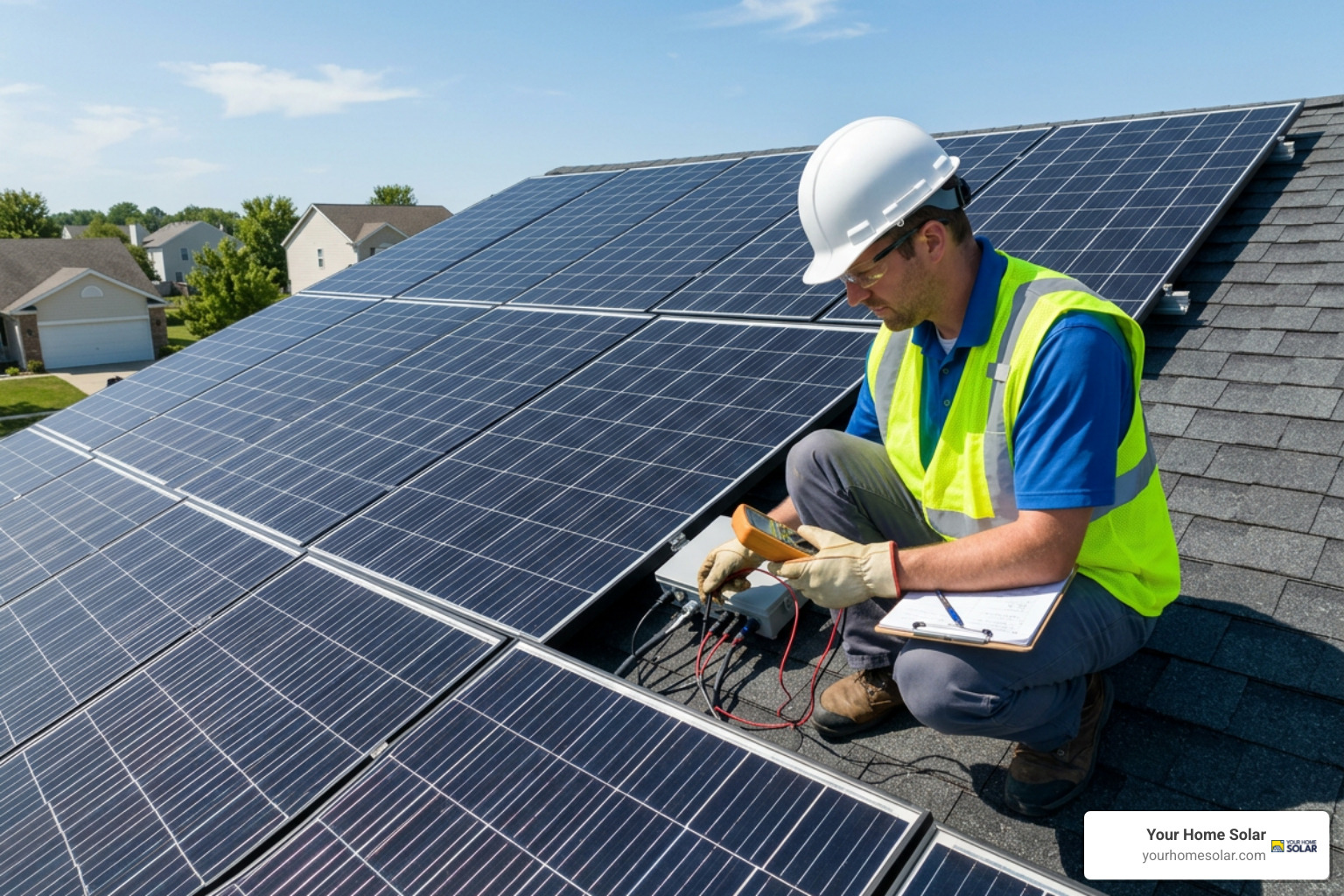
Connecting power generation hardware to your household electrical system requires adherence to local building codes and utility guidelines.
Permitting, Microinverters, and Safety Standards
All grid-tied solar modules and inverters must carry industry-standard safety certifications, including UL 61730 and California Energy Commission (CEC) listings. In Tennessee, local utility distributors operating under the Tennessee Valley Authority (TVA) require formal interconnection agreements and certified anti-islanding protection.
Anti-islanding microinverters immediately shut down power output when grid voltage drops. This prevents accidental backfeeding into downed utility lines, protecting line workers during grid repairs. Always follow National Electrical Code (NEC) standards for junction boxes, disconnect switches, and rooftop conduit seals.
Maximizing Federal Tax Credits and Regional Incentives
You can significantly lower your capital investment when you harness the sun save on taxes everything about the federal solar credit. The Section 25D Residential Clean Energy Credit allows homeowners to claim a 30% tax credit on qualified equipment expenditures.
This credit applies to complete turnkey installations as well as DIY equipment packages, covering solar panels, inverters, racking rails, wiring, and energy storage batteries (3 kWh or greater). Always retain your itemized hardware receipts and proof of installation for annual tax filing.
Frequently Asked Questions About Affordable Solar
How much energy can a small DIY or plug-in solar kit produce?
A typical 800-watt DIY or plug-in system produces approximately 3.2 to 4.0 kilowatt-hours (kWh) of electricity per day, assuming 4 to 5 hours of direct peak sunlight. This generation is sufficient to offset steady daytime power demands from energy-intensive baseline appliances like refrigerators, desktop workstations, and circulation fans. Companion smartphone applications allow real-time tracking of kilowatt-hour yields.
What are the main risks of buying clearance or discounted solar panels?
Primary risks include freight shipping damage, limited warranty terms on discontinued models, and balance-of-system mismatches. When mounting clearance panels, never drill custom holes into the aluminum frame; drilling can damage internal busbars and immediately voids the manufacturer warranty. Always utilize the factory pre-drilled mounting slots.
Do plug-in and DIY solar installations qualify for the federal solar tax credit?
Yes. The 30% federal tax credit covers clean energy property expenditures for systems placed in service at your primary or secondary residence, provided you purchase and own the equipment rather than lease it. Portable plug-in kits qualify if permanently integrated into your home energy system during the tax year.
Conclusion
Affordable solar power is no longer out of reach. From modular plug-in kits that cover daily appliance loads to high-efficiency clearance bifacial panels and full DIY packages, homeowners have multiple paths to take control of their utility costs.
However, achieving dependable 30-year energy savings requires balancing upfront equipment discounts with safe electrical design, proper racking geometry, and regional utility compliance.
At Your Home Solar, we provide customized, dependable energy solutions across East Tennessee—including Knoxville, Oak Ridge, Maryville, Johnson City, Kingsport, Morristown, and Sevierville. Whether you need high-output monocrystalline arrays, backup generators, or Level 2 EV charging, our team is dedicated to providing reliable, code-compliant installations backed by 100% customer satisfaction.
Explore our comprehensive residential solar solutions today, or reach out to our team to schedule your personalized home energy consultation.