Why Residential Solar Panels Are Changing East Tennessee Homes
Residential solar panel systems offer East Tennessee homeowners three key benefits: energy independence from power outages, significant savings on electricity bills, and a positive environmental impact by offsetting 6-7 tonnes of CO2 annually. The main decision is choosing between pre-packaged solar kits or custom-designed systems. Custom installations typically deliver 15-30% better performance and comprehensive warranties, while DIY kits have lower upfront costs but require technical expertise.
Quick Comparison: Kit vs. Custom Solar
| Factor | Solar Kit | Custom System |
|---|---|---|
| Upfront Cost | Lower ($15,000-$20,000) | Higher ($18,750-$22,500 for 7.5kW) |
| Installation | DIY (your responsibility) | Professional (certified installers) |
| Performance | One-size-fits-all | Optimized for your specific home |
| Warranties | Limited equipment only | Equipment + workmanship (25+ years) |
| Support | Minimal | Full service and monitoring |
East Tennessee homeowners face rising electricity bills and frequent power outages. The average household consumes 9,500 kWh annually, costing over $1,200 per year, with rates climbing 3-5% annually.
Fortunately, solar technology prices have dropped. A typical 7.5 kW residential solar panel system now costs between $18,750 and $22,500 before incentives and can offset most of your electricity usage for 25+ years.
The key choice is between a pre-packaged solar kit and a custom-designed system. While kits offer lower initial costs, custom systems provide professional design, installation, and long-term support. The right choice depends on your home, budget, and goals.
This guide will help you assess your home’s solar potential, compare options, understand costs and savings, and steer the installation process.
I’m Ernie Bussell, founder and CEO of Your Home Solar. For over a decade, I’ve helped hundreds of East Tennessee homeowners make the right residential solar panel decision, ensuring they get systems that deliver on their promises.
Understanding Your Solar Needs: The Foundation of Your Choice
Before choosing a residential solar panel system, you must understand your energy consumption and goals. Like a blueprint for a house, a clear picture of your energy needs and home’s suitability is the first step.
We begin with an energy audit, analyzing your last 12 months of electricity bills. This data, showing your usage in kilowatt-hours (kWh), is crucial for sizing your system. For help reading your bill, you can use resources like Understanding your electricity bill.
Next, we conduct a thorough home suitability assessment, including:
- Roof condition: Solar panels last 25-30 years, so your roof must be in good shape. We recommend a roof that is less than 5 years old or in excellent condition to avoid the added expense of removing the system for roof repairs.
- Roof orientation and slope: A south-facing roof with a 30-45 degree slope is ideal in the Northern Hemisphere. However, modern technology makes east or west-facing roofs viable.
- Shading analysis: We assess shading from trees or buildings. Minimal shading between 9 AM and 3 PM is crucial for optimal performance.
- Home Owners Association (HOA) approval: Some HOAs have rules about solar. We help you steer these requirements or explore alternatives like solar shingles.
Defining your goals is also key. Are you seeking cost reduction, power backup for outages, or environmental benefits? Understanding your motivation helps tailor the perfect system, as detailed in guides like Planning a Home Solar Electric System.
Solar Technology 101: PV vs. Thermal
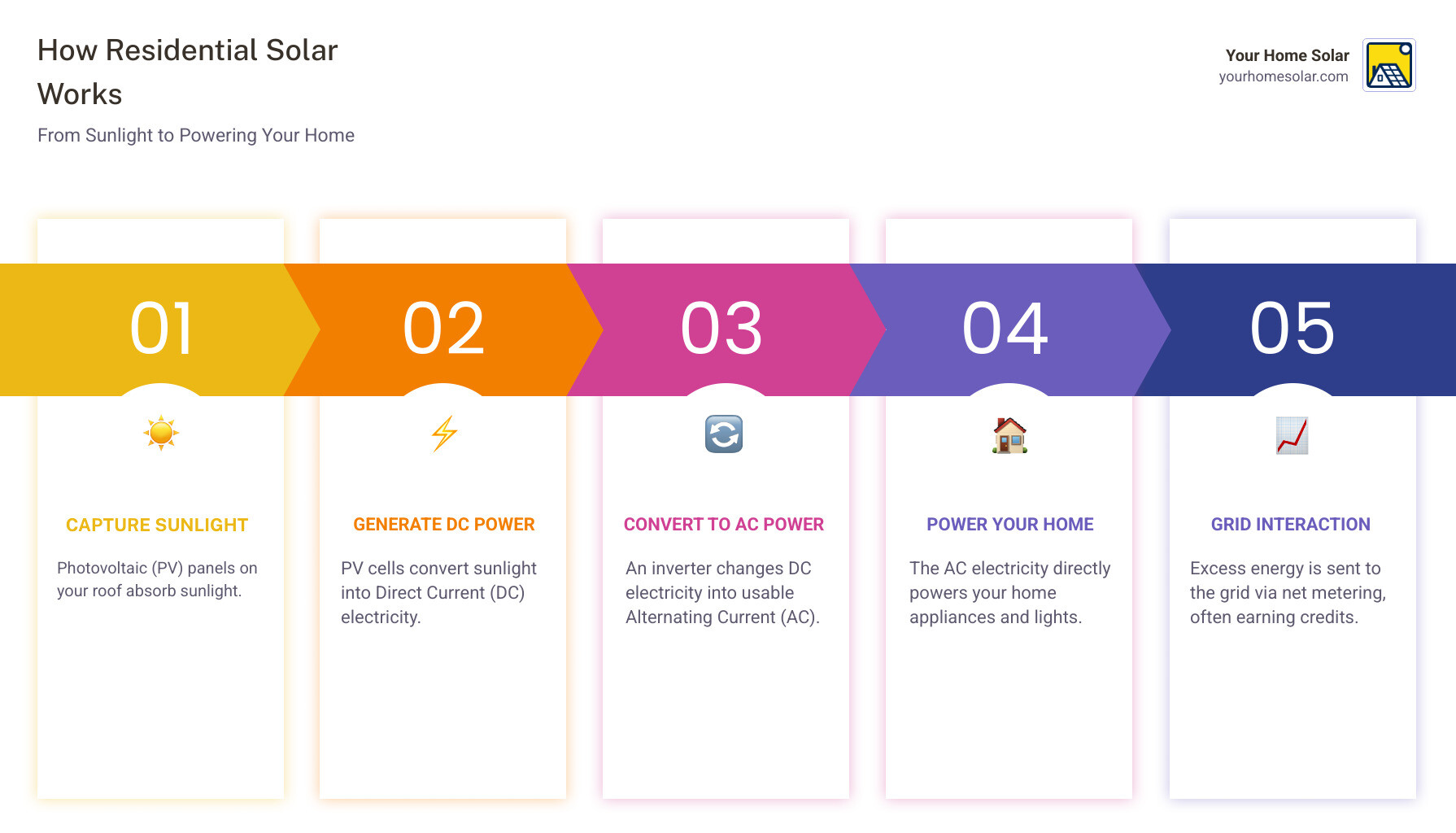
Residential solar panel systems are typically either Photovoltaic (PV) or solar thermal.
- Photovoltaic (PV) panels: These convert sunlight directly into electricity to power your home, reduce bills, and integrate with net metering, battery storage, or EV charging. PV panels have no moving parts and last 25-30 years.
- Solar thermal systems: These systems capture the sun’s heat to warm water for domestic use or space heating. They are efficient in cold, sunny climates and can reduce natural gas or propane use. A typical system costs $7,000-$12,000 installed.
We generally recommend PV panels for reducing electricity bills or integrating with battery storage. Solar thermal is excellent for high hot water demands. For a deeper dive, see Understanding Different Types of Residential Solar Energy Systems.
Factors Affecting Performance
East Tennessee receives ample sunlight, making solar a highly viable option in areas like Knoxville, Maryville, and Johnson City.
Several factors influence your residential solar panel system’s efficiency:
- Sunlight hours (insolation): East Tennessee gets enough annual sunshine for robust solar production.
- Weather impact: Snow and clouds reduce production, but panels still generate power on cloudy days. They are designed for a wide temperature range (-40°F to +185°F), and snow typically slides off or can be cleared.
- Panel orientation and tilt: South-facing roofs with a 30-45 degree tilt are ideal, but modern tech allows for optimization on other orientations.
- Temperature effects: Extreme heat can slightly decrease efficiency, but this is a minor factor in East Tennessee’s climate. Learn more at Home Solar Energy Output: How Temperature Affects Performance.
- System maintenance: Minimal maintenance is needed. Annual inspections and occasional cleaning are usually sufficient.
Exploring Your Options: Kits vs. Custom Residential Solar Panel Systems
Deciding between a solar kit and a custom-designed system is a pivotal moment in your solar journey. While both aim to harness the sun’s power, they offer vastly different experiences and outcomes. Our goal at Your Home Solar is to ensure you make the choice that best suits your needs and provides lasting value.
| Factor | Solar Kit | Custom System |
|---|---|---|
| Upfront Cost | Lower ($15,000-$20,000 for a basic setup) | Higher ($18,750-$22,500 for a 7.5kW system before incentives) |
| Performance | General, “one-size-fits-all,” may not be optimized for your home’s unique layout or energy usage. | Optimized for your specific roof, shading, and energy consumption patterns, ensuring maximum efficiency. |
| Installation | DIY (your responsibility) or hired general contractor. Requires significant personal effort, technical knowledge, and safety precautions. | Professional installation by certified, insured experts. Seamless process, adherence to codes, and proper sealing. |
| Support | Limited to manufacturer product support; no dedicated system design or post-installation assistance. | Comprehensive support from initial consultation to post-installation monitoring, maintenance, and warranty claims. |
| Warranties | Typically only product warranties for individual components. No workmanship guarantee. | Full suite of warranties: product (20-25 years), performance (25 years), and workmanship (often 10+ years). |
Pre-Packaged Solar Kits
Pre-packaged solar kits are often marketed as an affordable entry point into solar energy. These kits typically include a set number of panels, an inverter, and basic mounting hardware. The allure is often the promise of a lower initial cost and the satisfaction of a DIY approach.
However, we rarely recommend solar kits for permanent residential solar panel installations, especially on roofs. While they might seem appealing, they come with several significant drawbacks:
- One-size-fits-all: These kits are not optimized for your specific home’s energy consumption, roof orientation, shading, or local weather patterns. This can lead to underperformance and less savings than anticipated.
- Installation challenges: Unless you have extensive electrical and roofing experience, installing a roof-mounted system yourself is complex and dangerous. It involves working with high voltages, navigating roof structures, and ensuring watertight seals. Poor installation can lead to safety hazards, roof damage, and reduced efficiency.
- Permit navigation: Obtaining local electrical and building permits for solar installations can be a bureaucratic maze. Without professional guidance, you might face delays, rejections, or even fines.
- Limited support: When issues arise, you’re often left to troubleshoot yourself or deal directly with multiple manufacturers, which can be time-consuming and frustrating.
- Potential warranty issues: While individual components might have warranties, these kits rarely come with a comprehensive system or workmanship warranty. If a problem occurs due to installation error, you could be on the hook for expensive repairs. Portable solar panels, like some EcoFlow models, are an exception for specific uses like camping, offering flexibility and an IP68 waterproof rating.
For most homeowners in East Tennessee, the potential challenges and drawbacks of a solar kit for a full home installation far outweigh the initial cost savings.
Custom-Designed Systems
This is where Your Home Solar shines. A custom-designed residential solar panel system is precisely what it sounds like: a solution carefully crafted for your home, your energy needs, and your budget.
Our process begins with a professional consultation and site assessment. We don’t just look at your roof; we analyze your past energy usage, discuss your future energy goals (like adding an EV charger), and consider all the unique aspects of your property.
The benefits of a custom system are clear:
- Optimized for your home’s needs: We design a system that maximizes energy production based on your roof’s specifics, minimizing shading and ensuring optimal panel placement. This means you get the most bang for your buck and significant savings.
- Seamless permitting and grid connection: We handle all the paperwork, from local permits in Knoxville, Oak Ridge, or Maryville to utility interconnection with your local power provider. This saves you time, stress, and potential headaches.
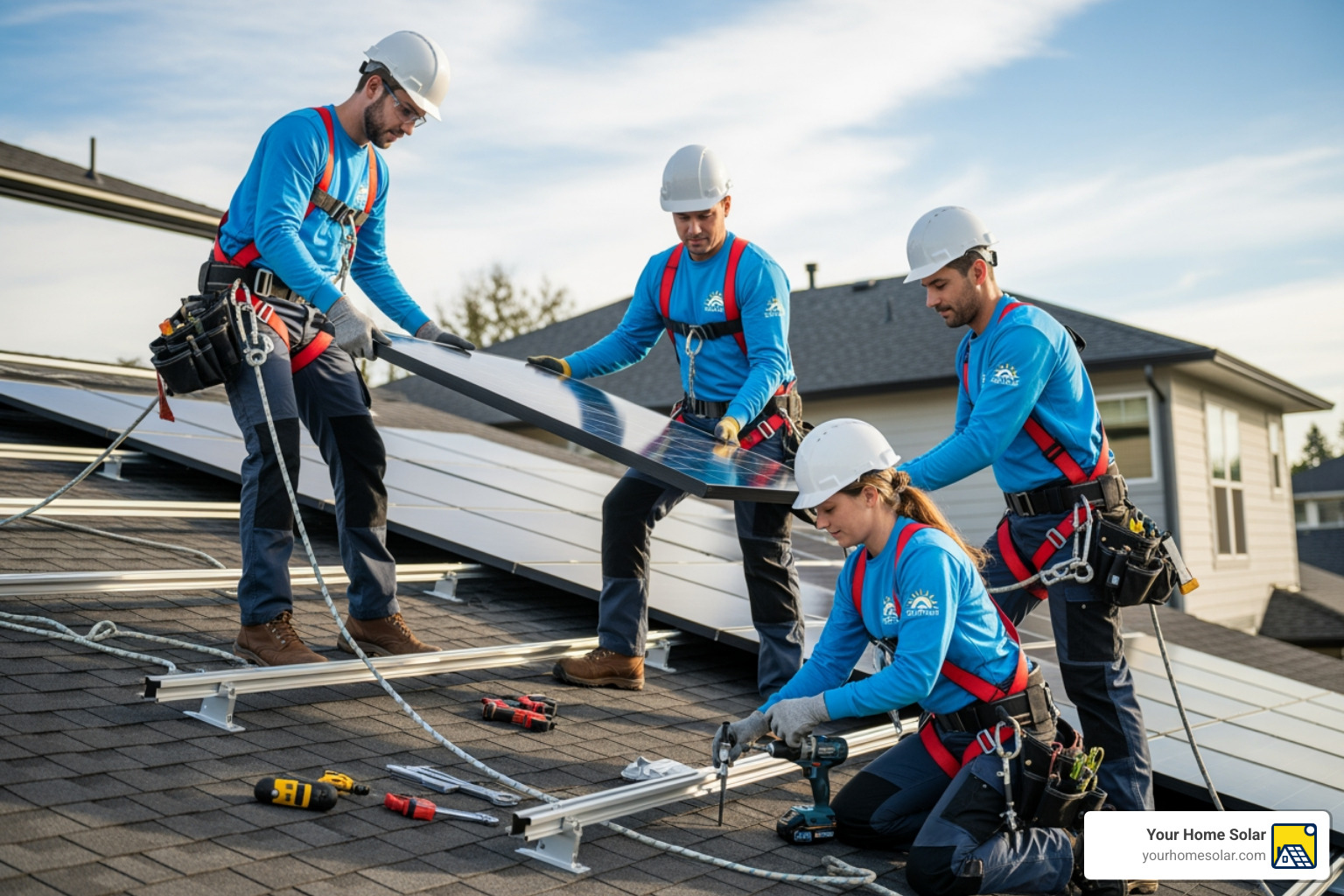
- Professional installation: Our certified and insured team ensures your system is installed safely, efficiently, and according to the highest industry standards. We use proper racking systems, integrated flashings, and ensure all electrical connections are flawless.
- Comprehensive warranties: With a custom system from Your Home Solar, you receive robust warranties covering the panels (25-year performance guarantee), inverters (typically 10-12.5 years), and our workmanship. This provides long-term peace of mind.
While the upfront investment for a custom system may be higher than a kit, the long-term performance, reliability, and support make it a far superior choice for most East Tennessee homeowners.
When looking for a qualified installer, always ensure they are certified by organizations like the North American Board of Certified Energy Practitioners (NABCEP). This certification requires work experience, a rigorous exam, a code of ethics, and continuing education. Additionally, verify that they are appropriately licensed electricians, as this is crucial for safe and compliant installations. We pride ourselves on having Expert Solar Installers in Knoxville, TN who meet and exceed these standards.
The Financials: Making Your Solar Investment Work

Investing in a residential solar panel system is a financial decision with long-term benefits. Understanding the costs, incentives, and potential returns is crucial. We’re here to make the numbers clear.
Sizing and Costing Your Residential Solar Panel System
System size, based on your annual electricity consumption, determines the cost. The average East Tennessee household uses about 9,500 kWh annually. To offset this usage, an 8-12 kilowatt (kW) system (20-30 panels) is typical. Factoring in system efficiency losses (20-25%), an 11 kW system (around 28 panels) would be needed for a 100% offset. Each standard panel is about 18 square feet and produces around 350 watts.
The cost of installing a residential solar panel system generally falls between $2.50 to $3.00 per watt. This means a typical 7.5 kW system would cost approximately $18,750 to $22,500 before incentives. For a precise estimate for your home, see our guide on Properly Sizing a Solar System for Your East Tennessee Home: Expert Tips.
Incentives, Rebates, and Financing
The federal Solar Investment Tax Credit (ITC) is one of the most significant factors making solar affordable. It allows you to deduct a percentage of your system’s cost from your federal taxes. For systems installed in 2020-2022, the credit was 26%, and for systems installed in 2023, it was 22%. You must own the system to be eligible. We stay current on all incentives, which you can explore on our Tax Credits & Incentives page.
Beyond the ITC, various financing options exist:
- Solar loans: Similar to home improvement loans, these let you pay for your system over time. Often, your monthly loan payment is less than your old energy bill.
- Mortgage integration: New homeowners can sometimes add solar financing to their mortgage through FHA and Fannie Mae programs.
- Local bank loans and home equity: Many East Tennessee banks offer competitive rates for home improvement or energy loans.
For a comprehensive look at financing, visit our Solar Home Energy Financing in East Tennessee page.
Payback Period, ROI, and Home Value
The payback period for a residential solar panel system in East Tennessee is typically 10 to 18 years. After this, you’re getting free electricity for the system’s remaining lifespan (another 10-15+ years).
The long-term return on investment (ROI) is substantial. With electricity rates rising 3-5% annually, solar acts as an inflation hedge, locking in your energy costs. The savings are tax-free, adding to the financial appeal.
Furthermore, solar panels can increase your property value by 3-4%, making it one of the smartest home investments. This benefit is explored in How Solar Energy Can Increase Your Property Value.
From Decision to Power-On: The Installation and Beyond
Once you’ve decided that a custom residential solar panel system is the right choice for your East Tennessee home, the journey from initial consultation to flipping the switch is an exciting one. We pride ourselves on a transparent and efficient process.
The Custom Installation Process
Our professional installation process is designed to be as seamless as possible for you:
- Consultation and site assessment: We start with a detailed discussion about your energy goals and conduct a thorough assessment of your home, including roof condition, shading, and electrical infrastructure.
- System design and proposal: Based on the assessment, we design a custom system optimized for your energy needs and present you with a detailed proposal, including expected costs, savings, and timelines.
- Permitting: This is where we handle the heavy lifting. We manage all local permitting requirements in your East Tennessee community, whether you’re in Sevierville, Morristown, or Oak Ridge, ensuring your installation meets all codes and regulations.
- Installation day: Our certified team arrives, typically completing the physical installation of your panels and inverters within 1-3 days. We work safely and efficiently, minimizing disruption to your daily routine.
- Inspection and grid interconnection: After installation, your system undergoes final inspections by local authorities. Once approved, your utility company will connect your system to the grid, and you’ll officially start generating your own clean energy. This final step can sometimes take a few weeks, but we guide you through it.
You can learn more about our comprehensive approach on our Our Process page.
Living with Your Residential Solar Panel System
Once your system is up and running, living with solar is remarkably easy and rewarding.
- System monitoring apps: Most modern solar systems come with user-friendly monitoring apps. These allow you to track your energy generation in real-time, see your consumption patterns, and monitor your savings right from your smartphone. It’s truly satisfying to watch your home power itself!
- Understanding net metering: In East Tennessee, like many areas, net metering policies are in place. This means that when your solar panels produce more electricity than your home consumes, the excess power is sent back to the grid. Your utility company then credits your account for this surplus energy, which can be used to offset future bills. This ensures you get value for every kilowatt-hour your system produces. We dig deeper into this on our Solar Energy and the Grid page.
- Maintenance requirements: One of the best parts about residential solar panel systems is their minimal maintenance. We recommend annual inspections to ensure everything is functioning optimally. Occasional cleaning of the panels, especially after a dry, dusty period, can help maintain peak efficiency, but rain often takes care of this naturally. For more tips, check out Solar Energy Maintenance 101: Tips for Keeping Your System Running Smoothly.
Long-Term Peace of Mind: Warranties and Guarantees
We understand that a solar system is a significant investment, which is why robust warranties are non-negotiable. With Your Home Solar, you’re covered:
- Panel performance warranty: Manufacturers typically offer a 25-year performance warranty, guaranteeing that your panels will still produce at least 80-85% of their original rated power after 25 years.
- Equipment warranty: This covers the physical components. Solar panels usually come with a 20-25 year product warranty, and inverters typically have a 10-12.5 year warranty.
- Workmanship warranty: This is a critical warranty provided by us, your installer. It covers the quality of the installation itself, ensuring that any issues arising from the installation are addressed promptly and professionally. This typically lasts for 10 years or more.
For a detailed breakdown of what’s covered, refer to Understanding Residential Solar Warranties in East Tennessee: What’s Covered. These comprehensive guarantees offer you long-term peace of mind, knowing your investment is protected.
Frequently Asked Questions about Household Solar Panels
We often hear similar questions from East Tennessee homeowners considering solar. Here are some of the most common ones:
How many solar panels are needed to power an average home?
An average East Tennessee home using 9,500 kWh annually typically needs an 8-12 kW residential solar panel system, which is about 20-30 panels. The exact number depends on your specific energy use, panel efficiency, and your roof’s characteristics. For a detailed calculation for your home, see our guide: Properly Sizing a Solar System for Your East Tennessee Home: Expert Tips.
What are the potential drawbacks of installing solar panels?
While the benefits are numerous, it’s important to be aware of potential challenges:
- Upfront cost: The initial investment can be substantial, but financing options and long-term savings often make it worthwhile.
- Roof suitability: Not all roofs are ideal due to age, condition, orientation, or shading. A thorough assessment is crucial.
- Weather dependency: Production is naturally lower on cloudy days or during heavy snow, though systems work well year-round in East Tennessee.
- Aesthetic considerations: Some homeowners worry about the visual impact or face HOA restrictions. Modern panels are sleek, and we can discuss options.
- Choosing the right installer: This is critical. An inexperienced installer can lead to poor performance or warranty issues. Choosing a trusted local expert like Your Home Solar mitigates these risks. We’ve compiled tips on Avoiding Solar Scams to help you.
Will putting a solar system on my roof cause damage?
No, not when installed correctly by certified professionals. Our team uses industry-standard, watertight racking systems. We integrate flashings and seal all penetrations to protect your roof’s integrity. We always assess your roof’s condition first and will advise on any necessary repairs, as panels are guaranteed for 25 years. Our workmanship warranty covers any installation-related issues, giving you peace of mind. For more expert advice, read Will Putting a Solar System on My Roof Damage It? Expert Advice for East Tennessee Homeowners.
Conclusion: Powering Your Future with the Right Solar Solution
As we’ve explored, the choice between a solar kit and a custom-designed residential solar panel system depends on your priorities. While kits offer a lower initial price, they often compromise performance, installation quality, and long-term support.
For most homeowners seeking reliable energy independence, significant savings, and a commitment to the environment, a custom-designed and professionally installed solution is the clear winner. It’s an investment optimized for your home, backed by comprehensive warranties, and supported by local experts who understand East Tennessee’s needs.
At Your Home Solar, we empower our neighbors with clean, efficient energy solutions. We provide trusted guidance from your first question to years of enjoying your solar-powered home.
Ready to take control of your energy future? Take control of your energy future with a custom residential solar solution and let us help you harness the power of the sun.