Why a Portable Solar System for Home Is Worth Understanding in 2026
A portable solar system for home is one of the fastest-growing options for homeowners who want backup power without a permanent installation. Here’s a quick overview of what it is and whether it fits your needs:
What is a portable solar system for home?
| Feature | Details |
|---|---|
| What it is | Foldable or briefcase-style solar panels paired with a battery and inverter |
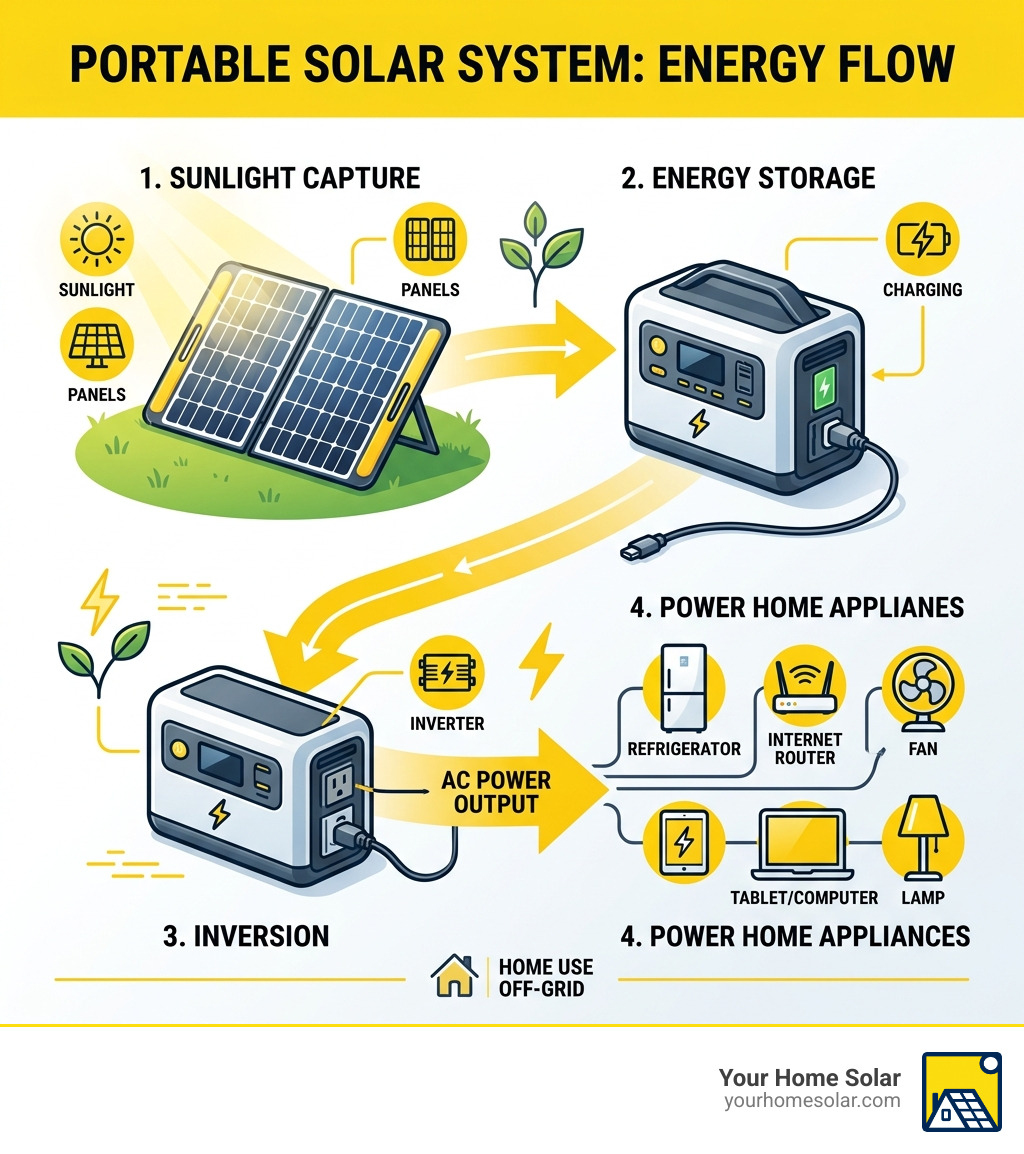
| How it works | Panels charge a battery, which powers your home appliances via an inverter |
| Best for | Backup power, cabins, off-grid use, renters, or homes without rooftop solar |
| Typical capacity | 1 kWh (small kits) up to 48 kWh+ (expandable whole-home systems) |
| Average cost range | ~$750 for basic kits up to $10,000+ for whole-home backup systems |
| Key advantage | No permanent installation required — plug in and go |
Unlike a fixed rooftop solar system, a portable setup can be moved, stored, or taken with you. It requires no drilling, no permits in most cases, and no contractor in many situations. For East Tennessee homeowners who deal with storms, outages, and rising energy costs, that kind of flexibility matters.
Power outages in the Smoky Mountains region are not rare. When the grid goes down, having a fuel-free, silent backup that can run your refrigerator, medical devices, or Wi-Fi router is no small thing.
I’m Ernie Bussell, founder and CEO of Your Home Solar — East Tennessee’s leading solar contractor — and over my years helping homeowners navigate energy decisions, I’ve seen a portable solar system for home go from a niche curiosity to a practical solution that fits a wide range of budgets and needs. In this guide, I’ll walk you through everything you need to know to make a confident, informed decision.
Portable solar system for home helpful reading:
Understanding the Portable Solar System for Home
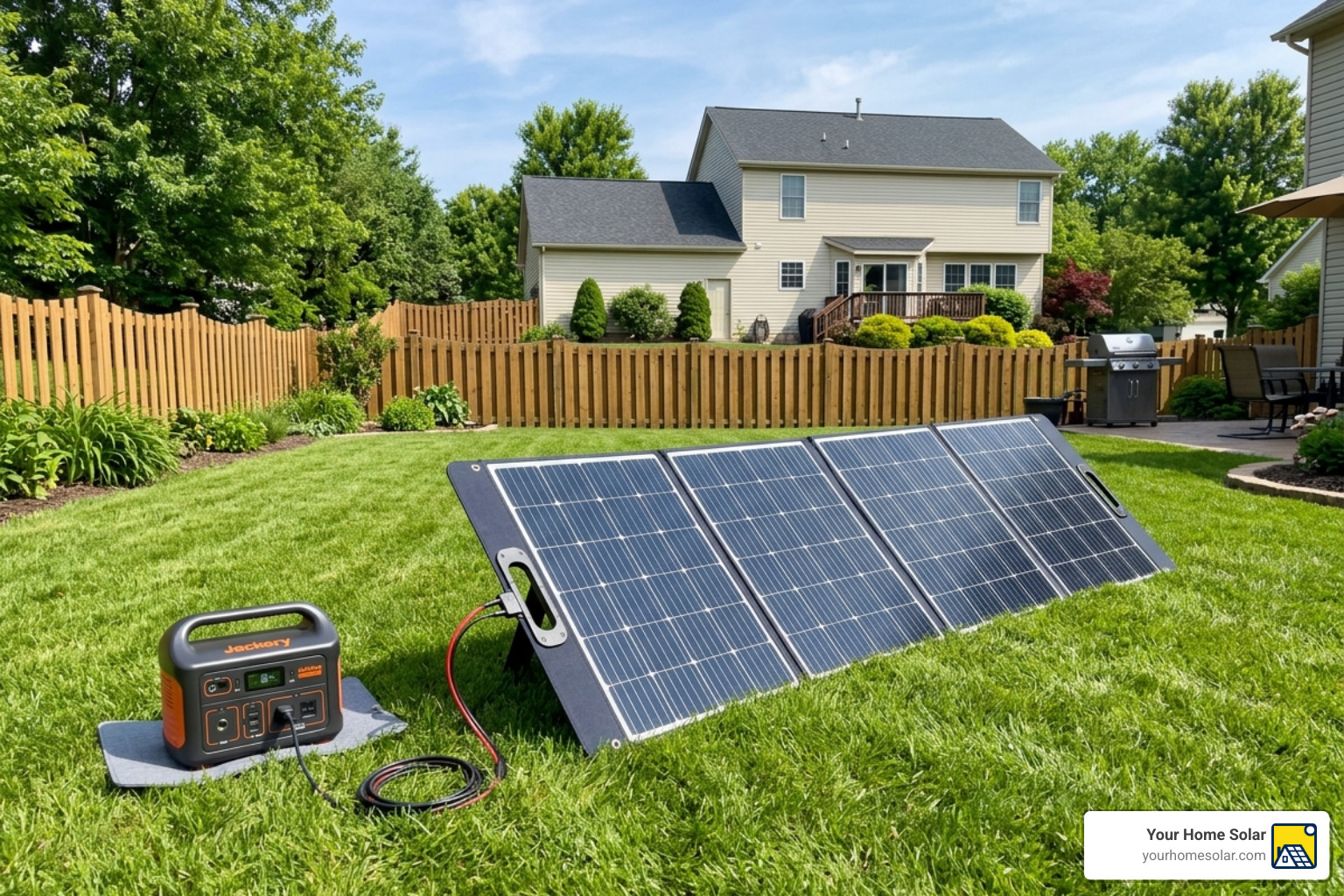
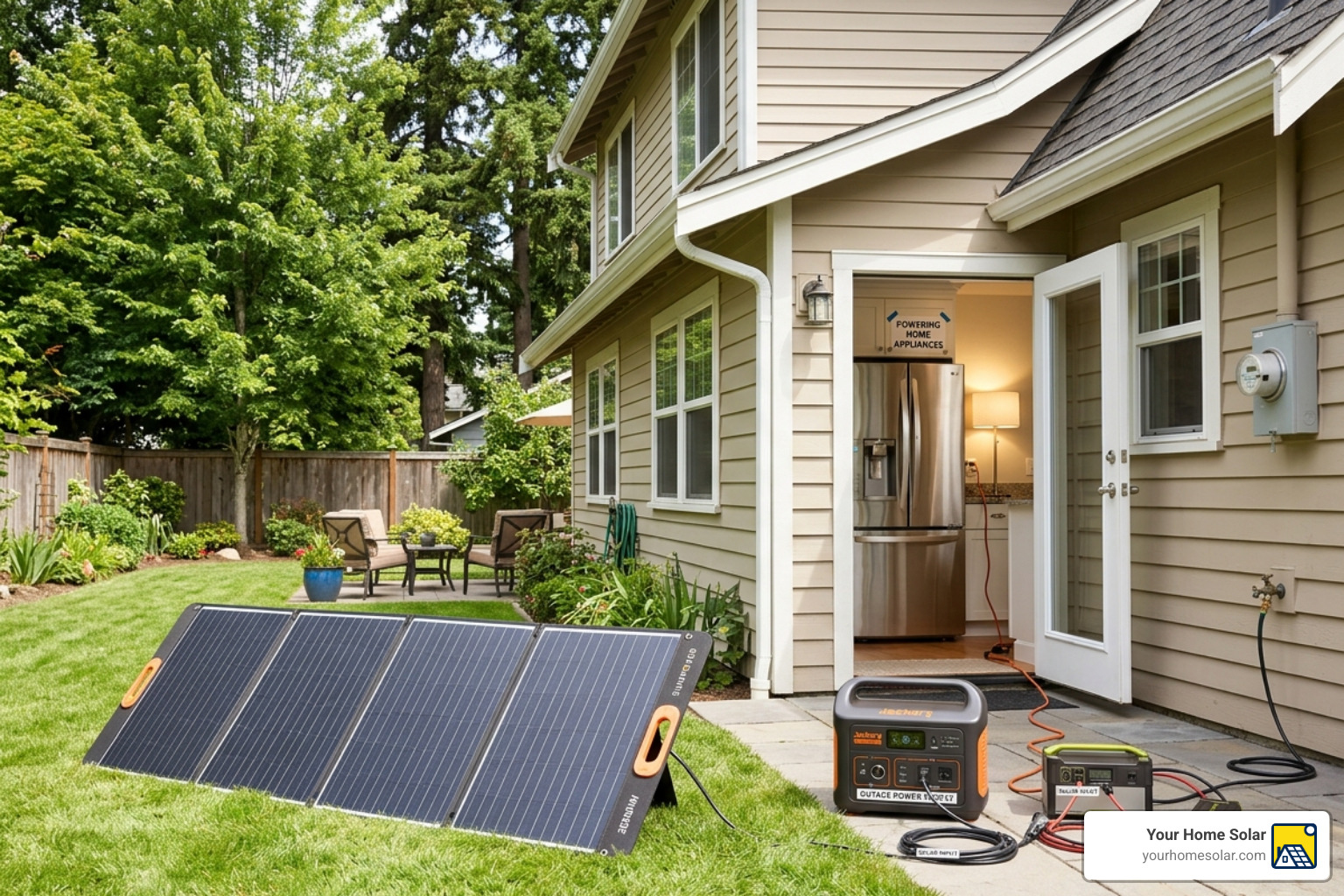
When we talk about a portable solar system for home, we are essentially looking at a “power plant in a box.” Unlike the large, rigid arrays you see on rooftops in Knoxville or Oak Ridge, these systems are designed for plug-and-play simplicity. They consist of high-efficiency solar panels that can be folded up like a suitcase and a central “power station” that houses the battery and the brain of the system.
The beauty of these systems lies in their off-grid versatility. Whether you are living in a remote cabin in the foothills or a suburban home in Maryville, these units provide immediate energy independence. You don’t need a team of installers to spend three days on your roof; you simply unfold the panels, face them toward our Tennessee sun, and start harvesting electrons.
For those looking to dive deeper into how these systems function without a connection to the utility company, check out Beyond the Grid: A Comprehensive Guide to Off-Grid Solar Panel Systems.
Portable vs. Fixed Solar Installations
The primary difference between a portable and a fixed system is permanence. A traditional installation is a long-term commitment to your property’s structure. In contrast, a portable solar system for home is non-permanent. There is no drilling into your shingles and no complex wiring that stays with the house if you move.
This makes portable systems incredibly renter-friendly. If you’re leasing a home in Johnson City or Kingsport, you can still enjoy solar security. If you move, the system moves with you. Furthermore, the mobility of these units means you can take your power supply on a camping trip to the Cherokee National Forest or use it to power tools in a shed that isn’t wired for electricity. For a look at some of the versatile options available, you can explore Portable Solar Generators & Solar Panels.
Core Components: Panels, LFP Batteries, and Inverters
To understand how these systems work, we need to look under the hood. A typical high-quality setup in 2026 consists of three main parts:
- Monocrystalline Solar Panels: These are the most efficient panels available today, often reaching conversion rates of up to 25%. Many modern portable panels, like those from EcoFlow, even feature bifacial designs, meaning they can catch reflected light on the back side for a significant boost in energy production.
- LFP (LiFePO4) Batteries: This is the gold standard for home backup. Lithium Iron Phosphate batteries are safer and much longer-lasting than older lithium-ion versions. We’re talking about 3,000 to 4,000 cycles before the battery even drops to 80% capacity—that’s over 10 years of daily use!
- Inverters: The inverter takes the DC power from the sun and turns it into the AC power your TV and fridge need. Look for a “pure sine wave” inverter to ensure your sensitive electronics (like laptops and CPAP machines) run smoothly without interference.
For more on how these batteries store your sunshine for a rainy day, read Beyond the Grid: How Solar Battery Banks Keep Your Lights On.
Benefits of Portable Solar for Home Backup
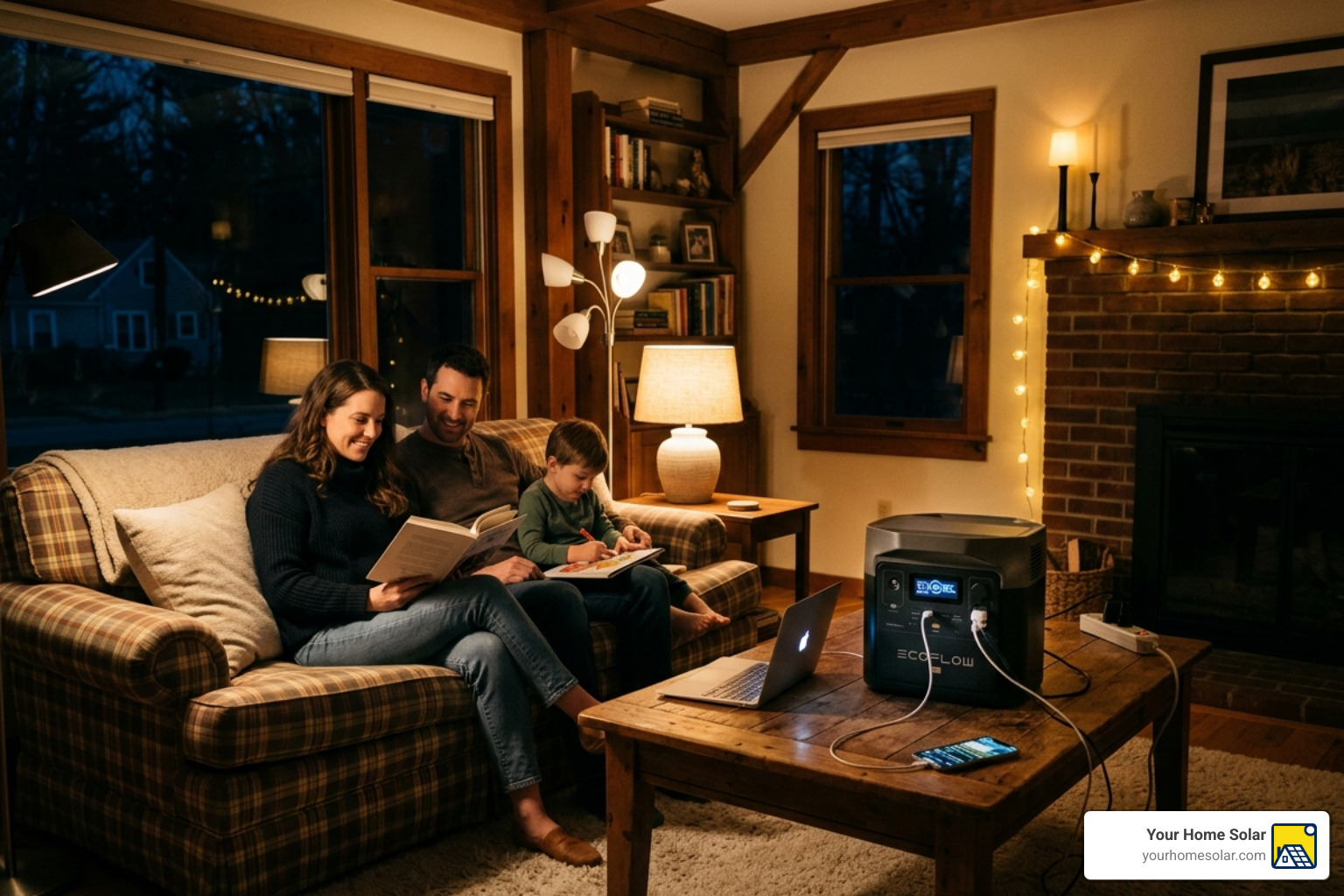
Why are so many of our neighbors in Sevierville and Farragut looking into a portable solar system for home? The benefits go beyond just “green energy.” It’s about peace of mind. Unlike gas-powered generators, solar systems are silent. There are no fumes, no oil changes, and no frantic trips to the gas station when a storm hits.
Using solar for home backup is an exercise in true self-reliance. As we discuss in Living Off the Grid: How Solar Energy Can Make It Possible, being able to generate your own electricity is the ultimate safety net.
Powering Essentials During Grid Failures
When the power goes out in East Tennessee, your priorities are usually keeping the food cold and the lights on. A mid-sized portable solar system for home (around 2-3 kWh) can run a standard refrigerator for 14 to 20 hours on a single charge. If you have solar panels attached, you can essentially run that fridge indefinitely.
Modern systems also feature “X-Boost” technology, which allows a portable station to power heavy-duty appliances like coffee makers or even some space heaters by managing the voltage. With 120V and 240V output options now common in larger units, you can even power well pumps or electric dryers if the system is sized correctly.
Financial Incentives and Tax Credits
One of the best-kept secrets about portable solar is that it can often qualify for the same federal tax credits as rooftop solar. Under the Residential Clean Energy Credit, you may be eligible for a 30% federal tax rebate on systems with a battery capacity of 3 kWh or more.
To claim this, you’ll typically use IRS Form 5695. This can knock thousands of dollars off the price of a high-end system, significantly improving your long-term ROI. For example, a system that costs $5,000 could effectively cost you $3,500 after the credit. You can find more information on qualifying equipment at Portable – Solar Panels – The Home Depot.
Performance and Integration in East Tennessee
Living in the Smoky Mountains offers unique challenges and opportunities for solar. While we have plenty of sunshine, our terrain and weather patterns mean you need to be smart about your setup. For a deeper dive into local independence, see Off-Grid Living in the Smoky Mountains: Embracing Solar Independence.
Maximizing Efficiency in the Smoky Mountains
To get the most out of your portable solar system for home, orientation is key. In the Northern Hemisphere, you should always face your panels South. Because portable panels come with adjustable kickstands, you can change the tilt angle throughout the day to follow the sun, which can increase your energy harvest by up to 25% compared to fixed panels.
Don’t worry too much about our Tennessee rain, either. Most premium portable panels now carry an IP68 waterproofing rating, meaning they can withstand a downpour without issue. However, clouds do reduce output. While panels still work on overcast days, you might only get 10-25% of their rated capacity. For more on local feasibility, check out Can My East Tennessee Home Be 100% Off-Grid? It Depends.
Integrating a Portable Solar System for Home with Your Electrical Panel
One of the biggest advancements in 2026 is how easily these “portable” units can talk to your house. You no longer have to run extension cords through a cracked window. By using a transfer switch or an inlet box, you can plug your portable power station directly into your home’s electrical panel.
This allows you to power specific circuits—like your kitchen outlets, living room lights, and well pump—with the flip of a switch. Systems like the EcoFlow Smart Home Panel 2 even allow for seamless failover, where the battery takes over automatically the moment the grid fails. Companies like EnerFusion Inc. – Power-Up GREEN! provide various components that help bridge the gap between portable and permanent power.
Choosing the Right Portable Solar System for Home Needs
Not all homes are created equal, and neither are solar systems. Selecting the right size is the difference between sitting in the dark and enjoying a movie while the neighborhood is blacked out. For help deciding between a pre-made kit or a custom build, read Kit or Custom: Finding the Perfect Household Solar Panels for Your Needs.
Sizing for Cabins vs. Full Residential Use
When sizing a portable solar system for home, you need to look at two numbers: Capacity (Watt-hours) and Output (Watts).
| System Size | Capacity | Best For | Typical Solar Input |
|---|---|---|---|
| Small (Entry) | 1 – 2 kWh | Phones, laptops, lights, small TV | 200W – 400W |
| Medium (Essential) | 3 – 6 kWh | Refrigerator, Wi-Fi, microwave, fans | 800W – 1,600W |
| Large (Whole-Home) | 10 – 45 kWh | AC units, well pumps, entire circuits | 3,000W+ |
For a small cabin in Morgan County, a 2 kWh system with 400W of panels is often plenty. For a full-sized home in Powell or Farragut, you’ll likely want an expandable system that starts at 3.6 kWh and can grow as your needs do.
Charging Speeds and Input Options
In 2026, you aren’t limited to just the sun. Most high-end units offer “dual charging,” meaning you can plug into a wall outlet and solar panels simultaneously to top off the battery in under two hours.
Some systems even allow you to charge at EV stations, which is a game-changer if you’re on the move. For those with a long commute in Tennessee, alternator kits can even charge your home backup system while you drive!
Frequently Asked Questions
How long does it take to charge a portable solar system?
It depends on the method! Using a standard AC wall outlet, most modern units (like the Delta Pro series) can charge from 0-80% in about an hour. With solar panels, a 400W array might take 6-10 hours of full sun to charge a 3.6 kWh battery. Using both together is the fastest way to stay powered up.
Can a portable solar system run a whole-house AC unit?
Yes, but you need a large system. To run a central AC, you typically need a unit capable of 240V output and a high surge capacity to start the compressor. Systems with 7.2 kW of output or higher can handle many 3-ton to 5-ton AC units, though they will drain the battery quickly without a massive solar array.
What is the lifespan of LFP battery technology in 2026?
LFP (Lithium Iron Phosphate) technology is incredibly durable. Most units are rated for 3,000 to 4,000 full charge cycles before they drop to 80% of their original capacity. If you use the system every single day, that’s roughly 10 years. If you only use it for occasional outages and weekend trips, it could easily last 20 years or more.
Conclusion
At Your Home Solar, we believe that energy security shouldn’t be a luxury. Whether you choose a fixed rooftop array or a versatile portable solar system for home, the goal is the same: independence, reliability, and peace of mind.
We’ve seen how these systems transform the lives of our neighbors across East Tennessee—from the quiet valleys of Blount County to the bustling streets of Knoxville. By choosing a system tailored to your specific needs, you aren’t just buying a battery; you’re investing in your family’s safety.
If you’re ready to explore how solar can work for your specific home and lifestyle, our team of experts is here to help with tailored, reliable installations and advice you can trust. Start your journey toward energy independence today and see why we are Tennessee’s most trusted name in home energy.