Why Emergency Home Power Matters More Than Ever
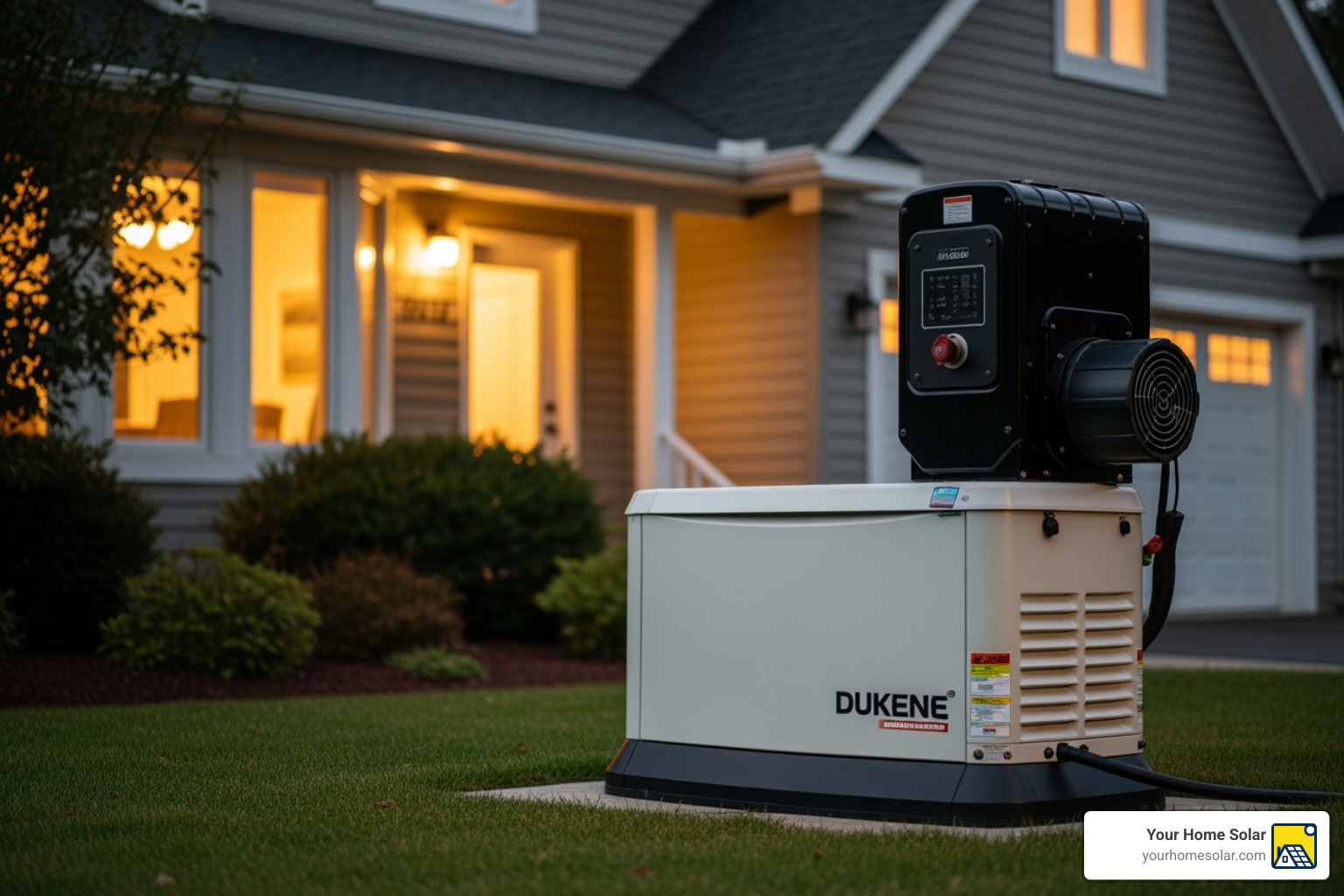
Emergency home power solutions provide backup electricity to your home during utility outages. Here are your main options:
| Solution Type | Best For | Key Benefits | Typical Cost Range |
|---|---|---|---|
| Standby Generator | Whole-home automatic backup | Runs on natural gas/propane, fully automatic | $3,000-$15,000+ installed |
| Solar + Battery System | Clean, renewable backup | Silent operation, no fuel needed, long-term savings | $10,000-$30,000+ installed |
| Portable Generator | Essential circuits only | Lower upfront cost, manual operation | $500-$2,000 + transfer switch |
| Portable Power Station | Small loads, indoor use | No exhaust, quiet, limited capacity | $300-$4,000 |
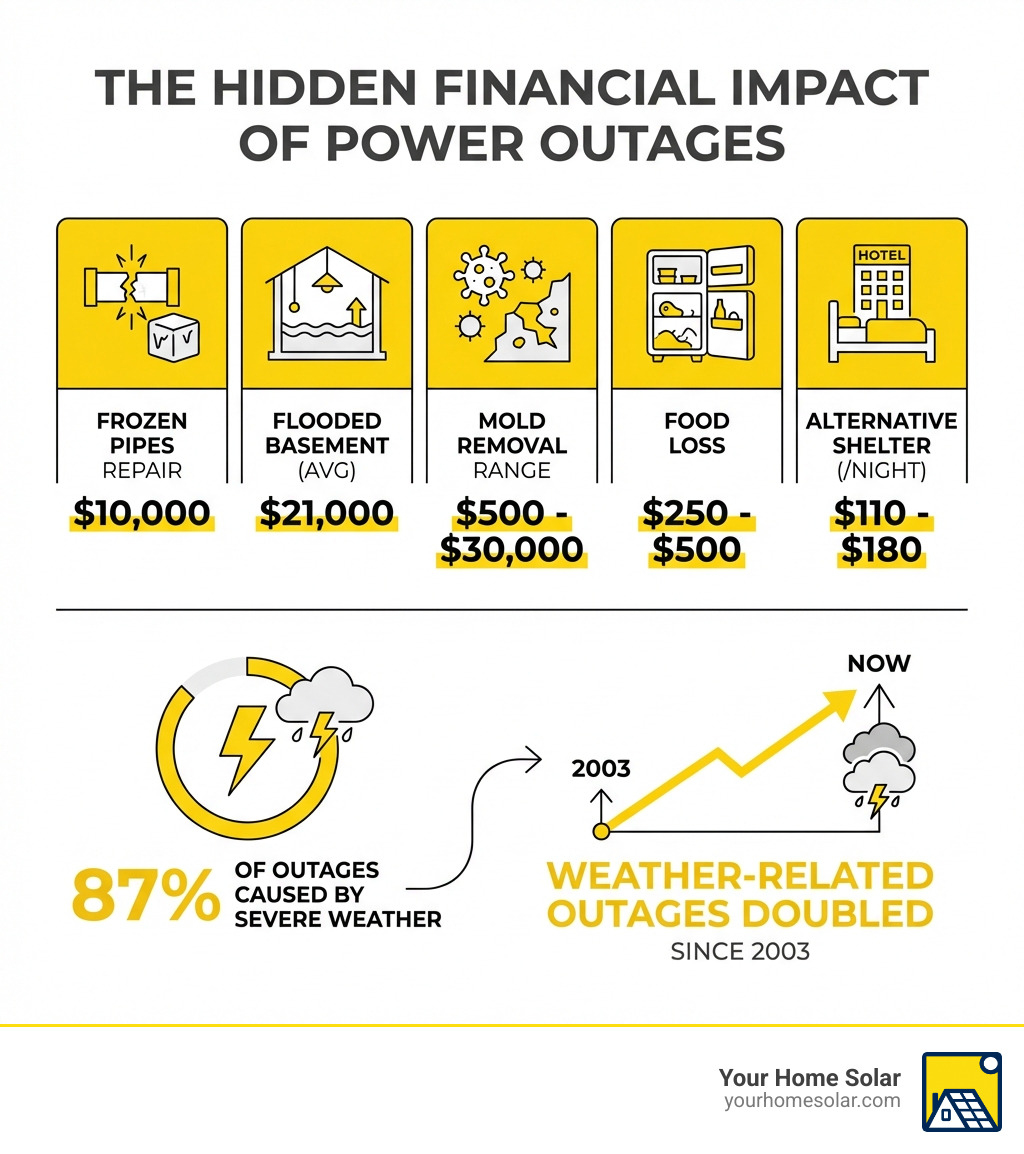
Power outages are becoming more frequent and more costly. 87% of power outages are caused by severe weather, and weather-related outages have doubled since 2003. For East Tennessee homeowners, this isn’t just an inconvenience—it’s a real financial and safety risk.
The hidden costs add up fast. A burst pipe can cost $10,000 to repair. A flooded basement runs $21,000 on average. Mold removal can reach $30,000. Even short outages mean spoiled food ($250-$500) and potentially dangerous situations for anyone relying on medical devices.
Most people experience about four hours of power loss each year. But when severe weather hits our region, outages can last days. During those critical hours, your home needs reliable backup power to protect your family, your property, and your peace of mind.
The good news? You have more options than ever for emergency home power. From traditional fuel-powered generators to modern solar battery systems, the right solution depends on your specific needs, budget, and long-term goals.
I’m Ernie Bussell, founder and CEO of Your Home Solar, and I’ve spent years helping East Tennessee homeowners protect their homes with reliable emergency home power solutions. My experience in operations management within the solar power industry has shown me how critical proper backup power planning is for our region’s weather patterns.
Understanding the Risks and Consequences of Outages
When we talk to folks in Knoxville or Sevierville about emergency home power, the conversation often starts with the “annoyance” of the lights flickering out. But the reality is much more sobering. As the statistics show, nearly 90% of outages stem from severe weather—something we know all too well in East Tennessee, from summer thunderstorms to winter ice events.
The consequences go far beyond sitting in the dark. According to the CDC Power Source Preparedness guidelines, prolonged outages are life-threatening for neighbors who depend on home-use medical devices like oxygen concentrators or CPAP machines.
Then there are the structural risks. If your power goes out during a deep freeze in Kingsport, your HVAC stops. Without heat, pipes can freeze and burst, leading to that $10,000 repair bill mentioned earlier. If your sump pump fails during a heavy downpour, your basement could become an indoor swimming pool, costing upwards of $21,000 in damages.
Beyond the immediate repairs, there’s the “aftermath” cost. Mold remediation is a silent budget-killer, with costs ranging from $500 to a staggering $30,000 depending on the severity. And if your home becomes uninhabitable, you’re looking at $110 to $180 per night for alternative shelter. Investing in a robust emergency home power system isn’t just a luxury; it’s a proactive insurance policy against these catastrophic expenses.
Comparing Emergency Home Power Solutions
Choosing the right system can feel like standing in the middle of a hardware store aisle with too many choices. At Your Home Solar, we specialize in helping you steer these waters. Generally, you’re choosing between two heavy hitters: the traditional standby generator and the modern solar + battery backup.
| Feature | Standby Generator | Solar + Battery Backup |
|---|---|---|
| Fuel Source | Natural Gas or Propane | Sun (Renewable) |
| Noise Level | Loud (like a lawnmower) | Silent |
| Maintenance | High (oil, filters, runs) | Very Low |
| Emissions | Carbon Monoxide/Exhaust | Zero Emissions |
| Lifespan | 10–15 years | 10–25 years |
| Recharge | Depends on fuel delivery | Recharges daily via sun |
When Comparing Solar with Traditional Gas Generators, the biggest difference is the “set it and forget it” factor. A standby generator is a mechanical engine. It needs oil changes, spark plugs, and regular “exercise” runs to ensure it works when you need it. A solar battery system, like the ones we install across Knox and Blount counties, has no moving parts. It sits silently, waiting to jump into action.
Choosing the Right Standby System
If you decide on a standby generator, you are looking at a permanent installation. These units sit outside your home, much like a central air conditioning unit. They are connected directly to your home’s electrical panel via an automatic transfer switch (ATS).
The “automatic” part is key. Within seconds of the grid failing, the ATS senses the drop in voltage, signals the generator to start, and switches your home’s load over to the generator. They typically run on natural gas or liquid propane (LP). If you have a natural gas line in Maryville or Oak Ridge, you have a virtually “infinite” fuel supply.
For those looking for high-end reliability, we often discuss Sol-Ark Solar Battery Installation as a superior alternative, as it provides that same automatic transition but without the mechanical vibration and noise of an engine.
Solar Battery Backup for Emergency Power
This is where the future of emergency home power lies. Modern systems use LiFePO4 (Lithium Iron Phosphate) technology. These batteries are safer, last longer (up to 3,000–6,000 cycles), and are much more efficient than the old lead-acid batteries of the past.
One of the greatest benefits is that they are exhaust-free. This means they can be installed inside a garage or utility room safely. There is no risk of carbon monoxide poisoning, and they operate in total silence. Furthermore, when paired with solar panels, your “fuel” is free. While a gas generator eventually runs out of fuel if the roads are blocked or the gas lines are compromised, a solar battery recharges every time the sun comes up.
We’ve detailed Why Solar Panels are Best for Emergency Power in our recent guides, highlighting that they offer true energy independence. You can also learn more about the specific chemistry in our post on Residential Solar Battery Types.
Connecting and Operating Your System Safely
Safety is our number one priority. Whether you use a portable generator or a whole-home system, how it connects to your house matters.
- Manual Transfer Switch: This is a sub-panel that allows you to safely switch specific circuits (like your fridge and well pump) from grid power to generator power.
- Power Inlet Box: This is a specialized outlet mounted on the exterior of your home where you plug in a portable generator. It prevents you from having to run extension cords through open windows (which is a major security and weather risk).
- Meter Collar: This is a device that sits between your electric meter and the meter socket, providing a quick connection point for a generator.
The Danger of Backfeeding: Never, ever try to power your house by plugging a generator into a standard wall outlet. This is called “backfeeding.” It sends electricity back out into the utility lines, which can electrocute utility workers trying to fix the grid. It can also start a fire in your own home.
According to Safe Generator Use Guidelines, you must also be hyper-aware of Carbon Monoxide (CO). Portable generators should never be run in a garage, basement, or near an open window. They produce toxic exhaust that is odorless and colorless. Always look for units with built-in CO detection and automatic shutoff features.
Maximizing Resilience with Solar and Battery Storage
For the ultimate in emergency home power, we recommend a solar + storage solution. This creates a “microgrid” for your home. During a disaster, your solar panels continue to produce power during the day, running your home and charging the battery. At night, the battery takes over.
This cycle can continue indefinitely, making it the most resilient option for long-term outages. We see many homeowners in East Tennessee exploring Living Off the Grid concepts not because they want to leave society, but because they want to ensure their family is safe regardless of what happens to the municipal grid.
Smart monitoring is another huge plus. Modern systems come with remote apps that allow you to see exactly how much power you have left and which appliances are drawing the most energy. You can literally turn off a non-essential light in Knoxville from your phone while you’re visiting family in Johnson City to save battery life.
Safety and Maintenance for Emergency Home Power Systems
Like any hardworking piece of equipment, your emergency home power system needs a little TLC.
- For Generators: You need bi-annual inspections. This includes checking the battery health (the one that starts the engine), changing the oil after significant use, and replacing air/fuel filters.
- For Solar Batteries: Maintenance is almost non-existent, but we do recommend checking the firmware updates via the system’s app and ensuring the area around the battery stays clear of debris and is well-ventilated.
We always keep an eye out for ways to help our customers save. For instance, the Government of Canada Tax Break Info is a great example of how governments are encouraging resilience (though local TN incentives vary). We also help our customers steer financing, sometimes using programs similar to Triangle Rewards Financing or local solar-specific loans to make these systems more affordable.
Frequently Asked Questions about Emergency Power
How do I size my emergency home power system?
Sizing is a bit of a science. You need to calculate your “Essential Loads.”
- Running Watts: The power an appliance needs to keep going.
- Starting Watts (Surge): The extra “oomph” a motor (like your AC or fridge) needs just to start up. We recommend a professional wattage calculation to ensure you don’t overload your system. You can find more details in our Residential Solar Solutions Guide.
What is the most cost-effective emergency home power option?
If you just want to keep the lights and fridge on, a portable generator with a manual transfer switch is the cheapest upfront. However, if you look at the 10-year ROI, solar + battery systems often win because they reduce your monthly utility bill every single day, not just during an outage. Plus, there are no ongoing fuel costs.
Can I install a backup system myself?
While there are DIY kits out there, we strongly advise against it. Dealing with your home’s main electrical panel is dangerous. Professional installation ensures you meet all local electrical codes in Tennessee, keeps your manufacturer warranty intact, and—most importantly—guarantees that the system will actually work when the grid goes down.
Conclusion
At Your Home Solar, we believe that every home in East Tennessee deserves the security of reliable emergency home power. Whether you are in the heart of Knoxville or the quiet hills of Roane County, the peace of mind that comes from knowing your food won’t spoil, your basement won’t flood, and your family will stay warm is priceless.
We pride ourselves on trusted expertise and a commitment to 100% customer satisfaction. Don’t wait for the next big storm to realize you’re unprepared. If you’re ready to take control of your home’s energy future, check out our options for Generator Installation in Knoxville and let’s build a more resilient home together.