
When the Grid Goes Down, Do You Have a Plan?
Battery backup for generator systems are one of the smartest investments a homeowner can make for reliable power during outages. Here are the top options at a glance:
| Battery Backup Solution | Capacity | Peak Surge | Battery Type |
|---|---|---|---|
| Bluetti Elite 200 V2 | 2,073 Wh | 3,900 W | LiFePO4 |
| EcoFlow Delta Pro 3 | 8,096 Wh | 6,000 W | LiFePO4 |
| Jackery Explorer 1000 v2 | 1,000 Wh | 2,000 W | LiFePO4 |
| Anker F3800 Plus | 3,800 Wh | 6,000 W | LiFePO4 |
| Bluetti AC500 + B300S | 3,072 Wh | 5,000 W | LiFePO4 |
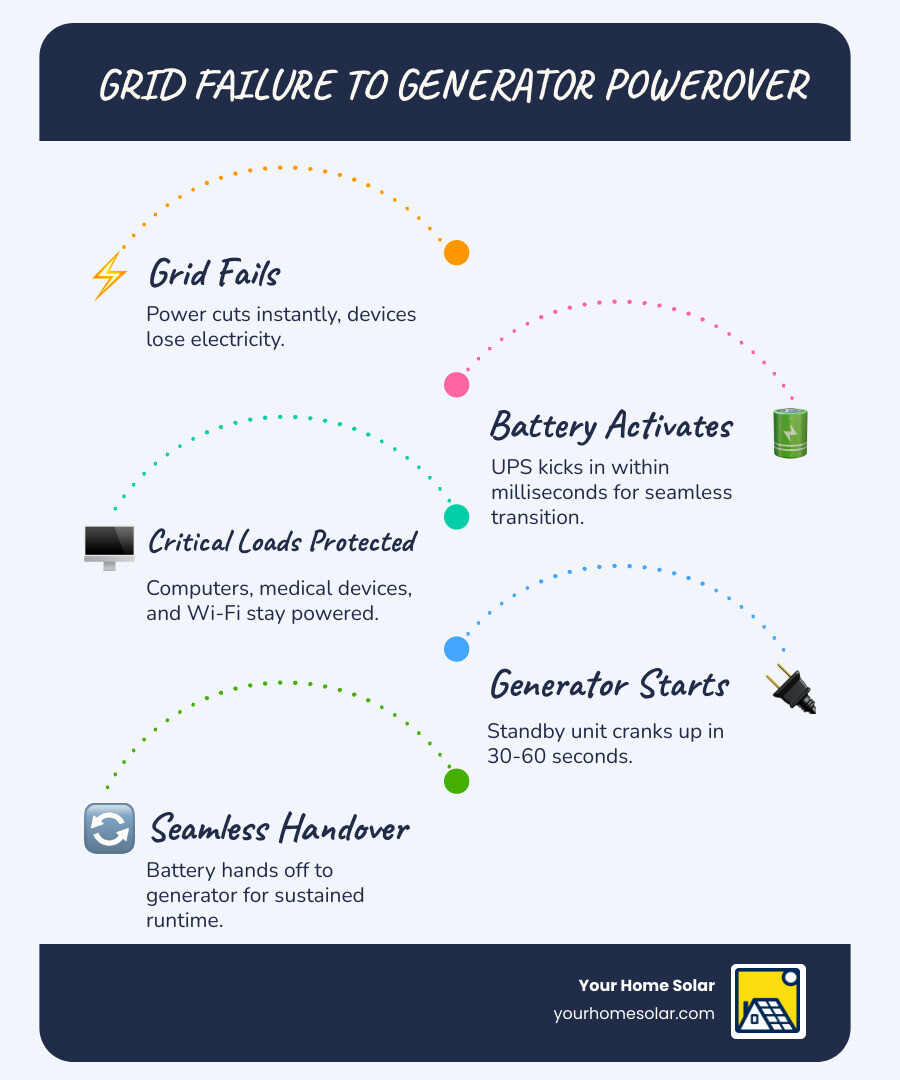
A generator alone is not enough. When the power goes out, a portable generator can take up to a minute to start producing power. That gap might seem small, but it can mean a crashed computer, a disrupted medical device, or a lost internet connection at the worst possible time.
A battery backup fills that gap instantly. It kicks on the moment the grid fails, keeps your critical devices running, and then hands off seamlessly once your generator is up to speed.
According to U.S. Energy Information Administration data, American households experienced nearly six hours of power interruptions on average in 2018 alone. For East Tennessee homeowners who deal with storms, ice, and grid strain, that number can feel very familiar.
The good news? Pairing a quality battery backup with a generator gives you layered protection – instant power from the battery, sustained power from the generator, and peace of mind no matter how long the outage lasts.
I’m Ernie Bussell, founder and CEO of Your Home Solar, East Tennessee’s #1 solar energy contractor, and my background in energy systems and home power solutions gives me a practical, no-nonsense perspective on choosing the right battery backup for generator setups that actually work. Let’s break down exactly what you need to know.
Why You Need a Battery Backup for Generator Systems
If you’ve ever sat in the dark waiting for your generator to crank, you know that “blackout gap.” Even the best automatic standby generators have a startup delay. During that 30 to 60-second window, your desktop computer reboots, your Wi-Fi drops, and your CPAP machine stops. This is where a battery backup for generator systems—often called a UPS (Uninterruptible Power Supply)—becomes your best friend.
Bridging the Startup Gap
The primary benefit of a UPS is its ability to provide instant power. While a generator is a marathon runner designed for the long haul, a battery backup is a sprinter. It detects the voltage drop from the grid in milliseconds. By the time your generator engine has turned over and reached its operating speed, the battery has already been carrying the load, ensuring your electronics never even blinked.
Cleaning Up “Dirty” Power
Generators, especially older or non-inverter models, can produce “dirty” power. This refers to fluctuations in voltage and frequency, technically known as Total Harmonic Distortion (THD). Sensitive electronics like high-end OLED TVs, gaming PCs, and modern kitchen appliances can be damaged by high THD.
An online double-conversion UPS is the gold standard here. It constantly converts incoming AC power to DC and then back to a perfect AC sine wave. This process filters out the “noise” from the generator, providing a clean, stable stream of energy. You can learn more about how this compares to other setups in our guide Comparing Solar with Traditional Gas Generators for East Tennessee Homes.

Top Rated Battery Backup for Generator Solutions
When we look for the best battery backup for generator pairings for our neighbors in Knoxville or Sevierville, we look for three things: capacity, surge capability, and battery chemistry. Modern systems almost exclusively use LiFePO4 (Lithium Iron Phosphate) because they last for 3,000 to 6,000 cycles—that’s over a decade of regular use!
Bluetti Elite 200 V2 Portable Power Station
The Bluetti Elite 200 V2 Portable Power Station is a fantastic mid-sized option. It offers a 2,073 Wh capacity and a massive 3,900 W peak surge. It’s roughly the size of a desktop printer and weighs about 53 pounds, making it portable enough to move where you need it most.
EcoFlow Delta Pro 3 Portable Power Station
For those looking for serious whole-home support, the EcoFlow Delta Pro 3 Portable Power Station is a beast. It boasts an 8,096 Wh capacity and is 97% efficient at delivering that power. It’s designed to handle heavy hitters like refrigerators and sump pumps without breaking a sweat.
Jackery Explorer 1000 v2 Portable Power Station
The Jackery Explorer 1000 v2 Portable Power Station is the “Goldilocks” of the group—just right for essential electronics. It’s versatile, reliable, and features the long-lasting LiFePO4 chemistry we recommend for all our East Tennessee installations.
Anker F3800 Plus
The Anker F3800 Plus is another powerhouse, capable of outputting 6,000 watts. In real-world testing, this unit has successfully powered a refrigerator, air fryer, and space heater simultaneously. It’s an excellent choice for a hybrid setup.
Technical Sizing of a Battery Backup for Generator Setup
Getting the right size is critical. If you undersize your battery, the generator’s initial “kick” or the load’s surge might trip the system.
The 80% Rule and the 2x Rule
We always recommend the 80% Rule: your continuous load should never exceed 80% of the UPS capacity. For example, if you have a 1,100W load, you need a minimum 1,375W UPS (1,100 x 1.25).
Furthermore, your generator’s continuous capacity should be at least twice the rated capacity of the UPS. This ensures the generator has enough “headroom” to charge the batteries while also powering your home’s loads. If the generator is too small, the UPS might reject the power as “unstable” and stay on battery mode until it dies.
Understanding Capacity
When choosing a system, look at the Watt-hour (Wh) rating. This tells you how long the battery will last. For a deeper dive into these metrics, check out our article Everything you need to know about residential solar battery types.
Safe Integration: Transfer Switches and Interlock Kits
You can’t just plug a high-powered battery into a wall outlet and expect it to power your whole house—that’s called “backfeeding,” and it’s dangerous and illegal. To safely use a battery backup for generator system, you need a professional interface.
Interlock Kits and Transfer Switches
An interlock kit is a mechanical device that prevents your main breaker and your generator breaker from being on at the same time. This protects utility workers from being electrocuted by your backup power. Alternatively, a manual transfer switch allows you to flip specific “critical load” circuits (like your fridge, furnace blower, and lights) over to the battery or generator.
For a permanent, high-power solution, many homeowners in Knox County choose a Generac generator installation in Knoxville paired with a Sol-Ark solar battery installation. These professional systems handle the switching automatically and safely.
Inlets and Through-Wall Kits
If you’re using portable units, a generator inlet box installed on the exterior of your home allows you to plug your generator or large battery station (like the EcoFlow Delta Pro) directly into your home’s panel via a heavy-duty cord. No more running extension cords through cracked windows in the middle of a Tennessee winter!
Frequently Asked Questions about Battery Backup for Generators
Can I recharge my battery backup for generator using a portable unit?
Yes! Most modern portable power stations, such as the EcoFlow Delta Pro, support “pass-through charging.” This means you can plug the generator into the battery station, and the battery station into your appliances. The generator charges the battery while the battery provides clean, regulated power to your devices.
Inverter generators like the DuroMax XP11000iH are ideal for this because they offer low THD and high fuel efficiency. Using propane is often a better choice for long-term storage in places like Johnson City or Kingsport, as it doesn’t degrade like gasoline.
What is the best type of battery backup for generator use with sensitive electronics?
The best type is an online double-conversion UPS. This system provides a pure sine wave and zero transfer time. Because it is always “re-generating” the power, it provides the highest level of protection against the voltage spikes and frequency shifts common in portable generators. You can see how these systems handle power quality in this scientific research on clean power for electronics.
How long will a hybrid battery and generator system last in winter?
A hybrid system is the ultimate winter survival tool. While solar can be unreliable during a dark East Tennessee January, a generator provides guaranteed energy. By using a battery to handle the loads at night, you can turn your generator off to save fuel and reduce noise, then turn it back on for a few hours in the morning to recharge the batteries.
With an expandable system like the Bluetti AC500, which can go up to 10.5 kWh, you can easily get 3+ days of backup for essential loads like heating fans, refrigeration, and lights. For more on preparing your home, see our generator installation Knoxville resource.
Conclusion
At Your Home Solar, we’ve seen how a well-designed battery backup for generator system changes the game for homeowners across East Tennessee. Whether you are in Maryville, Oak Ridge, or anywhere in the Tennessee Valley, having a plan that includes both instant battery response and long-term generator endurance is the key to true energy independence.
We pride ourselves on 100% customer satisfaction and expert installations tailored to your specific needs. Don’t let the next storm catch you off guard. If you’re ready to explore a professional backup solution, check out The Ultimate Guide to Solar Batteries and Energy Storage Solutions or contact us today for a custom consultation. We’re here to make sure you’re never left in the dark.