Choose the Right 200W Camping Solar Panel for Reliable Off-Grid Power
For most campers, the best 200w camping solar panel is a foldable monocrystalline model with adjustable kickstands, MC4 connectors, and a compatible MPPT charge controller. It offers the simplest balance of strong output, easy transport, and quick setup beside an RV, tent, or vehicle.
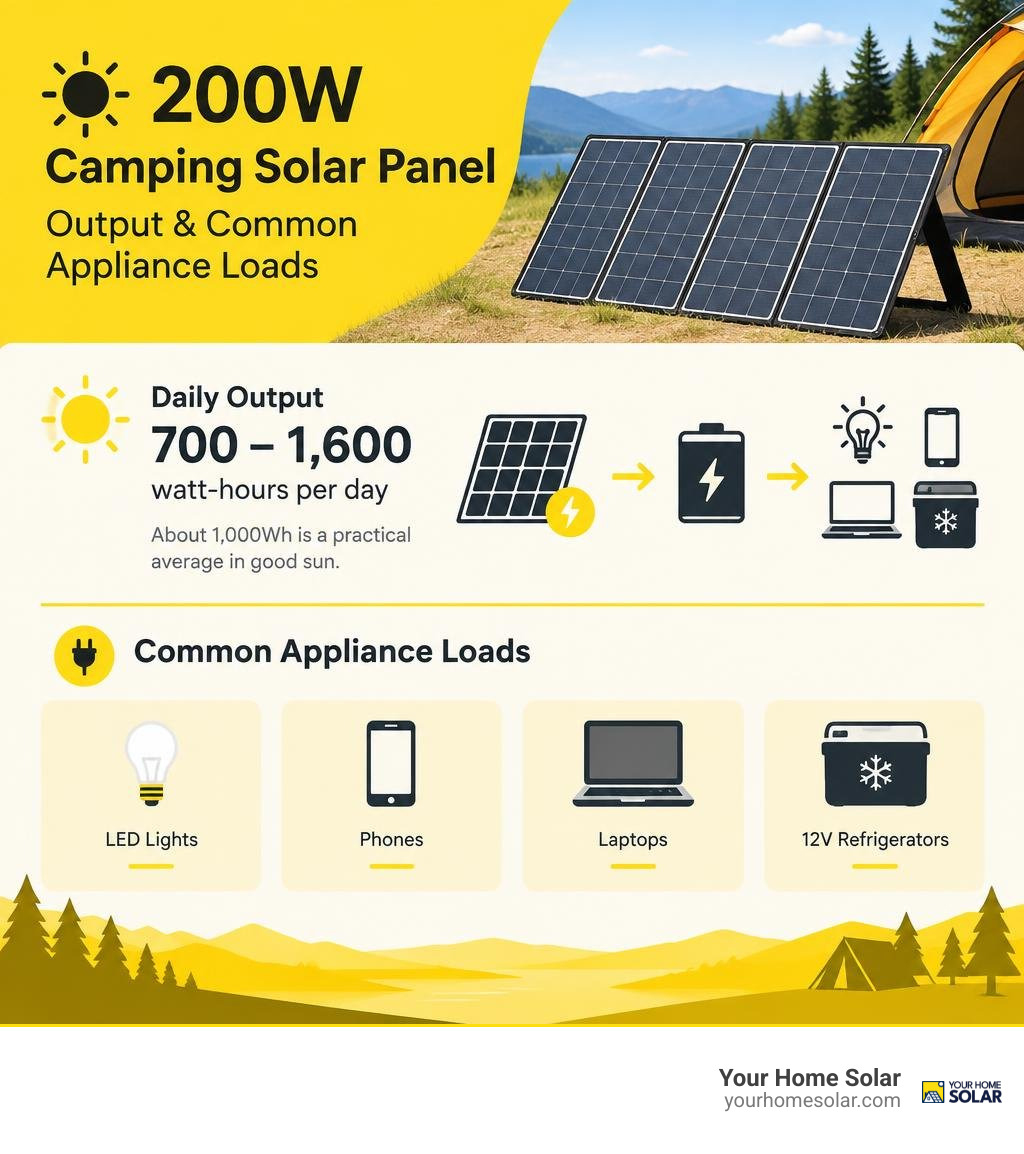
A well-placed 200W panel can typically make about 700 to 1,600 watt-hours per day, with roughly 1,000Wh being a practical average in good sun. That is enough to recharge a battery for lights, phones, laptops, and many efficient 12V refrigerators – but only when the panel, battery capacity, weather, and daily energy use are matched correctly.
This roundup compares portable, rigid, and flexible 200W options so you can find a solar setup that provides quiet backup power without hauling fuel or running a generator.
I am Ernie Bussell, founder and CEO of Your Home Solar, with years of solar operations and system-design experience helping people understand reliable energy systems. The same practical planning behind a dependable home system applies to choosing a 200w camping solar panel for power away from the grid.
200w camping solar panel vocab explained:
Types of 200W Camping Solar Panel Designs: Rigid, Foldable, and Flexible
When you set out to build an off-grid mobile setup, picking the right form factor is just as critical as choosing the right wattage. A 200-watt rating tells you how much raw generation the cells can produce under laboratory test conditions, but the physical construction dictates how you store, mount, and deploy your array.
Across modern off-grid setups, 200W panels fall into three primary categories: rigid panels with tempered glass and aluminum frames, foldable suitcase units built for quick deployment on the ground, and ultralight flexible panels designed to contour over vehicle roofs. To help you evaluate each form factor, our comprehensive guide to portable solar panels outlines how physical construction impacts overall system reliability.
| Feature / Metric | Foldable Suitcase Panels | Flexible & Lightweight Panels | Rigid Aluminum-Framed Panels |
|---|---|---|---|
| Typical Weight | 13 to 18 lbs | 8 to 11 lbs | 22 to 30 lbs |
| Average Price Range | $230 – $600 | $180 – $350 | $160 – $240 |
| Durability & Lifespan | Moderate (ETFE lamination, 3–5 yrs) | Moderate (protective polymer, 3–5 yrs) | High (tempered glass, 10–25 yrs) |
| Installation Style | Freestanding kickstands | Direct roof adhesive / grommets | Fixed brackets / Z-mounts on roof racks |
| Weather Resistance | IP65 to IP68 water resistance | IP65 to IP67 surface seal | IP65 junction box / IP67 connectors |
| Best Camping Use Case | Chasing sunlight while vehicle is parked in shade | Curved teardrop trailers & pop-up campers | Permanent overland rigs & camper conversions |
Foldable Suitcase 200W Camping Solar Panel Kits
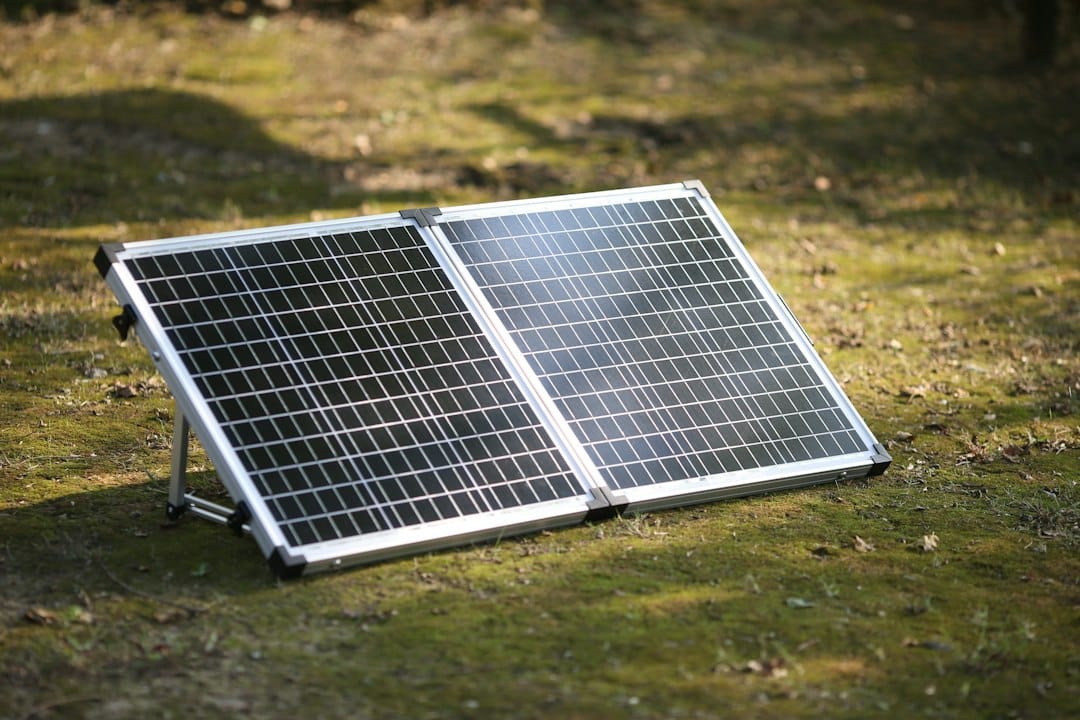
Foldable solar kits represent the gold standard for dispersed campers, tent campers, and weekend overlanders. These units typically feature two to four monocrystalline panels connected by heavy-duty fabric hinges that fold into a neat, briefcase-style footprint. High-efficiency portable panel designs frequently incorporate cells with conversion rates approaching 25% alongside IP68 water resistance ratings.
One of the greatest functional benefits of a foldable kit is the ability to chase the sun. When boondocking under dense forest canopy in areas like the Great Smoky Mountains or near Cherokee National Forest, parking your camper directly in the sun turns the interior into an oven. A foldable kit allows you to park your rig in deep shade while running an extension cable out into a sunlit clearing.
These designs often feature integrated kickstands that tilt the face at a 45-degree angle toward the sun, built-in carry handles, and dedicated zippered pouches for cables. High-end kits also integrate rugged ETFE (Ethylene Tetrafluoroethylene) protective coatings, which offer superior UV resistance and light transmittance compared to cheaper PET laminates. If you want a versatile unit equipped with multiple outputs right out of the box, look for foldable models that combine an MC4 output with direct DC, USB-A, and USB-C ports for direct device charging.
Flexible and Lightweight 200W Camping Solar Panel Options
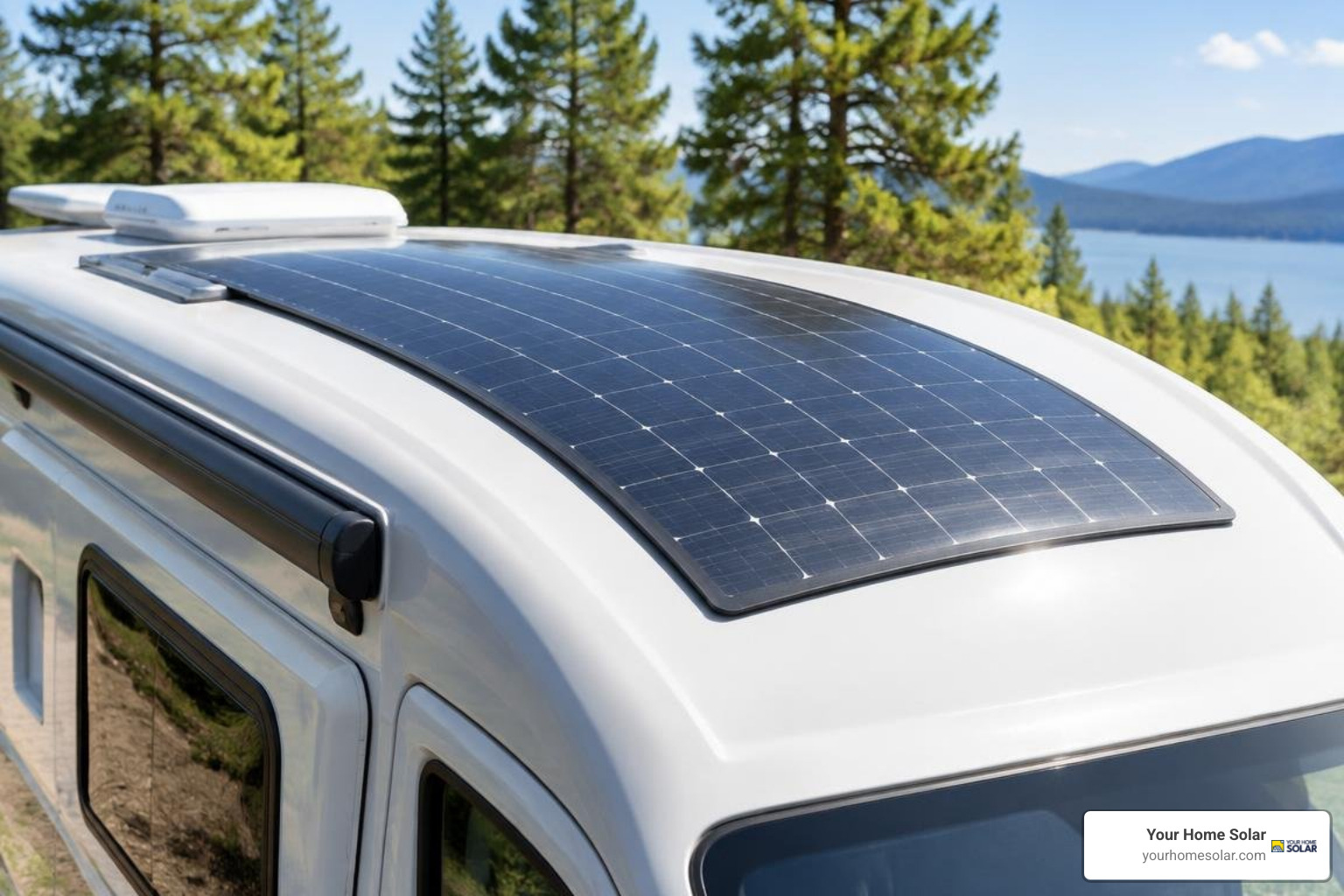
Flexible solar panels strip away the heavy aluminum perimeter and bulky tempered glass, replacing them with layered composite polymers and thin-film or half-cut monocrystalline wafers. The result is an ultra-slim module—often less than an eighth of an inch thick—that weighs roughly 10.8 lbs, representing an enormous weight savings over traditional glass modules.
Modern flexible units can flex up to 240 degrees. This makes them ideal for aerodynamic vehicle roofs, teardrop campers, curved van transitions, and pop-up rooftop tents where flat glass panels cannot physically sit. Because they mount flush against the surface using industrial double-sided adhesive tape or stainless steel grommets, they maintain a zero-drag profile that preserves vehicle fuel economy.
However, flexible panels require careful handling. You should never walk on flexible modules or crease them past their rated bending radius, as internal silicon micro-fractures will permanently degrade cell output. Furthermore, because they sit flush against a roof surface without the airflow gap found under rigid frames, they run hotter during mid-summer afternoons, slightly increasing thermal efficiency losses.
Rigid Monocrystalline and Bifacial Panels
Rigid panels remain the undisputed champions of cost-per-watt value and mechanical longevity. Built with thick anodized aluminum frames and impact-resistant tempered glass, these panels are engineered to endure decades of direct environmental exposure. If you plan to mount a permanent solar array on a camper van or off-grid cabin shed, a rigid 200-watt monocrystalline unit delivers heavy snow-load resistance (up to 5400 Pa) and high-wind tolerance (up to 2400 Pa).
Advanced rigid designs increasingly incorporate cutting-edge N-Type cell construction and bifacial glass. High-efficiency 16-busbar N-Type panels lower internal resistance, achieving higher performance even under hot ambient temperatures with a power loss coefficient of only -0.27% per degree Celsius above standard test conditions.
Bifacial panels feature dual-sided glass that absorbs direct irradiance from the front while capturing indirect albedo light reflected off light-colored vehicle roofs, sand, or snow from the back. This dual-sided capture can provide an efficiency boost of 5% to 15% under optimal mounting conditions, making rigid options an unbeatable choice for heavy-duty, fixed mobile installations.
Real-World Power Output and What a 200-Watt System Can Run
While a panel may carry a factory rating of 200W under Standard Test Conditions (STC: 1,000 W/m² irradiance, 25°C cell temperature, and 1.5 air mass), real-world outdoor performance involves environmental variables like ambient heat, atmospheric haze, and sun angles. Understanding how photovoltaic solar panels work helps clarify why solar arrays experience natural conversion losses in the field.
In real-world settings, a premium 200W panel typically operates between 75% and 90% of its rated nameplate capacity during peak hours. Rigorous independent field test benchmarks regularly show high-performing portable modules generating between 150W and 182W of continuous real-time power during clear midday sun. A dedicated portable 200W solar panel running through an efficient controller can reliably sustain your critical camp electrical loads without unexpected power cuts.

Expected Daily Watt-Hours and Battery Charge Times
To calculate how much energy your panel will produce on a camping trip, multiply the panel’s real-world output by the number of “peak sun hours” your campsite receives. Across most temperate climates in the spring, summer, and fall, a campsite typically sees 4 to 6 peak sun hours per day.
On an average sunny day, you can expect a 200W panel to deliver between 700 and 1,600 watt-hours (Wh) of usable direct-current electricity into your storage system.
When it comes to charging a standard 12V 100Ah Lithium Iron Phosphate (LiFePO4) battery—which holds approximately 1,280Wh of total energy:
- 50% to 100% State of Charge (SoC): Charging 640Wh takes approximately 4.5 to 6 hours of direct, unshaded sunlight when utilizing a high-efficiency MPPT charge controller.
- 0% to 100% Full Recharge: A complete replenish requires roughly 8 to 10 hours of peak sunlight, spanning roughly a day and a half of typical sun exposure.
Proper battery sizing is critical to ensure you have enough buffer for cloudy afternoons. For a deeper breakdown on matching battery chemistry with your energy generation, explore our guide on sizing deep cycle batteries for solar storage.
Powering Camping Appliances and 12V Refrigerators
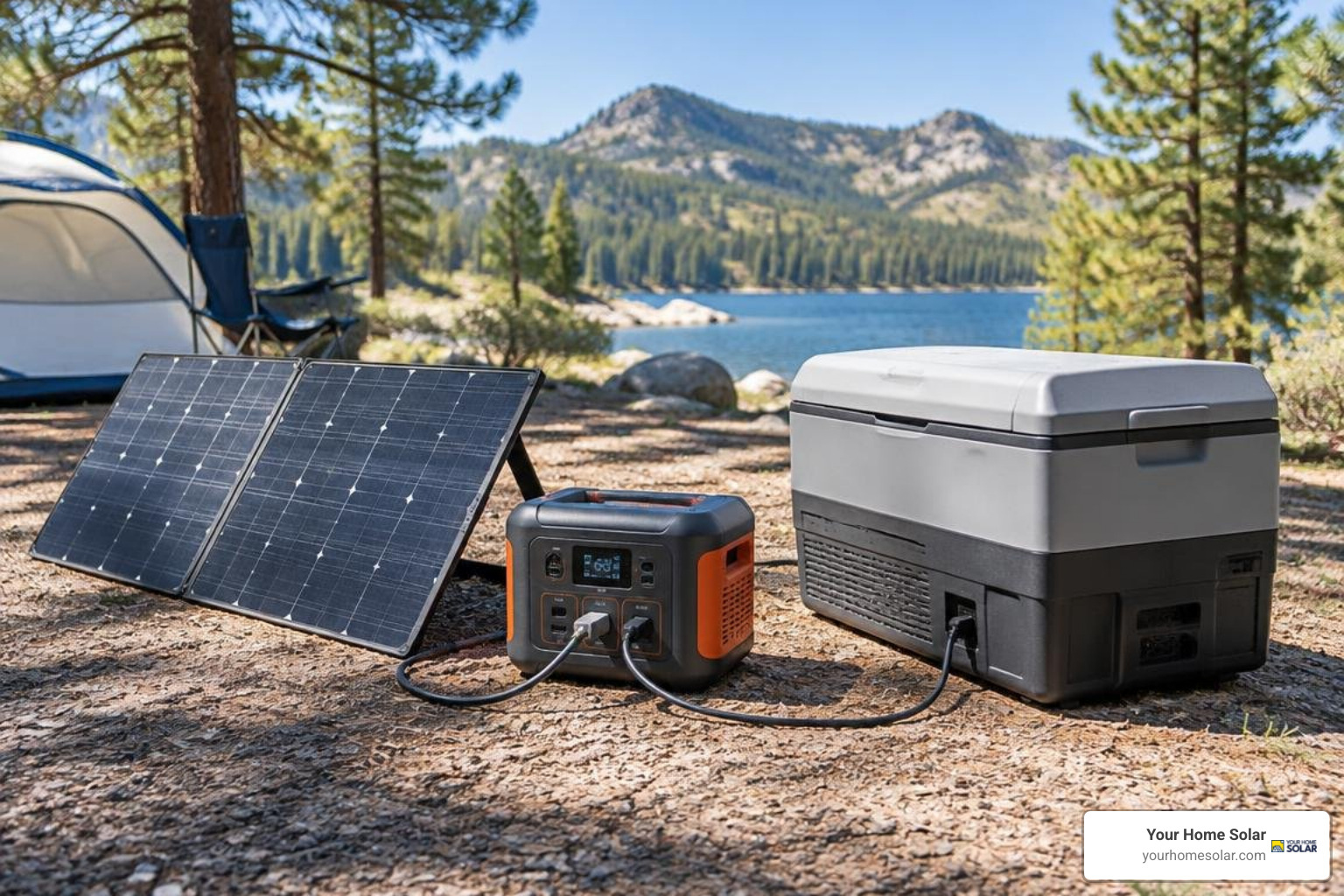
A daily harvest of 1,000Wh provides an impressive amount of energy for off-grid living, provided you are running energy-efficient 12V DC equipment rather than heavy AC resistance heaters. When paired with an appropriately sized battery bank (such as a 1,000Wh power station or 100Ah 12V lithium battery), a single 200W panel can easily balance the following daily loads:
- 12V DC Compressor Refrigerator / Cooler (45W–65W nominal): Because compressor fridges cycle on and off based on ambient temperatures, they consume roughly 350Wh to 600Wh over a 24-hour period. A 200W solar panel generates more than enough daily power to offset this draw entirely.
- Laptop Charging (60W USB-C PD): Provides roughly 16 hours of continuous runtime or 4 complete laptop recharges (approx. 240Wh total).
- LED Camp Lighting & Lanterns (5W–10W): Delivers up to 40+ hours of continuous evening camp illumination (approx. 50Wh to 100Wh total).
- Smartphone & Tablet Recharging (10W–18W): A single 200W panel generates enough daily energy to recharge a standard smartphone roughly 30 times over.
- 12V CPAP Machine (without heated humidifier, 30W–40W): Consumes roughly 250Wh to 320Wh over an 8-hour night, which can be replenished in less than 2.5 hours of midday sun.
How to Set Up Your Off-Grid Portable Solar Kit for Boondocking
Setting up an off-grid portable array requires balancing electrical safety, wiring sizing, and optimal sun orientation. To extract maximum wattage from your 200W panel, follow these field best practices:
- Optimize Your Solar Angle: Manually adjust the panel’s kickstands two to three times throughout the day (morning, noon, and late afternoon) to keep the module face perpendicular to the sun. This simple adjustment can increase your total daily watt-hour yield by up to 30% compared to leaving the panel laid flat on the ground.
- Prevent Micro-Shading: Solar cells inside a panel are wired in series strings. If even a small branch, leaf, or roof shadow covers 5% of the panel, the internal resistance can throttle power output across the entire string. Keep the glass completely clear of debris.
- Minimize Cable Voltage Drop: When placing your panel 20 to 30 feet away from your camper to reach a sunny clearing, line resistance can cause voltage drop. Always use heavy-gauge solar extension cable (such as 10 AWG PV wire) with weather-sealed MC4 connectors.
Choosing Between MPPT and PWM Charge Controllers
A solar charge controller regulates the incoming voltage and current from the solar panel to prevent overcharging your battery bank. When building a 200W system, you must choose between two primary technologies:
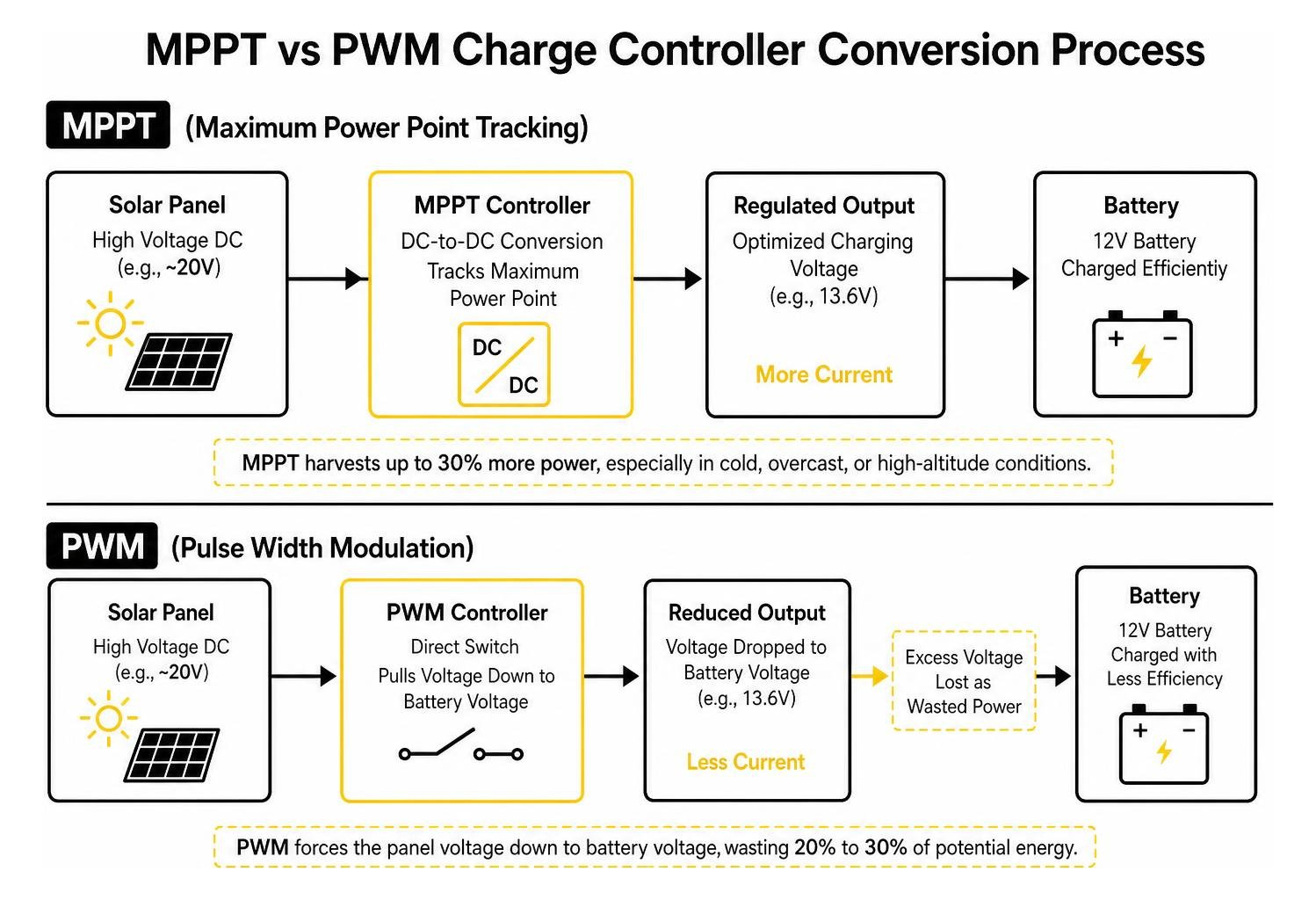
- Pulse Width Modulation (PWM): PWM controllers act as a direct electrical switch between the panel and battery. They force the solar panel to pull its operating voltage down to match the battery voltage (e.g., dropping a 20V panel down to 13.6V), throwing away the excess voltage as wasted potential. While PWM controllers are inexpensive, they discard 20% to 30% of your panel’s potential energy.
- Maximum Power Point Tracking (MPPT): MPPT controllers utilize smart DC-to-DC conversion to constantly track the ideal voltage-to-current ratio (the “Maximum Power Point”). An MPPT unit takes the higher input voltage from the panel and steps it down to the exact battery charging voltage while boosting output current.
An MPPT controller harvests up to 30% more total power than a PWM unit, especially in cold weather, overcast skies, or high-altitude environments where panel voltages fluctuate significantly. For any 200W solar panel system, investing in an MPPT charge controller (such as a 20A or 30A unit) ensures you capture every possible watt from your investment.
Wiring, Fusing, and Battery Bank Integration
Proper system integration protects your equipment, wiring, and vehicle against short circuits and electrical fires. When assembling your DIY boondocking kit, follow strict connection sequences and install proper overcurrent protection:
- Solar Array Wiring (Panel to Controller): Use 10 AWG copper PV wire equipped with standard MC4 connectors. Install a 15A to 20A inline fuse on the positive lead close to the charge controller input.
- Battery Bank Wiring (Controller to Battery): Use 8 AWG or 6 AWG flexible multi-strand copper cable. Install an inline fuse or manual circuit breaker (rated for 30A to 40A) on the positive lead within 7 to 12 inches of the battery terminal.
- Grounding Safety: When mounting an off-grid system inside a travel trailer or camper conversion, ground the charge controller’s negative terminal or ground lug to the vehicle’s metal chassis to eliminate static accumulation and stray voltages.
Frequently Asked Questions About Camping Solar Power
Can a 200W solar panel keep a 12V fridge running indefinitely?
Yes, a 200W solar panel paired with a dedicated deep-cycle battery can run an energy-efficient 12V portable compressor refrigerator indefinitely under normal, sunny weather conditions.
A modern 12V camping fridge consumes between 350Wh and 600Wh per day depending on the ambient temperature and how often the lid is opened. Because a 200W solar panel generates an average of 800Wh to 1,200Wh on clear days, the daily generation exceeds the refrigerator’s daily power consumption. To maintain power during 2 to 3 consecutive days of heavy rain or overcast skies, pair your system with at least a 100Ah (1,280Wh) lithium battery bank.
Are portable camping solar panels completely waterproof?
Most high-quality portable camping solar panels are water-resistant and engineered to withstand outdoor weather, but water ratings vary significantly across components:
- IP67 Rating: Completely dust-tight and protected against short-term water immersion (up to 1 meter for 30 minutes). Can easily endure passing rainstorms.
- IP68 Rating: Top-tier dust and continuous water submersion protection.
- IP65 Rating: Protected against multi-directional water spray and light rain, commonly found on junction boxes.
While the ETFE-laminated solar face and MC4 connectors can easily handle rain showers, non-sealed junction boxes, open USB ports, and basic charge controllers must be shielded from heavy, continuous rain. Always stow away foldable fabric panels during intense storms or flood conditions to avoid water ingress through fabric stitching.
How much real-world wattage does a 200-watt panel produce?
In real-world outdoor conditions, a clean 200W monocrystalline solar panel typically produces between 150 watts and 185 watts of continuous power during peak midday sun.
This variance is completely normal and stems from real-world factors:
- Angle of Incidence: Unless the panel is tracking the sun across the sky, oblique sun angles reduce incoming solar irradiance.
- Ambient & Cell Heat: Solar cells lose roughly 0.3% to 0.4% efficiency for every degree Celsius above 25°C (77°F). On a hot 90°F summer afternoon, dark panel surfaces can exceed 130°F, naturally reducing output.
- Atmospheric Reflection & Dust: Haze, humidity, and fine dust on the glass reduce total light transmittance.
Conclusion
A 200W solar panel provides the ideal sweet spot for mobile energy independence, delivering abundant silent power to run camping refrigerators, charge electronic devices, and keep your battery bank healthy without the noise, fumes, and maintenance of a gas generator. Whether you opt for a rapid-deploy foldable suitcase, an ultralight flexible roof panel, or a heavy-duty rigid monocrystalline module, matching your solar array with an efficient MPPT charge controller and reliable battery storage creates an off-grid powerhouse.
For larger travel trailers, permanent off-grid cabins, or backup residential systems, learning how smaller arrays scale into full-size power plants is essential. Explore our comprehensive guide to off-grid solar systems to discover how tailored solar, storage, and backup solutions can power your adventures—and your home—for years to come.