Design a Home Solar Array for Reliable, Lower-Cost Energy
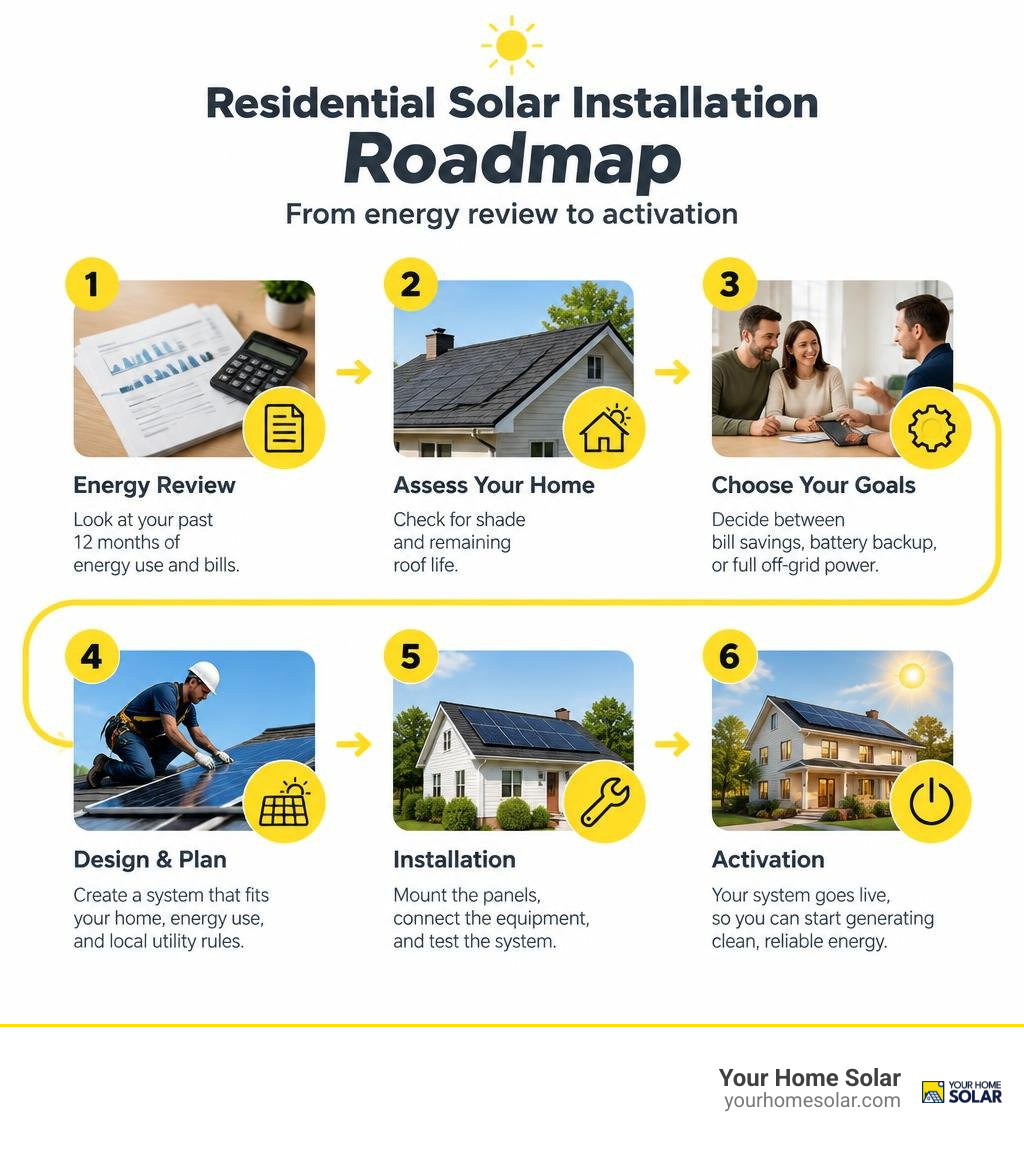
A home solar array is a set of rooftop or ground-mounted panels designed around your electricity use, roof conditions, utility rules, and backup-power goals. To plan one well, start with your last 12 months of electric bills, check for roof shade and remaining roof life, then decide whether you need simple bill savings, battery backup during outages, or full off-grid power.
A properly sized system can reduce the electricity you buy from the grid and, with a battery and compatible inverter, keep selected essentials running when the utility goes down. Most homes use a grid-tied or hybrid design; fully off-grid systems require much larger battery and generator planning.
More than 5 million U.S. households now have solar, and the number is expected to keep rising through 2030, according to the Solar Energy Industries Association. For East Tennessee homeowners, the important question is not whether solar works. It is whether the system is designed for your home, energy habits, and outage concerns.
I am Ernie Bussell, founder and CEO of Your Home Solar, with experience leading solar operations and building processes for residential installations. In this guide, I will break down home solar arrays in clear terms so you can make a confident decision about your home’s energy future.
Important home solar arrays terms:
Evaluating Your Property for Modern Home Solar Arrays
Before ordering equipment or scheduling an installation crew, we have to evaluate the unique physical characteristics of your property. Every home captures sunlight differently, and a customized approach ensures that your system produces maximum power over its multi-decade lifespan.
The primary factor in solar geometry is roof orientation (or azimuth). In the Northern Hemisphere, true south-facing roof planes capture the highest concentration of daily solar irradiance. However, east- and west-facing planes are also viable, typically capturing 80% to 85% of the energy that a south-facing surface receives. An ideal roof pitch sits between 15 and 40 degrees, allowing panels to capture sunlight efficiently across both summer and winter solar paths while naturally shedding rainwater and debris.
Structural integrity and shading analysis are equally important. We perform detailed shade modeling to identify obstructions like mature trees, chimneys, or neighboring structures that could cast shadows across the modules. Combining these environmental factors is the foundation of thoughtful residential solar panel design.
Assessing Roof Suitability and Solar Potential
The underlying condition and material of your roof dictate how smoothly an installation will proceed. Solar photovoltaic panels are built to generate clean electricity for 30 years or more. If your asphalt shingle roof is more than 15 years old, it is generally wise to replace or repair the roofing surface before mounting solar hardware, preventing the need to remove and reinstall the array down the road.
Different roofing materials require specialized mounting techniques:
- Asphalt Shingle: Common, cost-effective, and straightforward to seal using flashing hardware.
- Standing-Seam Metal: Highly durable; uses non-penetrating clamps that grip the seams without puncturing the roof.
- Corrugated Metal & Tile: Requires engineered brackets and specialty flashing kits to guarantee a watertight seal.
To assess performance potential, solar engineers utilize tools like the National Renewable Energy Laboratory’s (NREL) PVWatts calculator. This modeling software evaluates historical weather patterns, solar angles, and local shading to project monthly kilowatt-hour (kWh) output. For a complete overview of assessing structural readiness, review our guide to rooftop solar systems.
Calculating System Sizing for Home Solar Arrays
To size an array accurately, we review your past 12 months of utility bills to establish your baseline annual kilowatt-hour consumption. Residential electricity demands vary widely based on square footage, HVAC efficiency, water heating methods, and whether you charge an electric vehicle at home.
According to NREL benchmark data, an average residential solar array size in the United States sits around 7.15 kW direct-current (DC), typically falling within an operational range of 3 kW to 11 kW. A 7.15 kW system produces enough energy to satisfy the complete annual electricity requirements of an average single-family home in many sun-rich climates.
When properly sizing a solar system, we calculate your daily average consumption and divide it by your local peak sun hours—the number of hours per day when solar irradiance averages 1,000 watts per square meter. We then adjust for system efficiency losses (such as inverter conversion, temperature derating, and wiring resistance) to ensure your system meets your energy offset goals across every season.

Engineering the System: Hardware, Storage, and Configuration
A high-performing solar array relies on balanced engineering across every component. Premium monocrystalline photovoltaic panels convert sunlight into direct current electricity using single-crystal silicon structures, delivering high efficiency even in limited roof spaces.
Modern system design also optimizes the DC-to-AC ratio (often designed between 1.2:1 and 1.38:1). This intentional sizing allows the solar array to deliver maximum usable alternating current (AC) power during morning and late afternoon hours without exceeding the inverter’s continuous AC rating. Learn how to combine these components in our overview of designing your ideal home solar system.
Selecting Between Grid-Tied, Hybrid, and Off-Grid Configurations
Choosing your system architecture depends on your budget, energy goals, and requirement for emergency backup power.
| System Type | Grid Connection | Battery Storage Included | Powers Loads During Grid Outages? | Primary Application |
|---|---|---|---|---|
| Grid-Tied | Yes | Optional / No | No (Anti-islanding safety shutoff) | Maximizing utility bill savings at the lowest initial cost |
| Hybrid | Yes | Yes | Yes (Instantly isolates from grid) | Daily bill reduction combined with seamless emergency backup |
| Off-Grid | No | Yes (Required, large capacity) | Yes (Completely independent) | Remote properties where utility connection is unavailable or costly |
Standard grid-tied systems connect directly to your home electrical panel and the utility grid. Under National Electrical Code (NEC) guidelines, standard grid-tied inverters must immediately shut down during an outage—a safety feature known as anti-islanding that protects utility lineworkers from unexpected backfeed.
Hybrid systems solve this limitation by integrating battery storage and a smart transfer mechanism that safely disconnects your home from the utility grid during a blackout, powering your selected circuits continuously.
Integrating Battery Storage and Resilient Inverters
Modern energy storage systems utilize Lithium Iron Phosphate (LiFePO4) chemistry. Compared to older lithium formulations or flooded lead-acid batteries, LiFePO4 cells offer superior thermal stability, a non-toxic chemical structure, and long service life (often exceeding 6,000 charge-discharge cycles).
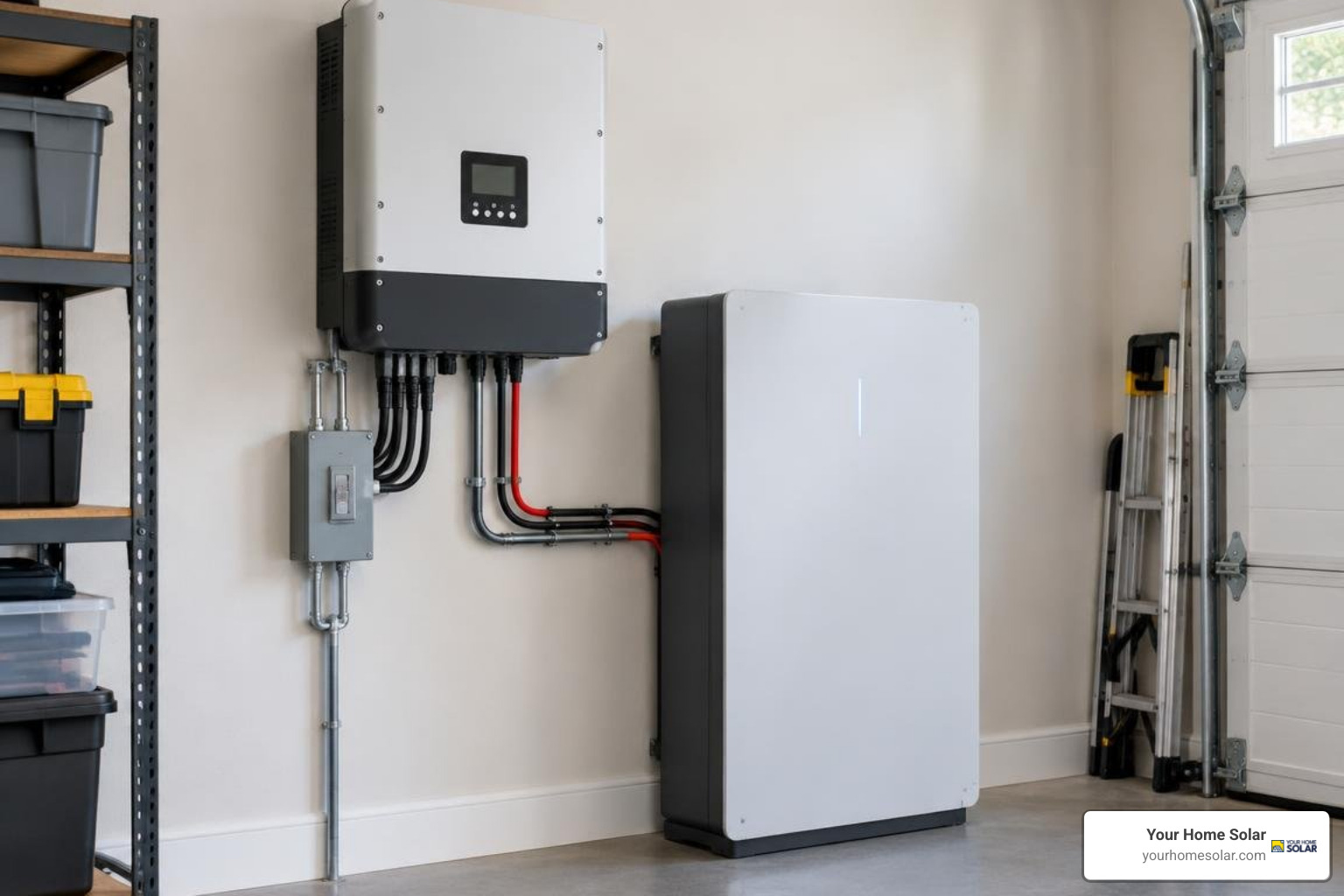
When configuring solar plus storage, smart split-phase inverters manage power distribution between the solar panels, the battery bank, the home’s critical load subpanel, and the grid. When severe weather hits, the system isolates your essential appliances—such as refrigeration, medical equipment, well pumps, lighting, and communication gear—providing continuous power without interruption. For properties with larger electrical loads or heavy HVAC usage, explore our guide on powering high-energy homes with a 15kW solar array and battery backup.
Financial Planning: Costs, Incentives, and Long-Term Value
Going solar is a major investment in your home’s infrastructure. While the upfront investment is significant, the long-term economics of generating your own electricity provide predictable energy costs and valuable equity. Review our comprehensive residential solar solutions guide to evaluate financing and system longevity.
Understanding System Costs, Payback Timelines, and Tax Credits
According to industry data from EnergySage, a typical residential solar array costs a little over $30,000 before applying available financial incentives. The overall cost of going solar has declined steadily since 2009 due to manufacturing improvements and improved hardware efficiencies.
Homeowners who purchase their systems outright or via solar loans can take advantage of the Federal Investment Tax Credit (ITC), alongside regional utility rebates where available. For homeowners who own their systems, the average payback period is roughly 11 years, after which the electricity generated is essentially free for the remaining operating life of the array.
Maximizing ROI with Net Metering and Property Valuation
Net metering programs provide billing credits for the excess electricity your panels produce during peak daylight hours. When your system produces more kilowatt-hours than your home consumes, the surplus flows back onto the utility grid, spinning your billing meter backward or building credits to offset night-time energy consumption.
In addition to recurring utility savings, solar installations deliver immediate real estate value. Research from the Lawrence Berkeley National Laboratory and the Department of Energy indicates that home buyers view solar arrays as premium structural upgrades—comparable to a newly renovated kitchen. Nationwide, buyers have demonstrated a willingness to pay an average premium of approximately $15,000 for homes equipped with an owned solar array.
Execution: Professional Installation vs. DIY Considerations
Installing a photovoltaic array involves structural carpentry, high-voltage direct-current wiring, and utility grid interconnection. Understanding the installation process helps ensure your array operates safely and efficiently.
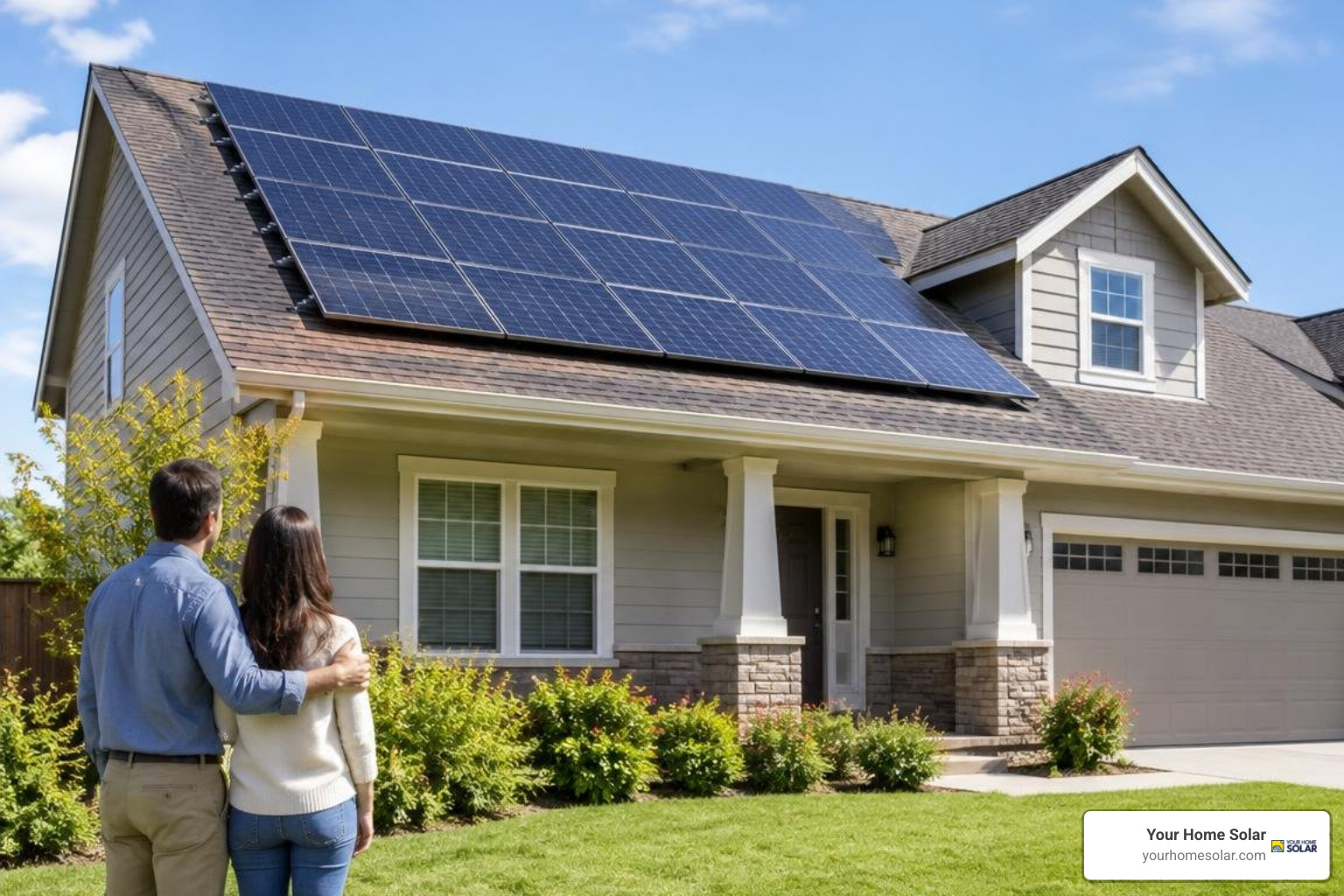
While pre-packaged DIY solar kits exist, professional installation guarantees compliance with National Electrical Code standards, rapid shutdown requirements, and manufacturer warranty guidelines. Professional teams handle structural engineering stamps, municipal permitting, and utility interconnection agreements, protecting your home and investment.
Navigating Permits, HOA Regulations, and Certified Installers
A successful installation requires navigating local administrative and regulatory frameworks:
- Permitting & Interconnection: Systems require municipal building and electrical permits, followed by formal utility interconnection approval and bi-directional meter installation.
- HOA Guidelines: Many states enforce Solar Access Laws that prevent Homeowners Associations from unreasonably prohibiting solar panel installations on private properties.
- Installer Credentials: Always work with professionals holding certifications from the North American Board of Certified Energy Practitioners (NABCEP).
- Consumer Protection: Avoid aggressive door-to-door sales tactics, misleading promises of “free solar from the government,” or installers unwilling to provide transparent, line-item contracts.
Maintaining Efficiency and Longevity in Home Solar Arrays
Photovoltaic modules have no moving parts, making them remarkably low-maintenance over their 30-year operational lifespan. High-quality modules exhibit an initial first-year degradation rate of about 1%, followed by a low annual degradation rate of ≤0.4% per year, retaining over 87% of their original generating capacity after three decades.
To maintain maximum production:
- Keep panels free of heavy dirt, pine pollen, and organic debris with an occasional rinse using a garden hose and soft squeegee.
- Never use abrasive chemicals, high-pressure washers, or metal scrapers on solar glass.
- Monitor your system’s digital mobile app monthly to track module-level performance and identify sudden drops in inverter conversion efficiency.
Frequently Asked Questions About Residential Solar
How do solar panels perform during severe weather and grid outages?
Solar panels generate electricity from ambient daylight and continue to produce power during cloudy or rainy conditions, typically yielding 10% to 25% of their rated capacity through diffuse sunlight. Photovoltaic modules are engineered and lab-tested to withstand heavy snow loads and direct impacts from hail up to one inch in diameter traveling at high speeds.
During a power outage, a standard grid-tied system automatically turns off to ensure safety for utility workers. However, systems equipped with a hybrid inverter and battery storage automatically isolate from the utility grid via an internal transfer switch, keeping essential home circuits powered continuously.
What is the financial difference between buying and leasing solar panels?
Purchasing a solar system (using cash or a solar loan) means you own the equipment directly. This allows you to claim all federal tax credits, build home equity, and achieve the highest overall return on investment over the system’s 30-year lifespan.
Leasing or entering into a Power Purchase Agreement (PPA) involves a third-party developer owning the hardware on your roof. While leases reduce upfront capital requirements, the third party retains the tax credits, and the long-term utility savings are substantially lower than direct ownership.
Can I install a complete solar array myself using a DIY kit?
DIY solar kits are available for homeowners with advanced electrical and construction skills, but self-installation carries significant risks. Rooftop solar requires working on steep pitches, handling high-voltage DC electricity (up to 600V), and ensuring strict compliance with local building codes, fire setbacks, and NEC rapid-shutdown rules. Furthermore, many equipment manufacturers restrict or void equipment warranties if the hardware is not commissioned by a licensed electrical contractor.
Conclusion
Transitioning to solar power gives you long-term control over rising utility rates while reducing your household’s environmental footprint. Whether your goal is to lower your monthly electric bills or protect your family with emergency battery backup during storms, a properly engineered system provides clean, quiet, and reliable power for decades.
At Your Home Solar, we specialize in designing customized, high-performance clean energy systems built to the highest technical standards. Contact our team today to explore our tailored residential solar installations and take the first step toward true energy independence.