
Your Electricity Bill Is Too High — Here’s How to Fix It
If you want to know how to keep my light bill low, here are the fastest, highest-impact steps:
- Set your thermostat to 78°F in summer and 68°F in winter — each degree saves roughly 2-3% on heating and cooling costs
- Seal air leaks around doors and windows with weatherstripping or caulk — air leaks waste 25-40% of heating and cooling energy
- Switch all bulbs to LED — they use 75% less energy and last 25 times longer than incandescent bulbs
- Lower your water heater to 120°F — every 10°F reduction saves 3-5% on water heating costs
- Unplug devices or use smart power strips — standby power adds $100-$200 per year to the average bill
- Wash clothes in cold water — 90% of a washing machine’s energy goes to heating water
- Change HVAC filters every 1-3 months — dirty filters force your system to work harder and use more energy
Electricity bills have been climbing fast. The average American household now pays $169.80 per month — that’s nearly 30% more than in 2021. For homeowners in East Tennessee, where heating and cooling demands are real year-round, that number can hit even harder.
The frustrating truth? The average household wastes 20-30% of the energy it pays for — through drafts, standby devices, inefficient habits, and outdated equipment. That’s not a small leak. That’s hundreds of dollars disappearing every year.
The good news: most of the fixes are cheap, fast, and don’t require any major home renovation.
I’m Ernie Bussell, founder and CEO of Your Home Solar — East Tennessee’s #1 solar energy contractor — and after years working with homeowners on whole-home energy strategy, I’ve seen which changes actually move the needle on how to keep my light bill low. In this guide, I’ll walk you through every high-impact step, from quick behavioral changes to smarter long-term solutions.
Understanding Your Energy Bill: Where the Money Goes
Before we can start plugging the leaks in your wallet, we need to understand where the electricity is actually going. Many homeowners believe that turning off a stray lamp or using the microwave instead of the oven will instantly slash their bill in half. While every little bit helps, the reality is that home energy consumption is heavily dominated by a few major players.
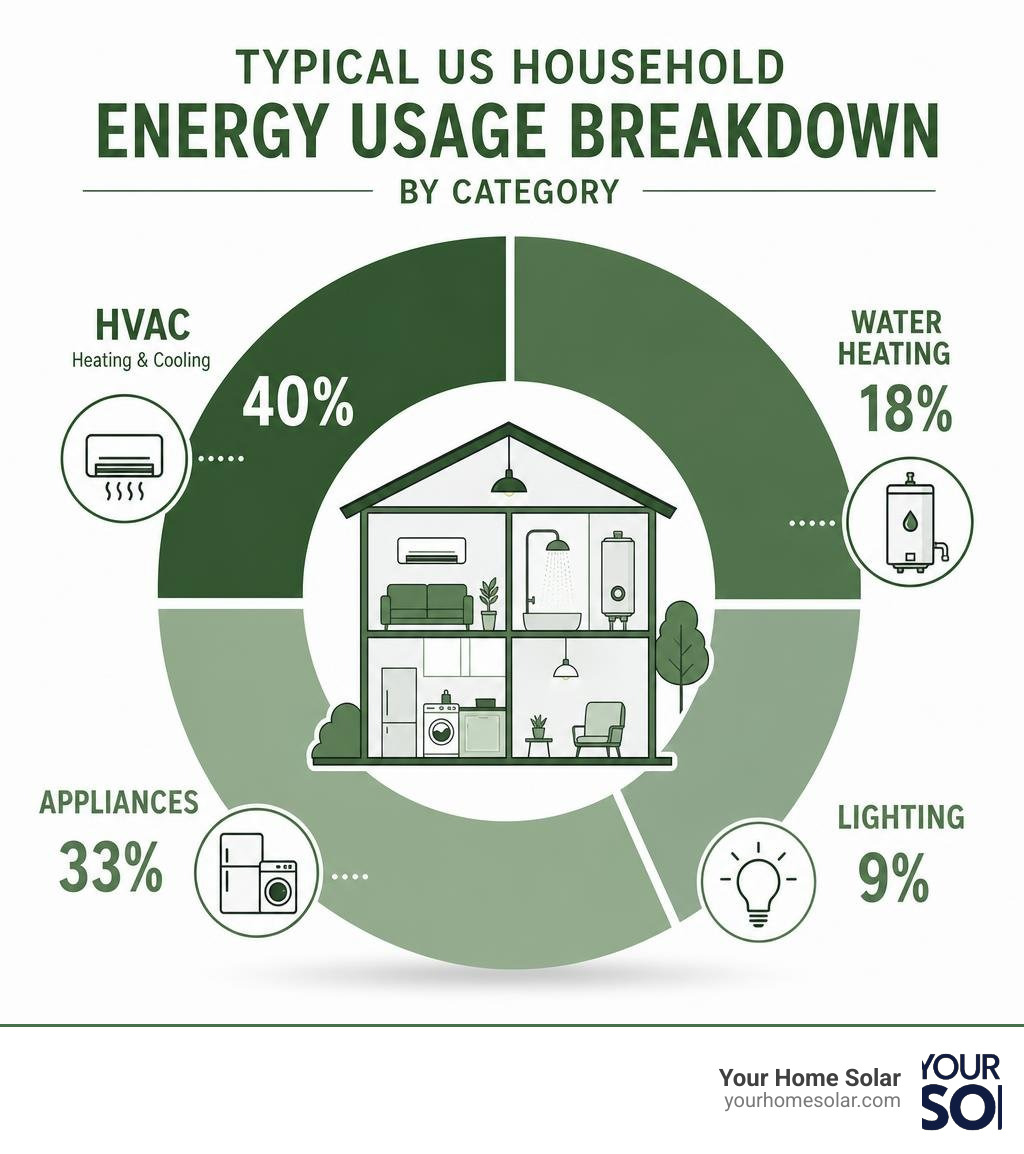
According to data from the U.S. Energy Information Administration (EIA), heating and cooling make up nearly 50% of the typical household’s energy usage (and in many drafty homes, it can climb as high as 52%). Water heating takes the second place spot, accounting for roughly 18%. Major appliances like your refrigerator, clothes dryer, and dishwasher come next, followed by lighting and electronics.
To help you visualize where your money goes every single month, we have put together a breakdown of typical household appliance energy consumption:
| Household Appliance / System | Share of Average Monthly Bill | Estimated Monthly Cost (At National Average Rates) |
|---|---|---|
| HVAC (Heating & Cooling) | 48% – 52% | $81.50 – $88.30 |
| Water Heater | 18% | $30.50 |
| Refrigeration (Fridge & Freezer) | 7% | $11.90 |
| Lighting | 5% | $8.50 |
| Clothes Dryer & Washer | 5% | $8.50 |
| Electronics (TVs, Computers, Game Consoles) | 10% | $17.00 |
| Other Appliances (Oven, Dishwasher, etc.) | 3% – 5% | $5.10 – $8.50 |
If you want to dive deeper into how these numbers stack up for the current year, check out this guide on How to Save Money on Your Energy Bills in 2026.
By targeting the largest energy hogs first, you will get the absolute highest return on your time and effort. It is the classic 80/20 rule: 80% of your savings will come from optimizing just 20% of your home’s systems.
How to Keep My Light Bill Low: The High-Impact HVAC Strategies
Since heating and cooling make up half of your monthly power bill, any strategy to reduce your energy usage must start with your HVAC system. In places like Maryville and Knoxville, seasonal temperature swings mean your system works incredibly hard. In fact, local discussions like the ones on this Why are Maryville electric bills so high this winter? – Facebook post highlight how quickly winter heating costs can spiral out of control when temperatures plummet.
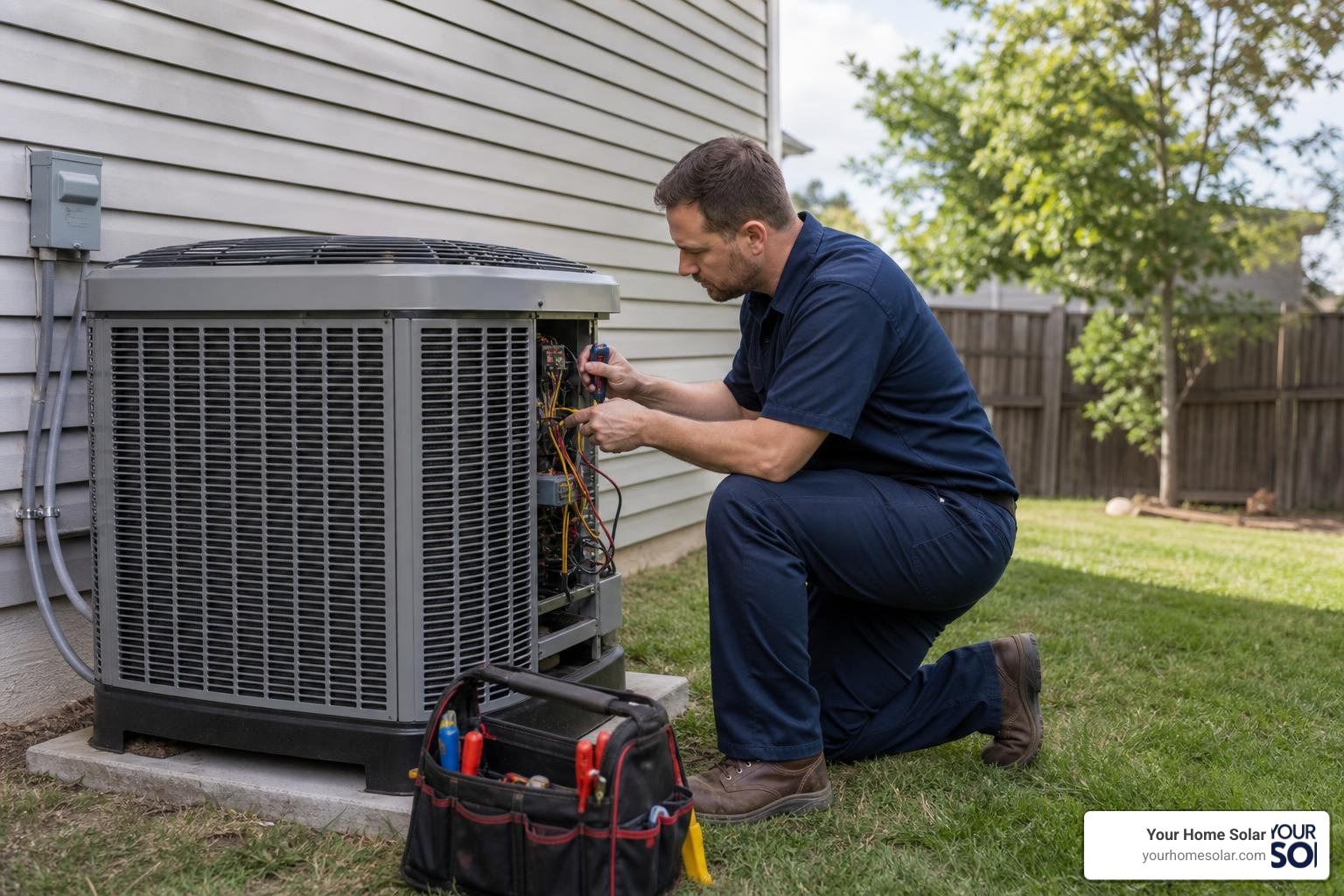
To get your HVAC system running as efficiently as possible, start with these baseline maintenance steps:
- Change your air filters regularly: A standard, flat filter should be changed every month, while pleated filters can last up to three months. A dirty, clogged filter restricts airflow, forcing your system to run longer and consume 5% to 15% more energy.
- Keep your outdoor unit clear: Clear away dead leaves, weeds, and debris from around your outdoor compressor unit. It needs breathing room to release heat efficiently.
- Schedule annual maintenance: Having a technician service your HVAC system in the spring (for A/C) and fall (for heating) ensures it operates at peak efficiency.
- Get your ducts sealed: According to utility studies, unsealed or leaking ductwork can waste 20% or more of your conditioned air. Sealing these leaks keeps the air you paid to heat or cool inside your living spaces.
For a comprehensive checklist of high-leverage steps, take a look at How to lower your electric bill — 30 evergreen tips | Seenra.
Thermostat Settings and Habits to Keep My Light Bill Low
The single highest-ROI intervention in your home is your thermostat. It costs absolutely nothing to adjust, yet the savings are immediate.
The golden rule of thermostat management is the 3% per degree rule: for every degree you adjust your thermostat closer to the outdoor temperature, you save roughly 2% to 3% on your heating or cooling costs.
- In the Summer: Set your thermostat to 78°F when you are home. When you go to sleep or leave the house for the day, raise it by 4 to 7 degrees.
- In the Winter: Set your thermostat to 68°F when you are active at home. When you are sleeping or away, lower it to 60°F or 62°F. According to the National Energy Assistance Directors Association, the average U.S. household is projected to spend nearly $1,000 during cold winters just to heat their homes, making these minor winter adjustments incredibly lucrative.
You can read more about how to manage these seasonal shifts without sacrificing comfort in our article Save on Electricity Bills Without Living in the Dark.
Additionally, make ceiling fans your best friend. A ceiling fan costs only about one cent per hour to run, compared to the 10 to 30 cents per hour it costs to run an air conditioner.
- Summer Fan Direction: Run your ceiling fan counter-clockwise to create a cooling wind-chill effect. This makes the room feel up to 4 degrees cooler than it actually is, allowing you to set your thermostat higher without feeling the heat.
- Winter Fan Direction: Run your fan clockwise on low speed. This gently pushes the warm air that naturally rises to the ceiling back down into your living space.
- Remember: Fans cool people, not rooms. Turn them off when you leave the room to avoid wasting electricity!
Sealing Air Leaks and Improving Insulation
You can have the most efficient HVAC system in the world, but if your home is drafty, you are essentially paying to condition the outdoor air. The average home loses 25% to 40% of its heating and cooling energy through air leaks around windows, doors, and poorly insulated attics.
Finding and sealing these leaks is a highly satisfying weekend DIY project that pays for itself almost instantly.
- The Dollar Bill Test: Close a door or window on a dollar bill. If you can pull the bill out easily without any resistance, you have an air leak.
- Weatherstripping and Caulk: Apply adhesive weatherstripping around the moving parts of windows and doors, and use silicone caulk to seal stationary gaps around window frames, baseboards, and outdoor wall penetrations.
- Door Sweeps: Install a cheap door sweep on any exterior door that has a visible gap at the bottom. For a zero-cost temporary fix, roll up a bath towel and place it against the bottom of the door.
- Attic Insulation: Heat naturally rises, and in the winter, a poorly insulated attic acts like a chimney, drawing warm air right out of your home. The U.S. Department of Energy recommends attic insulation levels of at least R-38 to R-49. If you can see your attic floor joists, you probably need to add more insulation.
To see step-by-step instructions on how to locate these invisible energy drains, check out How to Lower Your Electric Bill: 12 Ways That Actually Work | MayoCalc.
Optimizing Major Appliances and Water Heating
Once you have tackled your heating and cooling, it is time to look at your major appliances. These are the silent middleweights of your utility bill, constantly pulling power in the background.
Efficient Water Heating Practices
Water heating is the second-largest energy expense in most homes, accounting for roughly 18% of your utility bill. Fortunately, making your water heater more efficient is incredibly simple and requires almost no lifestyle changes.
First, lower the thermostat temperature. Most manufacturers ship water heaters with the default temperature set to 140°F. This is unnecessarily hot and poses a scalding risk. Lowering the temperature to 120°F is perfectly safe, provides plenty of hot water for showers and dishes, and saves you 3% to 5% in water-heating costs for every 10°F reduction.
Second, insulate your tank and pipes. If you have an older water heater tank that is warm to the touch, it is losing valuable “standby” heat. Wrapping it in an inexpensive insulation blanket (if the R-value is below R-24) can reduce standby heat losses by 25% to 45%. Additionally, insulating the first six feet of hot and cold water pipes leaving the water heater can raise the water temperature at your tap by 2°F to 4°F, allowing you to use less hot water overall.
For more localized water-saving advice, you can review the official Energy & Water Savings Tips – KUB page from the Knoxville Utilities Board.
Smart Appliance Habits to Keep My Light Bill Low
How you use your daily appliances can also make a significant dent in your monthly bill. By adopting a few simple habits, you can stop wasting energy during chores:
- Wash Clothes in Cold Water: Roughly 90% of the energy your washing machine uses goes toward heating the water. Modern laundry detergents are specifically formulated to clean just as effectively in cold water. Switching to cold-water cycles can save you $60 to $100 per year.
- Clean the Lint Trap Every Time: A clogged dryer lint trap restricts airflow, which can increase your dryer’s run time by up to 30%. Clean the trap before every single load, and check your outdoor dryer vent line annually to ensure it isn’t blocked.
- Air Dry When Possible: Whenever the weather permits, consider using a clothesline or drying rack. Air-drying even half of your laundry loads can save $50 to $75 annually.
- Run Full Loads Only: Your dishwasher and washing machine use roughly the same amount of water and electricity regardless of how full they are. Wait until you have a full load before running them.
- Skip the Heated Dry: Your dishwasher’s heated dry cycle uses a high-wattage heating element that draws a massive amount of power. Switch to the “air dry” or “eco” setting and let your dishes dry naturally.
For a deeper dive into behavioral changes that can lower your bill by up to 30%, read How to Save Money on Electricity (Lower Your Bill 30%) | WalletGrower.
Lighting and Phantom Load Reduction
Lighting and electronics might seem small compared to your HVAC system, but they operate constantly. Because they are so easy to optimize, they represent some of the fastest “quick wins” available to homeowners.
The LED Revolution
If you are still using old incandescent light bulbs, you are essentially paying to heat your home with light. Incandescent bulbs waste 90% of their energy as heat, while LED bulbs use 75% to 80% less energy and last up to 25 times longer.
Replacing just 20 frequently used incandescent bulbs with LEDs can save you $100 to $180 per year. With LED bulbs now costing as little as $2 to $5 each, this upgrade pays for itself in just a few months.
Defeating Vampire Power
Did you know that many of your devices are drawing power even when they are turned off? This is known as phantom energy or vampire load, and it accounts for 5% to 10% of residential electricity use in the average home. That is roughly $100 to $200 per year spent on devices that are doing absolutely nothing.
Any device with a standby light, a digital clock, or an external power brick (like a phone charger or laptop charger) is a standby power suspect. Common culprits include:
- Smart TVs and streaming devices
- Video game consoles (especially in “instant-on” mode)
- Desktop computers and printers
- Microwave ovens and coffee makers with digital displays
To defeat these energy vampires, plug your entertainment center and home office electronics into smart power strips. These strips automatically cut power to secondary devices (like your DVD player, soundbar, or printer) when the primary device (like your TV or computer) is turned off. For other appliances, simply unplugging them when they aren’t in use is a highly effective habit.
To learn more about the math behind standby power and how to eliminate it, read How to reduce your electricity bill — 17 proven ways that actually work in 2026 | euenergy.
Rate Plans, Energy Monitoring, and Solar Solutions
Once you have optimized your home’s physical systems and behavioral habits, the next step is to examine how you buy your electricity.
Depending on your local utility provider in East Tennessee — whether you are served by KUB in Knoxville, the Oak Ridge Utility District, or local cooperatives in Sevier or Hamblen counties — you may have access to different rate plans.
- Time-of-Use (TOU) Plans: These plans charge you different rates for electricity depending on the time of day. Electricity is much cheaper during “off-peak” hours (usually late at night and early in the morning) and more expensive during “peak” hours (typically hot summer afternoons or cold winter mornings). Shifting heavy energy tasks like running the dishwasher, doing laundry, or charging an electric vehicle to off-peak hours can cut your costs significantly.
- Energy Monitoring: To truly understand your home’s energy patterns, consider installing a home energy monitor. Devices like the Sense monitor connect directly to your electrical panel and use machine learning to identify the unique electrical signature of every appliance in your home, showing you exactly what is running in real-time.
If you live in Sevier County, you can compare local electricity rates and trends using Compare Sevier County, TN Electricity Rates (2026) – EnergySage.
The Ultimate Solution: Home Solar
While behavioral changes and efficiency upgrades are fantastic, they can only take you so far. As long as you are 100% dependent on the traditional utility grid, you will always be vulnerable to rising electricity rates and seasonal price spikes.
The most permanent, high-impact way to keep your light bill low is to generate your own clean, free power with residential solar panels.
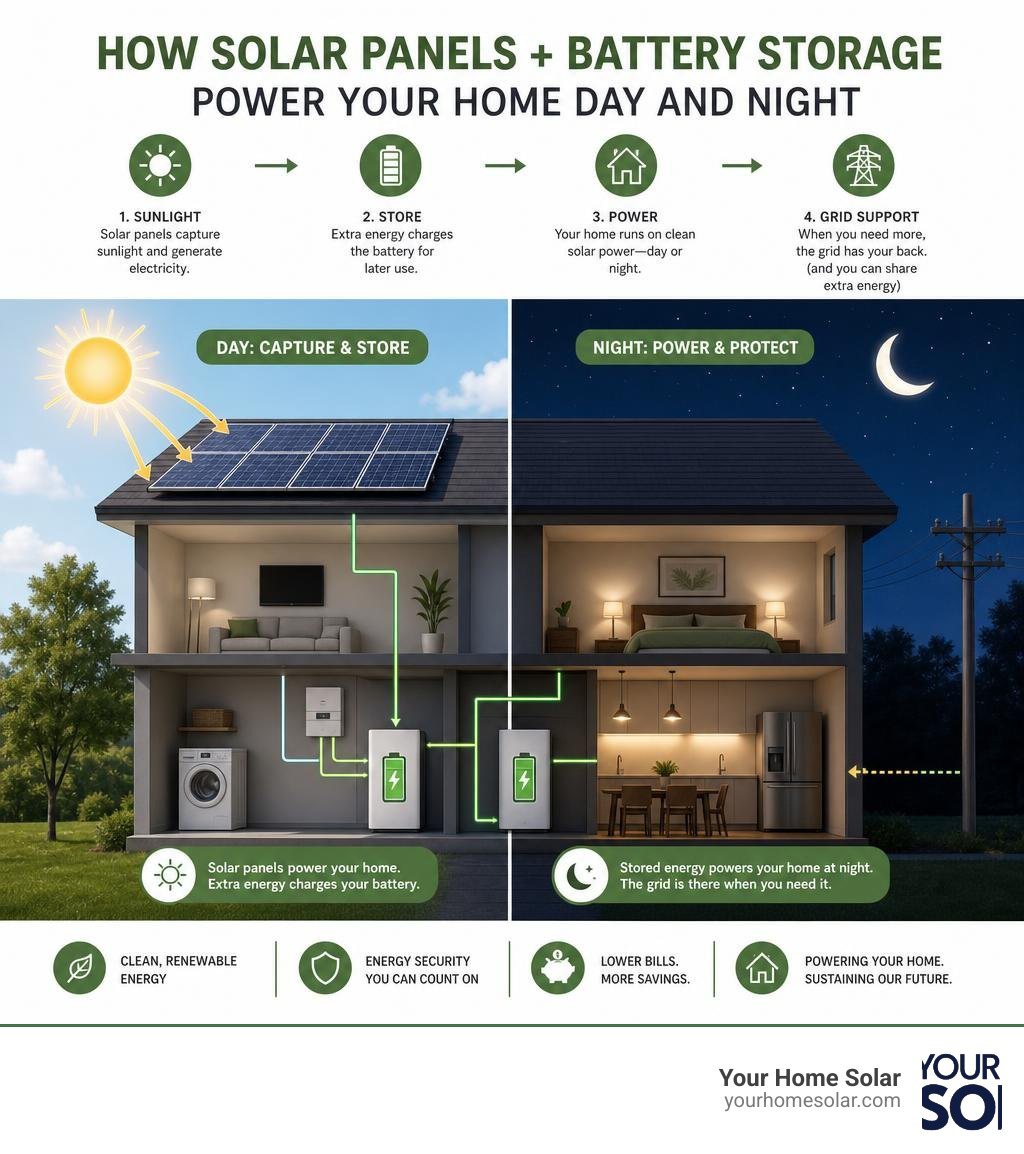
By installing a custom-designed solar system on your home, you can:
- Drastically Reduce or Eliminate Your Monthly Bill: Generating your own power means you buy less (or zero) electricity from the utility company.
- Protect Yourself Against Rate Hikes: Once your solar panels are paid for, your electricity is essentially free for the next 25 to 35 years.
- Take Advantage of Major Incentives: The federal government currently offers a 30% tax credit for residential solar installations, making the transition more affordable than ever.
To learn more about how solar can transform your home’s budget, read our guides on Unlocking Your Home’s Potential: How Solar Energy Can Save You Money and discover the real cost of delaying your transition in Why Skipping Solar Panels Could Be Costing You.
Frequently Asked Questions about Lowering Electricity Costs
How much can I save by switching to LED bulbs?
Replacing 20 frequently used incandescent bulbs with highly efficient LEDs will save you between $100 and $180 per year on your electricity bill. Because LEDs use up to 80% less energy and last up to 25 times longer, the initial investment typically pays for itself in under six months.
Does unplugging devices really make a difference?
Yes! Standby power (or “vampire load”) from electronics that are plugged in but turned off accounts for 5% to 10% of the average household’s energy bill. Unplugging devices like game consoles, chargers, and coffee makers, or using smart power strips, can save you $100 to $200 per year.
What is the single most effective way to lower my bill?
Adjusting your thermostat is the single most effective, zero-cost way to lower your bill. Because heating and cooling account for roughly half of your energy usage, setting your thermostat to 78°F in the summer and 68°F in the winter can reduce your HVAC costs by 10% to 15% annually.
Conclusion
Learning how to keep my light bill low doesn’t require you to live in the dark or freeze through the winter. By starting with simple, zero-cost behavioral changes — like adjusting your thermostat, washing your clothes in cold water, and unplugging standby electronics — you can immediately stop burning cash.
From there, low-cost DIY projects like weatherstripping doors, sealing air leaks, and upgrading to LED bulbs will secure steady, year-round savings.
But if you are ready to take control of your energy future, protect your household from rising utility rates, and enjoy virtually free electricity for decades to come, home solar is the ultimate answer.
At Your Home Solar, we provide tailored, reliable, and highly rewarding home energy installations across East Tennessee — from Knoxville and Oak Ridge to Maryville, Morristown, and Sevierville. Whether you want to explore solar panels, secure your home with a backup generator, or install a fast EV charger, our team is dedicated to 100% customer satisfaction.
Ready to stop wasting money on your monthly utility bill? Let us help you design the perfect energy solution for your home. Explore our guide on how to Save on Electricity Bills Without Living in the Dark or contact us today to get started!