Your Electricity Bill Is Too High — Here’s What Actually Helps
If you want to reduce power bill costs fast, here are the most effective moves you can make right now:
- Adjust your thermostat — Set it to 78°F in summer and 68°F in winter. Shift 7–10°F for 8 hours a day and save up to 10% annually.
- Unplug idle devices — Standby power drains 5–10% of your home’s electricity and can cost up to $165 per year.
- Switch to LED bulbs — They use 75% less electricity than incandescent bulbs and can save around $225 per year.
- Set your water heater to 120°F — Dropping from 140°F can save up to $400 per year.
- Seal air leaks — Drafts and poor insulation can account for up to 40% of heating and cooling losses.
- Shop your electricity rate — In deregulated markets, switching to a fixed-rate plan can protect you from price spikes.
- Look into solar — Community solar and rooftop panels can cut annual electricity costs by 5–100%, depending on your setup.
More than 80% of American adults are stressed about utility bills, and over a third have cut other essential expenses just to keep up with electricity costs. That’s not a personal finance problem — it’s an energy efficiency problem, and most of it is fixable without major renovations or living in the dark.
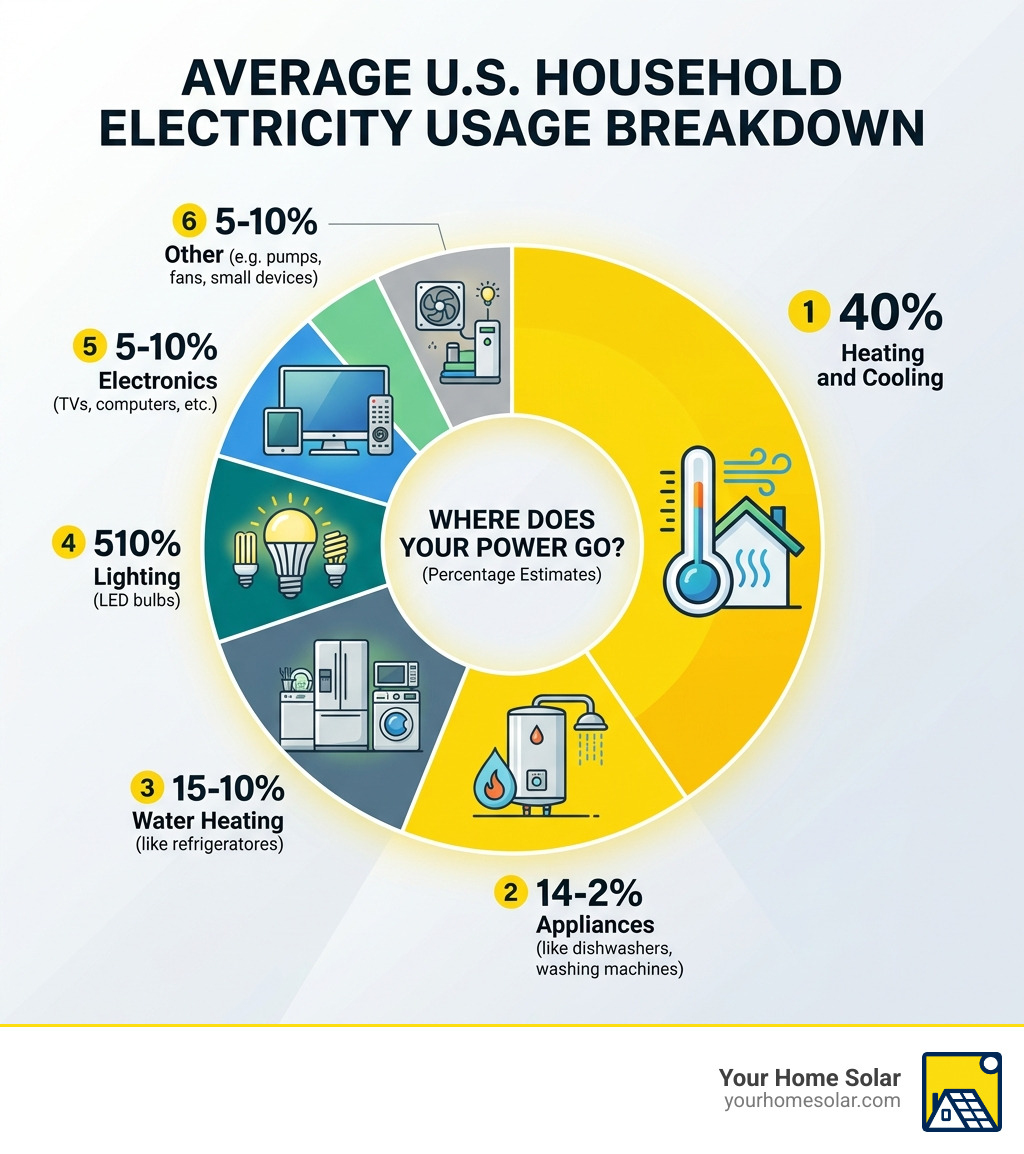
The average U.S. household uses about 1,000 kWh per month. Where does it all go?
If your bill feels out of control, you’re not alone — and there’s a clear path forward. This guide walks through every practical strategy, from free habit changes to smart upgrades to long-term solutions like solar, ranked by impact and ease.
I’m Ernie Bussell, founder and CEO of Your Home Solar, East Tennessee’s top-rated solar energy contractor, and I’ve spent years helping homeowners understand their energy use and reduce power bill costs through a combination of efficiency improvements and solar solutions. Let’s get into what actually works.
Quick Wins to Reduce Power Bill Costs Today
Many people think saving money on electricity requires a massive lifestyle overhaul, but the biggest drains on your wallet are often things you don’t even notice. We recommend starting with “no-cost” habits—changes that require zero dollars but offer immediate relief.
Master Your Thermostat Settings
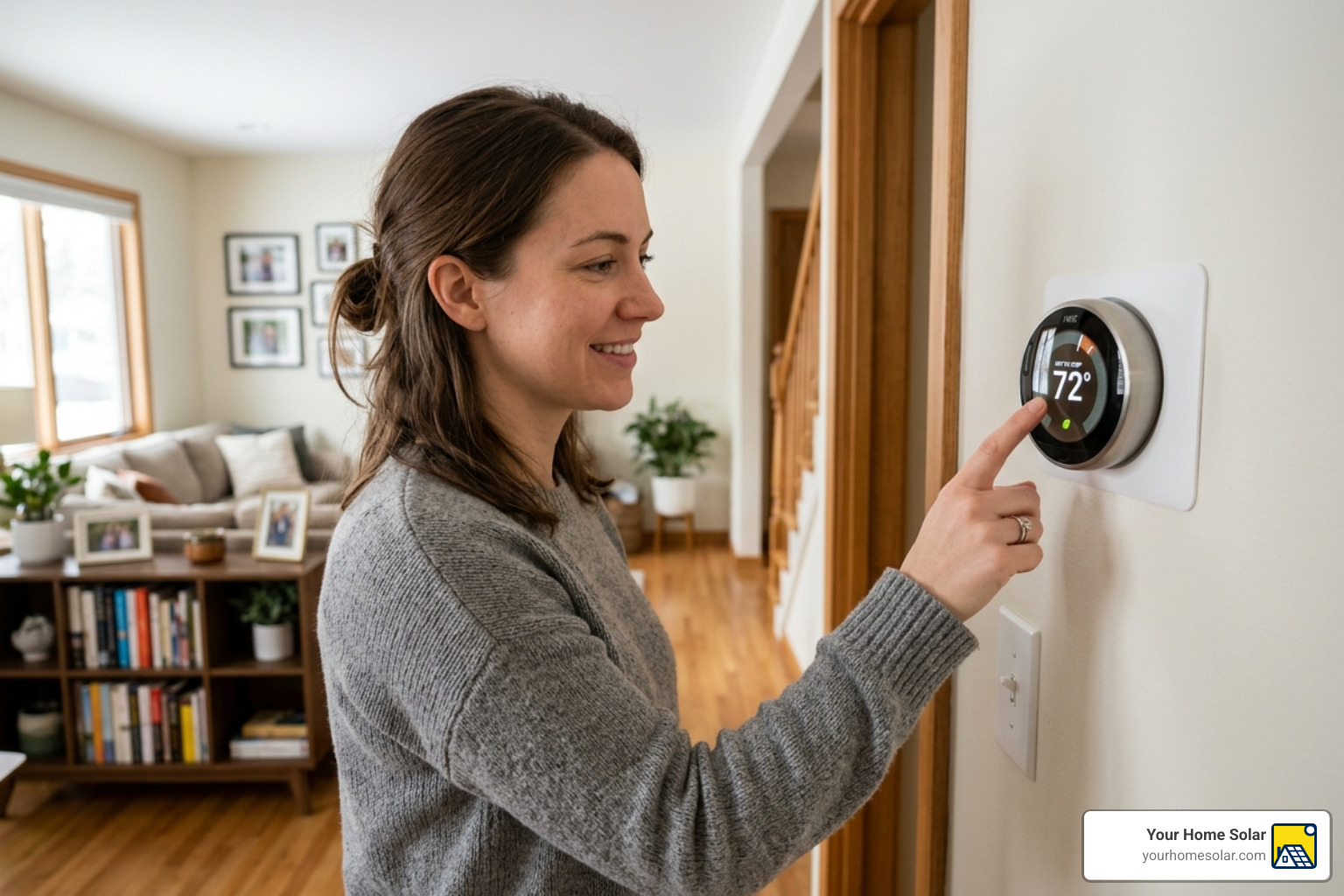
Heating and cooling are the heavy hitters of your energy bill. According to DOE guidelines, you can save as much as 10% each year simply by turning your thermostat back 7° to 10°F from its normal setting for eight hours a day.
In our East Tennessee climate, we suggest aiming for 78°F in the summer and 68°F in the winter. If that sounds extreme, each degree you adjust can cut your cooling costs by 6-8%. Using “temperature setbacks” while you are at work or sleeping is the easiest way to see a difference. Scientific research on thermostat savings shows that a consistent 8-hour cycle of adjustment is the sweet spot for maximum ROI.
Eliminate Vampire Energy to Reduce Power Bill Waste
Did you know that “vampire energy”—the power used by devices even when they are turned off—accounts for 5% to 10% of residential energy use? These little energy thieves are things like your coffee maker, gaming consoles, and phone chargers.
The NRDC estimated that the cost of always-on devices can reach up to $165 per household per year. To fight back, we suggest using smart power strips. These strips can detect when a primary device (like your TV) is off and automatically cut power to peripherals (like the soundbar or DVD player). If you aren’t ready for smart strips, just unplugging your chargers when they aren’t in use can make a measurable dent in your monthly kilowatt-hours.
Optimize Kitchen and Water Usage
Water heating is usually the second-largest expense in a home. A quick win is setting your water heater to 120°F instead of the factory-standard 140°F. This simple tweak can save you up to $400 per year according to DOE water heating tips.
When it comes to chores, save energy on laundry by only running full loads and using cold water. About 90% of the energy used by a washing machine goes toward heating the water! Also, don’t be afraid to use your dishwasher. Environmental Protection Agency water facts show that modern dishwashers use about nine times less water than hand-washing dishes. Just make sure it’s fully loaded before you hit start.
Low-Cost Upgrades for Immediate Impact
Once you’ve mastered the free habits, it’s time for some minor investments. These are the “low-hanging fruit” of home improvement that pay for themselves in months, not years.
Switch to High-Efficiency Lighting
If you are still using old incandescent bulbs, you are essentially paying to heat your home with light. LED light bulbs use 75% less electricity and have a lifespan up to 25 times longer.
By switching to LED bulbs, the average household can save approximately $225 per year. When shopping, look at the lumen output (brightness) rather than watts, and choose a color temperature that fits your room—”warm white” for living areas and “daylight” for kitchens or workspaces.
Seal the Thermal Envelope
Your home’s “thermal envelope” is the barrier between your conditioned air and the outside world. If that barrier is leaky, your HVAC system has to work overtime. Air leaks can prevent up to 40% of your heating and cooling from staying where it belongs.
Start by using weatherstripping on doors and caulking around window frames. Don’t forget the small stuff: outlet gaskets (little foam pads that go behind your light switch plates) can stop drafts from coming through your walls.
For a deeper dive, we recommend a home energy audit to identify where your insulation might be lacking, especially in attics and crawl spaces. In some cases, installing an attic fan can help exhaust hot air in the summer, reducing the load on your AC. Finally, don’t underestimate window coverings. Closing blinds during a hot Sevierville afternoon can block significant solar heat gain, keeping your home naturally cooler.
Strategic Energy Management and Rate Plans
Managing your bill isn’t just about how much energy you use, but when you use it and how you pay for it.
| Plan Type | Pros | Cons |
|---|---|---|
| Fixed-Rate | Predictable monthly costs; protected from market spikes. | May pay more if market prices drop significantly. |
| Variable-Rate | Can be cheaper during low-demand months. | Prices can skyrocket during extreme weather. |
| Time-of-Use (TOU) | Very cheap during off-peak hours (middle of night). | Very expensive during peak hours (4 PM – 9 PM). |
In Tennessee, many utilities offer different rate structures. If you are on a TOU plan, shifting heavy tasks like laundry or running the dishwasher to off-peak hours can drastically reduce power bill totals. This is especially important now with the rise of remote and hybrid work, as home energy consumption has increased during what were traditionally off-peak daytime hours.
Use Smart Technology to Reduce Power Bill Automatically
You don’t have to remember to turn off the lights if your house does it for you. Smart home devices like smart thermostats use geofencing to sense when you’ve left the house and automatically adjust the temperature.
Identify your power-hungry appliances—like your HVAC, water heater, and refrigerator—and see if they can be automated. For example, a smart timer on your water heater can ensure it isn’t keeping a full tank of water at 120°F while you’re away on vacation.
Leverage Financial Assistance and Rebates
There has never been a better time to upgrade your home’s efficiency. The Inflation Reduction Act (IRA) has introduced massive opportunities through Home Efficiency Rebates. For those in our service areas like Knoxville or Maryville, these programs can help cover the cost of heat pumps, which can save between $300 and $948 on annual utility bills.
Check out our Solar Incentives Tennessee 2026 Guide to see how federal tax credits can be stacked with local utility rebates. For low-income households, programs like LIHEAP or the CARE program offer direct assistance to ensure energy costs don’t become a barrier to essential needs.
Future-Proofing with Renewable Energy
If you really want to stop worrying about the utility company raising rates, it’s time to talk about energy independence. Generating your own power is the ultimate way to reduce power bill expenses to nearly zero.
The Long-Term ROI of Solar Power
Solar isn’t just “green”—it’s a smart financial investment. By unlocking your home’s potential, you can protect yourself from the rising costs of traditional electricity. In fact, why skipping solar panels could be costing you is a question we answer often; every month you wait is another month of paying for a bill that could be eliminated.
For our neighbors in East Tennessee, the benefits of going solar in Knoxville TN include increased property value and the ability to use net metering to sell excess power back to the grid. While the solar panel installation Knoxville cost varies based on your roof size and energy needs, the long-term ROI is undeniable. Adding a battery backup can further increase your savings by allowing you to use your own stored solar power during expensive peak hours.
Maintenance for Peak Efficiency
Even the best systems need a little love. To keep your HVAC running efficiently, you must change your air filters regularly. A dirty filter makes your system work harder, using more juice to move the same amount of air.
We also recommend you schedule maintenance on your HVAC system at least once a year. Dirty coils and leaky ducts can reduce efficiency by up to 20%. Sealing your ductwork ensures that the air you’ve paid to cool actually reaches your living room instead of leaking into your attic.
Frequently Asked Questions about Reducing Electricity Costs
Why is my electricity bill so high?
High bills are usually caused by a combination of “vampire energy,” poor insulation, and seasonal weather extremes. The U.S. Energy Information Administration notes that space heating and cooling are the largest energy consumers in most homes. If your bill spikes suddenly, check for a malfunctioning appliance or a leak in your thermal envelope.
How much can I save by unplugging electronics?
You can save approximately $165 annually by eliminating standby power. While a single phone charger doesn’t use much, a household full of DVRs, computers, and kitchen appliances adds up to 5-10% of your total bill. Using smart power strips is the easiest way to manage this without constantly pulling plugs.
Are there renter-friendly ways to reduce my bill?
Absolutely! Renters can swap out incandescent bulbs for LEDs (just keep the old ones to put back when you move), use smart power strips, and apply temporary window film to reduce heat gain. These changes are low-cost and fully portable.
Conclusion
Reducing your power bill is a journey that starts with simple habit formation and ends with energy independence. Whether you’re adjusting your thermostat by a few degrees or looking into high-efficiency ENERGY STAR appliances, every step counts.
At Your Home Solar, we are proud to be the East Tennessee energy experts helping families from Oak Ridge to Johnson City take control of their utility costs. If you’re ready to stop renting your power and start owning it, we’re here to help. Learn more about solar in East Tennessee and let’s build a more efficient future together.