What Goes Into Residential Solar System Design?
Residential solar system design is the step-by-step process of sizing, configuring, and engineering a solar energy system specifically for your home — covering everything from reading your electricity bill to submitting a permit-ready plan set.
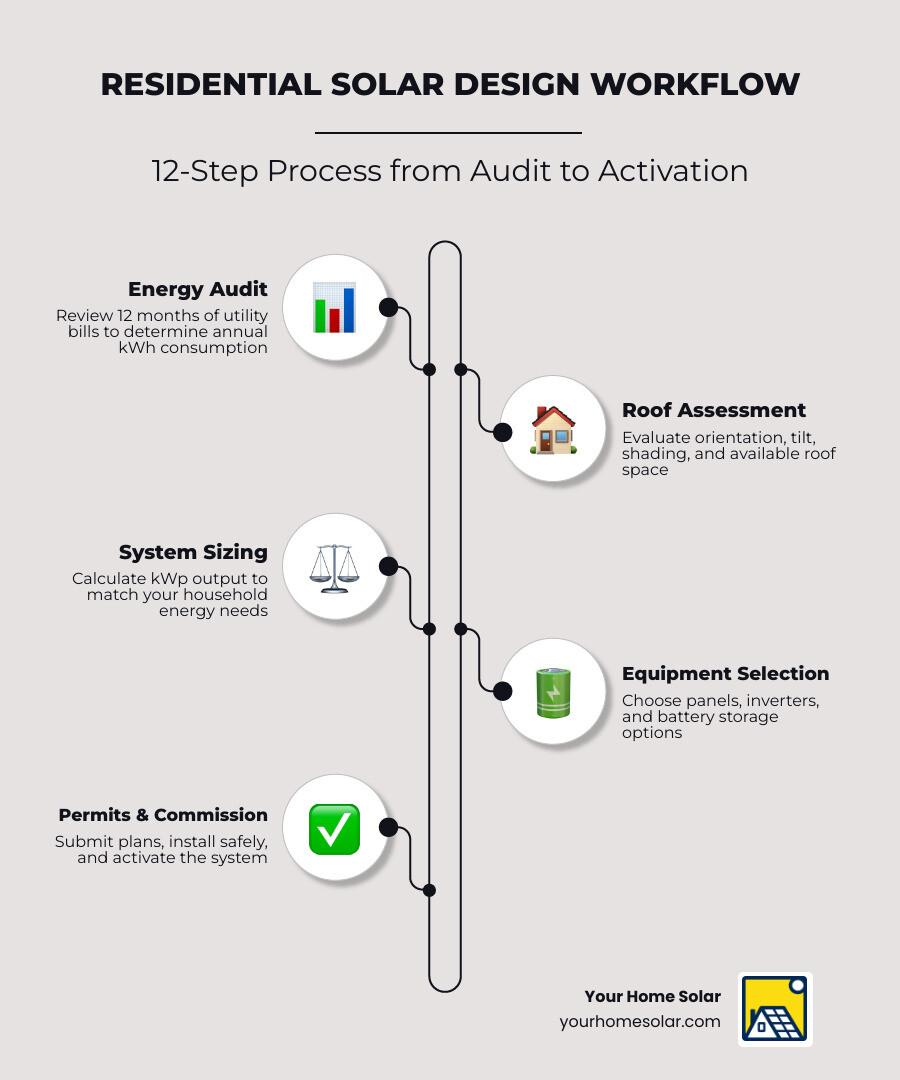
Here is a quick overview of the core steps:
- Analyze your energy use — Review 12 months of utility bills to find your annual kWh consumption
- Assess your roof — Check orientation, tilt, shading, and available space
- Size your system — Match system output (kWp) to your actual energy needs
- Select equipment — Choose panels, inverters, and optional battery storage
- Configure strings and wiring — Size cables and design the electrical layout
- Run a shading and production simulation — Validate expected output before installation
- Handle permits and interconnection — Submit drawings to your utility and local authority
- Install and commission — Mount, wire, and activate the system safely
Getting any one of these steps wrong can mean a system that underperforms, fails inspection, or costs you more than it saves.
Most East Tennessee homeowners are surprised by how much engineering goes into a solar project before a single panel touches the roof. A typical residential installation falls between 5 and 8 kWp, using 12 to 20 panels — but the right size for your home depends on dozens of variables unique to your property, your energy habits, and your goals.
This guide walks through the entire design process in plain language, so you can make confident decisions at every stage.
I’m Ernie Bussell, Founder and CEO of Your Home Solar, the #1 solar energy contractor in East Tennessee — and I’ve spent years helping homeowners navigate the full process of residential solar system design, from the first bill review to final inspection. My background spans military service, education, and solar operations management, which means I’ve built systems that are both technically sound and easy for real homeowners to understand.
Essential residential solar system design terms:
Core Components of Residential Solar System Design
When we talk about residential solar system design, we aren’t just talking about panels. A system is a collection of high-tech components that must work in perfect harmony for 25 years or more. Think of it like a car: the panels are the engine, the inverter is the transmission, and the racking is the chassis.
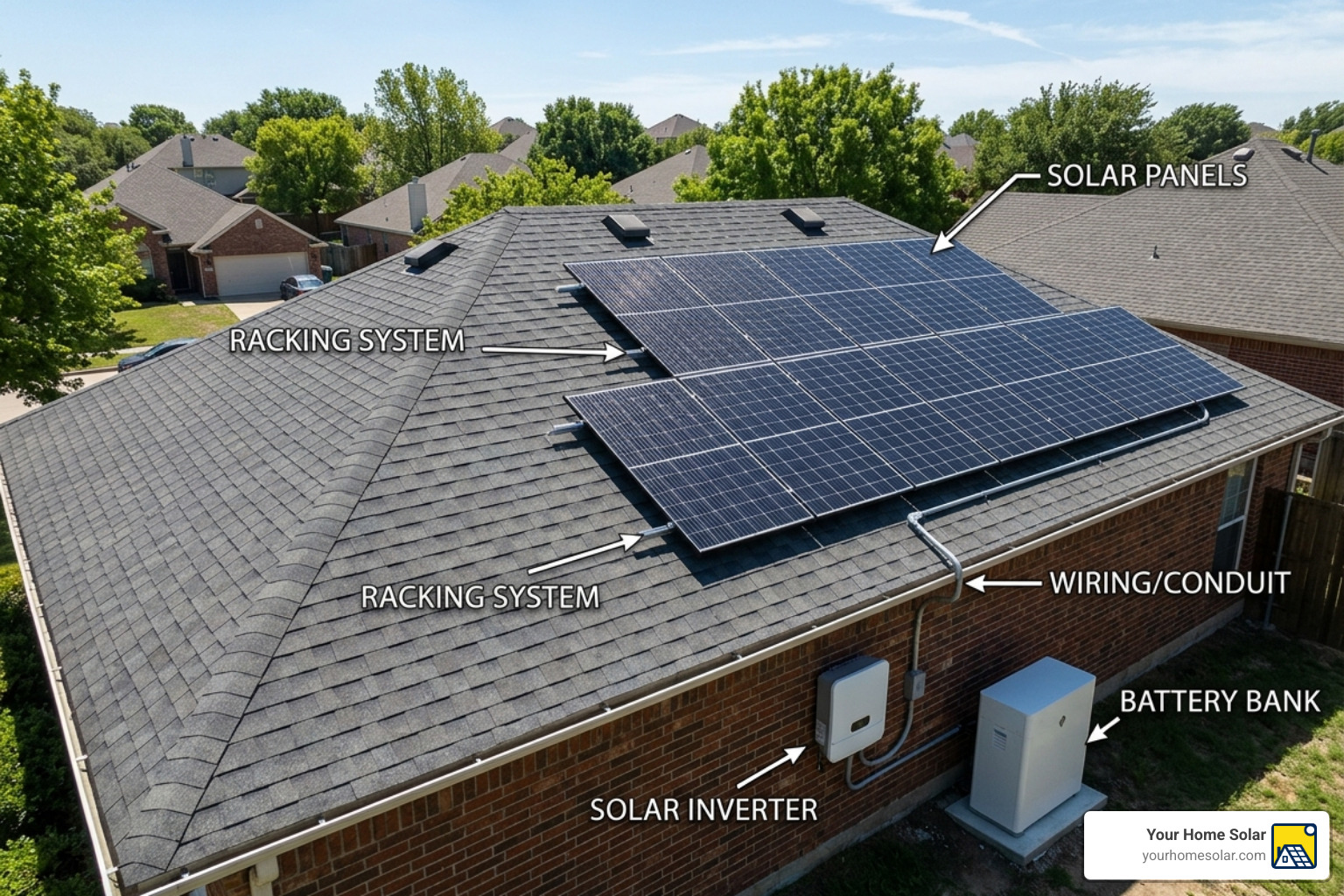
The primary pieces of hardware include:
- PV Modules (Solar Panels): These capture sunlight and convert it into direct current (DC) electricity.
- Inverters: These “brains” of the system convert DC power into alternating current (AC) for your home appliances.
- Racking and Mounting: This is the structural framework that secures panels to your roof or the ground.
- Balance of System (BOS): This includes the wiring, conduits, fuses, and disconnects that keep everything safe.
In 2026, the industry has shifted toward high-efficiency N-type TOPCon and HJT (Heterojunction) cells. These modern technologies offer better performance in the humid East Tennessee heat compared to older Mono PERC panels. Understanding these different types of residential solar energy systems is the first step in a professional residential solar system design: complete engineering guide.
Selecting Panels and Inverters for Residential Solar System Design
Efficiency is king. Most modern residential panels range from 400W to 500W, with efficiency ratings between 21.5% and 23%. While N-type TOPCon panels are the current standard, they also boast lower annual degradation rates—roughly 0.40% compared to 0.55% for older models. This means more power for your home in year 20.
Choosing the right inverter is equally critical. You generally have three choices:
- String Inverters: Cost-effective and great for simple roofs with no shade.
- Microinverters: Installed under each panel; ideal for complex roofs or homes with shading issues.
- Hybrid Inverters: Designed to manage both solar panels and battery storage in one unit.
We often refer to the inverter as the heart of your solar system because it manages the flow of energy and provides the data for your monitoring apps.
The Role of Battery Storage and Backup
In East Tennessee, where summer storms and winter freezes can knock out power, battery storage is no longer just an “extra.” Most modern designs utilize Lithium Iron Phosphate (LFP) chemistry. LFP is the gold standard for home safety because it is less prone to thermal runaway than older chemistries and offers a massive cycle life—often 6,000 to 10,000 cycles.
Batteries allow for “self-consumption,” meaning you can use your own solar power at night rather than buying it from the grid. This is a key part of understanding your complete home solar system investment.
Sizing Your System: From Energy Bills to Kilowatts
Sizing a system is part math, part fortune-telling. We start by analyzing your last 12 months of utility bills. Why 12 months? Because your energy use in a Tennessee July (AC on full blast) looks nothing like your use in October.
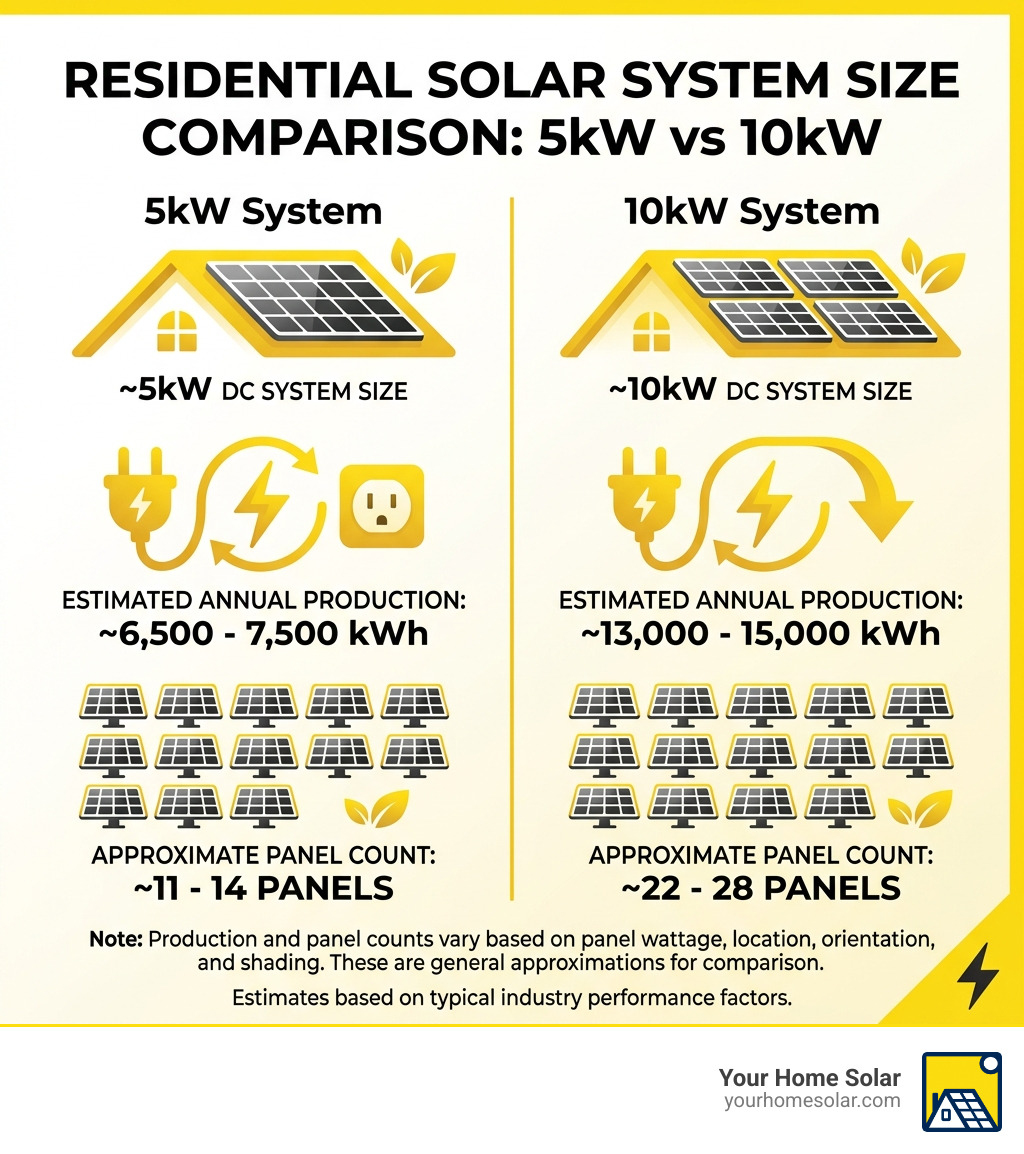
A household consuming 12,000 to 15,000 kWh per year is typically well-matched to a 10kW system. In our region, a 10kW system can produce roughly 13,000 to 15,000 kWh annually, depending on the specific “yield factor” of your location. Getting this right is the essence of properly sizing a solar system for your East Tennessee home.
Calculating Load for Residential Solar System Design
When we calculate your “load,” we look at your daily watt-hour needs. We also factor in the DC/AC ratio—the relationship between the capacity of your panels and the capacity of your inverter. An industry-standard ratio is 1.1 to 1.25. This slightly “oversizes” the panel array to ensure the inverter runs at peak efficiency for more hours of the day, even if you lose a tiny bit of power to “clipping” at high noon.
We also focus on future-proofing. Are you planning to buy an EV? That could add 2,500 to 3,500 kWh to your annual load. Switching to a heat pump? Add another 2,000 to 4,500 kWh. We help you plan your solar-powered home so you don’t outgrow your system in three years.
Climate and Irradiance Factors
Tennessee isn’t the Sahara, but we have excellent solar potential. We use local irradiance data—the measure of solar power hitting a surface—to predict production. Temperature also matters; solar panels actually lose efficiency as they get hotter. High-quality panels have a low “temperature coefficient,” meaning they handle our humid 90-degree days better than budget options. You can learn more about these technical nuances in this guide on how to design a solar PV system.
Site Assessment and Roof Suitability
Before we finalize a residential solar system design, we have to look at the “canvas”—your roof.
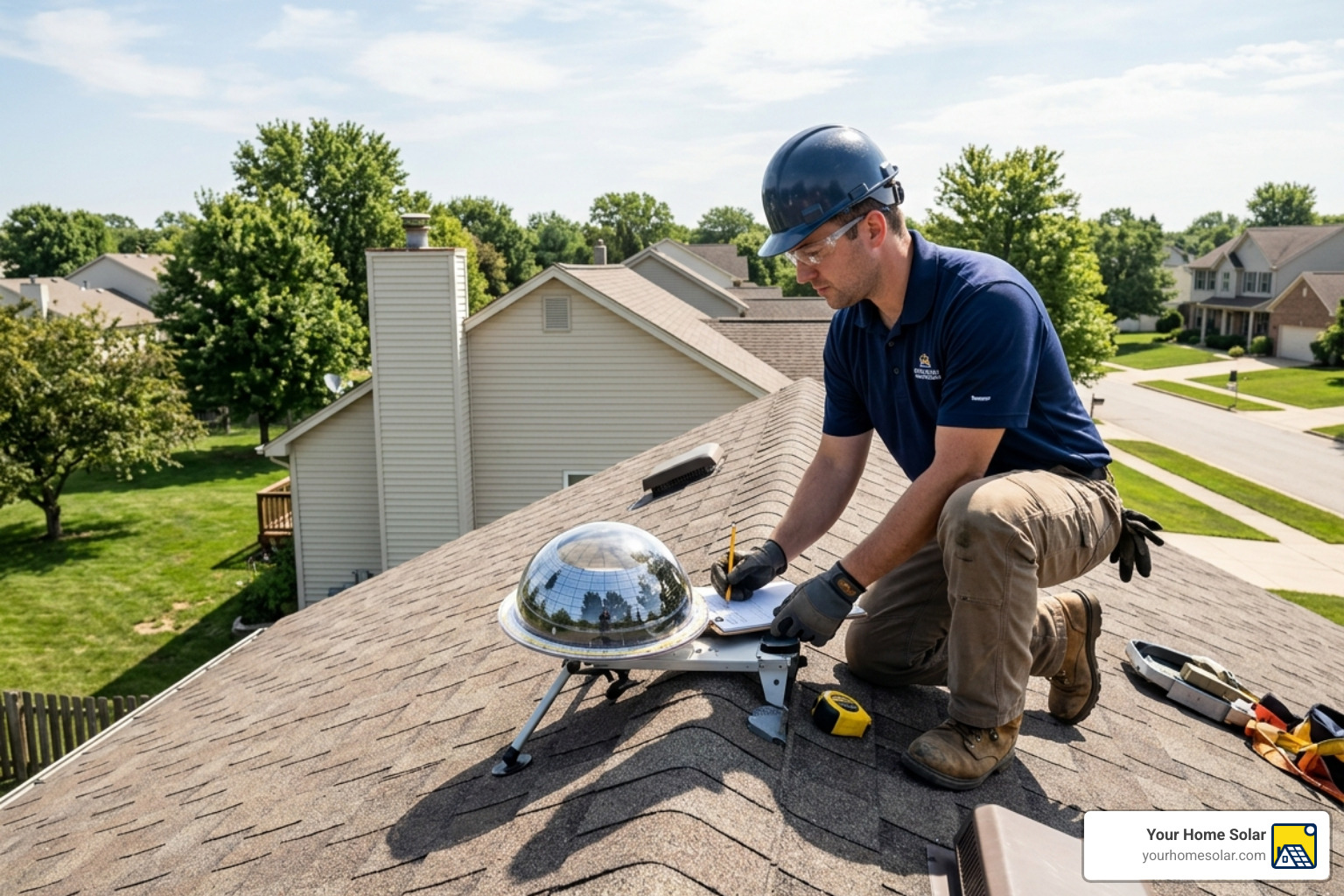
We evaluate four main factors:
- Azimuth (Orientation): In the Northern Hemisphere, south-facing roofs are the gold standard. East and west are also viable but may produce 10-15% less.
- Tilt (Pitch): Ideally, panels should be tilted at an angle equal to our latitude (roughly 35-36 degrees in Knoxville or Johnson City).
- Space: A standard 440W panel takes up about 2.2 square meters. A 10kW system needs about 40-50 square meters of unshaded space.
- Structural Integrity: Panels and racking add about 2-4 pounds per square foot of “dead load.” Most modern roofs handle this easily, but if your roof is over 15 years old, we usually recommend replacing it first.
For a deeper dive, check out our guide to residential solar panel design and this sizing and layout guide.
Shading Analysis and Mitigation
Shading is the “solar killer.” Even a small shadow from a chimney or a neighbor’s oak tree can disproportionately tank your production because of how cells are wired together. We use professional tools like the Solar Pathfinder or SunEye to create a 360-degree shading map. If shade is unavoidable, we use microinverters or DC optimizers to ensure one shaded panel doesn’t drag down the whole string. This is a vital part of sizing and best practices for solar design.
Fire Codes and Structural Requirements
Safety isn’t optional. The International Fire Code (IFC) requires specific “setbacks”—usually 36-inch clear pathways along the ridges and eaves—so firefighters can safely navigate your roof in an emergency. We also ensure your racking is rated for local wind uplift requirements. Knowing what to expect and how to prepare ensures your system is both legal and safe.
Electrical Engineering and Safety Standards
Once the layout is set, we move to the electrical “blueprint.” This involves creating a single-line diagram, which shows every wire, fuse, and connection in the system.
In 2026, we design all systems to NEC 2023 standards. One of the most important requirements is Rapid Shutdown. This safety feature allows first responders to de-energize the solar array at the push of a button, reducing the voltage on the roof to safe levels within seconds. This technical rigor is explained in our practical guide to the installation process.
Wiring and Cable Sizing
Size matters when it comes to cables. If a wire is too thin, you lose energy to heat (voltage drop). We aim for a voltage drop of less than 2% on the DC side. We use specialized UV-resistant cables, like H1Z2Z2-K, to withstand decades of sun exposure. Following a 10kW system design walkthrough can show you exactly how these calculations work.
Permits and Interconnection Agreements
You can’t just plug solar into the grid and hope for the best. We handle the “paperwork mountain,” which includes:
- Utility Interconnection: Getting permission from local providers like KUB, TVA, or BrightRidge.
- Permitting: Submitting plans to the city or county building department.
- PE Stamps: Sometimes a Professional Engineer must “stamp” the plans to certify the roof can handle the weight.
This ultimate installation procedure ensures you stay on the right side of local regulations.
Financial Planning and ROI Analysis
Is solar a good investment? For most East Tennessee homeowners, the answer is a resounding yes. The Federal Investment Tax Credit (ITC) currently allows you to deduct 30% of your total system cost from your federal taxes.
With an average 10kW system, many of our customers see a payback period of 10 to 12 years and a total return on investment (ROI) of over 150% over the 25-year life of the system. We help you understand the basics of solar installation and financials so there are no surprises.
Performance Validation and Simulation
Before we turn the system on, we run a final simulation using tools like PVWatts. This gives us a “Performance Ratio”—a percentage that tells us how efficiently the system is turning sunlight into AC power (usually 75-85%). Once the system is live, our maintenance and monitoring guides help you track your “specific yield” to ensure you’re getting every watt you paid for.
Frequently Asked Questions about Residential Solar Design
How much roof space is required for a 10kW system?
A 10kW system typically requires 40 to 50 square meters (roughly 430 to 540 square feet) of unshaded, south-facing roof area. This accounts for roughly 22 to 24 modern high-efficiency panels plus the required 36-inch fire code setbacks.
What is the ideal DC/AC ratio for home solar?
Most designers aim for a DC/AC ratio of 1.1 to 1.25. This means your solar panel capacity is slightly higher than your inverter’s capacity. While this causes a tiny bit of “clipping” at peak noon in the summer, it significantly improves energy harvest during the morning and evening, leading to higher total daily production.
Should I choose microinverters or a string inverter?
It depends on your roof. If you have a single, unshaded, south-facing roof plane, a string inverter is highly efficient and cost-effective. If your roof has multiple orientations (east, west, and south) or is shaded by trees or gables, microinverters are the better choice because they allow each panel to operate independently.
Conclusion
At Your Home Solar, we believe that residential solar system design shouldn’t be a mystery. Whether you are in Knoxville, Johnson City, or anywhere in East Tennessee, our goal is to provide a tailored, high-performance system that gives you energy independence for decades.
Solar is more than just hardware; it’s a financial and environmental commitment. By focusing on precision engineering, local expertise, and 100% customer satisfaction, we turn the concept of clean energy into a daily reality for our neighbors.
Ready to see what a custom design looks like for your home? Explore our Residential Solar Solutions Guide to take the next step toward a brighter, more sustainable future.